We'll get there in a minute.
After a few introductory thoughts and comments, we as God's creatures, great,
small, and large, whatever, are all debtors. What I mean by that
is we all owe God. We all owe to Him. That's what
I want to talk to us tonight about, being debtors to God.
In Acts chapter 17 it says, when Paul was preaching the gospel,
he said, he makes this comment, and this was part of the gospel,
part of the message that he was speaking to those who were, I
guess this was in Anthens, but he said specifically in verse
28 for in him we live and move and have our being as certain
also of your own prophets have said for we are also his offspring. Now Paul was preaching the gospel
and he put, he added that in there, or he didn't add anything
to the gospel. That was part of his, the preaching that he
was saying is that we are, we live, move, and have our being
as his creatures, as his created beings. So we're indebted to
him simply from that. But as regards to the believer,
as regards to the believer, the law We were indebted to that. We were born in sin, trespasses
and sins. We were indebted to God, to the
law. We were in debt to it. But as
regards to the law, we all come short of the glory of God. Every
person is born in sin, we come short of the glory of God. Thusly,
we are all debtors to the law. But oh, the good news of the
gospel, Jesus Christ satisfied that debt. He paid it all in
full. We don't run back to the law
for our rule of life. We don't run back to the law
and behold its threatenings, if we are children of God, we
are redeemed. Our kinsman redeemer has paid
our sin debt in full. So as it is legally applied to
us, and as it's justice is applied to us, and as it's wrath is applied
to us, We won't experience that because he does not judge sin
and then have to judge it again. No, he died once on Calvary. It is finished is what he said.
The great transaction is complete. In the mind of God, we are free
in Christ Jesus. We are free to serve him, to
honor him, and freely worship him. So then we are the church,
the elect of God, the chosen, the remnant, all these phrases,
are no longer debtors to God as far as his justice. As far as his justice. We sing
that song in the hymn book. Sing, oh, sing of my Redeemer. With His blood, He purchased
me. On the cross, He sealed my pardon,
paid the debt, and made me free. Paid the debt. That is an amazing
fact. It's an amazing truth. It's an
amazing anchor in the gospel of the grace of God. The Lord
Jesus Christ has paid our debt. Paid our sin debt. So I ask the
question, we're talking about debt, debtors, we're talking
about indebted to God. So does the believer owe God
nothing or does he owe God for naught, all that he's done? Are
we indebted to him? Yes, we are. We owe, and I'm
going to use that term interchangeably, indebted and owing. If you're
in debt to somebody, if you don't own the mortgage on your your
home, the bank does, you're in debt to the bank. But we owe,
we don't owe the law, we don't owe anything to the law, it's
been satisfied, justified, and fulfilled. But we do in much,
we owe God much in every way to his everlasting love. Now,
Spurgeon made this comment, and it just hit me, it struck me. He said, we are debtors, or we
owe, to every single one of God's attributes. Every attribute of
God, we are in debt to. Now that just, I just had to
stop, and I told Melinda about that, and that's when we were
looking for Pink's attributes of God. Well, I looked at the
attributes of God, and I'm not going to go over, there's 20
or whatever, however many he's got. I'm not gonna go over, I'm
gonna go over a few. In A.W. Pink's Attributes of
God, for instance, we owe to God's solitariness. What does
that mean? God is in need of nothing. He's
independent. He's in need of nothing. When
He created, it didn't add anything to Him. It didn't take anything
to Him. Nothing adds to Him. Yet, He
created man in order to redeem us. We have redemption. even
though God is solitary. Second thought, God's decrees. What does that mean? That means
his eternal purpose, which included our sinful self. Yet he predetermined
to voluntarily humiliate his son on our behalf. I'd say we owe to God's decrees.
Thirdly, God's faithfulness. That is, he is faithful to his
covenant. We know about his covenant, the
covenant of grace. God's faithful to his covenant. Therefore, he's
faithful to his own sacrifice, his son, and therefore, those
who are mentioned in that said covenant, his people. We, his
faithful, we owe a debt of gratitude, of thankfulness to his solitariness,
his decrees, his faithfulness, just to name a few. Now, what do I mean by indebted? Well, this is what the Oxford
Dictionary said. The Oxford Dictionary defines
indebtedness or indebted, the feeling of owing gratitude for
a favor. Okay? The feeling of owing gratitude,
thankful for a favor. Grace, isn't it? Grace isn't
the free favor of God. So, that's what I want to look at.
Now, I want to look at Romans chapter 8, where you're at, and
look at one verse. Romans chapter 8 and verse 12. three words Therefore brethren
and he's talking to the believers to believers. We are debtors
Now I know he's saying we're not we're not we are debtors
not to the flesh to live after the flesh For if you live after
the flesh you shall die, but it you through the spirit do
mortify the deeds of the body You shall live so he's speaking
about the flesh in the spirit, but he makes this phrase therefore
brethren. We are debtors We're just gonna
stop there We are indebted. We have the feeling, the mental,
emotional, the heart, the soul, we have the feeling of gratitude. This is every believer, this
is not an option. If you are saved, if you claim
to be saved by the free and sovereign grace of God in Christ Jesus
through the understanding and receiving of the gospel, the
declaration of peace, then You're grateful. Well, turn with me
to 1 Corinthians 6. 1 Corinthians 6. Paul, in essence, says the same
thing here. In 1 Corinthians 6, verses 19
and 20. What? He's speaking to the brethren. Know ye not that your body is
a temple of the Holy Ghost, which is in you, which you have of
God, And you're not your own, for you are bought with a price. Therefore glorify God in your
body and in your spirit, which are God's. Be thankful. That's
what he's saying. Walk in an attitude, in a conduct,
in a deportment of thankfulness, of gratitude. That's what it
is to be indebted. indebted to God. So I want us
this morning to look together at a few things on how we as
God's redeemed children are said to be debtors or that we are
to be oh we are said to owe to God our Father. Just basically
these are some of more of his attributes if we want to look
at it that way. We should be thankful and owe to God for his
sovereign love, for his sovereign love. Because it's Jeremiah 31,
it's an everlasting love. It chose us before we chose him.
It's a love greater than Solomon, I'm sorry, it's a love that is
greater than Jonathan and David. And turn to 2 Samuel chapter
one, this is, I always thought this is so interesting how this
is worded. 2 Samuel chapter 1 and verse 26. David is mourning over Jonathan's
death. David says, I am distressed for
thee, my brother Jonathan. Now look at this, how tender
this is. Very pleasant hast thou been unto me. Thy love to me was wonderful. Now, apply this to Christ and
his love. Now, Jonathan is dead, but it
was involuntary. Christ voluntarily suffered,
bled, and died for us. We owe, we are debtors to his
sovereign love. Yea, thy love to me was wonderful,
passing the love of woman. How amazing, how beautiful, how
wonderful is that? So we are indebted for God's
sovereign love. It is an undeserved love for
he sought us, we did not seek him. And once he found the lost
sheep, he put us on his powerful shoulders and carries us all
the way home. When we look back at our life
as we're passing and we think about all the ups and downs,
we can say as another brother that he led and fed all the way. He led, it may have been some
lean years, some heartaches, that's life, that's life. We're
not exempt from that, but his sovereign hand, we see his providential
hand controlling all things for our best. Well, brethren, We
are 10 times the more debtors to God than we would be otherwise. Oh, what we owe to sovereign
love. Secondly, we owe, we are debtors
for God's sovereign grace. Now we sing that other hymn.
I got this hymn book up here, refer to it quite a bit. Come
thou fount. In verse three, oh, To grace,
how great a debtor. Daily I'm constrained to me.
Let thy goodness like a fetter bind my wandering heart to thee,
prone to wander. Lord, I feel it, prone to leave
the God I love. Here's my heart. Oh, take and
seal it, seal it for thy courts above. Oh, to grace, how great
a debtor. Indeed, we are indebted to sovereign
grace. Grace for each day. freely bestowed
upon unworthy worms such as ourselves. We have, we've seen overruling
grace. Many times, that which we want
to do, we can't do. You know, the spirit and the
flesh, they're difficult. There are passions. The things
of this world get in the way. They glitter and they shine and
we gotta have this and we gotta have that. Instead of being content
with what we have, we seek and we go after all these things.
Thank God for his overruling grace. Otherwise we wouldn't
be here. We'd be out doing something different.
We'd be out doing something different. I've always thought myself, if
I wasn't pastor, if I wasn't here, I would, I would not, not
darken a church door. I would live the way I wanted
to live. Thank God for his overruling
grace. without merit on our part. It was purely sweetly and effective
grace, which is favor all to the pardoning of our guilty souls. Oh, what we owe to God and his
sovereign grace. Thirdly, We owe to him for his
keeping mercies. We'd have wandered, and we do
wander, but he brings us back. He keeps bringing us back. That's
where the difficulty comes in. When you see other people fall
and walk, or they're not walking, or they're kind of walking away,
or you're not sure what's going on. You want to embrace them.
You want to hug them. You want to rebuke them. You
want to shake them. Iron sharpening iron. But he has to keep us,
or we'll walk away. After a thousand affronts to
his name and character, he still puts upon us the best robe of
righteousness. He puts on a family ring. He
kills the fatted calf. That's the best calf. In Luke
15, the prodigal, we see this. And all this, plus he kisses
us with such compassionate embraces. Much kissing. But I was, that's
all right. We bring stuff up. We bring things
up, but God, he will not charge us. Why? Because the debt's paid. But we owe, oh, what we owe to
God for his keeping mercy. Fourthly, his preserving pity. Jude chapter 24, unto him who
is able to keep us from falling, keep us from falling, keep us
from falling. How often, how frequent we fall. What debtors, what amazing preserving
wonders are we afforded? He gives us daily means to walk
with him. New mercies can be seen, can
be had as we see that the Holy Spirit leads and guides us into
all truth. We have his means of grace. If
we will partake of these, if we will avail ourselves to these,
to come and hear the word preached, Either hear it over the phone
or be in the presence. These are means. Prayer. We pray
every day. This isn't a one-man show. I
don't want it to be a one-man show. It's not a one-man show. We fellowship with one another.
We gather together. We partake of His blessed ordinances,
the Lord's Supper. We have fellowship meals. I think
these are essential. His Gospel is preached. We hear
it. We listen to it. This place has been given to
us. We remember we were meeting in homes. We remember we were
meeting in a rental place. We remember that. I haven't forgot
that. This is His means of grace. Partake of it. Read of His Word. Study His Word. You people, us,
together, this is the church. This building is nice, but the
people are the church. These are all means of grace.
You people, we are designated to gather one with another. Psalms
23, though, I walk through the valley of the shadow of death.
What? I don't fear an evil. Why? Because he's going to preserve
me. He's going to preserve me. I've said this many times, but
I actually believe it. We are immortal here until our
work is done. We sing that hymn. We are. Now,
I'll be like Maurice. Don't go and sleep under elephants.
Don't presume upon God's grace, but obey His grace. Obey His
grace. He will cover us. He will help
us. He will protect us. He's promised us. Avail ourselves
to these means of grace. Oh, what we owe to God's preserving
pity. Fifthly, We owe him for his immutability. It's another attribute. It means
he doesn't change. We change daily. We get a little stress. We can't think right. We get
somebody, somebody dangles something in front of us. We know where
to walk. That looks better. I'm gonna
try that out. Okay, you go try that out. What
about your soul? What about gathering together?
What about the fellowship of the believers? What about singing
the hymns? You may not be able to do that. You're going to take
yourself? We've got to be careful. We change daily. He does not. He does not change, nor can he. Nor can he. How come we are not
written off? We'll write one another off,
but how come he has not written us off? When we sin so frequently,
when we are so drawn after the things of this world, when our
worship is so cold and so lukewarm, when we think we're something,
when we're nothing, Galatians 6.3, it must be all owing to his unchanging
mercy and grace and love found only in our divine substitute. That can be the only reason.
Because it, these unchanging characteristics of our God are
only found there in him, are only found, always found there,
only found there in him. In him, as it says, in him we
live, move, and have our being. That's why, I was reading one
of these daily devotionals, they really emphasize, we'll do this
and this if the Lord wills. We assume that. I'll go do this, I'll go do that,
whether it's a job or record, whatever. I'll do this, I'll
do that. I'll go to a store to get groceries if the Lord wills. The early saints, this is something
they said. I don't think they had, I know
we all have sinful nature, but it doesn't seem like they had
the distractions we have. I may be wrong. Why we are so deep in debt to
every personal perfection of God, to Him we owe ourselves,
our life, our all. We do. It's amazing. He gives us breath,
you know, food. You know, one writer, I don't
remember who it was, he said, why is food so flavorful? Why is food so good? Oh, it's
how, no, it's He makes it so. Everything we have, we have. Our reasonable service to him
who loves us and washed us clean every wit is to be in gratitude,
is to be indebted to him. Oh, what we owe to God's immutability. So I want to close and read another
hymn. I had known this hymn for a long
time. I found it online by Mr. Murray McShane, 1837. The last line of each stanza
is what I'm interested in. When this passing world is done,
when has sunk yon glaring sun, when we stand with Christ on
high, looking over life's history, then, Lord, shall I fully know,
not till then, how much I owe. When I hear the wicked call on
the rocks and hills to fall, when I see them start and shrink
on fiery deluge brink, then, Lord, shall I fully know, not
till then, how much I owe. We could have been crying just
like them. When I stand before the throne, dressed in beauty
not my own, when I see thee as thou art, love thee with unsinning
heart, then, Lord, shall I fully know, not till then, How much
I owe. When the praise of heaven I hear,
loud as thunders to the ear, loud as many waters' noise, sweet
as heart's melodious voice, then, Lord, shall I fully know, not
till then, how much I owe. Chosen, not for good in me, wakened
up from wrath to flee, hidden in the Savior's side by the Spirit
sanctified, teach me, Lord, on earth to show By my love, how
much I owe. Can we not do that? We should
as believers. Let us communicate. Let us hold
this place like it's the last place on earth. Let's be here
if we can. If we can't, I understand some
things. It's just the way it is that
life happens. But I do know opportunities, make greater temptations, you
can just say, nope, I'm not going to do that. Why? I've got people to meet. I've
got brethren to sing praises with. I've got a God to worship.
And this is where I want to be. This is where I want to be. Thank
God if we do want to be there. You know how we pray that the
Lord would bring other sinners by. This is a leper colony. Bring us more lepers. Bring us
more lepers. But if not, like Martin Luther
said, here and I stand. By the grace of God, I can do
no other. Nathan, would you close this please?
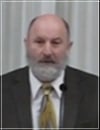
About Drew Dietz
Drew Dietz is the pastor of Sovereign Grace Church in Jackson, Missouri.
Comments
Your comment has been submitted and is awaiting moderation. Once approved, it will appear on this page.
Be the first to comment!