Colossians chapter 3, starting in verse 16. Let's look
at two verses, verse 16 and 17. And I want to narrow in on one
phrase. Verse 16 of Colossians chapter
3, let the word of Christ dwelling you richly in all wisdom, teaching
and admonishing one another in psalms and hymns and spiritual
songs, singing with grace in your hearts to the Lord. And
what so ever you do in word or deed, do all in the name of the
Lord Jesus, giving thanks to God and the Father. by him, by him. Now, as I said,
I wanted to stir a narrow in on one phrase, and that's the
first several words in verse 16, the word of Christ, let the
word of Christ dwell in you richly in all wisdom, the word of Christ. What does that mean? What does
the word of Christ mean? Well, I think it's obvious from
the context and from the whole of scriptures, it means the scriptures. The word of Christ is the scriptures
and its contents and its subject matter. The word of Christ. We come here, we talk about Christ. We talk about, he's the good
shepherd. We talk about Christ as our example.
We talk about, uh, I was reading some older writers and they didn't
say what would Jesus do as far as a contemporary thought, but
they just said, would you take Christ with you to go do whatever
activity you're doing? Would you take Christ with you
to do that? And if you're ashamed to do that,
then you need to stop, you know? So, and this writer, J.C. Philpott, he could be blunt and
it may have been J.C. Ryle. He can be even blunter.
But he just said, could you take Christ with you to this event,
to this whatever? And he said, just think about
that. So the word of Christ simply means the scriptures. It's content
and subject matter. Well, this we'll see as we break
down the Bible into several headings or topics. which doing that,
we will observe Christ is the central order of all the word
of God. And we know this, we know this,
this is a good reminder. Or as our text says, let the
word of Christ dwell in you richly, richly, all wisdom, teaching
and admonishing one another in Psalms, and hymns and the spiritual
song singing with grace in your hearts to the Lord and whatsoever
you do in word or deed, that's everything that we do, word or
deed, do it all in the name of the
Lord Jesus giving thanks to God and the Father by him. So these verses are just centered
around Christ. I also believe This taken in
context, all true wisdom and teaching and hymns and all our
spiritual singing should be centered around Christ and him crucified. Centered around Christ and him
crucified. And not only as pastor, but as
an older, an aging believer, I realized this is more of what
I want to do. You know, I am interested in
the things that we all have going on in our lives. I really am. And I ask the Lord to bless you
in your endeavors. But if I don't seem jacked up
or really super excited, it's because I desire to see the word
of Christ dwelling in you richly. And I like Paul, I'm not saying
I'm super spiritual or I'm a guru or anything like that. But Paul
did say that he was determined not to know anything among you,
save Christ and him crucified. And that you'll get ridiculed
from believers as well as unbelievers. But let's refer not to what I'm
saying here, but let's refer to what our Lord Jesus Christ
said in John chapter His own words, John chapter five, and
let's start in verse, we'll look at verse 39. John chapter five, and verse
39, Christ was speaking, he said, search the scriptures, for in
them you think you have eternal life. Now, he didn't have the
New Testament. They are they which testified me, the word
of Christ. And in the same chapter, verses
43 through 46, Christ says, I am come in my father's name and
you receive me not. If another shall come in his
own name, him you shall receive. How can you believe, how can
you believe which receive honor one of another and seek not the
honor that cometh from God only? Do not think that I will accuse
you to the Father. There is one that accuses you,
even Moses, in whom you trust. For had you believed Moses, you
would have believed me, for he, Moses, wrote of me." So when
Christ was quoting, all he had was the Old Testament, The New
Testament had not been written, so everything, the history, the
prophecies, the prophecy, everything was referring to in the Old Testament. But now in Colossians chapter
three, Paul says that he wants the word of Christ. And seeing that Alpha and Omega,
everything in between Genesis and Revelations is concerning
him. That's what I want us to look at. We'll break this down
into the Bible if we can, if I, you know, so may so say and
so do into six different parts or contents. The Holy Spirit,
we ask that he would take the things of Christ, which he says
in first Corinthians, turn with me to first Corinthians chapter
two. I really didn't look at this really good until this morning.
Well, I just need to read the whole thing. Very good. First Corinthians chapter 2, regarding speaking the word of
Christ and receiving the word of Christ by the Holy Spirit's
injunction and having the word of Christ, this Bible, the scriptures,
the contents, the theme dwell in you richly. First Corinthians
chapter 2 verse 1, And I, brethren, when I came to you, came not
with excellency of speech or wisdom, declaring unto you the
testimony of God. Now that testimony of God could
be the word of Christ. For I determined not to know
anything among you save Christ and Him crucified. And I was
with you in weakness, in fear, in much trembling, And my speech
and my preaching was not with enticing words of man's wisdom,
but in a demonstration of the spirit and of power. Why? That your faith should not stand
in the wisdom of men, but in the power of God. Albeit we speak
wisdom among them that are perfect, Yet not the wisdom of this world
nor of the princes of this world that come to naught, but we speak
the wisdom of God in a mystery, even the hidden wisdom which
God ordained before the world unto our glory, which none of
the princes of this world knew, for had they known it, they would
not have crucified the Lord of glory. But as it is written,
I have not seen nor ear heard, neither entered into the heart
of man the things which God has prepared for them that love him.
But God hath revealed them unto us by his spirit. For the spirit
searches all things, yea, the deep things of God. That's what he's saying. And
then Christ himself says, when he was gonna leave, he was gonna
send the comforter. And he said the comforter, he
specifically says, I'm gonna send in him in my name, in my
name, Christ. He said, and this was in John
14, verse 26, I'm gonna send another comforter, I'm gonna
send another comforter, and he shall speak in my name. The words
of Christ. Let them dwell in us richly.
Now, kind of got involved, Melinda and I got involved in some history
stuff this week, and I love this quote. Some preacher said it
years ago. He says, may we be, may we be
a people of one book. This book. This book. And there's an author that goes
through the history of that phrase. Actually, this phrase was spoken
in a derogatory sense by Thomas Aquinas, the Catholic, in the 1600s. But he was not
using it this way. The way this is used in Victorian
England was, may we be a people of one book, the book of the
Bible. So the book of the Bible, this
is what we're gonna break it down into six categories, six
parts. The first part is the historical
content. The historical content. And Christ
is the substance of all of this history. Not, we're gonna trivialize
this book just to find answers, but Christ is the sum and substance.
For example, in Adam, we see Christ as our head and our representative. You speak of Adam, but you can
see Christ. Noah, he's both the restore of the world and as the
ark, the savior of his people. We preach Christ out of the ark.
Isaac, he's the slain one upon the altar. We see Christ vividly. Joseph, he's the sufferer, yet
also the savior. In Moses, we see Christ as the
great judge and lawgiver. Aaron, the high priest with the
ephod upon his breast, standing before God and man. In Joshua,
we see Christ as the commander, the captain, and literally, his
name, the deliverer. David, Christ we see as the greatest
song, the greatest song there ever was. All those songs are
songs regarding Christ. Solomon, he's the prince of peace. and he's our beloved married
spouse. Jonah, and I could go through
every prophet, but I just skipped to Jonah. He's our death, our
burial, and our resurrection. We see that there. We see him.
Secondly, There is a ceremonial part, or a ceremonial context
in this book. Well, of course, Christ is the
fulfillment of all shadows and types, from the morning to the
evening sacrifice, the altar, he's the high priest, he's the
ark of God, he's our showbread, and the holy anointing oil, he
himself is our year of release, he's our city of refuge, and
everything in between. Thirdly, we see the prophetical
content or the prophetical part. And in, well, let's turn to Luke
chapter 24, see what Christ himself says about such content. Luke chapter 24. Luke chapter 24, and starting
in verse 25, and Christ said unto them, O fools, and slow
of heart to believe all that the prophets have spoken. Ought
not Christ to have suffered these things, and to enter into his
glory, and beginning at Moses, and all the prophets, he, that
is Christ, expanded unto them in all the scriptures the things
concerning himself." Indeed, indeed. From the wonderful counselor,
the mighty God, to the end of the law for righteousness, Christ
is the Lord our righteousness. If we want to talk about Jehovah
Jireh, if we want to talk about Jehovah Shalom, if we want to
talk about Jehovah Nisai, He's all that, he is that prophet
spoken of in Deuteronomy 18, which we've seen when we've gone
through Deuteronomy. The Lord will raise up a prophet
like unto his brethren. Thirdly, or fourthly, there's
the promises, or the promissory content. Well, in 2 Corinthians
chapter one, Christ is, all the promises in him are yes and amen. Those are all true and right,
these promises, and needful for us as we seek to have this word
of truth, this word of promise, this word of Christ dwelling
in us richly. We need to have this. We need
to see the promises as they're wrapped up in Christ. Let us
evermore, whether come affliction in our life, or trials, or hardships,
or in our sunset years, Sing with grace and thanksgiving in
the heart, which is again what he says in Colossians chapter
three, whatsoever you do in word or deed, admonish one another
to dwell upon Christ richly in Psalms and hymns and spiritual
songs, singing with grace in your hearts to the Lord. That's
why this is one reason why we gather together. We gather together
to do these things. And the hymns are just as important. They're an important part of
worship. The reading of the word is an important part of worship.
The preaching, the fellowship, the Bible class, all these things
we do to the honor and glory of Christ. Whatever we do in
word or deed, we do to the glory of the one who we desire to dwell
in us richly. Fifthly, there's experiential
content or the practical part. which is all of it, there's nothing
in this book that's not practical for the believer, as the just
shall live by faith. We don't live by sight. I was
listening to some guy, I didn't find him, it popped up and said,
oh, what's this guy got, what's this babbler gonna say, you know,
like they said in Acts. Well, he said, the reason why
religion is so mocked It's because people believe stuff they don't
have any evidence for. You can't prove God. And all
of a sudden, I thought, exactly. The just shall live by faith.
So you want me to show you something? That's why I think Christian
apologetics, I don't like them. No. We preach the gospel. Like Bruce said, we preach the
gospel. And then I say, get out of the way. Or hand them a car,
or give them a track, or something to tell them what they think,
what they don't know about God. But there is experiential part,
there is a practical part. We live daily by the word of
Christ, which to us is the practical word of grace to our needy souls. Philippians chapter one, turn
back a few pages to that. Just take a phrase that he says
here, I think is very interesting. Philippians chapter one, And
look with me at verse 21. For to me, says Paul, a believer,
to live is Christ. Stop there. Stop there. What
are you going to do tomorrow? Lord willing, we say we buy and
sell and get gain. No, we say if the Lord wills.
And I look forward to that lesson. It's a very rebuking lesson.
We live our lives as though we have tomorrow. We don't. We don't know if we have tomorrow. But we think we do. We're spending,
and we're doing, and we're getting, and we're doing, and we're acquiring
this and that. I don't know. Are we walking by faith? Are
we really, as Scott Richardson says, are we rehearsing our death?
Paul says, for me and for every believer, he's not a super saint.
He was touched with the feeling of firmities like us to live
is Christ, not Christ plus. To live is Christ. The other
option is to die. That's the game. That's pretty narrow. Yes, it's
very narrow. But that's how the believers
walk. You buy and sell. You pay taxes. Complain about taxes like everybody
else does and realize, oh, God's on the throne. So then we be
quiet. And then we complain about something
else. And then God's on the throne. That one old preacher years ago
said, God is sovereign, and I'll be thankful. It's really. Faith is, faith is, I say it's
not easy, faith is straightforward, it's bold, it's plain, and it's
what the believer desires to do. Well, this is what Paul said
in another place in Galatians chapter two, Galatians chapter two and verse
20, Paul says this, the experiential,
the practical part of the Bible, I am crucified with Christ, Nevertheless,
I live, yet not I, but Christ liveth in me, and the life which
I now live in the flesh, I live by the faith of the Son of God,
who loved me and gave himself for me." That's what it comes
down to. Do you see Christ as your lover,
or do you see Christ as your judger? Either or. He's going to judge
you in yourself. or love you in Christ. Love you
in Christ. The practical experiential part. When we pray, don't we say in
the name, in the name of Christ, amen? Every day, at least every
day, we ask, when we pray, which is what the believer's supposed
to do, when you pray, Christ said, you do this daily, give
me the daily grace, and I will be done in the name of Christ. Not Mohammed, not Buddha, not
Joseph Smith, not Confucius, not the Pope, or even ourselves. Why? Once and again, the scripture
says Christ will and must have the preeminence. That's practical
for us. Our marriages are centered around
Christ. Husbands, love your wife as Christ. We love the church. That one
glorious name given. Our jobs, our assisting others,
neighbors or otherwise, they're all done unto the glory of God
in Christ. Whatsoever you do, whatsoever
you do, do in word or deed, do all in the name of the Lord Jesus,
giving thanks to God and the Father by him. Well, what will
happen is your neighbors are going to say, you know what,
you're going to bring that up again. I'll take care of it myself.
But you offer. Lastly, there's a doctrinal content
or a doctrinal part. Every teaching and every instruction
in this book initiates, initiated by the Holy Spirit, leads us
to him with whom we have to do. He is the Alpha and the Omega,
the first and the last. He's the mystery of godliness.
He's the incarnate word dwelling among us. Who, without divine
revelation, who can understand such doctrine? Only those, as
he says, to whom he reveals. I thank thee, Father of the Lord
of heaven, that thou hast hid these things from the wide and
prudent and revealed them unto babes. Unto babes. And actually, in Ephesians chapter
four, you don't have to turn there, but it is said to learn
of him, is said to be taught by him as the truth is in Jesus
Christ. So, closing. So we stand where
God is pleased to stand, upon the whole revealed will of God
the Father, will of God the Son, will of God the Holy Spirit,
upon the worth, work, and person of our blessed kinsman redeemer,
as written in the word of Christ. Let the word of Christ dwell
in you richly. In closing, let's turn to Proverbs
chapter six. Proverbs chapter six. Now in
this text, commandments is the word of Christ. Proverbs chapter
six, starting in verse 20. My son and my daughter. Keep thy father's commandment. Keep the word of Christ. And
forsake not the law of thy mother. Bind them continually upon thy
heart, and tie them about thy neck. When you go, it will lead
thee. When you sleep, it shall keep
thee. And when you awake, it shall
talk with thee. It's like what Bruce was saying
this morning. Be inundated, saturated, with the word of Christ. And we know, in Proverbs chapter
four, we know that in Christ Jesus, who of God has made unto
us wisdom, righteousness, sanctification, redemption, God has made Christ
unto us wisdom. We know that that's true. Proverbs
chapter four, Verses five, six, and seven. My exhortation to
myself and to everyone that can hear this. Get wisdom. Get Christ. Get understanding. Forget it not. Neither decline
from the words of my mouth. Forsake her not, and she shall
preserve thee. Love her, and she shall keep
thee. Wisdom is the principal thing. Therefore, get wisdom, and with
all thy getting, get understanding. May the Lord bless the preaching
of the word. Nathan, would you close this
please?
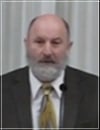
About Drew Dietz
Drew Dietz is the pastor of Sovereign Grace Church in Jackson, Missouri.
Comments
Your comment has been submitted and is awaiting moderation. Once approved, it will appear on this page.
Be the first to comment!