Bootstrap
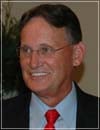
Larry Criss

This Wondrous Grace

2 Samuel 7:18
Larry Criss August, 16 2022 Video & Audio
0 Comments
Larry Criss
Larry Criss August, 16 2022

In Larry Criss's sermon titled "This Wondrous Grace," he explores the profound grace of God as exemplified in 2 Samuel 7:18. The main theological topic addressed is God's unmerited grace toward His people, particularly through the promise made to David concerning the establishment of his kingdom and the eventual coming of Christ. Criss argues that remembering God's past mercies is essential for recognizing His future mercies, positing that God's grace is a continual source of hope and assurance for believers. He supports his arguments with biblical references such as 2 Samuel 7:12-13, where God's covenant with David foreshadows the eternal kingdom of Christ, and John 1:17, highlighting the transition from the law to the grace embodied in Jesus. The sermon emphasizes the Reformed doctrine of grace alone, underscoring that salvation is entirely a work of God, thus rendering any notion of human merit utterly irrelevant. The practical significance lies in cultivating a heart of gratitude and awe for God's grace, which should lead believers to praise and glorify Him for their salvation.

Key Quotes

“Past mercies are proof, an indication of future mercies. [...] He never has and he never shall.”

“When a sinner is made to realize something of who God really is, and then consequently, who they really are, that then... they’ll feel their need of God's mercy.”

“Not unto us, O Lord, but in thy name give glory for thy mercy and for thy truth's sake.”

“It took a miracle to put the stars in place. And it took a miracle to put the moon in space. But when He saved my soul, cleansed and made me whole, that took a miracle of love and grace.”

Sermon Transcript

Auto-generated transcript • May contain errors

100%
Thank you, Rex. Pray that I'll
be able to do exactly that, to exalt the Savior. That's what
I'm supposed to do by His grace, and that's the best thing I can
do for you. For you. God would be pleased
to allow me to do that. On behalf of my wife and myself,
just let me say that we have been blessed in being here, and
It's always something that we look forward to when we're asked
to come back, and it's always a delight. We stay usually with
Mark and Regina, perhaps every time, but they've not got tired
of me yet, probably because Robin is with me, but they are just
delightful. They treat us like we're special,
Rex, and we appreciate it very much. We go back We go back a
while, don't we? You and I. As Rex mentioned,
I think Sunday morning, I was here 20 years. Been in Sylacauga,
Alabama now for 11 years already. My, my, my, how time flies. Pray for me tonight. Mark asked me a couple of times
today when he saw me with my Bible and looking over my notes,
he asked me, are you ready to preach? I said, well, we'll find
out. We'll find out. If God makes me ready, if he
enables me, I'm ready. Will you turn back to 2 Samuel
chapter 7 that Brother Jimmy read to us just a few moments
ago? I text Mark, not Mark, Rex today,
asked him who had the reading tonight. He told me Jimmy, so
I text Jimmy and asked him if he would read this chapter, which
he was kind enough to do. 2 Samuel chapter 7. The first 17 verses consist of
God's promise to David that he would allow, not David himself,
but David's son that would follow after him, to build God an house,
to magnify his name, his greatness, and for his honor. And then beginning
at verse 18, the rest of the chapter is David's response to
that promise to him from his God. Look again, if you will,
at verses 12 and 13. We'll read those in just a moment. But this most gracious promise
from God to his servant David, it stirred him up. God stirred
David's heart by the prophet concerning his past mercies to
David. David, remember what I've done
for you. Remember the past. Remember where
you were when I found you. Remember where I have brought
you thus far. And not only that, but the prophet
reminded David of the blessings that God had promised yet to
bestow, yet to come. Past mercies, past mercies are
a token of future mercies. That's just so, David. God never
repents of his blessings, of his grace, of his mercies. Past mercies are proof, an indication
of future mercies. The poet put it this way, after
so much mercy passed, will God let me sink at last? Never. Never. That would be more of a dishonor. He would suffer a greater loss
than I would. If one of the sheep that God
Almighty entrusted into the hands of our surety, the Lord Jesus
Christ, if one of them, just one of that multitude that no
man can number, just one, is plucked out, it would be a disgrace
and dishonor to the triune God He would lose more than that
sinner. No. After so much mercy passed,
will God let me sink at last? Never. He never has and he never
shall. Look here again at verses 12
and 13 in 2 Samuel 7. And when thy days be fulfilled,
and thou shalt sleep with thy fathers, David, when you go the
way of all flesh, I will set up thy seat after thee, speaking
of course of Solomon, which shall proceed out of thy bowels, and
I will establish his kingdom. and he shall build a house for
my name, and I will establish the throne of his kingdom forever.
Behold, a greater than Solomon is here." This declaration certainly
refers to Solomon and the temporal kingdom of David's family. Oh, but in a much larger sense,
in a much greater sense, it was meant of David's son and David's
God, the Lord Jesus Christ. It refers to him. Yeah. It refers
to his kingdom. It refers to his majesty, his
reign, everlasting reign, and his grace, indeed are greater
than Solomon is here. God said this to his son, concerning
his son. No one else, no one else, no
man, no angel, no prophet, no one else was ever referred to
this way. God says to his son, but until
the son he saith, This is God the Father speaking. Thy throne, O God, is forever
and ever. A scepter of righteousness is
the scepter of thy kingdom. Now that couldn't have been said
of Solomon. And when the angel appeared to
Mary with these words, Fear not, Mary, for thou hast found favor
with God. And behold, thou shalt conceive
in thy womb, and thou shalt bring forth a son, and thou shalt call
his name Jesus. He shall be great. He shall be great, and shall
be called the Son of the Highest, and the Lord God shall give unto
him the throne of his father David, and he shall reign over
the house of Jacob forever. And of his kingdom," not Solomon's,
but of his kingdom, the kingdom of the Lord Jesus Christ, there
shall be no end, an everlasting kingdom. Now let's consider David's
response, beginning at verse 18. Consider David's response
to that message of God's wondrous grace. That's the title of a
message, this wondrous grace. And every sinner that's tasted
that God is gracious, every sinner that's been called out of darkness
and translated into the kingdom of his dear son knows that this
grace is indeed wondrous. It's a marble indeed, is it not? In the light of who God is that
bestows that grace, it's wondrous. In the light of the sinner who
receives this grace, again, it's wondrous. And in the light of
the only one by whom this grace comes, it's indeed wondrous. For the law was given by Moses,
but the law couldn't save. The law only exposed my sin.
The law only proved me guilty. The law was a hill too high.
Oh, but grace and truth came by Jesus Christ. What do I need more than that?
Is there anything I need more than grace? Grace taught my heart
to pray and made my eyes overflow. It's grace and grace alone that's
kept me to this day. And that grace will not let me
go. It refuses to let me go. Oh, there's nothing I need more
than that. It's not without without good
reason, not without cause, that the prophecy concerning the birth
of the Son of God 700 years before it actually took place said this,
His name shall be called Wonderful. Wonderful. In Sunday's message,
I made mention that it's my firm conviction, and I derived that
conviction from God's Word, that when a sinner is made to realize
And as our pastor used to say, I choose those words deliberately. When he's made to realize, because
if he's not made to realize it, he never will. But when he's
made to realize something of who God really is, and then consequently,
who they really are, that then, That's how our text begins, isn't
it? Verse 18. Then, and not until
then, will they feel their need of God's mercy. I love how old
Joseph Hart put it. I've read a lot of hymns, I use
a lot of hymns. They help me express what I have
difficulty expressing. That's why I quote so many of
them. But I've not found one much better than this. concerning
this subject of a sinner being made aware that they are a sinner. Hart wrote, what comfort can
a savior bring to those who never felt their woe? A sinner is a
sacred thing. The Holy Ghost has made him so. Has made him so. And when God
does that, then, then they'll cry out to God as that publican,
be merciful to me. Oh God, be merciful to me. I'm the sinner. And when that
happens, when they cry out to God for mercy, God then likes
to show mercy. They'll experience that mercy.
That mercy and grace will be given through the one mediator
between God and man, the Lord Jesus Christ, and then they'll
join every other believing sinner and gladly acknowledge again
with David, nodding to us, oh Lord. Not unto us. Oh, no, we can't. Don't even
hint that I should take any credit for this. Don't tell me anything
about my will or my worth or my work. Oh, no, no, we push
that away. We gladly push that away and
say, not unto us, O Lord. Not unto us, but in thy name. Thy name give glory for thy mercy
and for thy truth's sake. But before, but before, the experience
of that mercy will join with the multitude and sing a vastly
different tune, won't we? Our tune was vastly different
before God got us lost. It went something like this.
We're ashamed of it now. Ashamed of it now, but it was
nonetheless true. We stood with the religious multitude
and said, Lord, I thank you. I'm not like other men. I'm not
as bad as my neighbor. I'm really not so bad. I thank
you that I'm not like other men. I've made myself to differ. I've
made myself to differ, and that's the problem, is it not? A self-made
man, that that might be something to admire in some ways, but when
it comes to standing for God Almighty, a self-made man will
only hear it apart from me. Self-made men, self-made Christians,
there is no such thing. Only God's grace makes us to
differ. After God brings us down from
our naturally lofty thoughts of ourselves, we then, then begin
to sing an entirely different tune. Before that, it was I,
I, I. Robin and I dealt with a gentleman that did
some work at the house after the first flood. And he wanted
to, he insisted to tell us his experience. And it was all, I,
I, I. I would finally deliberately
just cut it short and politely say, well, let's do what you're
here, what you're being paid for. And I told Robin, man, that
guy's testimony sure had a lot of I in it. Not much about God. That's what we are by nature.
I, I, I, but oh, when God Almighty, by his wondrous grace, this wondrous
grace drops it into our heart, he gives us a new song, doesn't
he? A new tune. It's no longer I,
I, I. Then it's him, Sammy. It's about Him. It's about Him. It's about Christ that I was
chosen in. It's about Christ who redeemed
me. It's about Christ who called me out of darkness. It's about
Christ who found me. Christ picked me up. Christ put
me up on His shoulders. Christ brings me home to glory.
Christ shall have all the everlasting glory because Christ did all
the work. Again, the psalmist in another
place said, Psalm 40, I waited patiently for the Lord, and he
inclined his ear unto me." He didn't take it for granted that
God was obligated to hear him, like most folks do today. He
didn't take it for granted that God owed him mercy, that he owed
him grace. No, David said, I waited patiently
for the Lord, knowing it was up to him. I couldn't demand
it. I couldn't claim it as a right.
I couldn't claim it as a matter of merit. It's a matter of mercy. I waited for the Lord. And lo
and behold, this wondrous grace, he inclined his ear unto me. Hmm? How about that? Now take David's name out and
put your name in there, child of God. Isn't that a marvel? You cried for mercy, remember
that? When God made your heart to fear, as old Newton wrote,
he made your heart to fear and you thought for the first time
in your life, how can he have mercy on me? Before you thought
you weren't so bad. Oh, but now like the public and
again, you're the sinner. And you think, how can God have
mercy on me? Oh, I remember that, don't you? I remember that. Those sleepless
nights. Oh, it seemed like the Thunder
of God's justice was in my ears night and day. Lost, lost, lost. I knew it. I knew it. And I ran to one and then another. What must I do to be saved? Do
this, do that. Become a self-made man. And they told me, you're saved.
But God said, no you're not. You're lost. You're lost. He
inclined his ear unto me. Oh, what a wonder. He heard my
cry. He heard my cry. He brought me
up also out of a horrible pit, out of the miry clay, and set
my feet upon a rock, and he established my goings. And like David here,
in his response to God's mercy and grace, he had put a new song
in my mouth, even praising to our God. God did all that for
me. No wonder old Newton said. I mean, you know he looked back
on what he was when God found him. What a despicable wretch
he was. What a vile offender he was. A slave trader. Newton looked
back on that after God saved him. And he dipped his pen in
that quill and he said, well, it's just this. It's amazing. It's simply amazing. Amazing
grace, how sweet the sound that saved a wretch like me. He couldn't
get over it, and neither should I. I prayed much today that God
would enable me, as Rex mentioned, to exalt his son, to brag upon
the Savior, and had to pray likewise. Father, forgive me. Lord, forgive
me. Because to be truthful with you,
just to be honest with you, this great mercy and grace, this wondrous
grace that I'm trying to talk about, I take for granted most
of the time. Are you that way? Do you have
that problem? That which is most astounding,
that which I should be most thankful for, is the very thing I take
for granted. message that Spurgeon preached. The greatest wonder of grace.
Spurgeon wrote, what wonders of grace shall we be, if from
a judgment which we should have so richly deserved, we shall
be rescued at the last. Salvation never shines so brightly
to any man's eyes when it comes to himself. I'll vouch for that. This is grace illustrious indeed
when we can see it working with divine power upon ourselves. To our apprehension, our own
case is ever the most desperate. and mercy shown to us is the
most extraordinary. First, to see so many there in
glory whom we never expected to meet. Secondly, to miss so
many of whom we felt sure that they must be saved. And then
thirdly, and I'm sure he borrowed this thought from old John Newton,
and thirdly, the greatest wonder of all will be to find ourselves
there. Won't that be something? Won't
that be something? To be among that multitude that
no man can number. Folks see here rather, and it's
usually religious folks, that you believe that horrible doctrine
of election, election, phew. Most churches today, your average
Baptist church would be less shocked if you stood in the pulpit
and just had a cussing fit than to say election. They say, oh
yeah, you believe only one or two are gonna be saved. No, no,
no, no. We believe there's a multitude
that can't be numbered, that it's not a matter of they might
be saved, they shall be saved. They shall be saved with an everlasting
salvation. They shall be with the captain
of their salvation in glory forever. And oh, child of God, is it not
a wonder of grace that you shall be there? Every redeemed sinner,
every believing sinner shall be there, standing before the
throne of God and of the Lamb, standing right in the very presence
of God Almighty as He smiles upon them. Not a frown, we're
not fearful, oh no, we're rejoicing, as we never could hear. When
we see thee as thou art, and love thee with an unsinning heart,
then shall we really know, oh, what a debt of love we owe. Waving that palm leaf of victory. Victory. And singing, worthy
is the Lamb. Spurgeon said, I'm sure that
everyone who has such a hope of being in glory feels it to
be a marvel. And he resolves, if I'm saved,
Spurgeon wrote, I will sing the loudest of them all, for I shall
owe most to the abounding mercy of God. Every sinner saved by
grace feels the same, do they not? I stand amazed in the presence. God help that to be true in my
heart, not just reading it with my lips. I stand amazed in the
presence of Jesus the Nazarene and wonder how he could love
me, a sinner condemned unclean. He took my sins and my sorrows. He made them his very own. He
bore the burden of Calvary and he suffered and he died alone. When with the ransoming glory
his face at last shall see, oh, there's the heaven of heaven.
There's the glory of glory. They shall see his face. We have so many that are doing
that at this very moment, aren't they? We sat here and we're trying
to think of that, what shall it be? Or we're trying to soar
into the heavens and try to imagine what shall that be like? And
we have so many that have gone there and at this very moment,
or seeing him as he is, they shall see his face. When with
their ransomed in glory, his face I at last shall see. I imagine all these trials, these
heartaches, and they're not pretend, no, no, no. We don't bury our
heads like the proverbial ostrich and pretend they don't exist.
Yes, they do. We hurt, we weep, we cry. But oh, when we shall see him
as he is, When with the ransom in glory his face at last we
shall see, I imagine all those things will be remembered no
more. They'll be as nothing. To be
my joy through the ages, the seeing of his love for me. Oh, how marvelous. How wonderful, and my song shall
ever be, how marvelous, how wonderful is my Savior's love for me. Old J.C. Philpott, he wrote this. He said, the sense of our weakness
in God's power, of our misery in his mercy, of our ruin and
his recovery, of our abounding sin and God's abounding grace,
a feeling sense, I say, of these opposite yet harmonious things
brings us to a personal experimental dealing with God. And it is in
these personal dealings with God that the life of true religion
consists. I asked Robin the other day,
if she could name the seven wonders of the world. And she said, no. I don't think I can. And before
I got in trouble, I said, honey, I can't either. I don't think
I can name three to be sure of. And I read that the original
seven wonders of the world Out of the seven, only one still
exists. And then in the year 2000, they
named seven new wonders of the world. So I guess those original
ones are Secondhand wonders, I don't know, but thanks to God,
whether there are seven or 70,000 wonders in this world, what can
any wonder altogether compare to this one? Jesus Christ loved
me. Jesus Christ loved me and would
not interfere with my will. Jesus loved me, but made no effort
to rescue me from a certain everlasting hell. Whew. Thanks to God's grace. That's not how it reads, does
it? No. Jesus Christ loved me, and he
gave himself for me. He gave himself, all of himself. all of himself. He gave himself
for me. I love that passage in John 18.
What a wonderful picture of substitution. John 18. Judas brings that mob
to the garden to arrest the Lord Jesus Christ, to drag him off. And we read there in John 18,
Jesus knowing all things. Jesus knowing all things that
should come up on him. He knew it from eternity. He
knew it from eternity. He looked to that from eternity. The hour has come. Jesus knowing
all things that should come upon him went forth. And said, Whom
seek ye? Jesus of Nazareth. Jesus answered,
brethren, and said, I have told you that I am he. If therefore
ye seek me, let these go their way, let these go their way,
that the same might be fulfilled which he spake of them which
thou gavest me. Have I lost none? Oh, with such a mighty Savior
as that. With such a glorious substitute,
with such a redeemer as that, my response must be, in light
of what we just read, Christ says, here I am, take me, but
my sheep have to go free. Oh, arise, my soul, arise. Shake off your guilty fears.
The bleeding sacrifice in my behalf appears. Before the throne,
my surety stands. My name is written on his hands. He ever lives above. For me to
intercede. His all-redeeming love. His precious
blood to plead. His blood atoned for all his
race. And sprinkles now the throne
of grace. I think I'm safe. I think I'm
saved. That's not a presumption. I believe
the Son of God. I believe what God committed
into His hands, He'll present back to God with the wonderful
proclamation, Father, here they are. Here they are. I've lost
none. Not one. Not one sheep is lost. And you won't be the first child
of God no matter what you pass through. You and I together. He will keep us until he presents
us, follows us before the presence of our God. Old Robert Hawker
wrote, one of the sweetest and most precious offices of the
Holy Ghost in glorifying the Lord Jesus, is by taking the
things of Christ and showing them to his people. When he acts
as our remembrancer of the Lord Jesus Christ in bringing again
to our recollection what our ungrateful and forgetful hearts
so easily suffer to slip out of our minds, the seven wonders
of the world indeed. Can you name them? Have you seen
them? Will it make a lick of difference
in 50 years from now? Oh, but this wonder will be the
only one that's really important. Have I seen this wonder? Have
I experienced this wonder, the wonder of God's grace? Then went
David in and sat before the Lord. Can you visualize that? Here's
King David, a mighty king. In the presence of God, he crumbles. He crumbles. David goes into
the presence of the King of kings and Lord of lords and he says,
Lord, who am I? I just got the message. You've reminded me of what you've
already done for me and gave me your word, your promise of
what you will yet do for me. Who am I that you should do these
great great things for. No matter how glamorous, how
pleasing to the flesh, this world of man-made religion may appear. Even to an apostle, he was temporarily
made to marvel when he saw the picture of that decked-out harlot,
Babylon, in Revelation chapter 7. And the elder asked John,
Wherefore do you marvel, John? That's just makeup. That's just pretense. That's
not real. That's just show. There's nothing
to it. That's what religion is. That's
what man-made religion is. Oh, but to have in the heart
peace with God. Oh, there's a treasure. That's
a treasure that money can't buy. To lay down at night and know
I am His. And He is mine. And nothing can
separate me from the love of God which is in Christ Jesus. It took a miracle to put the
stars in place. And it took a miracle to put
the moon in space. But when He saved my soul, cleansed
and made me whole, that took a miracle of love and grace. That's a marvel of mercy, is
it not, brother and sister? That's a wonder of grace. About
eight, nine years ago, my second or third year in Alabama, Larry
Dell, my oldest son, came to visit him and his family and
my two granddaughters. At the time, they were probably
seven and four years old. Now they're, I think, 17 and
13 years old. But I wanted to show them the
sights. I wanted to show them what Sylacauga
Buzzer's Roost had to offer. It didn't take long. But I took
them out to the marble quarry. Sylacauga has, I think, one of
the world's largest deposits of marble. Boy, they picked up
marble and put it in the car while we were taking this home.
We have a Blue Bell ice cream factory just down the street
from the house. We went in there and we went up to the ice cream
parlor. Boy, all that ice cream. They
just pressed their nose up to the glass until they could decide
which one they wanted. and a couple of other things,
but I thought those things that seemed so common to most folks
was just a wonder to them. They just stood with wide-eyed
wonder. David comes before God Almighty,
In wide-eyed wonder, as such gracious acts of love and mercy
as only could flow from the free, sovereign grace and loving mercy
of God Almighty, there is no other reason, nor no other cause. It was by God's free grace, no
merit, No worth, no work in David. God would have mercy simply because
He would. And David sat down before Him
in wide-eyed wonder and said, O Lord, why me? Why me? For Thy word's sake, verse 21
there, Second Samuel 7, David says, with thy word saken, according
to thine own heart, hast thou done all these great things,
great things, great grace, great Savior, great salvation for great
sinners, to make thy servant know them. Wherefore thou art
great, O Lord God, for there is none like thee, neither is
there any God beside thee, according to all that we have heard with
our ears." Brother Henry Mahan wrote an article, this is a portion
of an article out of one of his old bulletins. The Queen of Sheba,
the seeking sinner. He said, when the Queen of Sheba
had seen the wisdom of Solomon, She had heard of it in her own
country, about his glory, his kingdom. She came to see for
herself and to prove him with questions. And he told her all
her questions, he answered her. And when she saw his wisdom and
his glory and his ascent to the temple of the Lord, she was so
overwhelmed and awed that she could not speak. Henry said,
this is a picture of the seeking sinner who hears of Jesus Christ
and comes to him and has revealed to him the wisdom and the glory
and the exhortation of the Lord Jesus Christ at God's right hand. He, like Mary, sits at his feet
unable to find words to say." That's how David was listening.
Henry said, be concerned about the worthy new converts, not
the one who cannot find words to express his joy, his vision
of Christ the Redeemer. This wonder will be the only
one that's really important moment after all. The wonder of his
grace. This wonder, you had he quickened. Mark answered, why did he do
that? Why would He quicken you? You lay dead like all the rest
of mankind, in trespasses and sins. And like in Ezekiel's vision,
God came by and said, live, live. You had He quickened who were
dead in trespasses and sins. At another time, the psalmist
asked the question, David, What shall I render unto the Lord
for all his benefits toward me? That's a good spiritual exercise. If you have need to be revived,
refreshed with a sense of God's mercy and grace and gratitude
in your own heart, then ask yourself the same question as David did.
Who am I? What shall I render unto the
Lord for all his benefits toward me? Robin was telling me a few
days ago that she ran into somebody, and they asked her how much we
had lost in the flood. After she came home, was telling
me, I told her, I said, you know what, Robin? I don't think we
know yet how much we've lost in the flood, because some of
those things that we thought we had saved, we unpacked them
and found out they were broken, didn't we? And then I thought
to myself, I still have Jesus Christ. I haven't lost him. I'm still
his and he's still mine. There's no flood, no sickness,
no disaster. Nothing can take me away from
him. When David was leaving this world,
he rested his immortal soul on the everlasting covenant of God's
grace in Christ. You know that passage well. Where
else can a dying sinner look for peace except the God who,
for Christ's sake, has forgiven us? Now these be the last words of
David. The son of Jesse said, the man
who was raised up on high, the anointed of the God of Jacob,
and the sweet psalmist of Israel said, this is chapter 23 of 2
Samuel, the spirit of the Lord spake by me and his word was
in my tongue. The God of Israel said, the rock
of Israel spake to me, he that ruleth over me must be just,
ruling in the fear of God, and he shall be as the light of the
morning. when the sun rises, even a morning without clouds,
as the tender grass springeth out of the earth by clear shining
after rain. And David said, although my house
meet not so with God. Yet, yet, that doesn't change
this. The rebels in my household, the
vile sin in my household. Yet he hath made with me an everlasting
covenant ordered in all things insure, and as David lay his
head upon that pillow on his dying bed, he said, This is all
my salvation and all my desire." What a hope, Mr. Spurgeon again. Commenting on the verse in John
16, 33, in the world, our Lord said to his disciples, and to
you and I, in the world you'll have tribulation, but be of good
cheer. I have overcome the world. Spurgeon
said, I know that he bids me be of good cheer. Alas, I am
far too apt to be downcast. My spirit soon sinks when I am
sorely tried, but I must not give way to this villain. When
my Lord bids me cheer up, I must I must not dare to be cast down. What is the argument which he
uses to encourage me? Why, it is his own victory. He says I have overcome the world. His battle was much more severe
than mine. I have not yet resisted unto
blood, why do I despair of overcoming? See my soul, the enemy has been
once overcome, I fight with a beaten foe. O world, Jesus already vanquished
thee, and in me by his grace he will overcome thee again.
Therefore am I to be of good cheer, and sing unto my conquering
Lord. You remember Bunyan's famous
old allegory? He has a passage where pilgrims would receive what Bunyan
called their summons. A summons would come, and what
it was, God was calling them home. Bunyan said that a summons
came to one that it was time for them to go down to the river.
And during their pilgrimage on earth, they had been fruitful
in their journey, But when they stepped into the water, they
said, this isn't as I thought it would be. I can feel the bottom,
and it's good. It's good. And so he passed over
to the other side, and the trumpet sounded as he entered through
the gates into the city. Let me finish with this. This old hammered brother Moose
Parks, his son, so often expresses the idea of this unmerited, wondrous
grace of God so well. Hail Sovereign Love! Hail Sovereign
Love, which first began the scheme to rescue fallen man. Hell matches
free eternal grace, which gave my soul a hiding place. Against
the God who rules the sky, I fought with hand up left to eye, despised
the notion of his grace, too proud to seek a hiding place. Enwrapped in thick Egyptian night
and fond of darkness more than light, madly I ran the sinful
race, secure without a hiding place. That was us. That was
us. But, but, thus the eternal counsel
ran, O mighty love, arrest that man. Arrest that man, Rex Barton. God said, arrest that man. He's gone far enough. Arrest
that man, Sovereign Mercy. And I said, Lord, are you sure
about solitars? We've heard this man. He's come
here to Damascus to arrest God's people. He chased them from Jerusalem. He's not satisfied. He's come
here to bind them and bring them back. You sure you want me to
go to him?" And God says, yes, arrest that man. He's been arrested. I felt the arrows of distress
and found I had no hiding place. Enigmatic justice stood in view. the Sinai's fiery mount I flew.
But just as crowd was frowning face, this mountain is no hiding
place. There long a heavenly voice I
heard, and mercy angels soon appeared. He led me on with gentle
pace to Jesus as my hiding place. Should sevenfold storms of thunder
roll, and shake the earth from pole to pole, no thunderbolt
could dot my face, for Jesus is my hiding place. On him, almighty
justice failed, they would have sunk a world to hell. He bore
it for the chosen race and thus became their hiding place. A few more rolling suns at most. This is true of every one of
us. It's true of me. I may never
see you in this life again. Or if I come back here again,
I may never see some of you. Oh, child of God, that's all
right. That'll be all right. A few more
rolling suns at most shall land me on fair Canaan's
coast, where I shall sing the song of grace and see my glorious
hiding place. Oh, this wonderous grace. Thanks
be to God for his unspeakable gift. God bless you. So good
to be with you.
Larry Criss
About Larry Criss
Larry Criss is Pastor of Fairmont Grace Church located at 3701 Talladega Highway, Sylacauga, Alabama 35150. You may contact him by writing; 2013 Talladega Hwy., Sylacauga, AL 35150; by telephone at 205-368-4714 or by Email at: larrywcriss@mysylacauga.com
Broadcaster:

Comments

0 / 2000 characters
Comments are moderated before appearing.

Be the first to comment!

Joshua

Joshua

Shall we play a game? Ask me about articles, sermons, or theology from our library. I can also help you navigate the site.