We would be wise to live each day as if we knew it would be our last, wise to set our affairs in order in preparation for eternity.
Sermon Transcript
Auto-generated transcript • May contain errors
100%
What can you learn from a dying
man? From a man who knows he's about
to leave this world. I'd like to watch men die. I'd
like to visit with God's elect when they're dying. I have learned
much from such men. There was a man by the name of
David who lay on his deathbed and all Israel waited to hear
what he would say. And he said, the Lord hath made
with me an everlasting covenant, ordered in all things insure.
This is all by desire, though he make it not to grow. What
a blessed, blessed comfort. Some years ago, I went to visit
our friend, Shelby and I did, Brother Darryl McClung. Many
of you knew him. A fellow who was born with a
cleft lip. And as we started to leave his
house, Shelby and Betty were back in the kitchen. Darryl and
I visited a little bit. And he said to me, it's good
to know there's a man in glory. There'll soon be another one.
Learned much from a dying man. In Isaiah 38, we read about a
man named Hezekiah who was dying. In those days, Hezekiah was sick
unto death. And Isaiah the prophet, the son
of Amos, came to him and said unto him, thus saith the Lord,
set thine house in order, for thou shalt die and not live. The Lord God said to this good
godly king of Judah, Hezekiah, set thine house in order, for
thou shalt die and not live. of all the kings of Judah, none
compared to Hezekiah. None compared to Hezekiah. He
stood head and shoulders above them all. Hezekiah was the son
of a reprobate apostate father, but he was chosen of God, elect
and precious. Hezekiah was the object of God's
everlasting love, the object of God's saving grace. He was
just 25 years old when God made him king in Judah. What a remarkable
place to be. 25 years old, he's the king in
Judah. And for the next 14 years, Hezekiah
went about reestablishing the house of God and the worship
of God, destroying idolatry, destroying every piece of idolatry
he could find in the land and reestablishing the worship of
God. We read of this man, Hezekiah, about his reign Back in 2 Kings,
he did that which was right in the sight of the Lord. According
to all that David his father did, he removed the high places
and break the images and cut down the groves and break in
pieces the brazen serpent Moses had made. For those days, the
children of Israel did burn incense to it. And he called it Nehushtan. Hezekiah found folks worshiping
that piece of brass. that Moses made way back in the
wilderness. They kept that brazen serpent
and worshiped it, burned incense to it. Hezekiah said, don't you
know this is a worthless piece of brass? This is a worthless
piece of brass and you burn incense to it. He trusted in the Lord
God of Israel so that after him was none like him among all the
kings of Judah, nor any that were before him. For he claimed
to the Lord and departed not from following him, but kept
his commandments, which the Lord commanded Moses. And the Lord
was with him and prospered. He prospered whithersoever he
went forth. Then we read in Isaiah 38. Hezekiah
began to reign when he was 25. And now 14 years later, he's
just 39 years old. And God said to this good godly
king of Judah, Hezekiah, set thine house in order, for thou
shalt die and not live. What do we learn from this man,
Hezekiah? Let's look at these first eight
verses of Isaiah 38 and learn five or six lessons, maybe seven. May God be our teacher. In those
days was Hezekiah sick unto death. And Isaiah the prophet of Amos,
the son of Amos, came unto him and said unto him, thus saith
the Lord, set thine house in order, for thou shalt die and
not live. Then Hezekiah turned his face
toward the wall and prayed unto the Lord and said, remember now,
O Lord, I beseech thee, how I have walked before thee in truth and
with a perfect heart and have done that which is good in thy
sight. And Hezekiah wept sore. Then came the word of the Lord
to Isaiah saying, go and say to Hezekiah, thus saith the Lord,
the God of David thy father, I have heard thy prayer. I've
seen thy tears. Behold, I will add unto thy days
15 years. And I will deliver thee in this
city out of the hand of the king of Assyria. And I will defend
this city. And this shall be a sign unto
thee from the Lord. that the Lord will do this thing
that he has spoken. Behold, I will bring again the
shadow of degrees, the degrees, which is gone down in the sun
dial of Ahaz, 10 degrees backward. So the sun returned 10 degrees,
by which degrees it was gone down. Oh. Hezekiah has word from God, he's
going to die. And he turns his face to the
wall and prays. And before he's done praying,
as Isaiah is walking out the court, God comes to Isaiah and
says, go back and tell Hezekiah, no, I'm going to let him live
another 15 years. And I'll give him this sign that
I'm going to do it. I'm going to cause the sun to
go backwards by 10 degrees. And Hezekiah lives another 15
years. Now understand that God did not change his mind. Hezekiah's
prayer did not alter God's purpose. Folks say prayer changes things.
No, prayer changes you, it doesn't change things. God's purpose
was being fulfilled in Hezekiah's prayer. You see, after Hezekiah
lived these next 15 years, he begat two sons, Manasseh and
Josiah. And Josiah is named specifically
in the book of Matthew as being in the line and progeny of our
Lord Jesus Christ. Certainly you don't think that
was left to chance. That was left to Hezekiah praying
for it. God ordained Hezekiah's prayer
as well as he did his restoration of the sickness. But in this,
God teaches us a good many things. First and foremost, we should
be wise. Living in this world, and live
as if each day were our last. Oh, God teach us to live as if
each day were our last. How different things would be
if we would live as if each day were our last. Treat each other
as if each day were our last. When the Apostle Paul I wrote
to Timothy, knowing he was about to die. He said, Timothy, when
you come to visit me in prison, be sure you bring John Mark with
you. Bring Mark with you. You remember, Paul and Barnabas
went their separate ways because of Mark. Paul said to Barnabas,
said, you can't depend on him. I'm not gonna go. Barnabas said,
if you don't take Mark, I'm not going, and they split up. They
split up. Never hear anything more from
Barnabas. When Paul's in prison, he says, I was wrong about Mark.
When you come visit me, be sure you bring Mark with you. And
he thus seeks to make known to all that he receives Mark as
God's servant and as his brother. Alexander the coppersmith, on
the other hand, he speaks steadfastly, said the Lord reward him according
to his iniquity. He's done me much harm and you
beware he'll do you much harm. Live every day as though you
knew it would be your last. May God the Holy Ghost be our
teacher now as we look at this passage of scripture. First,
understand this. The grace of God, God's salvation,
life and faith in Jesus Christ does not exempt any of us from
the sufferings, sicknesses, and death that other men must deal
with. In those days, Hezekiah was sick
unto death. Neither a man's greatness nor
his godliness, neither his usefulness nor his faithfulness exempt him
from the sufferings, sicknesses, and death common to Adam's race. Hezekiah was a mighty king. By God's own testimony, the very
best king Judah ever had. The very best. Did more for the
good of God's people than any other king. Did more for the
establishment of God's worship than any other king. Did more
in the destruction of idolatry than any other king. Did more
in the reestablishment of God's house and God's praise than any
other king. And Hezekiah is about to die
as a young man. This mighty, mighty king had
to endure the insults of Sennacherib and his ambassador, Rabshakeh.
He had to endure sickness of body and at last die just like
any other man. You see, godly, faithful, useful
Hezekiah was stricken with a disease. A disease which without a miracle
was certain to be fatal. And this was in the midst of
the days of his comforts and his usefulness when God had just
delivered him from Sennacherib's insulting rage and assaults. He's now just 39 years old. This
king, this king, and it must be said, Lord, he whom thou lovest
is sick. How gracious the Lord God was
in sending Hezekiah notice of his approaching death. He said,
Isaiah, go tell my servant Hezekiah his days are up. Tell my servant
Hezekiah the time has come for him to come home. It was David's
earnest prayer, you'll remember, that he might be taught to number
his days and know their end. He said, Lord, make me to know
mine end and to measure my days, what it is. God set my end before
me constantly. Calls me to know soon I must
die. Calls me to know the measure
of my days. You set a time for me. And when
that time is done, I'm leaving here. Do that. That I may know
how frail I am. Oh, God, teach us how frail we
are. It's sad. It's sad, Don. We have to get to be our age
to find out how frail we are. Oh, if the young man, the young
man, I think of these young men, God may be pleased to raise up,
send out to preach the gospel. Oh, would God, he would teach
them wisdom of an old man, to know how frail they are. Give
them the strength of their youth, but teach them the wisdom of
an old man, to know how frail they are. To know how soon the
end comes, to apply their hearts to wisdom. Moses said, teach
us to number our days, that we may apply our hearts to wisdom. Apply our hearts to Christ, who
is the wisdom of God. Apply our hearts to Christ and
the things of God. I say to young men all the time,
some years ago, there was a young preacher, I know him well, I've
known him all his life, and he started preaching and he did
what most young preachers do, what I did when I was a young
preacher, he dressed like a young preacher. He had the latest hairstyles
and the latest clothes and, you know, just looked real spiffy,
real modern, real classy for an 18, 19 year old boy. combed his hair like an 18, 19-year-old
boy, and most of the time acted like an 18 or 19-year-old boy.
And I said to him, I said, if you expect to preach to men,
I suggest you get you some drab-looking suits. I suggest you get you
some dark-colored suits and shave off that little fuzz on your
face and comb your hair like a grown man and quit talking
like a boy. Quit talking like Rockefeller's
got a dream, a thing going on in the sky. I'm going to do this,
I'm going to do that. And behave like a man whose heart is set
upon eternity. Teach us to number our days,
to know how frail we are and apply our hearts to wisdom. This
sickness seized Hezekiah when he was in the midst of his triumphs.
when he was at his peak, when he's at his peak in strength,
at his peak in success, at his peak in work. He's just 39 years
old. The Assyrians had now been turned
aside and ruined by the hand of God. But Hezekiah was rejoicing
and suddenly made to tremble. Sickness is not a sign of God's
displeasure. It's no indication of a lack
of faith on our part. The fact is sickness is sent
by our Heavenly Father for our benefit. Sickness comes to drive
us to our knees, to drive us into the arms of our Savior.
That which is aggravating to our bodies is often good for
our souls. Sickness tends to draw our affections
away from the world to Christ. Sends us to our knees and send
us to our Bibles and anything that does that's good. Sickness
reminds us that life in this world at its best is but brief
and vanity. Sickness causes us to look beyond
the grave to eternity. Sickness sets our minds to things
above. Whenever sickness comes, be it
nothing but a cold or something as serious as a heart attack
or cancer, let us be patient before the Lord and ever mindful
that sickness is the fruit of sin. There's no reason you shouldn't
get sick. No reason I shouldn't get sick.
Sickness is the forerunner of death. And as surely as you get
a little runny nose, you're going to die. Sickness and health,
life and death are in the hands of God our Savior. He gives life. He sustains life. He snuffs it
out. He gives life, He sustains life,
He snuffs it out exactly as it pleases Him. But for believers,
sickness is never unto death. He that believeth on me, our
Savior said, shall never die. He that believeth on me shall
never die. These bodies go to the grave. that these bodies may be changed,
but the believer never dies because we are risen with Christ and
we have a life in Christ the Lord. In fact, sickness, whatever
the sickness is, for God's people is for the glory of God. And
when sickness is over, everything's all right. Everything's well. I told you many times about my
last visit with Brother Charlie Payne at Ashland, an elder there. I didn't realize Charlie was
as sick as he was. I knew he was, man, he had a lot of heart
trouble. But he was in the hospital and
went to visit he and his wife, Shelby and I did, and we started
to leave. And I said, Charlie, I'll see you soon. And he said,
well, I'll be out of here soon. And when I am, I'll either be
better or well. And I understood exactly what
it meant. We may get a little bit better,
but soon we'll be well. When God takes us to glory, it'll
not be death for us, but life everlasting. Learned this second
thing. We should each of us set our
houses in order. in anticipation of death. Set
your house in order, for thou shalt die and not live. Reckon how you would behave if
you really believed you were going to meet God today. Reckon how you'd behave. Try
to live just that way. Set your house in order. Set
your house in order so that every day you live in anticipation
of Christ's coming. Apply your hearts to Him so that
when He comes, you'll be found of Him in peace with God, in
peace with your own conscience. In peace with the people of God. In peace with all men. So that
you have nothing else to do but die. Oh, God teach me to live like
that. So that I have nothing else to do but die. That's all. Set the affairs of your life
in order. So that your death will cause as little trouble
as possible to those who remain behind when you're gone. Set
your affairs in order. I urge you make plans to die. I urge you to make funeral preparations. You let your pastor know what
you want me to do, we'll make preparations ahead of time to
do it. Do that so your family doesn't have to. Nobody has to
be concerned about it. Set your house in order. Live
today with the anticipation of ending life today. Understand
this third thing. Prayer. Prayer. Prayer. Talking with God. Prayer. Communion with God. Prayer. Worshiping God. Prayer. Hearing God. Prayer. Prayer is the salve for every
sore, the medicine for every sickness, the comfort for every
trouble. We read in verse two that Hezekiah
turned his face toward the wall and prayed unto the Lord. Is any afflicted? Let him pray,
James says. When Hezekiah was distressed
by his enemies, he prayed. He went and spread the letter
before the Lord. Now that he's sick and could not go to the
house of the Lord, he still prayed. Where else should a child go
when he has need but to his father? He turned to his father. He could
not go to the house of the Lord, so he turned his face toward
the wall. He didn't turn his face toward the wall in despair,
just all torn all to pieces. He turned his face toward the
wall, that is toward the house of God, toward the temple, toward
the mercy seat, typifying Christ, redemption by Christ, acceptance
with Christ, propitiation in Christ. He turned his face toward
God and he prayed. He looked to God for mercy. Turn
over to Hebrews, hold your hands here and turn to Hebrews chapter
four. It's very familiar text to scripture. Verse 14. We have a great high priest that
is passed into the heavens. Jesus, the son of God. Let us
hold fast our profession. Hold fast that which we profess
to believe. For we have not an high priest,
which cannot be touched with the feeling of our infirmities,
but was in all points tempted like as we are, yet without sin. Let us therefore come boldly
to the throne of grace, that we may obtain mercy and find
grace to help in time of need. Prayer, that's the salve for
every sore, the medicine for every sickness, the comfort for
every troubled heart, prayer. Come boldly to the throne of
grace and pour out your soul's need before God in prayer and
leave it with him. Cast your care on him who cares
for you. Here's the fourth lesson. Back
in Isaiah 38, three. The testimony of God in you. The testimony of God in you,
concerning you. The testimony of God giving you
a good conscience before him will make it easy to die. And
Hezekiah said, remember now, O Lord, I beseech thee. how I
have walked before thee in truth with a perfect heart and have
done that which is good in thy sight." And Hezekiah wept sore. Now what on earth is Hezekiah
saying? Sadly, most every commentator
I read on this passage of scripture and every sermon I've read on
this passage of scripture, no exception, Suggest that Hezekiah
was saying, Lord, you know how good a life I've lived. You know
how faithful I've been. You remember that and it'll be
all right to die. What stupidity. What absurdity. That's not what Hezekiah's doing
at all. That's not what he's doing at all. Hezekiah is speaking
exactly as God taught his people to speak, exactly as others have
done so in the past in prospect of death. We come to meet God
in judgment and death is on the brow and you anticipate judgment
very soon. I want to tell you something.
Your best works will comfort you nothing. They'll only disturb you. Your
noblest deeds will profit you nothing. They'll only make you
uneasy. Your greatest love for others
will only trouble you. They won't comfort you. What's
this guy talking about? Turn to Micah chapter six. Micah
the sixth chapter, hold your hands here in Isaiah, turn to
Micah chapter six. Hezekiah is not, speaking of
his pride and integrity, but rather he is humbly begging God
to remember his faith, faith in God, faith in his mercy, faith
in his grace, faith in his son, faith in his redemption, faith
in his salvation. In Michael chapter six, verse
eight, he has showed the old man what is good and what does
the Lord require of thee but to do justly and to love mercy. and to walk humbly with thy God. This is what God requires, and
this is what God gives. He requires you to do justly,
to love mercy, and to walk humbly with God. That does not mean
that you treat men justly, though certainly you should. It does
not mean that you love to show mercy to men, though certainly
you should. It does not mean that you walk, bow before God,
though certainly you should. What's he talking about? To do
justly is simply to take sides with God against yourself, confessing
your sin. Confessing that your only hope
before God is the blood and righteousness of his dear son. to confess that
in ourselves, by reason of sin, we justly deserve God's wrath,
his indignation, for we've broken his righteous law. To do justly
is to say against thee, thee only have I sinned, done this
evil in thy sight. It is to confess my sin to God. to acknowledge what I am before
God. God, I deserve your wrath. And my only hope before you is
the righteousness of your dear son. That is to love mercy. The mercy performed by our Lord
Jesus Christ in the accomplishment of salvation. Oh, confess your
sin and love the work of Christ. Love the mercy of God in Christ.
Cling to his righteousness, his blood atonement, his grace. Love
mercy. Zechariah spoke of him and that
mercy he would perform. That we must love. And walk humbly
with your God. Walk before God, recognizing
who and what you are and whose you are. Walk humbly with God. Confess it. Your only hope with
God is grace. Your only righteousness is the
righteousness of Christ. The only forgiveness you can
have is forgiveness by his precious blood. That's all. That's all. Walk humbly with God, acknowledging
that you're nothing but a sinner saved by God's free grace. Hezekiah
back here confesses the very same thing that Paul confessed
that we read earlier in 2 Timothy. You don't need to turn there,
just listen. I am now ready to be offered. The time of my departure
is at hand. Now listen to me. Hear your pastor
speak. I'm ready to be offered. The
time of my departure is at hand. I'm perfectly comfortable with
that. How can that be? Because I fought a good fight.
I finished my course. I've kept the faith. I have lived
in this world by faith in the Son of God. That's my only claim
to God is His Son. That's all. There is laid up for me a crown
of righteousness, a crown of righteousness the Lord will give
to me at that day, the righteous judge, but not to me only, but
to all you also who fight the good fight of faith, who finish
your course, who keep the faith. A crown of righteousness, a crown
perfectly fitted to your head. because God has made you the
righteousness of God in his son." And Hezekiah wept sore. Why? Certainly it's not that
he was afraid to die. Certainly it's not because he
was fearful of the unknown. Certainly not because he did
not realize that to be absent from the body is to be present
with the Lord. Certainly not because Hezekiah thought it better
to live in this world than to live with Christ in glory. Oh,
no. Oh, no. Why did he weep sore? He wept because of the distressed
condition of the nation with Sennacherib and the Assyrians
coming upon them. He wept because he had no son
to succeed him. No heir to his throne, so difficulties
were sure to arise within the Church of God that would cause
trouble. He wept, perhaps more than anything
else, because he had no children. He had no son. This man, Hezekiah,
was still alone in this world. and being without a child, without
an heir, without a son, the hope that all men in Israel who believed
God had that the Messiah might be born from their loins, that
the woman's seed might come from their loins. He had no hope that
that would be the case. He dies without a child. But
he went sore. He went sore because he was a
man concerned about things, concerned about people who were dear to
him. Concerned about relationships that would be broken. This past
Friday night, this young lady sitting right here sent me a
brief text. A brief text. And I turned my
face to the wall and wept with delight. This is what she said. I'm praying for you, Papi. And that's more value, more value than buckets of gold. I understand,
I understand this guy. He wept sore, not for himself,
not for his needs, But for the people he loved dearly, he wept
sore. Here's the fifth thing. The Lord
God, our God, our Heavenly Father, has a gracious ear. His ear,
hear me children of God, hear me, his ear is always open to
our His ear is always open to our
cries. Verse four. Then came the word of the Lord
to Isaiah saying, go say to Hezekiah, thus saith the Lord God of David. The God of David, thy father.
I have heard thy prayer. I have seen thy tears. Behold,
I will ahead unto thy days 15 years, and I will deliver thee
and this city out of the hand of the king of Assyria, and I
will defend this city. The same prophet who brought
Hezekiah the warning that he must prepare to die is sent back
to him with a promise from God that he'll not only recover,
but he will be restored to his former state of health and who
will be given 15 more years in which to live and serve God. When we pray in our sicknesses,
in our troubles, God may not send the answer that we specifically
want. But if he gives grace sufficient
and promises grace sure, That's good enough. That's better than
what we wanted. God always hears our cries. He always answers our prayers. And He answers our prayers in
the way that is best. Now listen to me. And however
He answers our prayers, He answers our prayers in the way we want. God always answers my prayers,
giving me exactly what I want. Maybe not what I think I want
at the time, but exactly what I want. I want him. I want his grace. I want his
will. I want his glory. I want the
good of his people. I want the salvation of his elect.
That's what he gives. That's what he's promised. and
his grace will be sufficient all along the way. Turn back
to Psalm 138. Hear what David says about this
matter of God hearing prayer. I will praise thee with my whole
heart. Before the gods will I sing praise
unto thee. I will worship toward thy holy
temple. I will praise thy name for thy
loving kindness and for thy truth. for thou has magnified thy word
above all thy name. In the day when I cried, thou
answeredest me and strengthenedest me with strength in my soul. In the day when I cried, you
answered me and you gave me strength in my soul. Now turn back to
Psalm 41, Psalm 41. The Lord God will strengthen
him upon the bed of languishing. Thou will make all his bed in
his sickness. The promise is God will keep
your bed from causing your bed sores. He'll make you comfortable
in the bed of adversity. I think I've told you this back
several years back. I was in a hospital here in Lexington. I'd been in the hospital for
21 days, had to go back for another seven days, and there was a nurse
in there. I was a big fellow when I went
in there. I was a good-sized fellow when
I went in there. This gal made me look little. She was big and
strong, and she would come and pick me up and get me out of
bed, take me to the shower, and pick me up and move me from one
place to another. pick me up and move me. She was
a big gal. And every little bit she'd come
in and turn me over in the bed. And I'd want to cuss, I hated
it so bad. It hurt. I mean, it just hurt. She'd turn, I hurt. But she was
turning to keep me from hurting. She was turning to make my bed,
to keep me from getting bed sores. And the Lord God promises he
will be a nurse to turn you in your bed. And sometimes it may
hurt so much you want to cuss. But he's turning you to make
your bed comfortable, to keep you from getting sores from the
bed. God promised Hezekiah that he
would both heal his body and protect his church. And Hezekiah
was delighted. He promised him that he would
see the good of Jerusalem all the days of his life. Here's
the sixth thing. The God of all grace, our heavenly
father, performs wondrous, miraculous works of providence by which
he confirms his word and comforts his elect in times of trouble.
Look at verse seven. This shall be a sign unto thee
from the Lord, that the Lord will do this thing that he has
spoken. Behold, I will bring again the
shadow of the degrees, which is gone down to the sundial of
Ahaz, 10 degrees backward. So the sun returned 10 degrees,
by which degrees it was gone down. Now that can't, you know
that didn't happen. That's just a, Allegorical statement,
if the earth was turned back 10 degrees, everything, it'd
destroy the whole earth. Well, that depends on who does
the turning. I'll let others argue as they
will about what happened during this time. God turned the earth
back by 10 degrees. So the sun went back by 10 degrees. That's miraculous. That's something
totally contrary to nature. That's something that science
can never figure out. That's something that cannot
be explained on any human terms. What really happened? God turned
the earth back by 10 degrees. God made it, no problem for God. Are you suggesting that God performed
a miracle? just for the comfort of this
man Hezekiah? God performed a miracle just
for the comfort of one of His children? A miracle just for
comfort? You gather something else from
it. This He did just for Hezekiah. just to give consolation to Hezekiah,
just so that Hezekiah might have God's word confirmed to him.
When Shelby read this the other day, back in 2 Kings, I think
it was, she said, how do you explain that? God did it, that's
all. God did it. God did it just for
Hezekiah. I told you recently, if I could
do so without calling attention to myself, I'd write a book. A book that would be helpful
to a lot of people, I'm sure. Identifying things that I know.
I'm not talking now about things I don't know. I'm talking about
just the ones that I have observed. Wonders my God has done in this
world just for me. Skip, I'm talking about things
from which nobody on earth benefited except me. Just me. Just me. God doing wondrous things
just for me. Why does that surprise anyone?
He did it for Hezekiah. He's been doing it throughout
history and he'll continue doing it. And we'll come back to this
later, but one more lesson. The Lord God always uses means
to accomplish his purpose. But it's always a means that
appears to have been something that would be in the way rather
than useful. The Lord God intended to give
Hezekiah two sons years after this event. But he would have
Hezekiah pray in order that his life be spared for those next
15 years to bring Manasseh, that godless, godless, godless king,
who was also the object of God's choice and election, who would
be saved by God's grace. And his son Josiah, that young
boy king who did so much good in Judah, God would be sought
in prayer. He said, this is what I'm going
to do. but I will be sought for this
thing. And so he sweetly, graciously forces Hezekiah to pray. He uses
the instrumentality of medicine, strange medicine, strange medicine. Well, why would a man go to the
doctor if he's going to heaven when he dies? Because we have
a responsibility for life. because it's our responsibility
to do so. And Isaiah was told to take some figs and make a
plaster of figs and put it on Hezekiah's boils. Now, I'm not
a doctor, and I haven't researched this. If Dr. Gill was mistaken,
you'll have to take it up with him. But Mr. Gill suggested that
figs aggravate boils. They don't help them. Figs cause boils to come to a
head. They don't help them. That's
just the purpose. That's just the purpose. God
takes things that would be destructive in another's hands and uses them
for good in his hands. I went to the doctors 43 years
ago, and they gave me a strange new medicine they were using
called chemotherapy. And it was a mixture of poisons.
A mixture of poisons. A little bit too much of any
of it, and you're gone, Jesse. And along with the mixture of
poisons, gave me radiation. Massive dosages of cobalt. Radiation. The kind of stuff, when they
give it to you, they're gonna step out of the room. Too much of it, you're
gone. You're gone. In the hands of
a wise physician, exactly what's needed. And our God, our Father,
our Savior, our wise physician, knows just exactly how to mix
the medicine in our cup. So it is with preaching. God
saves his elect by the preaching of the gospel. And look here, look here. Are you
paying attention to me? He uses things just like this
that are more likely to hurt you than help you. More likely to be a hindrance
to you than be a help to you. More likely to pollute you than
to cleanse you. to please God by the foolishness
of preaching to save them that believe. Thus the Lord said to
Hezekiah, set thine house in order, for
thou shalt die and not live. And I say to you, my brother,
my sister, set your house in order. Soon, we must die. Soon, we must meet God in judgment. Set your house in order. I say
to you who believe not, set your house in order. Believe on the Son of God and
go home with life everlasting. Peace with God. and go to eternity
with life everlasting and peace with God. Amen.
About Don Fortner
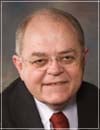
Don Fortner (1950-2020) served as teacher and pastor of Grace Baptist Church of Danville, Kentucky.
Comments
Your comment has been submitted and is awaiting moderation. Once approved, it will appear on this page.
Be the first to comment!