This was the last feast, the feast by which the year was brought to its final conclusion. It speaks of that time John describes in Revelation 10. When the Lord Jesus, the mighty Angel of the Covenant shall have fulfilled all the purpose of God, when he shall have fulfilled everything written in the book of divine predestination, he shall come again, make all things new, lift his hand to heaven, and declare — "Time shall be no more. The mystery of God is finished" (Revelation 10:1-7).
Sermon Transcript
Auto-generated transcript • May contain errors
100%
How I thank God for effectual
blood, effectual grace, grace that can never fail. Many years
ago when we were taking children to camp every year, my sisters
would come up from Winston-Salem and one of them asked me, Juanita
who died last year, she said, what do you mean By that word
effectual, I thought it strange, so common to us. I said, effectual
grace is grace that gets the job done. Effectual blood is
blood that gets the job done. God's grace can never, never
fail. In great measure, that is the
message given to us in the Feast of Tabernacles picture and in
time. My text tonight is Leviticus
23 verses 33 through 44 and my subject is the Feast of Tabernacles,
the Feast of Tabernacles. In the Old Testament throughout
the Mosaic Age the Lord ordained seven great symbolic annual feasts
which he required the children of Israel to use in worshiping
him. The Feast of Passover, picturing
redemption by Christ. The Feast of Unleavened Bread,
portraying Christ, the bread of life. The Feast of Firstfruits,
speaking of the resurrection, both the new birth, which is
the first resurrection, and the resurrection of the dead in the
last day. The Feast of Pentecost, portraying
the gathering of God's elect by God the Holy Ghost. The Feast
of Trumpets, portraying the liberty of God's free grace proclaimed
in the gospel. The Feast of Atonement, speaking
particularly of the expiation of our sin by the blood of Christ. And then the Feast of Tabernacles. Each of these feasts was highly
symbolic, each one portraying a distinct and very important
aspect of the person and work of the Lord Jesus Christ in the
redemption and saving of our souls. But there are three of
them that stand out from the others. The Feast of Passover,
The Feast of Pentecost and the Feast of Tabernacles were all
required by God so that the children of Israel, every male in Israel,
once in the year would come up to Jerusalem and spend seven
days encamped in Jerusalem worshiping God in observance of the Passover,
in observance of Pentecost, and in observance of Tabernacles.
Israel must come to Jerusalem, come up to the place where God's
altar, God's ark, God's priest, God's mercy seat were found.
And there they would worship the Lord God. These three feasts
specifically portrayed these three great aspects of salvation
by Jesus Christ, our Redeemer. The Passover is Christ's sacrifice
for us. The Son of God loved us and gave
himself for us. But his death at Calvary was
not merely a display of love. That's what it's made to be in
this generation. In this generation when everybody
talks about love and nobody knows anything about it. In this generation
when folks use the word love like you might use the word chewing
gum. They have no idea what they're talking about. The love of this
age is meaningless and they make the love of God meaningless.
They make the love of God meaningless. If God loves everybody, then
everything is okay with everybody forever, or else God is useless. One of the two. One of the two. The fact is, God doesn't love
everybody, and Christ didn't die for everybody. God loves
his people. And Christ died for us, accomplishing
redemption for God's elect by the satisfaction of divine justice,
as Jimmy just said. The Feast of Pentecost was typical
of the in-gathering of God's elect by the effectual grace,
by the irresistible power, by the omnipotent mercy of God the
Holy Ghost. Every sinner for whom Jesus Christ
died at Calvary. Every sinner for whom the Son
of God suffered the wrath of God, every sinner for whom God
poured out his inflexible fury and justice upon his Son, every
one of them shall be born again, called to life and faith in Jesus
Christ by God the Holy Spirit, all of them, all of them. It's
called irresistible grace. It's called the new birth. The
grace of God can never fail. And the Feast of Tabernacles
typified the consummation of redemption and resurrection glory. The ingathering of all the redeemed
into heaven at last, at the second coming of Christ. When the Lord
God has finished his work, when all his purpose of grace has
been accomplished, and it shall be accomplished, Every chosen
sinner shall be with him in glory. Every object of his love shall
be with him in heaven. Every redeemed soul shall be
with Christ at the throne of God. Every called sinner called
by the Spirit of God shall be with the Son of God forever.
Everyone in whom God the Holy Spirit works faith shall be with
him at last in heaven's glory. Let's read what God the Holy
Ghost tells us now in our text about the Feast of Tabernacles.
Leviticus 23 verse 33. And the Lord spake unto Moses
saying, speak unto the children of Israel saying, The 15th day
of this seventh month shall be the Feast of Tabernacles for
seven days unto the Lord. On the first day shall be in
holy convocation. You shall do no servile work
therein. Seven days you shall offer an
offering made by fire unto the Lord. On the eighth day shall
be in holy convocation unto you. And you shall offer an offering
made by fire unto the Lord. It is a solemn assembly. You
shall do no servile work therein. These verses do not really give
us by any means a full description of the Feast of Tabernacles.
They simply are given here showing us where the Feast of Tabernacles
fits in, where it fits in in this list of feasts as the consummation
of these annual feasts. The Feast of Tabernacles speaks
of the time that John describes in the 10th chapter of Revelation. When the Lord Jesus, the mighty
angel of the covenant, shall have fulfilled all the purpose
of God, when all that he shall have done has fulfilled everything
written in the book of divine predestination, Christ will come
again, he will make all things new, he will lift his hand to
heaven and say, shall be no more, the mystery of God is finished."
Read on, verse 37. These are the feasts of the Lord,
which he shall proclaim to be holy convocations to offer an
offering made by fire unto the Lord. a burnt offering, and a
meat offering, a sacrifice and drink offerings, everything upon
his day, beside the Sabbaths of the Lord, and beside your
gifts, and beside all your vows, and beside all your freewill
offerings, which he shall give unto the Lord. These two verses,
verses 37 and 38, actually are the conclusion that Moses was
inspired of God to give concerning these feasts of divine worship. But the conclusion is announced
before further instruction is given. And you read the passage
and wonder, why does Moses interrupt himself here before he finishes
talking about the Feast of Tabernacles and gives us this summary of
the feast, the seven feasts? I can't help asking myself such
questions. I'm kind of curious like that. It certainly was not
that Moses was writing and said, oh, I forgot to say something.
He's writing by divine inspiration. He writes as he does to call
our attention to the fact that this feast represents the most
joyful prospect of heavenly glory. everlasting bliss, and that day
called the time of the restitution of all things. And then Moses
goes on to describe the feast for us. Verse 39, also in the
15th day of the seventh month, when you have gathered in the
fruit of the land, you shall keep a feast unto the Lord seven
days. On the first day shall be a Sabbath,
and on the eighth day shall be a Sabbath. The word also would
be better translated, surely, or certainly. And Moses goes
on to give us the instructions. He said, surely, you're gonna
keep this feast. And surely, with absolute certainty,
God's elect, Christ redeemed, saved sinners shall all be with
him in glory at last. Verse 40, and ye shall take you
on the first day the boughs of goodly trees, branches of palm
trees, and the boughs of thick trees and willows of the brook. And you shall rejoice before
the Lord your God seven days. And you shall keep a feast unto
the Lord seven days in the year. It shall be a statute forever
in your generations. You shall celebrate it in the
seventh month. You shall dwell in booths seven
days. All that are Israelites born
shall dwell in booze, that your generations may know that I made
the children of Israel to dwell in booze when I brought them
out of the land of Egypt. And I am the Lord your God."
And Moses declared unto the children of Israel the feast of the Lord. Now let's briefly look at several
things regarding this feast of tabernacles. First, the time. The Feast of Tabernacles was
to be observed on the 15th day of the seventh month at the time
of harvest, when all the fruit of the land had been gathered,
when the grapes were in the wine press. It was held at a season
of the year because it typified the full harvest of the earth
in resurrection glory when Christ comes again. I haven't yet begun
to get a handle on this. I know it's so. I haven't yet
begun to grasp what all it includes. But we read in the book of Revelation
that the kings and nations and merchants of the earth shall
bring all their treasure to Zion in that great day. everything of benefit, everything
useful, shall give praise to God Almighty. What is that? Everything that is, everything
that has been, and everything that shall be. It is all designed
of God for His praise, for our salvation, and our everlasting
enjoyment in the presence of God in heaven. We don't have
to guess about this. Hold your hands here in Leviticus
and turn over to Zechariah chapter 14. The Spirit of God tells us
plainly that this is what it's talking about. Zechariah chapter
14, look at verse 16. It shall come to pass that everyone
that is left of all the nations which came against Jerusalem
shall even go up from year to year to worship the king, the
Lord of hosts, and to keep the feast of tabernacles. At the
end of verse 18, the Lord will smite the heathen that come not
up to keep the feast of tabernacles. This shall be the punishment
of Egypt and the punishment of all nations that come not up
to keep the feast of tabernacles. In that day shall there be upon
the bells of the horses holiness unto the Lord. And the pots in
the Lord's house shall be like the bowls before the altar. Yea,
every pot in Jerusalem and in Judah shall be holiness unto
the Lord of hosts. And all they that sacrifice shall
come and take of them and seethe therein. And in that day, there
shall be no more the Canaanite in the house of the Lord. The
Feast of Tabernacles was kept during the rainy season. the
time when Israel was just almost constantly had rain. Had it been
kept in the spring, it would not have been unusual for people
to see the Jews dwelling in booths as we might sit out in a summer
house or something like that. But in the rainy season, they
were commanded of God to each one, each family dwell in a temporary
booth for seven days. for seven days, calling the attention
of those who had no idea who God is, who didn't worship God.
They would keep this feast, celebrating what God had done for them, as
the Lord God, throughout their days when they came out of Egypt,
camped round about them, as they dwelt in booths, with a pillar
of cloud and a pillar of fire. But the Feast of Tabernacles,
was done during this season because it was an unexpected sight. No one would expect it to happen
then. Speaking of the resurrection of the last day and the coming
of our Lord Jesus Christ, no man knows the time or season
of his coming. I'm so glad the scriptures say,
or season. We live in a generation of men
and women who have the idea that if they study hard enough, if
they start figuring things out just right, they can predict
when the Lord's coming, or at least this is about it. And most
of you here are not familiar with Dallas Theological Seminary,
but that's the premier dispensational premillennial seminary among
conservative fundamentalist people in the world. And every time
something different happens in the Middle East, I'm not talking
about occasionally, I'm talking about every single time they
come out with a new book, this is it, the Lord's coming now.
This is it, the Lord's coming now. Shelby and I attended school
with a lady, she was Shelby's roommate. She married to a fellow
that stopped by here one day, just once was enough. But he
was in the area during the time of Y2K. And he had written a book all
about it. You know, the turning of the century. He went all over
the country selling books and giving seminars, making money.
And when Y2K came and went and nobody's computer crashed, all
the books disappeared from his website. He wrote a new book. And came back the next year selling
books and making money. They think they can figure it
out. This is a generation of prophecy idiots. Why stand ye
here gazing up into heaven? That's not our business. Our
business is to live constantly on the tiptoe of faith, expecting
the Redeemer to come again. either in his glory at the last
day. Maybe right now, maybe right
now. Brother Mark Henson told me the
other day, he showed me films of that explosion down below
Junction City, and the gas pipe exploded about six miles from
their house, woke him up, and he got up and looked outside.
He said, my first thought was the Lord's coming. That's a good
thought. That's a good thought. My first
thought. We ought to live continually on the tiptoe of faith, anticipating
Christ's immediate return. We'll preach it, but we've got
to look for signs and seasons and pictures and we can figure
this out. No. The Savior said no signs
shall be given. There were many things precisely
given in prophecy concerning our Lord's first advent. There
is nothing given in scripture as a prediction or a sign of
his second advent. Not one thing. And we're told
plainly not to look for them. The same is true with regard
to death. We ought to live constantly on
the tiptoe of faith, anticipating Christ to come and take us to
himself at any moment. My friend, Brother Mick Godfrey,
asked me this week when I was down in North Carolina, he said,
do you ever think about death? I said, Mick, I deliberately
try to think about death throughout the day, every day of my life,
and it's been a habit for a long time now. We ought to live continually
in the anticipation of Christ's coming. No man knows when. This I know. At the time ordained
of God before the world was, by the means ordained of God
before the world was, I'll die. Not a second before, not a second
after. The same is true of you. And
when we do, whether we meet the Lord Jesus there or whether we
meet him in the second coming of his glory, we will stand before
God in judgment and be judged according to absolute righteousness,
according to our works. either our works personally,
which are all abomination and sin, or by the works of our Redeemer,
our substitute, our performance of righteousness in Him, our
satisfaction of justice in Him. All right, here's the second
thing, the purpose of the feast. God's purpose in establishing
this feast was to remind Israel of their time in the wilderness.
when they dwelt in booths, when they lived as pilgrims and sojourners,
and the Lord God dwelt in their midst. But there's more, much,
much more than that. The Feast of Tabernacles spoke
of another, better, more glorious day for the Israel of God. It speaks of the new creation,
when our God shall make all things new. We can't begin to imagine it.
The new creation prophesied in Isaiah and spoken of through
the scriptures began with the first advent of our Lord Jesus
and the accomplishment of redemption by him. When our Lord Jesus came,
we're told that the word was made flesh and dwelt among us,
tabernacled among us, and we beheld his glory, the glory as
of the only begotten of the Father, full of grace and truth. These Old Testament pictures
were just until the time of Reformation, until the time when the new creation
began. Still the full accomplishment
of the type will take place when our Lord comes again in his glory. Let's read about it one more
time. Turn to Revelation 21. Revelation 21. I saw a new heaven and a new
earth. For the first heaven and the
first earth were passed away, and there was no more sea. Seas are things that divide people,
no more sea. And I, John, saw the holy city,
New Jerusalem, coming down from God out of heaven, prepared as
a bride adorned for her husband. and I heard a great voice out
of heaven saying, behold, the tabernacle of God is with men,
and he will dwell with them, and they shall be his people,
and God himself shall be with them and be their God, and God
shall wipe away all tears from their eyes, and there shall be
no more death, neither sorrow nor crying, neither shall there
be any more pain, for the former things are passed away. And he
that sat upon the throne said, behold, I make all things new. And he said unto me, write, for
these words are true and faithful. And he said unto me, it is done.
I am Alpha and Omega, the beginning and the end. I will give to him
that is a thirst of the fountain of the water of life freely.
He that overcometh shall inherit all things and I will be his
God and he shall be my son. this feast of tabernacles was
to be a time of great joy. They were commanded to celebrate
as they came together in this last feast of the year by which
they concluded the year itself. They would celebrate as they
brought sacrifices, celebrate as they remembered dwelling in
booths, celebrate as they remembered being pilgrims in a strange land,
wandering through the wilderness, celebrating the anticipation
of that which was pictured in the inheritance given to them
in the land of Canaan, the heavenly glory of resurrection glory. This is something that we need
to recognize. These Old Testament saints, we
have a tendency to think they just, they didn't know too much.
The fact is, Enoch, who lived before the flood, prophesied
of the Lord's coming with 10,000 of his saints. God's servant
Job, who wrote the earliest book in the Bible. The book of Job
was written before the book of Genesis. The book of Job was
the first book of inspiration written. Job said, I know that
my Redeemer liveth. and that he shall stand at the
last day upon the earth, and though after my skin worms destroy
this body, yet in my flesh shall I see God, whom I shall see for
myself, and mine eyes shall behold, and not another, though my reins
be consumed within me." Well, here's the third thing. What
was the significance of these booze? The bulls displayed a
picture of this new creation. We see it in Nehemiah. Turn over
to the book of Nehemiah, if you will. Nehemiah chapter eight. In the new creation, the earth
shall be covered with luxurious vegetation. where men and women
shall forever live in perfect righteousness, in perfect peace,
sending up songs of praise to the triune Jehovah continually. Nehemiah chapter 8, verse 14. Nehemiah is in the process of
leading the people to rebuild the walls of Jerusalem and to
rebuild the temple. And they found written in the
law, which the Lord had commanded by Moses, that the children of
Israel should dwell in booths in the feast of the seventh month.
And that they should publish and proclaim in all their cities
and in Jerusalem saying, go forth unto the mount and fetch olive
branches and pine branches and myrtle branches and palm branches
and branches of the thick trees to make booths as it is written. So the people went forth, and
they brought them and made themselves booze, every one upon the roof
of his house, and in their courts, and in the courts of the house
of God, and in the street of the water gate, and in the street
of the gate of Ephraim. Everywhere around Jerusalem,
they're dwelling in booze. And all the congregation of them
that were come again out of the captivity, came again out of
Babylon, made booze and sat under the booze. For since the days
of Joshua the son of Nun, under the day had not the children
of Israel done so. and there was very great gladness,
very great gladness. Also day by day, from the first
day until the last day, as he read the book of the law of God,
and they kept the feast seven days, and on the eighth day was
a solemn assembly according to the manner. Now try to picture
this. It's a celebration of God's people
for God's work. for what he had done and for
what he had promised to do. The booze the people made, in
which they dwelt these seven days of the feast, were made
by putting together specific things that God told them to
do. The passage here in Nehemiah, put together back here with Leviticus
23, tells us that every good tree was used. Every good tree
provided boughs of fruit for the occasion. Branches of palm
trees, symbols of victory, of joy were used for the booze. The boughs of thick trees, that
is to say of bushy trees. Trees like the myrtle spoken
of by Nehemiah were used. And they took the high, lofty
palm branches and the low, thick bushes, branches of the bush
of the myrtle trees for their booms. And then the willow trees
of the brook. The willows were used, those
things that grow up by streams with their thick hangings under
which men find shade and refuge. Nehemiah tells us that they also
used the olive and the pine. The olive providing fruit and
also oil. So the olive represents God,
the Holy Spirit, his work in us and for us. And the pine provided
beans needed to hold their booze together, and also provided pleasant
fragrance. Speaking of Christ, our Redeemer,
that strong one who binds us together, and that strong one
who is a fragrant, sweet-smelling sacrifice unto God for us. They dwelt in these booze for
seven days, rejoicing before the Lord. Rejoicing in the anticipation
of eternity. Rejoicing in the anticipation
of what God had promised. Still there's more. These boughs
made of these trees portray something of the matchless love of God
for Jeshurun. Turn to Deuteronomy chapter 33. These boons portray that love
of God for his people in which we have dwelt forever. The love of God, like the bough
of every good tree, feeds us continually. The love of God,
like the palm tree, is lofty and triumphs over all obstacles.
The love of God, like the pine, is strong and fragrant. Like
the myrtle, it reaches down to the lowest and is thick, immense,
indescribably full. The love of God, like the olive
tree, is rich and full. And like the willow by the brook,
it bends over. and protects us continually.
Now look at this, Deuteronomy 33, verse 26. There is none like
unto the God of Jeshurun, who rideth upon the heaven in thy
help, and in his excellency on the sky. The eternal God is thy
refuge. Underneath are the everlasting
arms. He shall thrust out the enemy
from before thee, and shall say, destroy them. Israel shall dwell
in safety alone. The fountain of Jacob shall be
upon the land of corn and wine. Also his heavens shall drop down
with you. Happy art thou, O Israel, who
is likened to thee. O people saved by the Lord. Will you hear this? Hear God
speak to you? Happy art thou, O Israel. Who is like unto thee? Who is like you? Who is like you? Sometimes folks
poking fun at God's teaching with regard to the sweet gospel
doctrine of election. They say, you folks think you're
something special. Well, no, but God does. Who is like you? O people, say to the Lord, the
shield of thy help, and who is the sword of thy excellency?
And thine enemies shall be found liars unto thee, and thou shalt
tread upon the high places, their high places. God's people shall at last triumph
over Satan and all the forces of evil and all who have opposed
them throughout history, trampling on their high places. And I can't
fail to call your attention to the fact that in this Feast of
Tabernacle, there were two Sabbaths, one on the first day and one
on the eighth day. And so it is with the gospel
of God's grace, there are two Sabbath rests for God's people.
The sweet rest of faith in Christ our Redeemer. He is our Sabbath. Would to God I can convey this
to everybody. We don't keep a material, physical
Sabbath day. We're forbidden to do so. Sunday
is not a Sabbath day. I am happy that we set aside
this day and come and worship God. But Sunday is not a Sabbath
day. It's the first day of the week.
John refers to it as the Lord's day because that was the day
on which the people of God gathered to worship the Savior. Most likely,
this is the day of our Lord's resurrection. But it's not a
Sabbath day. Our only Sabbath is Christ our
Redeemer. We come to God and stop working
for acceptance with God. And then there is the Sabbath
of eternal glory with Christ Jesus, the eighth day, the day
of new beginning for us all. The Jews, however, added another
element to the Feast of Tabernacles. Their religion, year after year
after year, declined. And they more and more ignored
the word of God and the things of God. And rather than doing
things God's way, they added superstitious things to make
them appear more acceptable, maybe more beautiful, maybe more
superstitious, I don't know. But they added the ceremony to
the Feast of Tabernacles in which they would go down to the pool
of Siloam and take water out of the pool of Siloam, and bring
it into the temple, into the house of God, and pour it on
the floor, and pretend that the water was magical. It had healing
power. You read about it in John chapter
9. It was a commonly accepted thing. But this feast, called the Feast
of the Lord, by the time our Lord Jesus stood in Jerusalem. It's called the feast, the Jews'
Feast of Tabernacles. You see, when we rearrange things
in the worship of God, when we rearrange things in the doctrine
of God, when we add to or take from the Word of God, that which
we call God's worship, is but will worship, our own worship,
the worship of our own wills and of ourselves. This past Tuesday,
Shelby and I, as usually we do when we're in North Wilkesboro,
had lunch with my sister. A delightful time, but always
a time of brokenheartedness as well. As has become customary
these days, large church in Winston-Salem, they quit having midweek services
about a year ago. Until then, they got folks to
come by giving them supper every evening, every Wednesday evening.
Fed everybody who wanted to come, so they'd come to church. And
then they started meeting, breaking up on Sunday nights, and they'd
go to different group houses and, you know, act religious
and do stuff. And now on Sunday nights, just
not long ago, they announced that they were going to have
game night on Sunday nights. My brother-in-law said to my
sister, said, it seems strange, the pastor says, rather than
said, bring your Bible with you tonight, he said, bring your
game with you tonight. How sad, how sad, how sad. Anytime you add to or diminish
from God's revelation, Anytime you mix what you want with the
worship of God and call it worship, it is nothing but idolatry of
the worst kind. No, we will not be bowing to
contemporary ways. Not in this place, not as long
as I have breath and sanity and God keeps me here as your pastor.
No wonder when our Lord Jesus went up to the Feast of Tabernacles,
and he saw the people coming away. They'd been up to the Jews'
Feast of Tabernacles. And they expected something magical
to happen from the waters of Siloam. The Lord Jesus stood
and cried, saying, if any man thirst, let him come unto me
and drink. He that believeth on me, as the
scripture has said, out of his belly shall flow living waters. You won't have to look for something
magical. You won't have to look for nonsense from religious fools. Now, look at the sacrifices involved
in this feast. We won't read it now because
it's so lengthy, but in Numbers chapter 12, the sacrifices are
listed. And if my calculation is correct,
and I'm sure it is, there were 189 sacrifices made through the
week. That's a lot of blood. 189 sacrifices. But each day,
they diminished. Each day. Why? Because all the
sacrifices pointed to one sacrifice. One sacrifice by which God removes
the sins of his people. Behold the Lamb of God which
taketh away the sin of the world. Takes away the sin of his people
throughout the world. Look back in Leviticus 23 verse
36. Here is the solemn closure of
the feast. Verse 36, seven days shall you offer an offering made
by fire unto the Lord. On the eighth day shall be an
holy convocation unto you. You shall offer an offering made
by fire unto the Lord. It is a solemn assembly and you
shall do no servile work therein. Those words solemn assembly might
better be translated a solemn shutting up. a solemn closure. The Feast of Tabernacles portrays
the closing of God's purpose, the closing of the book of predestination,
the closing of all that God ordained before the world was, the time
of the restitution of all things when our Savior makes a new heaven
and a new earth wherein dwelleth righteousness. And then in verse
37, here's a picture of God's servant. I'm sorry, verse 44.
Here's a picture of God's servant. And Moses declared unto the children
of Israel the feast of the Lord. The seven feasts portraying redemption,
portraying all the work of God, in which God, now with this feast
of tabernacle, closes everything up. Turn over to the book of
2 Peter, and I'll wrap this up. The Lord God testifies in verse
44 of his servant Moses that he was faithful. The one thing God requires of
stewards, do you remember what it is? Is that a man be found
faithful. That's all, just faithful. Moses faithfully declared the
word of God and the will of God, all that God told him to declare,
he faithfully and implicitly obeyed God's revealed will. Oh, may God make you and me faithful
servants. Look here, 2 Peter 3. The Lord
is not slack concerning his promise, as some men count slackness.
But as longsuffering to us would, not willing that any, not willing
that any of his elect should perish, but that all should come
to repentance. But the day of the Lord will
come as a thief in the night, in which the heavens shall pass
away with great noise, and the elements shall melt with a fervent
heat. The earth also and all the works that are therein shall
be burned up, seeing then that all these things shall be dissolved. Look around you. Look up here. Look around you. Look out the
windows there. Look at everything you see. Look at them. All these
things shall be dissolved. Everything men and women seek
Everything we try to accumulate, everything that causes wars,
everything that divides families, all these things shall be dissolved. Oh God, teach us to look at them
as melting wax. Seeing that they shall be dissolved,
what manner of persons ought ye to be in all holy conversation
That is an all holy manner of life and godliness. How is that? Looking for and hasting unto
the coming of the day of God, wherein the heavens being on
fire shall be dissolved and the elements shall melt with a fervent
heat. Nevertheless, we, according to his promise, look for a new
heavens and a new earth, wherein dwelleth righteousness. Wherefore,
beloved, seeing that you look for such things, be diligent
that you may be found of him in peace without spot and blameless. My God, oh my God, teach me and
teach these your people. To live not for time, but for
eternity. Not for things, but for Christ. Set our affection on Him. Upon Christ above, in whom our
life is hid, with God our Savior. God, take from us over much care
for this world and set our affection upon our Redeemer. Use us in
our time here for your glory and teach us to live every day,
every hour, in the anticipation of eternity with Christ our God,
our Redeemer, our Savior. Amen.
About Don Fortner
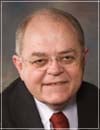
Don Fortner (1950-2020) served as teacher and pastor of Grace Baptist Church of Danville, Kentucky.
Comments
Your comment has been submitted and is awaiting moderation. Once approved, it will appear on this page.
Be the first to comment!