The Feast of Pentecost was a picture of the ingathering of God's elect by the mighty operations of God the Holy Ghost (Joel 2, Acts 2).
The two loaves of leavened bread represent God's elect, gathered from the four corners of the earth by the Holy Ghost, and presented before him, in connection with all the perfection and preciousness of Christ our Passover, who was sacrificed for us.
• In the Passover, we see the sacrificial death of Christ, the Lamb of God.
• In the sheaf of firstfruits, we see the resurrection, ascension, and acceptance of Christ as our sin-atoning Substitute.
• Here, in the feast of Pentecost, we see the outpouring of the Holy Spirit upon all flesh for the ingathering of God's elect, which was the result of Christ's accomplished redemption.
Sermon Transcript
Auto-generated transcript • May contain errors
100%
Studying the book of Leviticus,
I keep praying that God will be pleased to be my teacher and
to show me his message in each of these various types and pictures
of our Redeemer described in Leviticus. May he be pleased
to anoint our eyes with the eye salve of his grace and give us
eyes here to behold our Lord Jesus Christ and the wondrous
accomplishment of redemption, just as he led John through the
streets of the New Jerusalem to behold those same wondrous
accomplishments. I want us to see the fine gold
and precious stone of each thing portrayed here. May the Lord
the Lamb be our light as we open his word. He promised he would
give his spirit, our comforter, who would take the things of
Christ and show them to us, that he would take those things and
open them to us and make them clear. Oh, may he be pleased
to do so today. My text is Leviticus 23, verses
15 through 22. If you'll just hold your Bibles
open there, that'll be our text. Leviticus 23, verses 15 through
22. In this passage, we're given
instructions from the Lord God himself to Moses, to Israel,
and to us about the Feast of Pentecost. Now in the Old Testament,
it was called the Feast of Weeks. In the New Testament, it's referred
to as Pentecost or the Feast of Pentecost. It's called the
Feast of Weeks in the Old Testament because it was observed seven
weeks and a day after the Passover. It's called the Feast of Pentecost
in the New Testament because it was observed seven weeks and
a day after the Passover in the New Testament was observed for
its last time. The word Pentecost simply means
50th, seven weeks and a day. Leviticus 23 verse 15. Ye shall count unto you from
the morrow, after the Sabbath, from the day that ye brought
the sheaf of the wave offering, seven Sabbaths shall be complete. Even unto the morrow, after the
seventh Sabbath, shall ye number 50 days, and ye shall offer a
new meat offering unto the Lord. He shall bring out of your habitations
two wave loaves of two-tenth deals. They shall be of fine
flour. They shall be bacon with leaven. That's significant, baked with
leaven. They are the first fruits unto
the Lord. And ye shall offer with the bread
seven lambs without blemish of the first year, and one young
bullock, and two rams, and they shall be for a burnt offering
unto the Lord, with their meat offering, with their drink offerings,
even an offering made by fire of sweet savor unto the Lord.
Then shall you sacrifice one kid of the goats for sin offering,
and two lambs of the first year for sacrifice of peace offerings.
And the priest shall wave them with the bread of the first fruits
as a wave offering before the Lord with two lambs, and they
shall be holy to the Lord for the priest. And ye shall proclaim
on the same day that it may be an holy convocation unto you. You shall do no servile work
therein. It shall be a statute forever
in all your dwellings throughout your generations. and when you
reap the harvest of your land, thou shalt not make clean riddance
of the corners of thy field when thou reapest. Neither shalt thou
gather any gleaning of thy harvest. Thou shalt leave them unto the
poor and to the stranger. I am the Lord your God. The feast of firstfruits was
held at the beginning of the barley harvest. The Feast of
Unleavened Bread, I'm sorry, the Feast of Pentecost was held
seven weeks later at the beginning of the wheat harvest. Now you
can't avoid noticing significant differences between the two.
The Feast of Firstfruits was of wheat, like the firstfruits
of the barley, they were to be offered to the Lord, but not
a sheaf. The wheat offering was to be
offered in the form of two loaves of bread. This offering must
be made, however, of leavened bread, leavened bread that the
priest would eat. This offering was to be made
with specific animal sacrifices, a sin offering and a peace offering. And these two loaves of leavened
bread were to be waved with two lambs of the first year before
the Lord by God's appointed priest who would take them and feed
upon them. What's the significance of all
this? Why are we given these specific details when we no longer
observe such a feast at all? What does God the Holy Ghost
teach us by this typical, costly act of religious ceremony in
the Old Testament? And without question, we learn
clearly that every good and perfect gift comes from above, comes
down from the Father of lights, with whom is no bearableness
nor shadow of turning. So we're taught at the outset
that we ought to always be thankful to God for every provision of
his hand. All things are from him and all
things come from him for the benefit of our souls. So we recognize
that at the outset. But there's more here than just
an act of thanksgiving. The Feast of Pentecost was a
picture of the in-gathering of God's elect by the mighty operations
of God the Holy Ghost in effectual calling and in the new birth.
I've read to you earlier, both the second chapter of Joel and
the second chapter of Acts, because Joel prophesied of that time
when the Lord God would pour out his spirit, not just upon
the Jews, but upon all flesh. And then in Acts chapter two,
we see that accomplished by Christ Jesus, the King, who pours out
his spirit upon his church and with one baptism, by which Christ
baptized his kingdom at one time into the Spirit of God, performing
for us a wonder of his grace. The two loaves of leavened bread
represent God's elect. gathered from the four corners
of the earth by the Spirit of God and presented before him
in Christ Jesus in connection with all the perfection and all
the preciousness of Christ our Passover who was sacrificed for
us. In the Passover, we saw the sacrificial
death of our Lord Jesus Christ, the Lamb of God. In the sheaf
of firstfruits, we see his resurrection from the dead, his ascension,
his being accepted as our substitute, our sin-atoning sacrifice by
God in heaven. And here in the Feast of Pentecost,
we see the result, the outpouring of God's Spirit upon all flesh. For the engathering of God's
elect in the four corners of the earth, where he has scattered
them in his providence. Christ redeemed us from the curse
of the law, being made a curse for us, because it's written,
Cursed is everyone that hangeth on a tree. And he did this that
we might receive the Spirit of God. Only when the sacrifice
is made can the grace of the Spirit be given us. Only when
the sacrifice has been made can sinners be saved. Only when justice
has been satisfied can sinners be brought to God acceptable,
perfect, righteous, and holy. But understand this. The sacrifice
being made, every sinner for whom the sacrifice was made must
and shall be brought to God acceptable, holy, righteous, and perfect
in Jesus Christ the Lord. Now let's look at the various
things here given to us about the Feast of Pentecost. First,
observe the time of the Feast. I don't usually pay much attention
to ancient Jewish traditions or any other religious traditions
for that matter. If somebody suggests that I ought
to do something or ought not to do something because this
is the way it's always been done, you can bank on it. I will violate
the tradition. But the Jews from ancient times
have contended that the Feast of Pentecost was to be observed
50 days after the Passover for a reason. It was at that time
that the law was given to Israel at the hand of Moses. Though
the scriptures don't verbally connect the two, there is an
obvious connection. The Israelites left Egypt on
the day of the Passover. They arrived at Sinai sometime
during the third month, according to the 19th chapter of Exodus,
which begins about a week before Pentecost. And it was then that
Moses was called up in Mount Sinai to receive the law of God,
the revelation of God's holiness. I find those things significant.
I think you will too, if you just consider two or three things.
One, the law was given to shut us up to Christ, to make us know
our sin. and our need of a substitute.
The law was given by God, as it were, to drive us into the
arms of a substitute. To show us there's no way, there's
no way for sinners to do right before God. There's no way for
sinners to achieve acceptance with God by their works. Second,
the law's revelation of God could not be complete without its fulfillment
by Christ. The law gives a revelation of
God in various aspects of his holy character, in various aspects
of his attributes, but the whole revelation of God comes only
by the fulfillment of law by Jesus Christ fulfilling every
commandment of the law and then dying under the strict justice
of the law for the satisfaction of justice for the sins of his
people and now Jesus Christ is the revelation of the glory of
God. Jesus Christ is that one in whom
God in all his holy character is revealed. And yet this glorious
fact, by which God is revealed in all the splendor of his holiness,
can never be known by any sinner except God the Holy Ghost revealed
him. You see, salvation comes not
by instruction, though instruction is needed. Salvation comes not
by me teaching you about the Savior, though that's needed.
Salvation comes not by your prayers, though certainly sinners saved
call on God in prayer. Salvation comes not by churches
working out a program so they can get people to feel pressure,
make a decision for Jesus. That's nonsense. How does salvation
come? When it pleased God to reveal
His Son in me. Salvation comes by divine revelation. Salvation comes by divine revelation. Now hear me, you who yet do not
know our Savior. If ever God reveals his son in
you, you will tell me about it, I won't tell you about it. You
won't need me to tell you God has saved you. God's revealed
his son in you. Oh, no, no, no, no, no. You will
know God has revealed his son in you because you believe on
his son. All right, here's the second
thing. Be sure you don't miss this. We're told that the sacrifice
of this Feast of Pentecost must be a sacrifice of two loaves
of bread. I'm told in verse 17, they shall
be bacon with leaven. Baked with leaven. Leaven. Almost,
if not universally, through the scriptures, a representation
of evil, of sin, of that which corrupts. But God says you bring
these loaves baked with leaven on the day of the Feast of Pentecost. Why? These loaves were baked
with leaven and presented to the Lord as leaven loaves because
they were intended to represent not our Redeemer, but us, his
people. God's elect scattered in this
world. They were two loaves. Because
God's church is made up of sinners saved from the Jewish nation,
and sinners saved from all the Gentile nations. And the Jews
and Gentiles, saved by God's grace, are the Israel of God,
God's covenant people. The two leavened loaves were
leavened. Because saved sinners are sinners
still. Saved sinners are sinners still. Brother Bill Raleigh and I were
talking just the other day, he came by the office about growing
in grace. Let me tell you a little something
that you will identify with immediately. The heaven born soul is like a old red wasp in one
characteristic. He's never bigger than the day
he's born. He's never bigger than the day
he's born. When first God saves a sinner,
we have a notion that somehow our sin won't bother us anymore,
we won't have any more difficulties, and rapidly that notion is proved
to be false. You see, God's people in this
world, in their experience of grace, their old nature, the
old man Adam, that nature with which we're born, that corrupt
nature, is never improved and certainly never eradicated. Believers
do grow in grace. Believers do grow in the faith
and knowledge of our Lord Jesus Christ. And the more we know
him, The more vile we know ourselves. The more we see his beauty, the
more we experience our ugliness. And the more we know his strength,
the more we know our weakness. The heaven born soul is at his
biggest, like the old red wasp the day he's born. The experienced
believer. recognize not only am I the least
of all his saints, but the chief of sinners. This heart, this
heart, this heart with which I was born, this corrupt nature,
the vile lust of this corrupt man have not diminished or even
weakened in 52 years. The body's aged, but the old
man rages with corruption, just like he did as a young man. The
old man is always corrupt. We know that there is created
in us a new man, Christ Jesus the Lord. We acknowledge and
confess our sin and rejoice that believing on the Lord Jesus Christ,
confessing our sins, God is faithful and just to forgive us our sins
and to cleanse us from all unrighteousness. But we know that everything we
do is marred and corrupted by sin. We cannot for a second stop
sinning. Now, we can stop some of the
outward acts. We can stop behaving like we
used to behave. We can stop doing the things
we once did. We can stop acting like the ungodly
and suppress those things most of the time. But the fact is,
no matter how much you suppress the outward acts, Mark, they
keep popping up, don't they? Reminders that what's in there
is still a raging beast. Corruption and darkness. Reminding
us that we need always to trust our Redeemer, our Savior, after
whose likeness we have been created. That new man, created in righteousness
and in true holiness. Made partakers of the divine
nature. Christ in you, the hope and glory being given to us.
On the day of Pentecost, the Spirit of God filled the church
and the church of God stood before God in all the perfection, in
all the holiness, in all the righteousness of Jesus Christ
himself. Now hear me. You and I, who are
gods, stand before God perpetually in all the perfection, all the
holiness, all the righteousness of his dear son. But sinners
still. Oh, wretched man that I am, who
shall deliver me from the body of this death? That which is
born of flesh is flesh. Never has been anything else
and never can be anything else. These two loaves waved before
God were made out of wheat seed, the fruit of that which has been
sown in the earth. Our Lord said, except a corn
of wheat fall into the ground and die, it abideth alone, but
if it die, it brings forth much fruit. Speaking of his own sacrifice
as our sin atoning substitute. And now we stand before God in
him. These two leavened loaves were
accepted though leavened. by the Holy Lord God. They were
accepted though corrupted with yeast by the Holy Lord God as
an offering of a sweet savor because of the sacrifice of another. Look at verse 18. Clearly there's an indication
here that God knows and acknowledges the evil that's in us. To deny
that would be to deny his omniscience as God. Yes, God knows it. But blessed be his name, the
evil that is divinely recognized, is divinely provided for and
pardoned. Verse 18. And ye shall offer
with the bread seven lambs without blemish of the first year. Seven
lambs, seven perfect lambs. Seven fold perfection in a sacrifice. Perfect sacrifice of perfect
lambs. And one young bullock and two
rams. They shall be for a burnt offering
unto the Lord with their meat offering and their drink offerings. Even an offering made by fire
of sweet savor unto the Lord. Here, we have an immediate connection
Between the leavened loaves and the presentation of an unblemished
perfect sacrifice. Obvious, the significance in
it. We are accepted, not because of any personal holiness, not
because of any merit, not because of anything we do. Sinners are
accepted of God. because of the perfection of
Christ and his sacrifice, the infinite God, our Savior. So that now, being made meat
for heaven, having Christ's holiness, his righteousness put in us,
and having the righteousness of God imputed to us, we are
made meat to be partakers of the inheritance of the saints
in light. Here is rest, comfort, and joy
for our souls. Even as we acknowledge our sin,
God omniscient knows exactly what we are. Our Father remembers
that we are dust. He knows exactly what we are.
He knows the worst of us. And yet he does not ever deal
with us after our sins. He does not ever reward us according
to our iniquities. He deals with us in grace and
rewards us in justice according to Christ's righteousness. You
shall offer with the bread seven lambs without blemish. I'm not preaching to you speculative
theory, but I'm telling you exactly what the type was intended to
teach us. As I said before, this is obvious, look at verses 19
and 20. Here we have two lambs and a priest. The leaven loaves
were to be offered and accepted because of two lambs and a priest
of the first year, offered by God's appointed priest as a peace
offering way before him with the lambs. Then you shall sacrifice
one kid of the goats for sin offering, and two lambs of the
first year for sacrifice of peace offerings. And the priest shall
wave them with the bread of the first fruits for a wave offering
before the Lord, with two lambs, and they shall be holy to the
Lord for the priest. The priest took the lambs and
the two leavened cakes and waved them before God. and God accepted
them as one, at one time. Christ is our priest. Christ
is our sacrifice. Christ is our sin offering. Christ
is our peace offering. Christ takes us and presents
us to God. And the Lord God accepts us one
with Christ. Accepts us as He accepts His
Son. Accepts us in His Son. Accepts us because of His Son. Accepts us with His Son. Oh sinner, Oh, sinner, come to
God and bring God with all the leaven of your foul nature, bring
God the perfect sacrifice. And God Almighty accepts you,
one with His Son, and rewards you according to the worth and
the merit of His Son, and smiles upon you as He smiles upon His
Son. The work of the Spirit, I repeat,
does not remove indwelling sin, but it enables the sinner to
honestly. That's a key word. It enables
the sinner to honestly look at his sin like God does. Reckon
ye also yourselves to be dead indeed unto sin. I'm dead to
sin. I don't mean by that the sin
no longer bothers me. Oh no, that's not what it means
at all. I am crucified with Christ. His blood is all that God requires
and God in his holiness can require no more to sin. I died with Christ. Justice has
no claim to condemn me, therefore my conscience is free of guilt. The Lord God declares, he hath
not beheld iniquity in Jacob, neither hath he seen perverseness
in Israel, How can that be? Say, Brother Don, that's a message
of a false prophet. It is. But the false prophet
had words in his mouth. God put in his mouth. Read the
chapter. God has not beheld iniquity in
Jacob. He has never beheld perverseness
in Israel. How can that be? He holds us,
embraces us, accepts us, looks on us, and blesses us in Christ
as the lamb slain from the foundation of the world. Always, ever, and
only blessed of God in Christ. Before services started this
morning, Bernita had been listening to an old message that I preached
a long time ago about David. and brought up a point that I
remember making. The prophet of God said concerning
David in the matter of Uriah the Hittite, the thing which
David did displeased the Lord. Yes, God is aware of our sins. God is aware of our transgressions. and he chastens us and corrects
us so that we and all around us may know that God hates iniquity
and will never approve of it. But the scriptures specifically
say the thing that David did displeased the Lord. It didn't
say David displeased the Lord. Why is that? Because God sees
us only in with and one with that one of whom he says, this
is my beloved son in whom I am well pleased. Now let me try to speak plain
to you. I acknowledge there are times
when I think pretty highly of myself. God forgive me. There are times when my head
swells with pride and my heart nearly bursts with self-approval. And when I do, I know myself
at my worst. At my worst. Me, proud. Me, inflated. Me? God forgives such thoughts. But
God Almighty is always pleased with me. Even when I am most
displeased with myself. Because God accepts me as one
with His Son. Now listen to me. Oh God, help
you hear me now. How can he do that, Mero? Because
we really are one with his Son. One with his Son. All right,
here's the fourth thing. Verse 21, rest is proclaimed. And ye shall proclaim on the
selfsame day that it may be a holy convocation unto you. and ye
shall do no servile work therein. It shall be a statute forever
in all your dwellings throughout your generations. That's what
I am doing now. That's what God's servants around
the world are doing now in preaching the gospel. We're proclaiming
rest. Rest to the weary, rest to the
heavy laden. That's not talking about folks
who work physically and get tired. That's not talking about folks
who carry a heavy load. That's talking about folks who
are weary and heavy laden with their efforts at trying to find
some way to make themselves accepted with God. Weary and heavy laden
because no matter what you do, you find the load of guilt still
on you. Weary and heavy laden because
no matter what you do, you find yourself still corrupt and vile
and wretched and without hope. The Savior says, come unto me,
all you that labor and are heavy laden. Bring all your works and
throw them down here. Bring all your righteousness
and throw it down here. Bring all your knowledge and
throw it down here. Bring all your sin and throw it down here.
Bring all your guilt and throw it down here. At my feet, believe
me, and you, I will give you rest. And he speaks to you, my
brothers and sisters, and says, with all your loads, with all
your trouble, with all your heartache, with all your grief, with all
your pain, with all your circumstances that you can't share with anybody,
come to me. Take my yoke upon you. Learn
of me. Learn the reason why for all
these things. Learn that the caterpillar and
the canker worm and the locust are all my armies that I sent
to invade the land. Learn that Assyria and the wicked
kingdoms of the world are all my armies and my rulers that
I use as a rod in my hand to chasten you. Learn this, take
my yoke upon you, bow here and you shall find rest unto your
souls. Rest in the Lord and wait patiently
for him. Fret not thyself because of him
who prospereth in his way, because of the evil man who bringeth
wicked devices to pass. We get all bent out of shape.
I was reminded this week of some evil things fellas done, attempted
to start to pry into it, do some, oh wait, no, no, no, no. Don't
let that bother you. Just rest, God'll take care of
it. Return unto thy rest, oh my soul, for the Lord hath dealt
bountifully with thee. This is my rest forever. Here
will I dwell for I've desired it. Christ is rest for your soul. Return to your rest. Set still
and worship God. One last thing, look at verse
22. This verse speaks of the gleanings
God required the Jews to leave in their fields for the poor.
And when you reap the harvest of your land, thou shalt not
make clean riddance of the corners of thy field when thou reapest. Neither shalt thou gather any
gleanings of thy harvest. If you left something in the
field, you can't go back and get it. Thou shalt leave them unto the poor
and to the stranger. I am the Lord your God. Without question, this is a picture
of God's provision for us, both Jews and Gentiles, in all things. His provision of all things.
The Lord Jesus is our mighty Boaz. And as Boaz commanded his
servants to leave handfuls of purpose at certain places in
the field, specifically for Ruth, So our Boaz commands the angels
of heaven, Satan, the demons of hell, and all beasts of the
field to leave handfuls of purpose in the field, specifically for
his chosen. The reason being, Boaz was determined
to get Ruth as his bride. The reason for all God's work
of providence is our savior is determined to get his redeemed,
his chosen for his bride. And then he gives handfuls of
purpose by his word, speaking to our hearts by his word, giving
us his goodness and his grace, and of his fullness have we received,
and grace for grace. so that our Savior constantly
provides by His grace, specifically for the poor, the poor in heart,
the poor who know themselves poor, empty, helpless, bankrupt
sinners before God. Listen to me again, listen to
me now. Is there anybody here Poor before God. I'm talking about anybody who's
got nothing, nothing to commend him to God. Nothing, nothing
by which he can hope to find acceptance with God. Poor, poor. Christ died poor, and God saves
poor sinners, none else. Poor sinners who are strangers. Strangers. Strangers to God. Strangers to God. This scattering of the handfuls
by Boaz, these gleanings left in the field deliberately by
God's purpose portray our inheritance with Christ. It is the inheritance
of Christ bestowed by God's free grace So that God's church is
not merely blessed by Christ, but blessed with Christ and in
Christ. The bride of Christ in heaven
shall possess and enjoy her own wealthy, happy home in heaven. The home she rightly holds as
her own. The home into which she belongs. It's called her husband's house.
Where else would you expect the bride to be? It's her house,
because it's his house. You see, we are one with Christ. One with Christ. So much so,
that in the day of judgment, God will present his church,
his bride, every ransomed soul, before a wandering world. in
the spotless, perfect righteousness and holiness of Christ. And he
will say to hell, and to all the world and to all nations. Here are my people because they
fully deserve heavenly glory. They have no sin. They're perfectly
righteous, perfectly holy. Behold here what my grace has
done. And the Lord Jesus presents us
holy, unblameable, and unreprovable before the presence of the glory
of the triune God to the praise of God forever. And that which
shall be to the praise of God forever is the everlasting happiness
and song of every saved sinner in heaven's everlasting glory. God make it yours for Christ's
sake. Amen.
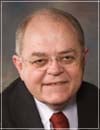
About Don Fortner
Don Fortner (1950-2020) served as teacher and pastor of Grace Baptist Church of Danville, Kentucky.
Comments
Your comment has been submitted and is awaiting moderation. Once approved, it will appear on this page.
Be the first to comment!