The scapegoat is a picture of the complete removal of our sins by Christ.
• The first goat, the Lord's goat, the slain victim, gave us a picture of the atonement.
• The second goat, the scapegoat, gives us a picture of sin's removal, the taking away of our sins, which is the result of Christ's effectual atonement.
Sermon Transcript
Auto-generated transcript • May contain errors
100%
Our blessed Redeemer, in preaching
to men, commonly preached in parables. He commonly told stories
by which he would picture the message he wanted to proclaim.
That's a very good way to preach. One picture is worth a thousand
words. So in the book of God, we're
given many pictures of Christ and redemption and grace and
salvation. I want us to go back to Leviticus
16 again this morning and look at one of my favorite Old Testament
types. Now, while you're turning to
Leviticus 16, Let me tell you a few things about how to understand
and use biblical types and metaphors. It's important that you understand
why these things are given and how they are to be understood.
Types, like our Lord's parables, are intended generally to show
us one specific thing. Just one thing, not many, just
one. Too often when folks start to
preach from types or preach from the parables, they try to make
them very complicated and show things that just aren't there.
The types and parables generally are intended to teach just one
thing, to proclaim just one message. Those types usually stand on
just two legs. their natural historic meaning,
and their spiritual allegorical meaning. They are bipeds, not
centipedes. They don't have a hundred legs,
just two. Mr. Peek is often used in preaching
from the Old Testament scriptures. I have read his books with great
profit over the years, but he has a terrible tendency to make
two legs into a hundred in a heartbeat, and that's not good. That's not
good. The types and pictures are intended
to stand on their natural historic meaning and their allegorical
spiritual message. For example, Adam was a type
of Christ. We're told so plainly in the
fifth chapter of the Book of Romans. Like our Lord Jesus,
Adam was our covenant head and representative. Christ represented
God's covenant race, God's elect, so Adam represented all the race
of humanity. As we all fell in Adam, we all
made to live in Christ. That is, all who were represented
by Adam, the whole human race, fell in Adam, sinned in Adam,
died in Adam, and were cursed in Adam. All who are in Christ,
our covenant head, God's elect, God's covenant people, all of
us obeyed God in Christ. All of us suffered in Christ,
all of us died in Christ, all of us rose again in Christ, so
that the whole of our salvation is by the doing and dying of
the Lord Jesus Christ. Sarah and Hagar described in
Galatians chapter 4 as being a picture, an allegory, a type
of the law and of grace. Their sons Isaac and Ishmael,
a type of the law and of grace. That does not mean that everything
they said and everything they did and everything they experienced
was typical. They stood as a picture of law
and of grace. Law being bondage and guilt and
terror, grace being liberty and salvation and life in Christ.
So not everything about the type is necessarily meaningful to
us in a spiritual way. David's slaying of Goliath was
a clear instructive type of the Lord Jesus Christ conquering
sin and Satan in the accomplishment of our salvation by his work. But it's a mistake to try to
find something spiritually significant in the sling David used, or in
the five smooth stones by which he took to go into battle against
Goliath. Now this is what I'm saying.
If you try to find more in the type than is intended by the
Spirit of God, try to just draw out great complicated pictures. You make a mess of it. and you
cause more confusion than understanding. I can't tell you how many times
I've spoken to preachers, young preachers especially, because
they like to get hold of something nobody else has ever said and
teach something nobody else ever thought about teaching because
they want folks to know, they study, and they dig into things. And I hear them talk about types
and pictures. I think this is a type of that,
that's a type of that. It doesn't do a good, it's not good enough
for you to think it is, is it? Is that what's intended? And
when you deal with the types and the pictures, you want folks
to look at it and say, yeah, that's it. Why didn't I see that
before? That's the way we deal with types
and pictures. Back in Leviticus 16, last week
I tried to show you the teaching of this passage with regard to
the Day of Atonement. Today I want to talk to you about
the scapegoat. Abram was required to take two
goats from among the people and then cast lots for the goats,
one to be slain and one to be the scapegoat. won the Lord's
goat and won the scapegoat. The casting of lots was not insignificant. We're told by the wise men, the
lot is cast into the lap, but the whole disposing thereof is
of the Lord. So the Lord Jesus Christ, our
Redeemer, who is both our lamb of sacrifice and that one portrayed
in the scapegoat, all concerning him was determined not by the
will of man, not by the purpose of man, not by the choice of
man, but by the will and purpose of God set forth from eternity
so that Christ is a lamb who verily was slain before the foundation
of the world. All this was done in the purpose
of God before the world began in the accomplishment of redemption.
And here it's portrayed for us in this scapegoat. Look at verse
3 of Leviticus 16. Thus shall Aaron come into the
holy place, with a young bullock for a sin offering, and a ram
for a burnt offering. He shall put on the holy linen
coat, and he shall have the linen britches upon his flesh, and
he shall be girded with a linen girdle, and with the linen miter
shall he be attired. These are holy garments. Therefore
shall he wash his flesh in water, and so put them on. And he shall
take of the congregation of the children of Israel two kids of
the goats for a sin offering, and one ram for a burnt offering. And Aaron shall offer his bullock
of the sin offering, which is for himself, and make atonement
for himself and for his house. And he shall take the two goats
and present them before the Lord at the door of the tabernacle
of the congregation. And Aaron shall cast lots upon the two
goats, one lot for the Lord, and the other lot for the scapegoat.
First, Aaron sacrificed the bullock and made atonement for himself.
because Aaron was a sinner and he must have atonement made for
himself. Though he is the high priest
of Israel, he was only a representative high priest. Aaron was no greater,
more noble, more holy, more righteous before God than any other who
believed God. He was simply chosen of God to
represent the Lord Jesus in this great capacity as Israel's high
priest. And so being a sinner, he must
make atonement. Second, he sacrificed the Lord's
goat to make atonement for the children of Israel. This one
who has come in now and washed and put on the holy linen garments
and made atonement for his sin steps in in the holy place and
makes atonement for the congregation of the children of Israel. What
a picture of our Redeemer. And then third, God's priest
was required to symbolically impute the sins of Israel to
the scapegoat. He was required of God, very
symbolically, to make a transfer of sin, a transfer of guilt from
all the congregation of Israel to one scapegoat. Look at verse
20. And when he hath made an end
of reconciling the holy place, and the tabernacle of the congregation,
and the altar, he shall bring the live goat. Now try to get
the picture. And Aaron shall lay both his
hands upon the head of the live goat. And that goat's standing
before Aaron and he's pressing the weight of his whole body
on the head of that goat, laying both his hands upon the head
of the live goat. And as he does, he confesses
over that goat all the iniquities of the children of Israel and
all their transgression. in all their sins, putting them
upon the head of the goat, and shall send him away by the hand
of a fit man into the wilderness. And the goat shall bear upon
him all their iniquities unto a land not inhabited, and he
shall let go the goat in the wilderness." This scapegoat beautifully
portrays our dear Savior, the Lord Jesus. The slain goat portrays
him, the Lamb of God, slain for our sins. The scapegoat portrays
him, the Lamb of God, sacrificed and accepted of God, putting
our sins away. Behold the Lamb of God, John
said, who taketh away the sins of the world. Here is the Lamb
of God. He bare our sins in his own body
on the tree, and when he did, took them away. That's what's portrayed in the
scapegoat. The first goat was the Lord's
goat, the same victim. It gave us a picture of the atonement. The second goat is the scapegoat,
giving us a picture of sins removal. of the taking away of sin, of
the putting away of sin, of the forgiveness of sin. You see,
that's what God's forgiveness is. It is not simply saying,
all right, I will agree no longer to be angry with you because
of sin. It is not God forgiving sin as we do. And we forgive
sin, but it's always back yonder. It's always back there. It's
always back there. It's always back there. We can't
forget. We forgive offenses, but they're
back there. We may not deal with the offender
in any way to seek revenge for the offense, but the offense
is always back there. Have you ever tried to forget
an offense? The harder you try, the more
you remember. It's, and first thing happening, it pops up again.
It's always back there. Not so with God's forgiveness. God forgives sin by taking it
away. And when God forgives, the sin
is never there. He cannot remember that which
does not exist. He cannot remember that which
does not exist. He cannot see that which omniscience
cannot find. He forgives sin because he removes
sin from us by Christ Jesus the Lord, who was manifested to take
away our sins, and in him is no sin. Would you go home today
completely free of sin before God. Would you go home today with
the assurance that God in heaven has no reason ever to be angry
with you again? If so, come and lay your hand
to faith upon the head of the Lord Jesus Christ, God's sacrifice,
and confess your sin, and go home without sin. All right, let me show you three
things in this picture, and I'll be done. First, we'll look at
the lost scapegoat. Let's read verses 20, 21, and
22 again. when he hath made an end of reconciling
the holy place, and the tabernacle of the congregation, and the
altar, he shall bring the live goat, and Aaron shall lay both
his hands upon the head of the live goat, and confess over him
all the iniquities of the children of Israel, and all their transgressions
in all their sins, putting them, their iniquities, their transgressions,
and their sins, upon the head of the goat, and shall send him
away by the hand of a fit man into the wilderness. And the
goat shall bear upon him all their iniquities unto a land
not inhabited, and he shall let go the goat in the wilderness. First, we see the transfer and
imputation of our sins to Christ portrayed here. Surely he hath borne our griefs
and carried our sorrows. Yet we did esteem him stricken,
smitten of God, and afflicted. But he was wounded for our transgressions. He was bruised for our iniquities. The chastisement of our peace
was upon him, and with his stripes we are healed. How can this be? How can the
son of God suffer the wrath of God for the sins of the enemies
of God? He, the God of glory, hath made
him, wondrously, mysteriously, inexplicably, he hath made him
sin. God made his son sin. See him in Gethsemane as he sweats
great drops of blood fall into the ground, as he begins to take
to his lips the cup of woe, as he begins to be overwhelmed with
the sense of that horrid mass of iniquity made his before God. And he cries, oh my father, if
it be possible, let this cup pass from me. He said, what shall
I say? Father saved me from this hour,
but for this cause came I unto this hour. Thy will be done. Father, glorify thy name. And so the Lord Jesus willingly,
willingly goes on to Calvary. And as all our sins are poured
out on him, he's made sin for us. and suffering all the terror
of God's just, holy anger, all the terror of God's holy fury,
all the terror of God's holy law, until at last, he said,
it is finished, and bowed his head and gave up the ghost. Now,
he did this that we might be made in the same wondrous, mysterious,
unexplainable way, the righteousness of God in him. That's called
substitution. That's called redemption. Next,
in verse 22, the scapegoat portrays the removal of our sins by the
Lord Jesus. The goat shall bear upon him
all their iniquities, unto a land not inhabited, and he shall let
go the goat in the wilderness. When Christ died, bearing in
his body all our iniquities, all our transgressions, and all
our sins, he, by the sacrifice of himself, perfected forever
them that are sanctified. With his own blood, he put away
our sin. He removed them from us. He cast
them away so that now the guilt of sin is gone. Will you hear
me? Oh, God help you to hear me. I'm here before God. Aware more today than I've ever
been in my life of my sin. The depravity of my heart, the
corruption of my mind, the vileness of my life. And here I am before
God without guilt. Without guilt. Without guilt. God has no reason to be angry
with this man because Christ took my sin away. And if God
has no reason to be angry, I'm not guilty. He's purged our consciences
from the guilt of sin. The Lord Jesus has taken our
sin away and he has taken away from us the punishment of sin. Where there is no guilt, there
can be no punishment legally. There is therefore now no condemnation
to them that are in Christ Jesus. To them that walk not after the
flesh, but after the spirit. Now let me tell you what it means
to walk after the spirit. There is no condemnation to anyone
who's in Christ Jesus. Believing on the Son of God,
you have no condemnation. That's what it is to walk after
the Spirit. To walk after the Spirit is to believe on the Lord
Jesus. It is to believe as the Spirit
of God teaches you to believe. As the Spirit of God gives you
faith to believe. That's what it is to walk after
the Spirit. I know we live in this age of charismatic nonsense
in which men and women are learning and being taught to think that
everything with regard to man's relationship to God has to do
with his feeling and his goodness and his works and his Bible reading
and his prayer and his devotion and his evangelism. Filthy rags,
that's all that is. The best you do, the best you
do, just filthy rags. To walk in the spirit is to walk
before God, trusting his son. And as you trust his son, there's
no condemnation. Not only that, but the memory
of sin, insofar as God's holy law and justice is concerned,
is gone. Listen to the scriptures. In
those days and in that time, saith the Lord, the iniquity
of Israel shall be sought for, and there shall be none. And
the sins of Judah, and they shall not be found. Lord, what does
that mean? For I will pardon them whom I
reserve. Their sins cannot be found. They
cannot be seen because I pardoned them. You see, God's part is
the putting away of sin. Blessed is the man whose transgression
is forgiven, whose sin is covered. Blessed is the man unto whom
the Lord imputeth not iniquity, and in whose spirit there is
no guile. Listen to the scriptures. Hear what God says. As far as
the east is from the west, So far hath he removed our transgressions
from us. Turn to one passage, 1 Peter
chapter four. I've read this to you dozens
and dozens, if not hundreds of times, but I fear I haven't quite
yet grasped, let alone declared the fullness of this text. 1
Peter chapter four. for as much then as Christ hath
suffered for us in the flesh. Christ has suffered for us in
the flesh. Since that took place, since Christ suffered for us
in the flesh, arm yourselves likewise with the same mind. What same mind? The mind of Christ
who suffered for us in the flesh. For he that hath suffered in
the flesh hath ceased from sin. Look up here. Christ suffered
in the flesh for our sins. Having suffered in the flesh
for our sins, see him yonder, he hath ceased from sin. Sin
has nothing more to do with him. Judgment cannot touch him. Wrath
cannot come upon him. Death can never seize him. He
hath ceased from sin. Look at verse two. that he should
no longer live the rest of his lifetime in the lust of men. What? When did he ever live in
the lust of men? A preacher, he never did. Well,
this text must be talking about somebody else. When Christ suffered in the flesh,
you who believe him suffered in the flesh. When Christ ceased
from sin, you who believe him ceased from sin. Now then, the
end of all this is that you who believe should no longer live
the rest of your lifetime in the flesh to the lust of men,
but to the will of God. You're not your own. You've been
bought with a price. Therefore glorify God in your
body and in your spirit, which are God's. With all the sins
of Israel made his, the scapegoat was taken and put into the hands
of a fit man. That fit man also represents
our Savior, the Lord Jesus. The God, the judge of all the
earth, who must do right. That fit man represents the very
justice of God, the law of God, the righteousness of God. And
here the law of God comes and takes this goat that's made sin
and he takes him in hand and he goes out of the camp of Israel. Watch him, watch him, watch him. I can picture the believing men
and women in Israel watching that man and that goat. And they watch until at last
it's just two dots going over the horizon. And soon they disappear
and they keep watching. That man takes the goat and turns
him loose into the thistles and thickets in the wilderness, uninhabited,
where no man lives. And then, in a little while,
he was just one dot coming back. That fit man, the justice of
God, the law of God, the holiness of God, comes back! and there's
no sin with him. The scapegoat is forever gone. The sin forever removed. The scapegoat is beyond the camp
of Israel, out of sight, beyond the track of man, in the far
borders of an uninhabited land. Released, it disappears. Unseen, unknown, never to be
seen again. It's buried in oblivion. That's where our sins are. Go. I can't think of a brighter picture,
a full pardon of sin in Christ. Christ bore the accursed load
of my guilt and my sin. and he bore it away, as far as
the east is from the west, so that God's all-seeing eye cannot
see it, so that God, who knows everything, cannot know it, so
that God says, iniquity is gone. Oh, precious tidings. Oh, heart-searching
truth, oh, wondrous, wondrous grace is the redemption that's
ours in Christ. God the Spirit, by the testimony
of the gospel, proclaims this good news and confirms it to
every redeemed sinner by the gift of faith. Yes, faith is
a gift. I call on you to believe God,
knowing full well that you won't. I call on you to believe God,
knowing full well that you can't. What can a dead man do? If God
leaves you alone, you're going to hell. Faith is the gift of
God. And God, the Holy Spirit, gives
this gift of faith to every redeemed sinner so that the sinner, being born of God, cannot help
believing on the Son of God. You just can't help it. You just
can't help it. You believe him. God has cast
our sins, all our sins behind his back. God has cast our sins
into the depths of the sea, lost in infinite forgetfulness. There
is an infinite separation between our transgressions and us. infinite separation as far as
the East is from the West. Christ the scapegoat bore our
iniquities away. Listen to what God says. For
peace I had great bitterness, the prophet wrote, but thou hast
in love to my soul delivered it from the pit of corruption.
for thou hast cast all my sins behind thy back. Can that be seen to which the
eye of omniscience is blind? Can that be recalled which God
has forgotten? Can that be found which God has
cast away? Turn over to the book of Numbers,
Numbers 23, Numbers 23. Never was forgiveness, the forgiveness
of our sins by our God, more rightly declared than when the
Lord God sovereignly forced the false prophet Balaam to declare
it. I find it amazingly wondrous that God, throughout history,
has taken godless, reprobate men, even false prophets, and
forced them to do things. They're unaware of it, but he
forced them to do things and forced them to say things just
for the benefit of his people. Certainly, Balaam portrays it.
Look here, Numbers 23, verse 19. Balaam reports back to Balak,
the fellow who hired him to curse Israel. God is not a man that
he should lie, neither the son of man that he should repent.
Hath he said, and shall he not do it? Or hath he spoken, and
shall he not make it good? Behold, I have received commandment
to bless, and he hath blessed, and I cannot reverse it. Now
look at the blessing. He hath not beheld iniquity in
Jacob, neither hath he seen perverseness in Israel. Look up here again. You're looking
at a man named Jacob, whom God named Israel. And this is what
God forced Balaam to tell man. God has never beheld iniquity
in Jacob. God has never beheld perverseness
in Israel. Who is Jacob? Who is Israel? The sinner conquered by grace
made a prince with God. The Lord his God is with him. Verse 23, surely there is no
enchantment against Jacob, neither is there any divination against
Israel. According to this time, it shall
be said of Jacob and of Israel, what hath God wrought? Now, that which Christ has taken
away, blooded out and removed by his precious blood. God cannot
and will not remember. Jimmy, this was God's covenant
promise to you before the world began in his son. Are you ready to hear it? Their
sin will I remember no more. I will remember their sin no
more. Do you need comfort? Drink deeply
from this stream of joy. Lay down in this green pasture
of delight. Your sin so many, so vile, so
hateful, your scapegoat has taken away. All our blemishes, all
our defects, all our iniquities, all our transgressions, all our
sins, forever gone. Forever gone. God, our Savior,
who cannot lie, says to you who believe. This is what God says. Do you
believe on the Son of God? Do you believe on the Son of
God? This is what God says to you. Thou art all fair, my love,
there is no spot in thee. Thou art all fair, my love, there
is no spot in thee. And I urge you today, now, as we behold the Lord Jesus Christ,
our scapegoat. Children of God and you who have
never had any reason to think you're children of God. You who
are saved by God's grace and you who've never been saved by
God's grace. Oh, may this be the day of grace
for you. Come now and lay the hand of faith on the head of
Christ the scapegoat and confess all your sin and find yourself
without sin before God. Many, many years ago, Charlotte
Elliott, who lived in Brighton, England, was a bitter woman,
30 years old, unwed. Her health was completely gone.
Her disabilities hardened her, made her just nasty and mean. But her parents were both believers.
On one occasion, the famous Swiss preacher and hymn writer, Cesar
Millan, was a guest at her parents' home. as her father and mother
spoke with Milan and he with them about the things of God,
his goodness, grace, mercy, and love in Christ. Charlotte sat
there just steaming. And finally she burst out, if
God loved me, why would he have treated me this way? Her parents
were just embarrassed and got up and left the room. The preacher
stayed behind. He said, Charlotte, You're tired
of yourself and you're holding your hate and anger because you
have nothing else to hold to. And she looked at him and said,
well, what then is your cure? Milan said to her, come to Christ. Come to the Savior with all your
fear and all your shame and all your pride and all your anger. and ask him to have mercy on
you and give you grace. She said, just come to Christ
as I am. Yes, he said. And Charlotte Elliot
did just that. She believed on the son of God.
She came to Christ just as she was. 14 years later, she wrote
her spiritual biography in these words. One of the greatest hymns
ever been written, I reckon. Just as I am, without one plea,
but that thy blood was shed for me, and that thou bidst me come
to thee, O Lamb of God, I come. Just as I am, and waiting not,
To rid my soul of one dark blot, To thee whose blood can cleanse
each spot, O Lamb of God, I come, just as I am, Though tossed about
with many a conflict and many a doubt, Fightings and fears
within, without, O Lamb of God, I come. Just as I am, poor, wretched,
blind, sight, riches, healing of the mind, yea, all I need
in thee to find, O Lamb of God, I come. Just as I am, thou wilt
receive, wilt welcome, pardon, cleanse, relieve, because thy
promise I believe. O Lamb of God, I come. Just as
I am, thy love unknown hath broken every barrier down. Now to be
thine and thine alone. O Lamb of God, I come. God give you grace now to come
to the Savior and go home without sin, without guilt, without condemnation,
free from all condemnation through Christ the Lord. Amen.
About Don Fortner
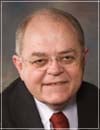
Don Fortner (1950-2020) served as teacher and pastor of Grace Baptist Church of Danville, Kentucky.
Comments
Your comment has been submitted and is awaiting moderation. Once approved, it will appear on this page.
Be the first to comment!