I want to show you eleven things about this man Jephthah, eleven things about myself, things I hope each of you can enter into and identify with by the grace of God.
Sermon Transcript
Auto-generated transcript • May contain errors
100%
One of my favorite hymns. Thank
you so much. As you're turning to Judges chapter
11, listen carefully to what I'm about to read to you. You see your calling, brethren?
How that not many wise men after the flesh, not many mighty, not
many noble are called. But God hath chosen the foolish
things of the world to confound the wise. And God hath chosen the weak
things of the world to confound the things which are mighty,
and base things of the world and things which are despised
hath God chosen, yea, and things which are not to bring to naught
the things that are. that no flesh should glory in
his presence, but of him are ye in Christ Jesus, who of God
is made unto us wisdom and righteousness and sanctification and redemption,
that according as it is written, he that glorieth, let him glory
in the Lord. Our great, wise, and gracious
God displays his wisdom and his grace by using weak, insignificant,
despised instruments, instruments no one else would dream of using
to accomplish his greatest works in this world. That is nowhere
demonstrated more clearly in Holy Scripture than in this 11th
chapter of Judges. We had this in our reading yesterday,
if you followed the reading schedule. Judges chapter 11. The man of
whom this chapter speaks is a man by the name of Jephthah. His
name means one that will open. And truly, the things here recorded
by the pen of inspiration about this man open our eyes somewhat
to the wonders of God's grace in Christ Jesus. After reading
this chapter yesterday, my dear wife asked me about Jephthah's
vow. What does all that mean? What
did he do? And that's my subject tonight.
But I want us to begin at verse one, and I'll work my way down
to Jephthah's vow in the last part of the chapter. So just
hold your Bibles open here at Judges chapter 11. May God the
Holy Ghost be our teacher. Let me make 11 statements in
this message. I'll be very brief spend the
bulk of my time on the last one First understand this Jephthah
was a man born in shame He was the bastard son of a harlot Jephthah
was a man born in shame. He was the bastard son of a harlot. I Now Jephthah the Gileadite
was a mighty man of valor, and he was the son of a harlot. And
Gilead begat Jephthah, and Jephthah's wife bare him sons, and his wife's
sons grew up, and they thrust out Jephthah and said unto him,
thou shalt not inherit in our father's house, for thou art
the son of a strange woman. We understand the scriptures
are right only when we understand the scriptures spiritually and
apply them to ourselves personally. Certainly, this passage is no
exception. Like Jephthah, I am a man born
in shame. Behold, I was shapen in iniquity. And in sin did my mother conceive
me. You and I are the shameful sons
and daughters of shameful parents, born in shame, born in sin. Here's the second thing. Jephthah
bore the pain and the shame of his mother's base, bestial immorality. He bore the shame of his mother's
actions all the days of his life. He was cast out from his brethren
by his brethren. His brethren despised him. Me
too. We are aliens from the commonwealth
of Israel. Strangers to the covenants of
promise. Having no hope without God in
the world. Like Jephthah, cast out. Aliens
from the house of God. Number three, look at verse three.
Following the example of his mother, Jephthah lived as a rebel,
leading a band of vain men. Would to God I could persuade
the people who hear me. You, your sons and daughters,
family, friends. Would to God I could persuade
everybody who hears my voice. There are always consequences
for your actions. and the consequences of your
behavior will always be seen in your own flesh and blood,
in your own sons and daughters. How many times I've watched men
and women take their children by the hand and show them by
example how to despise the things of God. And their children about
always do. but always do I've seen children
grow up by folks in the houses of folks who profess to believe
the gospel of God's grace and They grow up and they make a
profession of faith and they're just about as dependable as the
parents were as fickle as water Not always the case. I've often
said warning folks warning them warning you You take your children
by the hand, and by your rebellion, you lead them to hell, no matter
what you say with your mouth. Jephthah, like his mother, lived
as a rebel, leading a band of vain men, verse three. Then Jephthah
fled from his brethren and dwelt in the land of Tob. And there
were gathered vain men to Jephthah and went out with him. the same is true of you and of
me. In time past we walked according
to the course of this world. according to the prince of the
power of the air, the spirit that now worketh in the children
of disobedience, among whom we all had our conversation in times
past, in the lust of our flesh, fulfilling the desires of the
flesh and of the mind, and were by nature children of wrath,
even as others. The fact is the wicked are estranged
from the womb. They go astray as soon as they're
born, speaking lies. Even here, I see God's hand of
grace upon my soul. Grace was set upon me before
I ever knew anything about God's grace or ever had any interest
in obtaining God's grace. And had it not been for the distress
of my soul, Distress brought upon me by my own rebellion,
by my own ungodliness, by my own sin. Had I never known the
torment of guilt in my conscience, I would never have come to Christ.
The Lord always knows exactly what he's doing with his all,
and he always orders the paths of his people in the best way
for them. You see, only the guilty need
pardon. Only the dirty want cleansing. Only the sinful seek mercy and
forgiveness. Here's the fourth thing. Jephthah was by law excluded
from the congregation of Israel. It is written in the book of
the law, a bastard shall not enter into the congregation of
the Lord. So it was with you and me. The distinction that's here made
between the children of a married couple and the children of fornication
and adultery is uniformly decidedly marked in the scriptures. There's
a reason for that. The marriage of a man to a woman
is set forth in scripture as a picture of the union of Christ
and his church. In fornication, evil, horribly
debasing as it is, must never be treated lightly. But we have
many instances in Scripture in which God, our Savior, seems
to go out of His way. He seems to go out of His way
to demonstrate the fact that the Lord Jesus Christ is the
Savior of sinners. Now, hear me, children of God. Hear me, you who hear my voice
now. Let us never, never, never become accustomed to the vile,
godless ways of this reprobate world. Let us never, never, never
accept as ordinary sodomy and adultery and fornication and
drunkenness and such like. Let us never, never, never indicate
any approval of such behavior. And at the same time, Let us
be gracious and compassionate as our Savior, who went out of
his way to demonstrate his love for a woman like Tamar, a harlot
like Rahab, an adulteress like Bathsheba, A woman like Mary
Magdalene, a woman like that woman taken in adultery in the
8th chapter of John. Our Savior goes out of his way
to say, behold me, behold me, I have come to save sinners. He's the friend of publicans
and sinners. The friend of those who decidedly
would make themselves friendless. The friend of those who decidedly
would make themselves the enemies of all men. Christ is the friend
of publicans and sinners. And publicans and sinners are
never disqualified for participating in the mercies of God in Christ
Jesus. Sin. Oh, would to God I could make
folks hear this. Oh, Spirit of God, make all who
hear my voice now to hear this. Sin does not disqualify anyone
for mercy. It's our only qualification.
Sin does not disqualify anyone for God's grace. It's our only
qualification. How sweet it is to know that
in the gospel day of God's grace, unlike the Mosaic day of God's
law and severity, the Lord God Almighty tells us that where
sin abounds, grace did much more abound. And joyfully, the Son
of God tells us that he embraces in the arms of his grace publicans
and harlots and sinners like us. Number five, though despised
by everyone else, Jephthah was beloved of God, chosen of God
in Christ. Ordained of God to be an instrument
by whose hand he would save his people. I Can't tell you With what gratitude and With
what joy and with what brokenness and with what a sense of complete
inability and unworthiness I say this I Me too. Me too. Though despised by everyone else,
Jephthah was beloved of God, chosen of God, ordained of God
to be an instrument by whose hand he would save his people. Before I formed thee in the belly,
the Lord said to Jeremiah, I knew thee. And before thou camest
forth out of the womb, I sanctified thee, and I ordained thee a prophet
unto the nations. God passed over the proud and
the mighty men of Gilead. Jephthah, the son of the harlot,
the one who was not even allowed to be brought into the congregation
of Israel. Jephthah was chosen of God to
be his servant. Now, let me pause a minute here. We should never overrate those
things by which men seek to distinguish themselves among men. We raise
our children and raise them rightly when we teach them to do the
best they can at what they do, to be the best they can at their
work, to excel in everything they put their hands to. That
is only right. But we should never overrate
those things by which men seek to distinguish themselves from
men. The fact is, God's mercies are not bestowed according to
man's merits. And God doesn't use men because
of their natural gifts and abilities. God does not use men because
of their natural gifts and abilities. I have often heard people say
who ought to know better. I've heard preachers say who
ought to know better. Well, I just believe he's so
gifted, he'll make a preacher. Not likely, not likely. God commonly, commonly gifts
men who have no natural ability and gifts men who have nothing
to make themselves appealing to others and uses such men for
the furtherance of his gospel and the good of his people. Number
six, at God's appointed time, we read in verse 29, the Spirit
of the Lord came upon Jephthah. And so it is with all God's elect. At his appointed time, God the
Holy Spirit comes in time of love to his chosen ones. And the Lord God, as he poured
out his spirit upon Jephthah and exalted him to the highest
dignity and usefulness among his people. Jephthah was one
of God's. Because he was one of God's,
he prospered in all that he did. His name is recorded among the
honorable of Israel in Hebrews chapter 11. This man Jephthah,
his name is recorded in heaven. Our Savior said, rejoice because
your names are written in heaven. And well should we rejoice in
God's goodness to us, in giving us his spirit, because our names
are recorded in heaven. The spirit poured upon Jephthah.
was the same spirit poured upon the Lord Jesus Christ, our mediator,
without measure. That same spirit given to God's
elect, the anointing which we all have, the unction we all
have, being God's. And it is the same spirit that
was given to our Savior, so that we who are God's God's chosen
are given His Spirit and the gifts of His Spirit at the appointed
time of His mercy, and it is He who works those gifts of grace
within us. Number seven, by the grace of
God bestowed on him, by the gift of faith in Christ that was wrought
in him, we're told in Hebrews 11 32, Jephthah subdued kingdoms
and wrought righteousness. What a statement. Jephthah, believing
God, subdued kingdoms and wrought righteousness. Nations were made
to bow before him. Nations brought its objection
to him. And the work he performed as
he ruled over nations is described by God as a work of righteousness. So that Jephthah's life, being
a life in union with Christ, is a life of righteousness. No
outward condition, be it ever so base, can hinder God's purpose
or thwart his free grace. Number eight, look at verse nine.
Jephthah feared God, and fearing God, he believed God's word. the word that God spoke, the
word that God revealed to him. Verse 9, Jephthah said to the
elders of Gilead, if you bring me home again to fight against
the children of Ammon, the sons of Lot's incestuous affair with
his daughter, and the Lord deliver them before me, shall I be your
head? and the elders of Gilead, his
brothers who had despised him, had thrust him out of the house,
said to Jephthah, the Lord be witness between us, if we do
not sow according to thy words. Then Jephthah went with the elders
of Gilead, and the people made him head and captain over them,
and Jephthah uttered all his words before the Lord in Mizpah. Now Jephthah's faith is evident
because he ascribed Israel's conquest to Israel's God. Not to Israel, but to Israel's
God. Look what it says in verse 14.
And Jephthah sent messengers again unto the king of the children
of Ammon. And he said unto him, thus saith
Jephthah, Israel took not away the land of Moab, nor the land
of the children of Ammon. We didn't take that land from
you. No, sir. No, sir. But when Israel came
up from Egypt and walked through the wilderness under the Red
Sea and came to Kadesh, then Israel sent messengers unto the
kingdom of Edom saying, let me, I pray thee, pass through thy
land. But the king of Edom would not
hearken thereto. And in like manner they sent
unto the king of Moab, but he would not consent, and Israel
abode in Kadesh. Then they went along through
the wilderness and compassed the land of Edom and the land
of Moab, and came by the east side of the land of Moab, and
pitched on the other side of Arnon. but came not within the
border of Moab, for Arnon was the border of Moab. And Israel
sent messengers unto Shihon, king of the Amorites, and the
king of Heshbod, and the children of Israel, said unto him, let
us pass, we pray thee, through thy land unto my place. But Shihon
trusted not Israel to pass through his coast. But Shihon gathered
all his people together and pitched in Jahaz and fought against Israel. Look at verse 21. And the Lord
God of Israel delivered Shihon and all his people into the hand
of Israel, and they smote them. So Israel possessed the land
of the Amorites, the inhabitants of the country, and they possessed
all the coast of the Amorites, from Arnon even into Jabbok,
and from the wilderness into Jordan. So now the Lord God of
Israel hath dispossessed the Amorites from before his people
Israel, And shouldst thou possess it? God did this, you're going
to overturn it? He's mockingly, jeering this
key. Verse 24, wilt thou possess,
will not thou possess that which she must thy God giveth thee
to possess? You you you go take what your
God gives you and we'll take what God our God gives us So
whomsoever the Lord our God shall drive out from before us Them
we will possess now watch this The land of the Amorites was
Israel's possession long before Ammon was ever born and This
was a land given to Israel by God's covenant to Abraham when
God brought Abraham out of Ur of the Chaldees, long before
Lot's incestuous grandson was born. And so it is with us, though
Satan held us in bondage as though we belonged to him. and would
not let us go. In the day of his grace, the
Lord Jesus comes and takes possession of that which is his from everlasting. He snatches us from the hands
of Satan and from the pit of destruction and does but recover
his own prisoners of hope, as we're described in scripture.
Jephthah called upon the God of truth to judge between Israel
and the Amorites. Look at verse 27. The Lord judge,
the Lord the judge be judged this day between the children
of Israel and the children of Ammon. What an example. What
an example you you come to challenge me you come to challenge God's
people you come to challenge what God's done You come to make
light of me God the judge be the judge. We'll wait and see
how God turns this thing out Let us be glad happy and comfortable
in committing all things to God the judge who does all things
right and well number nine verse 32 The Lord God honored the faith
that honored him by delivering the Ammonites into Jephthah's
hands. So Jephthah passed over unto
the children of Ammon to fight against them, and the Lord delivered
them into his hands. And he smote them from Arior,
even till thou come to Midnath, even twenty cities, and unto
the plain of the vineyards with a very great slaughter. And the
children of Ammon were subdued before the children of Israel. Come and listen to me. Listen
to me now. Will you hear what God says? Them that honor me, I will honor. Them that honor me, I will honor. So God says in 1 Samuel 2 and
verse 30. We honor God by believing Him. We cannot better honor God than
by believing him. We cannot, by anything we say
or do, honor God so highly as we honor God by believing him. And God says, them that honor
me, I will honor. Jephthah believed God. Can you imagine what it must
have taken for this man Jephthah? Jephthah. Of all the men in Israel,
Jephthah. This man cast out from his brethren,
cast out of his father's house, cast out from the congregation
of Israel. This man despised by men, so
despised that his only companions were a bunch of despised men.
And there's Jephthah. Then he goes out against the
mightiest kings there were in the world. And he goes out against
those kings just in the name of the Lord. And he subdued those
kings. How? He believed God. That's all. He believed God. And God honored him. Number 10. Verse 35. We read that Jephthah
opened his mouth to God and declared, I cannot go back. That for which Jephthah is most
commonly known is his vow to God about which Shelby and I
talked a little bit yesterday. The fact is it was a rash vow. But most people seem to have
the idea that because Jephthah conscientiously kept his vow,
Because it was such a terrible, costly thing, something that
cost him and his cherished daughter so much, this was something that
was a weakness in Jephthah, a flaw in this man. But I'm confident
that cannot possibly be the case. Jephthah's name is mentioned
and he's held before us in Hebrews 11 in that chapter that we call
the hall of fame for faith. He's held before us there in
Hebrews 11 with Abraham and Isaac and Jacob. Enoch and Abel and
Noah, with David and with the servants of our God throughout
the ages of the Old Testament. Jephthah is held as an example
of faith. That convinces me that this is
the very thing for which this remarkable man of faith is commended
to us. You cannot separate Jephthah's
vow from his victory over the Amorites. Let's look at it for
just a couple of minutes. Verse 30, Jephthah vowed a vow
unto the Lord and said, if thou shalt without fail deliver the
children of Ammon into my hands, then it shall be that whatsoever
cometh forth of the doors of my house to meet me, when I return
in peace from the children of Ammon, that shall surely be the
Lord's, and I will offer it up for a burnt offering. So Jephthah
passed over unto the children of Ammon to fight against them,
and the Lord delivered them into his hands. And he smote them
from Aror, even till thou comest to Minneth, even twenty cities,
and unto the plain of the vineyards with a very great slaughter.
Thus the children of Ammon were subdued before the children of
Israel. And Jephthah came to Mizpah unto his house. And behold,
his daughter came out to meet him with timbrels and with dances,
and she was his only child. Beside her, he had neither son
nor daughter. And it came to pass, when he
saw her, that he rent his clothes and said, Alas, my daughter,
thou hast brought me very low, and thou art one of them that
trouble me, for I've opened my mouth unto the Lord, and I cannot
go back. And she said unto him, my father,
if thou hast opened thy mouth unto the Lord, do to me according
to that which hath proceeded out of thy mouth. For as much
as the Lord hath taken vengeance for thee of thine enemies, even
of the children of Ammon. What a remarkable man Jephthah
must have been. His daughter had heard of her
father's victory and she comes out dancing and just anxious
to greet him and applaud him for his great victory. And soon
as she heard that he had spoken to God, she said, I'm in your
hands and you're in God's hands. You do exactly what you've told
God you would do. Read on. And she said to her
father, verse 37, let this thing be done for me. Let me alone
two months that I may go up and down upon the mountains and bewail
my virginity, I and my fellows, my friends. And he said, go. And he sent her away for two
months, and she went with her companions and bewailed her virginity
upon the mountains. And it came to pass at the end
of two months that she returned to her father, who did with her
according to his vow, which he had vowed, and she knew no man. And it was a custom in Israel
that the daughters of Israel went yearly to lament the daughter
of Jephthah, the Gileadite, four days in a year. Jephthah's fidelity
and perseverance. Believing God is seen in the
keeping of his vow. By keeping his daughter in her
virginity perpetually. He said, I've opened my mouth
unto the Lord and I cannot go back. I've spoken to God and
I cannot go back. I told God I was going to do
something and I cannot go back. If Jephthah's dog had come out
to meet him, no one would ever imagine that Jephthah had killed
his dog and offered his dog as a sacrifice on the altar of God
that would pollute the altar of God. And yet folks had the
idea that somehow Jephthah was a monstrous man. He offered his
daughter as a sacrifice to the Lord God. That certainly is not
what happened. He kept his daughter a virgin
all the days of his life. That was the prerogative and
the privilege of a father in Jephthah's day. It was still
the prerogative and privilege of men, even in the Gentile world,
when you get to 1 Corinthians 7, the Apostle Paul shows that
clearly. Jephthah did not kill his daughter. He kept her a virgin perpetually. A more literal translation of
Jephthah's vow in verse 31 would read like this, if you want to
write it down somewhere. It shall belong to Jehovah, and
I will offer it instead of a burnt offering. Young's literal translation
reads like this, I have offered up for it a burnt offering. The modern King James translates
it this way, surely it shall belong to the Lord. Now I'm absolutely
certain that Jephthah did not slaughter his daughter for these
four reasons. Let me give you these and I'll
wrap this up. First, this was a personal vow. A vow that Jephthah made to God. A vow that Jephthah alone could
keep. Now hear me, hear me. Nobody
can represent you before God but you. Nobody can represent
you before God except you, that by faith in Jesus Christ, the
sinner's only representative to God. Jephthah could not require
his daughter to do something for God. He didn't have that
power over her. He could not make his daughter
believe God. He didn't have that power over
her. In fulfilling the vow, he could not take that which did
not belong to him and offer to God, and his daughter's life
didn't belong to him. He had the right as a father
to govern his daughter's life. He had a right as his father
to care for his daughter. He has a right as a father to
give his daughter in marriage or not give her in marriage,
but he had no right to take her life as a father. Jephthah had
no right to kill his daughter. Second, Throughout the Scriptures,
human sacrifices are presented to us as abominations to the
Lord. The Lord God Almighty, by Mosaic
Law, strictly forbade human sacrifice. He strictly forbade it. It was
constantly held up in Israel as an abomination. That which
was done only by the abominable idolaters around them. In order
for Jephthah to have killed his daughter and offered her for
sacrifice, he would have had to assume the priest office and
would have had to pollute God's altar with human blood. And he
wasn't here spoken of here in the book of God and commended
for such an act. In addition to those things,
the scriptures tell us plainly there was no need for such sacrifice.
There was no need for Jephthah to literally sacrifice his daughter's
life because God provided redemption for such circumstances. Turn
back to Leviticus, the book of Leviticus, chapter 27. I want
you to see this. God, by law, provided redemption
for a child such as Jephthah's daughter, and even for unclean
beasts that were dedicated to the Lord. Leviticus chapter 27,
verse 1. The Lord spake unto Moses saying,
speak unto the children of Israel and say unto them, when a man
shall make a singular vow, the persons shall be for the Lord
by thy estimation. And thy estimation shall be of
the male from 20 years old even to 60 years old. Even thy estimation
shall be 50 shekels of silver after the shekel of the sanctuary.
And if it be a female, then thy estimation shall be 30 shekels.
And if it be from five years old even to 20 years old, then
thy estimation shall be of the male 20 shekels and for the female
10 shekels. So God provides for something
else to be given to him rather than the child itself by way
of sacrifice. And the fact is, Jephthah's vow
was exactly the same as that which Hannah used when she devoted
Samuel to the Lord. He said to his God and our God,
I will offer up the first thing that comes out of my house. It
shall surely be the Lord's. I will offer it up for a burnt
offering. by redemption, according to the law of redemptions. I
will take that which first comes out of my house, and I'll give
it to God. That's exactly what Hannah said
when she prayed in 1 Samuel 2. She said, Lord, give me a son,
and I'll give him to you. Give me a son, and I'll give
him to you. This is what faith is. Faith
is the surrender of our lives to our Redeemer. It is calling
Jesus Christ our Lord. It is identifying ourselves as
His servants and calling Him our Lord, taking Him to be our
Lord because we want Him to be our Lord. Jephthah said exactly
the same thing Hannah did and exactly what we are taught to
say because of God's marvelous deliverance and grace in saving
our souls. I will go into thy house with
burnt offerings. I will pay thee my vows, the
psalmist writes, which my lips have uttered. Come and hear,
all ye that fear God, and I will declare what he hath done for
my soul. and the ordinance that was kept
by Jephthah, kept by his daughter, was kept by Israel for every
year, for many years. Jephthah's daughter apparently
lived for quite some time after this, after the bewailing of
her virginity, because we're told that the children of Israel,
the daughters of Israel, every year after that, would come and
bewail the virginity of Jester's daughter. Among the ancient believing
Hebrew women, nothing was so highly valued by them. Nothing
so highly valued by them as being women with a fruitful womb and
bearing children, male children. Because every believing Hebrew
woman hoped that she might be the one through whose womb God
would send his Son into this world. Every week, from Eve right
down through history, Eve had Cain and said, I've got a man
from the Lord. And she was disappointed with
that. And she had Abel, and Abel was slain. And she had Seth,
I've got another man from the Lord. They're still, maybe this
is the one. Maybe this is the one. And the
Jewish women cherished the privilege of motherhood, particularly desiring
that God might send the Lord Jesus, the promised seed, through
her womb. In verse 40 after Jephthah had
kept his vow, we read that the daughters of Israel went yearly
to lament the daughter of Jephthah. That word lament might better
be translated to rehearse with, or as your marginal translation
gives it, to talk to. Every year they would come up
to talk to Jephthah's daughter about her virginity and her retaining
her virginity because of her father's vow. I can't but imagine what questions
they might have asked her. Can't but imagine the younger
ones asking her how frustrated she must be, how disappointed
she must be, how painful it must be to see all of her peers, all
of her friends, the other companions, having children one after another,
and she is maintained in her virginity. Every year the daughters
of Israel spent four days with Jephthah's daughter. talking
to her about her devotion and her consecration to God because
of his goodness. You see, this devotion of Jephthah's
daughter, as much involved her believing God as it did Jephthah
believing God. She said to her father, you do
what you told God you would do. And she said, let me go bewail
my virginity and came back willingly and bows to her father's will
for the glory of God. I'm not saying anything strange
to you who believe God, who know God. I recall very well when
I first discovered Shelby was going to have our daughter Faith. I was taking New Testament Greek.
We had been told we couldn't have any children. I don't even
know if they had fertility doctors, but if they had them, we couldn't
have afforded them. We didn't even change that. We found out she was pregnant.
As a matter of fact, I found out I believed before she did,
didn't I? And I announced it to everybody before she even
knew it. I would have cried and kicked out of school if I'd bought
cigars. If I'd have bought nickel cigars and passed them out by
the box store, I was tickled to death. And I named the child
Catherine Faith, from two words in the scriptures. Catharizo,
which means pure. And faith, bestio, pure faith. God gave her to us. God gave
her to us. And though the doctors had told
us from the very beginning, we're gonna have a boy. She's too big
to be a girl. She's gonna have a big boy. I'm
talking about right at the time she went back to the delivery
room. And here we got a little girl. You know, we never picked
out a boy's name. Never did. But almost immediately,
Faith, Captain Faith. And as soon as I heard the words,
that Shelby was going to have a child. I bowed my heart to
God and gladly put her in His hands. She's yours. Thank you for her. Same thing
when we heard about Audre Grace coming into this world. Same
thing we heard about Will. What do you do with them? You
put them in God's hands and you can't do better. You can't believe
God for them. And you're a fool if you pretend
you can. If folks want to be baptized
for their children and pretend to raise them as Christians,
you can't raise a Christian. God saves sinners. You can't
raise a believer. God saves sinners. What do you
do? You put them in God's hands and
wait for God to take his gift. Wait for God to take his gift. Brother Rex has said, standing
in this pulpit many times in prayer, Lord, we don't read in
your word of any ever bringing their child to you and seeking
your mercy who were turned away without your mercy. I'm prepared to wait for my own
and for yours. for God to be gracious. You do
the same. One last thing. Jephthah said,
I've opened my mouth to the Lord and I cannot go back. 50 years ago, 50 years ago, sorry,
51 years ago, almost 52 now, I got into a magistrate just
like that one. And I opened my mouth to God,
and I said to God and to the world, I'm yours. Lock, stock
and barrel. I've never for a moment regretted
it. And I can't go back. I cannot go back. I cannot go
back. That's a strong statement. Can't
go back. I'll take the cup of salvation
and call on the name of the Lord and thereby pay my vows I cannot
go back Because I'm not able to Thank God I'm not able to I Can't break God's grip If it
could be broken by my sin, by my unbelief, by my rebellion,
it would have been broken long ago. I'm not able to go back.
I have no power to go back because the all-powerful God holds me
in his hands. I cannot go back. And thank God,
I will not go back. I will not be prevailed upon
by any force or by any power to go back because my master
says I give to Don Fortner eternal life and he shall never perish. And I will add what most will
not add, no matter what. No matter what. No matter what
he feels, or thinks, or does, he shall never perish. Oh, brother
Don, that's presumption. Lindsay, it's one of two things.
It's either proud, arrogant presumption, or it's simple faith. There's
no in-between ground. It's one of the two. Cannot go
back. I will not be persuaded. I will
not be pushed. I will not be coerced to go back
Because the master will not allow it. My Savior will not allow
it. I Cannot go back Thank God Because
I will not go back How about you Lord You're all I have and all I want,
and I have nowhere to go but to you. To you and to your throne
of grace, where I obtain mercy and find grace to help in every
time of need. Amen.
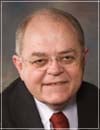
About Don Fortner
Don Fortner (1950-2020) served as teacher and pastor of Grace Baptist Church of Danville, Kentucky.
Comments
Your comment has been submitted and is awaiting moderation. Once approved, it will appear on this page.
Be the first to comment!