These laws regarding things clean and unclean, holy and unholy were intended by God to show us spiritual things. They were given to point us to Christ and the grace of God in him. They are pictures of gospel truths.
Sermon Transcript
Auto-generated transcript • May contain errors
100%
God's elect are a peculiar people,
a divinely possessed people. This we're taught throughout
the scriptures. We're not our own. We've been
bought with the price of Christ's precious blood. God's peculiar
possession who the Lord Jesus redeemed. when he gave himself
for us that he might redeem us from all iniquity and purify
unto himself a peculiar people zealous of good works. Peculiar
people. That word doesn't mean odd or
strange. It would better be translated
possessed. It has the idea of ownership. And yet the word possessed doesn't
really translate the word fully. This is one of those rich, rich
words that must be defined rather than just translated. As this
word is used peculiar in Titus 2.14, it means owned, held in
possession, possessed lawfully, possessed powerfully, encompassed,
Surrounded, protected. This is what God the Holy Ghost
teaches us about all who are born of God. This is true concerning
every elect sinner. All who believe on the Son of
God are God's peculiarly, distinctly possessed people, purchased by
the sin-atoning blood of the Lord Jesus Christ, called by
omnipotent grace surrounded and encompassed by the incomprehensible
God under his constant care, his constant protection. What
a word with which to describe us. His peculiar people. The angel of the Lord encampeth
all the time round about them that fear him. Now this fact,
I repeat, is taught throughout the scriptures. Tonight, I want
to show you this fact as it's set before us in the 11th chapter
of the book of Hebrews. The title of my, or the book
of Leviticus, excuse me. The title of my message is A
Possessed People. Our text will be Leviticus 11,
one through 47. Let's begin in verse one. And the Lord spake unto Moses
and unto Aaron, saying unto them, Speak unto the children of Israel,
saying, These are the beast which ye shall eat among all the beast
that are on the earth. Whatsoever parteth the hoof and
is cloven-footed, and cheweth the cud among the beast, that
shall ye eat. Then in verses 4 through 42,
The Lord distinctly divides the clean from the unclean of all
the animals in the earth, in the rivers, in the seas, and
in the skies. And he gives very specific dietary
laws to the nation of Israel. Then in verse 43, he gives us
the reason. You shall not make yourselves
abominable with any creeping thing that creepeth. Neither
shall you make yourselves unclean with them that you should be
defiled thereby. For I am the Lord your God. You
shall therefore sanctify yourselves. A literal reading would be, you
have therefore sanctified yourselves and you shall be holy. Or more
literally, you have been made holy. Neither shall you defile
yourselves with any manner of creeping thing that creepeth
upon the earth. For I am the Lord that bringeth you up out
of the land of Egypt to be your God. You shall therefore be holy
for I am holy. This is the law of the beast
and of the fowl and of every living creature that moveth in
the waters and of every creature that creepeth upon the earth
to make a difference between the unclean and the clean and
between the beast that may be eaten and the beast that may
not be eaten. Now if you're like me, I'm sure
you have read this chapter many times and others like it through
the scriptures and scratch your head and wonder why is that there? Why are these laws, these dietary
laws, this clean and unclean animals of every kind in the
sky, in the earth, and in the sea, why are these laws given
to us in the scriptures? Well, if you will listen carefully
and follow me through the scriptures before I'm done tonight, I think
you'll have the answer. Let me give you the setting.
Be sure you get the setting of the passage. Up to this point,
everything in the first 10 chapters of the book of Leviticus has
been about one thing, atonement. blood atonement, the necessity
of atonement for sin. All the subjects of the sacrifices
is about atonement, telling us that God Almighty demands that
fallen man have an atoning sacrifice if he comes to Him and find acceptance
with Him. Those atoning sacrifices declare
that God Himself whom we have offended, against whom we have
sinned, has made a way whereby he can bring sinners to himself
in righteousness, holiness, and truth, and never compromise his
law. And that way is Jesus Christ
our Redeemer through the precious blood of God's dear Son. As Mark
just read to us, God is just and the justifier of all who
believe. Now, beginning in chapter 11,
as if he would compel us to come to him by the blood of Christ,
God the Spirit begins to describe our great need of grace, our
need for atonement, our need for an effectual sacrifice and
substitute. Here he begins to show us our
sinfulness. His designs in these next chapters
are to shut us up to Christ, to shut us up to God's free grace
in our crucified Redeemer. to create in our minds a sense
of our corruption, our depravity, our sin, to create in our minds
a sense of our guilt by nature. These things are written in the
next few chapters. Beginning in the 11th chapter,
God the Spirit shows us the need of atonement, showing us corruption
and sin. Now, as we read these chapters,
specifically these 47 verses in chapter 11, let me state this
clearly and emphatically so that no one mistake and you not mistake. These laws, as is the case with
all the Old Testament law, was fulfilled by Christ our Redeemer,
and they do not in any way have any power or condemning power
or constraining power over God's people. We are not under the
law in any sense whatever. Christ has redeemed us from the
curse of the law and he's made an end of the law. But the law
gives us clear instruction, clear instruction in type and in picture
that we will be wise to heed. Understand this too. These laws
are given, these dietary laws, but obviously there is no moral
distinction between a hog and a cow. There's not anything about
those animals that makes one clean or unclean in a moral or
spiritual way. And obviously our Lord teaches
us plainly that what goes in the mouth does not defile us. So that the dietary laws given
in the scriptures in the Old Testament were given only to
the Jews. Only to the Jews in the Old Testament,
never to the Gentiles. I stress that because there are
many, many, many who would put pressure. We know we're not in
the law, but these laws have nothing to do with us except
as they portray for us our need of Christ and the accomplishment
of redemption by Him. Chapter 11 shows us the existence
of sin. The universality of corruption. Chapter 12 portrays the transmission
of sin from one generation to another. Have you often wondered
why a woman giving birth was considered unclean? Why is it that a woman bringing
a new life into this world was considered unclean under the
law? Because by giving birth, she gives birth to one that is
but a sinner. Sin being transmitted from one
generation to the next. And so the woman giving birth
is here declared to be herself unclean. Chapters 13 and 14 display
the vileness of sin in the picture of leprosy. What a horrible,
horrible thing sin must be if it is portrayed with leprosy. And then in chapter 15, we see
a picture of the original sin in its deformity that's in us.
It's there portrayed as a running issue, just a constant running
issue. And thus, we're shut up to Christ.
If we would be righteous, if we would come to God and be accepted
of God, If we would stand before God, holy, unblameable, unreprovable
in his sight, if we would approach the holy Lord God, we must come
to God only by Christ, bringing nothing of our own, nothing from
these polluted hands, these polluted hearts, these polluted minds,
these polluted bodies. We bring nothing of ourselves
to God, but only Christ Jesus, the Lord. These laws regarding
things clean and unclean, holy and unholy, were intended to
teach us spiritual things. They were given to point us to
Christ and the grace of God in him. They're pictures of gospel
truths. Let me show them to you in this
11th chapter of Leviticus under four heads. First, there is a
difference made, and then a distinction maintained. Third, a defilement
manifested, and fourth, the discipline motivated. Number one, here is
a difference made. As the Lord God ceremonially,
and it was only ceremonially, put a distinction between the
clean and the unclean. Distinguishing son of mammals,
animals, saying these are clean, and others saying these are unclean.
Not because of anything in those animals, but God simply declared
one's clean, the other is unclean. That's all that made one clean
and the other unclean. We know that very clearly because
God declares later that we consider all things clean of themselves,
nothing defiled, nothing corrupt. So the distinction made between
these animals, the distinction between a catfish and a bass
is just God said one's clean, the other's unclean. The difference
between a cow and a hog, God said one's clean, the other's
unclean. That's all the difference there is. God made the difference. So it is with all the sons and
daughters of Adam. There's a distinction made. Some
are clean, some are unclean. A distinction made by God alone,
not by you, not by me, not by the church, by God alone. The only difference there is
between men in this world, spiritually speaking, is the difference that
grace has made. We're all unclean, unholy by
nature. We all deserve the everlasting
wrath of God in hell, but he has made some holy, he has made
some clean by the operation of his free grace in Christ Jesus
the Lord. Oh, thank God for cleanness that
only God can give. Who maketh thee to differ from
another? What hast thou that thou didst
not receive? Now if thou didst receive it,
why dost thou glory as if thou hast not received it? God alone
makes the difference. His grace alone distinguishes
one man from another. He does this by blood atonement,
by righteousness imputed to us, making the very righteousness
of Christ ours in free justification, and by righteousness imparted
to us, making the very nature of Christ ours, giving us a new
nature, making us new creatures in regeneration. We are made
clean and God says we're clean. God declares us clean. And that
which God has done, God alone shall be praised for. We come
to God trusting Christ our Savior. I trust Christ as my substitute. Upon his worth I fall. His blood
and righteousness alone can satisfy God's law. Here's the second
thing. First, God made a difference.
Second, here's a distinction maintained. God has made us,
if we're Christ, clean. God has made us holy. God has
made us righteous. This is a distinction that God
has made. but it's a distinction that is
to be maintained by us. A distinction to be maintained
by us. Paul tells us to be zealous of
good works to maintain this distinction. Yes, it is a distinction graciously
maintained by God. I fully recognize that. He which
hath begun a good work in you will perform it until the day
of Jesus Christ. and yet it is a distinction to
be maintained by us. How so? The Lord gave these dietary
laws to Israel, and I repeat, only to Israel, because he made
them his covenant people, his distinct people in this world. Israel alone was separated from
all other nations. To Israel alone, God sent his
word. To Israel alone, God gave the
revelation of himself. In Israel alone, God set up his
worship. In Israel alone, God portrayed
redemption, grace, and salvation by Christ in all the sacrifices
and ceremonies of their worship. They were a distinct people in
this world, and they were to maintain themselves as a distinct
people in the world by these very laws that God gave. God
gave them a diet that was so strict that if they simply obeyed
these dietary laws, the Jews could never have any sort of
close association with any other people. The only time they could
mingle with other people was by violating the laws God gave
them. The Canaanites ate anything. They would even eat an animal
that had been killed by a dog and turn around and eat the dog
with no scruples. They couldn't eat with the same
table with Arabs because the Arabs, their nearest kinsmen,
thought nothing of eating a camel, a hare, or a conic. By ceremonially
preventing their social intercourse with other people, the Lord arranged
and secured a continued distinction with his people. He arranged
by these laws a continued distinction so that Israel would be maintained
a separate people. The things that are here described
as unclean, for the most part, I wouldn't, I'm not certain that
everything, but for the most part, all the various animals
right down to the creeping things on the earth that are here described
as unclean. were animals that were venerated
by the heathen around them. Animals that were either worshiped
by them or spiritually venerated as having some kind of mystical
divine power. And so they were venerated by
them in their idolatrous worship. And so the children of Israel,
by their obedience to these laws, were kept from close association
even in the idolatry of the ungodly around them. Kept from intermarrying
with the others. Perhaps you're thinking, Brother
Dunwell, what does all this have to do with us? I'm glad you asked. The Lord God would have Mark
Henson and his wife, and Don Fortin and his wife, and you,
your wife, your husband, your children, to live distinctly
in this world as his people. I have to say this because I
don't want to be misunderstood by anyone and I don't want folks
who hear this and don't understand the gospel as you do to run wild
with it. I'm not talking about a distinction that the world
honors and applauds and sees and says, now there, that's godliness,
that's holiness, that's, the world knows nothing about godliness. The world around you, if people
don't know God, they don't know godliness. You understand that?
So what they think about as godliness got nothing to do with this.
But you and I, as God's people, must studiously maintain this
distinction as God's people. And the scriptures teach us this
continually. I repeat, these dietary laws
are not in any way applicable to us. That which we eat and
drink does not make us clean or unclean. And yet we're to
maintain a distinction between ourselves and the world. Turn
to Titus chapter 2. I'll show you two passages in
this regard. Titus chapter 2. Here the Apostle
Paul writes by divine inspiration. And it tells us that we are not
to live like the reprobate live. We're not to live like the reprobate
live. We are in all things, in all manners of life, to adorn
the doctrine of God our Savior. To set it forth in this light
that shows forth the beauty of the gospel. Look at Titus 2 verse
one. Speak thou the things which become
sound doctrine. These are things associated with
election, predestination, limited atonement, effectual calling,
and perseverance. Sound doctrine. These are things
associated with godliness. That aged men be sober. Grave
tempered. Old men ought to act like old
men. Old men ought to behave like men have some wisdom. Their
gray hairs are gray hairs indicating some experience. They are to
be sound in faith, sound in charity, sound in patience. Faithful,
loving, patient. How unlike aged men who don't
know God that is. Old men tend to get cranky. Believing
men are to be sound in faith, in charity, in patience. The
aged women likewise, that they be in behavior as becometh holiness.
What does that mean? They don't slander folks. They
don't blab. They don't gossip. They don't,
they're not false accusers. Not given to much wine. They
don't, they don't drink too much. Teachers of good things. That
they may teach the young women. Old women are to teach young
women to be sober. to love their husbands, to love
their children. Oh, what a responsibility to
you mothers and grandmothers to be discreet, chaste, keepers
at home, good, obedient to their own husbands. How come that the
Word of God be not blasphemed? In other words, if you don't
behave like that and you profess to believe this book, you blaspheme
God's Word. Verse 6, young men likewise exhort
to be sober-minded. Young men need a lot of instruction
to be sober-minded. I tell young men all the time,
of course, I'm at the age of anybody under 50 is considered
young by me anymore, but I tell them all the time, men, preaching
are to go to preach. If you want to be respected as
one who speaks for God, you've got to act like an old man. I
mean, you've got to act like one. Dress a little older than
you want to. Comb your hair a little different
than you want to. Act like a man who takes life seriously. I pulled
aside a friend of mine who had some aspirations for preaching.
I'd known him all his life. His father was standing right
beside me. His father was a preacher, and he was doing some preaching,
but back in the days when they had those spiked hair, it was
for, you know, to push them up and all that stuff. That's fine.
Nothing wrong with that. And very modern suits and clothes.
Well-dressed fellow. for a fellow who's 18, 20 years
old. And I had a lengthy talk with him. I said, if you're going
to preach, I suggest that you change your hair coat and change
your suits and dress a little different and behave this way.
And when we got done, he looked at me kind of shocked and his
daddy looked at me, said, I'm glad you told him that. Young
men be sober. Be sober. Well, they've got to
be children. No, they're grown up now. Be
sober. Be sober. In all things, showing
thyself a pattern of good works. In doctrine, showing uncorruptness,
gravity, and sincerity. Steadfast, not tossed about with
every wind of doctrine, every cockamamie theory folks come
around with. Sound speech that cannot be condemned. That he
that is of a contrary part may be ashamed, having no evil thing
to say of you. Now, you can't keep people from
talking bad about you, but you can keep from giving them a reason.
That's what he's talking about. I can't keep people from gossiping
about me, but I can live in such a way as not to give them a reason.
Exhort servants to be obedient unto their own masters, and to
please them well in all things, not answering again, not purloining,
but showing all good fidelity that they may adorn the doctrine
of God our Savior in all things. How come? For the grace of God
that bringeth salvation hath appeared to all men teaching
us that denying ungodliness and worldly lust, we should live
soberly, righteously, and godly in this present world. Now, turn
back to 2 Corinthians, Chapter 6. We're not to live like the world,
and we're not to worship with them. We're not to mingle the
worship of God with idolatry. 2 Corinthians, Chapter 6, Verse
14. Be ye not unequally yoked together
with unbelievers. Now he's talking about religious
folks. He's talking about religious folks. For what fellowship hath
righteousness with unrighteousness? And what communion hath light
with darkness? And what concord hath Christ
with Belial? What part hath he that believeth
with an infidel? And what agreement hath the temple
of God with idols? Don't mingle with the ungodly,
with the reprobate, with the idolatrous in their worship.
The distinction to be maintained is not a distinction of strange
dress or pious sounding speech or outward show. Inward realities
don't need outward labels. Inward realities. You don't need
outward labels. Please don't misunderstand me,
I don't object if you want to wear bumper stickers on your
car, put them on your car, truck, that's all right with me. I've
just made it my practice throughout my life, I just don't do it.
I would like to drive around with a big Confederate flag on
the hood of my car, on the top of my car, on the front of my
car. I'd like to do it, I just don't do it. If you know me very
well, you know that it's flying inside. But I just don't do it. I don't need the flag. I don't
carry stickers on the back of the truck or car indicating anything
political. If you know me very well, you
don't even have to ask what I think about political situations. You
know full well what they are. Inward realities don't need outward
labels. I'm not talking about putting
on a show of religion. But rather, this peculiarity, this distinction
is maintained by one great object. Whether therefore you eat or
drink or whatsoever you do, do all to the glory of God. That will keep you from cussing
too much or yakking too much or other stuff. Whatever you
do, whether you're eating or drinking, I mean whether you're
eating at your table or eating downtown, whether you're drinking
a glass of water or drinking a glass of wine, whether you
eat or drink, whatever you do, do it for the glory of God, and
that will serve you well to maintain this distinction. Look at the
rule of law given in Leviticus 11.3. It's a pretty good picture
of a believer one who has been made clean before God by his
grace. Whatsoever parteth the hoof and
his cloven footed and cheweth the cud among the beast, that
shall you eat. The believer, like the clean
animal, both chews the cud and his cloven footed. He feeds upon
Christ and the gospel of his grace in his heart and soul. He doesn't merely hear the gospel.
He relishes it. He relishes it. Most of you are familiar with
animals more so than I am, but a cow been grazing and chews
the gut, she's just relishing what she's been eating. The believer
feeds on the gospel. He relishes the word read and
the word preached. And he walks as a man, but he
walks with God. He's clothing footage. He walks
on the earth, but he walks toward heaven. He walks in this body
of flesh, but he walks in the spirit. In verses four through
eight, the Lord identified four unclean animals that might have
been mistaken for clean ones. The camel, the coney, the hare,
and the swine. The camel, the coney, the hare,
and the swine all chew the cud. but they don't divide the hoof.
They were all unclean. And so they fitly represent the
unclean, those who don't know God. The doctrinal purist who
has no interest in godliness, devotion, consecration to Christ,
like the camel, plodding alone in his sensuality, but still
chewing the cud. Like the coney. He digs in the
earth and hides in the rocks. Might well portray the self-serving
religionist, the cowardly man or woman who talks a good talk
in the right company, but doesn't dare confess Christ before his
enemies openly. Or they might be compared to
the hare, flying in leaps and bounds, chewing the cud but not
parting the hoof. They are portraying the feel-good,
emotional religionist, the Pentecostal charismatic folks whose religion
is all show, just outward show. Though he chews the cud, he's
just an earthly. His religion is all show, nothing
else. But what did the Lord mean putting
hogs in this place? Why does he specify them? Verse
7. And the swine, though he divide
the hoof and be cloven-footed, yet he cheweth not the cud. He's
unclean to you. Of their flesh shall you not
eat, and their carcass shall you not touch. They are unclean
to you. The hog seems, I think, to be
set before us for a distinct reason. A picture of those who
act right Outwardly, they have a profession, nothing else. They
are outwardly upright, devout, zealous, but inwardly, they're
unclean. Well representing the Pharisee,
the self-righteous religionist, who appears so clean, but all
the while is wallowing in the mire of his own excrement, his
own righteousness, which Paul calls just dumb. Let us then
walk before our God in this world, you men and women of Grace Church.
You, the man speaking to them. As men and women who are distinctly
his. With a heart of faith and love
toward Christ. Acknowledging and confessing
our sin. Walking in the spirit. Trust
in Christ. Ever separating ourselves from
the world. I don't mean living like hermits. I don't mean withdrawing from
society, withdrawing from men. I mean living for God's glory
without regard to the world's opinion. Living for God's glory
without regard to what men think. The church seems always anxious
to marry the world. How sad she has done so, so often. What a hellish marriage. You
remember in Genesis 6, it was when the church married the world
that God sent the flood of his wrath to destroy the world. Love
not the world, neither the things that are in the world. If any
man loved the world, the love of the father is not in him.
For all that is in the world, this is all that's there, the
lust of the flesh, the lust of the eyes, the pride of life is
not of the Father, but is of the world. And the world passeth
away. It's not worth the effort. The world passeth away and the
lust thereof, but he that doeth the will of God abideth forever. Now, back in our text, Leviticus
11. Here's the third thing. A defilement manifested. These
dietary laws were so thoroughly detailed that the Lord seems
to have intended them to be a constant manifestation of the fact that
so long as we live in this world we are defiled with sin and need
cleansing. I know you may think, well, Pastor,
you remind us of that often enough. I can't remind you of it often
enough. Try to get a picture of the Jew
living in those days with these words of God's law in his mind
and in his heart. He walks out of his house, morning
or evening, He walks out into the fields, or he goes to visit
a neighbor, or he goes out to work in the hot sun, or just
goes out in the cool of the evening to look at the stars in the sky,
or he walks to the tabernacle to offer sacrifice to God. Everywhere
he goes, he sees uncleanness. Steps out and there's a caravan
of unclean camels. There's an unclean hawk or an
eagle in the sky. There's a field mouse, a rabbit. There's a house cat. There's
a dog. He sees insects in his flowers. Everything, everything reminding
him constantly of uncleanness. so that he might think within
himself, as long as I live in this world, I live with corruption
and uncleanness. I can't breathe the air without
breathing in corruption, and I can't exhale without exhaling
corruption. While I live here in this flesh,
I live in corruption, in uncleanness, in need continually of cleansing
blood to make me white and holy before God. That's one reason
God has left us here in the condition we're in. in this body of flesh,
struggling with sin, that we may ever, ever, ever be reminded
of our need of Christ, of God's grace, of Christ's righteousness,
of Christ's atonement, of Christ's intercession, of his power, of
his mercy. That our minds and our hearts
might ever be turned to him deliberately. Fourth, how was this discipline motivated?
The laws given in these 47 verses required strict, constant discipline. Discipline that had to be motivated
by something. The life of faith, that is a
life of consecration to Christ. That's what the life of faith
is, Jimmy. It's a life of consecration to Christ, a life of devotion
to Christ. It's called Christianity. The
life of faith, devotion to the will and glory of God requires
strict, constant discipline. I'm not talking about discipline
that we inflict on one another. I'm talking, Lindsay, about discipline
that we exercise upon ourselves. There's a huge difference. Most
everybody in the world, especially the religious world, wants to
discipline you. I was talking to a fellow today.
He called me. He's so concerned he can't find any place to worship
or go into some reformed place where they're trying to discipline
their lives, tell them what they've got to do and don't do. But the
life of faith, of consecration to God, involves Don Fortner
disciplining himself. How can that discipline that's
required be motivated? Look at verse 43. You shall not
make yourselves abominable with any creeping thing that creepeth.
Neither shall you make yourselves unclean with them that you should
be defiled thereby. How come? Give me some motive. For I am the Lord your God. You
shall therefore sanctify yourselves. That is, I'm the Lord your God.
You have therefore sanctified yourselves. By faith in Christ,
we come to God. We're separated from the world.
And ye shall be holy, more literally. I'm the Lord your God. Therefore,
you have become holy. He made you holy. For I am holy. Neither shall you defile yourselves
with any manner of creeping thing that creepeth upon the earth.
For I am the Lord that bringeth you out of the land of Egypt
to be your God. Ye shall therefore be holy, for
I am holy. Now here are five things, powerful,
powerful arguments of mercy, grace, and love by which God
claims my heart's devotion and yours. by things by which God claims
you as his possessed people, by which God proclaims to you
and me and claims us as his peculiar people. First, his sovereign
lordship, I am the Lord your God. I was, I am, and I shall be the
Lord your God. Let us serve him with fearless,
wholehearted devotion, considering nothing but him. I have every
reason to. He's the Lord, our God, God over
all. And then his saving operations.
I am the Lord your God that brought you up out of the land of Egypt. I've redeemed you, I've made
you mine, I put a new spirit in you, I called you by my grace,
I hold you, I keep you, I won't let you go. He claims his right
as Lord upon us by his immaculate holiness. Ye shall be holy, that
is you had become holy, for I am holy. The holy Lord God have
made you holy. I have made you holy. And his
special covenant relationship, what a claim. I am the Lord your
God. The Lord is my shepherd. He is
my God. He said I will be your God and
you shall be my people. He has made himself ours in covenant
relationship. That gives him the right to claim
our devotion to him. And fifth, this gracious promise. You shall be holy. The Lord God who has made us
holy shall preserve us in this holiness. and he shall present
us faultless before the presence of his glory in the perfect righteousness
and holiness of his dear son. You and I are a possessed people. Christ peculiar people, loved
of God, redeemed by blood and saved by grace. Let us seek grace from God continually
to consecrate ourselves to him. I beseech you, therefore, brethren,
by the mercies of God, that you present your bodies a living
sacrifice, holy, acceptable unto God, which is your reasonable
service. That's the most reasonable thing
in the world, the most reasonable thing in the world for me to
do. is devote myself to Him. The most reasonable thing in
the world for you to do, if you're God's, is to devote yourself
to your Redeemer and His glory. Our Father, will you give us
your Spirit grace continually to walk before you in uprightness
and devotion of heart. As you, our God, Father, Son,
and Holy Ghost are utterly devoted to us in all your holy eternal
being devoted to me. Oh my God, make me devote myself
to you. And the grace I ask for myself,
I ask for these my brothers and sisters who like me, as desperately
needy sinners, need your mercy all the time. For our friends
who are Enduring hardship, Skip, his wife Sandy, Joe and Bruce,
David and Teresa. God have mercy upon them. Give
them the grace they need. And we ask that you will perform
that for them, which is good for their souls and for your
glory. Amen. All right, let's have a
hymn.
About Don Fortner
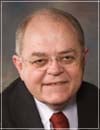
Don Fortner (1950-2020) served as teacher and pastor of Grace Baptist Church of Danville, Kentucky.
Comments
Your comment has been submitted and is awaiting moderation. Once approved, it will appear on this page.
Be the first to comment!