All were anointed with the anointing oil for whom the blood of the sin-offering was shed. — All are born of God for whom blood atonement has been made.
Sermon Transcript
Auto-generated transcript • May contain errors
100%
Many years ago, I read a story
about an event that took place during the Civil War here in
the United States. A farmer by the name of Blake,
I don't know any more about him than just that his last name
was Blake, was conscripted for military service. And when he
was notified that he had to go into the Army, terribly concerned
about leaving his family. His wife was already dead. And
he knew if something happened to him, his children would be
orphaned and there'd be no one to take care of them, to support
them. And the day before he was scheduled
to leave for the army, his neighbor, a fellow named Charles Durham,
came to visit him. He said, Blake, I've been thinking,
you're needed at home. So I've decided to take your
place. Blake was speechless. The offer seemed to be too good
to be true. He grasped the hand of his friend
and thanked him and gave thanks to God for his willingness to
serve in his place as his substitute. And Charlie Durham went to the
front lines. He performed his duties nobly. But on his first day in battle,
he was shot and killed. When Blake heard that his friend
had been killed, he immediately saddled his horse and rode out
to the battlefield and searched for a good while until he found
the body of his friend. He arranged to have it brought
back to the churchyard where they had often stopped after
services and spoken about the things of God. And he arranged
for his burial. and placed a marker over the
grave of his devoted substitute. The inscription was brief, but
there was never an inscription carved in a tombstone more honoring
to the man of whom it spoke or more heartfelt by the man who
did the engraving. It reads, he died for me. With every stroke of the chisel,
tears fell from Blake's eyes as he wrote those words concerning
his friend. He died for me. There is little more moving to
our hearts than such a story. As I said before, I know nothing
about either man except the names I've given you. And my own heart's
moved by it. How sad that our hearts are so
little moved by the fact that there is another man, a man who
is himself God, our Savior, of whom you and I, who are born
of God and taught of God, can say with confidence, he died
for me. The picture of what our Lord
Jesus accomplished for us is given in many, many ways in the
scripture and we have it given to us in the eighth chapter of
the book of Leviticus. Leviticus chapter eight. I wanna
talk to you as God will enable me about that man who is God
who died for me. Let me show you a picture of
him that was drawn 2,000 years before he came into this world.
Leviticus chapter eight, verse 14. And he brought the bullock for
the sin offering, and Aaron and his sons laid their hands upon
the head of the bullock for the sin offering. And he, that is
Moses. Moses is the one doing the sacrificing.
Moses, who pictures the law, justice, and judgment of God.
Moses slew it and Moses took the blood and put it upon the
horns of the altar round about with his finger and purified
the altar and poured the blood at the bottom of the altar and
Sanctified it to make reconciliation upon it Then we read in verse
30 Moses took of the anointing oil and and to the blood which
was upon the altar, and sprinkled it upon Aaron, and upon his garments,
and upon his sons, and upon his son's garments with him, and
sanctified Aaron, and his garments, and his sons, and his son's garments
with him. All who were anointed with the
anointing oil are those for whom the blood of sacrifice was shed. And the teaching is obvious.
All who are born of God, all who are called by the Spirit
of God, all who are sanctified by the grace of God are those
for whom Christ shed his blood in making atonement for our sins. Now I want to focus our attention
on just two things in this message. First, let me speak to you for
a little while about the prominence of our Savior's blood, and then
about the efficacy of his blood. Here's the first thing. Our Lord
Jesus' sin-atoning blood is set forth prominently throughout
this book. The book of God is a book written
in blood. It is all about the blood sacrifice
of our Lord Jesus Christ, his sin-atoning blood, his precious
blood. Take away the blood atonement
of Christ. Take away the shedding of Christ's
blood, and this book is as useless as any other book. It has no
more value than any other book. It's of no more benefit than
any other book. This book is not intended merely
to teach moralisms or to teach doctrine. It's intended to show
us the person and work of Him who shed His blood at Calvary
in the accomplishment of our redemption. The blood of Christ,
his blood sacrifice, his blood atonement, his blood cleansing
is typically unfolded in great detail in this eighth chapter
of Leviticus. Throughout the chapter, the thing
constantly set before us is the necessity and the efficacy of
our Savior's blood, of atonement by his blood, the only means
by which you and I can have reconciliation to and acceptance with the Lord
God. On that day when Aaron and his
sons were consecrated as God's priest, it was the blood of the
sacrifice that was constantly before them and constantly before
the eyes of the people. As Moses went through all the
ceremonies of that day, all the sacrifices of that day, everything
was focused on sacrifice and blood, everything. Here is set
before us three divinely appointed sacrifices. These three sacrifices
could never take away sin, but they portray him by whom God
would put away sin, our Lord Jesus Christ. Let us never, never,
never forget this. The sacrifices of the Old Testament
Those blood sacrifices could not atone for sin. They were
not made to atone for sin. They were not intended to atone
for sin. God gave the sacrifices as a
picture of him who would come and make atonement for sin, the
Lord Jesus Christ, the Lamb of God. And we're told that plainly
in the 10th chapter of Hebrews. Here in this eighth chapter,
in verses 14 and 15 that we just read, is the bullock of the sin
offering. In verses 18 and 19, the ram
for the burnt offering. And then in verses 22, 23, and
24, the ram of consecration. All of this was done by Moses,
not by Aaron, but by Moses. Moses, who represented the law,
the justice, and the judgment of God. Aaron was not yet the
high priest. He is being made the high priest.
He is now being consecrated as the high priest. But the sacrifice
is made by Moses. and the consecration is made
by Moses, and the anointing is given by Moses, and the sanctification
is accomplished by Moses. Now understand the significance.
Everything that we have from God in grace through Jesus Christ
our Lord. Everything we have by God's grace
in salvation. Everything we obtain by God's
grace is given to us on the grounds of justice satisfied by the sacrifice
of our Lord Jesus Christ. We should not be at all surprised
to read what Paul says about this in the ninth chapter of
Hebrews. Just listen. When Moses had spoken
every precept to all the people according to the law, he took
the blood of calves and of goats with water and scarlet wool and
hyssop and sprinkled both the book and all the people saying,
this is the blood of the Testament which God has enjoined unto you.
Moreover, he sprinkled with blood both the tabernacle and all the
vessels of the ministry. And almost all things are by
the law purged with blood. Now, what's the message of that?
Without shedding of blood is no remission. Without justice
being satisfied, no man can be accepted of God. Without justice
being satisfied, sin cannot be put away. Without justice being
satisfied, God cannot and will not forgive sin. As Brother Scott
Richardson used to say so frequently, before God can do something for
you, he's got to do something for himself. Before God can do
something for you, he's got to do something for himself. Before
he can forgive your sin, he must satisfy his own justice by the
sacrifice of his son. What do those sacrifices teach
us here in Leviticus chapter eight? They teach us several
things. Number one, our only acceptance
with God is by blood, the precious blood of Jesus Christ. We are
accepted in the beloved, in whom we have redemption through his
blood, the forgiveness of sins, according to the riches of his
grace. We are redeemed with the precious
blood of Jesus Christ, who verily was foreordained as the Lamb,
without blemish, without spot, before the foundation of the
world. In other words, we cannot come to God, we cannot worship
God, we cannot find acceptance with God, we cannot serve God,
we cannot bring sacrifice to God except through the blood
of Christ Jesus our Lord. Only a bloodstained ear can hear
God speak. Only a bloodstained hand can
do God's work. Only bloodstained feet can walk
in the courts of His house. We can't come to God except by
blood, but oh, blessed be His name. We can come to God by the
blood of His Son. We can come to God through Jesus
Christ our Lord. Brother Mark praying here just
a little bit ago, praying for our own children, those raised
in this church family. They're our children. My children
and your children are our children. Yours are mine, mine are yours.
We ought to pray for them as such. But understand this, understand
this. In this book, God always follows
night with day. He always follows night with
day. We think that night follows day.
Read the book again. In all spiritual things, in every
place in this book, night comes before the day. Day follows the
night. And when God deals with our sons
and daughters, he must deal with them first in nights, in the
night of judgment. If ever you know God in his mercy,
you will first know his judgment. You will never experience his
grace until you experience his judgment. And the judgment is
seen clearly in Christ. And now we come to God Sin being judged in our substitute. And now our sin being judged,
we come boldly to the throne of grace to obtain mercy and
find grace to help in time of need. Throughout this eighth
chapter of Leviticus, we see the value, the efficacy, the
power, and the wide, wide application of the blood. Almost all things
are by the law, purged with blood. Not only is the blood our only
acceptance with God, our only assurance of acceptance is the
precious blood of Christ. When the children of Israel brought
their sacrifices to God, and the priest took the sacrifice
and offered it to God, when Aaron took the paschal lamb on the
day of Atonement and offered it to God, How on this earth
could anybody presume God would accept them? Because they brought
the sacrifice God required and God provided. Our assurance of
acceptance, our assurance of acceptance is the blood atonement
of Jesus Christ the Lord. We look for assurance in all
the wrong places when we look away from the blood sacrifice
of Christ. I know religion teaches us, and
I know our flesh teaches us, and I know we've been taught
all our lives to look in ourselves, to look to our fruits and our
evidences. These are the things that give
us assurance. Any honest man, any honest woman,
who looks even to his faith, let alone his works, let alone
his love for his brethren, let alone his godliness, let alone
his devotion, anyone who looks to anything about himself and
says, there, now I have assurance, has assurance based totally on
a facade of self-righteousness that he knows is a lie. That's
the reason folks don't have any. We have assurance, not because
of who we are or what we do, what we feel or what we experience. Our assurance is in him who is
yonder in glory, Jesus Christ, our priest, our sacrifice, our
acceptance with God. Our Redeemer's presence in heaven
on the throne of grace declares the worth and efficacy of his
atoning blood to our hearts so that we can cry with the Apostle
Paul as he wrote by inspiration, who is he that condemns? Who
is he that condemns me, this man? It is Christ that died,
yea rather that is risen again, who is even at the right hand
of God, who also maketh intercession for me. This Christ, this man. After he had offered one sacrifice
for sin forever, sat down on the right hand of the majesty
on high from henceforth expecting till his enemies be made his
footstool. For by one offering, by his one offering for sin,
he hath perfected forever them that are sanctified. The Lord
Jesus sits upon his throne in heaven as our high priest. There
is our assurance, he ever liveth. He never changes, we're in him. And as he is, so are we in this
world. Christ is our substitute. He's
our high priest. And all who are saved by the
free grace of God are accepted of God in him because of what
he's done. You may recall in Leviticus 16,
before Aaron could make atonement for the people, he must first
make atonement for his own sins. So too, our blessed Savior made
atonement for himself, that is, for the sins of his people that
were made his own. John Trapp, the old Puritan,
put it this way. As he bore our sins in his own
body upon the tree, He was first redeemed by himself and afterwards
we. When he died and was freed from
sin, we died in him and we too are freed from sin in him. He
entered into and took possession of heaven. For himself, yes. Father said to the son, ask of
me, and I'll give you the heathen for your inheritance. He took
possession of heaven as the God-man, our mediator, who had finished
his work, but he took possession of heaven as a forerunner for
us. Took possession of it in our
name, and we took possession of heaven in his name. So that
he who now sits in heaven, we sit together with him in heaven
itself. The Lord Jesus presents himself
to the triune God in all his sacrifices. And we come to God
and present ourselves to him. This attempt of mine to honor
him and preach it, this attempt of yours to honor him in song,
in prayer, in worship. We offer to God, oh, wondrous,
wondrous grace. God accepts this from you and
me. And he accepts us in Jesus Christ,
our Redeemer, our great high priest. The sons of Aaron watched
all of this, and the children of Israel watched all of this,
and Aaron watched this, and he and his sons experienced this.
They were all made to stand accepted before God on the value of one
sacrifice. the bullock for sin offering,
the ram for burnt offering, and the ram of consecration. They
jointly laid their hands upon the head of the sacrifice, and
the sacrifice bearing their sin is accepted of God and they're
accepted of God. Now don't miss this. Aaron and
Aaron alone was anointed before the blood was shed. Read the
chapter again. He was robed in the gorgeous
garments of the priesthood. He was anointed with holy oil
as his son stood over here as it were in the background waiting.
They weren't clothed with the holy garments of the priesthood
yet. They weren't anointed yet. Why? The reason ought to be obvious. Aaron, when spoken of by himself,
typifies our Lord Jesus in his own peerless perfection. a man. Aaron stands by himself
alone. Our Lord Jesus came into this
world and appeared on this earth in human flesh in the peerless
perfection of his own humanity. And in His own person, our Lord
Jesus was anointed with the Holy Ghost without measure, we're
told in John chapter 3 verses 34 and 35. He is that one who
is the Lamb slain from the foundation of the world. And being slain
from the foundation of the world, He is that One who is anointed
of God from eternity with His Spirit. He's called the Christ,
the Anointed One. And then when He came into this
world and was baptized in John, the Holy Spirit descended on
Him and abode on Him. And God gave His Spirit without
measure to His Son. So our Lord Jesus stands before
us represented by Aaron in his peerless perfection as the God-man,
our mediator. And still there's the fullest
possible identification between Aaron and his sons in this anointing
that follows. Look at verse 30. Verse 30. And Moses took of the anointing
oil, and of the blood which was upon the altar, and sprinkled
it upon Aaron, and upon his garments, and upon his sons, and upon his
son's garments. Already preceding, we read Moses
did this for Aaron, now he does it for Aaron again, and for his
sons. And sanctified Aaron and his
garments, and his sons and his son's garments with him. Why
is this? because there is the fullest
possible identification. I don't know how else to say
it. I've got down here between Christ and his people, but between
implies something separate. There's the fullest possible
identification of Christ and his people as one. In Hebrews
chapter two, verse 11, We're told that the sanctifier and
those who are sanctified are all of one. The meaning of those
words is the sanctifier and those who are sanctified are all one. So that we who are sanctified
by Christ are one with Christ, one with him, one with him. This
mystery, I keep telling you, is beyond the scope of my mind
to grasp it, almost beyond the scope of faith to realize it.
Christ and his people are one. Yes, we are distinct. Yet what? Personally distinct, like Aaron
and his sons. And yet spiritually, representatively,
like Aaron and his sons, we are one with Christ. And that enhances
the value of the union. Now, here's the second thing.
As the blood of Christ was prominent in all the sacrifices and services
of the Old Testament, during all the time of the Levitical
law. The blood of Christ is effectual
blood, effectual blood. Now, I won't spend much time
here, but I want to make some statements of fact with regard
to the efficacy of our Savior's blood. Shelby and I have been
talking about this last couple of days. There are multitudes who lead
assault against the glory of God and the gospel of God's grace,
who pretend to be preachers of the gospel, and the point of
their assault is the efficacy of Christ's precious blood. We're
just saying there is power, power, wonder-working power in the precious
blood of the Lamb. I recall When I was a young man
in school out in Springfield, Missouri, folks would lead singing,
and they'd get all excited and carry on, and they'd try to sing,
find out how many times they could say power, power, power,
power, power, power, as they sang it, almost ridiculing the
fact that there's power in the blood of the Lamb, trying to
pretend all the while that they believed in the power of the
blood of the Lamb. The Lord Jesus actually accomplished
Everything he intended to accomplish when he shed his blood at Calvary.
That's what's meant when we use the word ethicacy with regard
to the blood of Christ. It got the job done. With his
own blood, he entered in once into the holy place, having obtained
eternal redemption for us. Everything Christ intended to
accomplish. Everything he intended to do,
he has fully accomplished by his one sacrifice for our sins
at Calvary. What is that? He obtained redemption
for us. He put away sin for us. And now, Christ Jesus, having
died as our substitute, Every sinner for whom his blood was
shed at Calvary shall at God's appointed time be born again
by the power of his Spirit, anointed of God. Anointed of God, just
like Aaron and his sons. Those for whom the blood was
shed, back here in Leviticus 8, all of them received the anointing. And none received the anointing
except those for whom the blood was shed, Aaron and his sons. They and they alone anointed
as God's priests. Do you understand this? That's
not over your head, is it? Everybody for whom Christ died
receives the grace of God by the power of his spirit and are
made priests unto God, they and they alone, because the blood
of Christ is efficacious, effectual, sin-atoning blood. All those
for whom Christ died shall be saved by the power and grace
of God. Look at Leviticus chapter eight,
verse 12. Here's the anointing of Aaron
and his sons. And he poured of the anointing
oil upon Aaron's head and anointed him to sanctify him. Verse 30. And Moses took of the anointing
oil of the blood which was upon the altar and sprinkled it upon
Aaron and upon his garments and upon his sons and upon his son's
garments with him and sanctified them. and his garments and his
sons and his son's garments with him. Between the anointing of
Aaron and the anointing of his sons, several things took place. The blood was shed, the fat of
the sacrifice was consumed, and the breast of the sacrifice was
waved before God. Only then do we read what transpires
in the 30th verse where Aaron and his sons together are sanctified
by the anointing that Moses put upon them. In other words, perfect
atonement was made before the anointing was given. He who died
at Calvary under the wrath of God as our substitute has ascended
to God in his power and by the power of his blood and resurrection
took possession of the throne of heaven. And by that same power
pours out his spirit upon all flesh. That is, pours out his
spirit upon God's elect wherever they're found, Jew or Gentile,
throughout the world. This was done first for Aaron. Our Lord Jesus first has the
Spirit without measure. And now He makes us priests unto
God. The anointing spoken of in the
psalm is that on Aaron's head, runs down to his beard and all
his garments. The whole body of Christ covered
with the anointing oil. Everything was done. exactly
according to the revelation of God, exactly by the word of God,
nothing arbitrary, nothing capricious, nothing that Moses concocted,
nothing that was imagined by him. Everything was divinely
ordained and divinely appointed, pointing us to our Lord Jesus
Christ. Aaron's being anointed. Gives
us a special picture of our Savior. Without the shedding of blood,
There could be no union between Christ and his people. Here's
Aaron and his sons. And the thing that unites them
in the priesthood is the blood of the sacrifice. And the thing
that unites us with God's Son is his precious covenant blood,
his sin-atoning blood. I suppose, I don't know, I suppose
that that phrase that is commonly misused, blood is thicker than
water, is derived somehow from this fact. The blood of Jesus
Christ is that which unites man to God and God to man in the
person of his son. The union could not take place
until the blood was shed. Oh, but pastor, you've said we
have an everlasting union, an eternal union with Christ. That's
because Christ is the lamb slain from the foundation of the world.
All that we experience in time was done from eternity and it
is brought to pass in time only in our experience of God's grace.
As we read earlier, without shedding of blood is no remission. Our Lord's righteous life His
exemplary behavior, His godliness, His devotion could not do anything
for us except by the sacrifice of His blood. Until His blood
is separated from His body, there is no redemption and no remission. But now, Because the atonement
has been made. Because the atonement has been
accepted. Because the sacrifice has been
accepted. We now have God's free grace. And we are sanctified by his
spirit. Only when the atonement has been
accomplished is grace bestowed. Aaron stands alone in the first
part of the chapter. And then as you knighted with
his sons in the latter part. Pretty good picture we have of
that with our Lord Jesus Christ on the Mount of Transfiguration.
There he stands alone. in his transfigured glory, but
standing with him are his sons, Moses and Elijah and Peter and
James and John. He said, touch me not now, I'm
not yet glorified. When he rose from the dead, he
stands there on the Mount of Transfiguration and his people
with him. And we stood with him from everlasting
because God accepted him and accepted us in him from everlasting. And now we're sanctified in him. Moses came and took the blood,
and he put it on the right ear of Aaron, and upon the thumb
of his right hand, and upon the great toe of his right foot,
and put it on the ear of Aaron's sons, and upon the thumbs of
their right hands, and upon the great toes of their right feet,
sanctifying them with the blood. Now this, at least in measure,
describes what sanctification is. As Moses took the blood and
sanctified the tabernacle, and the altar, and the horns of the
altar, and almost all things by blood sanctified them, purged
them, cleansed them with blood, that sanctifying means they were
set apart just for God. Just for God. just for God's
use, just for God's purposes, just for God's service. This
is what our Lord Jesus meant when he said, I sanctify myself,
that they also might be sanctified through the truth. The Lord Jesus
was not made more holy. He was not made more righteous.
What does he mean? He says, I deliberately, purposefully
devote myself to just one thing, to just one thing, to God for
the saving of my people. I'm here to serve one cause only,
the glory of God in the saving of my people. Above all else,
Lindsay Campbell, this is what it means to be sanctified. We've been washed in the blood
of Christ, given his spirit, set apart by God from everybody
else in the world for just one cause. For just one purpose, the glory
of God, the serving of his purpose. Let it be ours day by day and
hour by hour ever to sanctify ourselves unto our God. Oh Lord, you know the voice of
my groaning before you. Let it be ours to devote ourselves
to this one cause, the cause of God and his glory and the
interest of his kingdom. Aaron alone wore the crown on
his turban, holiness to the Lord. His sons looked to him for everything. And you and I look to Christ
for everything. We set ourselves apart to God,
ever trusting Christ. Our only acceptance, our only,
our only acceptance, our only assurance, our only peace with
God is Christ and Him crucified. And then once it was done, you
don't have to read it with me again, but in verses 31 through
35, Abram and his sons were shut up in the tabernacle for seven
days. They were shut up in the tabernacle
for seven days. Seven days being the number of
completion and perfection. They were shut up together, feasting
on the same sacrifice for seven days. What a picture this is
of our union with Christ, waiting for the manifestation of the
sons of God. With him, feasting from the same
basket of consecration. abiding in the same place, keeping
the same charge, holiness to the Lord, preserved on the same
ground, that you die not for seven days, until all the days
of our complete mission, all the days of our complete life,
all the days of our Complete service all the days of our appointed
time are finished And then the eighth day The eighth day hasn't
come yet The eighth day is spoken of in chapter 9 The eighth day
is the day of the glorious manifestation of the sons of God The eighth
day is the day when God sets his elect before wandering worlds
to show forth his glory in the manifestation of the glory of
the sons of God with Jesus Christ our Lord. Until that day, we're
shut up with Christ forever in the holy place. That's the saving
power and efficacy of the blood, the precious blood of Christ.
This is my memorial to my substitute. He died for me. I'm crucified with Christ. Nevertheless,
I live, yet not I, but Christ liveth in me. Christ liveth in
me. The life which I now live in
the flesh, I live by the faith of the Son of God who loved me
and gave himself for me. Amen. That's the power. That's the efficacy of the precious
blood of Christ. It is the blood by which we are
redeemed. the blood by which we're saved,
the blood by which we stand before God, the blood by which we are
safe, and the blood by which we will stand before God forever,
the precious blood of Christ. Amen.
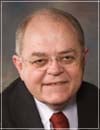
About Don Fortner
Don Fortner (1950-2020) served as teacher and pastor of Grace Baptist Church of Danville, Kentucky.
Comments
Your comment has been submitted and is awaiting moderation. Once approved, it will appear on this page.
Be the first to comment!