And now you got to meet her.
And you know why I married her. We're so happy to be here. I
didn't realize until just before the service began today just
how long it had been since I was here last. So I'm happy to make
reacquaintance with you. And your friend and mine, Brother
Bruce Crabtree, said to me last week, be sure to tell them hello
from me. The last time I was preaching
for Brother Crabtree, maybe the time before that, I was up there
a while back holding a series of meetings for him, and he got
up to introduce me. This is my friend, Brother Crabtree. He started bragging and bragging
and bragging. Only eternity is going to know
how this choice servant of God has been used of God, how many,
how we've been blessed by this servant's faithfulness. And it's
good she brought Mother Dawn along with her too. And that's just about the way
it is. If you'll open your Bibles to the 35th chapter of the Gospel
of Exodus, I believe God's given me a message for you. Oh, may
he be pleased. to speak through these lips of
clay his word by his spirit to your heart and seal it to your
heart for the glory of Christ and the everlasting good of your
souls. The title of my message is a little unusual. I want to
preach to you a little bit about the high honor God puts upon
his people. The high honor God puts upon
his people. The Lord God declares to you
who are his, to you who are saved by his grace, to you who believing
on his dear son, the Lord Jesus Christ, know yourselves to be
nothing but sinners, poor, wretched sinners, utterly unfit for the
company of other human beings. And if you have ever been made
to know what you are, you know you're unfit for the company
of other human beings, unfit for the company of other human
beings, let alone of God. How unfit we are for God. In ourselves, in all that we
are, in all that we feel, In all that we think, in all that
we do, oh how repugnant man must be to God. But God says to you
who are His, to you who have been by His grace through the
blood and righteousness of His dear Son made fit now made fit
now to be partakers of the inheritance of the saints in light, made
fit not only for the company of God's saints, but for the
company of God himself forever. To you, the Lord God says, since
thou was precious in my sight, thou has been honorable and I
have loved thee. since thou was precious in my
sight. Thou has been honorable and I
have loved thee. The highest honor we can or do
give to the triune God is to believe on his dear son. The highest honor man can give
to God is faith in Christ. Our faith in Christ, I fully
know, is his gift to us. And our faith in Christ is our
gift to God. Believing him, we honor him. And God's promise is, them that
honor me, I will honor. Then that honor me, God declares,
I will honor. He says, since thou was precious
in my sight, thou has been honorable and I have loved thee. How does
the infinite God honor man upon the earth? How does God, the God of glory,
honor you? and me while we walk on this
earth. I want to show you how the almighty
honors those, all of those who honor him by faith in Christ. I want to show you from the word
of God, what a great privilege and honor it is. What a great
privilege and honor it is for such things as we are. fallen, depraved, helpless, fickle,
unstable, shifting, sinful men and women. Have I missed anyone? That's all you are, Mitch, and
that's all I am. Just fallen, depraved, sinful,
shifting, fickle, unstable men and women. How on this earth
does God honor such? He takes such things as we are. Now listen to me. Are you listening? He takes such things as we are
and uses us to perform his work. He takes such things as we are
and uses us to perform his work in this world. Oh, how God has
honored this congregation. He's given you his word and the
privilege and responsibility of declaring his gospel to this
generation. Oh, how God is honored. how God
has honored this man who preaches to you. Unto me, who am less
than the least of all saints, is this grace given, that I,
of all men, that I should preach to you the unsearchable riches
of Jesus Christ his son. Now let's look at Exodus 35. Because at first glance, chapters
35 through 39 in Exodus appear to be nothing more than a recapitulation
of chapters 25 through 31, most of the commentaries have very
little to say about these final chapters of Exodus. Most of the
commentators treat them as almost nothing but something just redundant,
a needless repetition. What a great pity. Nothing written
in the book of God is redundant, merely repetitive or unnecessary. At the very least, those things
that are repetitions given in scripture are needful repetitions. In the book of Deuteronomy, Moses
tells the children of Israel. No, that's not right. God tells
the children of Israel through his servant Moses to take the
things revealed to them. And he said, talk of them when
you walk in your house. Talk of them when you walk in
the field. Talk of them when you lie down
at night. Talk of them when you rise up
in the morning. Teach them to your sons and daughters
generation after generation. Tell them over and over and over
again the wondrous works of God. Paul wrote to the Philippians
and he said, It's not grievous for me to write the same things
to you. For you, it's needful. It's needful that we be repetitively
instructed in the simplest things with regard to the gospel of
God's grace, because the simplest, most needful things are things
that affect our souls, things that affect our lives, things
that affect our behavior. They're not just theory. They're
shoe leather doctrine, shoe leather theology, things you walk around
in. Now, the tabernacle in the wilderness
was designed purposefully by God to be a picture of redemption,
a picture of grace, a picture of salvation. Do you remember
when the Lord Jesus appeared on the Mount of Transfiguration
with Moses and Elijah? Luke tells us something strange.
Luke tells us that Moses and Elijah talked to him about the
death he should accomplish at Jerusalem. Do you know what that
word death is in the Greek text? It's the word Exodus. The Exodus
he should accomplish at Jerusalem. And the book of Exodus is all
about the accomplishments of Christ at Calvary as our substitute. That's what it's all about. It's
all about redemption, grace, and salvation by Jesus Christ
the Lord. It's described in chapters 25
through 31, the tabernacle's purpose is described. And God
gave Moses a pattern while he was in the mount. Now some folks
have the idea that God pulled out a set of blueprints and said,
Moses, you do this this way, that way, and the other way.
That's not what he did at all. The Lord God revealed his son
and his son's sacrifice, his son's obedience, his son's resurrection,
his son's glory, his son's salvation to Moses. And he said, now you
go down there and make the tabernacle to portray what you see in him.
Christ is the pattern after whom the tabernacle was constructed.
In chapters 35 through 39, Moses gives us by inspiration a record.
of how the tabernacle was actually made according to the pattern
God gave Moses in the mount everything was finished exactly according
to the pattern that's very important in itself you see this tabernacle
when you get to chapter 40 you read about it all those skins
all those cords and stakes, our friend by the many, we call them
pins, the tent pins, all those pins that held the tabernacle
up, all the furnishings, all the elaborate furnishings in
the outer court, in the holy place, in the most holy place,
all of those things, with all the boards and sockets of silver. Do you know how long it took
them to set that thing up? Read chapter 40, God so designed
the tabernacle that the whole thing could be set up in the
wilderness by one man in one day. Exactly according to the
prophecy of Zachariah chapter three, when the Lord God promised,
I will remove the iniquity of the land in one day. So that
the whole thing was designed to portray the accomplished work
of our Lord Jesus Christ in that one day. Now, this is important
to recognize that in chapters 25 through 31, God says, this
is what I'm going to do. In chapters 35 through 39, he
brings this thing to pass. In chapter 40, the work is finished.
Because typically, that's just the way God represented to us
his work of salvation. what God purposed in eternity,
the salvation of his people. We call that predestination,
election, covenant grace, the purpose of God, the purpose of
God. That which he purposed, he did.
It was finished. The works were finished from
the foundation of the world. Well, if that's the case, time
doesn't matter. I beg your pardon. What God purposed,
God performs in time for the glory of his own great name.
And everything he purposed in eternity, he brings to pass in
time. And the redemption he purposed
in eternity, he accomplished at Calvary when God the Son,
bearing our sin in his own body on the tree, put away sin. by
the sacrifice of himself, and he cried, it is finished. It is finished. And there, redemption's
work was accomplished. But we come to experience it
in time. In the work of God's grace in
us, when he raises the dead to life, giving us life and faith
in Jesus Christ, we begin to experience something. that we
will continue to experience forever in heaven's eternal glory. It's called redemption, grace,
and salvation. God's salvation by Christ Jesus
is portrayed here then in the tabernacle, both in its purpose,
in its experience, and in its consummation at last in resurrection
glory. But let's look at how the chapter
begins. I'm going to read this 35th chapter with you, most of
it anyway. And as we do, you'll see that it's a chapter all about
doing stuff. It's all about doing stuff, working,
working. But the chapter begins in a rather
strange way. It begins by requiring rest. Look at verses 1, 2, and 3. Moses gathered all the congregation
of the children of Israel together and said unto them, these are
the words which the Lord hath commanded that you should do
them. Six days shall work be done,
but on the seventh day there shall be to you an holy day,
a Sabbath of rest to the Lord. Whosoever doeth work therein
shall be put to death. Ye shall kindle no fire throughout
your habitations upon the Sabbath day. Here the children of Israel
are serving God with willing hearts. God's chosen people making
sacrifices for the building of the tabernacle with joy, laboring
with gladness. But the chapter begins with a
commandment to rest. Why? Are you listening to me? Service to God. Service for Christ begins with
no service. Service to God, service to Christ,
working for God begins with a total cessation of works on your part. You will never know God until
you come to rest in Jesus Christ, confessing all your goodness,
all your righteousness, all your nobility to be nothing but filthy
rags before God. Good works do not stand you in
good stead with God. Not before you're saved, not
in the process of being saved, not after you're saved. Good
works merit you nothing from God Almighty. People talk about
being saved by their works. And then fools say, no, we believe
in salvation by grace, but you got to work and God's going to
reward you in heaven. You'll get some big crowns. And
you know, some fellas have some bitty crowns, they'll be lopsided,
have to walk like this. What did you ever do? You think for
a minute. Forget what you did. What did
you ever think? that you think is worthy of meriting
something from God. You never had a thought that
wasn't sin. You never had an imagination that wasn't corruption,
me too. That's what's in us by nature.
If you would be saved, If you would worship God, if you would
walk with God, if you would wind up in Heaven's glory with God
our Savior, you begin by stopping trying to please God. You can't
do it. You cannot make up to God. Many
years ago, my mother and dad had been visiting with us for
a while, and I always tried to witness to them when they came.
They had religious notions. Going out the door on his way
out, my dad, tears running down his cheek is just as sincere
as all get out. He said, Don, son, someday before I leave this
world, I hope I can make up to God for all that I've done. And
I said to my dad with tears burning my cheeks, and I don't think he ever heard
me. Dad, I hope you'll quit trying
to make up to God. You can't do it. Only Christ
can and only Christ did. Now let me tell you what the
Sabbath was all about. We don't keep a Sabbath day, that is folks
who worship God in spirit and in truth don't, and folks who
pretend to keep a Sabbath day don't either. Now, I've got a
lot of friends who pretend to, none of them did. None of them
do, none of them can. That's just not a possibility.
I observe the Lord's Day, we worship God on Sunday, and I
generally try to avoid doing things that would imply any disregard
or disrespect for the Lord's Day, but if somebody came along
and they said, if you mow your lawn on Sunday, you've broken
the Sabbath, and he'll stay at my house, I'd probably get my
shorts on, go out and mow the yard Sunday afternoon. I hold such
nonsense in contempt. Christ is our Sabbath. Do you
see what God's created? This is the last time in the
book of Exodus he speaks about Sabbath. And here he adds something
that's never said before. He said, don't even light a match
on the Sabbath day. Don't even kindle a fire. Why
did he add that? Nothing, nothing, nothing. If you would be saved, you must
do nothing. Some of you here are without
Christ right now. Come to it right now. Don't say
anything. Don't even say a prayer. Don't
move. You can't get to him by walking
in front of a church building. Well, that's how grandma got
saved. No, she didn't. She just got religion that way.
You can't get to Christ by coming to an altar, be it Baptist or
Papist. It doesn't matter. The only way
you get to Christ is by faith. What do you do? You rest in him. Come unto me, all ye that labor
and are heavy laden, the Savior said, and I will give you rest. You quit working, you quit trying
to earn your way to heaven, you quit trying to appease God, and
you, ceasing from your works, enter into rest with Jesus Christ
the Lord, at rest with God. or at rest with God, then you
can do what the prophet Isaiah speaks of that nobody else in
the world has ever done. You come to Christ and you rest
in him and you call the Sabbath a delight. You call the Sabbath
a delight. I'm not sure whether Brother
Minnie was there or not. First time I was in England was
1987. And I was there for a conference that the Evangelical Times had,
and I think I probably ruined it for them forever. They've
never had another one. But on Sunday afternoon, we were at
a farm, a large farm somewhere up north of England, and the
children were standing around. And they were standing around
like this. by the Allen Jennings children.
They were that high and starting down there. They were just little
fellows. And I said to them, I really did know what I was
saying, but acted like I was ignorant. I said, you kids want to play
ball? Man, you'd have thought of asking if they wanted to get
naked and go skinny dipping. Folks were shocked to death. They'd
never heard of such a thing. We can't do that. It's the Sabbath. What nonsense. What nonsense. Folks keep the Sabbath, they
pretend to, none of them call it a delight. I call it a delight. Do you? I call it a delight. I rest in Christ the Lord. Can you? Can you, dare you, rest
your soul entirely on the blood and righteousness of God's darling
Son with no works, no righteousness, no goodness, no emotion, no feeling,
no knowledge to bring to God just His Son? That's what God
requires. Come to Christ right now, right
where you are, if you can. If you do, you can't resist his
grace and I'm telling you it's because God chose you. Christ
redeemed you and the spirits called you. All right now, look
at verses four through 19. Here we see God bestowing a great
honor upon the children of Israel. He so highly honored them that
he allowed every man and woman in the nation of Israel to have
a hand in making the tabernacle. Isn't that something? Isn't that
something? And my dear friend, Sheena, what
on earth could I ask you to do now? He allows every man and
woman in the nation to have a hand in making the tabernacle. No
exceptions. No exceptions. Without question,
God did not need their assistance. Everything the children of Israel
brought to him, he had given them. And yet, the Lord God condescended
to use the people he brought out of Egypt to establish his
place of worship and all things connected with his worship while
they were in the wilderness. Look at verse four. And Moses
spake unto all the congregation of the children of Israel, saying,
This is the thing which the Lord commanded, saying, Take ye from
among you an offering unto the Lord, whosoever is of a willing
heart. Let him bring it. An offering
of the Lord. Verse 10. And every wise hearted
among you shall come and make all that the Lord hath commanded,
the tabernacle, his tent, and his covering, his tashes, and
his boards, his bars, his pillars, and his sockets, the ark, and
the staves thereof, with the mercy seat and the veil of the
covering. Verse 18. the pins of the tabernacle that's
the tent nails and the pins of the court and their cords the
claws of service to do service in the holy place the holy garments
for Aaron and the priest or Aaron the priest and the garments of
his sons to minister in the priest office great as that privilege
was imagine God's gonna establish a sanctuary for God in the wilderness. And he says, bring whatever you
want to, and I'll make you a builder of my house. What have I got? I get to go build the house of
God. High as that honor is, God has
given you an indescribably higher honor. That pales to insignificance
when compared to the privilege the Lord God has put on you and
me, every believing sinner in this world. You see, God Almighty, I'm afraid you won't hear me.
I want you to listen. God Almighty has chosen to make
himself known to sinners only by you. You are my witnesses, he said. Well, God's sovereignty can save
sinners any way he wants to. Yes, yeah, and the way he wants
to is through the foolishness of preaching. That's exactly
right. That's exactly right. Sinners
aren't saved any other way except somebody who knows his grace. Go tell sinners about his grace. The Lord God says, you are my
witnesses over and over again. I find it interesting to look
at the origin of words. A lot of our English words are
really transliterations from other languages. Transliteration
is a word that's used, it's invented, it's coined. When a translator
is trying to translate a word from one language to another
and there's no word in English exactly like that word, so we
will just write it out in English letters the way it's spelled
in this language. Our word baptize is a transliteration
of the Greek word in the New Testament. because there was
no word that the folks who translated the King James translation, which
I am fully convinced is the best there is, but they were pedo-baptists. They sprinkled water on babies
and called it baptism. So rather than translate the word baptize
as it very well should be translated, immerse, dip, or plunge, they
said, no, we will just translate it and that we will call, or
transliterate it, that we will cause no offense to anybody.
And so they just invented a word called baptize. Our word photo,
our word photo, it's a transliteration of the Greek word light. Just
a transliteration. Our word dynamite, our word dynamite,
that's a transliteration of the word that's translated in Romans
1, power, power. And the word witness. Anybody
got any idea, other than you preachers, anybody got any idea
what that word is? If you were to write it out just
from the Greek letters into English, you'd spell it martyr. Martyr. God says, you shall be
my martyrs. You shall be my martyrs. You
are my martyrs. What's a martyr? A martyr is
a person who willingly lays down his life in a cause, a cause
worthy of promotion, even at the cost of his life. Oh, what
a high honor. God has made us his witnesses. You turn to 2 Corinthians 5.
Let me read you some statements from scripture. Ye are my witnesses,
saith the Lord, and my servant, whom I have chosen. that ye may
know and believe me and understand that I am he before me there
was no God formed neither shall there be after me I even I am
the Lord and beside me there is no Savior you're my witnesses
fear ye not neither be you afraid Had not I told thee from that
time and had declared it, ye are even my witnesses. Yea, there
is no God, I know not any. Our Lord Jesus spoke to his disciples
after the resurrection and he showed them his hands and his
side and the disciples were glad when they saw the Lord and then
Jesus said to them, peace be unto you. I haven't yet gotten the fullness
of this, but oh, what a word. As my father hath sent me, even
so send I you. As my father, for the same reason,
for the same purpose, to the same end, as my father hath sent
me to save my people from their sins, That's how I've sent you
into this world. You receive power. After that,
the Holy Ghost has come upon you and you shall be witnesses
unto me. Now look at 2 Corinthians 5.
Let me show you what it is we're to witness of. Verse 17. This is what God tells us to
declare. This is what God sends his servants
to declare. This is what God sends his church
to declare for the building of his church and kingdom. Verse
17, therefore, if any man be in Christ, he's a new creature. Old things
have passed away. Behold, all things have become
new and all things are of God. who hath reconciled us to himself
by Jesus Christ, and hath given us the ministry of reconciliation. And as God reconciled us to himself
by the sacrifice of his Son, and has given us the service
of reconciliation, the service of calling sinners redeemed by
the blood of Christ to be reconciled to God. Read on. to wit that
God was in Christ reconciling the world. Now let me read that
exactly as it is intended to be. Reconciling his elect wherever
they are in the world. Reconciling the world of his
elect. It's nonsense. It is nonsense to imagine that
God was in Christ reconciling everybody in the world to himself.
He wasn't. If he was, the whole world would
be reconciled to him. He was in the world reconciling his
elect wherever they're scattered, men, women, boys, girls, old,
young, bond, free, black, white, any corner of the earth. He was
in Christ reconciling the world of his elect unto himself. Now,
and he's given to us the ministry of reconciliation. He's committed
to us the word. The word of reconciliation. What
is that word? This is the message. Now that
we're ambassadors for Christ, as though God did beseech you
by us, we pray you in Christ's name, just as if God is standing
here talking to you. Just as if Christ is standing
here talking to you. Be ye reconciled to God. Quit fighting God. Give up the
warfare. You're gonna lose this war. Either
now in grace, triumphing over you, are in judgment with justice
destroying you. How come? Why should I be reconciled
to God? For he hath made him to be sin
for us. That's how God reconciles sinners
to his son, to himself and his son. Who knew no sin? For what purpose that we sinners
such as we are might be made the righteousness of God in him. Now, back to Exodus 35, look
at verses 20 through 29. See here the people God uses
and the gifts we bring to him by which he's honored and served. Now let's apply it just as personally
as possible. Scriptures are of little benefit
unless you apply them personally. Look around you for just a minute. Quit looking here for just a
minute. Just look on each side of you for just a second. Look
at you. Now look up here. Do you see
the people God uses to build his kingdom? Do you see the people God uses
to save his people? Do you see the people God uses
to proclaim his gospel? To declare his glory? Do you
see the people God has chosen to use to gather his elect out of the
four corners of the earth in this generation? You see your
calling brethren. Not many wise, not many mighty,
not many noble, but God's chosen the foolish things of this world.
Weak things, base things, things that are not, just nothings,
nobodies. Such things as we are, such things
as you are, such things as I am. men and women out of whom those
who know us best would never expect anything good. How come? How come that no flesh
should glory in his presence? If God Almighty is pleased to
use something Don Fortner says, or does or writes for the benefit of any man's
soul. It's not because of anything Don Fortner possesses or has
or can do. Nothing. My wife would tell you
when God saved me, I'd bluffed my way through school. I'd actually
been kicked out of school. And when I was 17 years old,
first started preaching, I couldn't read. I'm not talking about I
couldn't read a little, I couldn't read. I could stumble through
words on my own. But to read publicly, my daughter
read better when she was six than I read when I was 17 years
old. I just bluffed my way through school. How could God use something
like that? Same way you can use frogs and
lice to destroy a nation. Same way you can use something
like you. Sinful, corrupt. base, vile. We're better now,
are you now? Are you now? You act better,
you haven't become any better. Just sinful, vile, base, corrupt. But of him are ye in Christ Jesus,
who of God is made unto you wisdom, and righteousness, and sanctification,
and redemption, And according as it is written, he that glorieth,
let him glory in the Lord. You see, we have this treasure,
this treasure, the gospel of God's grace, in earthen vessels,
Paul said. Earthen vessels. Earthen vessels
are just clay pots, but not those rich extravagant clay pots that
folks will spend a fortune to dig up in the Far East somewhere.
No, no, no, no, no. I'm talking about just something
somebody molded out of clay and it fell off the floor and got
broke. We have this treasure in earthen vessels, broken clay
pots. God puts the treasure of the
gospel in these hands and carries it
to you that the excellency or the power
may be of God and not of us. Who are the people God uses to
honor himself? Who are those people he used
to make the tabernacle? Look at verse 20. They were a
chosen covenant people as you are, the congregation of the
children of Israel. The offerings they brought were
the Lord's offering, that which the Lord had given them, that
which really was the Lord's, that which they acknowledged
to be the Lord's. Both men and women, rich and poor, both the rulers and the laborers
who worked for the rulers brought their offering to the Lord, each
one serving God with what God gave them in the capacity where
God put them. That's what you have in verse
22 through 25. Each one serving the Lord where they were with
what God put in their hands in the capacity God had given them. Look at verse 25, 22. Men and
women, as many as were willing-hearted. Verse 23, every man Verse 24,
everyone, every man. Verse 25, all the women that
were wise hearted did spin with their hands. Verse 26, all the
women whose heart stirred them up in wisdom spun goat's hair. The offerings were offerings
of a willing people who did what they did with willing hearts,
just because they wanted to. You see, that's the only service
God will ever have. That's the only service God will
ever accept. The only service God will ever use. Men and women
who do what they do, performing it with willing hearts, just
because they want to. If there be first a willing heart,
then it's accepted according to what a man has and not what
he has not. The soldiers in Christ's army
are volunteers. They're made willing in the day
of his power, but willing they are. Our willingness comes by
his grace, but willing they are. Oh, my. I wonder what God would
let me do today for him. For him. The materials out of
which the tabernacle was made were provided by the voluntary
offerings of God's people. Our folks at home, if you care
to write to one of them or call one of them or come visit us
and ask them face-to-face, will tell you in a heartbeat, I put
no pressure on anybody to do anything, anytime, except the
pressure of the gospel of God's grace. The surest way for me
to never ask you to do anything again is just say no one time. That's the surest way to get
it. I'm not a beggar for God, and God's not a beggar to you.
God's people give because they want to, not because they have
to. They don't pay a tithe, the religious tax, they give. They
don't raise money for the cause of Christ by bake sales, they
give. They give, they give, they give, and they give themselves. They serve the cause of Christ,
inspired by nothing but reverence, gratitude, and thanksgiving.
Moses just told these people that the Lord God Almighty who
brought them out of Egypt, who destroyed all their enemies,
God their Savior and Redeemer, was willing to receive a gift
from them. Willing, God is, to receive a
gift. from the likes of you and me. He didn't tell him what to bring,
how much to bring, or even command him to bring it. He just said,
he said, the Lord's willing to use whatever you bring to him.
And each one brought what he had in possession. Some brought
silver, some brought gold. And you know what some of those
fellows brought? They brought wood. How come? Because wood's what
they had. Each one brought only as much as he wanted to bring.
No more, no less. His heart dictated what he brought.
And when they got done bringing everything they brought, there
was more than enough. Moses said, you keep the rest
of it. We got more than enough to finish the work. That's how
God's people serve him. You see, if the God of glory
calls us to do a work, The God of glory will supply everything
needed for the work. I'm 60, how many? 68 years old this year. I've
been preaching the gospel of God's free grace for 51 years. I've never asked anybody for
a dime for anything for me. I've asked you for the folks,
not for me, not for me. How do you get from place to
place? I managed to get by. Well, how do you eat? Do I look
like I've lost many meals? God supplies every meal. I own
nothing. I have nothing. I want nothing.
You see, God's servants are God's servants. God's church is God's
church. Your pastor and I, and some of
you, we talked about the difficulties y'all have gone through. If God's
in this, he'll make a way if he has to turn the world upside
down. Now, forgive me, I use the wrong words. God never has
to do anything if he chooses to turn the world upside down.
And I like to see him turn the world upside down once in a while,
don't you? He just turns things inside out. And wow, don't that
happen. So Peter Bennett come to Great
Falls, Montana, preached the gospel. That's why. No other
reason that anybody can figure out except the folks who listen
and profit by the word. Now, one more thing. Look briefly
at Bezalel and Aholahab. They typify our blessed Savior,
the Lord Jesus Christ, who builds his church. As is commonly the
case in scripture, the names of these men are highly significant. The first man named is Bezalel,
verses 30 through 35. His name means in the shadow
of God, or the protection of God. That's a pretty good picture
of Christ. He is that one who is the shadow
of God. He comes God in the flesh. And he is the protection of God
who encamps round about his people. Aholiab means the tent of the
Father. And our Lord Jesus Christ is
God manifest in the flesh. dwelling among us, whose glory
we beheld as the glory as of the only begotten of the Father,
full of grace and truth. But Bezalel and Aholam clearly
also represent faithful pastors, gospel preachers, men appointed
of God as overseers in his house. Look at verse 30. See, the Lord
hath called by name Bezalel, Verse 31, and he hath filled
him with the spirit of God in wisdom, in understanding, and
in knowledge. Verse 34, he hath put in his
heart that he may teach, both he and the Holy Lamb. Verse 35,
them hath he filled with wisdom of heart to work. These men,
like all men called of God, were called to the work God gave them. They were men filled with the
Spirit of God. Their lives controlled by, led
by, under the influence of God the Holy Ghost. And they were
gifted, gifted men. Bezalel and Holeb gifted specifically
to do the work God had called them to do. They were specifically
gifted to do the work God had called them to do. And God's
servants are specifically gifted for the work God calls them to
do. They were cunning, skillful men, given gifts and wisdom and
understanding by God to feed his church with knowledge and
understanding. They were workmen. Verse 35,
they're called workmen, workmen. That's God's servants. I will
tell you something about faithful pastors, faithful pastors. I'm not talking about Harlan,
I'm talking about faithful pastors. Faithful pastors are men who
labor in the word and in the doctrine. I have a friend of
mine who was speaking to me about his young pastor just a few weeks
ago. The young pastor I've known all
his life and recommended him to the church, very dear to me. He said, brother Don, I drive
by his office seven o'clock in the morning, he's there. And
I drive by his office at six o'clock every night, and he's
still there. That's what you call a pastor. They labor in
the word. and in doctrine. You see that
you love them, have esteemed them in love for Christ's sake.
Know them, pray for them. What a high honor God put upon
those men. Little did Bezalel or Aholam
know that all those years they were under the lash of Pharaoh's
whip. God was preparing them to build
him a house. God was teaching them how to
be skilled in the work he had ordained for them to do, to establish
his tabernacle in the wilderness. So it is with God's servants.
Whatever it is that God would have you to do, whether it's
to serve him in the dark heart of New Guinea or to serve him
in the dark heart of New York, God's service, whatever it is
he has for you to do, whether it is yours to dig coal for a
living 16 hours a day and come worship God and give what you
can and mow the yard on Saturdays, whatever it is, God puts in your
hand to do, bearing witness for him for the furtherance of the
gospel. Oh, what an honor, what an honor. God let me do this
for him. Yesterday morning, Friday, I'm
sorry, Thursday morning, I buried a dear friend, Brother Bobby
Estes. He was 82 years old. The Lord
took him home Friday a week ago. I remember when Bobby first came,
started attending services. He was about 50 when I met him,
maybe a little younger than that. No, he was about 50. He married
one of the ladies in our congregation, and he wasn't much interested
in gospel. Like most people, he was religious,
but he worshipped when in real worship places and didn't know
God from a bit ago. But he came once in a while,
just once in a while. Maybe once a month, maybe a little
less than that. And then one Sunday morning, I announced Tuesday
night, I'm going to begin a series of studies in what folks commonly
call Calvinism. I don't like the word, but that's
what it's commonly called. We have a reputation, and I do
like the reputation. Folks call us hyper-Calvinists.
They say it nasty. Hyper-Calvinists. I'll be preaching
on that for the next several weeks. That Tuesday night, there
I sat in my bed with his wife. He'd been sitting right there
every service, unless he could not be there every service since
then. After about a year, a year and
a half, he came back to me at the door one morning and shook
my hand. He said, Brother Don, he said, I believe God saved me. I want
to confess him and believe his baptism. And we arranged it. He confessed Christ. In just
a little while, one morning I was over at the office working and
I heard noise outside. Here came Bobby Estes. He had a truck,
trailer, and on that trailer he had a tractor and a bush hog,
and he's unloading it. We got about 10 acres of ground
there. He started mowing the grass. Every week, every week
until he was hospitalized, he mowed that grass from then on.
Nobody asked him to. Nobody suggested it. He just
saw something he could do, and he did it. Very few people knew
this. Matter of fact, nobody knew except
my wife, and she didn't always know it, and Bobby and myself. If Bobby had been in Danville
when I started coming up here, you know what he'd have done?
On the way out the door, the last service folk came up here,
he'd have stuck a little folding bun in my hand to go out to dinner. Every time, almost every time.
What were we doing? Doing what he could. Doing what
he could. My brother Bob Potser, another
one of our deacons, the Lord took him several years ago. He
used to say to me, he said, brother Don, I can't go preach, but I
can do this. I can paint, I can drive a nail, I can do this,
I can do the other thing. You remember that woman in Mark 14
who came, that old harlot, God has saved. She came and did something. Folks mocked her. Can you imagine
her, the daring audacity of that old harlot? The Lord Jesus is
at the Pharisee's house, and she came in and bought an alabaster
box of ointment. It was worth 300 pence. You know
what 300 pence was? That was a year's wages. She'd
been saving it up her whole life, I expect, for her old age. But
the Lord has saved her, and she understood his doctrine. She
understood he was about to die to redeem her. And thinking on
those things, she came in and broke that alabaster box open
and anointed him for his burial. And she washed his feet with
her tears, kissed them, and wiped them with the hairs of her head.
And Judas said, what is she doing? Look at that shameful thing.
That money could have been taken and given to the floor. And all
the other disciples joined in. Isn't it amazing how quickly
we follow ungodliness? Isn't that amazing? Somebody
starts to yack, say something bad, did you hear that? How quickly
we follow ungodliness. And our Lord rebuked. He said,
I'm going to tell you something about this woman. Wherever the
gospel is preached, what this woman has done will be spoken
of throughout the world. You leave her alone. I'll tell
you what she's done. Are you ready? I'll tell you
what she's done, and I'll tell you what you can do. She has
done what she could. Oh my God, give me grace to do
what I can to my dying breath. Amen.
About Don Fortner
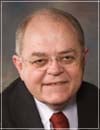
Don Fortner (1950-2020) served as teacher and pastor of Grace Baptist Church of Danville, Kentucky.
Comments
Your comment has been submitted and is awaiting moderation. Once approved, it will appear on this page.
Be the first to comment!