Bootstrap
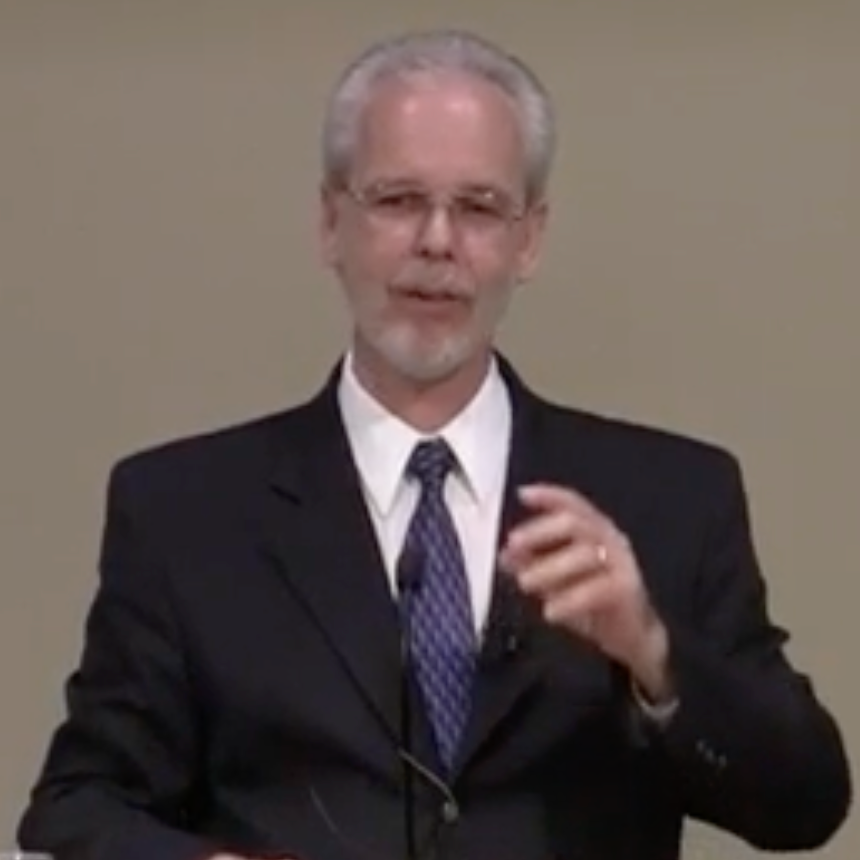
Mark Daniel

Imputation's Single Foundation

Leviticus 7:15-18
Mark Daniel January, 23 2008 Audio
0 Comments
Mark Daniel
Mark Daniel January, 23 2008

Sermon Transcript

Auto-generated transcript • May contain errors

100%
Please be finding your way to
Leviticus 7. And while you're trying there, let me just mention
that it was made known to us just before service that Debbie
James' dad has passed away, Tim James' wife, and let's do remember
her and the family during this time. Leviticus chapter 7 deals with
the subject of imputation. I'm particularly interested in
trying to teach this evening about one particular aspect of
imputation. This passage emphasizes the single
foundation of imputation. Let's let's read the verses and
we'll talk some more about that. Verse 15. And the flesh of the
sacrifice of his peace offerings for Thanksgiving shall be eaten
the same day that it was offered. He shall not leave any of it
until the morning. But if the sacrifice of his offering
be a vow or a voluntary offering, it shall be eaten the same day
that he offers his sacrifice and on the morrow also the remainder
of it shall be eaten. That is at the very latest. But
verse 17, the remainder of the flesh of the sacrifice on the
third day shall be burnt with fire. And if any of the flesh
of the sacrifice of his peace offerings be eaten at all, On
the third day, it, that is the sacrifice, shall not be accepted,
neither shall it be imputed unto him who offers it. It shall be
an abomination, and the soul that eateth of it shall bear
his iniquity. Imputation only has one foundation. It's a single element, a single
truth, a single reality. And that foundation of imputation,
contrary to what almost everyone universally believes, is not
faith. Faith is not the foundation of
imputation. Let me give you an example of
what I was taught years ago as a young religionist lost and
as far away from the gospel as I could be in Bible college.
I remember one day in Dr. Hampton's math class, we'd been
studying greater than, less than, and equal to. And when he got
to the lesson on equivalence, he stopped and he said, you know,
this thing about equal to can be no better illustrated than
by the doctrine of imputation. Well, I was a young lost religion
and seeking to be a young lost theologian, so I was greatly
interested in how math could teach me something about theology.
So I perked up my ears and he made this statement. He said,
Abraham believed God. And it was accounted unto him
for righteousness. He went on to say, therefore,
in mathematical terms, faith equals righteousness. If we put
our faith in Jesus Christ, then he will count it the same as
righteousness. I want to be very clear right
up front that nothing could be further from the truth. Faith
cannot be, absolutely cannot be, The foundation for imputation
God does not impute righteousness into a single one of his people
because they believe. Whatever else you understand
about that verse a math teacher quoted or its original verse
back in Genesis fifteen six it is not teaching that if you believe
God will impute righteousness unto you this however teaches
exactly. The very heart of this passage
teaches exactly what imputation is based on. Did you see that
part down there in verse 18? It, that is the sacrifice, notice
these two words that stand out, shall not be accepted, neither
shall it be imputed to him who offers it. Imputation rests solely
on this foundation, whether or not the sacrifice is accepted. This works very simply. If the
sacrifice is accepted, righteousness must be imputed. And yet if the
sacrifice is not acceptable, it will never be imputed. It's
all founded on the sacrifice. The sacrifice is the foundation
of righteousness. Faith, however, is the means
by which we partake of it. Did you notice in this particular
type of sacrifice the whole The subsequent act after it had
been offered on the altar was to partake of it, to eat it,
actually to consume it all. And that is what faith is illustrated
in. To consume the sacrifice is to
partake of that righteousness of Christ that's been imputed
to us. Look in Romans chapter 4. Let me share with you something
from this latter part of that chapter and on into the fifth
that makes this so very clear for us. Romans 4 verse 23. This is speaking of Abraham. Now, it was not written for his
Abraham's sake alone, but it was imputed to him that righteousness
was imputed to him. But for us also, to whom it shall
be imputed if we believe on him that raised up Jesus our Lord
from the dead. Now, if you stop right there, doesn't it sound
awfully much like what my math teacher was saying? If you believe
it'll be imputed to you. But let's read on. Verse 25. Jesus our Lord from the dead,
who was delivered because of that is the actual meaning of
that preposition translated for who was delivered because of
our offenses. He had no reason. He had no reason
to die if it wasn't for the sin our sins upon and that's the
only reason God killed him. Had our sins not been present
in his body on the tree, God would have not killed him. God
couldn't have killed him. God can't kill a righteous man. You
know, let me stop and say this about that. This thing about
the Lord's death is not it's not play acting with God. It
wasn't a matter of God making a deal with his son that somehow
he would say, well, son, I know you're not guilty, but I'm going
to have to treat you like you are. You know, I know you didn't
do any of these things, but I'm going to have to follow through
as though you did. Oh, no, that's not what it was.
There was a true, a true transference. Of sin to the Savior of God couldn't
killed it. God can't kill the righteous
man. He's just his holiness would prevent it. But he says he was
delivered because of our fences then and look at this and was
raised again because of our justification because his death was successful. The sins were atoned. Then God
was obligated to raise him up in evidence of that. Now look
at verse 5. The first word of Chapter five, verse one. Therefore,
is actually in the original, the third word in the sentence,
and I'd like to read it that way because it stands between
two thoughts that often get confused. He was raised again because of
our justification. Having been is actually the past
perfect tense, having been justified, therefore, why for because he
was offered he was delivered. And because he rose again to
prove it, having been justified, therefore, and then he goes to
the next thought, by faith, we have peace with God. It's the
justification of Christ's work. That's the foundation of imputation.
And then after that is faith, which is the laying hold of it.
Look what it said. By faith, we have peace with
God. We come to partake and actually become righteous through union
with him. through our Lord Jesus Christ, and he adds accent to
that in verse two, and he says, by whom also we have access.
That word access is not just the possibility of access, but
the word access literally means a coming to. Faith is a coming
to the righteousness of Christ. It's the coming to in our experience,
the coming to in our understanding, the coming to in our oneness
with Christ. That's what faith is all about. Now, let's go back
to our text before I get too far away. Back in Leviticus. The problem shows up clearly
in verses 15 and 16. We have twice repeated there
that these types of sacrifices were to be consumed on the very
first day. I believe any saved Israelite
at that time had no trouble doing that. For any saved Israelite
would have certainly seen the symbolism of actually eating
the sacrifice, partaking of its flesh. They would easily have
seen that union with Christ, union with the Savior, oneness
with the offering, and therefore receiving of its benefits was
what was prefigured in that. They would have had no trouble
eating that thing. I dare say a lot of them ate it before they left
the tabernacle. But then there were those others that for whatever
reason may not have been able to have completely eaten it that
day. And he said, at the outside limit, the next morning. And
he said, here's a problem. Now, the problem that was going
on here was based on this. Now, this was a very humid and
arid climate there. It was desert. It was probably
temperatures that ranged much like the mid-south of our country.
You might, if you offered a sacrifice one day and it was left overnight,
it would probably be okay the next morning. But if you let
that thing out in the kinds of temperatures that they had two
days and waited till that third day, you're talking roadkill. No, you're talking a sacrifice
that in no way, in no way could foreshadow the glorious death
and resurrection of Christ. And he said, it shall not be
eaten. He said, if you do, if you eat this, look there in verse
18 again, if any of the flesh of the sacrifice of his peace
offerings be eaten at all, On that third day, and I don't think
it's by mistake or by coincidence that the third day is mentioned
twice in this in this verse, because the point of this passage
is, is that a rotten piece of flesh cannot symbolize the glorious,
satisfactory atonement of the Lord Jesus Christ. A sacrifice
that was left to rot would be the clear image of God leaving
his son to rot in the grave because he didn't succeed. Let's take
a look. We already read that earlier
in Romans, or actually in Psalm 16, but I'd like for us to look
at the commentary on that in Acts chapter 2. In Acts 2, Peter
actually spends a good bit of time on that passage out of the
Psalms in his message on the day of Pentecost. Let's spend
just a few moments there. Look at verse 25. For David speaks concerning him. He says he's speaking about Christ
in that passage, and therefore we know that the words were the
words of the Lord Jesus to his father, looking to him in trust
that he knew that what he was about to do as it is as it was
to bear the sins of his people would not go unfulfilled. He
says, I foresaw the Lord always before my face. He's on my right
hand. that I should not be moved. Therefore
did my heart rejoice. My tongue was glad. Moreover,
also my flesh shall rest in hope, even though I know I will die
under his wrath. I am dying in hope. He had the
sure knowledge. He knew who God was. He knew
who the Father was. He knew the holiness and the justice of God.
He had no fear of dying under his wrath without hope, for he
knew a just God would honor a sacrifice like that. He said, therefore,
My flesh shall rest in hope, verse 27, because thou wilt not
leave my soul in hell. Neither wilt thou suffer, thine
holy one, to see corruption, to see decay, to see rottenness. That's why that sacrifice could
not have been left to the third day, putrefying and rotten and
absolutely dead and gone and wasting away, it couldn't represent
Christ. That's why God said it was an
abomination to even think about eating something like that. It
was absolutely beyond conception that a person could find Christ
in such a sacrifice. Verse 28, thou hast made known
to me the ways of life. You've made known to me resurrected
life. Thou shalt make me full of joy
with thy countenance. Now look at verse 29. Men and brethren, let me freely
speak unto you of the patriarch David, that he's both dead and
buried, and his sepulcher is with us unto this day. He's not
talking about himself. Therefore, being a prophet, and
knowing that God has sworn with an oath to him that of the fruit
of his loins, according to the flesh, he would raise up Christ
to sit on his throne, he, seeing this before, spoke of the resurrection
of Christ, that his soul was not left in hell, neither did
his flesh seek eruption. This Jesus hath God raised up. Now, since a rotten sacrifice
rendered imputation of righteousness impossible, we understand that
the effectiveness then of Christ's death on the cross is clearly
taught in the truth about his resurrection. We know about what
he accomplished through what happened afterward. The resurrection
serves that purpose. It teaches us this absolute success
of Christ's death. Look back at verse 23. Let's
back up just a few verses in that passage. Notice, I think
it could be Peter's whole summation of that passage. Christ being
delivered by the determinate counsel and foreknowledge of
God, you have taken and by wicked hands have crucified and slain.
whom God hath raised up, having loose the pains of death, because
it was not possible that he should be held by that." Not possible. Why was it not possible that
he should be held by that? Because he was the Son of God?
Well, yes. Because he was God in the flesh?
Absolutely. Because he offered a perfect
sacrifice? That's exactly right. And how
do we know he did? by the resurrection. If there
had been no resurrection, we would have no reason to believe
that the sacrifice had succeeded in putting the sins away, had
no reason to even have a beginning to believe that it had been accepted
and therefore the righteousness was imputed. It's because of
who Christ is that we understand and are sure of what he did.
Look with me in Romans chapter eight. Here's a familiar passage. Romans 832. God who spared not. Spare not his own son. What in
what way would he have spared him if he could? Well, certainly
he would have spared him his anger. But he did not spare. Certainly, he would have spared
him his wrath and vengeance, but he didn't spare him. He would
have spared him for many things as a loving father, the eternal
father of the eternal son is the very apple of his eye. But
he spared not one ounce of his wrath against his son. Now, he
said he who spared not his own son, but delivered him up for
us all, what did he deliver him to? Did you know if it were possible
for a person to go through this world, having almost successfully
kept the law, may be offended only in just one minute point. Do you know what his punishment
would have been? Eternity under the wrath of God. Now, just suppose to me, I wonder
how many, I wonder how many sins of my own I don't even know how many of
them I have left to sin before I leave this world that were
piled upon the body of my Savior. How many eternities worth of
sin that I alone put upon Him. And then I count yours. I count
every other sheep of this present age and every other dearly beloved
sheep of every age, past and those yet future. And I count
up the numbers of eternities that my Savior bore, he spared
him not. He delivered him up to the full
payment of every single thing that our sins deserved. And here's
the question he asked about that. If that's true, if the debt truly
was paid, not in part, but in full, not sparing even a little,
delivered up the full bulk of God's wrath against all of that
mass of sin, he asked this question. How shall he not with him also
freely give us all things? How can God, who is just, not
give us what Christ purchased? Now that's the question of this
passage before us. Verse 33 asks the question differently. Who
shall lay anything to the charge of God's elect. It's God who
justifies. How can you find even one sin
that you can lay on the most wicked sinner that Christ died
for? How can you find a single thing
against Him? God justified them. Who are you to say it ain't so?
What do you know about it? If you know anything about God,
If you know anything about His holiness, anything about His
justice, if you know anything about the perfection of Christ
and the absolute totality of His sacrifice, you know that
that can't be. God can't find any one of them
guilty. But wait a minute, Mark. Here's
the response I got of one of my friends not too long back
that I asked about that. I asked him this question. I
said, Do you believe the Lord Jesus
Christ died for all men of all times? Absolutely do. He sure
did. I said, well, what went wrong? What do you mean? Got a puzzle? What do you mean? I'm just saying
that if he died for all the sins of all men of all times, then
some of them are in hell, then what went wrong? Johnny looked
at me, he said, I don't know what you're talking about. And I said, if he paid the debt,
Did he pay the debt? He absolutely did. Paid them
all off. I said, well, was the payment accepted? Was God satisfied
with it? Absolutely was. Well, then why
are they in hell? He said, because they didn't
believe. I said, well, you just said they were paid. Yes. You
just said God was OK with it. Yes. Then why are they in hell?
Because they didn't believe. I said, Johnny, something went
wrong there. Either God's an unjust tyrant,
who is demanding payment twice for the same sins, or else Christ
just failed. I don't understand what you're
saying, Mark. I don't understand what you're saying. I feel so
sorry for him. He honestly did not understand what I was saying.
Paul was asking that same question. Who can find anything to lay
on to the charge of anyone for whom Christ died? God says they're
just. Now, if God says they're just, they're just. All we have
to do is close our mouth. He asks a further question in
verse 34. Who is he who condemns? And look at this. Here is the
cornerstone of this passage and brings us right back to our text.
Who is he who condemns? It's Christ that died. Don't you know who he is? Don't you know who it was? Don't
you have any inkling of the power of that person, eternal power?
Absolutely righteous power. The ability to do what he set
out to do. It's Christ that died. How could you find anyone for
whom he died guilty of anything? It's Christ that died. And he
goes a little further and he says, yea rather. Yea rather
is an expression in the Greek that says there's something even
more important I want to share with you. Not only did he die,
but he's risen again. Right back to that thing. What
is that? That's the proof That's the proof positive, the proof
infallible that what he set out to do, he did. Not only that,
he goes on to make one other assertion, who also maketh, that
is, is continually making intercession for us. Ever since he bore those
sins, ever since he was raised successful, and accomplished
his purpose. And ever since he rose from this
earth and went back to sit at the right hand of God, he's been
there as our witness. You know why God's not angry
with us? Because of who sits beside him and what he did. And
he sits right there and every day, all day long, God looks
to him and he finds no fault in us. he said that's what it
how how could anyone can be in any one of those not a single
it's impossible Peter said it's not possible that the great good
of building because it was satisfactory at home now. who who does this
who could possibly our text when it talks about those false Israelite
worshipers who. could eat a three day old rotten
sacrifice just as easily as they could a fresh one right off the
altar. Who could that possibly be referring to in our time?
I think it should be evident from the fact that the rotten
sacrifice and the mention of three days twice, which leads
us to the resurrection of Christ, shows that there was some misunderstanding,
some great lack of knowledge about Christ. And I know that
it's at least two things. They were number one, they were
lost Israelites. They clearly had no understanding. No appreciation
of union with Christ. You know, the more I understand
about Christ, the more I want to be just found in him. I used
to say that a lot. I know back in the early 90s
when the Lord first first revealed his son in me, I knew enough
to know that that's what I needed. I've come to understand a little
bit about that. I don't think I can be in him close enough.
I want to be absolutely just one with Christ. I don't want
a righteousness that's a judicial standing somewhere in heaven
and leaves me here apart from it. I don't want a righteousness,
as many talk about, that is based on the righteousness of Christ. No, I want Christ. I want him
who is my righteousness. Oh, no. No, I think these false
believers in Israel were those who had no understanding of union
with Christ and therefore had no understanding. They could
tell no difference between a successful sacrifice and one that didn't
succeed. They could just as easily eat
a three-day-old stinking sacrifice as to eat a fresh when they had
no discernment of Christ, no understanding of his resurrection. I think there are a lot of people
like that today in false religion who have no understanding of
the resurrection. You can tell that pretty much
by what they spend their time on. Once they get on that doctrine,
the big thing is about proving that it really happened. We have
to show the scientific evidence that this was an historically
verifiable act that truly happened. You know, that's aimed at agnostics
and atheists and people who don't care. I don't care if they believe
or not. And I'm not really particularly
cared about whether you believe in the historical validity of
the resurrection or not. What I want to know is Do you understand
the biblical significance of that resurrection? Because in
that resurrection is a proof of whether or not you and I are
saved. False believers today have no
understanding of the resurrection and the evidence of that is that
they have no discernment between a good sacrifice and a bad sacrifice. You know, we are Blessed here,
there are a lot of people who come and a lot of those folks
who come, they come and listen and they can nibble on our sacrifice.
They can hear something they like and go away feeling pretty
good about that. You guys preach Jesus too, don't
you? And then they can go right on down the road and go to someone
who has a rotten, putrid, failed sacrifice and just enjoy it just
as much. Just like Israel did of old,
it makes no difference to them. They don't discern. They don't
discern The victorious death of Christ. I like what Paul taught
in First Corinthians 1570. Let me just read that one to
you. He said it's like this. If you want an equivalence, if
you want a true biblical equals statement, here's one. He says
in a Christ be not raised, your faith is vain. You're believing
for nothing. If God left him to die and rot in the grave,
you have no reason to trust him for anything. Not only is your
faith in vain, you are yet in your sins. That thing goes both
ways. If Christ didn't rise, you're
yet in your sins. If anyone died a believer, died
as someone who was professing to have faith in Christ and went
to hell, there's only one reason that that could possibly be true.
And that is that Christ didn't rise from the dead. It could
not have happened. Matthew speaks very specifically
about what actually happened on the cross. He speaks with
great precision. In Matthew 121, he says, And you shall call his
name Jesus, Savior, in essence. And then he gives three pairs
of words that are unmistakable. For he shall save. He spoke with great confidence. He shall save. He shall not attempt
to save. He shall not do his best to save,
he shall not make it possible for you to be saved. He simply
made the clear statement, he shall save. Second two words,
his people. Paul said, who can condemn any
of God's elect? He didn't die for everyone, he
died for chosen people, he died for his people. And Matthew says,
for he shall save his people. Here's the part that I like.
from their sins. I don't know about you, but I
remember my days, though thankfully they're getting foggier, my days
in religion. I remember less about them, and
I'm glad for that. But I do remember this about
the things we taught about Christ's death. We taught that he was
a sin offering. We believe somehow that sin was
sort of just like a, you know, something separate from us that
he could just die for sin. That's what people said a lot
then. He died for sin. As though you could die for guilt
or you could die for, you know, some general feeling. No, he didn't die for sin. He died for the sins of his people. Specific sins. Specific sinners. Successful Savior. Do you understand
that? That's the gospel. That's why
God could leave him in the grave because it could not be any other
way. He put those sins away. I don't
understand it. I have some some knowledge. You know, we do have higher knowledge. We have the highest knowledge.
Our knowledge of Christ is so high that even though we know
him. And even though we know exactly
what we're trying to say, we can't find words to say it. But
I know this, I know that the sins that continually issue forth
out of my heart and out of my mind, that I can't stop. Those continually come out of
me. And did you know that even though
they're brand new to me, they're long gone to Him. I don't know
how that works, Clare, but I know that somehow I've been united
with Christ for a long, long time. Because somehow the sins
of this sinner were found in His body before I was ever born
in Paintsville, Kentucky in 1955. I don't know how to explain it
any other way except union with Christ that transcends what I
know about time. I was found in Him before I ever
came to be. And those sins that are continually
coming to make themselves known in their ugly reality to me,
He's already known them well. And He put them every one away.
And they can do me no harm, even though they pain my heart. No,
the resurrection is the full proof of redemption accomplished.
And if you deny the accomplished redemption, you prove simply
one thing. You don't believe in the resurrection. You can't
believe in the resurrection, not believe that it's done. It
can't be both ways. Christ can't have put sin away
and not put sin away. He either did or he didn't. God
can't have said, I receive it, and I'm satisfied with it, and
I'm pleased with it. He can't be that and then say,
but I'm going to send you to hell anyway. The gospel of this
day is just as foolish as those old Israelites munching on a
rotten piece of meat, thinking they were doing the sacrifice
of Jehovah. Well, let me finish with this.
I hope someone who hears this message will ask this question,
if it's like that, Mark, if Christ's work of justifying sinners was
so completely finished on the cross and so absolutely guaranteed
by the resurrection that its results cannot be changed, then
what is faithful? What is faithful? Well, the fact
that a person would even have a question like that shows how
faith is misrepresented in today's religion, because most folks
think that faith is changing things. But faith has nothing
to do with changing what is and cannot be otherwise. Christ died
for whom he died for, and you can't go back and change that
number. He accomplished salvation for every one of them, and they
cannot be lost, and God must save them. And so, he either
died for you or he didn't. That's the simple gospel fact
of his death. He either died for you or he
didn't. Your sins were either put away or they're not. So you say,
well, then what of his faith? Well, look with me in Romans
chapter 10, verse 6. But the righteousness which is
of faith speaks on this wise say not in my heart who shall
ascend into heaven that is to bring Christ down from above
you know this this very question is an excellent evidence of the
fact that Paul preached particular redemption this only a question
you would ask when confronted with particular redemption that
Christ only died for his elect he said what can I do then what
could I do to make sure that he comes that he came down to
die for me Paul says, don't think like that. That's the wrong question. You're not coming to Christ that
way. You're just sticking with the works of your flesh. What
can I do about that? What can I do to make something happen?
He said, don't think like that. Look at verse 7. Or here's the
other question people ask when confronted with particular redemption.
Or who shall descend into the deep? That is to bring up Christ
again from the dead. What can I do, Mark, to make
sure that when he rose, he rose and it was evidence that my sins
were put away? What can I do to buy into that?
What can I do? And Paul says, wrong question. Don't think like
that. It's not what you can do. Faith
has nothing to do with what we do with Christ. Faith is coming
to terms with what he did or didn't do for me. That's where
faith is. Look at verse eight. But what
sayeth it? What does that old word, Old
Testament word say? By the way, you might want to read that for
yourself. It's in Deuteronomy 30, verses 11 through 14 is where
this comes from. He said, but what saith it? The
word is nigh thee, even in thy mouth and in thy heart. It's something that you say and
something that you have within you. That is the word of faith,
which we preach. He said, I've been telling you
about it already. It's not what you can do. I'm
telling you, it's what's been done. It's the word of faith.
That is, verse nine. That is, thou shalt confess with
thy mouth. Lord Jesus. Lord Jesus. Now there's faith. There's the
greatest expression of faith a sinner in this world will ever
know. A sinner comes and says, what can I do? I can't I can't
go back. and change the reality of that
day. I can't I can't make put myself in that number. I can't
do anything. And what can I do? I can fall
on my face. I can say, Lord, there's nothing
I can do. You are the master of my salvation. There is no part of it in my
hands. There's not a thing that I can
do about that. I fall on my face before you and worship and say,
Whether you died for me or whether you didn't, I see it's all in
your hands. That's the first step of faith. Look at the rest
of it. And shalt believe in thine heart
that God hath raised him from the dead. Here's that sinner
that comes to Christ and says, Lord, I don't know if you died
for me or not. I only know that either you did or you didn't.
I can't do a thing about it, but I do know this. I do know
this. I do know that not a single person
that you died for can possibly be lost because the Father raised
you from the dead. And I know that whoever you died
for is going to be saved. Paul says that that is true faith. For it says, if you fall down
and recognize that it's out of your hands and in his alone,
and if you find yourself on your knees saying, and I know somebody's
going to be saved, whether it's me or not, Paul says, thou shalt
be saved. And suddenly two things that
seem to us to be so contradictory come and make such a perfect
pair. One is the irrevocable, irreversible effects of Christ's
death and comes to be paired up with his infinite mercy that
any sinner who falls on their face before him and says, Lord,
I don't know if you died for me or not, just have mercy on
me. And he never rejects a one. Mark, that doesn't make sense
to me. Well, maybe if the Lord's pleased, it might make sense
to you one day. It makes plenty of sense to me. He receives no
one who comes with their own aid. He receives all who regard
him as Lord of their salvation and who recognize that he is
the effectual Savior of everyone for whom he died. Well, may the Lord be pleased to grant
us not to fall into that company who can't discern the difference
between a true Christ and a true sacrifice and a false. No, may
we cherish, may we cherish our precious sacrifice for it has
been accepted and it already has been imputed unto us. Let's
pray.

Comments

0 / 2000 characters
Comments are moderated before appearing.

Be the first to comment!