Drew Dietz, thank you for coming
to preach the gospel to us. We're gonna be in John chapter
14. Good morning. That hymn that y'all just sang
is our piano player and her husband's favorite. And I would like to
share with you why it is well with our soul. The believer in
Christ, we're going to see why it's well. Every year getting older. I think it was John Newton, was
being visited by a friend. And he said, how are you doing,
John? And he said, I'm suffering from
a disease in which there is no cure. Old age. But then he said,
but who would live in a world such as this? I know the natural,
our natural estate is to try to live. But when you hear messages
like that, messages like we heard last night, hymns, because our
hymns should complement the message. It's like the two on the road
to Emmaus. Their hearts burn and they don't want to hear anything
but Christ and Him crucified. Let us turn this morning to John
chapter 14. John chapter 14. I'm going to
read the first four verses and that's it. Let not your heart be troubled. You believe in God, believe also
in me. In my Father's house are many
mansions. If it were not so, I would have
told you, I go to prepare a place for you. And if I go and prepare
a place for you, I will come again and receive you unto myself
that where I am, there you may be. And whither I go, you know,
and the way you know. The traitor Judas has just been
marked, and now our Savior declares that he is to go away. And where he goes, they cannot
come. This is said in the last few
verses in chapter 13. And now, in chapter 14, our elder
brother addresses the troubled hearts of his little flock. I'm sure we also would have aching
and worrisome hearts. The friend of sinners is going
away. That's all they knew. And they
thought incorrectly that he was going to come and rule and reign
over Judah and all that. They had misconceptions. And
today we may have troubled hearts. I hope God produces that troubled
heart because then there's peace. But what Christ affirms next
in these verses here is one of the most sensitive, heartwarming,
and charitable utterances to the comfort and helps of his
dear sheep. I go to prepare a place for you. I go. Tonight I wish, or today,
I wish to simply walk through these words, three easy outline
points, that's what I'm about. And through these words and implore
the spirit of grace and supplications to benefit us and to glorify
Jehovah God. That's why we're here. We desire
to see him glorified and we desire to see his people grow. And if
it's his good pleasure to take the stony heart out, to take
the ear and heal that, and give us a heart of flesh. A heart
of flesh. I go. I'm going to break it down
three ways. I go to prepare a place for you. I go. Who's speaking? Identify that. The great I am
is speaking. None other. He has the attention
of the eleven. There's no comfort for Judas. If you read some of these narratives,
wouldn't you love to have been there and just be a part of that? I go, the great I am, this God
incarnate in the flesh, this is Emmanuel, God with us. This
is the self-same ruler that we just heard about who's over all.
He spoke and the worlds were. He was before time and was the
Father's daily delight. If you want to sometime when
you get home look at Proverbs chapter 8. It talks about before
the world was I was with you and when the waves were I was
there, I was a part of it. And then he says I was daily
your delight. This is the Son speaking. But
the most amazing, I guess the most amazing thing is, next chap,
I think it's maybe verse 8 or something, or a little further
down, he says, and my delights, delights, I don't have to tell
you what the Hebrew or Greek is, we understand that, my delights
were with the sons of men, the scoundrels, the vagabonds, us,
his people. So this is the one who's speaking,
I go, I go, I go willingly. That's amazing. Nobody forced his hand. You know
he did, God didn't create and then Christ came and you know
and I don't know he did this willingly as we heard Greg's
mentioned he did this willingly by decree and by purpose As a
willing lamb set, he set his face towards the cross. He said,
his face is a flint. This I must do. I must need to
go through Jerusalem. I must need to do this. Everything
he did was on purpose. It was by decree. Secondly, he
goes, I go voluntarily. John chapter 10. Turn back a
couple of chapters. John chapter 10. John chapter 10 verse 17, therefore
does my father love me, this is Christ speaking, because I
lay down my life that I might take it again. No man takes it
from me, but I lay it down of myself. I have power to lay it
down, I have power to take it up again. This commandment I
have received of my father, willingly, voluntarily, and cheerfully. It says in Hebrews chapter 12,
you don't need to turn there, but it speaks of the joy that
was set before him. The joy, yes, the joy of, well,
this whole passage, I go to prepare a place. The cross. The enemies, the scenes
at Calvary, the scenes at Golgotha, all these scenes, the Mount of
Olives, all these scenes. I remember years ago, there's
a passage in Psalms. If you look at a topographical
view of Golgotha and if you look at the
Mount of Olives, The temple is up here, and the temple, then
you've got this brook, the brook Kidron, you're familiar with
that in history, and then you've got the Mount of Olives. But
during the time of Christ, they're still sacrificing, and all the
blood that they sacrifice, day in and day out, they would worship,
and it would trickle down and settle in that brook. Now in
Psalms, which is very difficult to read and to realize what's
going on, Christ says he drank that brook. Now I don't know
about you, but in Southeast Missouri in the summertime, those stagnant
pools are disgusting. That's what our Lord went through
for his people. I go, I go. Yet he endured the
most horrific agonies known to men, for Isaiah says his visage
was marred more than any man. What's that mean? That means
black beard, thorn, not very recognizable, a bloody stump. I go even unto death. He must
go because he's our forerunner. He's our captain. Micah chapter
2, if you get some time, when you go home, he's the breaker. There's a couple, there's one
verse, in front and back, it says about he's the breaker.
And what that means, it's like a shepherd in the Old Testament,
when they'd had the sheep fold, and then they would wait, you
know, get them going in the morning, and they'd take that stone wall
down, and those sheep could go back and forth. He's the breaker,
he's our forerunner. He broke the power of canceled
sin. This is what he did. But what
did it cost him? It cost him his life. Life for
a life. He goes to face and to fight
and to conquer all things against us, the law of God. God demands
perfect righteousness. We don't have it. Without holiness,
no man shall see the Lord. Guilty. He goes as our go-between,
our mediator, our righteousness. He, in all things, like the breaker,
the captain, in all these titles, which I love, these Old Testament,
New Testament titles of Christ, he, says Paul, must have the
preeminence. What's that mean? Seek ye first
his kingdom and righteousness. He must have the preeminence.
So the believer's life, We work to pay Caesar, we work to pay
taxes, we work to provide incomes, we do these things, but Christ
must have in our lives, he will, the preeminence, the preeminence. He loves us so much. His grace and love for his people
is so immense as he calls us the apple of his eye. That's
in Deuteronomy 32, it's in Proverbs 7, and Psalm 17. We are the apple,
that's the most tender part of the eye. This is why he did this. I go. I go to suffer that which
we really deserve. We would not have him to reign
or rule over us, Luke 19. He came unto his own, it says,
and his own received him not. He came unto us, we've received
him not. We did not seek him, but rather despised and rejected
every advancement that he made. And I mentioned last night Gomer
in Hosea, and this could be found in Hosea chapter 2 verse 8 and
in verse 19 through 23 where she just thought her lovers were
taking care of her. And she was right to one extent,
her lover was taking care of her, it's just she didn't realize
it. Her ear was still, couldn't hear. Oh sinner, it's hard for
us to kick against the pricks, is it not? One of the first books that I
remember reading when I was becoming a Calvinist, which to this day
I still would recommend it, is The Attributes of God by Arthur
Pink. It's not very big. It's probably two pages, three
pages, but it talks about most of his attributes, and Pink just
floods it with scriptures. He says a little bit, and he's
got scriptures, and you go to the Word of God, and you see,
and that's when I remember, I'm not in control. I'm not king. I threw the book. That's mad.
I don't need some dead preacher telling me. Yeah, I did. Yeah,
I did. It's hard for us to kick against
the pricks. Well, in humble adoration to knowing this, that he went
to his father voluntarily, willingly, cheerfully, I pray that we would
be humbled by these things, that we would sing this song that
Mr. Bonar, Horatius, was so apt to
write. He says, I was a wandering sheep. I did not love the fold. I did
not love my shepherd's voice. I would not be controlled. I
was a wayward child. I did not love my home. I did
not love my father's voice. I loved afar to roam. The shepherd
sought his sheep. The father sought his child.
They followed me o'er vale and hill, o'er deserts waste and
wild. They found me, nigh to death, famished and faint and
lone. They bound me with the bands
of love. They saved the wandering one.
Jesus is my shepherd. T'was he that loved my soul.
T'was he that washed me in his blood. T'was he that made me
whole. T'was he that sought the lost, that found the wandering
sheep. "'Twas he that brought me to
the fold, "'tis he that still doth keep. "'I was a wandering
sheep, I would not be controlled, "'but now, but now, "'but now
I love my father's shepherd's voice, "'I love, I love the fold. "'I was a wayward child, I once
preferred to roam, "'but now I love my father's voice, "'I
love, I love his home.'" because he's prepared it for us, for
his people. Well, the second thought, he went to prepare a place. As his people are also prepared
for that place, heaven, so Christ himself will see to it that the
kingdom is expecting the church. Turn with me to 1 Corinthians
2. First Corinthians chapter two
and verse nine. But as it is written, I hath
not seen nor ear heard, neither hath entered into the heart of
man the things which God hath prepared for them that love him. It's prepared, it's prepared. Now that word in the Greek means
to make ready. And he did this before the foundation
of the world. Our wonderful counselor, our
mighty God, leaves no one else to prepare. I go. You know, when
we get a little bit of authority in our places of work, we kind
of start delegating. Not our Lord, the weakest, frailest
sheep, the youngest sheep, the elderly among us who hearts are
troubled, There's no need to be. I know we do. He himself. God. We'll just discuss that. He prepares
the place. Oh, wonderful counselor. Our
habitation. He is the grand architect. He
is the master builder. He singularly prepares this abode
for all his remnant. Turn with me to First Kings chapter
six. It's like this. 1 Kings chapter 6 is very much
like this. They're repairing the building
of Solomon's Temple. I'm sorry, the rebuilding of
Solomon's Temple. And it gives the dimensions in
the first section of chapter 6. Look at verse 7. And the house,
when it was in building, was built of stone made ready before
it was brought thither. Sounds like he's making us ready. Sin included, but sin one day
will be excluded. And so that there was neither
hammer, nor axe, nor any tool, iron heard in the house while
it was in building. I've looked at it, I look at
that personally as there's no works there. You know, the clamor,
construction sites, they're messy. You hear stuff go cutting and
all this. There's not gonna be any of that. because our Lord
completely by himself, not sat down on the right hand of God,
but by himself thoroughly purged our sins, and we are being made
ready. Can you imagine that? I need
new construction, I did a little construction. Can you imagine
having everything done off-site here and brought and just set? That's how perfect, that's how
sovereign, as you mentioned, our Lord Jesus Christ is. He
knows the end from the beginning. How can He? Because He's Alpha
and Omega. So, this amazes me. The house and its occupants are
made ready. We're prepared. He prepares this
place for His people in order that we may dwell together with
Him evermore. It'd be perfect fellowship, John
chapter one, verse one. You don't have to turn there.
Perfect union, John 17. Perfect joy and perfect peace. Because there's no noise. There's
not any religion, there's only two religions. We talked about
this this morning. Two religions in the world. I don't care what
the denomination is. Cain and Abel. Cain and Abel works for
grace. That's grace all eternity. Sovereign Grace Church of Jackson.
I like that. We're not promoting confessions
of faith. We're promoting Christ because
he must have the preeminence. No more tears or tribulation
because he's prepared this place. Faith will give way to sight.
Hope to full realization. He has prepared heaven by the
merits of his substitutionary death and glorified resurrection. Lastly, I go to prepare a place for you. This is good news. This is good
news. It's the best news. To the believer,
it's the only news. I was talking to Rob, and what
I've seen, because I've had to describe it here lately to some
folks that don't know, what makes your group better than others? Or what is your beloved more
than? That's what they're asking. They
don't know. What is your beloved more than another? Well, let
me tell you. Ruddy, black hair, sockets of fine gold. But what
I notice about the folks that Greg and Caleb, getting to know
Caleb better, and Frank, I've heard all of y'all on CD and
sermon audio. What I've found is what I found
with Henry and what I found with Scott, Jack Shanks, Maurice Montgomery,
Tommy Robbins, all these men, they don't look at this as a
trivial book. They look at this as Christ,
Christocentric. He's the hub. And you can spend
your time and tell others how your husbands need to love your
wives, or you can look to Christ as Christ loved the church. We
see, we go to Christ. Christ is the answer. And I've
been around people who trivialize it and they want to go to this
and that and prove their points and their doctrine. And I'm convinced, as some of
the old writers were convinced, this. If what you learn about
the Bible today and what you learn about the Bible next Sunday
or Wednesday, if it doesn't make you more like Christ, if it doesn't
make you want to be more like Christ and glorify God, it's
a waste of your time. Really, that's it. That's it. And I'm happy to be a part of
that in Acts, but they're ignorant and unlearned men, but they've
been with Jesus. That's fine. I don't care. I used to in my young, gotta
prove a point. This is good news. I go to prepare
a place for you. But my question is this. Can
you, can I, can we say that this grace So full and so free, this
unmerited free favor that cannot be bought, cannot be purchased,
which Isaiah 55 tells us, why are you bringing money and trying
to buy? And you can't purchase, you know, bread and milk. You
can't. Why are you eating? Why are you bringing money? It's
already been paid. Is it for you? I can't answer
that. A wise man said in a study of
the book of James, because James is a pretty tough book as far
as woe is me type thing. And he said, now these things
that I'm writing you, they are for you. They're not for the
person sitting next to you or behind you or maybe thinking,
oh, I wish he was here. You're here right now. Can you
say? that Christ went to glory, battered,
beat up, bruised like no one else, suffered, bled, and died,
and rose the third day. Can you say that was for me specifically? You, me, the chief of sinners? You, me, less than the least? You, me, the wandering prodigal? You, me, who would not have him that we may have life? I
have another question. If these things are true about
you, because of our vile corruptions and iniquities, is our place
in glory forfeit? Is my place in glory forfeit
because I acknowledge that I am the less of the least, I'm chief
of sinners? Transgressions, iniquities, sins
is described three different ways, mean different things.
No. For where sin abounds, grace,
grace, grace did much more abound, Romans 5. No, our place in heaven
is not forfeit. For he shall see the travail
of his soul and shall be satisfied, Isaiah. For he shall bear the
sin of many and made intercession for the transgressors. Again,
Isaiah 53. I close. Scott Richardson said, what is
a preacher? Preacher is a nobody telling everybody about somebody
who can save anybody. Another place is in Turn With
Me to First Kings chapter 22. This is a preacher. I don't mean to be offensive,
but this is what we are. First Kings 22. There's a battle
going on. Swords flying, shields, and there's
a bowman. Verse 34, when I stand up here,
when Caleb stands up here, when Frank, Greg, whoever, when we
stand up here, this is what we want. A certain man, that's us,
no name. We're not significant. And the
quicker we realize that, the quicker maybe we'll realize he
went to prepare a place for us. A certain man, it could be anything,
a certain man drew a bow at a venture. Okay, you can imagine the fights
going on in this time, and he just goes like this. That's what
he's doing, at a venture, that's what that means. and smote the king of Israel,
this is Ahab, the bad king, and the arrow hit between the
joints of the harness, we're supposed to be right here, we're
in the armor, now that's a one in a, you believe in chance,
you believe in luck, are you a gambling man? That's right
here, no armor. Wherefore, the man said to the
driver of his chariot, turn thine hand and carry me out of the
host, for I'm wounded. Malchus, I'm wounded. Do you
know you're wounded? Well, it gets better, because
later on in the lesson, it talks about he died. And that's what
we try to do. We try to, by the grace of God,
kill your flesh. Kill your self-reliance. Kill
your self-confidence. I know you're not going to hear
that from whoever. But I ask you, and I ask myself
in closing, judge yourself today. Judge yourself today, right now. Is your heart troubled? Is it
wounded? Bless God. Are you covered about with many
things? It happens, I still do. Pursue,
seek the one thing, the one person needful, Christ the Lord. And maybe you'll hear this. And if I go and prepare a place
for you, I will come again and receive you unto myself, that
where I am, there you may be also. He prepares, he does the
preparing for his people. God be the glory.
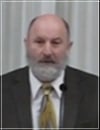
About Drew Dietz
Drew Dietz is the pastor of Sovereign Grace Church in Jackson, Missouri.
Comments
Your comment has been submitted and is awaiting moderation. Once approved, it will appear on this page.
Be the first to comment!