Bootstrap
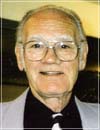
Scott Richardson

Abel's Sacrifice

Genesis 4:1
Scott Richardson October, 17 2009 Audio
0 Comments

Sermon Transcript

Auto-generated transcript • May contain errors

100%
What more can God do that He's
already done? What more can God do? He gave Himself. God gave Himself
in the person of His Son. What more can He do? There's
no more God can do. That's all He can do. God gave
Himself. Why would he give himself for
me or you or any other alienated, determined, hostile sinner? Why? I don't know. Why is a sinner
valuable to God? I don't know. But he must be. He must be. I know there's nothing
in him that would be attractive unto God or would be vital in
the area that he would somehow have something to commend himself
unto God. I know that. But somehow, I don't
know if we'll ever know, but there's something about a sinner
that is valuable unto God. The first man born of woman, there in Cain and Abel in that
story, prior to that even Adam himself. It talks about Adam being in
the garden and transgressing the law of God, violating, and
God came down, and the first thing that's said about God is
that he's seeking ascent. God came down. God came down
in the cool of the day. To do what? To seek a poor sinner. What's valuable about that poor
sinner that God would come down in the cool of the day and seek
him? Where art thou? But I'll tell
you this, a consciousness of what you are will never lead
you to God unless This consciousness of what you are is accompanied
by the faith of who He is, and then you'll come to Him. A consciousness
of who you are will only cause you to put on your fake knees.
This is the consciousness of the fact that you're a sinner. See, that'll put you out in the
trees clothing yourself. That's where it put Adam, put
him out there in the trees, and he was closing himself. That didn't satisfy his conscience.
Where art thou? Well, I don't know much. What
I know, I'll try to tell you. It won't take long. I used to think I knew a whole
lot, but the older I get, the less I know. One thing I'm sure
of, though, is this. I know the need of the hour.
I know the need of the hour. The need of the hour is this.
It's to have the presence of the Spirit of the living God
to make effective that which we're trying to preach. That's
the need of the hour. Good singing? That's fine. That's
fine. I'm all for it. Good preaching? I'm all for it. Biblical preaching? I'm all for it. The exaltation
of the Lord Jesus Christ, oh, that's the essence of it. But
to have the presence, to have the presence of the living God
in our midst, to take the Word and the Gospel and to stab our
hearts, listen to me, stab our hearts until our hearts bleed,
until we cry out, Lord, Save me and add on to that the else
I perish. That's what we need. We need
your heart stabbed. Oh, stabbed. Stabbed until the
blood runs. Stabbed until the blood runs
in our hands and down our throats. Until we see our need, our absolute
need and our violence and say, Lord, God Almighty SAVE ME! SAVE ME ELSE I PERISH! That's what we need. That's the
need of the hour. I can run off with the mouth
up here for forty minutes or two hours or whatever it is unless
the presence of the Spirit of the Living God doesn't make effective
what I'm trying to say. Prophets or nothing. It'll just
be another meeting, that's all. Sovereign Grace Bible Conference
Meeting at the Danville Baptist Church or the Katie Baptist Church
or just another meeting. Brother, I'm tired of just other
meetings, ain't you? I'm tired of other meetings.
I've been to a lot of them. I'm not referring to Sovereign
Grace Conferences. I've been to my own church. I've
had a lot of meetings, just the same old meetings. And don't
misunderstand, I'm not complaining about getting together on Sundays
and Sunday nights and singing and praising God and praying
and reading the scriptures. That's about all we can do, Henry.
That's about all we can do. But oh, that we could beg somehow,
somehow, I don't know how, I ain't got the answer to it. Somehow,
if we could bombard, if we could bombard God God's heaven and ask Him and
beg Him to come in our presence and make effective what I'm trying
to say, to clothe it, to clothe these words with power that He
didn't wring a man out and bring him down to the dust from which
he sprang. And He might see His ungodliness,
His vileness, before God, and he might acknowledge before God
who he is. Lord save me. I'm going to perish
if you don't. Well, you turn with me, if you
will, to the book of Genesis. The book of Genesis chapter 4.
I want to talk to you just a little bit here. Genesis chapter 4. about two men who are the first
examples of a religious man of the world and a genuine man of
faith. That's what I want to talk to
you about. Two men, a genuine religious man of this world and
a genuine man of faith. And I want to talk to you about
their offering. I want to talk to you about one
was accepted and one was rejected. Why? What's the distinction? What's the difference? Let me
read a few verses. Verse number one, Genesis four. Adam knew Eve, his wife, and
she conceived and bared Cain and said, I've gotten a man from
the Lord." And she again bare his brother Abel, and Abel was
a keeper of sheep, but Cain was a tiller of the ground. And in
the process of time it came to pass that Cain brought of the
fruit of the ground an offering unto the Lord. He also brought of the firstling
of his flock and the fat thereof, and the Lord had respect unto
Abel and unto his offering. But unto Cain and to his offering
he had not respect." The first thing I want you to notice, I'm
not telling you anything that you don't know, But I want you
to notice that both of these men were born outside of the
Garden of Eden. They were not born inside the
Garden of Paradise, but they were born outside of the Garden
of Eden, and both of these men were the sons of fallen Adam. And they could absolutely have
nothing naturally to distinguish themselves one from another. They were both what? They were
both sinners. They both had fallen natures. Neither was innocent. And it
will be well for us to be clear in reference to this, for this
reason, in order that the reality of faith and divine grace might
be fully seen. Now, if the distinction here
between Cain and Abel was founded in nature, then it follows as
an inevitable conclusion they were not the partaker of the
nature of their father. And there would then be no room
for the display of grace and the exercise of faith. They were both born outside of
the garden. Both were the sons of fallen
animals. and both had the same nature. Now most people religiously would
teach today, and I'm sure that there's someone here today that
believes what I'm about to say. They would teach that era man,
born of woman, is born with qualities and capacities which, if rightly
used, would enable him to work his way back to God. Now there's
someone here that believes that, whether they believe it in paragraph
style as I presented it or no, I don't know, but they believe
it. They believe that there's some capacity or quality that
they have if in the right place, circumstance, or somehow they
could work themselves back into the favor of God. Now that's
a lie and a plain denial of the fourth chapter of the book of
Genesis. I want to tell you first off now, first off, that man
is so far off from God, he could never work himself back into
God's favor. He's far off from God. How far
off from God is he? They say the drunken man is far
off from God. They say, well, I don't know
whether you ought to spend too much time down in Vine Street
or this street or that street talking to the dialects and the
winos because they have been They have become involved in
alcohol, and their system is just saturated with it, and they
don't need to talk to them. Their minds are saturated. They're
far off from God. There's not much help for them.
They say there's not much use to go talk to that self-righteous
hypocrite because he's so far off from God. Well, he's far
off from God, and the drunkard's far off from God. And the religious
man's far off from God. Now let me tell you this. He
is so far off from God that he cannot on his own come back unless
God comes where he is and fetches him back. He'll never come back.
That's how far off from God he is. So this business of people
saying, people saying inadvertently that every man is born with qualities
and capacities which, if rightly used, would enable him to work
his way back unto God is a lie. Cain and Abel were born outside,
not inside, of paradise. They were the sons of not innocent
Adam, but fallen Adam, and they came into this world as the partaker
of the nature of their Father, and that which is born of the
flesh is flesh and can't be nothing else. That which is born of the
flesh is flesh, is flesh, is flesh, it can't be nothing else. So, in light of that then, if
there were anything in nature where it could recover its lost
state or favor or innocence, This is the place to do it, Genesis
chapter 4. But no, both of them was lost. They were flesh. They had the
nature of their fallen father. They had the nature of fallen
Adam. They were ruined. They were guilty. And it's, I think, important
for you and I to have a correct understanding, I was going to
say, of the doctrine of federal headship, but I'll leave out
that word doctrine and say it is right that you have an understanding
of the federal headship. We all died in Adam. Every man, every woman, every
boy, every girl up to now and to the rest that are born have
died in Adam. You died in Adam. And when Adam
rebelled against his maker, Somehow you in his loins, you rose up
in rebellion and you made your strike against God and tried
to push God Almighty off of the throne. You need to have the
proper understanding of the federal headship that you died in Adam. that you're a partaker of your
fallen father's nature, and you're a sinner. You didn't become a
sinner, you was born that way. You went astray from your mother's
wounds, and you spoke lies, and you're deceitful, and you're
bad, and you're vile, and you're against God right now, and if
you could get God in your grasp, you'd kill him. Oh my soul, you
need to understand what I'm talking about. I'm talking about the
federal headship of God, or the federal headship here, and how
you are related to her, and how you got your nature. Got your
nature from your father. He got his nature from his father,
and his father is on down to Adam. You ain't got anything
to brag or boast about. Now, what's in a name? Adam? Adam? Why, you're Your father
is Adam. Your father is Adam. He is a
sinner. He rebelled against God. And
your grandfather's the dust. And your great-grandfather is
nothing. You ain't got anything to brag
about. You're nothing. Come from nothing, going nowhere,
lest God intervenes. And nothing in man's nature where
it could recover its lost innocence. No, sir. In the first man, we
have sin and disobedience. In the second man, the second
Adam, the Lord Jesus Christ, we have righteousness, obedience,
and life. And as we get our nature from
the former, so do we also from the latter, that is, the second
Adam. The way in which we get our nature from the first man
is by birth. So the way we derive our nature
from the second man is by a new birth. The nature we got from
Adam came by the will of man. The nature that we get from the
second Adam, the Lord Jesus Christ, James 1 and 8 says, it is according
to the will of God. The distinction then was not
grounded, pounded, based upon anything in their nature. As
for their nature, there was no difference. All have sinned and
come short of the glory of God. Both of them was lost. Both the
sons of fallen Adam. Both had his nature. What made
the difference? That's what's important. What
made the difference? That's what's important. What made the difference? The difference was not in themselves.
The difference was not in their natures. The difference was not
in their condition. The difference was not in their
circumstance. The difference lay absolutely,
entirely, 100% in their sacrifices. That's where it was. Over in
Hebrews chapter 11, I think verse number 4, it says this. It says,
By faith Abel offered unto God. I like that. He offered unto
God. a more excellent sacrifice than
king by which he, the offerer, by which he obtained witness
from God that he was righteous, God bearing witness to his gifts. That's what it says. Here we're
taught then that it is in no wise a question as to the man,
but only to the sacrifice. It's not a question as to the
offer, but as to his offering. What were their offerings? Well,
what did old King bring? He brought the fruit of the ground.
That's what you bring. That's what I brought all of
my life until God revealed Himself. in the person of his son to my
heart. All my life, Henry, I never was
very religious. And I'm not making light of that.
I ought to have been religious. I ought to have been respectful
unto God. I mean, God clothed me and fed
me and gave me a good home and a good family. and kept me, you
know, from being killed in the war and things of that nature.
I ought to have been respectful unto God, but I had no respect
unto God. The only thing I ever brought
God was the fruit of the ground. That is the toil of my own sweat. What did he bring? He brought
the fruit of the ground. Cain offered to God the fruit
of a what? Of a cursed earth, and that without
any blood to remove the curse. He presented unto God an unbloody
sacrifice simply because he had no faith. Had he possessed this
divine principle of faith, it would have taught him that without
the shedding of the blood, there is no remittance of sin. Cain was a sinner, and as such,
death stood between him and God Almighty. But in his offering,
there is no recognition of this fact. And in your offering, when
you bring that of your own making, of your own volition and will,
you bring that unto God, there is no recognition of the fact
in yourself. There's no presenting to God
a sacrificial life to meet the claims of divine holiness. divine
justice. Let me say this. It's going to
be said, it's already been said, but I'm going to tell you this.
Listen to me. If you don't get anything else
out of what I say, remember this. God Almighty demands absolute
perfection, and God will not accept anything less than what
He is. And don't you start, don't you
bring something that is not perfect unto God and expect to be accepted
by God. He won't accept it. I don't care.
I don't care how good I pretend to be, or you pretend to be,
or all of us together, if you roll it together if you want
to and bring it up to God and God, it's an insult. It's an
insult. It's despising God himself to
offer anything like that. You're here today without the
Lord Jesus Christ as your hope and as your righteousness. You're
in a bad way. You're in a bad way. I'm going
to tell you this. The Bible says the wrath of God resteth upon
you. Huh? How come? Because you don't
believe? Because you haven't brought the
right sacrifice? It says that he that believeth not, the wrath,
the wrath of God abideth, resteth on him. Right now it's on you.
And one day God's going to put your weight down and God's going
to crush you. My soul, it rests upon you, it abides
upon you. Listen, he treated God as though
he were altogether such a one as himself who would accept this
sin's stained fruit of the curse of the earth. All of this and
much more is involved in Cain's unbloody sacrifice. He displayed
ignorance in reference to divine requirements, which I mentioned,
in reference to his own character, in reference to his own condition
as a sinner. Oh, listen, reason might say
what more acceptable offering could a man present unto God
than that which is the direct result of the best that he can
do? That's what reason says. Henry,
wherever you go, and I know that you do, but if you confront some
of these folks, they'll tell you, if you put them in a corner,
they'll tell you, I'm doing the best I can. What more does God
expect than that? That sounds reasonable, oh, doesn't
it? What more could God expect? Brother, I'm doing the best I
can. I've deprived myself of it. of everything to get where
I am. I've got some choice fruit out
there in the field. Some choice fruit. Cain didn't
bring a rotten squash or a decayed pumpkin to God. He went over
his field, brother. And he looked at his fruit. And
he brought the best. He brought the best that he had.
It was the direct result done of sweat, of work, of toil. He was the best that he could
do. He brought the best that he could do to God. He didn't,
when they came to worship God, he didn't say in his heart, no,
I don't bring him any time. He didn't say, I don't believe
in God. The Bible, that Bible business
is crazy. Go if you want to, Abel, but
he didn't say that. He got the best. He went out
in the field and got the best he had. And he brought it in,
and that was the direct result of his toil, the fruit of his
hands. Worked in the sun, 8, 10, 12,
14 hours every day, tilling the ground, doing what he knew to
do best. And at the end, at the harvest,
the best that he had in his harvest, he said, I'll give it to God.
Reason said, that'll be all right. That ought to be all right. There
was a time that I said it would be all right, too. But God thinks
different. He thinks different. He said
it won't be all right. Look at the ministry of the Lord
Jesus Christ. Look at His ministry. It would
have proved to be of no avail as regarding our relationship
to God the Father if He had not forgiven his life. He went about
doing good. and he could have went about
doing good until this day, but unless he give himself as a bloody
sacrifice to appease the offended justice of God and save the poor
sinner, we'd still be in our sin. Oh no, you see the false
ground that Cain stood upon, an unpardoned sinner. coming
into the presence of God to present an unbloodied sacrifice. Listen,
could a sinner's toil, could a sinner's work remove the curse
and stain of sin? Could a sinner's work and toil
satisfy the claims of a holy God? Could it furnish a proper
ground of acceptance for a sinner? Could it set aside the penalty
that's due to sin without the shedding of the blood? There's
no remission of sin. Cain's unbloodiest sacrifice,
like everybody else's unbloodiest sacrifice, is worthless and not
only worthless, but as I said, it's an insult to the immaculate
perfection and the glory of God Almighty who made it. It's an
insult! Oh, my soul. God help us. God help us. What about the sacrifice
of Abel? He brought the bloody sacrifice.
The bloody sacrifice. I told you, God demands absolute
perfection. That's what He demands. He demands
an unblemished sacrifice. There can be no blemish in the
sacrifice. The sacrifice must be perfect. As a matter of fact, in the book
of Leviticus it says it must be perfect to be accepted. If you're ever to be accepted
and I'm ever to be accepted, it's going to have to be in the
sacrifice. It's going to have to be in this
sacrifice, the sacrifice of the Lord Jesus Christ. Oh, my soul,
do you know what I'm talking about this morning here? I believe
you do, most of you. Maybe there's somebody here that
doesn't understand. Maybe you're still in the dark
as to this sacrifice, as to your need of this sacrifice. Oh, my soul, I trust that God,
in His grace and in His mercy and in His kindness and in His
favor, will so prevail upon your poor heart that you'll question,
you'll say, what's this fellow talking about when he's talking
about these Sacrifices! What's he saying? That God or
man will do the best he can and God won't have anything to do
with it, but a bloody sacrifice! He'll accept. That bloody sacrifice
is the Lord Jesus Christ. That sacrifice is Jesus Christ.
In Him is personified perfection, perfection, perfection. In Him
was no sin. He was made sin. in our behalf
that we might be made the righteousness of God in Him. There's no need
coming to God with some paltry work in your hands. You'd better
come to God with the Lord Jesus Christ as your offering. It's
my sacrifice. It's all I've got, Lord. That's
all I've got. Nothing in my hand I bring. Simply to thy cross I cling. I quoted that scripture, God
forbid that I should glory save in the cross. Why? Why did Paul glory in the cross? He gloried in the sacrifice,
not that cross. He who hung on the cross, the
atonement, he gloried in the sacrifice. You know what Paul
was saying when he said, God forbid that I should glory save
in the cross of our Lord Jesus Christ? He said, that's where
God met my sin, in Christ. I glory in Christ who was made
sin in my behalf that I might become the righteousness of God.
Scott Richardson
About Scott Richardson
Scott Richardson (1923-2010) served as pastor of Katy Baptist Church in Fairmont, West Virginia.
Broadcaster:

Comments

0 / 2000 characters
Comments are moderated before appearing.

Be the first to comment!

Joshua

Joshua

Shall we play a game? Ask me about articles, sermons, or theology from our library. I can also help you navigate the site.