Bootstrap
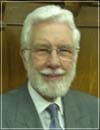
Stephen Hyde

The Potter and the Clay

Isaiah 64:8
Stephen Hyde January, 20 2019 Audio
0 Comments
Stephen Hyde
Stephen Hyde January, 20 2019
'But now, O LORD, thou art our father; we are the clay, and thou our potter; and we all are the work of thy hand. ' Isaiah 64:8

Sermon Transcript

Auto-generated transcript • May contain errors

100%
May it please Almighty God to
bless us together as we meditate in his word tonight. Let's turn
to the prophecy of Isaiah, chapter 64, and we'll read verse eight. The prophecy of Isaiah, chapter
64, and reading verse eight. But now, O Lord, thou art our
Father, we are the clay, and thou art Potter, and we all are
the work of thy hand. It is a blessing for us to realise
we have such vivid descriptions really in the Word of God to
describe how the Lord looks and deals with us. And we have here
this illustration of clay and a potter. Well, perhaps most
of us may have seen a potter at work, and we've seen how that
he takes just a lump of clay, which has no shape at all, and
he works on it. and depending on the work that
he puts into it, and how he puts pressure onto it, so there is
the outcome, the form of that work which he has determined. And I'm sure we realise that
that lump of clay could not get up and produce anything itself,
It needed the potter to shape it. And what a good illustration
that is for us today, to realise that we really are no different
to that, just like a lump of clay. We are not able to shape
ourselves into anything of any use, anything that which is good. We are unable so to do. But we're thankful to know that
we have one who is able to, and one who does. And every single
person who is a living child of God, and everyone who has
been and will be, fall into such a category as this, that Almighty
God molds them. Now then, A potter makes different
shapes. He pleases himself what he wants
to do. And my friends, we have a glorious
heavenly potter who has decided what to do with his people. And surely that should be very
humbling, very encouraging, very confirming in our lives to realize
that the great God who we can call the heavenly potter is molding
us in accordance with his will and for his glory. You see when
a potter has finished an object, no doubt stands back and admires
it, because it's come into the shape and the form that he had
designed. All of us, if we are God's children,
will come into the shape that he has designed. And we won't
be able to argue with Almighty God, we won't be able to say,
I don't think I like this shape that is being formed. We may
not. We may not like what is occurring
in our lives. We may wish, perhaps, we were
being shaped in a different direction. We wish, perhaps, the heavenly
potter might not, perhaps, pressurise certain parts in order to change
the shape. But the Lord knows what he's
doing. He knows what will come forth. He knows what he will do. And
it is not coincidental that we have the beginning of this word
with a but. But now, if you go back a couple
of verses, we have another but, where the prophet says, but we. He includes himself. includes the whole Church of
God. He says, but we are all as an
unclean thing, and all our righteousnesses are as filthy rags, and we all
do fade as a leaf, and our iniquities, like the wind, have taken us
away. We may not be very happy, perhaps,
to recognise that such averseness describes us. But it does. It's sad, isn't it? But we are
really like this. We are unclean. We're unclean
because of our sin. Sin brings uncleanness. And we therefore stand before
God as an unclean thing. Nothing good. No good righteousness. We might perhaps be pleased with
some of the things that we do and say, and yet the Word of
God tells us here, all our righteousnesses are as filthy rags. They're not
worth looking at. They all have dirt mixed with
them. All our righteousnesses are as
filthy rags. And he says, and we all do fail
as a leaf. Perhaps when a leaf first grows,
it's nice and green and shiny perhaps, but it fades. Time fades it. We're no different. We fade, just like a leaf, and
our iniquities, like the wind, have taken us away. Well, we have nothing to boast
of, do we? We can't say, I'm not like that. Our iniquities, they are many. And it's a great favour from
God when he puts his finger on, perhaps, some of our iniquities. Perhaps things that we don't
like to acknowledge. We don't like to realise that
there are iniquities. And yet you see when God comes
and points to them, then you see we stand condemned before
a holy God. And then he goes on solemnly
and says, and there is none that calleth upon thy name, that stirreth
up himself to take hold of thee. Perhaps there have been many
occasions when this has been true. None calleth upon thy name. We may have prayed, or at least
we may have pretended to pray, but we haven't in fact come to
the throne of grace pouring out our heart before God. And the
words have flowed because we've come to a God who sees all about
us and we haven't There have been those times when they haven't.
We've just uttered words. We've pretended. We haven't actually
called upon the name of God. It's very solemn, isn't it? It's
very true. And we should be thankful that
the Word of God digs deep into our heart and points to show
us the error of our ways and that And there's none that stirreth
up himself to take hold of thee. We find we're not very concerned.
We've said our prayers and that's satisfied us. But we haven't
prevailed in our prayers. We haven't besieged the throne
of grace. We haven't prayed really from
our heart, just prayed from our head. We haven't really stirred
up ourselves, then we've been content. We're just a form without
the power. Now there is a vast difference. And when the Holy Spirit gives
us the spirit of prayer, there is power. And it's power from
on high. And it's the gift of God. And
we know then that we are meeting our God. That we have come truly
to the mercy seat. We really are at the throne of
grace. And we're blessed with that gracious
and glorious access. No one stir it up himself to
take hold of me. Perhaps we say, well, of course
I can't stir myself up. Well, we hide under that. You know, we are told to draw
near to God and he will draw near to us. James tells us that. And don't therefore think, well,
I can't produce any real prayer. Well, I know we can't. But do
we desire to be blessed with a spirit of real prayer, a spirit
of providing prayer, or are we satisfied with just a mere form
of words? Well, here were these words here
graciously put for your and my instruction tonight. Thou hast
hid thy face from us and hast consumed us because of our iniquities. What does that lead us to? Confession of sin. Confession
of our iniquities. We cannot approach unto God thinking
that we're all right. Thinking that we have a perfect
right to approach unto the majesty on high. We come before God as
a guilty sinner. We bow down confessing our sins. That's a good place. That's a
good start. It's not something to end with,
something to start with, to come before God in that way. For thou hast hid thy face from
us and has consumed us because of our iniquities. You see, it's
our sins which separate between us and our God. And those sins
are varied. And never think you're not a
bad sinner. Never think you're a very great
sinner. My friends, may the Holy Spirit convince us that before
a holy God, we are indeed, as Paul was, the sinner. It's as
though no one else is there. We stand in the presence of almighty
God, full of iniquity, pleading for compassion pleading for mercy,
pleading for access at the throne of grace. Now then, you see,
when we are like that, we are then ready to be made conformable
unto his image. We are then willing to be moulded. Previously, we may have had our
own plans. Oh yes, We thought this would
be good and this would be right and this would be necessary.
But when the Holy Spirit comes upon us, then you see we are
given that grace to submit ourselves under, remember, the mighty hand
of God. The mighty hand of God. It's
not a small hand. It's a mighty hand. Now this
is not the only time in Isaiah when he refers to the clay and
the potter. There's at least three occasions. Another one
is in the 29th chapter of this prophecy, and we can read the
16th verse. He says, Surely your turning
of things upside down shall be esteemed as the potter's clay.
For shall the works have him that made it? He made me not? Or shall the thing framed say
of him that framed it, he had no understanding? The thing which
is striking here is, sometimes things are turned upside down. Things are going very smoothly. And upside down means completely
opposite, doesn't it? To realise It's God turning things
upside down in our lives. Now we may be very disappointed.
We may wonder where the scene will end. The blessing is this,
when we realise it's the work of the heavenly potter. And it's all part of the glorious
process of making us conformable unto his image. And as Isaiah
says, for shall the work say of him that made it, he made
me not? Couldn't possibly say that. A
pot couldn't stand back and say, well, I just got here. The potter
made it. or show the thing framed, say
to him that framed it, he had no understanding. My friends,
God knows exactly what he's doing with us in our life. Exactly. Nothing takes God by
surprise because he's planned it for us. And it will be a wonderful
blessing, an amazing blessing, if God therefore deals with us
as his children and bringing us into that conformity unto
his image, which really means, very clearly, to be made more
Christ-like. Now, by nature, we are not Christ-like. And we need our Heavenly Father,
the Heavenly Potter, to indeed frame us, to mould us, to make
us like unto His beloved Son. You know, this is a glorious
work. This is a wonderful work. This
is a work that no one else can do. But our God, and my friends,
every true believer, has the mark of God's hand upon them. It's not the mark of a man. It's
not the work of a man. It's the work of Almighty God. And so what a mercy it is if
we're able to realize that. And then in the 45th chapter
of Isaiah, again, the prophet makes this comment in the ninth
verse, woe unto him that striveth with his maker. We may sometimes
strive against God. We'll try and change what appears
to be happening in our life. We don't want the situation to
develop. We want to carry on. And so what
are we doing? We're striving against God. Well, the word is woe unto him
that strives with his maker. Let the potsherd strive with
the potsherds of the earth. Shall the clay say to him that
fashioneth it, what makest thou or thy work? He hath no hands? How easily we bring situations
down to a human level, instead of realising that our God reigns
and what is happening is for our good. The Lord knows what
is best. No way do we know what's best. You may say, well, tell me why.
I'll tell you why. We only see now. God knows the
end. God knows where you and I are
going, and therefore he works that work in us to repair us
for all his will, so that he's with us in it. See, if he's moulding
us, he knows how to shape us so that we're ready for whatever
eventuality faces us in the future. and to be sure that in due time
there will be a good result because we shall be a potter, a pot which
is complete, made in accordance with the will of Almighty God. Well, Jeremiah again. Familiar
words in Jeremiah, but they're good words to remember what he
says. He tells us in the 18th chapter
of Jeremiah and the sixth verse, these words. And again, it's
good to just read them, to be encouraged by them. He says this,
then the word of the Lord came to me saying, it wasn't man's
word, the word of the Lord. And that's good, isn't it? When
the word of the Lord comes to us, yes, and puts us right, corrects
us, naturally a potter can correct any mistakes as he moulds the
pot. My friends, the Lord corrects
us and we're told, he was told to go down to the potter's house
and there I will cause thee to hear my words.' So Jeremiah went
down to the potter's house, and behold he wrought a work on the
wheels, and the vessel that he made of clay was marred in the
hand of the potter. So he made it again, another
vessel, as seemed good to the potter to make it. Then the word
of the Lord came to me, saying, O house of Israel, cannot I do
with you as this potter, saith the Lord. Behold, as the clay
is in the potter's hand, so are ye in mine hand, O house of Israel. Well, that surely is comforting,
is it not? To think that you and I are in
God's hands. We're safe there, aren't we?
We're safe. And to think that the Almighty
God, nonetheless, is very graciously and gloriously moulding us. And that moulding will be successful. It may take a long time, it may
take a short time. It may take whatever time the
Lord determines. But nonetheless, there will be
a completion of that work. And so we're able to confirm,
behold, as the clay is in the potter's hand, so are ye in my
hand, O house of Israel. He's speaking not about the world. He's speaking about the church
of God. He's speaking about his children. He doesn't leave us just to wander
on aimlessly through this world. satisfied with just the husks
of time and then fall into hell at last. No, the Lord deals with
his people and it's very humbling to realise that his hand is upon
us. We may wriggle, we may squirm,
But you see, my friends, when we come to that realisation,
yes, God's hand is upon me, then you see we are willing, willing
for the Lord to mould us because we know in our right spiritual
mind, as Paul was able to declare, and Paul was moulded and he had
a difficult time, didn't he? But he was able to say this,
glorious words in the 8th of Romans, he said, and we know that all things work together
for good to those who love God and to those who are the called
according to his purpose. He didn't come and say, well,
there's just a few things. He said, we know that all things
work together for good. And the apostle, when he wrote
again to the Romans, he really expounded this theme in the ninth
chapter. And he speaks like this. He says,
therefore hath he mercy on whom he will have mercy, and whom
he will he hardeneth? Thou wilt say then unto me, why
doth he yet find fault? For who hath resisted his will? Neighbour, O man, who art thou?
That replyest against God. Shall the thing formed? Say to
him that formed it, why hast thou made me thus? Hath not the
potter power over the clay of the same lump, to make one vessel
unto honour, and another unto dishonour? What if God, willing
to show his wrath, and to make his power known, endured with
much long-suffering the vessels of wrath fitted to destruction,
and that he might make known the riches of his glory on the
vessels of mercy which he had afore prepared unto glory. You see, the Lord has a prerogative
to do what he will, but to ponder and think that day by day in
our life, the things that we come into, The path that we come
into is all part of that preparation for our eternal home. Preparation. And the truth is
this. If you and I are to be prepared
for our eternal home, it is to wean us from all the pride of
life and all the things that this world calls good and great.
It would be to direct us to see the glorious attraction in none
less than the Saviour, the Lord Jesus Christ. And when the Holy Spirit directs
us in that way, we come to the conclusion He is precious. He is precious because the glorious
Saviour so willingly died to atone for my sins. Indeed, he
has loved me with everlasting love, and therefore with loving
kindness has he drawn me. Perhaps just one other familiar
reference, when Paul wrote to the Ephesians, and we know the
second chapter is a familiar chapter, and many of the verses,
but coming down to the tenth verse, we're told this, For we
are his workmanship. Well have we got the mark of
God's workmanship upon us? Have we his mark that we can
see and know and others can see and know that we are his workmanship? For we are his workmanship created
in Christ Jesus unto good works which God hath before ordained
that we should walk in them, walk in obedience to the path
the Lord has ordained for us. Humble submission, it will bring
peace to our souls if the way is rough, thorny, rugged, mountainous
perhaps, obstacles in it. And we may perhaps question why
do I have to walk a path like this? It is the ordained path
of God for you and me in order to fit and prepare us for our
eternal home. And you see in such a path the
Lord deals with, he moulds us so that we are willing to be
moulded. And we come and say then, nevertheless,
not my will, but thine be done. And what is that? A Christlike
spirit. And how does that come? Through
the gift of God, through the gracious dealing with our souls. And what a mercy, therefore,
tonight, if we read these words, we're able to realize, yes, there
is a but now in my life. But now, oh Lord, and he says,
thou art our father, our heavenly father. Oh, what a blessing it
is to have a heavenly father. One who's watching over us as
his children. He's taking care of us, but he's
teaching us And he's instructing us, and he's guiding us, and
he's directing us, day by day. It's as though we are, perhaps
like Jeremiah said when he wrote the Lamentations, he has hedged
me about, that I cannot get out. He's made my path crooked. Well,
it was the Lord's dealings. with Jeremiah. And those dealings
will have a good end in the life of Jeremiah as he goes on to
tell us, he says, it is of the Lord's mercies that we are not
consumed. And I believe when the Holy Spirit
shines into our heart, we'll realize that because of our sins,
our iniquities, we deserve to be consumed, to be cast out,
cut off. No, it is of the Lord's mercies
that we are not consumed. because his compassions fail
not. They are new every morning. Great
is thy faithfulness, and this is the result of the heavenly
potter's work. The Lord is my portion, not the
world. The Lord is my portion, saith
my soul. Therefore will I hope in Him. But now, O Lord, Thou art our
Father, we are the clay, Thou our potter, and we are all the
work of Thy hand. Amen.
Broadcaster:

Comments

0 / 2000 characters
Comments are moderated before appearing.

Be the first to comment!

Joshua

Joshua

Shall we play a game? Ask me about articles, sermons, or theology from our library. I can also help you navigate the site.