Bootstrap
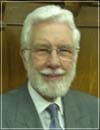
Stephen Hyde

Seekest Thou Great Things For Thyself?

Jeremiah 45:5
Stephen Hyde April, 23 2017 Audio
0 Comments
Stephen Hyde
Stephen Hyde April, 23 2017
'And seekest thou great things for thyself? seek them not: for, behold, I will bring evil upon all flesh, saith the LORD: but thy life will I give unto thee for a prey in all places whither thou goest.' Jeremiah 45:5

Sermon Transcript

Auto-generated transcript • May contain errors

100%
May it please God to bless his
word as we meditate in it this evening. Let us turn to the prophecy
of Jeremiah, chapter 45, and we'll read the last verse, verse
5. The prophecy of Jeremiah, chapter
45, and reading verse 5. And seekest thou great things
for thyself? Seek them not. For behold, I
will bring evil upon all flesh, saith the Lord, but thy life
will I give unto thee for a prey in all places whither thou goest. How much instruction there is
really in the Word of God for every eventuality in our lives. And it's good when we can read
the word of God with that true concern that his word may speak
to our hearts in whatever condition we are in and whatever need of
help and instruction and direction we need. And we read here in
this account in Jeremiah of the position with regards to the
scribe or the servant of Jeremiah of Barak. And these words were
spoken to Barak. And he was told by Jeremiah,
when the Lord said, Thou shalt now say unto him, the Lord saith
thus, behold, that which I built when I break down and that which
I planted, I will pluck up even this whole land. And seekest
thou great things for thyself, seek them not. For behold, I
will bring evil upon all flesh, saith the Lord. thy life would
I give unto thee for a prey in all places whither thou goest. Now from what we read together
in the 36th chapter of Jeremiah there was that roll which contained
the words that Jeremiah had dictated to Barak to be read and it was
read before the people and before the princes And then, of course,
someone else read it before the king. But Barak was privileged
to write it and to be able to read the great truths that God
had commanded Jeremiah to write. And, of course, they were very
telling words. They were very condemning words
because Israel had walked and so contrary to the Lord God for
so many years. And now in captivity the Lord
was again directing and speaking to them. And so Barak had this
privileged position of being able to write these words and
to address the people and the princes. And we know of course
what happened when it was the roll was read before the king.
The king didn't like what he heard at all. And as soon as
it began to be read, he took the pages and cut them out with
a pen knife and burnt them in the fire. Well, we cannot destroy
God's word. We may destroy the paper that
the words are written on, but we can't destroy the words of
God. And the king was not able to
destroy the words of God. And it's amazing really that
having done that, we read that the same words were written again. Yes, Jeremiah was able to dictate
those same words and they were written again and much more beside. Well, it's clear that Beorak
therefore had a prominent position in this situation. And now we
find that Jeremiah speaking unto Beorak, the son of Neriah, when
he had written these words in a book at the mouth of Jeremiah,
In the fourth year of Jehoiakim, the son of Josiah, king of Judah,
saying, Thus saith the Lord, the God of Israel, unto thee,
O Barak, thou didst say, and this is what Barak said, Woe
is me now, for the Lord hath added grief to my sorrow. I fainted
in my sighing, and I find no rest. Well, he'd been the instrument
in reading this word from Jeremiah which was not good news to Jehoiakim
and now it's been burnt and taken away and he doesn't know what's
going to happen and therefore he comes and says, woe is me
now. He was therefore concerned. What
was going to happen to him? What was the situation? For the
Lord had added grief to my sorrow. I fainted in my sighing and feel
no rest." Well, it may be because he was very disappointed that
he wasn't in a prominent position. He wasn't perhaps highlighted
as the bringer of the great word of God, but had been, as it were,
put down. And therefore he comes and says,
woe is me. He may have been disappointed.
He may have been sorry. for the position which had developed. You know, sometimes in our lives,
we have situations like that, don't we? We see the picture,
we envisage the picture, and we imagine what's going to happen. And we see ourselves in a prominent
place and a prominent position, and then we see how these things,
as it were, fall apart. Perhaps we feel like Barak and
say, oh, woe is me now. For the Lord addeth grief to
my sorrow. Things haven't really been working
out as I anticipated. Well, it may be that Barak, of
course, did not have the right desire, the right spirit. He
was just a scribe. And he was just reading that
which Jeremiah had been commanded by God to speak. It was God's
Word and he should have been very content to have just been
the mere reader of the Word of God. But it would seem therefore
that he was looking perhaps for something more important, looking
for a more prominent position as it were in the field of this
prophecy. And therefore we find that the
Lord speaks through Jeremiah. and speaks to him these very
important words. And seekest thou great things
for thyself, seek them not. Seek them not. Well, that may
be appropriate to all of us. It may be appropriate to some
of us. It may be appropriate to one
of us. But it's a blessing when God
takes us in hand. And when God speaks to us, in
clear words of instruction. And perhaps these words, these
words are very simple, aren't they? And they're very clear.
We don't need a degree to understand them. And yet, they may cut across
the things that we intended to do, the things we intended to
say. Because when the Lord speaks to our hearts, You know, we cannot
ignore them. We may try to, but we won't be
able to. You see, King Jehoiakim tried
to ignore the word of Jeremiah, but he wasn't able to. See, God
wrote the words again. And you and I cannot ignore the
word of God. We cannot ignore a word like
this, because naturally, naturally, We all seek great things for
ourselves, don't we? In one way or another, we all
imagine this and that coming to pass, and we can imagine ourselves
being in some position, and that would bring honour to ourselves. The Lord deals with us in love
to our souls, and he deals with us with words like this, to bring
us down and to direct us as to what we should not do, and that
is to seek great things for ourselves. The question is asked, you see,
seekest thou great things for thyself? And it's good when the
Spirit of God looks into our hearts and asks us the very same
question. What are our motives? How good
it is when the Lord comes. We may initially rebel against
it. We may initially not like such
words being addressed to us. And we may wish we never heard
them. But as the Lord graciously comes and touches our heart,
we should be able to come and say, it is the Lord. Let him do what seemeth him good. You see, the Lord has a perfect
way. The Lord's way is better than
ours. The Lord's way is higher than
ours. The Lord's purposes will be worked out, and they'll be
worked out not for your or my honour and glory, but for his
honour and glory. And how important that is in
our lives, that we recognise such a truth, that our life is
to show forth the honour and glory of God. Come to that position
like John the Baptist did, who had been so eminently used, hadn't
he? John the Baptist, wonderfully
favoured person. Born of Elizabeth just those
three months before the Lord Jesus, and then the one who was
the instrument in baptising the Lord himself. and had that very
clear view of the Lamb of God that taketh away the sin of the
world. And yet, you see, God brought
him to that humble position where he was able to come and say,
he must increase and I must decrease. Decrease in our own estimation
of our own abilities, of our own position, and to be humbled
under the mighty hand of God. Now, all that is affected by
such a situation generally is our pride, because we have to
come down, we have to climb down, we have to submit ourselves under
the mighty hand of God. What a blessing it is to know
that the Lord isn't leaving us and hasn't left us. So if we
were left, what terrible mistakes we might make. But to realise
that we have a God in heaven who looks down upon us and touches
our heart and gives us that humble submission to the will and purposes
of Almighty God. And seekest thou great things
for thyself, seek them not. Now this is a very broad statement,
isn't it? And it affects all our natural
life, and it affects all our spiritual life. You know, sometimes
there are those things in our spiritual life that we may pray
for a wonderful blessing, perhaps in relation to some particular
thing, perhaps some particular doctrine, that we pray that the
Lord will give us a wonderful revelation of the truth of God
in some specific area. And we may not receive answers
to those prayers. We may perhaps wonder why the
Lord has been silent and we haven't heard. Perhaps it's because if
the Lord had granted an answer to our prayers with that respect,
what would have happened was that we'd been seeking great
things for ourselves. Perhaps things to be able to
impress people by. It's a very sad thing, isn't
it? In spiritual things, when there is that desire to be able
to impress people by those things which God has done for us. Well, seekest thou great things
for thyself? Seek them not. The Lord knows
what you and I need, not what we think we need, and there's
a big difference. Sometimes people imagine they
need a certain blessing in a certain position, reference to something,
and they may be convinced it is so, and yet you see on a very
careful analysis it may be, so that they can consume it upon
their lusts. So they'll be well thought of,
having a wonderful testimony, a wonderful experience. Well,
you see, the Lord God, he won't allow that. He won't allow that
because he will have the honour and he will have the glory. It
comes down to this. A little that a righteous man
hath is better than the treasures of many wicked. My friends, you
and I need a little of the work of God in our hearts, which we
should be so thankful for. And yet, you see, we won't be
able to boast of such a wonderful experience. We will be able to
boast of what God has done for us. And what will it do? We shall be humbled. humbled
before God. This was really the words here
that Jeremiah was speaking to Barak. Yes, he was speaking good
words of instruction, and it wasn't as though he was going
to be left. He wasn't going to be forsaken,
because the words tell us, for behold, I will bring evil upon
all flesh, saith the Lord, but thy life, thy spiritual life,
will I give unto thee for a prey all places with a thou goest. He wasn't going to be left. God
was going to be with him. But it wasn't perhaps going to
be in the way that Barak had thought, that Barak had envisaged
in his little mind. No, God had a greater plan and
a better plan that would be for Barak. And perhaps in our lives,
God has provided some better thing. Some better thing. Yes, what a mercy that is. Then
if we are brought to submit ourselves unto the Lord God, we look at
the present. God knows the end from the beginning. We don't. We just see the present. And we're often so foolish We
try and weigh everything up in the present situation, whereas
it would be a blessing if we possessed that grace to commit
our way unto the Lord and trust also in Him. You know, God's
servant James, he instructs us, humble yourselves unto the mighty
hand of God, that He may exhort you in due time, casting all
your care upon Him, for he careth for you. What a favour that is
to be brought on that. And if we've been therefore seeking
great things for ourselves, then to be blessed. And it is a blessing
when God enables us to humble ourselves. And it's wonderful
in the sight of the Lord. God sees, God sees us. Humble ourselves in the sight
of the Lord, as James says. People don't see that. God sees
it, in the sight of God. He's given us that grace to lower
ourselves, to bring ourselves down, so that the Lord then may
lift us up. We can imagine, can't we, Barak? Proud, perhaps, to have been
the scribe of no doubt many scribes in in the land at that time,
but the Lord had called him to be the scribe to Jeremiah, to
be able to come and read this before the princes. No doubt
he was thankful and pleased to be able to do such a situation,
but now, see things have gone wrong. Things haven't quite worked
out. And he says, woe is me now. Oh
yeah, things weren't as rosy as they appeared. worries me
now. And therefore Jeremiah comes
and he puts his finger right on the problem. God puts his
finger right on the problem. Seekest thou great things for
thyself? Seek them not. I often think and I say a very
lovely little account of Jabez, recorded the prayer of Jabez,
in the midst of many names in the Chronicles, where we hear
his prayer. And he came and he said, oh that
thou wouldst bless me indeed and enlarge my coast. You see, he didn't come with
conditions that he wanted this and he wanted that. He just wanted
God to come and to bless him indeed. And you see, if you and
I come in that way, the Lord knows what We require what we
need in our spiritual life. He knows. And if we come in a
right way, not laying down conditions, not telling the Lord, we can
sometimes be found, as it were, dictating to God. It's like this. We come, perhaps not in quite
so many words, but we say, I've got a plan, Lord. It's a good
plan, and I want you to work it out. Not at all. God has a great plan. And you
and I will work it out in accordance with his will and purpose for
us. And therefore it's a wonderful
mercy to realize that God deals with us in love. He was dealing
here with Barak graciously in love and telling him, seekest
thou great things for thyself? Seek them not. Now, the blessing
is, for you and me to receive grace, to walk in that way, and
to cease seeking great things for ourselves, and to seek them
not, and to submit ourselves therefore under the mighty hand
of God. And we are not to exalt ourselves. You see the word of God tells
us in Matthew, whosoever shall exalt himself shall be abased. and he that shall humble himself
shall be exalted." We must beware of exalting ourselves. We should be concerned that God
therefore will lift us up in his way and in his time. I often
think of that very beautiful word that we read, I'd rather
be a doorkeeper in the house of my God. dwell in the tents
of wickedness. Now we might consider the doorkeeper
is perhaps the lowest position in the Church of God but it's
a right desire and it's a good desire to not be in some eminent
position but to be willing to serve the Lord in whatever place
the Lord has for us. And so not to be found seeking
great things, but to have that desire to rather be a doorkeeper
in the house of the Lord, just fulfilling some humble position,
thankful to be able to fulfill some humble position in the house
of the Lord. What a favour that is. And what
is it? It's receiving the Spirit of
God. We're not then exhorting ourself. We're desiring that God might
indeed be lifted up and God might be honoured and God might be
exhorted. In the epistle to the Hebrews,
the apostle wrote in the last chapter, we read the instruction,
let our conversation be without covetousness. and be content
with such things as ye have, for it is said, I will never
leave thee, nor forsake thee." Now surely that's the great desire
of our hearts, I hope it is, to hear and to know that the
Lord has said he will never leave us, nor forsake us. The apostle goes on to say, so
that we may boldly say, the Lord is my helper, I will not fear
what man shall say unto me." It's to desire a conversation
without covetousness. By nature we are covetous people
and that's why we have such words in the Word of God to instruct
us to let our conversation be without covetousness and to be
content which such things as we have. And to think, therefore,
we have that wonderful promise when he says, I will never leave
thee nor forsake thee. Well, the Lord is never going
to leave us nor forsake us. What we know is this. The Lord
will be with us. He'll be with us in our spiritual
life. And the Lord will provide for
us. our spiritual life all that we need to bring us home at last
to glory. The Lord will feed our souls. It may not be, as we may say,
a wonderful banquet, but it may be like Israel of old who were
granted a simple fare in the wilderness. Remember our life
on this earth is a wilderness. Day by day they're received The
manna from God, day by day, never failed. God's mercies never fail. Day by day, and the children
of Israel were brought at last into the promised land. They crossed over Jordan without
any effort. The Lord made the way. The Lord
provided the way where there appeared to be no way, and Israel
came safely into Canaan. And so it is to the Church of
God today, the Lord guides and directs us and he feeds us day
by day with that spiritual food. And you know that spiritual food
must be centred in none other than the Lord Jesus Christ. Seekest thou great things for
thyself? Seek them not, or seek for spiritual
food. Seek for that daily support,
that daily sustenance. Remembering the word of God,
a little that a righteous man hath is better than the treasures
of many wicked. Let us not despise the day of
small things. Let us be thankful for that which
God says and that which God does for our encouragement and for
our blessing. What a favour it is to know that
the Lord is with us. The Lord is going with us. The
Lord is teaching us. And he's leading us. You know,
Jacob, we're told he was, the Lord found him. Where did he
find him? In a waste, howling wilderness.
What did he do with him? He led him about. he instructed
him and he kept him as the apple of his eye. Jacob could never
have envisaged the journey that he would have to take to bring
him at last to the promised land, the land of glory. He would never
have realised that Lord would have to make all this goodness
to pass before him in the way. He was to be part of that great
and glorious plan that brought the little company of his family
down into Egypt, and that that family would become a great multitude
and would be a mighty nation. But in that life, you see, Jacob
was brought down, wasn't he? And he came and he said, all
these things are against me. Sometimes in our lives, The Lord
speaks a word like this, Seekest thou great things for thyself,
seek them not. We might think, well, all these
things are against me. No, they're not. All things are
working together for good to those who love God and to those
who are called according to his purpose. They are working together
for good. They may not appear to be, at
the moment because the Lord is perhaps crossing our path. Yes,
perhaps he's bringing us down. Perhaps the things that we'd
anticipated are being destroyed because the Lord is dealing with
us in love to our soul so that we might indeed be exalted in
due time, in God's time, in God's way. You see, when that occurs,
then it will be the right time, and it will be for his honour
and for his glory. The Apostle, when he wrote to
the church at Philippi, there are so many words of instruction
that the Apostle gives to us in his epistles, but in the fourth
chapter to the Philippians, and in the eleventh verse, he tells
us this, not that I speak in respect of want, For I have learned,
and you trace out the Apostle Paul's life, how much he had
to learn, didn't he? For I have learned, in whatsoever
state I am, therewith to be content. I know both how to be abased,
and I know how to abound, everywhere and in all things I am instructed,
both to be full and to be hungry, both to be abound and to suffer
need, I can do all things through Christ, which strengthens me."
He was able to set before us that great and glorious conclusion,
and how the Apostle proved the blessing of God in his soul. See, walking this way, when he
tells us he learned in whatever state I am, there were to be
content. You think of the path that he
led. You think when he was in Philippi, you think when he was
in prison, for doing the Lord's will. But the Lord granted a
great deliverance and a great blessing. And you see the Apostle
was wonderfully blessed with revelations of the Lord himself.
He tells us about them in the Corinthians, how he was lifted
up and into the third heaven and saw things unspeakable. Yes,
not to be able to speak of, but we see the Lord's goodness and
mercy to the Apostle Paul. And the Apostle Paul had to lose
all his greatness, looked up to as a wonderful Pharisee. The
Lord humbled him. The Lord brought him right down,
so that he cried out, Lord, what wilt thou have me to do? Now
you see, here we have this position. Seekest thou great things for
thyself, seek them not. What are we to do? Come like
the Apostle Paul. Lord, what wilt thou have me
to do? The Lord had a great work for
the Apostle to do. He began preaching, but then
he went into the desert for some three years. The Lord instructed him. The
Lord taught him. It's a good thing when the Lord's
hand is upon us for good. We're not being left to ourselves,
but the Lord is gracious to us and being mindful of us. And
we are often found to be so foolish. We're full of pride and we're
full of vanity, isn't it? Vanity. You think of what that
is. We imagine things, don't we? We paint pictures. Fine,
they don't come to pass because we claim some of the honour and
we claim some of the glory. And of course the Lord will not
have us take any glory from himself. No, the Lord is indeed a great
God. He is a holy God, but he will
have all the honour and he will have all the glory. And so Solomon
knew something about this. And he tells us in the Proverbs,
remove far from me Vanity and lies. Vanity. We have to examine
ourselves to see whether there is any vanity in our lives. He says, give me neither poverty
nor riches. Feed me with food convenient
for me. Now what a blessing when God
feeds us with convenient food. And surely that food is centred
in the Lord Jesus Christ. What a mercy if God deals with
us so that we're led into the sufferings of Christ. We're not
led into the sufferings of Christ, we're on the mountaintop. We're
led into the sufferings of Christ when we're in the valley. And
when the Lord then comes to us in our lowest state, and he then
draws near and encourages us, what does he do? He shows us
his hands and his feet. He shows us what he suffered
to redeem our souls. He shows us the cost of our salvation. Have we been seeking great things
for ourselves? Should we not have been seeking
great things that would bring honour and glory to our God,
that he might be lifted up? Well, the Lord does it in these
ways by bringing us down into the valley. And there we're blessed
with fellowship with the Lord Jesus Christ. How the Apostle
Paul knew the blessing of it. and how he desired it, again
and again, to know Christ and Him crucified. There's no greater
place of blessing than that. There's no greater favour. We'll
then lose sight of all the great things that we perhaps imagined
for ourselves, and we'll be truly humbled in the dust that Almighty
God has come and put us in our place, shown us where we were
going wrong, shown us our wrong motives, in love to our souls,
delivered us from that situation and brought us into that place
of fellowship with his sufferings. To realise that what Christ has
done to redeem our souls, the cost of it, that will make us
willing to be nothing, that Christ might be all and in all. It's the grace of God, it's the
blessing of God, it's the mercy of God, it's the love of God.
It surely is, isn't it? If we look through these things
and consider them, it's God's love to us all. When the Lord
perhaps speaks such a word as this, seekest thou great things
for thyself, we may not really have been realising what we've
been doing. And then the Lord comes and addresses
us in love to our souls. That we are therefore to not
seek those things which we had been seeking. Seek them not doesn't
mean to say the Lord's going to leave us, no. It means the
Lord has a different path for us. The Lord means that as Jeremiah
spoke to Barak, that the Lord would be with him in all places
whither thou goest. All places. You see, as Jacob
was led about, and he was instructed, and he was kept as the apple
of the eye of God. How humbling that is, isn't it?
He didn't walk his path, but he walked God's path. And it
was a path of blessing. It was a path of instruction.
and a path which brought honor and glory to God. Yes, Jacob
was able to say that it was the Lord. Yes, it was the Lord. Jacob is now alive. I will go
down to Egypt before I die. Yes, God's deliverance, God's
blessing, God's favor. God has a perfect time and God
has a perfect plan. you and me. And it is sometimes
in our life the Lord comes and corrects us in love to our souls
and makes us conformable to his image. We have the great and
glorious example, don't we, of the Saviour himself as he walked
this earth. Oh, what an example we have.
He pleased not himself. He did his Father's will, how
he humbled himself unto death, even the death of the cross.
Well, wonderful it is if God gives us grace to humble ourselves,
to submit to the will of God, and to hear such words as these,
and seekest thou great things for thyself, seek them not, realizing
that God has prepared some better thing for us, and God has gone
to a power a place in heaven for us, a place where by his
grace we shall come as those whom he has dealt with as his
children in love to their souls. And seekest thou great things
for thyself, seek them not. Amen.
Broadcaster:

Comments

0 / 2000 characters
Comments are moderated before appearing.

Be the first to comment!

10
Joshua

Joshua

Shall we play a game? Ask me about articles, sermons, or theology from our library. I can also help you navigate the site.