Bootstrap
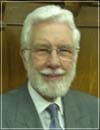
Stephen Hyde

Cast Thy Burden Upon The LORD

1 Peter 5:7; Psalm 55:22
Stephen Hyde October, 23 2016 Audio
0 Comments
Stephen Hyde
Stephen Hyde October, 23 2016
'Cast thy burden upon the LORD, and he shall sustain thee: he shall never suffer the righteous to be moved.' Psalm 55:22

Sermon Transcript

Auto-generated transcript • May contain errors

100%
I please the Lord to bless us
together this morning as we consider his word and let's turn to the
book of Psalms, Psalms 55 and we'll read verse 22. Cast thy burden upon the Lord
and he shall sustain thee. He shall never suffer the righteous
to be moved. These are the encouraging words
of God's servant David, who, without any doubt, had experienced
the reality of such words as this. Really, there are several
points in this particular verse. The first is caste, and the second
is burden, and the word burden can actually be translated as
gift. So we can think that the burden
is a gift. Cast thy burden upon the Lord
and then he shall sustain thee and then finally that those who
are the righteous shall never be moved. Well you see there's
much instruction in just a few words. And quite clearly the
psalmist desired that such expressions might have, be a record of those
things which he had passed through. And what a blessing it is that
the Lord has indicted him to write such words. And so we have
this word cast. Now what does that word cast
mean? Well, it really means to throw. When you cast something, you
throw something. And you may think also of the
expression, when ships leave their dock, they cast off their
moorings. And that means they're no longer
tethered to that dock, and they're free from that, and as it were,
they're by themselves. And so here we have this expression,
to cast, to throw, to throw away, to separate. So there is that
separation. And therefore the psalmist says
to cast, to throw away, to separate the burden. The burden, the gift,
which God has seen fit to place upon us. Sometimes we forget
that the burdens which We think we are carrying, perhaps we are
carrying, and we seem to forget that those burdens have arrived
and been placed there and been given to us by the good hand
of our God. We should not therefore be left
to that position to cry out, how hard is my lot? We should realise that if the
Lord has placed a burden upon us, and be that small or be that
large, and perhaps it's a burden which increases, perhaps the
Lord still sees fit to load it more and more, but then there
is this wonderful expression not to carry on enduring that
burden, but to have faith to cast it upon the Lord. Yes, to throw that burden away
from us unto the Lord. We may say, well, why is that
and why should we do that? Well, I believe that we have
the reason for it at the end of this verse where we're told,
he shall never suffer the righteous to be moved. And he clearly is
referring to the righteous. They are the ones that God deals
with in love to their souls. And in order to deal with them
in love to their souls, he causes them to walk in a path like this,
which is not a path which we as individuals enjoy naturally.
But when the Spirit of God applies his truth to our soul, we realize
it was necessary to instruct us and to give us that grace
and give us that faith to come and to cast that which the Lord
has given us back to himself. And it is to be granted to those
who are the righteous. And I suppose we may think that
when we're in that situation we are unrighteous. Yes, we're
having to bear this burden and we may sometimes think well it's
because of God's anger toward us that he's placed these burdens
upon us. Well, it may be the very opposite.
It may be his great love to our souls. And because we are amongst
those who are the righteous, and if we are among those who
are the righteous, we're amongst those for whom Christ has died. We're amongst those that have
been redeemed, redeemed with the precious blood of Christ. And therefore, we're being dealt
with in love to our souls. We should not therefore think
that this is something which we are receiving because of God's
anger toward us. It's because of his love toward
us. And it is bringing us to that
position to cause us to look out of ourselves. Sometimes we
struggle on, don't we? And we bear these burdens and
we're weighed down by them. Here we have this gracious exhortation,
and it is an exhortation, and it is the Word of God, and it
is the truth of God, to come like this, and to therefore cast,
to throw this burden, this gift, upon the Lord. Now then, what
a relief that will be, and how naturally it's impossible, isn't
it? We just carry on, we carry on
groaning under the burden, and we sometimes feel very sorry
for ourselves and we moan about our condition. Well what a blessing
it is if you and I are given grace and it is God's grace to
look out of ourselves to realise that it is God's gracious hand
upon us and he's dealing with us in love to our souls. Cast therefore thy burden upon
the Lord. We read of that chapter in Peter's
epistle. You may have thought, well, that's
a strange chapter to read. Well, the apostle Peter, he also
knew, of course, something of the problems which he had to
face and which the Church of God have to face. And he tells
us in the seventh verse in that fifth chapter, the first epistle
of Peter, casting, you see, throwing again, all your care upon him,
for he careth for you." And remember what the Apostle had previously
spoken of. He'd given that gracious example
and he'd said, yea, all of you be subject one to another and
be clothed with humility. For God resisteth the proud and
giveth grace to the humble. Humble yourselves therefore under
the mighty hand of God, that he may exhort you in due time. And so we can recognise that
the Lord graciously gives us these burdens to bear so that
the effect is to humble us. and to humble us under the mighty
hand of God, to realize that it's God's hand which is upon
us. Yes, God's dealing with us. That's a great blessing, isn't
it? To know that we're being dealt with, that God isn't leaving
us just to wander on to our own spirit. How easy it is to be
left to our own spirit. And so here the apostle tells
us to be clothed with humility. And for God resisteth the proud. Yes, and what we find is that
if we're proud and stuck up as it were, the Lord deals with
us. What a blessing it is, isn't
it? God deals with us. And therefore he comes and says, casting all
your care, everything, everything upon him. The Lord is our burden
bearer. Isn't that wonderful? The Lord
carries our burdens. And those burdens, of course,
have a variety of expressions, a variety of circumstances. But no doubt, the biggest burden
is, of course, the burden of our sin. Sometimes that can be
very heavy. And you may think, well, surely
that's not a gift. It is a gift if the Lord has
shown us where we are and reveals to us more of our sins. So the burden, perhaps, when
the Lord came and called us by His grace may have been quite
light. It would have been a conviction,
it would have been a truth, we would have bowed down recognising
we were a sinner. As we travel along through life's
way, the Lord loads us perhaps more. He shows us more of the
evil of our heart, the lustfulness of our spirit, the pride of our
hearts. And we find the burden, it's
God's gift to us, in revealing to us more that we're really
like. We may easily conclude that we're
a pretty good Christian. We're doing all those things
which are wonderful and right in accordance with God's word. Saul was like that, wasn't he?
He thought he was doing God's service, but he was wrong. Yes,
he was mistaken. But God cut him right down on
that Damascus road. What a change there was in the
apostle's life. How humble he was. How submissive
he was. Lord, what wilt thou have me
to do? It's a great blessing, isn't
it? The Lord, as it were, comes to us and strikes us down and
brings us to this place. And then you see, what is it?
Casting all your care upon him, for he cares for you. That's
what the Apostle Paul did. That's what the Apostle Peter
did. And my friends, by God's grace, that's what you and I
will do. Cast thy burden upon the Lord. The Lord's given us
that burden. He knows the weight of it. He
knows the reason we've received it, but how thankful we are the
Lord God is willing to carry it. Just think of that. The burden
which he's given you, which he's given me, He's willing to take
upon himself and to carry it. He bore the load. Indeed, he
bore the punishment instead of us. Cast thy burden upon the Lord. Well, I wonder if that is an
encouragement to us. Is it an encouragement? We might
think we're straining under it, we're being worn out by it. Perhaps
we're not looking in the right place for deliverance. Perhaps
we're trying to rectify the situation ourselves. Perhaps we're pressing
on in our own life, with our own plan, rather than coming
and casting it upon the Lord. Now the great blessing is this.
When you and I are given grace to cast our burden upon the Lord,
What is the result? The result is simply this. God
gets the honour and glory. God gets the honour and glory.
Because we realise it's all of grace. It's all of his mercy
toward us. That he's helped us to do that.
To come to him and to cast all our care upon him. To cast our
burden upon the Lord. If you remember the Lord Jesus
in the Gospel of Matthew, towards the end of that eleventh chapter,
he gives us these very beautiful words. Come unto me. Who are those who are to come
to the Lord? Those who are self-righteous?
Those who are full of their own pride and ability? No. Come unto me, all ye that labour
and are heavy laden, and I will give you rest. What a place that
is, isn't it? To come to the Lord when we're
labouring and heavy laden, what does it really mean? It means
this, casting our burden upon the Lord. It means coming to
the Lord, doesn't it? Come unto me. all ye that labour and are
heavy laden, and I will give you rest." How often, you see,
we hang on to the burden ourselves. We don't perhaps realise what
we're doing. We don't realise the fact we're
walking contrary to God, contrary to His will, contrary to His
plan, and yet here is this gracious word of deliverance. Here is this gracious word of
freedom. If the Son therefore shall make
you free, ye shall be free indeed. And my friends, the freedom of
God is a blessed relief. You see, if we cast our burden
upon the Lord, we're free from that burden, aren't we? We're
not carrying it still. We cast it aside, we cast it
on Him. We're not still carrying that burden. Is that not a relief? Is that not a wonderful favour? That the Son, the Lord Jesus
Christ, because of His love to our soul, has made us free. And it's a true freedom, and
it's a real freedom. If the Son therefore shall make
you free, you shall be free indeed. Well me, you and I know that
freedom which is in Christ. It's not freedom hanging on to
a burden. hanging on to that which shouldn't
really be there. And yet, you see, the Lord encourages
us therefore to come to Him, to come to Him with it, to cast
it upon Him. You see, the Lord puts it there,
He gifts us this to bring us to that place where we come to
the Saviour. no burden, no coming to the Saviour. We wouldn't want to, would we?
But the Lord gives the burden and then gives us grace to view
the situation, to view our situation, and to direct us then to this
great and glorious word of encouragement, cast thy burden upon the Lord. Nowhere else, nowhere else First
of all, no one else will be able to take the burden. And secondly,
no one else will be able to give us the relief from that burden.
So what a blessing it is to be able to read here the glorious
Gospel as it is in the Book of Psalms. See, the Gospel is not
confined to the New Testament. You young people, don't think
the Gospel is confined to the New Testament. It's definitely
not. Especially as some of you have been engaging in this new
series to start at the beginning of Genesis, you see how the glorious
Gospel is there. What a wonderful thing, isn't
it? The sinful mankind, the Gospel is throughout the Word of God. So, here we have the Word of
God in these words. Cast thy burden upon the Lord. Now, it doesn't mean that, of
course, it's going to be an easy life. It never is an easy life. A Christian life is not an easy
life. But we should be thankful to know that that which God gives
us is for our good. And in that situation, as the
psalmist, again, David, tells us, when we come to that position,
To cast our burden upon the Lord, he gives us this expression in
the 61st Psalm, he says, from the end of the earth will I cry
unto thee. The end of the earth, that means,
really is an expression at wit's end corner. We don't know what
to do. From the end of the earth will
I cry unto thee. When my heart is overwhelmed,
Yes, when we're overwhelmed, perhaps with our own sinfulness,
with our own grief. Not with our own pride, but with
our own grief. And what does the Lord say? Lead
me to the rock that is higher than I. What direction it is,
isn't it? To Christ, the Lord Jesus Christ. When we have these burdens, when
we have these weights, to be able to come like this, and to
come to this rock, come to the Saviour, lead me to the rock
that is higher than I. See, this word here leads us
to the Lord Jesus Christ. So when we appear to be overwhelmed,
remember, cast thy burden upon the Lord. Let us not hang on
to it. Sometimes, because of the pride
of our nature, we hang on to it. Because we want to bring
about the deliverance. We want to get the honour. And
we want to get the glory. Not so, says the Lord. Cast it
upon me. Cast it upon me. I'll take care
of it. I'll carry it. What a blessing then to be found
like this, casting our burden upon the Lord. And you see, when
we're able to do that, we're told, and he shall sustain thee. That means he'll strengthen us.
That means he'll help us. That means he'll be with us to
sustain us. And we might think, more than
that, what does it mean? Well, to be sustained in our journey,
we shall need food. Naturally, on a journey, we need
food. Spiritually, on a journey, the journey of life, we need
food. And therefore to think that this great and glorious
Saviour, who has taken the burden that we've been given grace to
cast upon Him, now sustains us. with heavenly food. Heavenly
food. And what is that? Well, the Lord
Jesus tells us, doesn't he? His broken body and his shed
blood. Well, I'm sure we're familiar
with the wonderful occasions that we have when we're able
to come together around the Lord's table to remember his dying love,
to remember the food that he supplies for us spiritually,
his broken body and his shed blood. That's how the Church
of God is sustained. We're not sustained by our pride.
We're not sustained by our own ability. We're sustained by what
Christ has done. The amazing change, isn't it?
From there being taken up with ourselves, conceited with our
own abilities, given that grace then to come just like this and
to cast our burden upon the Lord, and then to realise His gracious
God sustains us, day by day. Not necessarily a great feast,
Very seldom a great feast, but sustained. Every day, manna,
a fresh supply was granted to the Israelites, wasn't it? Every
morning, the manna was there to collect, a part, of course,
from the Lord's Day when they had to collect double on the
Saturday. But nonetheless, what a wonderful
favour it is for us to realise. The Lord supplies us with spiritual
food. He sustains us. You know, if
you're carrying that burden, and that's a burden which shouldn't
be there, it's a burden which the Lord has given you to cast
upon him, then you say you may go down and down in your own
feelings and get lower and lower. And yet, you see, if we are favoured
to hear that gracious exhortation, come unto me, what are we doing
then? We're not concentrating on self.
We're looking out of ourselves to the great glorious Saviour
and that great and wonderful plan of salvation, that great
and glorious act of redemption. Does it not feed our souls? Are
we not sustained by it as we journey on day by day through
life? It becomes more precious, doesn't
it? And it becomes more needful. And we're thankful for the provision
of it. that it is that which does sustain
us as we journey on. Nothing else will. Let us not
think it will. If you and I are to be partakers
of spiritual food, if you and I are to be sustained in our
spiritual life, it must centre on that which Christ gives, that which he supplies, to feed
our soul. And what it really means is this,
to meditate upon what Christ has done. You go to Calvary,
you go to Gethsemane, you go to the Judgment Hall, you think
of what Christ has done to redeem your soul. Isn't that which will sustain
you? Isn't that which will encourage us and help us to hold our way? And so, we know that the Psalmist,
at the end of the earth, he came to his God. My friends, we're
then granted this grace to cast our burden upon the Lord. And the promise is, and he shall,
sustain thee. He shall sustain us. Well, we
might wonder sometimes, we might think, well, I'm cast down. Yes, we may feel to be cast down.
And the psalmist asks the question. And in the 42nd Psalm, he tells
us, why art thou cast down? O my soul, And why art thou disquieted
within me? Well, perhaps we've got that
burden. We're cast down because of it. Remember, the psalmist
is speaking here about his spiritual condition. Why art thou cast
down, O my soul? That's the important consideration. And disquieted within me? What
does he tell us? Hope thou in God. What does that
mean? Coming to God and casting our
burden upon Him. Taking hold of His gracious and
glorious promises, which is here. Cast thy burden upon the Lord
and He shall sustain thee. There's no doubt about the Word
of God, is there? Hope thou in God, for I shall
yet praise Him who is the health of my countenance and my God. And surely the health of our
countenance is in, is when we are being fed spiritually. Remember in the days of Daniel,
Daniel and his men, they didn't want to partake of the king's
food. They wanted that which was very
simple, which would prove that it was God that was bringing
a good countenance to them. It wasn't something which had
been provided for them. No, they were dependent upon
God. And so it is in the same way for us today. The health
of our countenance and my God is in what God has done for us.
And that makes us healthy. You see, if you and I are feeding
upon Christ, we'd have a good countenance, wouldn't we? Oh,
we'd be rejoicing. in what God has done. Because
he starts this 42nd Psalm with those beautiful words, as the
heart panteth after the water brook, so panteth my soul after
thee, O God. My soul thirsteth for God, for
the living God. When shall I come and appear
before him? Well, it's a blessing, isn't
it? If we've been given that grace to cast our burden upon
the Lord, And to hear his gracious invitations to do that, and then
for the wonderful promise that he will sustain us, and he shall
sustain thee. And then he tells us, he shall
never suffer the righteous to be moved. Never suffer us to
be moved. If we were just to carry that
burden, We may try and find a different exit, a different way out. We
may try all the various things that our minds can produce, instead
of listening to the gracious Word of God. And to think that,
blessed with this grace, to come here to think that he shall never
suffer righteous to be moved. That means to be taken away from
the rock Christ Jesus. His people will never be moved
from it. There may still be those storms of life, there may still
be those battles, but if we are on that rock, we shall never
be moved. And the evidence, surely, that
we are on the rock is if we have received that grace from God
to come and to cast our burden upon the Lord and to have experienced
his sustaining grace. Now, clearly this is the pathway,
is it not, of the children of God. We should not think, well,
I don't think that applies to me. The Gospel is gloriously
free, isn't What a wonderful privilege it is to be found walking
in this way and to know that through His grace, because of
what Christ has done, we shall not be moved. We're not relying
on our own ability, on our own strength and our own help. No,
we're relying upon what Christ has done, the great and glorious
Saviour. Again in another psalm, how full
the psalms are of gracious instructions. Another psalm of David, he tells
us, but let all those that put their trust in thee rejoice. Now, if God gives us grace to
cast our burden upon the Lord, what is it? We're trusting in
the Lord that he will take that burden and he will bear it for
us. Let all those that put their
trust in Thee rejoice." Well, I'm sure it's a time to rejoice,
isn't it? To think this great God, because of His love toward
us, His amazing love, is willing to take our burden, to carry
it. Because of His great love toward
us, You think naturally, don't you? Sometimes we perhaps see
older people struggling on and we volunteer to help them to
carry something perhaps. And what a relief it is to them,
how thankful they are. The Lord Jesus Christ brings
this wonderful statement to us so that we might rejoice. Rejoice in his mercy. that He
hasn't left us, He hasn't forsaken us to just carry on. No, He's
drawn us to Himself. And all those that put their
trust in Thee, rejoice. Let them ever shout for joy,
because Thou defendest them. Let them also that love Thy name
be joyful in Thee. For Thou, Lord, will bless the
righteous with favour will encompass him as with a shield. That agrees, doesn't it, with
these words? Well, of course we know. All
the words of God agree, don't they? There's no difficulty in
God's Word. They all flow together. Cast
thy burden upon the Lord and he shall sustain thee. He shall
never suffer the righteous to be moved. So really the great
question for us this morning is to know that we are among
the righteous. That we are among the righteous.
That we are amongst those who are redeemed with the precious
blood of Christ. Because this gracious invitation,
this gracious word is directed to those who are the righteous. those whom God has redeemed. So we should not just pass over
these things and say, well, I don't know therefore whether this applies
to me. We should be found on the stretch,
seeking that you and I may know that we are amongst those that
this gracious word applies to. That we are amongst those who
are made righteous. not because of what we've done
or what we've said or what we are, but it's because of what
Christ has done for us in giving his life to pay the ransom required
to redeem our souls. And the ransom price was his
precious blood. This morning, do we rejoice? in what Christ has done? And
do we rejoice in that knowledge that it was done for us? Can
we bless God that he has come and blessed us with spiritual
life so that we have the evidence that we are made alive? We were once dead in trespasses
and sins. And again, you young people thinking
of Genesis, we were all born in sin and shaped in iniquity. And there we remain until the
God of all grace comes and calls us out of nature's
darkness into the glorious light of the everlasting gospel. What
is it? The Holy Spirit shows us our sinfulness. He shows us our need of a Saviour.
He directs us to the great sufficiency of the Lord Jesus Christ. And
we then come and are blessed to be able to say, my hope is
built on nothing less than Jesus' blood and righteousness. That's
a good foundation. We're on the rock if we're in
that position. And therefore, we will then be
able to enter in to the truth of these words and be thankful
for them. And to realise that because of
God's love and mercy toward us, we shall never be moved. We shall never be moved off that
rock. Once in Christ, in Him forever. We can't fall out of
grace. We can't fall away because Christ
has paid for our redemption with that enormous costly price of
His most precious blood. The Saviour did not shed His
blood in vain. And so we come this morning and
may we rejoice in His words May we be given grace to lay hold
of them and to follow them out and to realise the blessing that
they contain. We think of the words in the
37th psalm. Again another beautiful psalm
full of gracious help and gracious strength. Commit thy way unto
the Lord. Commit thy way unto the Lord.
Trust also in him and he shall bring it to pass, and he shall
bring forth thy righteousness as the light, and thy judgment
as the noonday. Rest in the Lord, and wait patiently
for him. Fret not thyself, because of
him who prospereth in his way, because of the man who bringeth
wicked devices to pass. We can leave those. What a blessing
it is then to come like this. commit thy way unto the Lord,
trust also in him, and he shall bring it to pass." So no failures
with God. Cast thy burden upon the Lord,
and he shall sustain thee. He shall never suffer the righteous
to be moved. Amen.
Broadcaster:

Comments

0 / 2000 characters
Comments are moderated before appearing.

Be the first to comment!

Joshua

Joshua

Shall we play a game? Ask me about articles, sermons, or theology from our library. I can also help you navigate the site.