Bootstrap
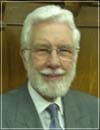
Stephen Hyde

Living For The Lord

Romans 14:8
Stephen Hyde May, 1 2016 Audio
0 Comments
'For whether we live, we live unto the Lord; and whether we die, we die unto the Lord: whether we live therefore, or die, we are the Lord's.' Romans 14:8

Sermon Transcript

Auto-generated transcript • May contain errors

100%
May God be pleased to bless us
this morning as we meditate in his word. Let us turn to the
chapter we read, the 14th chapter of Paul's epistle to the Romans,
and we'll read verse 8. The epistle of Paul to the Romans,
chapter 14, and reading verse 8. For whether we live, we live
unto the Lord, and whether we die, We die unto the Lord. Whether we live, therefore, or
die, we are the Lord's. The ministry of the Apostle Paul,
we are thankful to know and to be able to say, was very Christ-centred. The Apostle's life was wholly
taken up really with the things of God. And he tells us when
he wrote to the Corinthians, for me to live is Christ and
to die is gain. And that's really the same sentiments
that he addresses the Roman church in these words. For whether we
live, we live unto the Lord, And whether we die, we die unto
the Lord. Whether we live, therefore, or
die, we are the Lord's." Well, it's a very powerful statement,
isn't it? And it's a very important statement. And it's a statement which we
should look at ourselves. The Apostle here tells us, he
says, for whether we, that clearly included himself, and he was
speaking to these people at Rome, But he's also speaking, of course,
to the whole Church of God down through the ages. And he's really
addressing us today. Whether we live, we live unto
the Lord. Well, the truth is we are either
living unto the Lord or we are living unto ourselves. And if
we are living unto ourselves, we are not living unto the Lord.
And by that we can say it really means that we are pleasing ourselves
rather than doing those things which please the Lord. And it's
good for us sometimes to just sit down and analyse our lives,
analyse our words, analyse our thoughts and our actions as to
whether they come under this right and good category of being
numbered amongst those who live unto the Lord and who die unto
the Lord, or whether that is not true. We look around today,
we need to look at ourselves first, but we look around today
and we see, generally speaking, the Church of God not following
such a good pattern that the Apostle speaks to us here. There is a following, a worldly
pattern. Many people today will, they'll
serve God if they feel like it, they'll serve God if it fits
in with their routine, if it fits in with their plans, but
they don't want their plans, they don't want their routine
to be upset. In actual fact, the reverse should
be so true and so important for us. Our life should be really
totally taken up with the things of God and we fit around that,
the other things that we have to do. We have to work, of course
we have to work for our living, and it's right that we should
do so. But you know, when we have available time, and I suppose
we use the word, it's not a word that I really like, but it's
a word we use, leisure time, then how do we use that time? Do we use it living unto the
Lord? Or do we use it living unto ourselves? Well, it's a very relevant consideration,
isn't it? And I'm sure the day in which
we live, which we must consider to be a very materialistic day,
is a very different day to the day which existed centuries ago. But very sadly, we're not in
a day wherein the true Church of God, the people of God, are
living any closer to God, they're no better, they're no more lively
in their souls. In actual fact, to a large extent,
it's the opposite. The world creeps into our lives
to an ever greater extent. There's so much pressure from
various things. And the problem is then, we are
not living unto the Lord. And if we're not living unto
the Lord, what does it mean? It means that God's name is not
being lifted up, His name is not being honoured and glorified,
because we're living unto ourselves. Well the Apostle is able to make
this great and glorious statement, isn't he? Whether we live, we
live unto the Lord. And whether we die, we die unto
the Lord. Whether we live therefore or
die, we are the Lord's. And it's so important that we
read the Word of God and we take it to our hearts. We do read
the Bible, I hope we all read the Bible, but the problem is
sometimes we read it and we just pass over such words as these
and it doesn't really affect us, it doesn't really touch our
hearts, it doesn't really influence our lives and we just carry on
in the same way. There's been no change, there's
been no effect from reading God's Word. But it's a blessing if
God's Word affects us and whether God's Word changes us and whether
we are perhaps brought back in line with God's Word. We may fear and we may complain
that we are not as we would feel and would be. And we do find
that we are taken up with many trivial things which in actual
fact separate us between our spiritual life and our natural
life. We find therefore that our spiritual
life becomes dull. Our spiritual life becomes lukewarm. And we don't put the things of
God first. We put the things of God second,
perhaps third, sometimes fourth, sometimes a long way down the
line. And you know we have a great adversary, a great enemy, who
of course is the devil. The last thing the devil wants
you and me to do is to hear an exhortation like this and to
desire to walk in such a way. To live unto the Lord. And if we are to live unto the
Lord, what does it mean? It means that we should follow
the Lord, doesn't it? It means that we should follow
his example. His example in the words that
he speaks, the example that he set before us and the actions
that he did, and the life that he lived. We have a wonderful
example in the life of the Lord Jesus Christ, and the pre-eminent
statement, I suppose, in that life is this, that he pleased
not himself. Why? Because his concern, his
desire, was to please his Father, was to please God the Father. It would be a good test, wouldn't
it, in our lives, that as we do things or as we don't do things,
is it pleasing to God the Father? Are the things that we do pleasing
to God the Father? Are we able to really ask God's
blessing on everything that we do? Is it pleasing to God? Well, hear these words. of Paul
as he says, we live unto the Lord. And he wasn't saying, well
I'm going to live unto the Lord for 50% of my life and I think
that's a pretty good deal and I'm going to carry on with my
own life. No, the Apostle gave himself
totally really for the things of God. And as we've As you know,
going through the Acts of the Apostles, we have the example
of the Apostle there, that every opportunity he had, what did
he do? He spoke the things of God. Whether
it was in the synagogue, whether it was in the marketplace, whether
it was in the temple, whether it was in the houses of the friends
that he went to, what was his concern? To speak of the things
of God. and to encourage one another,
to edify one another, to direct the people to the Lord Jesus
Christ. The apostles' concern was that
Christ might be exalted, and that Christ might be known, and
that Christ might be followed, and that Christ might be the
one that the Church of God loved to serve. Now, the apostle, he
didn't count the cost, did he? There is a cost. There is a cost
to those who truly follow the Saviour, who do his bidding,
who do his will. There is a cost. But you know,
there's a great reward, there's a great recompense, and that's
this. It's the knowledge that we're
doing the will of God, our conscience is at peace. I might ask this question, is
your conscience this morning at peace with God? Or are those niggling questions
that keep on rising up, you're not able to stop, you're not
able to put away, those questions that you keep coming to you.
The Spirit of God is perhaps nudging you and continually nudging
you. You don't want to acknowledge
it. You don't want to realise that it's God because you know
if you take up your cross, you know it will have an effect.
You know it will change your life. You know it will affect
you. My friend, is it better to be
obedient to God or to listen to the devil and to be obedient
to Him. We have a wonderful God. We have a wonderful Master. We have a wonderful Saviour.
My friends, One who is so good, so kind and so gracious. One who does not deal with us
as our sins deserve. One who helps us, one who strengthens
us, one who sustains us. He doesn't leave you and me by
ourselves. He's with us day by day. He's by our side to encourage
us and to strengthen us so that we're able to find such a word
as this to be true. We live unto the Lord. It's a great question, isn't
it? It's a great question that we all need to ask ourselves. Are we living unto the Lord? And to very carefully examine
our lives to determine whether that is true or whether it is
false. We want to be able to answer
it in the right way. We want to be able to answer
it honestly. And if we're finding we're not living our life unto
the Lord, and I expect we should all find that to be true in some
elements in our life, that in fact we are not living our life
unto the Lord. May we have a real prayer, an
honest prayer to God that we might live our life unto the
Lord." Now, your life and my life, we must remember, is but
a few years. Just a few years. If you live
to be a hundred or so, it's only a few years. And then, eternity
is before us. We don't want to come down to
the day of our death and have to confess that, well, no, I
haven't lived my life unto the Lord. I've just been pleasing
myself. And then, as eternity is right
before us, to have to confess that we haven't honoured our
God. We haven't pleased our God. We've just done that which is
pleasing to ourselves. We've looked, we've counted the
cost, and we've turned aside. We've turned away. And yet how
the word of God encourages us. And it's a wonderful thing if
God gives you and me that wonderful grace to be willing to suffer
for his sake. And when Paul wrote to his son
Timothy, he told him about suffering. He said, if we suffer with him,
we should also reign with him. And therefore, if we are living
unto the Lord, it'll be a life of blessing because the Lord
will be with us, but it won't be an easy life. It won't be
an easy life. You know, the apostle, you only
got to look at his life as he tells us about it, not only recorded
by Luke in the Acts of the Apostles, but also when he writes his epistles
and he explains sometimes of the difficulties and the trials
and the great oppositions that the Apostle Paul had to pass
through. But did he regret it? No, he didn't. What he did regret
were the years when he followed his own inclination. He did regret
those times, didn't he? When he disobeyed God, when he
was pleasing himself. And even in those days he thought
he was pleasing God, but of course he wasn't. The Lord directed the Apostle
and he was willing to suffer for his sake. Remember then,
the one who of course is greater than Paul, the Saviour himself. Did he have an easy life? Of
course he didn't. He had a very difficult life.
He had so much opposition, didn't he? Day by day, wrongly accused,
wrongly judged, But did he turn back? Did he say, well, I've
had enough? No, he pressed on. And my friends,
we have these wonderful examples in the Word of God for us today.
Go back to the Old Testament. You look at the characters there.
You look at Moses. Look at Moses' life. What did
he say? Choosing rather. Choosing rather. Not an easy
path. To endure suffering, opposition,
than to be blessed with the pleasures of sin for a season. Choosing
rather to suffer affliction with the people of God. Moses had
a very comfortable first 40 years in his life, didn't he? Living
in Pharaoh's palace. Every comfort, no doubt, he wanted.
But you see, he was willing to give it all up, willing to give
it all up and to do the bidding of his God. And of course, God
was with him and God blessed him and God supported him. Then
you think of Abraham. Abraham, in his life, he had
to leave his country where he was brought up. leave all the
family that he had there. Of course, we know it wasn't
a godly community he worshipped in, in Ur of the Chaldees. And he had to travel many, many
miles. And there was much opposition in Abraham's life, but did he
give up? Did he say, well, I've had enough,
I'm going back? No, he followed the directions
of his God. Now my friends, today we have
the directions of our God in the Bible. We don't have to have,
we might think, a special word of direction. Some people you
know wait for words from God which God has never promised. We have the Word of God. The
Word of God directs us very clearly what we should do, what we should
say, How we should react? If you and I want any guidance,
and we want any direction, we shouldn't just sit in our armchair
at home, hoping somehow some wonderful words are going to
lodge in our mind. We should pick up the Bible, and read the
Bible, and find God's direction in reading the Bible. You will
find direction. You will find it there. It may
not perhaps be in the terms that you expected, or perhaps the
terms you wanted more accurately put. But you will find words
of direction, and you will find the right way to go, and you
will find that sometimes that way will not be an easy way. You know when the Apostle was
told to go to Macedonia, he went to Macedonia. He wasn't disobedient. He obeyed God immediately. But
he had a very hard time in Macedonia. And worse still, he was beaten. And worse still, he was put in
prison. What was he doing? He was doing
the will of God. You might think, well, surely
this can't be right. Surely I wouldn't have to find
it as difficult as this. I obeyed what God's told me to
do, and this is the result. Well, it wasn't the result, because
God was to greatly bless that jailer. They were Paul and Silas
in prison, and God came and blessed them, and enabled them to sing
praises to God at midnight. They weren't complaining. They
accepted what God had given them. And they sang praises to God
at midnight. And we're told the prisoners
heard them. What a wonderful testimony, wasn't
it? And what was the result then?
Later that same night when there was that great earthquake and
the jailer thought the prisoners had escaped. And the Spirit of
God came upon him and he realized his condition. and he desired
what he should do. We read then Paul was able to
preach the gospel to him and the effect was, what did he do?
He took up his cross and followed the Lord Jesus Christ. He was
baptised. What a change, what a blessing,
what a favour there was in that night and therefore in the obedience
that the apostle was directed to. Well, we should remember
that. instruction is to live unto the
Lord. Because we can leave all the
issue with God. And we can leave the issue with
God because of this truth. Earlier in this same letter to
the Romans, the Apostle says, and we know that all things work
together for good. to those who love God, and to
those who are called according to His purpose. And the Apostle
Paul could write those things, having proved the truth of them.
And therefore, even in that kind of situation, when he went to
Macedonia and to Philippi, and it appeared everything was going
against him, when it wasn't. No, it wasn't. Going back to
the Old Testament, we think of Jacob, don't we, when his sons,
they came back from Egypt, having met with Joseph, who they didn't
recognize. And Jacob said to his sons, all
these things are against me. But they weren't. He didn't know
the outcome. He did know the outcome in due
time, but he just judged the situation as he viewed it. And
you know we can judge situations as we view it. And we can think,
well, I suppose I really want to live under the Lord, but the
cost seems to be too great. And perhaps I can put it off
for a bit longer. Perhaps I can carry on. in my
present situation." Well, it's a blessing if the
Lord comes and gives us a willing spirit. That means a spirit directed
by the Spirit of God. And that means that Spirit of
God comes upon us and overcomes all our objections, overcomes
all the things that we've, as it were, put in the way to stop
us living unto the Lord. You know, we need much grace
and we need much support from Almighty God to follow a way
like this, to live unto the Lord. It's a very difficult thing.
Naturally, it's impossible. Remember, the Lord says He gives
more grace. Grace is unmerited favour and
He gives that to His people. He gives more grace. Things which are impossible with
men are possible with God. And God gives us that strength
so that we can do things that perhaps we never thought we could
do. The Lord encourages us, the Lord
stands by us. For whether we live, we live
unto the Lord and not living unto ourselves. You see the apostles
speaks to us in so many places really in the Word of God, so
many words of encouragement and he speaks to us in the epistle
to the Ephesians and the fifth chapter. He tells us very simple
words. Be ye therefore followers of
God as dear children and walk in love as Christ also has loved
us and has given himself for us an offering and a sacrifice
to God for a sweet smelling savour. Now if we ponder a word like
that, and if we compare it with a statement like this, we live
unto the Lord. Here the apostle, as he writes
to the Ephesians and says, be ye therefore followers of God
as dear children. and to consider why because of
what Christ has done. And walk in love as Christ also
loved us and has given himself for us an offering and a sacrifice
to God for a sweet smelling savour. It's good for us to think very
often of what Christ has done in order that our souls are saved,
in order that by his grace we shall go to glory and to be with
him. The Saviour gave his life. It's spelt out here in these
words, an offering and a sacrifice. Any sacrifice is costly. In Old Testament times, the people
brought sacrifices, and it cost them something to bring those
sacrifices. They had no doubt worked for
those sacrifices, but they were willing to bring them and to
offer them up to God. Well, the Lord Jesus Christ,
he gave his life, his life for an offering and a sacrifice to
God for us. And that sacrifice was an acceptable
sacrifice. Almighty God received that offering,
he received that sacrifice. But my friends, and it was received
on our behalf, so that we might be saved, so that all our sins
were taken away, were washed away. And they're washed away,
of course, as the Word of God tells us, in the blood of the
Lord Jesus Christ. The cost of our salvation was
so, so great. Let us never despise, let us
never minimize the great cost. To think that the Lord Jesus
Christ And don't forget he was God, the God-man. He came into this world so that
he might redeem our souls. And in order to do that, he had
to satisfy the whole demands of God. And the demands of God
were that his blood should be shed, that his life should be
given The wonderful picture was shown to us right through the
Old Testament, right from those early days in the Garden of Eden
when God came and gave those skins to Adam and Eve as a covering. The effect was that those animals
had been slain, the blood was shed. And you can trace right
down through the Old Testament the sacrifices, the Passover,
And all of that represented, and it was all brought about,
and it all signified, without shedding of blood, there's no
forgiveness, no remission. And therefore Christ died that
you and I might live. And so we have this statement,
for whether we live, we live unto the Lord. If we live, and
if we live in a spiritual sense, If our souls are alive, we've
passed from death to life, we receive that new birth and we
do live, we live because Christ died for us. Because Christ gave
himself as that perfect sacrifice. He was sinless, sinless. He never sinned and yet He was
condemned, not for sins that he'd done. Condemned really on
our behalf so that he might bear the punishment instead. Now my friends, let us never
forget the cost of our salvation. Let it ever be before our eyes
and may the cost of our salvation wonderfully influence us so that
we might desire to be found in this way, live unto the Lord,
not unto ourself. Remember, we are bought with
a price. Bought with a price, and that
price, his life. The price of blood, his death. Always remember that. As you
go about your life day by day, are we living unto the Lord? Are there those things which
we should do? Is it that way that we should
follow, to live unto the Lord? Well, how thankful we should
be that we have such a statement as that. You know, the apostle,
when he wrote to the Corinthians, in that first chapter, it's a
very beautiful chapter in that first epistle to Corinthians,
and we come to the end of that chapter and we read this, that
no flesh should glory in his presence, but of him are ye in
Christ Jesus, who of God is made unto us wisdom and righteousness
and sanctification and redemption, that according as it is written,
He that glorieth, let him glory in the Lord. Well, today, are
we glorying in the Lord? Well, you know, you and I cannot
really be glorying in the Lord, can we? If we're not living unto
the Lord. If we're living unto ourself,
we can't be really glorying in the Lord. But yet, how good it
is If we are able to glory in the Lord, we have reason to glory
in the Lord. We have much reason, if we think
what he's done, if we think of the cost of our salvation, the
great suffering that he passed through, that he endured, so
that we might live. And so, may our desire be that
we are glory in the Lord. Let him glory in the Lord. For
whether we live, we live unto the Lord. And the Apostle goes
on, and whether we die, we die unto the Lord. And therefore,
to think that if we live our life to Christ, and we die to
be found with Christ, whether we live or die unto the Lord, whether we live
therefore or die, we are the Lord's. Well, what a blessing
today if you and I have the evidence that we are the Lords. And if
we have the evidence that we are the Lords, are we denying
Him in the way that we're living? Are we denying Him in our actions,
in our following Him? Are we denying Him in the words
that we speak or perhaps the words that we don't speak? It's very easy to deny the Lord
by not speaking. When opportunity presents itself,
do we speak or are we silent? Do we not want to speak because
we know it might be costly? We know that people might mock
us, people might ridicule us, people might turn away from us. My friends, the blessing is to
have fellowship then with the Lord Jesus Christ, isn't it?
You know what does the Apostle say? This great and glorious
person, the Apostle Paul knew who he was following and what
he desired to be blessed with and what he desired to enjoy. And he tells us when he wrote
to the Philippian church in that third chapter, he tells us, but
what things were gained to me those I counted loss for Christ. You see, he had a right value
on union and communion with Christ. And by that, he compared it with
the things of this world. And he goes on to say, yea, doubtless.
And I count all things but loss for the excellency of the knowledge
of Christ Jesus, my Lord. That was what he wanted to know.
knowledge of Christ. Now my friends, you and I won't
find knowledge of Christ in following a worldly life. We won't find
any true peace in following a worldly life. But here was the desire
of the Apostle that he counted all things but loss for the excellency
of the knowledge of Christ Jesus my Lord. And he goes on to say,
for whom I have suffered the loss of all things." Well, do
you and I say that? Well, we don't, do we? We haven't
suffered the loss of all things, have we? Nothing like it. Perhaps
we haven't lost anything. We may have lost perhaps a little
bit in declaring whose we love and whom we serve. But the apostle
was able to say, for whom I have suffered the loss of all things
and do count them but done. that I may win Christ. He didn't
count the things of this world of any real value. He didn't
court the praises of men. He desired the praises of God. And so he goes on, and be found
in him not having mine own righteousness, which is of the law. He couldn't
keep the law. You and I can't keep the law.
We have no righteousness in the law, but that which is through
the faith of Christ, the righteousness which is of God by faith. And that faith is to believe
on the Lord Jesus Christ. God gives us that faith to believe. And then he says that I may know
him. Well, the apostle knew the Savior, but he wanted to know
him more. It wasn't just something which
he agreed to, acquiesced to, years ago, but no, he wanted
continual union and fellowship with Christ. Because my friends,
in glory, in heaven itself, that place which we trust we're all
going towards, and that place by His grace we hope to come
to, that'll be a place where we will be glorifying Christ.
And it won't be something we'll just begin when we get to heaven. It'll be that which we have desired
to do while we're on this earth. And so the Apostle tells us,
as he says, I may know him and the power of his resurrection
and the fellowship of his sufferings be made conformable unto his
death if by any means I might attain unto the resurrection
of the dead. His heart was set upon being
a true follower of the Lord Jesus Christ. And don't forget, the
Apostle never counted the cost. My friends, we have these examples
in the Bible to encourage us and to give us a clear direction
in our life today. That whether we live, therefore,
or die, we are the Lord's. Now, do we hope that by His grace
one day we shall be with Him in glory and that we are the
Lord's? The Lord has died for us. Then
are we living unto the Lord's today? Not tomorrow, but today
and tomorrow and every day. Is it our desire as we get up
in the morning, every morning, that we may be fine living unto
the Lord, not just on a Sunday morning when it's a relatively
easy situation, but every day, that we may live unto the Lord. And therefore whether we die
Whether we die, we die unto the Lord. Whether we live, therefore,
or die, we are the Lord's. Well, what a wonderful blessing
it is then. Now then, if we are, surely we
are numbered amongst who are called the children of light,
because the light has come into our hearts, into our minds, and
we have been blessed with this evidence. The apostle speaks
when he writes to the church at Thessalonica and he tells
us this, But ye, brethren, are not in
darkness, that that day should overtake you as a thief. Ye are
all the children of light and the children of the day. We are
not of the night nor of darkness. Therefore let us not sleep as
do others, but let us watch and be sober. For they that sleep,
sleep in the night, and they that be drunken, are drunken
in the night. But let us, who are of the day,
be sober, putting on the breastplate of faith and love, and for a
helmet the hope of salvation. For God hath not appointed us
to wrath, but to obtain salvation by our Lord Jesus Christ, who
died for us whether we wake or sleep, we should live together
with him. Well, we see there, the Apostle
clearly directing us into that good and right way. And so, we have here this morning,
in these words, a very important statement. Whether we live We
live unto the Lord. And you and I this morning, before
God, have to answer this question as to whether we are living unto
the Lord. Are those things that we are
not doing, that we fail to do, we're making excuses? Well, remember, again, the Apostle
tells us to take up our cross daily, not just once, every day. whatever the cost may be. Whether
we live, we live unto the Lord. And whether we die, we die unto
the Lord. Whether we live, therefore, or
die, we are the Lord's. The Apostle says, for to this
end Christ both died and rose and revived, that he might be
Lord both of the dead and the living. Well, this morning then,
may we ask the question, is the Lord our Lord? Is he your Lord? Is he my Lord? How important
that question is, isn't it? Because if he is our God, then
our eternal home is secure. If he's not, there is no security
and we should end up in that fearsome place of hell. But if
we are the Lord's, We have the evidence of it in our heart,
and bless God if we do. Let's praise his name for it.
Are we hearing his word this morning? For whether we live,
we live unto the Lord. And whether we die, we die unto
the Lord. Whether we live, therefore, or
die, we are the Lord's. Amen.
Broadcaster:

Comments

0 / 2000 characters
Comments are moderated before appearing.

Be the first to comment!

Joshua

Joshua

Shall we play a game? Ask me about articles, sermons, or theology from our library. I can also help you navigate the site.