Bootstrap
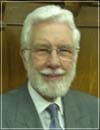
Stephen Hyde

92 - Paul Attacked and Rescued

Acts 21:27-40
Stephen Hyde April, 15 2016 Audio
0 Comments
Stephen Hyde
Stephen Hyde April, 15 2016
Acts of the Apostles Series - 92

Acts 21: 27-40

Paul is attacked and nearly killed by the Jewish mob in Jerusalem. He is rescued by the Roman soldiers and taken to the castle. Paul requests permission to speak to the people from the castle steps.

Sermon Transcript

Auto-generated transcript • May contain errors

100%
Please God to bless us together
this evening as we continue our meditation in the Acts of the
Apostles and chapter 21 and we'll comment this evening from verse
27 down to the end of the chapter. You remember that Paul has eventually
arrived in Jerusalem and we thought of Last time we spoke on some
of those things which he encountered, some of the difficulties and
how he went along with those things which were necessary.
And now we find that we're told that when the seven days were
almost ended, those are the seven days of purifying, the Jews which
were of Asia, when they saw him in the temple, stirred up all
the people and laid hands on him. Again, we need to be reminded,
as we have been on so many occasions, that we find the Apostle Paul
ever desiring to teach and to preach the Gospel, either in
the synagogues or as now in the temple itself. And every opportunity
it would seem that the Apostle was occupied in this work. We don't really read at all of
the Apostle having any leisure time himself. but we see him
occupied really wholly in the things of God. And yet what opposition
he obtained. We might be tempted to think,
well, if we're doing the will of God then everything is going
to be plain and easy and things will be smooth. Well, it's very
opposite, very often. And we should recognise that
the Lord has given us the Acts of the Apostles that tells us
in some detail the the opposition that the Apostle Paul had, and
not only verbally, but physically. He had a very hard and difficult
path, but it was one that he was content to walk in, because
he believed he was doing the will of God, and his concern
was quite clearly for the honour and glory of God, and for the
salvation of souls. Well, here he was in the temple. And these people came and they
cried out, men of Israel, hear help. This is the man that teaches
all men everywhere against the people and the law and this place. Of course, the temple had been
the ordained place for worship and sacrifice. But now, after
the Savior had died upon Calvary's cross and rose from the dead,
There was no need for it. There was no purpose in it at
all. All the ceremonial law had been
fulfilled. And so, no doubt the apostle
was directing the Jews, and also we read here the Greeks, to the
truth of these things. And there were those who were
so slayed in their religion because they did not believe the Lord
Jesus Christ had come They didn't expect him to come in the way
that he had, although they should have realised it if they'd read
the scriptures and have been blessed with spiritual insight.
But nonetheless, it hadn't worked out in accordance with the way
that they intended, so therefore they dismissed the Lord Jesus
Christ as being the Messiah. And so we read, for they had
seen before with him in the day Trophimus and Ephesian, whom
they supposed that Paul had brought into the temple. Well, they didn't
know that at all, they just supposed it. And they just wanted to bring
a further accusation against him. And all the city moved and
the people ran together and they took Paul and drew him out of
the temple And forthwith, the doors were shut. They obviously
had great intentions, stopping Paul ever going back into the
temple again. They wanted him out, and we read
on, and as they went about to kill him, you see, that was their
intention, to get rid of him. They didn't want this doctrine.
They didn't want to hear about the great glorious news of the
life and death and resurrection of the Saviour. didn't want to
hear it and therefore they thought that if they were able to kill
the apostle then that position would cease. But tidings came unto the chief
captain of the band that all Jerusalem was in an uproar who
immediately took soldiers and centurions, and ran down unto
them. And when they saw the chief captain
and the soldiers, they left beating of Paul." Well, we're not told
how much Paul was injured, but he must have been hurt a lot
with beating, with rods, no doubt it was. But it was amazing, wasn't
it, that it wasn't just a little group, you see, The Lord ordained
that there would be this tremendous upheaval of all the town coming
together and producing so much noise that the chief captain
and the soldiers and centurion heard it and therefore came down
to see what the problem was and as they appeared so they stopped
beating Paul. Well we see how God delivers. The apostle had to pass this
way. He wasn't exempt from this physical abuse. For the most
part today, we are not. But we should realise there are
many people in the world who do suffer physical abuse, very
greatly, don't they? We can read about it every day
in the press, the situation which exists to many people who are
holding the Gospel dearly and are prepared and willing to suffer
for it. And they do, sometimes indeed,
with their life. Then the chief captain came near
and took him and commanded him to be bound with two chains and
demanded who he was and what he had done. No doubt he bound
him with chains to appease the people so that they would be
aware that he was seriously concerned about the situation. And some
cried one thing and some another among the multitude. And when
he could not know the certainty for the tumult, He commanded
him to be carried into the castle, but of course they weren't able
really to bring about a consensus, because they didn't really understand
what they were saying. All they could think of was those
things that he was saying were contrary to what they'd be used
to, and ignoring the great truths which had been accomplished.
And so when he came upon the stairs, so it was, that he was
borne by the soldiers for the violence of the people. Here
he was, you see, being carried up into the castle, the castle
where the soldiers abode. They'd rushed down from it and
come down to the temple, and now they were going back to it,
and they were taking Paul back with them. For the multitude
of the people followed after, crying, away with him, away with
him. Just the same, wasn't it, with
the Saviour. He didn't want Christ away with
him, they said, when he was before Pilate. And as Paul was led into
the castle, he said unto the chief captain, may I speak unto
thee, who said, canst thou speak Greek? He was surprised. And
that must have, therefore, altered his opinion probably, thinking,
well, this man must be of some education. Because he would no
doubt have been speaking in Hebrew in the temple, and now here he
was speaking Greek. And yet they spoke and said,
art not thou the Egyptian, of which before these days made
us an uproar and leadest out into the wilderness 4,000 men
that were murderers? Well, of course, Paul wasn't
that person. There had been someone like that,
but Paul wasn't like that at all. He was very different. His
attitude was very different. And we find Paul's attitude in
all times submissive to the Word of God. That doesn't mean to
say he wasn't able to speak. It doesn't mean to say he wasn't
able to ask questions, as we know he did in this case. Because Paul came and he told
the centurion, he said, but Paul said, I, or sorry, the captain,
I am a man which am a Jew of Tarsus, a city in Cilicia, a
citizen of no mean city, and I beseech thee, suffer me to
speak unto the people." You see, the Apostle wanted still to be
able to declare the truth of God. Although he'd been beaten,
we might think, well, surely Paul, you want to retire now
and go and have some rest and be taken to the castle, away
from all these people? But no, he wanted to pursue that
which God had called him to, which was to preach the gospel,
to preach the unsearchable riches of Christ. And as we will come
to, God willing, next time, when he gives the account of his conversion
and how important it is. I thought very much when we,
that little booklet on Muslims that I gave you recently or before
I went away. And the great point there that
Ibrahim makes is that when we meet these kind of people, the
great thing is to speak to them of our testimony. We don't have
to argue about what they believe or don't believe. To speak to
them of our testimony. It's just what Paul did here,
didn't he? We come on to that. He spoke and he gave his testimony. It's a good example, you know,
we have in the Word of God. We often forget it, don't we?
But we're not to argue about other religions. We are to speak
of that which God has done for us and that which we believe
in. And so here the apostle comes
and he says, he asked the question, may I be able to speak unto the
people? And when he had given him license,
Paul stood on the stairs and beckoned with a hand unto the
people. And when there was made a great
silence, he spake unto them in the Hebrew tongue, saying, Well,
we can imagine, can we not? A multitude of people there,
yelling out previously, desire us to kill him. And now the apostle
there, under the care of the soldiers, able to stand up, put
his hand up so that people might be quiet. And there was a great
silence. The Lord had commanded this occasion
so that he might be able to speak unto the people and unto them
in the Hebrew tongue saying. Well, may God instruct us and
may we look forward to the next occasion when we hear what the
Apostle Paul said. Amen.
Broadcaster:

Comments

0 / 2000 characters
Comments are moderated before appearing.

Be the first to comment!

Joshua

Joshua

Shall we play a game? Ask me about articles, sermons, or theology from our library. I can also help you navigate the site.