Bootstrap
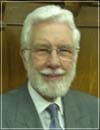
Stephen Hyde

I Know That My Redeemer Liveth

Job 19:25-27
Stephen Hyde May, 3 2015 Audio
0 Comments
These words of Job point us each to a vital question - Do we know that our Redeemer lives?

'For I know that my redeemer liveth, and that he shall stand at the latter day upon the earth: And though after my skin worms destroy this body, yet in my flesh shall I see God: Whom I shall see for myself, and mine eyes shall behold, and not another; though my reins be consumed within me.' Job 19:25-27

Sermon Transcript

Auto-generated transcript • May contain errors

100%
May the Lord be pleased to bless
us together this morning as we consider his word. Let us turn
to the book of Job, chapter 19, and we'll read verses 25, 26,
and 27. The book of Job, chapter 19,
reading three verses, 25 to 27. For I know that my Redeemer liveth, and that he shall stand at the
latter day upon the earth. And though after my skin worms
destroy this body, yet in my flesh shall I see God, whom I
shall see for myself, and mine eye shall behold, and not another,
though my reins be consumed within me. It is really quite amazing to
read such a statement from this man, Job, because of all those
statements which he'd made previously. The life of Job is an amazing
life. As I'm sure most of you know,
he was a very wealthy man. And we don't know precisely when
he lived. He obviously lived after the flood, but we don't
know exactly when that was. We know he had a large family,
and we know that the Lord allowed Satan to come and to destroy
his flocks and his herds, and his family also, so that he was
in a very difficult and a very destitute condition. And we know
that initially he sat and he did not complain. He bore that
which God had put upon him. And we read those words which
he said the Lord gave and the Lord has taken away. Blessed
be the name of the Lord. And then he had three friends
who would apparently being very close to him, well known to him
and they came and they sat down and they didn't say anything
for quite a long time and they pondered obviously what to say
and then gradually they all spoke in turn and Job answered mostly
when they spoke and generally they came to encourage him but
they also tried to point out what they thought were his faults
and why these things that come into his life. And Job tried
to answer those criticisms and those comments. And the real
truth is that God brings into our lives situations which will
be of benefit to us if we are the people of God, and those
benefits may not be always evident on the surface or evident at
the beginning. But it's only as these situations
are developed, or should I say as God develops situations in
our lives, then we perceive God's purpose toward us. Then we see
how God is working those things that we thought were all against
us. Yet we find that, in actual fact,
they weren't all against us. The truth was they were working
together for our good. And that was so in the case of
Job. As you go towards the end of
this book, you will see how eventually, after these three friends had
ceased speaking, and then a young man called Elihu then gave a
long lecture to Job also. Again, in all these things, there
were good things and bad things, And then God spoke. God spoke
directly to Job. And when God spoke, poor old
Job wasn't able to bring any arguments against God. God spoke
so clearly, so powerfully, that Job had to acknowledge his sinfulness. And he tells us that he then
came and he didn't say, what a good chap I am. In actual fact,
he abhorred himself and he repented. in dust and ashes. Now what was
that? That was the effect of the Word
of God. And it's good in our lives when
God brings us through perhaps a very difficult time to show
to us exactly what we're like, and not to make us think we're
a wonderful person. In actual fact to show us we're
the very opposite person. You see, because as I often say,
what the Apostle Paul said with regard to himself and his own
natural self and he says, in me that is in my flesh dwelleth
no good thing. Now that's a big lesson to learn
because we all think naturally that we've got a lot of good
about us and we know a lot and we try and produce all this evidence
for other people to think how good we are. But the truth is
that God's work brings us in our own esteem to a lower level,
sometimes to a very low level, so that we don't view ourselves
in any great light at all. Well, that's the truth and that's
the tenor of all the accounts in the Word of God And it really
is summed up in these very simple words that John the Baptist spoke
when he spoke of the Lord Jesus. He said this, he must increase,
but I must decrease. Just ponder that. You see, we
want to have greater views of the Lord Jesus Christ, that in
our hearts we view him as a greater saviour and we view ourself as
a greater sinner, perhaps a great failure. What a mercy it is then
to have a right view. And what that means is that the
Spirit of God is instructing us. The Spirit of God is teaching
us. Now, that's what occurred in
the life of Job. And we pick up the account in
more or less the middle of this book of Job. And we see how Job
is answering his friends here, and he answers his friends, and
we'll comment on those in a moment. But it comes down to this point,
as it were, almost in the middle of the situation. He suddenly
breaks forth, and he breaks forth with these wonderful words that
we read together this morning. And God obviously gave him this
spiritual view, and a wonderful view it was. And he's able to
say, positively, He said, for I know, there was that personal
statement, I know that my Redeemer, the Redeemer was of course none
less than the Lord Jesus Christ, I know that my Redeemer liveth
and he shall stand at the latter day upon the earth. Now, Job
suddenly had this wonderful view. And this word redeemer is of
course a very relevant and very important word. And it really
means that one has come to deliver for a cost. If someone was to
come to one of our courts someone had been accused of something
wrong and had been condemned and he had been charged with
paying a fine and he wasn't able to pay that fine, then if someone
came along and paid that fine and therefore delivered him from
the possibility of going to prison, such a person we would consider
as someone who had redeemed that person. He had paid the price
of the cost of that thing which he'd been accused of and had
been condemned of. Well, Job had a wonderful view
of his Redeemer. And may you and I have a wonderful
view of the same Redeemer as our Redeemer. And who is that? None less, of course, than the
Lord Jesus Christ. And what has he done? in order
to deliver us from eternal punishment. He has paid the cost of that
deliverance. And the cost was to take away
our sins. And the only way that could be
done was by the sacrifice of the Saviour's life, the redeeming
act, and that redeeming act was to shed his blood. You know the Apostle Peter sums
it up in his epistle, the first chapter in the first epistle,
he says, not redeemed with corruptible things as silver and gold, but
with the precious blood of Christ. That was the price that was paid
for Peter's redemption, and that's the price is paid for our redemption. And that is a price that was
paid for Job's redemption. Now, what is very wonderful about
this account is, of course, when Job spoke these words, it was
many, many years before the Lord Jesus was born and had lived
and died and shed his blood upon that cross. And therefore, We
observe here that Job was given that wonderful faith to look
forward to that time when there would be a Redeemer, the Lord
Jesus Christ. Now that was a wonderful act
of faith, wasn't it? We spoke, of course, last Sunday
about faith and how wonderful this gift of faith was to Job. But we today, We also need faith,
not that we look forward to the Lord Jesus, we look back to what
he has done. And to be able to then come and
say with Job, for I know that my Redeemer liveth. Now, Job was given that faith
to be able to declare this great and wonderful truth. And my friends,
it's so important for all of us to be given that faith to
come and to be able to say, I know that my Redeemer liveth. You know, I wonder this morning
if I was to say, well, everybody put their hand up that is able
to declare that. I wonder whether you all would
be able to say that. I know that my Redeemer liveth. There is a tendency sometimes
to pretend that we don't actually know. And somehow it's become a fact that
people are reluctant to actually acknowledge their knowledge of
what God has done for them, and that God has indeed called them. If you and I were put on a spot, and we were told that we were
going to be executed immediately, and we were asked
a question like this, do you know whether you have a Redeemer? That would be a very testing
question, wouldn't it? And it would need an answer,
wouldn't it? And it would be a wonderful favour then, if we
can say, and it will be very humbly, but it will be for God's
honour and glory, to be able to come and say, just like Job
did here, for I know that my Redeemer liveth. Now, Job wanted
this statement to be very firm and very positive and to be recorded
And we read in the previous verses when he says, oh that my words,
these words which he now states, were now written. Oh that they
were printed in a book. They were graven with an iron
pen and laid in the rock forever. They were such important words.
He wanted them to be recorded. He wanted them to be graven in
a rock forever. What were they? They were words
that brought honour and glory to God. Words that brought honour
and glory to God. He was able to come and say,
yes, I know that my Redeemer liveth. And all of these words
were therefore recorded and they were written so that they might
be there forever. It was Job's concern, wasn't it? Job's desire. these words might
be there for God's honour and glory. I wonder then this morning
if you and I could agree with such a statement as this. Oh
that our words were written. Yes, what God has done for our
souls. The revelation that God has given
to us that we are amongst his favoured and blessed people who
are redeemed with his precious blood. Do we desire there might
be a written statement about it, so that His name may be lifted
up and honoured and glorified? And written there, not that it
was going to fade away, because these things are eternal blessings. They don't disappear. If God
has blessed us with the evidence of eternal life, it's not something
which is going to disappear. It's there forever. Oh, as he says, for I know that
my Redeemer liveth. Now it's wonderful to think that
Job is suddenly, as it were, he lifted out of himself. It's
good sometimes when we are, as it were, lifted out of ourselves. Because Job was here, and he
was really complaining, wasn't he? As we read this chapter together,
and he confesses, And he says, these people have reproached
me ten times, and they're not ashamed, that makes themselves
strange to him. And he says, and be it indeed
that I have erred, mine error remaineth with myself, if indeed
you will magnify yourselves against me, and plead against me my reproach. know that God hath overthrown
me and encompassed me with his net. He realised now that God
was dealing with him. God had overthrown him. Overthrown
him from his lofty position. We read, don't we, In the life
of Job, before this happened to him, as he went about, old
men used to stand up and bow their head. Here's this great
man, Job, coming along. Oh yes, he was well respected.
And he may well have been proud in his own heart. But Job says
that God had overthrown him. God had brought him down. My friends, what a blessing it
is when God deals with you and me. And he doesn't leave us to
be proud of our position. Job here, that great man, was
brought down. He said, God has overthrown and
God has compassed me with his net. Well, you know what a net's
like, isn't it? A net. We're familiar, aren't we, with
fishermen. They cast the net into the sea and once they caught
fish in the net, the fish can't get out of the net, can they?
Now they are stuck in that net and it's as though God perhaps
puts a net round about us and we can't get out of that net.
What a blessing it is. We may want to. We may want to
try and escape and get out and do our own thing, please ourselves. God puts us in that net, just
like Job here was. He has compassed me with his
net. He goes on, and he's fenced up
my way that I cannot pass. And he has set darkness in my
paths. Well, God has his way for you
and me. God has ordained his way for
you and me. And it may not be the path that
you and I would have chosen, In actual fact, it's most likely
we would never have chosen the path that God has ordained for
us. But God ordained the right path
for Job. And my friend, God ordains the
right path for you and me. And it was like this. It was
fenced up as well. Fences around it. Not only was
it a net, there's a fence around him. Impossible, wasn't it? To jump out of it. There he was. God was in it. So he says, not only was that,
and he has set darkness in my paths. Poor old Job, he couldn't
see a nice bright path, a nice direct way. There was darkness
upon it. Now let's just pause for a moment. Job was a child of God. And therefore, don't be surprised
if in our lives we find a similarity. Yes, he's brought us into this
situation and we find we're a companion with Job. He says, he has stripped
me of my glory, taken the crown from my head. Yes, Job was brought
right down. And he hath destroyed me on every
side, and I am gone, and my hope hath he removed like a tree. And he hath also kindled his
wrath against me, and he counteth me as one of his enemies." Well,
we get a bit more of the picture, don't we? We find that Job was
very oppressed, wasn't he really? But he was going to be blessed
indeed. God wasn't going to leave him
in this position. But God was teaching him and God was instructing
him so that God's name might be honoured and glorified. And
poor old Job would come down to nothing. So he tells us, his
troops come together and raise up their way against me and he
camped round about my tabernacle. Tabernacle being a tent really.
just a temporary abode. He hath put my brethren far from
me, and mine acquaintance are very estranged from me. My kinsfolk
have failed, and my familiar friends have forgotten me." That's
painful, isn't it? Things that we perhaps expect,
perhaps pick up the phone and talk to us, silence. We think they've forgotten me.
Well, perhaps the Lord has caused them not to be in you and me
in their minds. And it appears that we may have
been forgotten, but the great blessing is God has not forgotten
us. God had not forgotten Job. God knew what he was doing with
Job. My friends, God knows today what
he's doing with you and me in our lives. We may think, oh my
life's very strange, my life's very difficult, I feel oppressed
all the time, I see no light. Well, consider God's servant
Job and be encouraged as you observe his path. Because it
gets worse. He says, I called my servant
and he gave me no answer. I entreated him with my mouth,
my breath is strange to my wife, Though I am treated for the children's
sake and mine own body, yea, young children despise me. I
arose and they speak against me. All my inward friends abhorred
me, and they whom I loved are turned against me. My bone cleaveth
to my skin and to my flesh, and I am escaped with the skin of
my teeth." Well, imagine the picture we have here. And it's
very desolate, isn't it? I suppose the Book of Job is
a book that isn't read very much. But it's worth reading, and it's
worth reading quite often, because it does describe in some detail
the arguments, not in this particular chapter, But the arguments that
you and I might put forward to substantiate what we're doing
is right and trying to justify our condition. And also perhaps
to hear comments from other people and not want to accept them.
It's a very important book this is, to view ourselves in the
light that God sees us in. And so Job then comes and he
says, have pity upon me. Have pity upon me, O my friends.
For the hand of God hath touched me. Now that's a good thing,
isn't it? To know that God's hand has touched us. God's hand is dealing with us.
We're not just allowed to carry on aimlessly in this sinful world,
but God has put his hand upon us and God had touched Job. And it was only a touch. My friends, what an effect it
had. What an effect it had. Just think of that. God just
touches us. What an effect it has. So here
was the effect upon Job. Oh my friends, for the hand of
God has touched me. Now, it would be a good thing
in our lives if we can also agree, yes, God's hand has touched me. God's stopped me perhaps. brought
things to pass which have changed my life. It's God's work. And so we have this very clear
statement, for the hand of God hath touched me. God had brought
Job to observe that it was God. He might have complained all
around, but now he looks and he realises it's God's hand that
has touched me. And so it would be good in our
lives if we recognised, well, I now begin to see, I begin to
understand, it's God's hand that has brought this upon me. God's
hand. Well, Job was greatly favoured
to be able to view this, and he said, why do you persecute
me as God and I'm not satisfied with my flesh? And then he comes
and speaks like this, oh that my words were now written, oh
that they were printed in a book, they were graven with an iron
pen and laid in a rock forever. And so as we come to these words
this morning, I wonder in our lives if we might look back and
have a list of complaints and a list of disagreements with
the way we're being directed and led, and a list of the positions
that we got ourselves into, or perhaps we should rightly say,
in spiritual light, that God has brought us into. But then,
be blessed with this wonderful view. You see, it seems as though
Job is lifted out of himself. And all the things then of this
poor world, as it were, they faded away, they were not important. And he views this beautiful scene
and he says, Oh that, for I know, for I know that my Redeemer liveth
and that he shall stand at the latter day upon the earth He
was making a statement, and then he comes and says, and though
after my skin, worms destroy this body, which we know of course
is true, we're buried in the ground and worms destroy this
body, yet in my flesh, yes, not that which was all disappeared,
but that which was raised up, in my flesh shall I see God,
whom I shall see for myself, and mine eyes shall behold, and
not another, although my reins or my mind be consumed within
me." He has this beautiful and wonderful prospect set before
him of being with the Lord Jesus Christ and giving this statement
that his Redeemer lives. My Redeemer liveth. What a great revelation that
was to Job and my friends. It's no less today, revelation
to you and me, to be given that living faith to be able to say,
yes, and by His grace, I know that my Redeemer liveth. Liveth. The Lord Jesus Christ, He reigns
and He lives today. He lives forever. He died. He rose again. A conqueror over
sin, death, hell and the grave. My friends, what a blessing it
is today for you and me to have that faith to know and to believe
that we have a risen Saviour, the Lord Jesus Christ. He died. My friends, death could not hold
Him. He rose a conqueror and there He is in heaven today. Heaven today, my friends, the
Father's right hand looking down upon us. Here we are assembled
this morning, a little company, to think that our Redeemer in
glory is looking down upon us. He lives forever. He lives. Are we encouraged by that? Are
we blessed by that? To know, yes. My Saviour lives
forever. See that's where we have this
wonderful prospect. A believer, a true believer,
has this prospect of eternal glory. For I know that my Redeemer
liveth. He lives forevermore. We don't come to a dead Saviour. We don't come to an idol made
with hands of wood or stone or metal or whatever. My friends,
we come today to the living Christ, the Redeemer. And oh, to be able
to come here and say with God's servant Job, oh yes, for I know
that my Redeemer liveth. And to have the evidence then
that the Lord Jesus is our Redeemer. And that means that he has died
for us. That he gave his life in that
agonizing way upon that cross at Calvary in order to atone
for our sins. It's the only way, my friends,
that you and I can ever get to glory. It's only through what
the Lord Jesus Christ has done. And if that is so, is Jesus precious
to us today? Do we value the work of the Lord
Jesus Christ? Is it a wonderful work? Is it
a glorious work? Do we praise and bless God for
that great work of our salvation in redeeming our souls without Christ? without Christ's
death, without the shedding of His blood, without His resurrection? My friends, there would be no
hope for you and no hope for me. Do we praise God today for
the Saviour, the Lord Jesus Christ? Can we come and say with John
Newton, my hope is built on nothing less than Jesus' blood and righteousness. Our hope, your hope, my hope
of eternal life, built upon what your Redeemer and my Redeemer
has done. That was Job's hope. And he looks
forward. He tells us that he shall stand
a latter day upon the earth. That was wonderful faith, you
know, to look forward to that day when Christ would return. Yes, Christ would come and stand
on the earth, be born as a baby and stand on the earth, but more
particularly, when Christ shall return in all his glory, when
time shall be no more, when eternity will be before everyone, And
the Lord will come and return and stand upon this earth. We
know that to be true by the words that the Lord Jesus spoke when
he ascended up into glory and those angels said, this same
Jesus shall come again in like manner. Yes, he will come again
and stand upon this earth as the righteous judge. He sits
upon that great white throne and so we see here Job able to
look forward by faith to say yes this Redeemer Shall stand
a latter day upon the earth And then he views himself he views
himself He recognizes what's going to happen? Although my
skin through and though after my skin worms Destroy this body
He realised the situation. He was to die, all of us will
die, unless the Lord should return before we die. We should all
die. Worms will destroy our body.
Yes, dust to dust, ashes to ashes. We should all come like this.
Worms shall destroy this body, yet. Okay, we see this. Faith looking forward, yet in
my flesh, that means in his own body. We know when we die our
souls will go to either heaven or hell. But in the great day
of the resurrection there will be that uniting of soul and body. He's able to come and say, yet
in my flesh should I see God? Yes, he would be resurrected
and he would see God. for himself, whom I shall see
for myself. Personally, my friends, see God
as he is. You and I can only have just
some vague idea of what God is, Father, Son and Holy Spirit.
And yet, on this great day when time should be no more, when
I shall see for myself, and mine eyes shall behold, and not another,
though my reins be consumed within me." And so, although Job was
able to give an account of the difficult life he was having
to live here on this earth, and it was, yet he's able to look
ahead to that time of glory. that time when they will be united
of body and soul. And he would then be forever
with the Lord. What a great and glorious time,
what a great and glorious prospect that was, wasn't it? We're thankful
that we have some little view of that when the Apostle Paul
and also the Apostle Peter gives us some indication of the wonder
of that situation, the wonder of that which shall occur. When
he tells us Paul first in the Thessalonians, he says, for the
Lord himself shall descend from heaven with a shout, with the
voice of the archangel, with the trump of God, and the dead
in Christ shall rise first. Well, Job would be amongst those.
Then we which are alive and remain shall be caught up together with
them in the clouds to meet the Lord in the air. And so shall
we ever be with the Lord. Now, Paul tells us this, and
it's so true. Wherefore, comfort one another
with these words, because there is a glorious hereafter, there
is a glorious scene which is to come. when the whole Church
of God will be united together and brought together and be found
with the Saviour forever and ever. And as the Apostle says,
and how true it is, wherefore comfort one another with these
words. You know, many people would think
they're morbid Morbid words. They're not morbid at all. They're
great and glorious words. They're wonderful words to be
able to think about and consider, because they are so, so true. And the Apostle Peter tells us,
he says, for this they willingly are ignorant of. People don't
want to know about this. that by the word of God the heavens
were of old and the earth standing out of the water and in the water,
whereby the world that then was being overflowed with water perished,
gives the account of the flood, but the heavens and the earth
which are now by the same word are kept in store, reserved unto
fire against the day of judgment and perdition of ungodly men. But, beloved, Be not ignorant
of this one thing, that one day is with the Lord as a thousand
years, and a thousand years as one day. The Lord is not slack
concerning his promise, as some men count slackness, but is long-suffering
to us, Ward." He was long-suffering towards Job. Is he long-suffering
to you and me? not willing that any should perish,
but that all should come to repentance." Well, what a favour it is if
you and I have been brought to that condition of repentance,
that we've repented of our sins and looked to the Lord for forgiveness.
But the day of the Lord will come as a thief in the night. That means people won't be ready
for it. In the witch, the heavens shall
pass away with a great noise, and the elements shall melt with
a fervent heat. The earth also and the works
that are therein shall be burned up, seeing them, that all these
things shall be dissolved. What manner of persons ought
ye to be in all holy conversation and godliness? He sets before
us a standard here, the position that you and I should be in.
looking for and hasting unto the coming of the day of the
God wherein the heavens being on fire shall be dissolved and
the elements shall melt with a fervent heat. Wherefore, beloved,
seeing that ye look for such things, be diligent that ye may
be found of him in peace without spot and blameless. This is a
word of gracious instruction to us. We have of wonderful evidence
of those things which are to come. We have the evidence here
before us of the faith of God's servant Job, we have a testimony
of the difficulty of his life, but we see he looks beyond the
things of this world. May you and I today, and in every
day, look beyond, beyond the things of this world, to be able
to come and say, humbly, truthfully, honestly, with God's servant
Job, for I know For I know that my Redeemer liveth, and that
he shall stand on the latter day upon the earth, and that
after my skin worms destroy this body. Yet in my flesh shall I
see God, whom I shall see for myself, and mine eye shall behold,
and not another, although my reins be consumed within me. Amen.
Broadcaster:

Comments

0 / 2000 characters
Comments are moderated before appearing.

Be the first to comment!

Joshua

Joshua

Shall we play a game? Ask me about articles, sermons, or theology from our library. I can also help you navigate the site.