Bootstrap
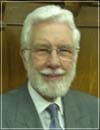
Stephen Hyde

Moses - God's Presence & Rest Promised

Exodus 33:14
Stephen Hyde March, 15 2015 Audio
0 Comments
Stephen Hyde
Stephen Hyde March, 15 2015
'And he said, My presence shall go with thee, and I will give thee rest.' Exodus 33:14

Sermon Transcript

Auto-generated transcript • May contain errors

100%
May it please the Lord to bless
his words to our souls tonight as we meditate upon it. Let's
turn to the book of the Exodus, chapter 33, and reading verse
14. The book of Exodus, chapter 33, and reading verse 14. And
he said, my presence shall go with thee. and I will give the rest." These are the precious words
of the Lord to Moses and they are the precious words of God
to his people. As they travel through this world,
this world which of course is a wilderness, were given to Moses
as he was to travel through this wilderness for those 40 years
and how no doubt he would have thought back upon this occasion
when the Lord spoke to him these glorious words, my presence shall
go with thee and I will give thee rest. Now they were given
of course after Moses had just passed through an exceedingly
difficult and testing time. He'd been up to the mountain
to have that conversation with Almighty God, and God had given
to him those two tables of stone on which he'd written with his
finger the Ten Commandments. And Moses had come down the mountain,
and what had he found? He'd found Israel in a state
of idolatry, worshipping the golden calf that Aaron had made. Well, what a sad, sad occasion
it was for Moses. And no doubt having passed through
that situation, remember it was only a relatively short time
that Israel had come out of Egypt, had been blessed with a wonderful
deliverance a wonderful appearing of Almighty God on their behalf. And now Moses had been up this
mountain for some 40 days and nights and now we see the children
of Israel, they got into a bad condition and we found what they
were left to do and they fell into the snare and they worshipped
the idol. And now we see Moses then in
this condition needed some encouragement to continue in that work which
the Lord had called him to. No doubt when he came across
the Red Sea, he'd seen the Lord wonderfully appear before him.
As it were, the Egyptians were drowned in the Red Sea, they
were to be seen no more forever. Perhaps he thought, well, the
enemy's now, no more, and the path will be smooth. Well, of
course, we realise how foolish it is to ever think the path
is going to be smooth. And it was not smooth in Moses'
case, and it will not be smooth in our case. And so as Moses
then needed an encouragement, and God gave him that wonderful
encouragement, so in our lives we may need a wonderful encouragement
when things perhaps do not go in accordance with our plans,
do not go as we might anticipate they might go, and that may not
be with any wrong motive. We may have, as it were, committed
our way unto the Lord and it seemed that things were going
smoothly and suddenly there was a big turn in the opposite direction. And so Moses then, he comes and
he prays and he pleads with his God and he says, see thou hast,
thou sayest unto me. See Moses was familiar with the
Lord speaking to him. The Lord was not silent to him.
And it's a good thing in our lives today when we have the
evidences of God being gracious to us, being mindful of us, and
speaking to our hearts, perhaps through his word. See thou sayest
unto me, bring up this people, and thou hast not let me know
whom thou wilt send with me. Yet thou hast said, I know thee
by name, and thou hast also found grace in my sight. Now therefore
I pray thee, if I have found grace in thy sight, show me now
thy way, that I may know thee, that I may find grace in thy
sight, and consider that this nation is thy people.' Now God
did not answer that prayer as perhaps Moses would have expected. He desired certain things and
they were not told to him. But instead, God gave him a much
greater promise, a much greater blessing in telling him that
his presence would go with him. His presence would go with him. And the blessing of that really
was the outworking of what Moses had asked for when he said, show
me now thy way. and also that he might know thee,
that I may know thee." Well, we know of course that Moses
did know the Lord, exactly the same really as it was in the
Apostle Paul's case when he wrote to the Philippians, and Paul
desired that he might know Lord Jesus Christ, but of course he
knew the Lord Jesus Christ. He wanted to know more of him
and that surely is what the God's servant Moses here desired, that
he might know more of the favour, that I may know thee, that I
may find grace in thy sight and consider that this nation is
thy people. Well he was to receive grace,
he was to receive favour, He was to receive answers in that
way to this prayer. And the Lord spoke to him in
this way and said, my presence shall go with thee. Moses would
need that, wouldn't he? Those 40 years in that wilderness
with a disobedient people, a people that continually rebelled against
God. Moses needed to have a promise
like this. And the Lord is gracious and
does perhaps give us promises. The Lord never gives a promise,
never speaks a word that will not be required. No, my friends,
the Lord speaks when a word is required. And if God has spoken
to us, given us a word, we might have thought, well, that's very
wonderful, that's very encouraging. We may not perhaps always appreciate
that we shall need that word. That word will be a strength
to us in our times of need, in the times when things are going
in the opposite direction. We will then be able to say to
the Lord, Lord, thou has said, and we can rely upon the promises
of God, which are certain and true. And therefore, it'll be
a blessing to know in our spiritual life, If the Lord speaks like
this, my presence shall go with thee. Well, the truth is that
the Lord's presence will go with us, but we need to be sometimes
reminded of it and encouraged by it as we travel through this
life. We only have to read the Word
of God and the testimony and the experiences which are recorded
in the Word of God to see the many, many hardships which God's
servants, God's people, who are all of course his servants, had
to face and had to endure as they journeyed through this world. Continual opposition in one way
or another. We can think of the patriarchs,
can't we? Abraham, Isaac and Jacob. Look at their lives and
we see many situations they came into And they would have needed
encouragement to know, yes, the Lord's presence was with them. We think of Joseph, a man of
God who was blessed with those dreams, those dreams which appeared
very pleasant perhaps to him. He wasn't sure how they were
going to be worked out. He wouldn't have thought he had
to go down into Egypt and spend a portion of his life in prison. in order that those dreams should
be worked out. We are sometimes foolish enough
to just look at the present situation and perhaps the end and not realise
all that's going to take place in the middle phase. And in the
life of Joseph, what there was that he had to pass through,
what he had to endure, how the word to him was tried. We read in the Psalms that the
word was tried. Yes, the word that God had given
him was tested. And my friends, I believe today
the Lord has given you and me a word of promise. It may not
have been a dream like Joseph, but it may have been a word of
encouragement, a word of direction, and we are walking in that way,
and yet we may still have to come into very dark paths, very
difficult paths. Joseph wouldn't have understood.
He didn't understand as he was there sent to prison because
he was upright in not giving in to those advances of Potiphar's
wife. Yes, he was a faithful servant
and yet you see he still had to face that difficult time in
that prison house. But we do read that God was with
him. doesn't mean to say that you
and I will be exempt from difficult times, but we can believe that
God will be with us in those difficult times and therefore
in those difficult times to have a word to rely upon, a word like
this, my presence shall go with thee. And of course We don't
have to only think of Joseph, we can move on to the New Testament,
can't we? We can think of the apostles
and the difficulties that they had to face, and especially the
apostle Paul in his life, what opposition he had to endure,
especially when he was doing the will of God. That's sometimes
when it's difficult and hard for us, but that's why the Lord
gives us these promises, so that when the way is difficult, we
can still turn to the Lord and say, Lord, thou hast said. You think of Paul when he went
to Philippi. The Lord commanded him so to
do. And he didn't hesitate. He went
and obeyed the word of God. And he preached Christ. And because
he preached Christ, he was apprehended, and he was beaten, and he was
put into prison. Well, was this the way of God? Was God with him? Yes, God was
certainly with him. And God was certainly with him
as he was with Joseph in the prison. And to such an extent
that as we read the account of Paul in that Philippian jail,
he and Silas, they sang praises at midnight to their God. They
sang praises and they sang praises really because of this truth. the Lord's presence was with
them. My presence shall go with thee. They were with the Apostle
in that prison house and of course there was in that case a wonderful
outcome. There was the Philippian Janer,
a man in charge of them, a man who was fearful when the prison
gates, prison doors were opened and he was about to kill himself
and Paul stopped him and then work of the Spirit was in his
heart. And he came and cried out, what must I do to be saved? And the Apostle spoke those great
words, believe on the Lord Jesus Christ and thou shalt be saved.
And we read the outcome there. He was baptised and all his house,
evidencing the work of God on that occasion. And Therefore
Paul would have known this great truth. My presence shall go with
thee. Yes, the Lord's presence was
with Paul. The Lord's presence was with
Moses. I believe the Lord's presence
is with his people today. And therefore we should not think
that when the clouds appear, when things appear to be dark,
there seems to be not very much light, the Lord has forsaken
us. No, It's the way the Lord has
determined to lead us, the way the Lord is directing us. It may not be the way that we
would choose, but it's the way that the Lord chooses. And the
way that the Lord chooses is the right way. The Lord doesn't
make any mistakes in the path that he ordains for his people. It is the right way that brings
them safely home to glory. Yes, my presence shall go with
thee. And therefore in dark places
we can believe the Lord is with us. Many in the past have been
imprisoned for the truth's sake. Many have been martyred for the
truth's sake. And you can read the many accounts
of those martyrs and what was so very evident in their lives
was The Lord's presence was with them. Yes, my presence shall
go with thee. The Lord's presence was with
them in those great testing times when they were about to be burnt
at the stake. The Lord was with them. The Lord
sustained them. The Lord strengthened them and
they were able to stand firm because of this great truth. Lord's presence was with them. My presence. Well, we might think
of this in this way. The presence of the Lord, what
does that really mean? I believe it means union with
our God, communion with our God. To be able to meditate upon what
Christ has done, what Christ has said, to find then in our
times of need, the presence of the Lord with us, and to therefore
know that he is that one that sticketh closer than a brother. He is our friend, a friend which
is so glorious to know. We can come to our God, we can
come to our Saviour and enjoy his presence in these situations. Again, going back in history,
there were those times of great blessing in the prison when the
Lord was with them. I remember hearing of Ian Paisley
in Ireland. You know, he stood very strongly
for the truth and in his life, in his earlier life, he was arrested
and tried and accused and committed to prison. And he didn't escape. Sometimes we think, well, the
Lord's with us, we won't have to endure such difficult situations. Well, Ian Paisley was in prison
and he said that when the jailer shut the door in his cell, he
realised in a very wonderful way the Lord's presence with
him. And the Lord was with him in that prison. And he was able
to write a lot when he was in that prison. You see, sometimes
the devil oversteps his mark. The devil thinks he's gained
the victory, but he does not gain the victory. And in that
case, you see, he may have thought when he'd shut, he imposed his
mouth by getting him shut up in prison. But in actual fact,
he was able to use his time in the presence of the Lord writing
very valuable things. My presence shall go with thee. So we shouldn't necessarily expect
to escape difficult times. In actual fact, the Word of God
speaks as clearly that we should expect difficult times. but also
we can believe the Lord will be with us in those difficult
times. And it's in those situations
that we realise the support and strength of the Lord God. We may think, well, I should
never be able to stand in such difficult times. No doubt those
martyrs never thought will be able to stand firm when facing
death. But the Lord gave them grace,
the Lord blessed them, and it was because of this great wonderful
truth, my presence shall go with thee. And as therefore we might
find that in these times of need we are blessed with union with
Christ. And again it comes down to the
testimony of the Apostle Paul when he said he desired fellowship
with the sufferings of Christ. Now my friends, we don't obtain,
we don't receive, we aren't favoured with that personal communion
unless we pass through and into situations that are difficult
naturally to enjoy then this fellowship with the Lord Jesus
Christ. Well, the Apostle Paul knew what
it was to have fellowship with his sufferings. Our nature, our
natural mind would not be able to understand such a truth. But the Word of God encourages
us in that position, that When we suffer ourselves, it brings
us then into that place to consider Him, the Lord Jesus Christ, and
what He endured, what He faced, what contradictions He had to
face day by day. But unless you and I are brought
into a situation, not in the same extreme, but in measure,
It's then that we know what it is to have fellowship with the
Lord Jesus Christ. Now, what is that? That's to
be blessed with his presence. My presence shall go with thee. And this is the situation, this
is the scene when the Lord really comes and we really realise then
that his presence is with us. So when everything's smooth,
there's no difficulty, when there's no trials, when there's no opposition,
we don't really understand the great truth of such words, my
presence shall go with thee. It's only when we come face to
face with the reality of our religion and know then the blessings
of it. So the apostle when he wrote
to the Philippians he tells us what things were gained to me,
those I counted loss for Christ. Well, there are many things that
we might consider to be necessary and precious in our natural life,
but the apostle tells us, those I counted loss for Christ. Do they bring us nearer to Christ? Do they bring us nearer to Christ?
Do they bring us closer? And do we enjoy his presence
more? Or is it like this? As the apostle said, yea, doubtless
I count all things but loss for the excellency of the knowledge
of Christ Jesus my Lord. What was that? That must have
been surely the presence of the Lord with him in the Lord's presence. Not in a physical way, but in
a spiritual way. For whom I have suffered the
loss of all things and do countenance but dung that I may win Christ. Christ was his great desire. And what a great truth that is,
and how it does really separate false religion from real religion. Because real religion is to know
the Lord Jesus Christ. And so the apostle goes on to
say, and be found in him, not having my own righteousness,
And Paul, the apostle, he had a lot to recommend him naturally. He had a lot of knowledge of
the things of God. But no, he said, not having my
own righteousness, which is of the law, but that which is through
the faith of Christ, the righteousness which is of God by faith. And then he comes on, that I
may know him. And as we said, of course, the
apostle did know him. He wanted to know him more. that
surely is the great need that we all have of knowing more of
Christ, that I may know him and the power of his resurrection,
and the fellowship of his sufferings be made conformable unto his
death, if by any means I might attain unto the resurrection
of the dead. The apostle was looking ahead,
He was looking forward to that eternal state, that state of
glory with Christ. And therefore, he gives us a
very clear picture. The things of this world, by
comparison, he counted as nothing when he compared the knowledge
of Christ, which was of such great value to himself. Not as though I had already attained,
either were already perfect, but I follow after, that I may
apprehend, he may understand that for which also I am apprehended
of Christ Jesus. Brethren, I count not myself
to have apprehended, but this one thing I do, forgetting those
things which are behind and reaching forth unto those things which
are before." Now the Apostle was much blessed as we know with
revelations, he was caught up into the third heaven, He'd had
a very amazing conversion on that Damascus road. But we see
him thankful for those situations, thankful for those blessings,
but not just resting on them. He was pressing forward. He says,
I pressed toward the mark with the prize of the high calling
of God in Christ Jesus. He was pressing forward for a
greater knowledge of Christ. And again, we think of our lives. Are we pressing forward for a
greater knowledge of Christ? Here is these words here, my
presence shall go with thee. The presence of the Lord Jesus
Christ and are we aware of it in perhaps in a special way like
the Apostle Paul desired here, nearness to Christ. He was pressing
forward toward the mark for the prize of the high calling God
in Christ Jesus let us therefore as many as be perfect be thus
minded and If anything be otherwise minded God shall reveal even
this unto you Nevertheless where unto we have already attained
let us walk by the same road Let us mind the same things and
so the Apostle it goes on and just come into the end of these
two chapter because it points out where his heart was and he
said, for our conversation is in heaven. What a wonderful statement
to be able to make. Our conversation is in heaven. From whence also we look for
the Saviour, the Lord Jesus Christ, who shall change our vile body,
that it may be fashioned like unto his glorious body, according
to the working whereby he is able even to subdue all things
unto himself." Well, what a blessed time that will be for the Church
of God, for every individual in that church, as they are partakers
of this blessing, my presence shall go with thee. And to know
that the Lord is with us, going with us, directing us, and bringing
us to that time when shall change our vile body." Now the Apostle
we might think was a gracious man as he was, but he has to
confess a truth like this, that he had a vile body. And again that's a good evidence
of the work of grace in our hearts. If the Holy Spirit reveals to
us the vileness of our heart, of the sins of which exist there, the violence
of them, and not to just put them aside as something relatively
unimportant. The Apostle never let up. He
always tells us the truth, and he says this, who shall change
our vile body, that it may be fashioned like unto his glorious
body, according to the working whereby he is able even to subdue
all things unto himself. my presence shall go with thee
and I will give thee rest and I will give thee rest we'll come
back to that in a moment but he went on he said the Apostle
Moses then said if thy presence go not with me carry us not up
hence now God had told him that his presence would go with him
but Moses comes back and he asks the Lord, he says, if thy presence
go not with me, carry us not up hence. And again, may that
be our concern in our lives. If there's any doubt, if the
Lord's presence is not going with us in a certain avenue,
in a certain situation, to be able to say, if thy presence
go not with us, not with me, carry us, not up hence. It's
interesting how it's phrased. If thy presence go not with me,
carry us, not up hence. He was leading the people. And if the Lord wasn't going
with him, he didn't want to be the leader. He didn't want to
be carried in a wrong way. He wanted to be found in that
right way. If thy presence go not with us,
carry us, not up hence. And remember, he's saying here,
for wherein shall it be known here that I and my people have
found grace in thy sight? Is it not in that thou goest
with us? My presence shall go with thee. Well, in our lives have we the
evidence that the Lord's presence is with us. His presence is with
us in that spiritual way To know the Lord is going with us, as
it were, side by side, as we're walking along through this earth. You know, you remember in the
account in the Song of Solomon, there was the Bride of Christ. And, well, she desired the presence
of the Lord. The Lord knew where she was.
The Lord knew all about her. But he had withdrawn himself
from her. He withdrawn himself. She wasn't
enjoying the presence of himself close by her. He'd withdrawn
himself. And we read, do we not, the reason
why the Lord withdrew himself from that Bride of Christ. And it's an important consideration
for us in our lives today because we read in that account The Lord
came to her, and what did she say? I sleep, I sleep, but my
heart waketh. It is the voice of my beloved
that knocketh, saying, open to me, my sister. My love, my dove,
my undefiled, for my head is filled with you, and my locks
with the drops of the night. Now the Lord was there with her. He was by the door, knocking
on the door, and the Bride of Christ, well, she was in a comfortable
position. She'd obviously got into her
bed. She said, I put off my coat,
how shall I put it on? I've washed my feet, how shall
I defile them? She wasn't prepared, as it were,
to get up and to answer the call. of her beloved. And then the
Lord withdrew himself. And we read, My beloved put in
his hand by the hole of the door, and my bowels were moved for
him. I rose up to open to my beloved, and my hands dropped
with myrrh, and my fingers with sweet-smelling myrrh upon the
handles of the lock. The evidence of God's presence
there, so close to her, And then she opened to her beloved, but
her beloved had withdrawn himself and was gone. We cannot demand the close presence
of the Lord with us. And it is easy for us to be drawn
aside by the relative comforts of this world, the comforts of
this life, the things of this world. It's a great test, isn't
it, of our spirituality to be able to pray for God's blessing
upon everything that we do and say and see, to see that God
will bless that. And if we cannot pray that, then
we can believe that Perhaps the Lord has withdrawn himself and
allowed us to come into a situation where we're not enjoying his
presence as perhaps we really desired. And so here we have
this bride here, she opened the door then when she thought she
would and the Lord had withdrawn himself and gone. Well, we read,
my heart failed me when he spake, I sought him But I could not
find him. I called him, but he gave me
no answer. Come back, don't be rudely to
what we spoke of this morning. That great need to seek, to seek. And here was his bride then,
seeking the Lord. But you see, he wasn't to be
found immediately. No, he'd withdrawn himself. The Lord is very gracious, and
he's very sovereign in his dealings. But he will have us walk in accordance
with his way and not our way. The word here is, my presence
shall go with thee, and I will give thee rest. And as Moses
said, if thy presence go not with me, carry us not up hence. For wherein shall it be known
here that I and thy people have found grace in thy sight? Is
it not that thou goest with us? That was the great need, to know
the Lord is with us, and here it was, the need of this bride,
that Christ was with her at this time, but no, he'd withdrawn
himself. And then she seeks the Lord,
and we read, the watchman that went about the city found me,
they smoked me, they wounded me, the keepers of the walls
took away my veil from me. The preachers of the gospel,
you see, They preach the word and they smote her, no doubt
because of her laziness and her indolence, as the preachers do. They come and open the wounds
and describe the situation. And here was this bride of Christ
in that condition. And then she comes and says,
I charge you, oh daughters of Jerusalem, If ye find my beloved,
again directing her thoughts to the church of God, the people
of God, O daughters of Jerusalem, if ye find my beloved, that ye
may tell him that I am sick of love. And they answer, what is
thy beloved more than another beloved? Why was this bride of
Christ so concerned about that communion, about the presence
of the Lord with her. Well, she gives a description
in answer to this question, What is thy beloved more than another
beloved? O thou fairest among women, what is thy beloved more
than another beloved that thou dost so charge us? Now, blessed
be God, this person, this bride, was able to give a very good
account of what the Lord meant to her. And it would be a good
thing if you and I able to give a good account of what the Lord
Jesus means to us. You can read in this fifth chapter
in the Song of Solomon from verse 11 down to the end of this chapter,
only a few verses, but it's very descriptive of how she viewed
her Saviour, the Heavenly Bridegroom, as her Saviour. And she comes
down the last verse, and she says this, his mouth is most
sweet. And we can think of that as the
words the Lord may speak to us. The words of Jesus, are they
sweet to us? His mouth is most sweet. Yea,
he is altogether lovely. We see nothing wrong, we see
no blemish in the Lord Jesus Christ, or in his dealings with
us, or in his gracious words to us. And then she says, this
is my beloved, and this is my friend, O daughters of Jerusalem. My presence shall go with thee,
and I will give thee rest. But we must be aware that although
the Lord's presence is with us, sometimes he may withdraw himself,
and we must be very concerned that we do not enter into those
scenes, those paths, which separate between us and our God. The Word
of God tells us very clearly and very solemnly, we cannot
serve God and mammon. And our nature likes to serve
both. We like to have a foot in the
world and a foot in the things of God. But you see, when we
enjoy the presence of the Lord with us, then you see, we can
let all the world go. It's not then attractive to us.
We see the great separating line. My presence shall go with thee
and I will give thee rest. Now, the truth is that God has
gone to repair a place for his people. A place of eternal rest. There's no rest really in this
world, is there? It's a restless place. A restless
place, one thing after another, bubbles up into our situation,
and we find there is no rest. We think foolishly, well, if
I get over this trouble, this difficulty, this trial, no doubt
it will be a bit easier. The hymn writer says, as soon
as one troubles awe, another doth him seize. And so true that
is, and I believe The real reason is to make us sick of the things
of this poor world, and to direct us more to the scene of glory,
to be with Christ, which is, as the Apostle said, far better. And so, and I will give thee
rest. The Lord will give rest to the
people of God. I will see you again, your heart
shall rejoice. What a time it will be when we,
by His grace, received into glory. The Lord will receive us in that
place of perfect peace where there will be eternal rest. Rest for our soul and I will
give thee rest. It's a wonderful promise, isn't
it, to look forward to as we journey through this world with
so much labour, isn't there, labour in one way or another.
We're labouring all through this life, but to look forward then
to our eternal rest. There is a rest that remaineth
for the people of God. A rest that the Lord has provided. And that's not something which
will suddenly cease. It is eternal. And there will
be peace and joy and happiness. No more crying, no more tears. But we shall be by the grace
of God forever with the Lord and we shall be in his presence
then forever and ever. There will be no then withdrawing. There will be that wonderful
time, that wonderful time of grace fulfilled and we shall
find ourselves in that eternal glory where glory, glory dwelleth
in Emmanuel's land. And he said, my presence shall
go with thee, and I will give thee rest. Well, may we know
in our life, day by day, the presence of God with us. And
may we be concerned that we may know that presence close to us,
like the apostle Paul desired. And may we desire to walk close
with our God, and to be concerned and aware of all the devil's
ambitions to draw us away make us walk far off, may we be concerned
to be found walking closely to our God and to enjoy His presence,
to enjoy His presence. Yes, there is a wonderful enjoyment
in the presence of the Lord because that presence brings into our
hearts peace, that peace of God which passes all understanding.
There's no real peace in this world. my friends, there is peace
as you and I are found walking with our God. That glorious peace
which will never really disappear because the Lord is peace. He
is our peace. And he said, my presence shall
go with thee and I will give thee rest. Well, it was a wonderful
word. The Lord spoke to Moses. It was
a wonderful word that he speaks to his people today. May we by
faith be able to stretch out our hand and to receive this
word and to go in the strength of it and in the comfort of it
to know that these words were true to Moses. Moses, experience
them. Moses, prove them. And may you
and I know the truth also of experiencing them and proving
them. My presence shall go with thee. and I will give thee rest. Amen.
Broadcaster:

Comments

0 / 2000 characters
Comments are moderated before appearing.

Be the first to comment!

Joshua

Joshua

Shall we play a game? Ask me about articles, sermons, or theology from our library. I can also help you navigate the site.