Bootstrap
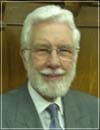
Stephen Hyde

Daniel's Faith in his God

Daniel 6:21-22
Stephen Hyde November, 30 2014 Audio
0 Comments
Stephen Hyde
Stephen Hyde November, 30 2014
'Then said Daniel unto the king, O king, live for ever. My God hath sent his angel, and hath shut the lions' mouths, that they have not hurt me: forasmuch as before him innocency was found in me; and also before thee, O king, have I done no hurt.' Daniel 6:21-22

Sermon Transcript

Auto-generated transcript • May contain errors

100%
May it please God as we consider
his word this morning, and we'll consider the response that Daniel
gave to King Darius after the night in the lion's den. So the sixth chapter of Daniel,
and we'll read verses 21 and 22. Daniel chapter 6 and verses
21 and 22. Then said Daniel unto the king,
O king, live for ever. My God hath sent his angel, and
hath shut the lions' mouths, that they have not hurt me. Forasmuch
as before him innocency was found in me, and also before thee,
O king, have I done no hurt. This is, of course, a very well-known
account, this book of Daniel, and especially this account of
Daniel when he was thrown into the lion's den. And it's a very
interesting account, but it's also a very important account
for us to realise the teaching that it contains. It contains
some good teaching for us, and yet some some sad teaching really
in one sense, because we are made aware of King Darius. And King Darius did many good
things in his life, but he was blessed with Daniel working for
him, working very closely with him, so he was very aware of
Daniel's situation. He was very aware of what Daniel
did and how he prayed and how he believed in his God. But as
we see the working out of this account in the life of the king
and Daniel, we note that there was no alternative but to take
Daniel when he disbelieved and did not obey the command of the king, there was no alternative
according to the laws of the Medes and Persians, which cannot
be altered, but to be thrown into the lion's den. Now, King
Darius had been tricked into making this law, not realising
that it would affect Daniel. But those who had planned this
were successful and the King signed the statement that no
one was to worship anyone else apart from the King who would
give permission and so therefore we see that Daniel continued
in his life and as he did every day was to worship his God. Well that's just what the enemies
of Daniel wanted to see and as soon as they observed that They
came to the king and told the king and said, well there's no
alternative, you have to throw Daniel into the lion's den. Well, the king was not happy
at all when he heard that. But he had to command that Daniel
was thrown into the lions. And so the king then said to
Daniel, thy God, whom thou service continually, he will deliver
thee. And we see there the sadness
really in the life of King Darius. What he said was, thy God. He didn't say our God or my God,
but he said thy God. And it would appear he did not
therefore have a personal interest in the God of Daniel. He came
and said, thy God, whom thou servest continually, he will
deliver thee. And a stone was brought and laid upon the mouth
of a den, and the king sealed it with his own signet and with
the signet of his lord's, that the purpose might not be changed
concerning Daniel. Then the king went to his palace
and passed the night fasting. Neither were instruments and
music brought before him, and his sleep went from him." We
don't read that he prayed to the true God. We don't read that. We just read that he fasted.
We don't know why he fasted. But he did fast and he wasn't
comforted by musical instruments. And he got up very early in the
morning. He went in haste to the den of lions and when he
came to the den, he cried the lamentable voice unto Daniel.
And the king spake and said to Daniel, O Daniel, servant of
the living God is thy God, whom thou servest continually, able
to deliver thee from the lions. And we see this statement again.
He's referring to Daniel's God. And clearly he believed that
Daniel's God could deliver him. He didn't mention that he believed
in that same God. And therefore, we have the response
then of Daniel. And Daniel says unto the king,
O king, live forever. And then we see this great statement.
My God, My God, hath sent his angel, and hath shut the lion's
mouths, that they have not hurt me." You see, Daniel was reliant
on the true God. He was reliant upon that God
who he could call, My God. Because that God had helped him
on so many previous occasions and have blessed him on so many
previous occasions. Some of those occasions we read
of in this book of Daniel. how the Lord gave him wisdom
to discern the dreams and to enable him to eat that simple
food and not partake of the king's food, which would have been illegal
for him. And so we notice how Daniel's
God had been with him and Daniel knew his God and was therefore
able to tell the king and respond to that statement, is thy God? And he responds and says, My
God. Now this morning, I want us to
consider the truth of that statement, to realize whether you and I
are able to say truthfully, humbly, but rightly, that my God, that
we do know the Lord God as our God. You know, you children this
morning, you come, don't you, to chapel, you have to go to
Sunday school, and you hear about God, the great important question
is whether you can say, He is my God. And if the true God is
your God, do you know what the result will be? Do you know what
the effect will be? Well, you will worship God. You will acknowledge God. You
will pray to God. You will thank Him for what He's
done for you. for the help you received, and
you will be blessed with that. Be able to talk to God in prayer,
to tell him everything about yourself, all your sorrows, all
your sins, how to confess them, be sorry for them, and then the
help you need in your work, your work at school, and many things. to come unto this God and be
able to say, just like Daniel, my God. It's very important for
all you young people, as well as all of us, to be able to come
this morning and make this statement and say, my God. We have a record in the Word
of God of those people who have been able to say, my God. No doubt there are accounts of
those people who have perhaps not had it recorded. But there
have been those who it's been recorded of very clearly. Moses
was able to say, my God. Moses had experienced the help
of God hadn't he on so many occasions. Especially as God dealt so graciously
with him and helped him to bring the children of Israel on their
journeys, those 40 years. He came to the end of that period
and wrote that long account which we have a record of in Deuteronomy.
And we see there in the 4th chapter, the 9th verse, or the 5th verse
I think it was, he refers to my God. Yes, he knew his God. He knew how God had delivered
him. He knew how God had strengthened him. He knew how God had helped
him. And then we think of that wonderful
character, Caleb. Remember, Caleb was one of the
twelve spies. Only he and Joshua were the two
which recognised that God was able to deliver them and bring
them safely into that land of Canaan. And later on in Caleb's
life, when he was inheriting his possession, When he was quite
an old man, he was 80 years old or so, and he was able to declare
that great truth, my God. He'd known how his God had helped
him, had been with him on those 40 days when they searched out
the land. He'd known how God had helped
him through his life, and now as he came his old age, he was
able to say, my God. It's so important for us today
to be able to personally say, my God. You think of Ruth, don't
we? That wonderful account of Ruth. Very simple, but very important. And she was able to declare about
Nehemiah, to say that her God should be my God. Yes, she'd
seen how God had been with Nehemiah. And she believed, therefore,
that the Almighty God was her God, my God. Now, we have that
as a wonderful statement. Very different, wasn't it, from
Darius here, who spoke about thy God. He didn't claim anything
about God being his God. Ruth did. My God. And so, Ruth's
God was with her. And we know, of course, she came
from the land of Moab. She was a Moabites. She wasn't
a Jew by nature. And yet God was wonderful to
her in bringing to her that revelation of salvation and through the
life of Naomi, directing her to the true God. She came to
believe that that God was her God and able to say, my God. So in our lives, we need to be
able to say that. David, we read a lot about David,
don't we? In the Word of God, many accounts
of his life, Many things written, he wrote in the Psalms describing
his situation. But you see, he is able to refer
to my God. And on many occasions, it was
evident that in David's life, the true God was his God. That
God who had delivered him on so many occasions. He says in the 18th Psalm, he
starts off, I will love thee O Lord, my strength. The Lord
is my rock, my fortress, my deliverer, my God, my strength, in whom
I will trust. My buckler, the hoard of my salvation,
and my high tower." He gives a wonderful list, doesn't he,
of those things which were precious to him in relation to his God,
my God, And so he states this, and I hope that perhaps, as we
look into our lives this morning, we may be able to come, along
with Daniel and all these accounts and David, to be able to say,
yes, he is the Lord God, the true God is my rock. A rock is
something very firm, isn't it? Something we can stand on and
not be moved. We need something very firm and
reliable in our life, our Christian life, to know then that the Lord
is our rock, my rock. Remember, it must be personal. Our religion is not general.
Your religion and my religion is personal between you and God. You and God. You have to come
to God. You have to pray to God. You
need to be able to say, my God. It's not someone else's God. It's my God. And therefore, he
is my rock and my fortress. Well, perhaps you know what a
fort is. A fort was used in the old days
to resist the enemy. It was a place of safety. The
people used to run into the fort to be safe. There's great safety
in Christ. There's no greater safety than
in Christ. Can you say this morning, yes, he is my fortress, my God,
my deliverer. David had been delivered, hadn't
he, on many occasions. You know, when he came to face
that giant Goliath, and he came before the king, and he made
a statement that as the Lord had delivered him previously
from the lion and the bear, he says, he will deliver me. He was confident in his God.
My God, my God, deliverer, my strength. my strength, how he
needed God on so many occasions, the many battles that he fought,
he needed God to be his strength. You and I, my friends, have many
difficulties in our lives, we have many battles to fight, to
know that God is with us, to be able to say, yes, my God,
he is my strength, in whom I will trust. If we have a God who we
believe to be my God, It's a God that we can trust in, isn't it?
Trust in for everything. Trust Him. Well, are you trusting
the Lord? Have you got difficulties in
your life? The unknown why? You don't know what's before
you. Are you trusting in the Lord? Are you able to say, yes,
my confidence is in my God. He who hath delivered me will
deliver me. My strength, in whom I will trust,
My bhaktha, that means shield. A shield. Is it your shield? You need a shield sometimes.
And you may say, why do I need a shield? Well, you know, we
have the statement that the devil, he throws, as it were, darts
at us, spears at us. And we need to be able to shield
ourselves from those darts. The devil, remember, is trying
to kill us, trying to get rid of our Christianity. And he'll
do all he can to do that. And they are referred to in the
Bible as fiery darts. They're very painful. Well, bless
God, here we have David saying, the Lord is his shield. When
those darts are thrown, he's able to put up his shield to
stop them penetrating and affecting him. My salvation. My salvation. What does that
mean? It means the God who has saved
him. The God who has delivered him.
The God who has taken away all his sins. My salvation. Well, is God your salvation? Is that who you depend on this
morning? The Lord Jesus Christ? They will say, yes, He is my
God. He is my salvation. David could
say that. Can you say that this morning?
My salvation. And then, my high tower. High tower. We refer to it in
the word of God, that high tower, where until we may continually
resort. If we can climb into a high tower,
you see where it's safe. David knew the favour of this
high tower. Having established that position,
my God, as Daniel says, my God, and as David says, my God, what
does he then go on to say? He says this, I will call upon
the Lord, who is worthy to be praised, so shall I be saved
from my enemies. The secret was to pray unto his
God. Daniel was a man of prayer, we
know. He prayed those several times
in a day. Specifically, specifically, he no doubt prayed many more
times, but specifically, he prayed those three times a day. And
it's good if you and I have set times, perhaps in our life, to
pray unto our God and to be able to say, yes, my God, well, not
only David, we can read of many others. We can read of Ezra,
Ezra. We can read of Nehemiah. Those
were two important people that came up from Babylon to lead
Israel back to Jerusalem and help to rebuild the temple and
to establish the true religion once again in that city of Jerusalem. And therefore, both of these
people were able to refer to God as my God. Yes, they weren't
worshipping the unknown God. They were worshipping my God.
And then, Isaiah. We're familiar with Isaiah, I'm
sure. Isaiah refers to the Lord as my God. My God. He speaks to us in the 25th chapter
of Isaiah, and he says this, he says, O Lord, thou art my
God. O Lord, thou art my God. It's
a good way, isn't it, to commence in prayer like that. O Lord,
thou art my God. What does it mean? It means that
Isaiah had confidence in his God. What did Daniel have? He had confidence in his God. What do you and I have? Do we
have, this morning, confidence in our God? That we're able to
say, Oh Lord, thou art my God. What does Isaiah say? I will exhort thee, I will praise
thy name, for thou hast done wonderful things. Thy counsels
of old are faithfulness and true." Well, on this occasion, Daniel's
God had done wonderful things. What had he done? He'd shut the
lion's mouth. They weren't able to consume
him. And so we have here Isaiah stating the truth. Thou hast
done wonderful things. Now I wonder, in our lives this
morning, that you and I can look back in our lives and able to
say with regard to my God, yes, my God has done wonderful things
for me in my life. Just think about that this morning. Can you remember what God has
done for you? As my God. Can you say, yes,
my God has done wonderful things for me. Great blessing, you know,
If you can, you see, Isaiah, although he was a prophet, he
was no different to you and me really. Just an ordinary human
person, and yet he was able to make such a statement like that.
My God. Jonah, and I'm sure we all know
about Jonah, don't we? Jonah disobeyed God, didn't he? He had his own plans. He knew
what he was going to do. He wasn't going to obey God.
He wasn't going to obey God. But God was determined that Jonah
should obey God. You may have had your plans,
and you said, I'm not going to do this, I'm not going to obey
God, I'm not going to follow that way. My friend Jonah was
like that. And Jonah had to learn a very
tough lesson. But he did learn the lesson.
The lesson was blessed to him. So that he was able to say, when
he was in the belly of the whale, And remember, he was there for
three days and three nights. That's a long time, isn't it?
To be in complete darkness. You think of that. If you were
in a place of complete darkness and you'd have been churned around
with all the weeds, as we're told. What an uncomfortable thing. And it would seem that he was
three days and three nights before he prayed unto God. And then
he prayed. Then he prayed. I won't go through
his prayer, you can read it in the second chapter of Jonah,
but he comes down to make this statement, and he says, I went
down to the bottoms of the mountains, the earth with her bars was about
me forever, yet hast thou brought up my life from corruption, O
Lord my God. What a humbling it was, surely,
for Jonah to realise that God hadn't dealt with him as he deserved. He deserved to have been killed,
didn't he? But no, God had a purpose for him. God had told him he
got to go and preach the Ninevites. He thought he'd get out of it.
He thought he'd change direction. And everything began to go alright.
But the Lord's plans were going to be fulfilled. And my friends,
in your life and my life, don't think you'll be able to move
outside of God's plans. God has a plan for us. And my
friends, if he's told us what that plan is, and we're rebelling
about it, be fearful. You may have to face terrible
things in your life. Jonah did. But God won the battle. Jonah
didn't. And my friends, God will win
the battle in your life and my life. And we'll come and realise
the truth of it and be able to say, as Jonah did, yet as thou
brought up my life, from corruption, O Lord, my God. You see what
a blessing it is. And then we have that wonderful
example of the Lord Jesus Christ when he prayed to his father
in that very personal way, my God, my God, why hast thou forsaken
me? A very personal statement, wasn't
it? But you see, he had his God to
pray to. Though he was in his human form, praying to his God. What a wonderful testimony. My
friends, may you and I heed such testimonies as that, to realise,
yes, this God is our God, and be able to say this morning,
my God. And then just one final reference
to the Apostle Paul. Well, I'm sure most of us are
familiar with the Apostle Paul and his life, what many hardships
he had, what he had to endure in that life, and yet he's able
to tell us as we come to the end of that chapter in the Philippians,
the fourth chapter, and he tells us, but, there's many buts in
the word of God, and here's a great but, but, my God, shall supply
all your need according to his mercies in glory by Christ Jesus,
yes. Paul said, my God, he'd experienced
it, hadn't he? Many times the Lord had delivered
him, many times he stood by him, In great times of distress and
persecution, God has stood by him. God has strengthened him.
God has helped him. Therefore, he is able to say
very clearly as he writes to the Philippians. He is able to
write with authority because he experienced it. All these
saints have. They speak with authority because
they know their God. But my God shall supply all your
needs. not some of it, all our need. Perhaps not all the things that
we want, not perhaps all the things that we are looking for,
but all our needs will be supplied. The word of God is true, believe
it, be blessed by it. My God shall supply all your
need. And here we have the answer and
the reason, according to his riches in glory by Christ Jesus. A fullness resides in Jesus our
head, Oh, what a fullness there is. Whichever abides to answer
our need, to answer your need. Yes, that fullness which is in
the Lord Jesus Christ. You know it's good if you and
I can meditate on the fullness that there is in Christ, because
there's a fullness there for everything in our natural life
and everything in our spiritual life, to realise there is a great
and glorious Saviour. And so here, We have Daniel speaking
in this way, My God then, hath sent his angel and hath shut
the lions' mouths, that they have not hurt me. You may say,
well that's a very good statement, that's pretty obvious really,
and because he hadn't been eaten, it's quite obvious they've been
shut. So it is. But I believe this has a far
deeper meaning for us today. The Word of God is not only a
book of historical accounts, not only to direct us with regards
to many things in our natural life, but also in our spiritual
life. And so, when he says this, makes
a statement that the Lord has shut the lion's mouth, we might
say, well, so what are you meaning, directing us in this situation? What are you really driving at?
Well, I'm driving at what the Apostle Peter said in his epistle. And in the first chapter in his
epistle, he speaks like this. And he says, the devil goes about as a roaring
lion, seeking whom he may devour. Sorry, it's the fifth chapter
I meant. Be sober, be vigilant, because your adversary the devil,
as a roaring lion, walketh about seeking whom he may devour. Now, let us not underestimate
the devil's desire, and the devil's skill, and the devil's determination. The devil will do all he can
to destroy our faith. He may bring us into great trials
as he brought Daniel. There can't be a greater trial
than being thrown into a den of lions, who are hungry and
ready to eat us up. It may not be in a physical way,
but you may be thrown, as it were, into a den of lions. You
may find you may have to live in a very difficult environment
A difficult environment at school perhaps, at college, at university
perhaps, at work, perhaps at home with your neighbours. You
may find it's not an easy environment. And the devil is insistent, you're
thrown into that situation to see if your faith can be destroyed. You perhaps say, well I don't
think I can bear anything else. I don't think I can really bear
any further opposition. Well, let us not forget we have
a great God who has told us this. Underneath are the everlasting
arms. We have a God whose arms are
there to support us, to help us and to strengthen us. And
the devil will do all he can to rid us of our religion and
to bring us into so many perplexing, perhaps, and perhaps trying situations
that we're tempted to give up our religion and say, well, I'm
not going to worship God anymore. And so the Apostle Peter, now
we're thankful that Peter wrote these things. You ask me, why
are you thankful? I'm thankful that Peter wrote
it because Peter was a man of God and Peter was tempted and
Peter fell and denied his Lord and Master, the Lord Jesus Christ.
Having said that he wouldn't do so, we realise that Peter
then was surrounded by the adversary, the devil, who was, as it were,
shouting in his ears to make him deny the Lord Jesus Christ. And so he's able to tell us here
these great truths. Casting all your care upon him
for he careth for you. That's just what dear old Peter
hadn't done when the Lord Jesus was arrested. And Peter followed
her far off and then when he was questioned those three times
that well he was a disciple. Oh no he wasn't. He wasn't going
to admit that he was a disciple. And he was so violent in his
answers. We read that he answered with oaths and curses, denying
his Lord and Saviour, that one who only a few hours before he
had declared that he would die for him if necessary. And so
here we have Peter's advice to us then here, casting all your
care upon him for he careth for you. Be sober. Be vigilant. It's good advice,
isn't it? My God, be sober, be vigilant. Because your adversary the devil,
as a roaring lion, walketh about seeking whom he may devour, whom
resist, steadfast in the faith, knowing that the same afflictions
are accomplished in your brethren that are in the world. And therefore,
do not think that the trial that you may be in, or the trial you
may face, is something very unusual, something that only you have
to face. Just realise that no, it's not. It's the general path
of true believers. Because those who are not believers,
the devil won't worry about. If you've got a very calm life
with no problems, you have to doubt that you're a true believer. Because if you're a true believer,
the devil will try and turn you from being a believer. He'll
try and bring everything against you. And here we have this very
vivid statement, as a roaring lion walketh about seeking whom
he may devour. And it's a good picture, isn't
it? We think of a lion. The lion was in here this morning.
A big lion, walking around the seats. Look at each one of us
to see if he is going to devour us. It would be a frightening
experience, wouldn't it? It would be a very frightening
experience. And that's just like the devil.
We don't realise, do we, what a frightful experience it is.
The devil is trying to devour us, trying to consume us, so
that we don't pray to God anymore. He's trying to frighten us off
from praying. Well, may we be blessed with
this wonderful statement of being able to say, as Daniel was, my
God. Now, he passed through, don't
forget here, the experience. He'd been that whole night with
these lions and he says, no, my God, send his angel and shut
the lions' mouths. that they have not hurt me."
That was a miracle, wasn't it? It was a miracle. You may say,
well, was it? Yes, it was, because when Daniel
was taken out of that lion's den, the king commanded that
they brought those men which had accused Daniel and they cast
them into the den of lions, their children, their wives, and the
lions had the mastery of them and break all their bones in
pieces ever they came to the bottom of the den. So we see
how fierce these lions were. And Daniel, you see, although
he faced the fierce lions, God was with him. And God delivered
him. And he's able to come and bear
this testimony. My God has sent his angel and
has shut the lions' mouths that they have not hurt me. And the
Lord does. shut the lion's mouths. I may
have told you, I think I have told you, I'll tell you again.
In my business life once, a man came into my office to visit
me, to see me, and I was quite sure of why he wanted to come. He wanted to argue about my fees
I was charging and to perhaps not pay them at all. And he sat
there and he talked perhaps for half an hour. about things which
are of no consequence. And eventually he got up and
said, well I must go now. He'd come and he'd made no comments,
it was just really a pointless visit. And I felt very, very
clearly that God had shut his mouth. He wasn't able to say
that which he'd come to do. And may we be encouraged to know
that God does still today. He shuts mouths. He stops people
saying, perhaps, evil things, wicked things, wrong things.
God is in control. We should always realise that
and be able to come and commit ourselves into the Lord's hands.
I remember I had prayed much before he came, that the Lord
would give me answers, that the Lord would help me and give me
right words to speak, but I didn't need to. The Lord had done that
which was far greater. He stopped the man even saying,
even asking the questions. So be encouraged in our lives.
As we live in the world today, there may be those, he was the
agent of the devil. The devil's agent. But you see,
everyone is controlled by our God. And it's wonderful to be
able to observe God working so mightily with him. God wouldn't
stop a man speaking. Yes, he can. He can stop a woman
speaking. He can stop the same things they
intended to speak. They weren't able to speak because
God shut their mouths. And so we have this example here
in this physical way. We may also know that God shuts
mouths in a spiritual way. And as the devil perhaps sometimes
may be about to say, evil things against us. I think that God
even shuts the devil's mouth, that he's not able to say things
against us and be encouraged, brings us back in this statement
to be able to say, as Daniel said, yes, my God. Oh, it's so important, my friends,
that you and I this morning have that faith in the living God,
believing he can do for us far more, exceeding abundantly that
we can ask or even think. We have a great God. Or do we
believe it? Do we understand it? Have we
experienced it? So that we can say from our hearts,
with a personal knowledge, yes, my God shall supply all your
need. My God has sent his angel and
has shut the lion's mouth, that they have not hurt me. We're
not sure whether that's was a physical angel or just an invisible angel,
but the effect was the same. The lion's mouths were shut. They were not able to open them
to consume Daniel. And yet they were very hungry
and they were very terrible. And yet God appeared and God
shut their mouths. And so my friends this morning
be encouraged to know that we come to that same God who can
shut mouths. They have not hurt me. Yes, they
were able to hurt. And you see, when mouths are
shut, then we're not hurt. Not hurt by words. Words can
be very painful. Very painful. But the Lord can
stop people speaking words against us. Yes, God shuts mouths. Wonderful. So, God shut the lion's
mouths, that they have not hurt me for as much As before him,
innocence he was found in me, and also before the old king
have I done no hurt." Now, be clear here, Daniel was not vaunting
his own self as some great person. He's really specifying the grace
of God within him. And it is good sometimes when
you and I can humbly testify of God's grace which he has given
to us. The ability that God has given
to us to stand firm to the things and the truth of God. He makes
that statement here, for as much as before him, innocence he was
found in me, and also before the old king am I done no hurt.
The king was very aware of the life that Daniel lived. He lived
close to him, he was about to make him the most important person
in the kingdom. He knew Daniel very well, and therefore it was
not wrong for Daniel just to reiterate the condition that
he was in because of his God, and the favour of his God towards
him. Oh King, have I done no hurt? No, he hadn't. He walked an upright
life, and it's good, you know, when you and I have that testimony
written about us, that we walked a good and upright life, and
we're able to make such a statement, not from our own, for our own
gratification, but for the honour and glory of God. So many occasions
in the Word of God there are, which bring us this picture to
see that God is on the throne and God receives all the honour
and all the glory. And the truth is that we must
be directed to none other than the Lord Jesus Christ, that one
who has gone before us, that one who has died for us, that
one who has pardoned all our sins through his precious blood,
through all that he's done. My God, this is our God, my friends,
and my God is God the Father. and God the Son and God the Holy
Spirit. My God, the Trinity are all together
in blessing and helping and strengthening us. So may we meditate on the
glory and the grandeur of the Trinity, God the Father, God
the Son and God the Holy Spirit. If we're able to come to say
this morning perhaps in all humbleness, and I do hope that all of us
can testify like Daniel, and be able to say from our heart,
not in theory, but from personal knowledge, my God. If we can, if we can say my God,
we can be sure that our eternal state is secure. And one day,
by his grace, through his love, we will be in glory with the
Saviour. Let us praise him forever and
ever. as our God, that One who is the King of kings and Lord
of all. Amen.
Broadcaster:

Comments

0 / 2000 characters
Comments are moderated before appearing.

Be the first to comment!

Joshua

Joshua

Shall we play a game? Ask me about articles, sermons, or theology from our library. I can also help you navigate the site.