Bootstrap
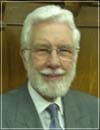
Stephen Hyde

30 - Simon The Sorcerer

Acts 8:9-24
Stephen Hyde September, 12 2014 Audio
0 Comments
Stephen Hyde
Stephen Hyde September, 12 2014
Acts of the Apostles Series - 30

Acts 8:9-24

The account of Simon the Sorcerer who tried to buy the power of the Holy Spirit from the Apostles and is sharply rebuked by Peter and exhorted to repent. A important lesson in free grace and the fact that we cannot earn or buy favour with God.

Sermon Transcript

Auto-generated transcript • May contain errors

100%
As most of you know, on a Friday
evening we're going through the Acts of the Apostles and we've
got to chapter 8. This evening we're going to speak
about the case of Simon. And that's not Simon the Apostle,
it's who we call Simon the Sorcerer. And it occurs in the 8th chapter
of the Acts of the Apostles and the account commences at verse
9. And last week we spoke about
the case where Philip came down into Samaria. Not Philip the
Apostle, but Philip who was called to join with Stephen and the
others when they were appointed. So this was not Philip the Apostle,
because all the Apostles actually were still in Jerusalem. And
so at this time we have this account. But there was a certain
man called Simon which before time, in the same city, used
sorcery. Sorcery is magic. And bewitched
the people of Samaria, giving out that himself was some great
one, to whom they all gave heed, from the least to the greatest,
saying, this man is the great power of God. So not only was
Simon important in his own eyes, he thought he was an important
person, But also most of the people also acknowledged that
this man is the great power of God. And it was obviously being
the magic that he performed which mesmerized the people that they
were therefore thought there was something very important
about this man and concluded it was the great power of God.
Of course in fact they were wrong. It was not the great power of
God at all. It was evil. It was the evil that Satan was
promulgating through this man and convincing these people that
those things which he was doing were right, in fact they were
wrong. And so we read, and to him they
had regard because for a long time he had bewitched them with
these sorceries. But now we see there was a wonderful
change in Samaria and that was when they believed Philip. Philip was preaching to them,
preaching the gospel. He'd been ordained to preach,
but when they believed Philip, preaching the things concerning
the Kingdom of God and the name of Jesus Christ, they were baptised,
both men and women. It's wonderful to read here in
this land of Samaria that the Spirit of God came upon these
people and as Philip preached concerning the Kingdom of God
and the name of Jesus Christ, it had a wonderful effect upon
them. An effect to the extent that
they desired to follow the example of the Lord Jesus Christ and
the Apostles, and of course many others, because we've already
commented on the Day of Pentecost, when there were those 3,000 people
added to the Church of God, so there were many who had been
baptised. And therefore, as Philip here
preached and spoke to them in the name of Jesus Christ, They
were baptised, both men and women. So it was a time of blessing
and a time of thankfulness. And it does set before us really
the example of the Christian Church, of those who are true
followers of the Lord Jesus Christ. They are baptised, whether they
are men or women. And then we see what Simon thought. Simon himself believed also. And when he was baptised, he
continued with Philip and wondered, beholding the miracles and signs
which were done." Now, we read this statement here, Simon himself
believed also. In fact, there is a very important
distinction between true believing and false believing. I believe
it can be summarised very simply like this. Here was this man,
he listened, with his mind, he heard that which was spoken,
he saw what had happened and therefore with his mind he no
doubt concluded that this was a good thing to do. Many people
were being baptised and therefore he decided with his mind that
he would be baptised. And as we read on, we'll come
to the difference because there is a difference between believing
in the head and believing with the heart. Believing with the
heart is the whole being. With the head it's just something
theoretical. And that's precisely what Simon
was here. He just believed in a theoretical
way. And there are many people today in the world who, if you
ask them, were they a Christian, they would say, yes, I'm a Christian.
In actual fact, they only believe as it were with their mind. It's
not with their heart, it's just something theoretical, something
they're happy to go along with. something that suits him at the
time and this clearly suited Simon. We have to be very careful
of that and be able to see whether there is the reality in those
who do believe or it is just something in the head. So we
read, then Simon himself believed also and when he was baptised
he continued with Philip and wondered beholding the miracles
and signs which were done. You see, carried on He went with
Philip, he carried on with the people and he wondered, he saw
these miracles and he saw these signs which were done. You see,
Philip had been anointed for this special work and no doubt
they'd laid hands upon him, the apostles had laid hands upon
him. So he was able to perform these miracles which were really
limited to this age as it were. And so we hear When the Apostles,
which were at Jerusalem, we know there were the Apostles staying
at Jerusalem, heard that St Mary had received the Word of God,
they sent unto them Peter and John, two of the Apostles, to
further the work and to encourage the people and to be in support
of Philip in that work. And then we read, and who, when
they were come down, prayed for them, that they might receive
the Holy Ghost. Now, it would appear from the
Word of God that these gifts of the Holy Ghost were granted
in these apostolic times and were granted by the apostles
who were given that special gift to lay hands upon people and
to convey the blessings to them. And so on this occasion, we see
the effect of that. For as yet, he was fallen upon
none of them, only they were baptised in the name of the Lord
Jesus. Then laid they their hands on
them, and they received the Holy Ghost." You see the wonderful
blessing that was to receive the gift of the Holy Ghost. And
they were then able to do those things which the Spirit of God
granted to them. And we see then the effect it
had on this man Simon. When Simon saw that through laying
on of the Apostle's hands the Holy Ghost was given, he offered
them money. He saw it was something important
because these people were able to do something which normal
people were not able to do. And he no doubt thought that
this would further his status among the people. So he desired
it and in order that he might have it, he was willing to pay
for it. He offered them money, saying,
give me also this power, that on whomsoever I lay hands, he
may receive the Holy Ghost. You see, he wanted this for himself.
He wanted the power for himself. He wasn't concerned about the
honour and glory of God. He was concerned about being
able to perform these miracles himself. And Peter responded,
very powerfully and very straightly to him. He said, thy money perish
with thee, because thou hast thought that the gifts of God
may be purchased with money. Well, it's obvious that a gift
is something which is not paid for. A gift is free. A gift is
given. And God gives gifts to his people. He gives us the great and glorious
gift of His grace. He gives us the gift of eternal
life. He gives us the gift to be able
to believe on the Lord Jesus Christ. And all these things
are the gift of God. We can't purchase them. We can't
earn them. We can't merit them. They are
God's gift to us. And because they are God's gift
to us, that means that we should be so thankful for them. and
we should bless God for those things which he does give, realising
that first of all we didn't deserve them and there wasn't anything
in us that merited them, but it is through the grace of God
that we receive them. And so here Peter speaks to Simon
very clearly and tells him, thy money perish with thee, because
our thought that the gift of God may be purchased with money. That was in his mind. He thought
he could buy anything. He thought money answered everything. Well, of course, it answers many
things in this world, but it does not answer the gift of grace. And then he tells him, Thou hast
neither part nor lot in this matter, for thy heart is not
right in the sight of God. comes back, you see, to this
great question of having our heart right with God. It's not
just our mind, it's our whole being, it's that within us. And so he says, his heart was
not right in the sight of God. And this is a very telling statement,
and it's a very important statement for all of us here tonight, to
realise that we need the work of the Spirit of God to be displayed
in our heart, which produces that real change, which gives
us the new birth, that gift of God, to be able to believe on
the Lord Jesus Christ. And as it is His gift, how wonderful
it is then to know that those words are true, that we have
freely received such things. And may we have the evidence
therefore, in our own heart, that we have received this And
not like Simon here who wanted to buy it, he wanted to purchase
it. We can never purchase this great
glorious gift of His grace, of His mercy, of His love to such
unworthy sinners. And the Apostle then speaks to
him and he tells him, repent therefore of this thy wickedness
and pray God if perhaps The thought of thine heart may be forgiven
thee." He obviously had those wrong thoughts in his heart,
thinking that he could purchase these gifts, and clearly his
thoughts were, if he could purchase these gifts, then he would be
thought well of, if he was able to perform these things. And
so he was very covetous that he might have these gifts which
were displayed upon those whom the apostles had come to grant
and to bless with the gift of the Holy Ghost. And so he goes
on to tell this man, for I perceive that thou art in the gall of
bitterness and in the bond of iniquity." There wasn't any love
to the Lord Jesus Christ in the heart of this man. There wasn't
any true thankfulness for forgiveness in the heart of this man. And
therefore the Apostle was able to see and to perceive that he
was bitter, really, to the Lord Jesus, bitter about the things
of God. All he wanted was his own gratification. He wanted himself to be thought
one of and he was still in the bond of iniquity. He was still
under that condemnation. He was not free from it. What
a blessing for us tonight if we see in our own hearts the
difference between what Simon shows to us here and the reality
of a true believer. A true believer is one whose
heart God has touched, one who is willing to be nothing, that
Christ may be all and in all. A true believer does not want
to be, in and of himself, some important person. He wants Christ
to be first. He wants Christ to be lifted
up. He wants Christ to be honoured and glorified. And he's willing
to be, as the Apostle Paul tells us, the eminent man of God, who
was, he tells us, less than the least of all saints. I believe
the Spirit of God, as that work comes into our heart, it shows
us our true state and we're willing to be nothing that Christ may
be all and in all. So we see the response here of
Simon then to this statement. What was his response? He said,
praise the Lord for me that none of these things which he has
spoken come upon me." Now, we don't know, the Scriptures don't
tell us the result of this man. All we know is that we have here
his statement and we know what the Apostle Peter spoke to him
and we know how the Apostle Peter told him very clearly what his
true state was and how his answer was, praise the Lord for me that
none of these things which he has spoken come upon me." Well,
that may seem on the face of it to be good and desirable,
we would not speak against it, but of course the truth is that
you and I need, and this man needed to pray for himself. He
needed to pray for forgiveness. He needed to pray for mercy,
exactly like Peter had said. It wasn't sufficient. for other
people to pray for him. He needed to be given that grace
to pray for himself for mercy. And what a blessing it would
be for us tonight if we know the blessing of God which has
brought us to pray to God ourselves for his mercy and for his blessing
and for his forgiveness that we may know his love in our hearts
and that we may know that we are passed from death to life
and that the Spirit of God has come into our heart, that we
have received that gift of the new birth, and it's not something
that we have done, it's something which God has done for us, and
the result will be, not honour and glory to ourselves, it will
be honour and glory to our God, that his name may be lifted up
and honoured and glorified. So we have before us in the Word
of God this example of Simon, we call him Simon the Sorcerer,
and we pray that we may be delivered from a situation like he was
in.
Broadcaster:

Comments

0 / 2000 characters
Comments are moderated before appearing.

Be the first to comment!

Joshua

Joshua

Shall we play a game? Ask me about articles, sermons, or theology from our library. I can also help you navigate the site.