Bootstrap
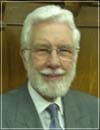
Stephen Hyde

Turn Thou Me

Jeremiah 31:18-19
Stephen Hyde June, 8 2014 Audio
0 Comments
'I have surely heard Ephraim bemoaning himself thus; Thou hast chastised me, and I was chastised, as a bullock unaccustomed to the yoke: turn thou me, and I shall be turned; for thou art the LORD my God. Surely after that I was turned, I repented; and after that I was instructed, I smote upon my thigh: I was ashamed, yea, even confounded, because I did bear the reproach of my youth.' Jeremiah 31:18-19

Sermon Transcript

Auto-generated transcript • May contain errors

100%
May I please God to bless us
this evening as we meditate upon his word. Let us turn to the
prophecy of Jeremiah chapter 31 and we'll read verses 18 and
19. The prophecy of Jeremiah chapter
31 and reading verses 18 and 19. I have surely heard Ephraim
bemoaning himself thus, thou hast chastised me And I was chastised
as a bullock, unaccustomed to the yoke. Turn thou me, and I
shall be turned, for thou art the Lord my God. Surely, after
that I was turned, I repented. And after that I was instructed,
I smote upon my thigh. I was ashamed, yea, even confounded. because I did hear the reproach
of my youth." We know that Jeremiah was a prophet
of the Lord and the Lord spoke through his
servant Jeremiah many great and important truths and how Many
times in this prophecy of Jeremiah, we see the Word of God describes
the life of the Church of God. And so it is good if we can trace
our life as we read the Word of God. And we have this statement
here with reference to Ephraim. Ephraim is really represented
representative of Israel or the Church of God. It's not a particular
individual, but it encompasses all the Church of God. And therefore,
as we read a statement like this, we should not think that it is
just addressed to one person and it has no effect upon us. The truth is the words we read
are applicable to every one of us. And it would be a good thing
therefore if we can at least in part find our heart moved
by the words of the Prophet and recognise that what is being
spoken does describe something that we understand. We understand
in our heart And what a blessing it is to have the Word of God,
which explains to us things that we fed in our hearts, which perhaps
other people wouldn't understand. But the Bible explains them to
us. And what a comfort that is then, to find that we're not
a stranger. We're not someone outside. But
we're someone on whom the Lord has graciously looked someone
whom the Lord is graciously moving and working in and instructing
and blessing. So the Prophet says, I have surely
heard Ephraim bemoaning himself thus. It appears that he wasn't
really speaking a very fluent prayer. He was bemoaning himself. He was Sorry for the situation
he was in. The situation he'd been in. And
so therefore, as he came before his God, there was this bemoaning. But God heard. And God hears
us. And He understands our moanings,
our groanings. They don't pass by. He notes
them. What a blessing it is to realise
that we have such a gracious God who does know and understands
us so very well. Now, we read here that the Lord
heard Ephraim bemoaning himself thus. What was he saying? He
was saying thou hast chastised me and I was chastised as a bullock
unaccustomed to the yoke. The picture we have here is of
a bullock, and of course we don't see it
really very much today, at least not in our nation. It does occur
in some parts of the world where bullocks are used to draw ploughs
or harrows or various instruments. and they are usually yoked together. And of course, naturally, they
don't like a yoke being placed upon them. A yoke goes around
their shoulders and they can't move very well without the other
bullet moving with them. And so they don't like to be
tethered in this way. And they reject it and they kick
and they buck. But you see, the truth is, that
here we have this statement as chastised me as a bullock unaccustomed
to the yoke and sometimes it may be that the bullocks are
chastised in this work to try and bring them to be sensible
and to work in agreement with the other bullock but sometimes
you see it doesn't seem to work very well And perhaps that's
the reason why we see here Ephraim bemoaning himself. He hasn't
liked being yoked. He hasn't liked being tied. We might say here being tied
as it were to the Church of God. He wasn't accustomed to it. And
he wished he wasn't. And he wished he could be free
from it. And yet you see he was really bemoaning himself because
of it. He was recognising that the chastising
had not really had a very good effect upon him. Hadn't really
achieved that which it was intended to do. And again, that may be
so in our lives, you know. Because the Lord does chastise
in various ways in our lives. Sometimes he afflicts our body
and we're not very happy with that and we may kick against
it and wish we didn't have to endure such things and yet you
see the reason is the Lord is doing it to make us accustomed
to his yoke And yet we rebel and we act just like this as
a bullock unaccustomed to God's yoke. Now you see, the truth
is that this bullock was far more useful being yoked to another
one than by himself. There was more strength and they
were able to go together. And again, this is a good picture. Is it not for the Church of God?
You see we can be joined together, we can be helpers one to another
and yet perhaps it might be that we are not very keen and therefore
the Lord may bring something upon us to chastise us, some
affliction perhaps, maybe something else in our lives, something
which comes into our lives, maybe a so-called accident that the
Lord brings to bear. It may be we lose something. The Lord has various means of
speaking to us and teaching us. And it may be that these things
have happened to us and we have to confess they haven't really
had any good effect. We still remain unaccustomed
to the We've still been rebellious. We've still been hard-hearted.
And it may be, therefore, that we're bemoaning ourselves that
this situation has developed. We may say, well, why have I
got to endure this difficulty and this trial and this problem?
Why is it that I'm like this? So Ephraim was bemoaning himself.
Well, my friends, God hears our bemoanings. He knows all together. He knows what our heart is like,
whether we are really rebelling against God because we are not
accustomed to His yoke. And so we read, Thou hast chastised
me and I was chastised as a bullock, unaccustomed to the yoke. And
then we see the real desire. We see perhaps the effect of
the Lord's work and what does it bring us to? What did it bring
Israel to? It brought Israel to a condition
of submission to the will of God. My friends, that's a great,
wonderful blessing to submit ourselves to the will of God. We are told to submit ourselves
under the mighty hand of God, that he may exhort us in due
time, casting all our care upon him. Now, naturally we don't
like to submit, especially if we think we know better, especially
if we think we know what we need, and how we need God to come and
to bless us, And we are not very happy if we find things going
contrary to us. And so we come into this position. What a blessing then, if the
Spirit of God comes to us and gives us that grace of submission,
so that we come then in a different way and pray like this. Turn thou me. and I shall be
turned, for thou art the Lord my God." We can envisage, can't
we, in a statement like this, how Israel desired the Lord would
turn them. The Lord would change their direction. The Lord would turn them in an
opposite way. And there was the concern, there
was the desire. And we read, I've surely heard
Israel bemoaning himself thus. There was then this bemoaning
and this prayer, turn thou me. Turn thou me. Now, if the Lord
gives us such a prayer, we need to be very thankful. The Lord
has blessed us with submission to his will, because that is
not our nature. We're just like this bullet unaccustomed
to the yoke, we do not want to submit. But the Lord brings us
to a place where we are willing to pray like this, turn now me
and I shall be turned. We know that when God works,
the work is done. And so, these words are so true,
turn thou me, and I shall return. You see, when God works, the
work is done. I will work, and who shall hinder
it? No one can hinder, no one can
stop the work of God. And so if we are blessed with
a prayer like this, turn thou me, and that really comes to
this, to make us conformable unto our
God, to make us willing in the day of His power, to make us a true follower of
a despised and crucified man. There was a time when we didn't
want to be turned. We had no desire to be turned.
We wanted to continue in our own road, in our own way. We didn't want to be turned. But it's a great favour if the
Lord comes and speaks to us in this way and gives us That desire
to come and to seek the Lord and to say, turn thou me. If that is a true prayer, if
that comes from our heart, we can be sure of this as we read,
and I shall be turned. But we need to be very honest
when we come to our God. We need to come in a right way. And to say like this, turn now
me. It's so very easy for us to have
our own motives and our own plans. And we should always realize
that our heart is deceitful above all things and desperately wicked. And sometimes it may be that
we think we have a desire, a right desire, and we may come to the
Lord like this and pray turn now me, but we may have got conditions
attached to it. We may have got our own ideas
and we may secretly be desiring the Lord will indeed come and
turn us but it will be in this way or that way. We don't want
it to be in the other way. But if you and I are blessed
by the Spirit of God and here we see Ephraim and the picture
is that he's been moaning himself and he's coming in a contrite
way, seeking the Lord will look upon him and turn now me and
I shall be turned. His confidence was in his God. The Lord never makes a mistake.
As for God, His way is perfect. That's what David was able to
declare. Yes, as for God, his way is perfect. And therefore,
God's leading and God's direction for us in our spiritual life
is a perfect way. It's a way which will bring honour
and glory to our God. And so, as we think in these
terms, and I shall be turned, because what God does then, will
be for our best and will be for His honour and for His glory.
I often think of that very simple prayer that we read of God's
servant Jabez in the Chronicles and he prayed this way, O thou
wouldst bless me indeed and enlarge my coast. He didn't have any
greater requirement than that. There weren't any conditions
spelled out. He just desired that the Lord would bless him
indeed and that his spiritual coast would be enlarged. He might
have a great view of God. Now, if we're praying in that
way, the Lord would turn us so that we'll be blessed. Blessed indeed. And only the
Lord knows what you and I need. The Lord knows perfectly what
we need. He knows what to do. He knows what to cause to happen. He knows what is cause to be
spoken. He knows everything. The Lord
knows the end from the beginning. So as we view these words here, turn thou me and I shall be turned. To come in that honest and simple
way. And it is not easy to come in
an honest way. You may be surprised at that
statement, but my friends our hearts are so deceitful. You
see, we have that evil within of pride. And deep down there
is that pride resting there. And very easily bobs up to the
surface. And what does it do? It detracts
from God's glory. And we may therefore think that
our motives are right and pure. Well, may we dig deeper into
our heart and find that it isn't quite as we anticipated. In fact,
we find evil working there. And we find if the Lord does
turn us in a way that we hope, and it comes to pass, we may
indeed claim something for ourselves. Now you see, the Lord doesn't
allow those things to come to pass. Bless God. Or if he does, There's usually
a difficulty and usually a problem with it. The Lord brings those
things to pass, which are for his honour and glory. And so
we have this very simple statement here, turn thou me. He wants it to be found going
in the right direction, not the wrong direction. And so he comes
and says, turn thou me. and I shall return. Because when
God does it, it's effective. It's effective. You won't argue
with God. You'll know that what God has
done is the best. So we read, turn thou me and
I shall return. And he comes and says, for thou
art the Lord my God. Now, that's important. because
it's clear here that Israel then were praying to their God. They did cry, they did bemoan
themselves, but it was to their God. May we come indeed in the same
way, be able to say, and what a blessing it is, to be able
to say, for thou art the Lord, my God. The Lord. That means He's the one that
we bow down before and worship. Our Lord. Our Master. The one we are willing to bow
down to. The one we are willing to serve.
The one we are willing to do His bidding for. Thou art my God. Thou art the
Lord my God. not the unknown God, but his
God. What a wonderful favour for us
tonight if we are able to recognise such words as being moved by
the Spirit of God to be able to come in this way and acknowledge
that these words are true. Understanding our position and
yet coming and saying, oh turn thou me and I shall be turned. for thou art the Lord my God."
Now, he tells us then, surely after that I was turned, I repented. Repentance didn't come before
he was turned. Repentance came after he was
turned. The truth is, he didn't really
realise what true repentance was. He didn't know what there
was to be repented of. And it's only as the Spirit of
God leads and directs us, and shows us our true condition,
when He's come and touched our hearts and done that for us that
we could not do for ourselves, that when we realise that indeed,
before we returned, well we were going our own way. After I was
turned, I repented. Repented of the evil. The evil
of our ways, the evil of our thoughts, the evil of our actions,
the evil of our words. So many things that when the
Lord has turned us, because when the Lord has come and turned
us, really what it means is change, a change. It's a complete change. And we therefore view things
very differently. We view things in God's eyes. Whereas previously we were viewing
things in our own eyes. We were working things out ourselves. We had our own plans. We had
our own designs. But when the Lord came and made
us willing in the day of His power to come in this simple
way and pray that the Lord would come and turn us, when the Lord
did turn us, Then we found there were those new desires, those
new concerns, those new prayers, that have been a wonderful change
in our life. And God had done it. God had done it for thou
art the Lord, my God. And then you see, we are then
granted that truly godly repentance, which is not to be repented of. It wasn't then a pseudo-repentance. It wasn't then just mere words. It wasn't just saying, I repent. The truth was the Spirit of God
had moved the heart so that as we realised what had hurt our
prayer and turned us and shown us then something of our true
condition, there was reason then to repent, to be truly sorry
for our sins, and to desire the Lord would indeed keep us, enable
us to do His will, and to follow His gracious and glorious example. After that I was turned, I repented. And the Prophet uses these words,
surely. We see therefore that when the
Lord does work in our hearts, by His Holy Spirit, and causes
us to have a real concern for the things of God, to pray that
he might once again bless us in that way. And then there is
that acknowledging of what the Lord has done and the Lord's
mercy toward us. Most of you will remember this
morning we spoke on the day of Pentecost and the effect of that
the Holy Spirit had on those on that day. And the effect was
that they cried out when they heard this. They were pricked
in their heart. Yes, they'd been turned. The
Spirit of God had turned them. They were pricked in their heart
and they said, men and brethren, what shall we do? Oh yes, there
was a concern. They hadn't been there, perhaps
at the beginning of that day. But when Peter rose up and preached
the Gospel, that was the effect. Men and brethren, what shall
we do? You see, there was the work,
the Lord had turned them. And then you see, Peter was able
to come and say then, repent and be baptised every one of
you in the name of Jesus Christ for the remission of sins and
you shall received the gifts of the Holy Ghost for the promises
unto you and to your children and to all that are far off,
even as many as the Lord our God shall call." Well, it was
a very similar condition, was it not? To that which we have
before us here. That was the effect of the work
of God. The effect of the work of God
was to make the Prophet here knowledge these truths, and to
be able to say, surely, yes, the effect of God's work is sure. Without God's work there is no
sureness about it. But as the Lord came and works
and causes this turning, this change, this situation, surely
after that I was turned, I repented. Yes, true repentance. And as
I sometimes say, and how true it is to be reading the Romans,
the goodness of God leadeth us to repentance. The goodness of
God. As you and I look back, perhaps
it may only be a few moments, maybe a few hours, maybe days
or weeks or years, but to look back and see the good hand of
God upon us, in causing us to be turned. We see the wonder
of His work. And to His name shall be all
the honour and all the glory. The goodness of God leads us
to repentance. It's good when that is so. It
puts things in a right perspective. You're not hard-hearted. You're
not rebellious. You're bowing down before your
kind and gracious God, who has not dealt with you as your sins
deserved, who has looked upon you and has turned you, has caused
a change to come about. Surely, after the I was turned,
I repented. Now you see then, repentance
is easy. You know, when you and I are
hard-hearted, My friend, repentance is not easy. In fact, it can't
occur. It's just a form of words. When the Spirit of God softens
our heart, when the Spirit of God shows us our true state,
or at least in measure, our true state, and shows us what a great
and glorious and compassionate Saviour we have, then you see
it moves us to repentance. When we see What the Lord says,
the Lord hath appeared of old unto me, saying, Yea, I love
thee, thee, personal, the everlasting love. Therefore with lovingkindness
have I drawn thee. This is the effect. The Lord
turns us. It is lovingkindness toward us
which has turned us, directed us to himself. And as we think
of that, that how unworthy we were of any desire. The Lord came with his loving
kindness and turned us, caused a difference, caused a change,
caused us to come to this place and to repent. Surely after that
I was turned, I repented. And after that I was instructed. I smote upon my thigh. We don't
learn everything immediately. The Lord instructs us. And instructs
us in this way. Here a little and there a little. And it's a line at a time. Line
upon line, line upon line, precept upon precept. We don't learn
everything immediately. We're always learners. But it
is the evidence of God's work in our hearts as we understand
that we are being instructed by the Holy Spirit of God. And that is very humbling. to
think that the Lord God, who rules the universe, comes down
and instructs us in those things that we need, in those revelations
that we need, where we need the Word of God to be opened up to
our understanding. The Lord does it. After that I was instructed. The Lord instructs. The Lord
is a great teacher, my friends. You see, men can instruct. The
Lord is a perfect instructor. Because he instructs us in the
right way. He instructs us in the good way.
He doesn't leave us to go off at a tangent. He instructs us. It may be, perhaps, like it was
in Jacob's case. He found him in a desert land,
in the waste-hounding wilderness. He led him about. He instructed
him. He kept him as the apple of his
eye. What a merciful God we have.
who treats us in such a compassionate way. There we were, in the desert,
wandering away in the wilderness. The Lord found Jacob. The Lord
finds you and me. He knows where we are. He knows
where we've been. He's watched over us. Then you see, He leads
us about. He instructs us. And he keeps
us the apple of his eye. And after that, I was instructed. Now, when the Lord teaches, when
the Lord instructs us, what does he do? Well, my friends, he shows
us how bad we are. He shows us how evil we are. He shows us how bad our motives
are, our desires are often. and all graciously instructs
us and he shows us these things. So we have this statement here,
after I was instructed, what did he do? He smote upon his
thigh. The same way, slightly different
area, that publican, he smote upon his breast. And his cry was, God be merciful
to me a sinner. This picture here we have, I
smote upon my breast, my thigh rather. Why? He says, I was ashamed,
yea even confounded. Have we been ashamed? Have we
been confounded? As the Lord has revealed a little
of what we are and instructed us Have we been ashamed of our
life? Ashamed of our profession? Ashamed
of our example? Ashamed of the things we've said?
Ashamed of the things we've done? Well, here we have this description.
I smote upon my thigh. I was ashamed, even confounded. Well, I believe if you and I
have been taught by the Holy Spirit of God, we'll understand
a little of what the Prophet says here. We can't hold ourselves
up as a wonderful example. We have to confess we've failed
so much, but we have a great and glorious Saviour who has
not dealt with us as our sins deserved. I was ashamed, even
confounded, Because I did bear the reproach of my youth, of
the sins of our youth, my friends. We look back, do we not? And
see the sins of our youth, the things which we did. Are they
not painful when it comes to our remembrance? We wish we could
undo things which we'd done. But you see, those things which
are done, are done to keep us, keep us down. So we can never
be proud of ourselves. What we can be is proud of our
God. We can be thankful for what our
God has done for us. In not dealing with us as our
sins are deserved. And what has he done? He's paid that great price for
our redemption. so that you and I might be set
free, so that you and I might one day be with Him in glory.
He's paid that price that we should have paid ourselves, but
could not pay. And if we had, it would not have
satisfied the holy law of God, because sin is mixed with all
we do. But to know that we have a great
and glorious Saviour, as we read here, for thou art the Lord my
God. My God. That one who is so willing
to go to the cross, to bear our sins, to carry our sins. And you see, as the Spirit of
God turns us, and as we're instructed, our spiritual eyes are opened
to behold something of the glory of that wonderful work of salvation,
that wonderful work of the Saviour, that which He did on our behalf,
so that by His grace and because of His great love, one day we
shall be with Him in glory forever and ever. Oh, are we not ashamed
of ourselves when we think of that love? and ever-blessed Lord,
and what He endured, what He endured, no time can tell, to
save our souls from that terrible hell. Do we not come to night and have
to exclaim, what a Saviour, what a Saviour, the Saviour that dealt
so graciously with Israel of old, Ephraim of old, that God
would still do us graciously with his church, with his people
today. He still comes to us, he still takes us in hand, as
we're like a bullet unaccustomed to the yoke, we kick and we fret,
we're not happy with the way that things are working out.
But, the Lord leads us in that right way. The Lord never leaves
us, nor forsakes us, And the Apostle Paul, when he wrote the
Romans, he says, he tells us, And we know that all
things work together for good to them that love God, to them
who are called according to his purpose. Those who are called
according to his purpose. Down to the ages, God has called
those whom he has chosen according to his purpose. And today, my
friends, he calls us according to his purpose. His purpose of
love toward us. And the Apostle says, for whom
he did foreknow, he also did predestinate to be conformed
to the image of his Son. It's the divine work of the Spirit
to make you and me conformed. It's where he turned, you see.
Turned himself to be conformed to the image of his son. That
he might be the firstborn among many brethren. Moreover, whom
he did predestinate, them he called. And whom he called, them
he also justified. And whom he justified, them he
also glorified. It's a wonderful change, isn't
it? And you see, as the Lord has called us, it is certain
that you and I will be glorified. Wonderful truth, amazing thing
to contemplate and to realise that this is the God that we
adore. This is the God that we read
of here, for thou art the Lord, my God. Well, may you and I tonight
be able to come and be able to trace out in our lives something
that Jeremiah was inspired to write down here with regard to
the Church of God and to be blessed with that wonderful evidence
that the Holy Spirit of God nonetheless has graciously come and turned
us and we might have that confidence to be able to come in this way
and say Turn thou me, and I shall be turned. For thou art the Lord
my God. Blessed be God. Amen.
Broadcaster:

Comments

0 / 2000 characters
Comments are moderated before appearing.

Be the first to comment!

Joshua

Joshua

Shall we play a game? Ask me about articles, sermons, or theology from our library. I can also help you navigate the site.