Bootstrap
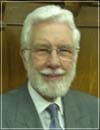
Stephen Hyde

Cease Ye From Man

Isaiah 2:22
Stephen Hyde February, 16 2014 Audio
0 Comments
Stephen Hyde
Stephen Hyde February, 16 2014
'Cease ye from man, whose breath is in his nostrils: for wherein is he to be accounted of?' Isaiah 2:22

Sermon Transcript

Auto-generated transcript • May contain errors

100%
I please the Lord to bless his
word as we meditate upon it this evening. Let us turn to the prophecy
of Isaiah, the second chapter, and read the last verse, that's
verse 22. The prophecy of Isaiah, chapter
2 and verse 22. Cease ye from man, whose breath
is in his nostrils, For whence is he to be accounted of? As we are told, the Prophet Isaiah
lived during the reign of Uzziah, Jotham, Ahaz and Hezekiah, kings
of Judah. And throughout that time, it
was his favour to be a prophet of the Lord. Isaiah is sometimes
referred to as the Gospel of Isaiah. And really it is an appropriate
term because Isaiah, as of course all the scripture, but Isaiah
perhaps particularly does speak very much of the Lord Jesus Christ. But Isaiah also was a faithful
prophet And he spoke faithfully to Judah at that time, just before
they went down into captivity, into that land of Babylon. And
he speaks to them in this prophecy. And we know therefore that when
they were there, no doubt they would have remembered or had
read to them perhaps some of this prophecy that Isaiah had
written. And then of course there was
really that long period when there was really little prophecy
after that return from Babylon. 70 years and no doubt the Church
of God would have been avidly reading and listening to the
prophecy of Isaiah as to the coming events which they anticipated,
especially the coming of the Messiah. So it would have been
a very special book for them to read. Well, we today can look
back and see how the Prophet addressed them and how he addresses
us today. And of course, although it was
written many years ago, it is very appropriate also for us
today in our lives. Perhaps not quite in the same
way as the illustrations were then, but nevertheless the illustrations
for us are very appropriate. And the prophet, he tells them,
and he says, therefore thou hast forsaken thy people, the house
of Jacob, because they be replenished in the east, and are soothsayers
like the Philistines, and they please themselves in the children
of strangers. Well that was the picture that
Isaiah was portraying to Judah at that time. And of course it's
very appropriate for the picture today isn't it? And then they
are told their land also is full of silver and gold, neither is
there any end of their treasures. Their land is full of horses,
neither is there any end of their chariots. And we can of course
change horses perhaps into cars today and we see there is no
end of that situation. And the land is also full of
idols. They worship the work of their own hands, that which
their own fingers have made. How true that is today. We see
people, we see all of us really, in measure, worshipping such
things. And the mean man bows down, and
the great man humbleth himself, therefore forgive them not. And then the Prophet tells what
will occur. And he tells us this, he says,
the lofty looks of man shall be humble, and the haughtiness
of men shall be bowed down, and the Lord alone shall be exalted
in that day. And that surely is the picture
that we have today, do we not? Lofty, haughtiness, and all around
us. And then to realise that, The
Lord will be exalted in that day. Well, there was a day coming
when the Lord would come, when he would be born, when he would
be exalted and indeed there would be those lofty looks and haughtiness
which would be bowed down. For the day of the Lord of hosts
shall be upon everyone that is proud and lofty and upon everyone
that is lifted up and he shall be brought low. Well, it's a
picture of the coming of the Lord Jesus Christ when he came
upon the earth at the time of his birth. It's also a picture
of the coming of the Lord at the end of this world, when everything
will be burnt up and the Lord will return. And we see the picture,
do we not, of the situation there. Well, we have what will occur
In that day a man shall cast his irons of silver and his irons
of gold, which they made each one for himself to worship to
the moles and to the bats. They will realise that those
things are of no value, no value at all. When you and I have to
come and stand before God, all the things of this world will
be of no value at all. They will not benefit us at all. In any event we have to leave
them all behind. The things perhaps that we worked
hard for, perhaps we worked harder than we should have done for
some of those things. The Lord has to be left behind. To go into the clefts of the
rocks, into the tops of the ragged rocks, for fear of the Lord and
for the glory of his majesty, when he arises to shake terribly
the earth. And the Lord does come and return
and shakes terribly the earth, which he will, then there will
be the fear of everyone who is on the earth will fear and tremble
and quake at the coming of the Lord. Now we have this picture
then, set before us by Isaiah, and he concludes it with this
last verse. He says then, Seek ye for man
whose breath is in his nostrils, For wherein is he to be accounted
of? It is a clear statement. Having
commented on all those things which exist and will exist, then
our word of admonition to us is to cease ye from man, whose
breath in his nostrils. For wherein is he to be accounted
of? It is right that we should indeed
cease from man. And if we are to cease from man,
why should we cease from man? Well, you see, man is very frail. Man is very frail. And the strongest
person is, by comparison, very frail. And in the book of Psalms,
Psalm 78, we read this The Lord makes this statement,
for he remembered that they were but flesh, a wind that passeth
away and cometh not again. Just like that you see, we're
like a wind. You've heard a lot about the wind, haven't we? Recently
the wind's blown and we haven't known where it's come from, we
don't know where it goes to, but we have heard it and we've
seen the effect and that's what happens, a wind that passeth
away and cometh not again." And that's really just like we are.
We're just so passing, nothing at all really. And then in the
104th psalm, again the psalmist makes a similar statement. He
says, Thou hidest thy face, thou troubled. Thou takest away their
breath, they die and return to their dust. Actually we are dust
really, and time will come we will return to be just like this,
dust of the earth, fading away, nothing to be accounted of. And also then in the 118th sthāma,
the sthāma speaks in these words, and this is the encouraging side,
not to trust in man, cease from man, We are told now to trust
in the Lord. It is better to trust in the
Lord than to put confidence in princes. It is better to trust
in the Lord than to put confidence in man. Well, we have such a
testimony before us. And then with this word here,
cease ye from man. We are to cease from man. We
are not to rely upon men. Because men are but dust and
men are passing away and they are really no consequence. And
therefore we are to look to the Lord, we are to trust in the
Lord and how good it is that the Lord gives us that faith
to believe in the Lord. We have many examples in the
Word of God that those who trust in the Lord, They were really
seeking for man. They had to, because men let
them down. Think of Joseph in the prison.
Yes, he had been a good few years now, separated from his family. Now he was in prison, and he
had asked the butler to remember him when he came into Pharaoh's
presence. But you see, the butler forgot
all about him. And so we are to realise that
we are. Therefore, not to rely upon men. We are not to rely upon people
that we think will help us and will be able to deliver us. And
that comes into many aspects in our life, doesn't it? It comes
into aspects in our school life, it comes into aspects in our
college life, it comes into aspects in our work life. It comes into
aspects in our home life. We might be relying on people
to advise us, people to direct us, people to help us. Well, we are told here, seek
ye from man. Seek ye from man. We are to trust
in the Lord. It's better to trust in the Lord,
because we can be sure The Lord will not give us wrong advice.
The Lord will not direct us in a wrong way. We can rest assured
the Lord will give us that good advice and that right direction. So we see the reason why we need
to feast ye from man. Man who is dying, it tells us
here, whose breath is in his nostrils, And you know sometimes
you and I might be relying on somebody and the Lord might take
them away. They might die. The person will be gone. We won't be relying on that person
anymore. Well that's a very sad and solemn
situation. I trust it perhaps won't come
into our lives but nonetheless we may be warned about it and
therefore be concerned that we may not be trusting in man. but that we may have that desire
and that aversity to cease ye from man whose breath is in his
nostrils, for wherein is he to be accounted of, and rather therefore
to trust in the Lord." Well, the Stalinist also tells us about
not trusting in man. The 146th Dialogue tells us really
about that. And it starts off in this way. Praise ye the Lord. Praise the
Lord O my soul while I live, will I praise the Lord. I will
sing praises unto my God while I have any being. Then he goes
on to say, put not your trust in princes, in important people.
We might think, well, here's someone who is important. Or
someone perhaps who's very gracious and very understanding. And we
might think, well, if I can meet that person or speak to that
person, I'm sure they'll be able to sort me out. Well, we're told
here, put not your trust in princes, nor in the son of man, in whom
there is no help. It's very easy to look around
and look and think we can observe people who will be able to help
us. But we're told his breath goes
forth, he returns to his earth. In that very day his thoughts
perish. When a person is dead, no thoughts anymore. They perish. And he goes on to say, happy
is that, is he that hath the God of Jacob for his help, whose
hope is in the Lord his God. That's a safe place, that's a
good place. And you see the Lord lives forever. The Lord doesn't
change. And the Lord knows every detail
in our life. Poor old man doesn't. No man
knows the details in your life. But God knows the details in
our lives. And therefore to be encouraged
by such a statement as this, the Lord shall reign forever.
This is a God that we come before, this is a God who we worship,
and therefore how clear it is that we should indeed cease from
man, but we should in turn look unto the Lord. Another prophet
of the Lord, Jeremiah, who again prophesied some solemn things
when he was on the earth. And he says very clearly and
very powerfully these words in the 17th of Jeremiah in the 5th
verse, Thus saith the Lord, Cursed be the man that trusteth in man,
and maketh flesh his arm, and whose heart departeth from the
Lord. It's a solemn warning for us
today. not to rely and trust in man. And sometimes we do, we are human,
we have a human nature. And there are those times sometimes
when we look to man and we think, oh that person will bear help
to me, and that person may encourage me. But you see, here is this
word, cursed be the man that trusts in man. We need to take
that to heart. to realise the Lord is speaking.
If we're trusting in man, then we're not walking in accordance
with the word of God. And the solemn statement is that
rather than being blessed, we are cursed. Cursed be the man
that trusts in man and makes his flesh his own and whose heart
departs from the Lord. And then we're told, for he shall
be like the heath in the desert, and shall not see good, and not
see when good cometh, but shall inhabit the parched places in
the wilderness, in a salt land, and not inhabit it." Well that's
the prophecy with regards to those who are relying on men. And then the Prophet says, Blessed
is the man that trusts in the Lord, and whose hope the Lord
is. And this is spoken of him, for
he shall be as a tree planted for the waters, and that spreadeth
out her roots for the river, and shall not see when heat cometh,
but her leaf shall be green, and shall not be careful in the
year of drought, neither shall cease from yielding fruit." Well
we have the picture there before us. as the Prophet's words to
those who are relying upon man and those who are relying upon
the Lord. And then the next verse speaks,
a familiar verse I'm sure. The heart is deceitful above
all things and desperately wicked, who can know it? And that's why
the Lord graciously gives us this instruction in our day and
age. It is appropriate for us today
He says, I the Lord search the heart, I try the reins, that's
the innermost being, innermost beings, even to give every man
according to his ways and according to the fruit of his doings. So we have the testimony of God's
prophet Jeremiah. Cease from man whose breath is
in his nostrils, for wherein is he to be accounted of. So, we see there a lot of negatives,
we've got some positives, but the greatest positive we have
is very clear. We are to speak to man and in
place of that we are to look to the Lord Jesus Christ. Because in Him is wisdom. In Him is all the help that we
shall need. And let us remember that the
Lord Jesus Christ walked upon this earth. The Lord Jesus Christ
was tempted in all points like as we are, yet without sin. That's why we have such a great
and glorious Saviour who understands our condition. And therefore
we can come to Him, we can trust in Him, and we can know and believe
that He does appreciate are very conditioned in every detail. That's why we have such a great
and glorious saviour. And that's why we have this word
here, to teach ye from man. We need to be reminded of it.
And we need to be directed again and again to the Lord Jesus Christ. What of course the Lord Jesus
Christ was spoken of in the Old Testament as well as the New
Testament. On many occasions there were in the Old Testament
which directs us to this situation. David knew the Saviour and he
knew the need to be directed in this way and he tells us In
the 34th Psalm he says, I sought the Lord. He didn't speak under
man. And if you follow through David's
life, you will find that he sought the Lord. You will find when
he went into battle, he sought the Lord. When he went this way
and that, he sought the Lord. He desired to be directed by
the Lord. Could he do this? Or should he
do that? And the Lord directed him. We have the same God today. My
friends, we shouldn't expect though, necessarily, an immediate
answer. Sometimes the Lord waits to be
gracious and then also he waits to test our faith, to test our
religion, whether we are really seeking his health and his direction. It won't be a situation that
we say, Lord I've got a plan and I want you to work to it. No, God's got a plan and we'll
walk and work to his plan. Sometimes we try and reverse
it. We tell the Lord our plan and we want God to work to that
plan. No, God doesn't work to our plans. He works to his plans. And his plans are far better
than our plans. Because he knows the end from
the beginning. We don't. We only see the immediate
future. And we think this will be good
for us and that will be good for us. No. The Lord knows. And
so, David says, I sought the Lord and he heard me. and delivered me from all my
fears." Now there will be fears that we'll have. Fears in our
daily life, our natural life, fears in our spiritual life.
We may fear the Lord's forgottenness. We fear the Lord isn't answering
our prayers. We may have prayed for a long
time and we haven't had any answers. Well, we must press on. And perhaps sometimes we just
need to examine our prayers, examine our requests to see whether
they are in accordance with God's will. Or whether perhaps we are
putting our view and asking the Lord to act in a certain way. And that's why perhaps we haven't
had any answers. As I've spoken to you sometimes,
that simple prayer by Jabez, recorded in the Book of Chronicles,
very simple, and he said this, O that thou wouldst bless me
indeed. Now that's a very good and a
very simple prayer. I know he went on a bit further,
but that's good enough. That's very simple, isn't it?
And he was Desiring and conscious that he wanted God to bless him,
but he didn't give a long list of requirements. He just asked
very simply that the Lord would bless him. My friends, if you
and I come down to that place, just to ask the Lord to bless
us, be sure the Lord will do that which you will need. And David was able to come and
say, I sought the Lord. And he heard me and delivered
me from all my fears, now naturally and spiritually. We may have
fears that the Lord has turned his back upon us. He's not answering
our prayers. And we're fearful that we're
amongst those who will be eternally lost. Well, the word of God tells us,
seek ye my face. Yes, we shall not be disappointed. The Lord will hear, the Lord
will answer in his time and will weigh. He tells us this, they
looked unto him and were enlightened and their faces were not ashamed. They looked unto him, the Lord
Jesus Christ, that's who we are to look to. Look unto Him. We won't be ashamed. We won't
be ashamed to wait for Him. There may be a waiting time. The Word of God tells us this.
Your time is always and my time is not yet. God has a time, a
right time. He has a purpose in our lives
and that purpose is to be fulfilled. It may not just affect us. God's
purposes being fulfilled may affect other people and we should
therefore realise that the Lord does that which is right and
which is for his honour and for his glory. So remember David
and his testimony, sure and certain isn't it? And we know that the
Lord heard and the Lord answered his prayers. The Lord didn't
turn his back upon David, no. and I believe he will not turn
his back upon us either. One of the lesser known prophets,
Micah, always goes encouraging with regards to looking to the
Lord. He tells us in the 7th chapter, and he speaks to us
and he says, Woe is me, for I am as when they have gathered the
summer fruit as the great gleanies of the vintage, there is no cluster
to eat, my soul desires the first ripe fruit." And he goes on to
say, the good man is perished under the earth and there is
none upright among men, they all lie in wait for blood, they
hunt every man, his brother with a net. And he goes on to say,
trust you not in a friend, put you not confident in a guide,
Keep the doors to thy mouth from her that lies in thy bosom. It's a very clear statement,
isn't it? Speak ye for man, whose breath
is in his nostrils. For the son dishonoureth the
father, the daughter rises up against her mother, the daughter
in law against her mother in law, the man's enemies are the
men of his own house. So with that statement, the Prophet
then comes down and tells us this. Because of that, therefore,
therefore, what's he to do? Therefore, I will look unto the
Lord. I will wait for the God of my
salvation. My God will hear me. Confidence in the Lord God. Confidence in the Saviour, the
Lord Jesus Christ. He will hear us. He will answer. Yes. And the Prophet just goes
on. We'll just go on for a moment.
He tells us this. Rejoice not against me, O my
enemy. When I fall, I shall arise. Sometimes we do fall. Sometimes
we make sad forms. He tells us, when I fall, I shall
arise. And when he sits in darkness,
he said, when I sit in darkness, the Lord shall be a light unto
me. Now you see, naturally man cannot
be a light. We're in darkness, we need the
Lord to shine. The Lord is to come, the Lord
is to bless. So we have this gracious testimony
of Mita. Let us remember it. Therefore
I will look unto the Lord, I will wait for the God of my salvation. See she for man. See she for
man and just again remembering the scripture which I often refer
to, the 45th chapter in Isaiah and verse 22, look unto me and
be saved. All the ends of the earth for
I am God and there is none else. How important it is for us to
remember that in our lives. We have to look unto the Lord
Jesus Christ, look unto me. and be ye saved. Not like anyone
else, cease from man. Cease from man. Perhaps we've been looking to
men. My friends, they are but dust to the earth. We are to
look unto the Lord. The Lord Jesus Christ. Oh, look
unto me and be ye saved. Perhaps that's our prayer. We
may know that we are amongst the Lord and we've been seeking
this way and that way. Look unto me, wherever we might
be, all the ends of the earth, for I am God and there is none
else. And we need to be reminded of
these things. We are to look to the Lord Jesus
Christ. Seek ye from man, poor old man,
whose breath is in his nostrils. Yes, it is not to be accounted
of and yet left to ourselves, you see, we so easily come and
respond and look to flesh and we think, well, I'll be alright
there and I'll find some help there. No. The Lord will have
all the honour and the glory. He won't give his glory to another.
And how necessary it is for us to be aware of that. And then
Zachariah, that prophet Zachariah, how much he speaks of Christ
in his prophecy. And in the 12th chapter, the
10th verse, we read this. And I will pour upon the house
of David, and upon the inhabitants of Jerusalem, the spirit of grace
and suffocation. This is the Saviour. This is
the Lord Jesus Christ. Come to the Lord. And they shall Look upon me,
whom they have pierced, and they shall mourn for him as one mourneth
for his only son, and shall be in bitterness for him as one
that is in bitterness for his firstborn. Cease from man. Look to the Saviour, yes, to
this One who pours upon the house of Israel the spirit of grace
and supplication. That means the spirit of prayer,
grace to pray. Unless the Lord gives us grace
to pray, we don't pray. We just speak words. That is not prayer. When God
gives grace, gives his favour, then it is that we pray. And
then we are blessed with the spirit of prayer, the spirit
of grace and supplication. And if we are seeking the Lord's
face, if we are desiring that he will be gracious to us, that
he will look upon us, then we have this view, and they shall
look upon me, whom they have pierced. And my friends, how
important that is, that in our spiritual life we are found not
looking to man, looking to the Saviour, and as we look to the
Saviour, what do we see? We see the man Christ Jesus,
the man suffering upon Calvary's tree, the man who indeed was
pierced, his hands and feet pierced, the spear put into his thigh,
pierced, so that we might receive eternal life. What a blessing
then to look away from man, to look to the Saviour, and then
to be directed to Calvary. What peace there is, flows into
the sinner's heart when we stand helpless and guilty before our
Holy God. And the Spirit of God points
at us and says, Thou art the man. Thou art the man. The sinful man. Thou art the
man. David had the finger pointed
at him. Yes, he confessed, he was the
man. But he looked to the Saviour.
when the Spirit of God directs us to see ourselves as sinners
and we then look to the man and we look upon him, the Word of
God says, and they shall. What a wonderful blessing isn't
it? To think that we, undeserving sinners of the earth will be
found amongst those who shall. Look upon me whom they have pierced
It's personal. It comes right home. And the
Spirit of God works. The Spirit of God applies the
word. You can't escape it. It comes right into your heart.
It's like an arrow of conviction. It strikes home. Thou art the
man. Look on me whom thou hast pierced,
and thou shalt mourn for him. As one mourned for his only son,
there shall be bitterness for him as well as bitterness for
his firstborn. Yes, we realise that it is our
sins that have caused the Lord of life and glory to suffer upon
the cross at Calvary. Seek ye from man. Look to the
Saviour, what a blessing it is when we are directed indeed to
look to the Lord Jesus Christ and to look to Him on the cross,
because there is all our salvation. There is no salvation outside
of the cross, no salvation outside of a crucified Saviour, no salvation
outside of him who bore the punishment instead. O let us then cease
from man, whose breath is in his nostrils, and let us look
to the Saviour, the Lord Jesus Christ. We know in the Hebrews
we have so many examples, really in that 11th chapter those who
by faith looked to the Saviour, And they were given that strength
and that help and that ability to believe in the Lord Jesus
Christ and in that which he would do. So we read about the Lord
Jesus being offered, offered up on our behalf. Hebrews 9.28
tells us, So Christ was once offered to bear the sins of many. and unto them that look for him
shall he appear the second time without sin unto salvation."
Well are we then, are we found tonight looking not to man, but
looking to the Lord Jesus Christ. You know this blessed Saviour,
we are told, for Christ is not entered into the holy place,
made with hands, which are the figures of the true. And of course
he was referring there to the tabernacle and to the temple
where the holy place, the holy of holies, where the high priest
entered in once a year. We are told here that Christ
has not entered into the holy places made with hands, which
are the figures of the true, but into heaven. The holy of holies typified heaven. The Lord entered into heaven
itself now to appear in the presence of God for us. Just think of
that. Look to the Saviour as he presents
our petitions to his Father. Nor yet that he should offer
himself often as the high priest enters into the holy place every
year with blood of others. for then must he often have suffered
since the foundation of the world, but now once, in the end of the
world, hath he appeared to put away sin by the sacrifice of
himself." He gave himself so that you and I might receive
the great and glorious gift of eternal life. And as it is appointed
unto men once to die, but after this the judgment, so Christ
was once offered to bear the sins of many. And unto them that
look for him shall he appear the second time without sin unto
salvation. The Lord Jesus Christ is the
only one. He is the only mediator between God and man, the man
Christ Jesus. He is the only one who can take
away our sins. the blessed and glorious Saviour
himself. And then just finally, the twelfth
chapter of the Hebrews, the Apostle tells us this, wherefore seeing
we also, today we also are encompassed about with so great a cloud of
witnesses, let us lay aside every weight, and the things that so
easily beset us, and let us run with patience the race that is
set before us, looking unto Jesus. Cease ye from that. Looking unto Jesus, the author
and the finisher of our faith. Now I hope that you may be able
to find in your heart the beginning of eternal life. If you possess
that beginning, it's because God has given you faith to believe. And if he's given you that faith
to believe, he's not only the author, but he is the finisher
of our faith, who for the joy that was set before him endured
the cross despising the shame, and he stepped down at the right
hand of the throne of God. So then he tells us, how important
is this, for consider him, not man, not men, not women, consider
him that endured such contradiction of sinners against himself, lest
ye be weary and faint in your minds. You may have come to that
place, you may be ready to give up. Perhaps you'll be looking to
man. Cease to man. Look beyond man. Poor man is but dust of the earth.
Look to Jesus. Consider Him. Consider Him. There you will find all your
needs supply. All your spiritual needs supply
and He will supply all your natural needs. It doesn't mean to say
what you might think you need, but He will supply that which
you do need. The Lord knows what you need. and all our needs,
he richly will supply." What a blessing to think we have such
a Saviour that endures such contradiction of sinners against himself. Lest
you be weary and faint in your minds. If you are weary and ready
to faint, what are you to do? Consider the Lord Jesus Christ. Think of his life. Think what
he endured. Think how weary he was. Think
how he was ready to faint, and yet strengthened by the Holy
Spirit of God. So today, you and I know what
it is to go in the strength of the Lord God. Yes, to wait patiently
for him, not rely on our own ability, but we are to seek the
man whose breath is in his nostrils, for wherein is he to be accounted
of? And when we cease from man, we
are to look to the Lord Jesus Christ, we are to trust in him
at all times. Ye people, pour out your heart
unto him. Amen.
Broadcaster:

Comments

0 / 2000 characters
Comments are moderated before appearing.

Be the first to comment!

Joshua

Joshua

Shall we play a game? Ask me about articles, sermons, or theology from our library. I can also help you navigate the site.