Bootstrap
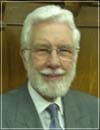
Stephen Hyde

Hezekiah's Sincerity

2 Chronicles 31:20-21
Stephen Hyde June, 23 2013 Audio
0 Comments
'And thus did Hezekiah throughout all Judah, and wrought that which was good and right and truth before the LORD his God. And in every work that he began in the service of the house of God, and in the law, and in the commandments, to seek his God, he did it with all his heart, and prospered.' 2 Chronicles 31:20-21

Sermon Transcript

Auto-generated transcript • May contain errors

100%
May it please the Lord to bless
us as we consider his word this morning. Let us turn to the second
book of the Chronicles, chapter 31, and reading verses 20 and
21. The second book of the Chronicles,
chapter 31, reading verses 20 and 21. And thus said Hezekiah throughout
all Judah, and wrought that which was good and right and truth
before the Lord his God. And in every work that he began
in the service of the house of God and in the law and in the
commandments to seek his God, he did it with all his heart
and prospered. As we read through the history
of the kings of Israel, the kings of Judah, we see sometimes dramatic
changes. More so perhaps in the kings
of Judah who were more often thankfully godly kings rather
than with Israel where they were mostly ungodly kings. But nevertheless
there were those times in Judah when there were those very ungodly
kings. And we have this life of Hezekiah,
whose father was a very ungodly king. It is therefore wonderful
and amazing to realize that he had a son, Hezekiah, who proved
to be a very gracious and wonderful monarch. in that place. And as we read the account of
what Ahaz did, and you can read it in earlier chapters, in chapter
28 in this same book, you will see what he did, and in fact
he shut the doors of the temple. No longer did he want that to
be used as a place of worship, in a place where sacrifices were,
and he shut the doors of the temple. It's almost beyond our
belief that such a thing could have happened in Jerusalem, a
very wonderful and blessed place. And yet, nonetheless, that's
what occurred. And then Hezekiah came to the
throne. We have to believe and understand
that it is the sovereign grace of God that produces these situations. But we're thankful for it. And
as we read the account of Hezekiah, he began to reign when he was
25. He wasn't very old, but obviously he's very much seen what his
father, Ahazaddan, who I think reigned for 16 years. He would
have been a boy of some understanding when his father began to reign.
And he would have seen those things that his father did. And we read about this, this
is what we read. And he did that which was right in the sight
of the Lord, according to all that David his father had done.
He, in the first year of his reign, in the first month, opened
the doors of the house of the Lord and repaired them. So he commenced, didn't he, in
a good way. And as we might say, he took his courage in both hands. It wouldn't have been easy. for
him to totally reverse the position which had existed in the reign
of his father. And so he commenced in this right
and good and God-honouring way. And he brought in the priests
and the Levites and gathered them together into the East Street
and said, Hear me, ye Levites. sanctify now yourselves and sanctify
the house of the Lord God of your fathers and carry forth
the filthiness out of the holy place for our fathers have trespassed
and done that which was evil in the eyes of the Lord our God
and have forsaken him and have turned away their faces from
the habitation of the Lord and turned their backs and they have
shut up the doors of the porch and put out the lamps and have
not burned incense nor offered offerings in the holy place unto
the God of Israel." What a solemn and sad situation existed, and
how wonderful to read of Hezekiah's determination to totally change
the situation. And he goes on to say, and this
is so relevant, Wherefore the wrath of the Lord was upon Judah
and Jerusalem, and he hath delivered them to trouble, to astonishment,
and to hissing, as ye see with your eyes." Well that was the
very clear position which existed then when Hezekiah came to the
throne. And his great desire was that
these things might be changed and brought about. There were
really three things that he brought about. three God-honouring things,
and so necessary. First of all, he reintroduced
the sacrifices which were ordained by God. Secondly, he caused the
people to praise the Lord. Thirdly, he reinstituted the
Passover. Now, we of course don't have
to take today the physical sacrifices. We don't today have to offer
up and fulfill the ordinance of the Passover. But nonetheless,
there are situations today which the Lord has brought before us
in the New Testament times, which it is our privilege and our obligation
to carry out. And we should be concerned, each
one of us, today to do that which the Lord sets before us in the
Word of God. We don't have, as Israel did
in those days, or Judah, a king to reign over them in the same
way whenever the king said, went, and had to be done. But we should
not forget that we do have a king, and that is the King, the Lord
Jesus Christ, who is far greater than any of those natural kings,
and how important it should be for us, and a concern for us,
that we do follow those ways, those directions, those commands,
those institutions of the Lord Jesus Christ. Now, Hezekiah was
commended for those things which he was able to bring about, and
as we read here in these two verses, and thus did Hezekiah
throughout all Judah and wrought that, wrought means brought about
that which was good and right and truth before the Lord his
God and in every work that he began in the service of the house
of God and in the law and in the commandments to seek his
God he did it with all his heart and prospered Now that's a full
statement, isn't it? It's a comprehensive account
of what Hezekiah was able to do. And such words as that have
not really faded and become old-fashioned or of no consequence or irrelevant
in the day and age in which we live. We live today in a sad
day. We live in a very sad day really,
especially as we consider the world at large, and as we consider
the nations, as we consider our own nation, and as we consider
the Church of God as a company. We see to a large extent a departure
from the truth of God. To a large extent there isn't
that true desire to follow the Lord wholeheartedly. Remember the account of Caleb,
that man of God. He followed the Lord fully. He
wasn't half-hearted in his attitude. And that's the great problem
today. We find there is a half-heartedness in the things of God. People
seem to fit in the things of God into their timetable if it
suits them. And they don't put the things
of God in the first place and then fit everything else around
it. And so as we look around the
church we've got at Nice today, we find the description so suitable
as describes that Laodicean church. There is a lukewarmness. There
isn't a real earnest desire. to follow the Lord fully. Now,
bless God, we have an account here of Hezekiah, whose great
desire was to follow the Lord fully. We know, and as we read,
towards the end of his life, he did fall, and he fell in this
way, and we should be aware of it, it's a snare, and he fell
because of pride of his own heart. There were those who came to
him, and he showed them all around. They weren't godly people, they
were by the hand of Sennacherib and the king of Assyria, and
he showed them all the things in his house. Well, he got a
lot of things. God had prospered him. They came
to him and said, why don't you come and have a look at all my
great things that I've got. Well, it was wrong. and we're
told, thus the Lord saved Hezekiah and the inhabitants of Jerusalem
from the hand of Sennacherib because of what he had done. So we need to be reminded that
we cannot turn our back upon God, albeit in the business of
the ambassadors, the princes of Babylon, who sent unto him
to inquire of the wonder that was done in the land, God left
him to try him that he might know all that was in his heart. So there's a warning there even
in the life of Hezekiah that we should be very mindful of
such a warning. So if the Lord does graciously
bless us and enable us to do things which we do with our whole
heart, to be on our watch and very careful that we're not left
to our own devices because the devil is looking very carefully
for a crack in our armour. He's very willing and very desirous
to find that crack and to penetrate and to cause us to detract from
the honour and glory of God and to bring about honour and glory
to ourselves. So we need to be very careful.
of that situation. Well, we can be thankful that
Hezekiah desired to do those things which were right and God-honouring. And therefore, he reinstituted
those sacrifices and also the Passover. And the people came
and they assembled at Jerusalem. Much people to keep the Feast
of Unleavened Bread. In the second month, a very great
congregation They all came, they heard what Hezekiah had sent
forth and demanded they should do. They should come and turn
again to the Lord and come again into this land, into this place
of Jerusalem and here worship the Lord. And so in this place
they came and they arose and they took away the altars that
were in Jerusalem and all the altars for incense and took them
away and cast them into the brook of Chidron. Now, we need to think
of that in our own lives, don't we? Because, as I said, the devil
is very subtle and he may have allowed us to bring idols into
our own home. Idols which we may bow down and
worship, perhaps not recognising it as such. Well, we need to
be very aware and concerned and to search out whether there are
any things which are detracting from the worship of God. That's
really what it is. It's detracting in our lives from worshipping
God. Detracting from having God first
in our lives. That's really why we find there
is that situation of lukewarmness and spiritual declension, that
means turning away from God, because we allow things to creep
in to our lives, our natural lives, which cause a detraction
from those spiritual blessings. And so here was Jerusalem then,
doing it, they took these things away. How could they worship
in holiness? How could they worship in purity
with all these other things staring them in the face? We might say,
well that was obvious, they couldn't of course have all these idols.
No, of course they couldn't. And it's no different really
today in our lives. How can we truly bow down and
worship the Lord in all honesty and all sincerity if there should
be any idols which are, as it were, showing their faces and
penetrating into our lives. And then we're then able to read,
then they came and they killed the Passover. And they weren't
in a healthy place. But nonetheless, they desired
to do that, and to bring about that which was God-honouring.
They killed the pastor on the 14th day of the second month,
and the priests and the Levites were ashamed, and sanctified
themselves, and brought in the burnt offerings into the house
of the Lord. And they stood in their place,
after their manner, according to the law of Moses, the man
of God, and the priests, and they sprinkled the blood which
they received at the hand of the Levites. They hadn't been
sanctified. They hadn't carried out these
sacrifices. There hadn't been that sprinkling
of blood. There hadn't been that true worship. There had been
a departure. There had been a following their
own pattern. They had offered sacrifices,
oh yes, they had offered sacrifices, but they weren't in accordance
with the word of the Lord. They weren't in accordance with
the commands of God. Their sacrifices were polluted. They weren't in accordance with
God's order. So we need to realise the necessity
of coming and bringing sacrifices to our God, those sacrifices
which are so needful. Now, as they came in this way,
there were those that weren't cleansed, And they came and ate
the Passover. But Hezekiah prayed for them,
saying, the good Lord pardon everyone that prepared his heart
to see God. It wasn't just a carte blanche
to say, well, Lord, pardon everyone, all those who departed, all those
who followed the wrong way. He said, the good Lord pardon
everyone that prepared his heart to see God. The Lord God of his
fathers, though he be not cleansed according to the purification
of the sanctuary, and the Lord hearkened to Hezekiah and healed
the people. Won't it be a good thing, won't
it in our lives, if we have truly desired to repair our hearts
to seek God. To repair our heart to seek God.
I wonder if we can stand up to that examination, whether even
today we have prepared our heart to seek God. Now, be assured
of this, it won't be easy. Be assured that the devil, the
last thing he wants you and me to do is to prepare our heart
to seek the Lord. He'll produce every reason and every excuse
why we should put off preparing our heart to seek the Lord. And
that means really coming to God in prayer. He'll put everything
before us and there'll be many reasons why we excuse ourselves
and we find that we're doing this and we're doing that and
time rushes on and we therefore are not able to prepare our heart
as we should. We need to be aware of the devil's
skill because there are many things which are not absolutely
necessary and not absolutely required and yet because of our
fallen nature You see, we look almost for excuses, not to prepare our heart as we
should. And we almost make excuses. We haven't been able to because
we had to do this thing, we had to do that thing. But don't forget, excuses don't
stack up before God. He was a very direct statement. The good Lord pardoned everyone
who prepared his heart to seek God. Now, these people then,
who were blessed on this occasion, as they reinstituted the sacrifices
and the Passover, they were blessed then, those who were true worshippers,
they were blessed with this preparation. this preparation that prepared
his heart to seek God. And if we think of it, and we
might think, well, I don't seem to receive any blessing, I don't
seem to receive that which I really desire, it may be because of
this truth that we have not in fact prepared our heart to seek
God. a preparation of our hearts before
we seek God. We live in a very rush and tear
time, don't we? Where so many things crowd in. And what happens is, the things
of God are crowded out. And that's a very sad situation. Now these people then were blessed. And we are thankful to be able
to read, Hezekiah spake comfortably unto all the Levites that taught
the good knowledge of the Lord. You see, there is a good knowledge
to be taught, and it's necessary it is so. And they did eat throughout
the feast seven days, offering peace offerings and making confession
to the Lord God of their fathers. Not only did they bring their
offerings, their sacrifices, they made confession Confession
is a great blessing. Confession of our sin to God
is a great blessing. And it's one of the most difficult
things to do. Again, because the devil doesn't
want you to do it. It's very hard to come and confess
sin before God. And every one of us needs to
be in that place, to confess our sins. Because we're all sinners,
we're all great sinners. What a blessing it is then, if
we are able to come and confess our sins. And as they kept this
feast, you know, the leader and the priest praised the Lord day
by day, singing with loud instruments unto the Lord. This was the position
as they came in this glorious place of worship. And then they
offered peace offerings and made confession to the Lord of their
God and their Fathers. The whole assembly took counsel
to keep other seven days. And they kept other seven days
with gladness. That time of worship wasn't a
burden, was it? They didn't come and say, well, that's good, I'm
glad that service is finished. I go home now and carry on with
my life. No. They were so blessed and so taken
up in the things of God, they wanted another seven days to
follow on. Fourteen days they were worshipping
the Lord. Confessing their sins, bringing
sacrifice. What a wonderful occasion it
was, wasn't it? To think of God's amazing mercy
to them. Just a short time previously,
there was no sacrifices, there was no Passover, there was no
praise, the doors were shut, and now through instrumentality
of Hezekiah, there was this wonderful turnaround, and a time of rich
blessing, and a time of wonderful favour. Well, we see how God
then spoke well of Hezekiah. And thus Hezekiah threw out all
Judah and wrought that which was good and right and truth
before the Lord his God. In every work that he began in
the service of the house of the Lord and in the law and in the
commandments to seek his God, he did it with all his heart
and prospered. So we have the inference here,
the Lord will bless that which is right in his sight if we are
truly doing his service, keeping his commandments, and seeking
the Lord God. We need to think of that, don't
we? Are we indeed doing his service, keeping his law, doing his commandments, Is that true? My friends, we
stand before God. We don't stand before man. We
don't have to impress men. We do sometimes think we ought
to. My friends, we stand before God.
And Hezekiah's concern was to do the will of God in a very
simple and a very God-honouring way. And he had to change things. He had to change the lifestyle
that was existing in those days of Ahaz. He had to bring about
that which Moses had instituted many, many years before. And we can read, and it wasn't like
this ever since the time of David and Solomon. That was a good
long time. Israel have been on the downward
trail. Hadn't followed the Lord as they
should have done. Now what a blessing it is for
us today to know that we have the Word of God. What a blessing
it is to know that we have the commands of God. We have the
law of God. We have the institutions of God.
They are all set before us in the Word of God and they are
very clear. You don't need a very clever
person to be able to understand the Word of God. You don't need
a degree in psychology or anything like that to understand the Word
of God. The Word of God is very simple
and it's very direct and it's our sinful natures that turn
away from the simple truths of God and somehow try to argue
that we have an excuse for this, we have an excuse for not doing
that. We cannot make excuses to God. We cannot. And how tragic it is that there
are so many who appear to do just that. Now here we have Hezekiah blessed with the Spirit of God. My friends, how we need the Spirit
of God to come upon us individually and collectively, to truly bow
down and worship the ever-living and true God. There are so many
false religions today, so many false gatherings, so many just
going through a mere tradition of worship. Just a mere tradition. My friends, you can look around
today, and it's not, it doesn't exclude a strict Baptist either. The people who sit around, have
gone to chapel all their life, have never truly worshipped the
Lord. Never truly bowed down. Have
really never had a concern about God's laws and God's commands. and about praising the Lord.
They've come and gone. They've come and gone. And tragically,
they've perished in their sins. My friends, it's good and right
to come and worship, but we need in that to worship the Lord,
not worship ourselves. Not pat ourselves on our back
and say, well, we've come against another service and we did a
good thing today. No, you need to know the Lord.
You need to worship the Lord. And as you and I come and worship
the Lord, to worship the Lord in the beauty of holiness. Now, it may be that in order
to come to that situation, it may be that we need a Nathan
perhaps to come to us. Just like it was in the life
of David. Nathan came to him, didn't he?
David thought he was alright. David thought he was, he'd hidden
his sin, adultery and murder, and it was going on, it would
appear quite happily in his life. But you see Nathan came, God
ordained that Nathan should come. And Nathan spoke to him and told
him, he was the man, he was the sinner, don't look around David
at other people, you're the man. It's very easy, isn't it, for
us to look at other people and think, well that person hasn't
done this and that person hasn't done that and I haven't done
this and I haven't done that. Don't worry about that. How do
you stand before God? Can you tick all the boxes before
God? Can you? Can you tick them all
or every one of them? be able to come and truly to
bow down before the Lord. Now, when David came, and Nathan
came to David, and Nathan spoke to David, and Nathan alerted
David to his position, did it have a bad effect? No, it didn't. It had a good effect. And my
friends went, the Spirit of God comes and touches our heart,
it has a good effect. We won't then rebel, we won't
say, oh, I don't want to hear that anymore. We will come down,
we bow down, we realise we are the man, we are the woman, we
are the child. And the result of that meeting
with Nathan, the effect of it, we're thankful to be able to
read in the 51st Psalm, which describes very clearly the effect
it was upon David. And he commences, and he cries
out, Have mercy upon me, not other people, me, O God, according
to thy loving kindness, He was dependent upon the loving-kindness
of the Lord, and so are we today. According unto the multitude
of thy tender mercies, blot out my transgressions, wash me thoroughly
from my iniquity, and cleanse me from my sin. That was the
beginning of his prayer. And indeed this 51st Psalm is
a prayer, it's a wonderful prayer, it's a glorious prayer. He comes
down, we won't go through it all, we haven't got time. He
comes down and he says this, creating me a clean heart, O
God, and renew a right spirit within me. Now what was that? Submission to God. Submission
to God. He desired For a clean heart,
a pure heart. We all have evil hearts, don't
we? We need to be cleansed, we need to be pure. We need to have
an honest heart before God, so that we can tick the boxes. You
won't be able to tick the boxes if you've got an unclean heart
and if you're making excuses. Create in me a clean heart, O
God, and renew a right spirit within me. And just moving on,
verse 17. the sacrifices of God. Now, if
God gives you this, this will be the result. The sacrifices
of God are a broken spirit. You'll be broken down before
God. You'll be humbled before God. You'll bow down before God,
confessing your sins. You'll bow down seeking for his
help and his strength to do his will and to obey his word and
to follow him. You have a broken spirit. You
come and you confess how you walk contrary to the Lord God.
The sacrifices of God are a broken spirit. A broken and a contrite
heart, O God, thou wilt not despise. You see, we are broken down before
God. When our spirit is brought to nothing as it were in ourselves,
we look to the Lord. Oh, to walk in that path. What
is it? It's a path of blessing. So he
says, do good in thy good pleasure unto Zion. Build thou the walls
of Jerusalem. My friends, the true church is
built with godly people who walk this way, who recognise they
have no good in themselves, who come to that place where they
bow down and worship, where they look to the Lord Jesus Christ
as their only hope. Then shall they be pleased with
the sacrifices of righteousness with burnt offerings and whole
burnt offerings, then shall they offer bullocks upon thine altar."
It is then, you see, when we come and we look to Christ. We look out of ourselves. We
come to that condition, no help in self, I find. It oft has sought
it well. Yes, there's no help in ourselves.
But to look out of ourselves to the Lord Jesus Christ. And what do we read here? to
seek his God, and he did it with all his heart, all his heart,
to truly seek to the Lord Jesus Christ, to truly seek that he
will reveal himself to us as he does to the world, to show
us as it were his hands and his feet, to show us that he suffered,
that he endured, that he gave his life, that great and glorious
sacrifice, so that we might have life, My friends, if you and
I have a hope in eternal life, it's because what Christ has
done is no help in ourselves, it's only in the finished work
of the Saviour. Now then, if we are truly seeking
the Lord with all our heart, I know my friends, if we haven't,
and you know, we may have thought perhaps we have been, but perhaps
we haven't really. we may need to come and bow down
before our God and confess, as David did, his sin, his shortcoming,
his foolishness, his ignorance, and to seek the Lord. Well, look
upon us, and the Lord will bless us. The Lord will reveal his
face to us, and the Lord will strengthen us to do his will
in everything. You know, there was this wonderful
return, wasn't there? to follow out the sacrifices
and praising God and the Passover. And the similarity today is really
to follow the Lord in that path of believers' baptism, to keep
the Lord's Supper as we gather together around that table and
to praise the Lord for these things. You know, in that wonderful
occasion on that day of Pentecost when Peter preached to that multitude. It was an amazing occasion. It
was a time of great blessing and great favour. And the Apostle
was able to speak very forcefully and very powerfully. He didn't mince matters. He told
them that they were the sinners, that they had done these things. And he says, therefore, let all
the house of Israel know assuredly that God hath made that same
Jesus whom ye have crucified, both Lord and Christ, and my
friends, it's our sins that have caused the Lord of life and glory
to be crucified, and it comes down to a personal position,
a personal application. Now, he says this, now, when
they heard this, they were pricked in their heart, what does that
mean? It means the word of God went
into their heart, It was the sword of the Spirit. It pricked
their heart and said unto Peter and to the
rest of the apostles, men and brethren, what shall we do? It had been displayed, it had
been told them. And the result was, what shall
we do? Yes, it was personal. My friends
might be so in all of our lives. What shall we do? When did Peter
say, repent and be baptized, every one of you, in the name
of Jesus Christ, for remission of sins, and ye shall receive
the gift of the Holy Ghost. Then, they that gladly received
his word, were baptised, and the same day ran unto them about
3,000 souls. What a wonderful occasion that
was. We see the Lord's mercy then to those people, that great
multitude who were against the Lord. Peter was blessed with
that powerful ministry, for the Word of God went home to their
hearts. Now we have here in this account,
we have that which Hezekiah was able to do, blessed and influenced
by the Holy Spirit, and there was a day of great blessing,
a day of great favour. It was indeed so really, through
those years of Hezekiah's reign, a time of favour. And what they
did, what he did, was that which was good, and right, and truth,
before the Lord his God. We today are standing or sitting
before the Lord, our God. And oh, may you and I be given
abundant grace to do that which is good and right and truth and
be able to do it with all our heart and then spiritually prosper
for his honour and for his glory. Amen.
Broadcaster:

Comments

0 / 2000 characters
Comments are moderated before appearing.

Be the first to comment!

Joshua

Joshua

Shall we play a game? Ask me about articles, sermons, or theology from our library. I can also help you navigate the site.