Bootstrap
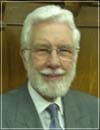
Stephen Hyde

How Great is His Goodness

Zechariah 9:17
Stephen Hyde May, 26 2013 Audio
0 Comments
'For how great is his goodness, and how great is his beauty! corn shall make the young men cheerful, and new wine the maids.' Zechariah 9:17

Sermon Transcript

Auto-generated transcript • May contain errors

100%
May the Lord be pleased to bless
our souls this evening as we consider his word together. Let's
turn to the prophecy of Zachariah chapter 9 and reading the last
verse, verse 17. The prophecy of Zachariah chapter
9 and reading verse 17. For how great is his goodness
and how great is his beauty. Corn shall make the young men
cheerful and new wine the maids." Zechariah was prophesying in
a difficult period in the history of Israel. And there had been
a great rebellion against the Lord. are turning away from the truth
of God. And yet he is able to come and
make such a wonderful statement as this, for how great is his
goodness and how great is his beauty. You might think, well
that's quite surprising. Well it is quite surprising,
but it is a very important statement. And I believe in the Church of
God, in the family of God, in the true Church of God, there
will be in their lives an acknowledgement of such a word as this. It doesn't mean to say that maybe
many times when things appear to be going in the wrong direction,
when things appear to be harsh and difficult to understand,
and easily we become rebellious and hard-hearted and wish things
were different and wish it hadn't occurred in the way it has. Well,
the problem is that we only see the present. The Lord knows the
end from the beginning. We only know that which we pass
through. We don't know that which is before us. But nonetheless
it's a good thing if during our pilgrimage through this life,
which it is. Remember a pilgrim is a stranger
and a foreigner in the land and that's where we are. It's a good
thing if as we're travelling through this land we are brought
to that position. It may be brought to a stand
where that we just stand and consider. And as we stand and
consider, we have to confirm such words as this. How great
is His goodness. How great is His goodness. The goodness of the Lord. You
know, we are surrounded with favours and blessings. I wonder
how often that we really express a statement like this. How great
is His goodness. Because it is. It is amazing,
the goodness of the Lord. And it is very undeserving, the
goodness of the Lord. And I believe that this statement
comes and crosses across every walks of life and every situation. Those who are rich and those
who are poor and those who are extremely poor, blessed with
the grace of God, will still confirm a statement like this,
how great is His goodness. We have, I'm sure, we all know
of many accounts in past days of people who have had virtually
nothing in this life and yet have been able to confirm how
great is his goodness. Perhaps those who have more in
this life often forget to make such a statement because so many
things they receive and take it as a course, a natural course
for them. But those perhaps who are naturally
very poor are very grateful for the least provision from the
Lord, and then they bow down and worship and say, oh, how
great is his goodness. Well, it's important, is it not,
that all of us, whatever our condition, whatever our situation,
are able to confirm a word like this in two aspects. The first aspect is perhaps our
natural life, and the second aspect should be our spiritual
life. And we shall need to be able
to confirm the truth of these words in both those statements. Well, we read together Psalm
31, a very beautiful psalm of David. In that psalm you may
have noticed that we read those words, O how great is thy goodness,
which thou hast laid up for them that fear thee, which thou hast
wrought for them, that trust in thee before the sons of men."
The important consideration there is, David says, Thou hast laid
up for them that fear thee, which thou hast wrought for them. That
means what God has done for them. Now my friends, God has done
everything for us. everything for us. People seem
to lose sight of the fact that everything that we do, everything
that we have, all our possessions are given to us from the Lord
God. It is Him that gives us everything. It is Him that makes things and
does things for us. And therefore how important it
is that we are able to cry out really, like David does here,
oh how great is thy goodness. We don't often hear that, do
we? You know, when people stand up to pray. Not often, is it? We break forth with such a word
as that. To begin our prayer perhaps,
oh how great is thy goodness. But yet it is so, isn't it? It
is so. Very often. We hear the very
opposite, don't we? People moaning and groaning,
but they should lift up their heads and view the wonderful
mercy and favour of the Lord. Because we have a God who is
so gracious and so full of compassion and we know that he does not
lay on us more than we are able to bear. We may think we've come
to the end of our tether, we can't bear anything else. But
don't forget, underneath are the everlasting arms. And we
can't sink beyond that. We may perhaps sometimes feel
that we're sinking and we're getting lower and lower. What
do you see? When we get low, we then fall
into the everlasting arms of the Lord. And He then supports
us. He doesn't let us disappear.
Oh how great is thy goodness, is that not true? For how great
is his goodness? You may not always realise that
that is so. It's because we don't recognise
the favour of the Lord. And yet you see the blessing
is to know the hand of the Lord is upon us for good. David tells us, blessed is the
Lord, for he hath showed me his marvellous kindness in a strong
city. And that was his statement, and
yet he says, for I said in my haste, I am cut off from before
thine eyes. We may sometimes say precisely
that in our haste. When we think we're cut off,
everything seems against us. There seems no hope for us. We're
cut off. Remember David had to say, he
said those things in haste. And we may have said those things
in haste. And then to realise, as it were
to take time to consider, take time to ponder what the Lord
has done You know, I remember that lovely hymn, count your
many blessings, name them one by one and it will surprise you
what the Lord has done. We need to be reminded, don't
we, of the blessings that we have. We're often fond of looking
around the other way and looking at the negative aspect, the things
which we haven't received. the blessings that we haven't
had, that we thought we should have had, the answers to our
prayers that we haven't received, that we thought we should have
received, and therefore we find ourselves getting more and more,
as it were, annoyed with God, more and more uptight, more and
more rebellious, instead of bowing down before the Lord, in our
own experience, praying, let thy work appear. Now you know
when God's work appears in our lives, in your life, in your
spiritual life, when God's work appears, then it will make a
wonderful change. And that change will produce
a number of things, and one of the things will be this, submission
to God's will. it will show us that we are,
as it were, just a lump of clay. And we have the illustration
in the Word of God that the potter, as he moulds that piece of clay,
he has a perfect right to mould that clay precisely as he wants
to. He may make it and change it
as it develops, but he has a perfect right to mould that clay as he
sees fit. Just think that our God, the
almighty ruler of the universe, has a perfect right to mould
us in accordance with his divine will and purpose for us. And therefore if we are brought
to that place of submission to the will of God, to be able to
say, the words with the Lord Jesus, nevertheless not my will
but thine be done. Now I believe when you and I
are brought to that position, it's a good place, it's spiritually
a healthy place, because we are walking with the Lord. We don't want to walk contrary
to God, do we? Because if we do, the Lord says,
if you walk contrary to me, I will walk contrary to you. And believe
you me, we prove that. I proved it myself. And you'll
prove it. You walk contrary to God. He'll
walk contrary to you. It won't be a pleasant path. You might think you're pleasing
yourself. You might think you're doing alright. I'll tell you,
you're fine. You come back with broken bones. You come back a hard way. If you backslide, it's hard to
climb back up again. Yes, the upward road is not easy.
So what a blessing it is to be brought to this place, to submit
ourselves unto the Lord, and to realise that the Lord has
ordained and is ordaining our path. And the path that you and
I are led in individually is a peculiar path. The Word of
God describes it like that. Peculiar path. A path that we
are not able to understand. But what we know is this. Like
the Apostle Paul said. The Apostle Paul had a very hard
life. He tells us, he said, and I know,
or he said rather, we know, that all things, all things, work
together for good to those who love God and to those who are
called according to his purpose and those all things will in
time produce a response like this how great is his goodness
how great is his goodness I believe the Lord then as it were takes
us by hand and shows us that if we walked our own path, that
it wouldn't have been good for us, and more importantly, it
wouldn't have brought glory to God. How great is thy goodness,
which thou hast laid up for them that fear thee, which thou hast
wrought for them, that trust in me before the sons of men."
It's very easy to verbalise trusting. It's very easy to say, well of
course I trust in the Lord. And then when things don't go
according to plan, when things don't work out in accordance
with our programme or our timetable, Do we still then say the same
things? Or are we then willing to realise
that trusting in the Lord means what it says? It means that if
we trust in the Lord, we trust Him for everything. Sometimes
the Lord makes us backtrack on statements we very glibly make. It's very easy to make statements. It's very easy to make perhaps
what we might term traditional statements. But you see when
the Lord comes and brings us into a situation, circumstances
which prove to us whether we are trusting the Lord or not. And if we are truly trusting
the Lord, then we shall be satisfied. with the direction that He leads
us in, even if sometimes it's in an opposite way. Contrary
to what we desire, contrary to what we thought, yet to know
that the Lord is in it. How important it is to know that
in our lives, the Lord is in it, the Lord is with us. We're
not walking by ourselves. You walk by yourself, it's a
lonely path. You walk with the Lord, it's
a very blessed path. Because you enjoy communion and
you enjoy union. And it is a little foretaste
of eternal blessings. And therefore, may we be able
to come and say, truly from our heart, these words, for how great
is his goodness. Well, we have that in the 31st
psalm. We have very similar words in
the 145th psalm. Again, we see how there's an
echo in these words. And again, it's David who makes
his statement. He says, earlier verses, verse 5, I will
speak of the glorious honour of thy majesty, and of thy wondrous
works, and men shall speak of the might of thy terrible acts,
and I will declare thy greatness. They shall abundantly utter the
memory of thy great goodness, and shall sing of thy righteousness. a statement by God's servant
David. Well, may we desire to be able
to echo such words as this. He goes on to say, the Lord is
gracious and full of compassion, slow to angry and of great mercy
The Lord is good to all, and his tender mercies are over all
his works. The Lord is slow to anger. Has
he been slow to anger with you and me? Well, if we're honest,
I'm sure he has. We look into our own lives. We
have deserved, have we not, the anger of the Lord. Perhaps we've
been amazed at the Lord's mercy, and the Lord's long-suffering,
and the Lord's compassion toward us. that he hasn't dealt with
us as our sins deserve. Indeed, as we read, we haven't
been cut off. We deserve to be cut off. And
therefore, as he says here, they should abundantly utter the memory
of thy great goodness. Again, as often we forget what
we actually read. A statement like this, which
tells us they shall abundantly utter the memory of thy great
goodness. Abundantly utter. Is that true
in our lives? Probably not. Probably not. Abundantly utter the memory of
thy great goodness. How good it is to remember the
Lord's great goodness. So we have that statement there,
great goodness. We have the statement here, great
is his goodness. And the Lord's goodness is great. It is great. How often we seem
to devalue the goodness of the Lord. We don't seem to appreciate
it as we should do. You know, we are here tonight
because of the goodness of the Lord. We're here tonight because of
that truth. You and I could have been born
in a dark country where the Gospels never reached. We could have never heard the
Gospels. Do we think tonight, oh the goodness of God in producing my life in a country
where the Gospel is preached. Perhaps more than that, born
into families where the Lord God is feared and honoured and
glorified and able to gather together to worship. Great is his goodness. Do we echo that tonight from
our heart? Is it really, really true? Well, it is really, really true.
But it's a wonderful blessing if you and I understand it. Now
then, just to think perhaps of the goodness of the Lord, just
in a few details. First of all, His goodness in
His mercy. Mercy is welcome news to those
who guilty stand. Have you prayed the prayer of
the publican? Have you prayed, God, be merciful to me, a sinner? Have you stood there, guilty
before a holy God, perhaps not able to lift up your head, just
like the publican? smote upon your breast and said, God be
merciful to me a sinner. If you have, thank God for that. Thank God for that, because that's
not a pharisaical experience. That's an experience brought
about, wrought by the Spirit of God. To come to that place
where you have to cry out, God be merciful to me a sinner. You'll mean it. It won't be a
vain prayer. You'll be crying for mercy. It's
the Lord's goodness, none less. How great is His goodness to
give us that cry for mercy. Bless God for that. If you can
look back in your life to remember, even tonight, look back to perhaps
a day, perhaps a night, when you had to cry to God for mercy,
Yes, it may have been walking down the road, it may have been
tucked in bed, whatever the situation, that came from your heart, a
cry for mercy. Now, it's the Lord's goodness
if he shows you his mercy, the Lord's goodness. And it's the
Lord's goodness, therefore, if you have received a call from
Almighty God, a call to turn around from your sinful way,
a call to bring you into the glorious light of the gospel,
that call from God, so that you are able to come and confirm
those words that the Apostle wrote to the Ephesians, and you
hath he quickened or made alive, who were dead in trespasses and
in sins. Has there been a movement in
your life Do you know a change? That whereas I was blind, now
I see. The light has shone. Your eyes
have been opened because God has come and called you. Here's goodness. Here's great
goodness. My friends, what great goodness
it is of the Lord to call us out of darkness into His marvellous
light. And when we are blessed with
that, It is a marvellous light. All things become new. Things
take on a different aspect. A change has occurred. It's because
of His goodness. Oh, how great is His goodness. Then we realise it is of His
grace. You see, the Church of God, we
look back. We don't know these things before.
As the Lord brings them into our life, we look back. And we
see His goodness, and we see His calling, and we see His grace. His grace is, of course, the
unmerited favour which we never deserved. You and I have never
deserved to be called by His grace. Never. It's because of
His great goodness. Oh, don't forget this, my friends.
Go home tonight. and ponder and consider His great
goodness. For how great is His goodness. And His great goodness in giving
you faith to believe. Faith to believe. It's not something
we possess ourselves. It's the gift of God. Faith to
believe. Have you received that faith
to believe? You may perhaps tremble to think
of it, but my friends, if God has opened your eyes, he's given
you faith to pray, he's given you faith to believe. And why? Because of his great goodness. Don't underestimate the greatness
of his goodness. Because it has brought about
that change From death to life, and that eternal life, how can
we evaluate eternity? We can't. It is so vast, the
greatness of it. Oh, the wonder, the mercy of
the Lord then toward us. Oh, what a blessing it is then
to possess these favours. How great is His goodness. His provision. for you and me
in our lives. How great is His goodness. For
everything that we have, how great is His goodness. And then, to look forward, to
look beyond our life, to realise that the Lord has gone to prepare
a mansion in the skies, a place in glory, reserved in heaven
for us. Oh, how great is His goodness.
Does it not come with power to us to realise the wonder of the
Lord, the mercy of the Lord, the favour of the Lord. How great
is His goodness. For how great is His goodness
and how great is His beauty. What does this refer to? It refers
of course to the Lord Jesus Christ. How great is His beauty. How great is his beauty? You may think, how does that
describe the Lord Jesus Christ? Well, until the Spirit of God
opens our eyes, we see no beauty in Christ. The Prophet Isaiah
tells us, he says in the 53rd chapter, for he shall grow up
before him as a tender plant, and as a root out of a dry ground,
he hath no form nor comeliness. And when we shall see him, there
is no beauty that we should desire him." In a natural way, there
is no beauty that we should desire him. How often people give a
wrong impression of the Lord Jesus. In the previous chapter
we read, as many were astonished at thee, His visage was so marred,
more than any man, and His form more than the sons of men. Naturally, there was no beauty
in Christ. But my friends, there is a beauty
in Christ. And there is a beauty in Christ
because He is so sufficient to meet our every need. And we have a picture of that
in the Song of Solomon, the Bride of Christ. speaks of her beloved, the heavenly
bridegroom. You may remember that the Lord
had come to her and knocked on the door and she was just too
comfortable to get out of bed and to open the door to her beloved. My friends, it would be sad if
that's so in our life. If we're just too comfortable
in the things of this world, Sometimes the Lord brings about
situations which stir us up. He brings things into our life
which produce a change. And so this Bride of Christ,
in her time, which was of course the wrong time, she then rose
up to open to her Beloved and her hands dropped with myrrh
and her fingers with sweet-smelling myrrh upon the hands of the lock,
and she opened to her beloved, but her beloved had withdrawn
himself and was gone." We must be very careful, don't we, not
to resist the work of the Lord, not to put our timetable to the
things of God. Here was then this Bride of Christ,
now She was disappointed and was gone. Her soul failed when
he spoke. I sought him but I could not
find him. I called him but he gave me no answer. You see the
desperate situation may be like that sometimes in our lives.
We've filled our life with other things. We've been deaf as it
were to the call of the Saviour. And then, when we thought we
would then seek after him, we find he's withdrawn himself and
gone. And therefore, she went about the city, the watchman,
the preachers refers to, and they found her and they smote
her. You know, that means that we
might come and listen to the preacher of the word where we're
smitten by it, the arrow goes home, we're convicted of our
position, And then the Church of God, she cried out to the
Church of God, O daughters of Jerusalem, if you find my beloved,
you tell me that I am sick of love. And they ask her this question,
what is thy beloved more than another beloved? O thou fairest
among women, what is thy beloved more than another beloved that
thou dost so charge us? Now, she is then able to describe
the beauty of the Lord. How great is His beauty. Now, it would be a great blessing
if you and I, in measure, can describe the beauty of the Lord. We haven't got time tonight to
go through this fifth chapter of the Song of Solomon, but there
are some beautiful expressions in it. And she starts off by
saying, My beloved is white and ruddy, the chiefest among ten
thousand. What do we think of Christ tonight?
What do we think of Christ tonight? Are you able to say, my beloved
is the chiefest among ten thousand and the altogether lovely. That's how she finishes up her
description of her beloved. His head is the most fine gold,
his locks are bushy and black as ravens. Well, it describes
Christ in all his thoughts and all his cares and his eternity,
his hair as black as a raven. We see the picture here, the
eyes are as eyes of doves, for the rivers are waters, wash with
milk and are fitly set, etc. Read it my friends, ponder it,
it's beautiful, it's glorious. And then she comes down and says,
his mouth, is most sweet. The words the Lord speaks, oh
how sweet they are. You see the beauty of Christ
as he speaks and his word comes to our heart and it shoots us,
it comes where we are. His mouth is most sweet, yea,
he is altogether lovely. If you saw nothing of any fault
in Christ, there was no complaint, no complaint, he is altogether
lovely. Oh, how do we view Christ tonight? You see, we don't think perhaps
sufficiently, do we? Oh, my friends, may we truly
think well of Him. May we have right views of Him.
And she says, this is my beloved, and this is my friend. Oh, daughters of Jerusalem, she's
speaking to the church, she's telling them, they'd ask her,
what her beloved was. She gives this wonderful description
and she says, this is my beloved and this is my friend, oh the
beauty of the Lord. Well, may we see the beauty of
the Lord in all that he's done, in all his glory, as we see him
suffering upon Calvary's cross to take away our sins. If we
come in that position, if we felt guilty before God, and we
cried out for mercy, we'll need a Saviour. And the Saviour is
the blessed Lord God Almighty Himself, who took upon Him our
human form and came into this sinful world and suffered and
bled and died, that He might redeem our souls. Now when the Spirit of God applies
these thoughts and these words to our soul, we will see a beauty
in Christ. the undefiled. Yes, he gave his
life, for we were so defiled, so unfit, so unworthy. I believe then, as we see him
suffering, all incarnate God could bear, with strength enough
and none to spare, shedding his most precious blood, on that
cross at Calvary, we shall bow down and say, worthy is the Lamb
that was slain. We'll see then a beauty in Christ. Well, tonight, may we ponder
these words. May we go away. May they remain
with you. Remain with you. How great is
His goodness and how great is His beauty. And may such words
come from our heart. May they be real. May they be
true. And may we therefore have much
cause to praise and to glorify the name of the Lord. Amen.
Broadcaster:

Comments

0 / 2000 characters
Comments are moderated before appearing.

Be the first to comment!

Joshua

Joshua

Shall we play a game? Ask me about articles, sermons, or theology from our library. I can also help you navigate the site.