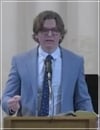
In his sermon, Eric Van Beek emphasizes the theological doctrine of the authority and reliability of Scripture as the sole foundation for the church. He argues that the church serves as the "pillar and foundation of truth" (1 Timothy 3:15), which means it does not determine truth but rather upholds the truth revealed in God's Word. Van Beek references 2 Peter 1:21 and 2 Timothy 3:16 to demonstrate that Scripture is God-breathed and divinely inspired, thus providing the necessary core for doctrine and practice. The sermon underscores the practical significance of adhering solely to Scripture, cautioning against the reliance on man-made traditions that diverge from biblical teachings. This view aligns closely with Reformed doctrines, particularly the principles of sola Scriptura and the sovereignty of God in both salvation and revelation.
Key Quotes
“The church doesn't decide what is truth. But that the church has been given the truth.”
“All scripture is God-breathed, and he’s useful for teaching, rebuking, correcting, and training in righteousness...”
“God is under no responsibility to save anyone.”
“Once the price is paid, the debtor must be released. Our debt has been paid. Our sentence has been served.”
The Bible teaches that the church is the pillar and foundation of truth, holding the scriptures as the sole authority for faith and practice.
According to 1 Timothy 3:14-15, the church is described as the pillar and foundation of truth. This means that the church is entrusted with the truth and should solely rely on Scripture for guidance rather than on human traditions or man-made doctrines. The church does not define what truth is; instead, it has been given the truth and is responsible for proclaiming it faithfully. Therefore, the validity of any church can be measured by its adherence to the Scriptures, which we believe to be a reliable and sole authority in all matters of faith and practice.
1 Timothy 3:14-15, 2 Peter 1:21, 2 Timothy 3:16
The Scriptures are affirmed as God's word because they are God-breathed and inspired by the Holy Spirit, as stated in 2 Timothy 3:16.
The reliability of the Scriptures as the very word of God is articulated in 2 Timothy 3:16, which states that all Scripture is God-breathed. This means that although human authors penned the words, it was ultimately God who inspired and guided them, ensuring that the Bible conveys His truth without error. Furthermore, 2 Peter 1:21 clarifies that prophecy in Scripture did not come from the will of man, but men spoke from God, carried along by the Holy Spirit. This divine inspiration is what sets the Bible apart from other writings and makes it an authoritative source for Christians seeking guidance in their lives and faith.
2 Timothy 3:16, 2 Peter 1:21
Grace is essential for Christians because it reveals our sinful nature and offers salvation through faith in Jesus Christ.
Grace is foundational to the Christian faith because it is by grace that we are saved through faith (Ephesians 2:8-9). Grace not only highlights the seriousness of our sinful condition, but it also assures us that God has provided a way of salvation through Jesus Christ. Romans 4:5 emphasizes that God justifies the ungodly by faith, underscoring the unmerited nature of grace—it cannot be earned but is freely given. In understanding grace, Christians recognize their utter dependence on God's mercy, which fosters a deeper appreciation for the sacrifice of Jesus, who fulfilled all righteousness and bore our sin.
Ephesians 2:8-9, Romans 4:5
The sovereignty of God is crucial in salvation because it affirms that God has the ultimate authority to save whom He wills and ensures the completeness of salvation through Christ.
The sovereignty of God is a cornerstone of the Gospel and provides comfort to believers. Daniel 4:35 affirms God's complete sovereignty, stating that He does as He pleases with the powers of heaven and the peoples of earth. This sovereignty means that salvation is entirely God's work; He alone enables individuals to come to faith in Christ (John 6:65). Without God's sovereign will, none could be saved, as we are naturally incapable of approaching Him. This truth also emphasizes the assurance that those whom Christ died for will certainly be saved, for God cannot demand more than what Christ has satisfied on behalf of sinners.
Daniel 4:35, John 6:65
Comments
Your comment has been submitted and is awaiting moderation. Once approved, it will appear on this page.
Be the first to comment!
