Bootstrap
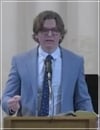
Bill Parker

Desires of the Heart

Psalm 37:3-6
Bill Parker May, 18 2014 Audio
0 Comments

Sermon Transcript

Auto-generated transcript • May contain errors

100%
Let's open our Bibles there,
if you've kept them open, to Psalm 37. I read this Psalm quite a bit. I've had it on my mind. Psalm
of David. Inspired by the Holy Spirit.
And I'm certainly not going to try to do the whole psalm this morning
because there's too many verses, but I'm going to basically preach
from verses 3 to verse 6. Trust in the Lord and do good.
So shalt thou dwell in the land, and verily thou shalt be fed. Delight thyself also in the Lord,
and he shall give thee the desires of thine heart. I've entitled
the message, Desires of the Heart. Commit thy way unto the Lord. Trust also in Him, and He shall
bring it to pass. And He shall bring forth thy
righteousness as the light, and thy judgment as the noonday.
And that's the passage I want to deal with just briefly this
morning. The whole Psalm is another passage of Scripture that basically
deals with the age old question of why do the evil men and women
of this world, the wicked, prosper? So many times we see that. And
why do the righteous, and of course the righteous would refer
to God's people, the sinners saved by grace, why do they seem
to suffer so much in this life? That's what that whole psalm
is about. And what a, you know, things like that, the only way
we're going to get any answers that make any sense at all is
to just go simply to God's Word. I thought about this, you know,
I mean, we could sit down and have a panel of the brightest
and the wisest men on earth and try to figure that one out, but
they'd come up empty. But God's Word simply, gives
us the answer. And the basic answer is, well,
you trust in the Lord. He knows what he's doing. And
I think, Ron, you mentioned this to me the other day, and I've
quoted this so many times from Brother Scott Richardson. And
Scott said this, and if you haven't heard this before, it'll really
float your boat. He used to say that all the time.
But he said, if we knew what God knew, we wouldn't change
a thing. Now get a hold of that one. That's
just something we can't enter into as pitiful, sinful, weak
human beings that we are. But if we knew what God knew,
we wouldn't change a thing. And you say, well, that's hard
for me to grasp. Well, let me put it in perspective for you
this way. I am the Lord. I change not. Therefore, you,
sons of Jacob, are not consumed. The fact that God doesn't change,
the fact that he is immutable, the fact that nothing needs to
change as far as God's purpose and plan, that's the security
of our salvation, folks. That's right. I'll put it to
you this way. Here's how far I take this. That
if anything in God's plan and purpose did change, we'd be doomed
forever. That's how far it goes. And so
when we look upon these questions of life, why does this happen? Why does that happen? Why do
the wicked prosper and the righteous suffer? I mean, you look at the
parable that our Lord taught of the rich man and Lazarus.
There's the rich man, an evil man, a selfish man, an ungodly
man. prospering in this life. Sumptuously,
the scripture says. I think that's the word it uses,
isn't it? Sumptuously. And there's a godly man named
Lazarus who trusts the Lord. A godly man out there laying
at the gate, sick, hungry, poor, the dog's licking his sores.
Now how do you figure that? You can't figure that. I can't
figure that. That kind of wisdom, that kind
of answer has got to come from God alone. But if that doesn't
put it in perspective for us, think about this. Consider this
question. How can a holy God save sinners
like us? Now that's the question of questions,
and there's no religion of man on earth that can answer that.
They think they've got the answer, but they don't. And that's why
this psalm is so dear to my heart. And like I said, I read it quite
often because I look around and I just can't figure things out.
Well, let me just give you some thoughts here. It all begins
with this. You know, he talks about in verse
one, fret not thyself because of evildoers, neither be thou
envious against the workers of iniquity. And we do that now. Don't say, well, that's not described. No. We do that. Why do you let
this happen, God? Why do you let them keep doing
that, God? Why don't you bless me? Why don't
you give me what I want? I think that way. And that's
fretting over evildoers. And he says in verse 2, for they
shall soon be cut down like the grass and wither as the green
herb. That's their end. You know, in another psalm, that
question comes forth, why do the heathen prosper? And he says,
well, consider their ends. Consider how it's all going to
end up. Because that's the issue. So what's the answer? Well, look
at it. Take each one. First of all,
he says, trust in the Lord. The word Lord there would be
Jehovah. What we would transliterate in
the English language as Jehovah. Who is Jehovah? He's the covenant
God. He's the God of all grace. He's
the God who makes promises or the God of promises by His grace. He's the God who saves sinners
by His grace. That's who Jehovah is. He's the
God who justifies the ungodly. Abraham believed God. This is
the God Abraham believed in. It's not a God you believe in
if you're a believer. So it starts off with the foundation
of what we call the foundation grace of faith in God. But it's God as He reveals Himself
in the covenant. It's God who reveals Himself
to sinners, His people, His elect, through the Lord Jesus Christ.
That's who the Lord is here. He is the God of creation, but
this is not simply talking about the God of creation. Should we
trust the God of creation? Oh, yes. But He's the God who
not only created this world, who commanded the light to shine
out of darkness when He said, let there be light. He's the
God who shines in our hearts to give the light of the knowledge
of God, the glory of God in the face of Jesus Christ. When you think about the covenant,
the covenant that David is referring to here is not the old covenant.
No sir. There was no righteousness for
man in the old covenant. Did you know that? He speaks
here in verse 6, he's going to bring forth thy righteousness.
Now hold on to that thought, I'm going to come to that. There
was no righteousness for man in the old covenant. You know
why? It was a ministry of death. It was the ministry of condemnation. Where righteousness is, there's
no death and condemnation. Scripture says. So the covenant
that David's talking about here is the covenant of grace. It's
the covenant that he laid on his deathbed. David laid on his
deathbed, 70 some odd years old. And he said, my house is a mess.
My family's a mess. My kingdom's a mess. God hasn't
seen fit to prosper me in that way. David knew he was fully responsible
for a lot of that mess because of his sin because of his evil
desires But he said this he said this is 2nd Samuel 23 5 and 6
he says he said God has made a covenant with me Ordered in
all things ensure now that tells you right there. He's not talking
about Sinai Because that wasn't ordered in all things ensure
as it applied to those people I mean, it was there ordered
and sure in what God gave it for. But as it applied to those
people, and he says, God has made a covenant with me ordered
in all things and sure. It's ordered by God. It's sure
because Christ is the surety. And he says, this is all my salvation.
That's my whole salvation. The state of my house and my
family, my kingdom, that's not my salvation. This covenant that's
ordered in all things, ensure in Christ, is all my salvation.
And then he said, this is all my delight, my desire. Remember
he said that? This is all my desire. You see,
there's nothing else for me, David said. You say, well now
David, why would you say there's nothing else for you? He's on
his deathbed. There's nothing else for him.
The pleasures of this world are, he's way past that. The riches
of this world, the glory of an earthly kingdom, he's way past
that. He's dying. He's getting ready to take his
last breath. And so he says, this is all my
desire. And you know, when I read that, my prayer is, Lord, don't
let me see that that is all my desire just at that point of
death. I'd like to see it now. I'd like to see it now. Sometimes
I lose sight of it. You do too, don't you? We all
do. But trust in the Lord. Now that
trust, that speaks of faith which is the gift of God. Resting in
Christ. Look down at verse 7. Rest in
the Lord. Rest in the Lord. Literally,
you might see in your concoissance, it says, be silent to the Lord. It's kind of like saying, don't
mouth off about these things. Just shut up and God's doing
His work. I know we're trying to figure
this one out. We're trying to do this, say
this, say that, speak this, speak that. Just rest in the Lord. Just be silent to the Lord. He
knows what He's doing. He's all wisdom. You know, it's
one thing to say we believe sovereign grace. It's another thing to
really believe it and live it, isn't it? And that doesn't make
us fatalists. No sir. He says up there in verse
3, trust in the Lord. And it says do good. But this
is faith, trust, leaning. Leaning on the everlasting arms. Resting in Christ. He's taking
care of things. Do you believe that? I do. He's taking care of things. We say, as a kid, we used to
sing that song, he's got the whole world in his hands. I didn't
really have any idea what that meant. But you know what? He
does. He's got the whole world in his hands. He's working it
out according to the purpose of his sovereign will. And again, it's one thing to
say it, sing it. It's another thing to believe
it, isn't it? God's on the throne. I remember Tim James said that.
Talking about when 9-11 happened. He said, you know, God didn't
vacate the throne that day. He stayed right there on that
throne. That's where He is. That's where He exists. Trust in the Lord. Well, trust
Him for salvation. Yes, sir. All my salvation. That's what David said. This
is all my salvation and all my design. I have no other hope
of salvation but in the Lord, in Christ. I'm a sinner, but
I'm washed in the blood of Christ. Nothing else will do it. What
can wash away my sins? Nothing but the blood of Jesus. Trust in the Lord for righteousness.
Did you notice there? Look down at verse 6. He says,
He shall bring forth thy righteousness as the light and thy judgment
as the noonday. That's an interesting verse.
Because you know what it tells us? We are not able to bring
forth our righteousness as the light or our judgment as the
noon day. Only God can do that. Did you
notice that? It says, he shall bring forth
thy right. You can't bring forth your righteousness. Now, why
is that? Well, what is your righteousness?
If you're one of God's people, my righteousness is Christ. Now,
we can do acts of morality and sincerity and charity, but that's
not our righteousness. We can do that. In fact, the
scripture says, let your light so shine before men that they
may see your good works. They can see those things. That's
not the light that it's talking about, incidentally, there. When
it says, let your light so shine that they may see your good works
and glorify your Father, which is the light is the gospel of
Christ, the glory of Christ. Now they can see your good works,
but here's the point. Your good works are not your
righteousness before God. The world may look at you and
say, well, I know that fellow's a Christian. He's over there
giving money to the poor. Or I know that fellow's a Christian.
He's going over there on a mission trip to build houses in Uganda
or somewhere to help people. And all those things are things
men and women should do. But when you do that, you're
not bringing forth your righteousness if your righteousness is the
right one. No, sir. Only God can do that.
And how does he do that? Through the preaching of the
gospel of God's grace in Christ. He brings it forth as he reveals
it to his people that I have no righteousness in myself. Christ
is my righteousness. Only God can bring that forth.
and my judgment. What is my judgment? My judgment
is the cross. That's where all my sins were
judged. They were laid on Christ, imputed, charged to Him. And
I have His righteousness imputed to me. Only God can bring that
forth in the preaching of the gospel and the power of the Holy
Spirit. You can't do it. Oh, I can tell people about it,
but that's how God brings it forth. But He'll make it real
to His people. He'll bring them to trust in
the Lord for all righteousness, for all forgiveness, for all
eternal life. And then he says, do good. Now,
what does it mean to do good in the scripture? Well, since
he begins by saying trust in the Lord, we have to understand
this, that the doing good here is not by man's standard, but
it's God's standard of doing good. We, again, see people doing
acts of morality and charity. And we say they're doing good.
That's what man says. But that's not what he's talking
about here. He's talking about that which is in God's standard.
And what does the Bible teach us about God's standard and about
doing good? Well, number one, it teaches
us that doing good according to God's standard is not natural
to any of us. In fact, it says there's not
one on earth who's good and sinneth not. It says there's none that
doeth good. No, not one. Secondly, it teaches
us that it's only the works of justified sinners. Those who
are washed in the blood of Christ and clothed in His righteousness.
How does it start out? Trust in the Lord. Thirdly, it's
the fruit of God-given faith. Remember, look down at verse
7 again. Rest in the Lord and wait patiently for Him. In other
words, all the works The good works, that's what the scripture
calls them, that believers do. They do it not seeking to make
themselves good or righteous, but because they are in Christ,
motivated by grace and gratitude. And then fourthly, the Bible
tells us that anything we do that is good, it's the fruit
of faith and the work and operation and power of God, not us. It's
God that worketh in us to do His good will and His pleasure. Paul said, the life that I now
live, I live by the faith of the Son of God. Is Christ in
you the hope of glory? Trust in the Lord and do good.
Well, that's what God commands his people to do. He never commands
you or me to do evil. He never commands you or me to
say anything evil. He never commands you and me
to even be suspicious of each other. In fact, if you want to
measure your love, measure your love by this, 1 Corinthians 13. Love thinketh no evil. No evil. Love believeth all things. All
things that glorify God and for the good of His people. And then
he says, so shall thou dwell in the land. Now for us in the
gospel, that's talking about dwelling continually and eternally
in the grace of God in Christ. His salvation, His family, His
fellowship. We'll dwell in His land, Canaan's
land, Beulah land, the land of God's grace, the land of God's
mercy, the land of God's eternal blessedness. That's all that we have as we're
blessed in Christ. And he says, and verily or truly
thou shalt be fed. We'll be fed with the bread of
life. Christ is the bread of life. We'll be fed with the word
of life. We're feeding on his word. That's
the key, isn't it? His word. Our souls are being
fed. And then look at verse four,
he says, delight thyself also in the Lord. Delight in the Lord. He is our delight. Delight in
his persons. The glory of God, the Father,
the Son, and the Holy Spirit. I thought about this, aren't
you glad you really can't explain the Trinity? I really am. I've said it before, and I know
Brother Mahan has said it for years. He said, you know, any
God you can explain that way as to his essence of his nature.
I mean, there are things we can explain because God explains
them for us. But I'm talking about as to the essence of his
nature. Any God you could explain as to the essence of his nature
and constitution of his persons. He's not God. What does the Bible
say? He's high above us. Who can figure
out God? But we delight in him. Our Father,
who art in heaven, hallowed be thy name. The Son of God incarnate,
Emmanuel, God with us, what a glorious person. Man of sorrows, what
a name for the Son of God who came. Ruined sinners to reclaim,
hallelujah, what a Savior. God-man. Word in flesh, human
flesh without sin. God the Holy Spirit, the power,
the unction from on high. How do we know we have that power?
that he indwells us because we trust in the Lord. Repent of
our dead works and idolatry. And then he says here, verse
four, and he shall give thee the desires of thine heart. Now
the desires of the heart. You know, when we consider the
desires of our heart, And what are the desires of our hearts?
What we want? Our heart, the mind, the affections, the will,
what draws us, motivates us, encourages us. Our thoughts. I want this, I don't want that.
Well, whenever we consider the desires of our heart, we have
to always seek the Lord's will above all things. That's what
we're doing. Now there are things in this
book that tell us plainly what God's will is and what God's
will is not as far as the revelation of His will. We call it God's
revealed will. The old theologians made that
distinction. Some people don't see much to
that distinction, but I think it's important. There is God's
sovereign will. And that's what I believe the
book of Deuteronomy chapter 29 and verse 29 calls the secret
will of God. And the secret will of God would
fall into this category. It's almost 11 o'clock. I probably
should have told you what time it is. But you all got watches. But it's almost 11 o'clock. Now,
I cannot tell you what's going to happen at 1101. God knows. And you know why God
knows? Well, he has this crystal ball
up in heaven, and he just looks down into it. No, that's not
how God knows. The Bible teaches that God knows
because He of His determinate will. He's already mapped out
and determined what's going to happen at 1101, 1102, 1103. He hasn't let you in on it. And
He hasn't let me in on it. That's His secret will. So I
can tell you that I am not responsible for what's going to happen at
1101. Only God is. But I can read here in the Bible,
and the Scripture says, Seek the Lord. Now that's God's revealed
will for His people. Seek the Lord. Worship the Lord. Read His Word. Feed upon His
Word. Run to Christ. Now that's God's
revealed will for me at 1101, 1102, 1103, the rest of my life.
Past, present, future. He's told me that. Now there's
no way that I can break God's secret will. Whatever is going
to happen is going to happen. You know, Henry used to tell
a story about the woman or man who comes and said, do you believe
whatever will be, will be? And he said, well, I don't believe
whatever won't be, won't be. God has a plan and a purpose.
And it's not what He's trying to do if you'll let Him. It's
what He's going to do. He said, I will do it. I'll bring it to pass. I purposed
it. That's what God said. You trust in the Lord. That's
who the Lord is. That's part of who He is. Alright? But He's
commanded us to love Him with all our heart, mind, soul. Love
our neighbors, ourselves. Somebody said, well, we don't
do that. We don't do it perfectly, but we're to try. Not to be saved
now. We can't be saved by what we
do. But that's God's revealed will. So whenever we consider
the desires of our heart, what we have to consider, number one
is, we need to seek the Lord's will above all things. We don't even seek our own will
above all things. We seek the Lord's will. What
we want and what we desire or what we may not desire may not
be the best thing for us. Or it just may be the best thing
for us. Can you tell the difference?
No. Neither can I. First of all,
we need to make certain from God's word that our wants, our
desires are not opposed to his revealed will. For example, in
the first In the Garden of Eden, we're talking about the desires
of the heart now. In the Garden of Eden when Satan tempted Eve,
what did it say about Eve there in Genesis chapter 3? And she
saw that the tree was good for food and something to be desired. Now her desire was an evil desire. How do you know that? Because
God said in the day that you eat thereof you shall surely
die. There's his revealed will. She desired something that was
against God's... She desired something that God
commanded her not to desire. People talk about David, King
David. Now we know that to want or desire
anything evil is against God's revealed will. David desired
Bathsheba, didn't he? That was an evil desire. He desired
another man's wife. He lusted, that was a lust, that's
an evil desire, concupiscence, Paul called it in Romans chapter
7. And David desired Bathsheba.
And listen, here's something that is mind-boggling when we
talk about trusting in the Lord. Even though David's evil desires
and actions were overruled by God's sovereign will, How do you know that? Well, the
birth of Solomon through whom Christ came according to the
flesh. Messiah came through that. Well,
did that make David's evil desire right? No. Did that make his
adultery right? No. That's one of the big reasons
that David had to cry in sorrow on his deathbed, although my
house be not so with God. David suffered severe consequences
in getting what he wanted. God gave him what he wanted,
and he suffered. And we know we should never follow
through with any evil desire. We should pray, Lord, deliver
us from the evil one. Deliver us from that. But secondly,
if we sincerely believe our desire is to glorify God, now think
about that. Whatever it is you desire, do
you desire to glorify God? That's what he's talking about.
He says in verse four, delight thyself also in the Lord, and
he shall give thee the desires of thine heart. We're not talking about, that's
not saying, well, if you do right, God will give you anything you
want. You know better than that. This is not that genie in a bottle
theology that they're coming forth with today. If you pray
hard enough, or if you start a prayer chain, or if you get
enough people involved, then you'll get what you want. No,
no, that's not what this is talking about. It begins with delighting
thyself in the Lord. I want to glorify God in whatever
I do, whatever I desire. And if we sincerely believe our
desires to glorify God in Christ and promote the salvation of
sinners and the edification of His people, think about it, then we have
no choice but to follow through with that desire. Over in Psalm
27, David said, one thing have I desired. That's the worship
in the beauty of his temple. Does this mean that everyone's
going to agree or disagree with our decisions? No. Does this
mean God will always bless us in our decisions and efforts?
Yes. But we don't know how. We don't
know how God's going to bless us. Sometimes we see some of
the greatest blessings of God from things that we see as injurious
and harmful. Sometimes we see things as bad
which are great blessings from God. But you know what? You can't figure those things
out and I can't either. And I'll even go farther. It's
even self-righteous for us to try to do that. Oh, really? Yes. I can't judge your heart. You
can't judge my heart. You remember when those false
preachers tried to judge Paul's heart and he said, it's a very
little thing to me that you do that because I don't really respect
you or have any regard for you. That's what he was telling them. In most cases, what we're doing
down here on this earth is groping in the dark, just trying to figure
it out, trying to be directed by the Lord in all these things. But I'll tell you one thing you
can bank on. It's all according to God's sovereign
will. He knows what we need and what's
best for us a whole lot better than we do. So what's the answer
for us? We'll look back at the Psalm.
Here it is, verse 5. Commit thy way unto the Lord. Trust also in Him, and He'll
bring it to pass. That's the answer. You say, well,
that's too simple. That's the problem with us. We
love to complicate things up, don't we? I told somebody when
I first moved to Albany back in 1985, I came up here, back up here. We
moved down there on June 3rd, 1985, and I came back up here
for the 13th Street Conference, and Henry had me preach. And
I got up here and I preached and boy, I was smoking. I mean,
I was laying everybody out. I thought this is the best sermon
that you all would ever hear. 85, how old was I in 85, 32? I mean, I really did. I felt
that way. And let me tell you something.
If you go back and listen to the message, I don't know if
Ron's got the tape of it or not back that far, but it was the
gospel. I remember it was the glory of
God. That was the title of the message from 2 Corinthians 4
and verse 6, the glory of God in the face. It was a gospel
message, but I thought I was just tearing it up. And I came
down out of the audience, I mean, out of the pulpit after the service
And Brother Cecil Roach was sitting there. And he came up to me.
And he looked at me with this perplexed look. And he said,
is all your preaching that complicated? And you talk about taking a young
man off his high horse and putting him down into the dust. He did
it. And I got angry, too, because
I wasn't that complicated. You know how we are. But I want
to tell you something. That was the best words that
any human being could have ever spoken to me about my preaching.
Because, I tell, I kid everybody, I said, since then, I've always
gone by the kiss method. Keep it simple, stupid. Talking
to me. That's right. But just one word
of admonishment from an elder. God used it. Would I have chosen
to do it that way? No. Was that the desire of my
heart at the time? Did you think I come down wanting
to hear Cecil Rhodes say that to me? Absolutely not. I would have rather him come
up and say, man, Bill, that's the best sermon I ever heard.
We need to print that. But he didn't do that. He said,
is all your preaching that complicated? I just thought, I hope not. But
you see, commit your way to the Lord. He knows what's best. God
used that man to teach me something that I needed to be taught. And then I went back and then
they had to put up with the young preacher and help him grow. That's how it happened. And then
the Lord brought me up here. And I know we've had some great
times and we still will. I'm not leaving tomorrow. But
you know what? Trust in the Lord and do good. My goal is to glorify Him in
whatever I do, wherever I am. How about you? That's the way
it is. Now, can we make mistakes? A bunch of them. Made a lot of
them. I'll make some this afternoon. But you know what? God's in control. And I can say from my heart of
hearts that my goal And whatever I do, whatever decision I make
is to glorify Him and to be used of God in some small way to promote
the salvation of sinners and to edify His people. That's what
I want. That's the desire of my heart
and I know that's the desire of your heart too. And God's
going to bless that, folks. He's going to bless that. He
says He will. And so we commit our way unto
Him.
Bill Parker
About Bill Parker
Bill Parker grew up in Kentucky and first heard the Gospel under the preaching of Henry Mahan. He has been preaching the Gospel of God's free and sovereign grace in Christ for over thirty years. After being the pastor of Eager Ave. Grace Church in Albany, Ga. for over 18 years, he accepted a call to preach at Thirteenth Street Baptist Church in Ashland, KY. He was the pastor there for over 11 years and now has returned to pastor at Eager Avenue Grace Church in Albany, GA

Comments

0 / 2000 characters
Comments are moderated before appearing.

Be the first to comment!

Joshua

Joshua

Shall we play a game? Ask me about articles, sermons, or theology from our library. I can also help you navigate the site.