Bootstrap
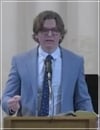
Bill Parker

Am I One of Christ's Elect

John 10:11-30
Bill Parker July, 28 2013 Audio
0 Comments
Bill Parker
Bill Parker July, 28 2013

Sermon Transcript

Auto-generated transcript • May contain errors

100%
Okay, let's stay right there
at John chapter 10. John chapter 10. Now, as I was thinking about
and began to study with this message, what I had in mind to
do is to go through the scriptures and see Some, if not all, I don't
think we can do them all, certainly not in one message, but some
of the identifications of the true people of God, those who
are truly saved by the grace of God. Scripture tells us that
while we're in this world, the visible church local assemblies,
even where the gospel is preached. I'm not talking about places
where the true gospel is not preached. That's a different
matter. That's Satan's tares. But even where the true gospel
is preached, that while we're on this earth, that there will
always be believers, true believers, and unbelievers, false professors.
And so two things that I believe that no true preacher wants to
do in his preaching is, number one, I don't want any of you
to go away from this place today or any other time that we're
met to worship and hear the Word of God preached if you're not
looking to Christ and trusting Him alone for all of your salvation. I know those are easy words to
say, and people say, well, surely I am, you know. I think we need
to think about that. I need to think about it now.
Don't just cast it off and say, well, I've done that all my life.
I was on the cradle row and all that. But if you're not trusting
Christ, if you're not pleading His blood alone for the forgiveness
of all your sins, and I'm talking to myself now too, if you're
not trusting His righteousness alone for your entire, complete,
perfect, eternal justification before a holy God, then I don't
want to be an instrument that helps you to walk away from this
place with any assurance of salvation. I do not want to give you false
hope. I don't want to give myself false hope. I want you to be
troubled in a spiritual way. I want the Holy Spirit. I pray
the Holy Spirit will trouble you. I can remember walking away
from this place troubled. And I thought it was the preacher,
but it wasn't. So I don't want to give anybody
false hope, including myself. The second thing that I don't
want to do is any of you who are truly looking to Christ for
all salvation, I don't want to give you any reason to doubt
or to be doubtful. Some say doubts are good. I don't
believe they are. I believe they're unbelief. We
have them. Don't get me wrong. I heard a preacher say one time,
if you don't have full 100% assurance of salvation all the time, then
you're not saved. That's not true. We're sinners
saved by grace. But you who are truly trusting
Christ, I want to be a comfort to you. I want to be an instrument
of comfort. pointing you to Christ even more.
I want you to have the peace that passes understanding from
the Word of God. Not because you heard me or because
I told you something, but because your salvation is grounded upon
God's testimony in Christ. I don't want to upset you in
that way. I want you to be calm and reserved
and with full assurance of faith. Now, that's scriptural now. I
know that, again, there's a lot of preachers say that's not scriptural.
Oh, yes, it is. I can show you that, but we don't
have time to turn to all these scriptures this morning, but
I'll give you one. You read it on your own. Hebrews
chapter 6, especially beginning there, verse 14 and 15. It's
where God commands us to have strong consolation in Christ. Not strong consolation in ourselves,
or in our denomination, or in the preacher, or in our profession
even. We're to hold fast our profession.
But what is our profession? Our profession is this, my hope
is in Christ and Him alone. We're to hold that fast. But
strong consolation in Christ. That's what I want. And so what
I did, I was going through the scriptures and I was trying to
see some of the ways that God's Word identifies and distinguishes
the true people of God as opposed to false professors. And there's
a bunch. There's a lot, isn't there? And I thought, well, that
just looks like a lot of messages. And that's good. Obviously, how
are the people of God identified in the Bible? Well, they're called
believers. Believers. Am I a believer? They've been
given the gift of faith, the scripture says, faith in Christ. Faith in Christ. You see, faith,
the faith of true believers is identified not by the degree
of faith you have, but by the object of your faith. Who is
it? Who is your faith in? There's weak faith and there's
strong faith. We're to grow in faith. Faith
grows. That's right. But here's the key to it. Here's
the key to assurance. It's not how much or what degree
of faith you have. It's in whom do you have faith. Under you therefore which believe
what? What's that say? He is what? Precious. Christ
is precious. You see, my assurance is not
even based on my faith. My assurance is based upon my
Savior, my Lord, my Redeemer, the Lord of my righteousness.
The lamb slain. My faith sometimes waivers. Does
yours? If you say no, you're a liar. I'll say that boldly. You're
lying to yourself, maybe. But sure, our faith waivers.
Circumstances. You know, it doesn't take much
for our faith to waiver, does it? It doesn't take hardly anything. I think about our Savior. You
know, people say today that Christ was made a sinner when He went
to the cross. You know, His faith did not waver one iota in His
cross experience. Boy, ours would, wouldn't it?
It doesn't take a cross for our faith to waver. Just a little
glitch will bring us down. But you see, He never wavers.
Christ never wavers. He's the same today, yesterday,
and forever. I am the Lord, I change not.
We change all the time. But He is the Lord, He changes
not. Therefore you sons of Jacob are not consumed. Now why are
we not consumed? Because He changes not. And that
means He changes not in His way of salvation by God's grace in
Christ. It's always the same. His mercy
is the same. His mercy endures forever. How
many times is that stated throughout the Scripture? His mercy endureth. That's the nature of His mercy.
It never stops. And I'm glad because we need
it all the time. I need it all the time, every
second. Certainly I need it at my worst moments, but I need
it at my best moments too. His grace reigns through righteousness. Who's? Christ. And that righteousness
never changes, never diminishes, it's never blemished, never contaminated. It's Christ, you see. The people of God are called
the righteous. Do you know if you're a true child of God, you
are righteous? That's what the Scripture says.
Well, how are you righteous? Let somebody follow you around
for a few days. And just watch your language
and your life and your attitude. Could they honestly, if they
knew what righteousness is, say, well, yeah, he or she's right?
You know better than that. How are we right? We're righteous
in Christ. We have His righteousness imputed,
accounted, charged to us. And that's how we stand before
a holy God, if we're in Christ. The people of God are called
the elect, or the election. Some people don't like that,
but that's what God's Word says. Really, think about it. Does
it matter what we like or don't like? If God's Word says it,
that's what it says. It's the election of grace. They're
called His brethren. I love that. In fact, it says
in Hebrews chapter 2 that He's not ashamed to call us brethren. Now, we're the kind of brethren
that any person ought to be ashamed of. in the eyes of God. But He's not ashamed to call
us brethren. You know why? Because He died for us. He cleaned
us up, washed us in His blood, clothed us in His righteousness.
We're called to sanctify. Those are set apart, made holy
in Christ. We're called the gift of God.
You say, where's that? John 6, 37. All that He hath
given me shall come to me. Hymn that cometh to me, I want
to know why it's cast out. We're called the church. You
know what the word church means? It means called out ones. We're
called out of the world. And that's another name for the
people of God. We're the called of the Lord.
Called by the effectual, invincible, irresistible calling of the Holy
Spirit through the preaching of the Gospel. We're the redeemed
of the Lord. He redeemed us with His own precious
blood. Not redeemed with corruptible
things, such as silver and gold. traditions, works, redeemed with
the blood of Christ. But here's another one, here
in John chapter 10. This is a beautiful one. They're
all beautiful, aren't they? When you think about them. And
that's the sheep. True children of God are called
the sheep of Christ. And so my question today, this
is the title of the message, am I one of Christ's sheep? That's
what I want to know. Am I one of Christ's sheep? Am
I one of these identified? He's talking about His sheep
here. This is the shepherd. Christ, the shepherd, the good
shepherd, the great shepherd, the chief shepherd. And I love
that analogy, don't you? I mean, that picture. He's the
shepherd of the sheep. So here's the shepherd talking
about His sheep. Well, what I want to know, am
I one of His sheep? Now there are many who think
they are, but who are not. I don't want to be one of those.
How about you? You know, there are people who think they are
His sheep, but they're not. Could I be fooled? Could I be
deceived? Jeremiah 17, we go back there
quite a bit. I think it's verse 9, it says,
"...the heart is deceitful, desperately wicked." Who can know it? Is
it even possible to know that I'm one of his sheep? Now, you
know, some people say, well, I really, I think I am, but you
really have to wait until judgment to find out. You know, over in
Matthew 25, I'm going to preach on that passage. Incidentally,
not today, but Matthew 25, he's talking about the judgment where
he'll separate the sheep from the goats. Now, the Bible teaches
there are sheep and there are goats. I remember one time in the preacher
school when we were doing our practices and preaching and we
had Brother Mahan and Cecil Roach and Brother Charlie Payne out
there with pads and pins, yeah, critiquing our preaching. That
made you feel real good, didn't it? And I made the statement,
I said, only God can take a goat and make him a sheep. Boy, Henry
got on to me about that. He said, no, that's not the way
it is. A goat's a goat, a sheep's a sheep. You know, when God saves
a sinner, He doesn't make a goat a sheep, He saves a lost sheep.
That's what He does, and we'll talk about that. But you know,
that's what the Scripture teaches, that there are goats and there
are sheep. And He says, I'll separate them at the end. So we're the people of God. They're
the sheep of Christ. Christ told a woman one time,
a Gentile woman, Matthew 15, 24, he said, I am not sent but
unto the lost sheep of the house of Israel. That's the sheep among
the Jews. He had some sheep among the Jews. And in his earthly ministry,
that's who he was sent to. That's who he went to. Over here,
look at John 10, look at verse 16. He says in verse 16, other
sheep I have which are not of this fold. That's of this Jewish
fold. Them also I must bring." They're
His sheep. He's got to bring them. He's
talking about the Gentile sheep here. They're sheep among the
Gentiles. I must bring them. They're His
sheep. They belong to Him. He redeemed them. He paid for
them. If you go and pay for something,
you expect to get it, don't you? And if you don't, there's an
illegality, isn't there? There's an injustice. But there
are people today who will tell you, well, Christ died for multitudes
that He don't get. Well, that's injustice. They
don't know the Scriptures. Psalm 23, that's one of the most
famous psalms. The Lord is my shepherd, I shall
not want. He maketh me to lie down in green
pastures. Is He really my shepherd? That's what I want to know. Now,
there are lots of reasons the people of God are compared to
sheep, and I'm not going to go into all those. I've heard some
really good messages on that. You know, the different characteristics
of sheep as an animal and how the people of God in a spiritual
way are compared to that. But the main thing is this. I'll
tell you something. If you know anything about sheep,
you know this. Sheep are helpless and defenseless. That's right. They're helpless
and defenseless. The Lord even referred to the
people of Israel as sheep having no shepherd. You know what a sheep without
a shepherd is? A sheep without a shepherd is
lost and doomed. That's what a sheep without a
shepherd is. Lost and doomed. You put a lion out there in the
wilderness, he pretty much wants to take care of himself. Put
a sheep out there in the wilderness, what's going to happen? He is
going to be somebody's supper pretty soon. He is a dead sheep. So when I look at this and consider
it, there are several questions to consider. Am I one of Christ's
sheep? Look at verse 11. Christ says,
I am the good shepherd. A good shepherd. Now there are
bad shepherds. They are false shepherds. Hold
on though. He says, I am the good shepherd and the good shepherd
giveth his life for the sheep. Now you want to know who Christ
died for? Right there it tells you. He
died for his sheep. Somebody says, was everybody
his sheep? No. The good shepherd giveth his life for the sheep.
Why did he give his life for them? Because God's justice demanded
it. For His sheep to be saved from
their sins, and that's what His sheep are, sinners, fallen in
Adam, ruined by the fall, coming under the judgment of
God's law for their sins. In order for these sheep to be
saved, somebody had to pay the price. Somebody had to die the
death. Somebody had to bear the curse.
Somebody had to come under the judgment of God. The wages of
sin is death. Somebody had to pay the wage,
had to take the wage. We earned it because of our sins. But the Bible teaches that the
Lord Jesus Christ, the Good Shepherd, took that account upon Himself. Took it upon Himself. He said
to the Father in the everlasting covenant of grace, He was made
our surety. That means he stood in our place
and said, if they owe you anything, put it on my account. That's the doctrine of imputation.
That's what that is. That's imputed sin, imputed to
Christ. Somebody said that impute is
not a legal term, it's an accounting term. And I was talking to Aaron,
my son, and he said, he's a CPA now, and he said, well, accounting
is a function of the law. I mean, the only reason that
you need to give an account is because the law says so. So it's
both. And that's what Christ did. He
came under the law. The Bible says He was made under
the law. That is, he was made accountable
to the law for the sins of his sheep. And what did he have to
do to redeem those sheep? What did he have to do to pay
that price? What did he have to do to satisfy the justice
of God? He had to die. The good shepherd
giveth his what? His life for the sheep. That's what it took. The life,
listen to this, the life of the shepherd is given for the sheep.
The life of God the Son incarnate given for His sheep. He died
that His sheep might live. Well, am I one for whom He died? Am I one of His sheep? That's
who He died for. He talks here in verses 12 through
13 about hirelings. They're false shepherds. They
run. They don't stay. They wouldn't
die for the sheep. They're just hirelings, you see.
They careth not for the sheep. But the Scripture says in John
13 and verse 1 that this shepherd, the Lord Jesus Christ, loved
his own unto the end. You ever see that in John 13?
He loved his own. Who are his own? His sheep. And
he loved them how much? To the end. To the end of what?
That word end there is an interesting word. It's the same word. that
our Lord spoke on the cross in John 19.30 when he said, it is
finished. The same word translated finished.
He loved his own, his sheep, unto the finishing of the work. And what did he have to do to
finish the work? He said, Father, into thy hands
I commend my spirit. What did he have to do to finish
the work? He had to cry, my God, my God, why hast thou forsaken
me? He had to suffer and bleed and die under the justice of
God, under the curse of the law. For the sins of the sheep accounted
to him. He paid our debt in full. That's what he did. And so look
at verse 14. He says, I'm the good shepherd
and know my sheep. He knew who he died for. They say, I don't know about
all this, but like I said, I've heard some pretty good messages
on this about shepherds and sheep and all that, but they said that
when the shepherds back then brought their flocks into Jerusalem
and into the sheepfold, and that's what he's talking about there,
you can read it back up in the first part of John 10, that each
shepherd had a particular call when the sheep, different flocks
were mixed in at the sheepfold, and that certain call That shepherd's
sheep would know that call and they'd come to that shepherd. Well, that's the way it is. He
knows his sheep. He knows them by name. His death
was not just some kind of a general amnesty out there, just some
kind of a blanket pardon, if you would cooperate. Let me tell
you something about sheep. They don't cooperate. They have to be gathered. They
have to be found and gathered and driven. Thy rod and thy staff
comfort me. That rod is the rod of gathering. You've seen a shepherd's rod
had that big hook on it? Had to reach up there and grab
that sheep and bring them in. He didn't just stand up and say,
here sheep, come on if you want to. No. They tell me sheep are too dumb
to do that, to come to the man. I don't know. But they hear that
voice, that's like that rod, that staff. But he knows his
sheep. And then he says he's known of
his. He said, I know my sheep and am known of mine. Now, this
is where it gets to. First of all, consider this.
Am I one of Christ's sheep? Let me give you these questions.
The first question would be something like this, and it may seem kind
of strange to you, but think about this. First of all, have
I ever been lost? Have I ever been lost? Well now,
what is it to be lost? It's to not know the way. You
ever been there? Ever been any place you didn't
know the way? You know what you were? You were lost. What is he talking about here?
Talking about the lost sheep. Remember he said the lost sheep
of the house of Israel. He had a parable about one sheep
who had gone astray. There were 99 in the fold, but
he went to get that one. It was a lost sheep. Isaiah 53,
you know the passage, the substitutionary servant of God, the suffering
servant, that's Christ, the prophecy of Christ, and talking about
who He suffered for, who He bore the sins for, and it says in
Isaiah 53 and verse 6, all we like sheep have gone astray. That's a lost sheep. They've
gone astray. They don't know the way. That's
what it is to be lost. They go a way, they go certain
ways, but it's not the way. Turn over to Romans chapter 3
with me. This passage here describes in
detail what the theologians call the total depravity of man. The
total depravity of man. All men are totally depraved.
All men and women born of Adam are totally depraved. Now, you
hear that term, totally depraved, total depravity, and it may conjure
up a lot of different images in your mind. Some people say,
well, now wait a minute. When you talk about depravity,
you're talking about somebody who's immoral and perverted.
You're talking about the child molesters, the pornographers,
and people like that. And yes, they are totally depraved.
But that's not what total depravity is in the Scripture. You see,
total depravity does not teach that I'm going to be as bad as
I could be, or you're going to be as bad as you could be. There are people who are totally
depraved who are, in the eyes of the world, according to the
standard of men, are moral and ethical, and even religious. I'll give you an example. I always tell people when they
read the book of Romans, read it through the eyes of the Apostle
Paul, who before he was saved, was named Saul of Tarsus, and
he was a very religious, ethical, moral, sincere, dedicated man,
and yet he was totally depressed. Total depravity, here's what
it teaches. It teaches that man fell in Adam to the point that
sin mars and contaminates everything we are and everything we do to
the point that we cannot be righteous before God, holy before God by
our works and our efforts. That's what total depravity teaches.
It has to do with the mind. It has to do with the affections,
and it has to do with the will, just as much. The will, people
talk about free will, and the reason they talk about free will
is because you make choices every day, don't you? I make choices
every day. And so they derive from that,
well, we've got a free will. Listen, listen, we're free moral
agents in that sense, but our wills can rise no higher than
our minds and our affections. That's right. I always use the
analogy of the wolf and the sheep since we're talking about sheep.
You get out on a green pasture and you build a fence, a circle,
and you put a sheep in that fence and that sheep's hungry. And
what's that sheep going to eat? The grass. Why? Because of his own free will
he chooses to eat grass? No, because he's a sheep. Now
put a wolf in there. Now what's the wolf going to
eat? He's going to eat the sheep. Why? Because of his own free
will, he just chooses to die. Well, I had sheep the other day,
today I'm going to eat grass. No! He's a wolf! And that's the
nature of a wolf. And that's why we sin. Because we're fallen, sinful
human beings. And we can do nothing but sin.
We can try to be good, but we still fall short. Look at verse
10 of Romans 3. It says, As it is written, there
is none righteous, no not one. Now what does that mean? Now here's Saul of Tarsus trying
to establish a righteousness by his works. But he doesn't
make it. He's always going to fall short.
That's what it means down there in verse 23. All have sinned
and come short of the glory of God. We can try to be good, we
can try to be religious, we can try to be moral, and we should,
but that's not going to make us righteous before God. Why? Because we're totally depraved. Our best works will always fall
short. You say, well, where's there
any hope for any of us? Christ is our hope, you say. That's why salvation... A fellow
looked at me one time. I was talking to him about this
very thing. We were having lunch. He looked at me. His eyes got
that big. He said, well, nobody can do that. Be perfect. And I said, that's right. That's
why salvation is by grace. And mercy. Not by works, you
see. He goes on, verse 11. He says,
there's none that understand it. There's the mind. Understand
what? We understand a lot of things.
You understand a lot of things. You get sick and go to the doctor.
You hope your doctor is a man or woman of understanding, don't
you? In the medical field. But let me tell you something
that nobody by nature understands. And that's how God saves sinners.
And you won't understand that until as 1 John 5 says, the Son
of God comes and gives you an understanding. That's the revelation
through the Gospel by the Spirit of God. And if you ever understand
that, and I'm talking about not just knowing it in your head,
I'm talking about being dedicated to it, sold out to it. David said, this is all my hope
and this is all my salvation and all my desire. He says, there's
none that seeketh after God. Now he doesn't say there's none
that seeketh after a god. Man seeks after a god. Man makes
gods unto himself. And they're usually like himself.
But the true and living God. Verse 12, look at this one. They
are all gone out of the way. Lost sheep, right there. A man down in Georgia told one
of our, the men down there in the church, he said, well I don't
ever remember a time that I wasn't saved. That's too long. Christ came to save the lost
sheep. The lost sheep. What the man
should have said, well I can't ever remember a time I haven't
been religious. Now you may be able to say that.
But my friend, we're born lost, aren't we? What way? Well, who is the way? Christ
is the way, the truth, and the life. No man cometh unto the
Father but by Him. It says, they all together become
unprofitable. There's none that doeth good.
No, not one. Jude wrote, they all have gone
the way of Cain. What's the way of Cain? That's
the way of salvation by works. Turn to Hebrews chapter 10. Here's
the way. Now, if you're one of his sheep,
He's going to bring you on the way. He's going to go out and get
you and bring you into the way. He's going to show you the way.
It's the way of salvation by the grace of God in Christ. It's
the way of forgiveness by the blood of Christ. It's the way
of righteousness by the suffering unto death, the obedience unto
death of the Lord Jesus Christ. And look here in Hebrews chapter
10, look at verse 19. He's talking about the death
of Christ for the sins of His sheep. And he says, having therefore,
brethren, boldness to enter into the holiest by the blood of Jesus,
the way into the holiest, by a new and living way. Not a dead
way. A way of salvation by other things. But a new and living way. Look
at verse 20. hath consecrated for us." The
way that Christ made for us. And what way was it? It's the
way of the cross. The way of the cross leads home.
Paul wrote, God forbid that I should glory save in the cross. It's
the way of the blood. It's the way of obedience. Not
yours, not mine, His. That's the way. consecrated for
us through the veil, that is to say, His flesh, that's His
body given for the sins of His people. And then, back over there in
John 10 and verse 14, you know, He says, I'm the good shepherd
and know my sheep, I'm known of mine. Do you know it's His
knowledge of us that keeps us in the way? The Lord knoweth them that are
His. Well, here's the second question. Have I heard the voice
of the shepherd? Look at verse 14 again. I am
the good shepherd, I know my sheep, and I am known of mine. Now how are you going to know
the shepherd? How are you going to know him? We'll read on. Verse 15. As the
Father knoweth me, even so know I the Father, and I laid down
my life for the sheep. There's the foundation of it
all, right there. He lays down His life for the
sheep. And the other sheep I have which are not of this fold, them
also I must bring. How are you going to know the
shepherd? He's got to go out and bring. He's got to reveal
Himself to you. Paul said in Galatians 1, when
it pleased the Lord to reveal His Son in me. And they shall
hear my voice. You're going to hear the voice
of the shepherd. And there shall be one fold and one shepherd. You see that? Look over at verse
24. It says, Then came the Jews round
about him, and said unto him, How long dost thou make us to
doubt, if thou be the Christ? Tell us plainly. And Jesus answered
them, I told you, and you believe not. The works that I do in my
Father's name they bear witness of me, but you believe not. Why
didn't they believe? Because they are not of his sheep. He said, Because you are not
of my sheep, as I said unto you. My sheep hear my voice, and I
know them, and they follow me." Do you notice how he said there,
you believe not because you are not of my sheep? Did you notice
he didn't say, you are not of my sheep because you believe
not? Do you see the difference? He said
you believe not because you are not of my sheep. My sheep hear
my voice. Now they hear the voice of the
true shepherd. You know there are a lot of voices out there, aren't
there? There are a lot of false voices. Matthew 7.15, there are
wolves in sheep's clothing. How do you know the difference
between a wolf in sheep's clothing and the voice of the true shepherd?
Well, a wolf in sheep's clothing points sinners to the broad road
that leads to destruction. What is that road? It's the way
of salvation by the works and the will of men. The true shepherd,
Christ, and His under-shepherds, His ministers, they point sinners
to the way of salvation by grace, the straight and narrow way.
Grace alone. Grace all the way. Grace 100%. Paul said that, he told the Ephesian
elders in Acts chapter 20, he said that when he departs, grievous
wolves enter among you, not sparing the flock. They'll preach salvation
in some way, at some stage, to some degree, by the works and
will of men, and not by Christ alone. How do we hear the voice
of the Shepherd Christ, the one true Shepherd of the sheep? Through
the preaching of the Gospel. which is the power of God unto
salvation, for therein is the righteousness of God revealed."
You see, the gospel will point you to Christ, who is the righteousness
of God. The gospel will not inspire you
or motivate you or threaten you to establish a righteousness
of your own. It will bring you to submission
to Christ, the one true shepherd, as the Lord your righteousness.
For Christ is the end of the law for righteousness to everyone
that believes. And that's the power of the Holy
Spirit. It's the preaching of the cross, the finished work
of Christ, to save me, to keep me, to bring me to glory. It's
the Word of God that comes in power. Have I heard the voice
of the shepherd? Not just with the physical ear,
but with the ear of faith. Christ told His disciples, blessed
are your eyes for they see, blessed are your ears for they hear.
That message that takes hold of our hearts, our minds, our
affections, our will, and brings us to the shepherd. Have I heard
the voice of the shepherd? Well, he said, my sheep hear
my voice. He said, I know them. They follow me over there in
another place. He said, they won't follow the voice of another.
And then thirdly, here's the third question. Am I by the grace
of God following the shepherd? Now look back at verse 27. He
said, my sheep hear my voice. I know them and they what? They
follow me. They follow me. He says, I give
unto them eternal life. It's a gift. You don't earn it
and you don't deserve it. And they shall never perish.
Did you see that? The sheep never perish. Here's
these fellas going around saying, well, you can be saved one day
and lost another. Well, the shepherd says the sheep
never perish. Now what he says? Isn't it black and white right
there? Neither shall any pluck them out of my hand. Now you
see the word man there is in italics. That means it was supplied by
the King James translators. And it's really not a bad translation
to put man in there. It's a masculine pronoun here. But literally it says neither
shall any pluck them out of my hand. The reason I always read
it that way is because years and years ago I was talking to
a fellow who was one of the charismatics who believes you can be saved
and then lost. And I quoted him this verse and
he looked at me and he said, see there it says, neither shall
any man pluck them out of my hand. But now the devil, he can
do it. It didn't really say any man,
it says any shall pluck them out of my hand. Now, first of
all, to follow Christ is to believe in Him for all salvation, looking
unto Jesus, the author and the what? Completer, finisher of
our faith. It's to rest in Him for all salvation,
for all forgiveness, for all righteousness, for all eternal
life and glory. It's to feed upon His Word. It's
to worship and to serve Him, because He's your life. It's
to seek to obey Him out of love and grace and gratitude. Not
to make yourself righteous, but because you are in Him. He is
your righteousness. 1 John 3, 9, Whosoever is born
of God doth not commit sin. What does that mean? It says,
for His seed, His children, His sheep, you might say, remaineth
in Him. He cannot sin because He is born
of God. You can't leave Christ. You can't
get away from Him. And then we're preserved by the
grace and the power of the shepherd. He said, neither shall any man,
any, pluck them out of My hand. Verse 29, My Father which gave
them Me is greater than all. Now that fellow said, well man
can't pluck him out of the Father's hand, but Satan can. Well it
says here, My Father which gave them Me, they're the gift of
the Father to Christ, In the everlasting covenant of grace,
God chose them and gave them to Christ. Put all the responsibility
of their salvation and eternal well-being on Christ. And He
says, my Father is greater than all. Well now, is He not greater
than Satan? You bet He is. Greater is He that is in you
than he that is in the world. And He says, and no, none, no
one is able to pluck them out of my Father's hand. I and my
Father are one. We read it at the beginning of
the service. Hebrews 13, 20, Now the God of peace that brought
again from the dead our Lord Jesus, that great shepherd of
the sheep, through the blood of the everlasting covenant.
There's the person and there's the work. The person of Christ,
that great Shepherd of the sheep, God in human flesh, and through
the blood of the everlasting covenant, His satisfaction to
God's justice to bring forth righteousness, and it says, make
you perfect, complete, in every good work to do His will, working
in you that which is well-pleasing in His sight through Jesus Christ,
to whom be glory forever and ever. Amen. Let's sing as our closing hymn,
My Savior, hymn number 226. My Savior.
Bill Parker
About Bill Parker
Bill Parker grew up in Kentucky and first heard the Gospel under the preaching of Henry Mahan. He has been preaching the Gospel of God's free and sovereign grace in Christ for over thirty years. After being the pastor of Eager Ave. Grace Church in Albany, Ga. for over 18 years, he accepted a call to preach at Thirteenth Street Baptist Church in Ashland, KY. He was the pastor there for over 11 years and now has returned to pastor at Eager Avenue Grace Church in Albany, GA

Comments

0 / 2000 characters
Comments are moderated before appearing.

Be the first to comment!

Joshua

Joshua

Shall we play a game? Ask me about articles, sermons, or theology from our library. I can also help you navigate the site.