Bootstrap
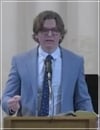
Bill Parker

The Glorified Realm of Salvation (Part 4)

Bill Parker May, 26 2013 Audio
0 Comments

Sermon Transcript

Auto-generated transcript • May contain errors

100%
All right, let's stay right there
in 1 Corinthians chapter 15 that Brother Joe just read. Starting
there in verse 35, two questions are posed there.
How are the dead raised up? And with what body do they come?
Now we're talking about the glorified realm or what I call the glorified
realm of salvation. That's the final destination
of all who are saved by the grace of God in Christ. The completion
of everything that God has purposed from eternity In the everlasting
covenant of grace through Christ, everything that God has purposed
coming to its final completion in the glorification of his people,
all together with Christ. It's going to take place at the
second coming of Christ. The scripture teaches that. We
read that in earlier messages. You can think of 1 Thessalonians
chapter 4 for one, but we've got others that you can study. And that's when every child of
God, every child of God, without exception, will be perfectly
conformed to Jesus Christ in every way. And I always have
to emphasize, we need to emphasize right now, we're just studying
this back in our Sunday school, 1 John 4, 17. You might think
about that verse where it talks about herein is our love made
perfect. That means brought to its goal,
love reaching its goal. That we may have boldness in
the day of judgment. That is, when we stand before
Christ at the judgment, we can have boldness, confidence, liberty. And it says, because as he is,
so are we in this world. Now, how are we like Christ in
this world? That's the issue there. Well,
he's our substitute. He's our surety. He's our advocate. We sang it. What can wash away
our sins? Nothing but the blood of Jesus.
We're right now in this world, we who are in Christ, we are
cleansed from all our sins by the blood of Christ. Now that
doesn't mean that sin is still not present. It's still present
in our lives. Sin still contaminates everything
we think, say, and do. It influences us. That's why
we have a struggle called the warfare of the flesh and the
spirit. But sin cannot condemn a child of God. Sin cannot be
laid to our charge. Blessed is the man to whom the
Lord imputeth not iniquity. Right now, that's not future
now. And Christ established it. God purposed it before the foundation
of the world and Christ established that on the cross. Our sins were
charged to Him. And He fulfilled the law, the
justice of God. And he established righteousness.
Right now, I stand before God, righteous in Christ. Not in myself,
but in Him. Now when we talk about this final
glory, that's when this old body, now some of us will shed this
body before then in death, physical death. And our spirits will go
to be with Christ. But in this glorification, we'll
receive a new glorious body. That's the question. How are
the dead raised up? And with what body do they come?
And he gives us seven words here that sort of help us a little
bit to understand what this glorified body's gonna be like. Told you
last week, I said one thing I know about this, or a couple things
I know about this subject is number one, there's a lot of
mythology, a lot of speculation, A lot of men seeking to describe
things that the Bible doesn't tell us. And secondly, there's
a lot of questions that won't be answered about this matter. But what does the Bible say?
Well, the first thing Paul establishes here in chapter 15 is that the
resurrection of the dead, he's talking about the dead in Christ,
talking about believers, those who die in the faith, The resurrection
of the dead is so vitally connected to the resurrection of Christ
himself that you cannot separate the two. You can't believe one
and not believe the other. That's what he said up here in
verse 16. Look at it. For if the dead rise
not, then is not Christ raised. You see, Christ was not raised
just for himself as a private person. He was raised as the
Savior, the representative, the quickening spirit of all his
people. He's the first fruits, he says. He said, if Christ be not raised,
your faith is vain. You're yet in your sins. If Christ
was not risen from the dead, that means he didn't do what
he claimed to do. That means he didn't satisfy
justice. He didn't put away sin. And if he didn't rise, then we're
still in our sins. And sin demands death, for as
death is upon all who have sinned. So the only way that we can conquer
this thing of death, really we can't conquer it, but the only
way this thing of death is conquered is through the death, burial,
and resurrection of the Lord Jesus Christ. Because his death,
burial, and resurrection means that sins are put away, paid
for, and righteousness is established. And that's what we must have.
So how is, how are the dead raised up? Well, the question, the answer
to that question is in these next verses, the dead are raised
up through death. Look at verse 36, we'll just
read through these verses I've already preached on, but look
at them. Verse 36 of 1 Corinthians 15. He says, thou fool, that
which thou sowest is not quickened, except it die. This new body,
is going to come to its completion and fruition through the death
of this body. And he says in verse 37, that
which thou sowest, thou sowest not that body that shall be.
In other words, that body that shall be. But bare again, it
may chance of wheat or of some other grain. Now he uses farming
as an analogy here, just like that seed. Remember I mentioned
that last week about those tomatoes that we're all waiting for, those
first summer tomatoes. When you put, you look at a tomato
seed and then you look at a full grown tomato, you know, they're
essentially they're the same thing, but they're not the same
thing, aren't they? I mean, you don't want to eat the seed, you
want to eat the tomato. And if you put that seed in the ground
and that tomato doesn't come up, you're pretty disappointed,
aren't you? Well, that's the way it is with these bodies.
This old physical, vile body, Paul called it in Philippians
chapter 3 in verse 20, this corruptible has got to die. And he says in
verse 38, he says, but God giveth it a body as it hath pleased
him, and to every seed his own body. We'll each have our own
individual bodies. and they'll be recognizable,
but they won't be the same. And he says in verse 39, all
flesh is not the same. Now he's talking about the nature
of existence here. There's one kind of flesh of
men, there's human nature. You see, that's what we're going
to be even in a glorified body. We're gonna be glorified spiritual
human beings. We're not gonna be, as the Mormons
say, little gods. We're not created divine. You
can't create divinity. If the nature of that being is
divine, that being has no beginning and no end. It's not created. He says, another of flesh, a
beast, another of fishes, another of birds, that's the animals.
There are also celestial bodies, verse 40, bodies terrestrial,
bodies in the heavens, bodies in the earth. The glory of the
celestial is one and the glory of the terrestrial is another.
He says there's one glory of the sun and another glory of
the moon. I mentioned last week how I love to think about Christ
being the son of righteousness. Malachi chapter four, I believe,
describes him in that way. The son of righteousness who
comes with healing in his wings. And then the moon, he says the
glory of the moon, that the moon shines with the reflected light
of the sun. That's like his people. we shine
in his glory. And he says, another glory of
the stars, for one star differeth from another star in glory. What
he's saying here is we've got to die. And then in this resurrection
body, we'll each have our own bodies recognized, but so much
better, so much more glorious, only beauty. That's all it is. No flaws, only holiness, no sin. perfectly conformed to the image
of Christ in every way, in our thoughts, in our attitude. And John said, it does not yet
appear what we shall be, 1 John 3 and verse 2. In other words,
we can't even begin to imagine what that's going to be like.
To live, not only just to live in a body that's free from all
pain and sickness and disease and aging and sorrow and weakness
and infirmity, but to have minds that never have a thought of
sin. That warfare of the flesh and
the spirit will be over because there will be no sinful flesh.
And in this illustration that he uses, there's diversity. There are differences. You're
going to be different from me, and I'll be different from you.
And there'll be variations, and we'll have our own identity.
And as our vile bodies, this corruptible body, becomes dust
and mingles throughout with all the dust of the earth. We mentioned this last week.
Some bodies disintegrate. Some bodies are blown up. Some
bodies are thrown into the ocean or in the river and they just
dissipate. The resurrection of our bodies
is not the equivalent of God putting together the greatest
jigsaw puzzle that ever was. What about bodies that are smashed
to pieces in a wreck or blown up in a bomb or burned to cinders
in a fire? What about those? Well, they
go to dust and ashes and it goes throughout the the wind and on
the earth and all of that? How do you suppose God is going
to get ashes thrown to the wind and how's he going to find the
right bones on the floor of the ocean and where's he going to
get the dust of somebody to determine from the dust of somebody else
and on and on? How's that going to happen? I
mean, do you think it's going to be like, you know, God looking
for that speck of dust that, oh, there's Bill Parker's ear.
Boy, I'm glad I found that or he'd just have one ear in glory.
But you know, some people think that way. But that's not how
it's going to be. It's not God putting Humpty Dumpty
back together again at all. The new spiritual body that we'll
have is not made up of the exact same particles of this vile body. No, sir. And the descriptions
shown here in the seed sown in the harvest is very, very important.
We look last week in John 12 where Christ even described his
own death as the planting of a seed, and that seed died and
bringing forth fruit, and the fruit was his own resurrection
in a glorified body. In his resurrection, his body
was some way transformed into a glorified body. The body he
was born with was in every way a human body without sin. You know, Christ in his incarnation,
and I don't understand all of this, and I can't explain all
of this to you. I can't give you the physiological
makeup of all this. I can't do it. But I know it's
so because the Bible says it. But Christ in his incarnation,
you know what? He was every way like us except
one. He was without sin. And he remains
so in that body throughout. He had sin imputed to him. He
was made sin, but he did not become a sinner. He was not contaminated
in his mind and in his spirit and in his heart with sin like
you and I are. He was not born in sin. He did
not contract sin. He ate with publicans and sinners
and yet he didn't catch the disease. Sin is not a germ. Sin is not
a vial of something. Sin is a principle. It's a powerful,
powerful principle within us that we're born with. But Christ
didn't have that. But now he ate. He got hungry. He got thirsty. He got tired. He became sorrowful. He wept.
All of those things that we go through, the weaknesses, he was
tempted like as we are, yet without sin. And yet when he died, he
came forth some way with a glorified body. Think about this in his
human body. Luke wrote that Christ grew in
wisdom, in stature, in favor with God and man. I can't explain
that to you. But when he went into the grave,
there was the burial of that old body. And what came out of
that grave was in some way a unique body. Some say it was like Adam
before the fall. But I don't believe Adam had
a glorified body before the fall. We'll have something better than
what Adam ever had even before the fall. In every way. We'll have a better, listen.
One way, Adam was righteous before the fall. but it was a human
righteousness, subject to change. Right now and in eternity, we
have the righteousness of God in Christ that can never change. You see, we've got something
better. And then Adam had a human body without sin before the fall. Well, we'll have a glorified
body. Now, I don't know how to explain all that. Christ's glorified
body was so much more glorious that you know that they did not
even recognize Him until He revealed Himself to them. And yet when
they knew who He was, His disciples, they saw Him as the same as He
was before with the same scars and the same features, yet glorified. Same, yet gloriously different. Now let's go look at this passage.
There's seven things about this resurrection body, seven words
that we'll look at. Look at verse 42. Here he's been talking about
the glory of each body. But now he says, so also is the
resurrection of the dead, verse 42. He says, it is sown in corruption. It is raised in incorruption.
Now that's the first thing we see about the glorified body.
It's incorruption, incorruptible. Now that just makes sense, doesn't
it? Think about it. We're saved by the grace of God
through the obedience unto death of an incorruptible Savior. Christ is our Savior. He's incorruptible. We'll be like Him. Secondly,
Our salvation even unto a final glory is based upon, grounded
upon the incorruptible blood and righteousness of the Lord
Jesus Christ. So our ground of salvation, our
ground of glorification is incorruptible. Peter said you're not redeemed
by corruptible things such as silver and gold, by the vain
traditions of men, but by the precious blood of Christ as of
a lamb without blemish and without spot. Thirdly, we're born again
by the incorruptible seed, the Word of God. The Holy Spirit
takes the Word of God and gives life. the Holy Spirit himself,
the third person of the Trinity. He's incorruptible. The Word
of God is incorruptible. I know men corrupt the scriptures
today, but they don't corrupt the Word of God, the true Word
of God. And then this incorruptible seed
given by the Holy Spirit gives us life. And then fourthly, In
Christ, we possess an incorruptible inheritance reserved in heaven
for us. So it only stands to reason that
we ourselves in glory will be incorruptible. Do you think God's
going to take a being who's corruptible and put him in the midst of all
that? Absolutely not. It's glory. That's why we call
it glory. Incorruptible. So he says, it's
sown in corruption. This body is corruptible. It's
sown in corruption. This body, this seed is planted
in the ground. But it's raised in corruption. No more corruption. No more death. No more disease. And then look
at verse 43. Here's the second word. He says,
it is sown in dishonor, it is raised in glory. Now that word
glory there is the opposite of dishonor. And what I believe
he's talking about here in dishonor is the contamination of sin that
brings dishonor to God. Brings dishonor to the image
of God in which we were created. You know man was created to glorify
God. But sin pervaded our lives and
pervades our lives. Now, as I said before, we're
already perfect in Christ, righteous in Him, sinless in Christ. But while in these vile bodies,
we still have the contamination of sin within us. Now again,
understand, when you're defining sin, you have to define it in
terms of the law of God. But in glory, we will be, listen
to this word, we will be impeccable. What does that mean? That means
we won't even be able to sin. Do you believe this? There are,
quote, theologians, unquote, who argue over whether or not
Christ was impeccable or not. They do. I don't believe Christ
was able to commit sin. He was impeccable. Why? Because
he's God. Doesn't the scripture say God
Cannot lie. He cannot lie. Why? Because he's truth. He's nothing
but truth. God cannot sin. Christ was incapable
of sinning. And I hear people say, well,
if that's so, then he couldn't have been tempted like me. Now
listen to me. Don't reason from the ground
up. Read the scriptures. Don't make
the mistake of thinking God is like you or me. Yes, He was tempted like as we
are, and I've shown you this. You know, just like, think about
Christ going up on the Mount of Temptation. You remember that?
After the Sermon on the Mount. Went up to the Mount of Temptation.
And the devil tempted Him. And He was up there 40 days,
and He did not eat. Now can you imagine how hungry
you'd be if you hadn't eaten in 40 days? You'd be like Esau
coming off the hunting field. Give me that pottage and I'll
sell you my birthright. The God-man was just as hungry
as you and I would be after having not eaten 40 days. The difference
is this. You and I have a fleshly power
within us that would readily, readily deny God in order to
relieve that hunger. He didn't have that at all. It didn't even enter his mind
to dishonor his father or disobey his father in order to relieve
that hunger. You remember when the devil tempted
him and he overcame the devil. So yes, he was tempted like as
we are except for one difference, yet without sin. He was impeccable. Think about this, talking about
having something better than Adam. Adam before the fall was
sinless but he wasn't impeccable or he wouldn't have fallen. will
be impeccable. And that's what he's talking
about here. This body is sown in dishonor. It's raised in glory.
A glorious state of being. Look at the next line in verse
43. Here's the next word. It is sown
in weakness. Boy, we know something about
that, don't we? Especially as we grow older. It's raised in
power. What kind of power? Power to
act, think, and do righteously. The power of sin is to bring
death, but the power of righteousness is to bring life. Christ's righteousness
gives and sustains life. In glory, we'll be able to obey
him perfectly without any hint of sin marring our thoughts,
our obedience at all. That's the power. Now that power
is not of ourselves, even in glory. It's the powers of God.
The powers of Christ. We're powerful in Him. But then
we'll be powerful in ourselves. But it's still His power. We'll
live throughout eternity by the power of God in Christ. Look at verse 44. Here's the
fourth word. He says it's spiritual. Look
here. He's sown a natural body. It's raised a spiritual body.
You see that? Now the next word Heavenly, but
hold on another related. I want to show you something
here. He says in verse 44. It's sewn a natural body It is
raised a spiritual body. So there's the there's the fourth
word this this glorified body is going to be a spiritual body
What is a spiritual body that doesn't mean a ghost? like like
you see on TV and reading in books and But this spiritual
body, it means this, it's without the hindrance and yearnings of
the flesh. Now, a born-again person, one
who's been chosen of God, redeemed by the blood, and regenerated
by the Spirit, is a spiritual person. How do you know you're
a spiritual person? We look to Christ for all salvation.
We don't look anywhere else. But then, having been raised
in a spiritual body, he says. A spiritual body. What's that
like? Fully spiritual. No warfare within. A completely realm of existence. Well, look on, he says, verse
44, there's a natural body and there's a spiritual body. Now,
none of us, if we're born again, we're spiritual. We have the
Holy Spirit within. He's given us a spirit. That's
the spirit of life. But we don't yet have a spiritual
body. We have a physical, natural body. And he says in verse 45,
so it is written, the first man Adam was made a living so. Now
you know who that's talking about. God created Adam. But the last
Adam, now Christ here is called the last Adam. He was made a
quickening spirit. Christ gives life. Life comes
from Him. And it's based upon all that
He accomplished in His death. Now that's the point I believe
is really being driven home here. Through the death of Christ. Through the death of His human
body. And I know, I know we can say
He died. He died. But it's only to be
attributed to His human body. Now He said that during the Lord's
Supper. He said this is my body which is given. for you. Through
the death of his body, this quickening comes forth. This life comes
forth. Look at verse 46. Howbeit that
was not first which is spiritual, but that which is natural. Adam
was created first. That is in his humanity, the
flesh. Christ, his human body was created
later. Now his deity wasn't created. That's why the scripture is very
careful. I love this about the word of God. It's very precise
and very true to every point of truth. It says in Isaiah chapter
9 verse 6, for unto us what? A what? A child is what? Born. Doesn't say a son is born, does
it? It says a child is born. What's that referring to? The
human body of Christ. And it says unto us a son is
given. That's the deity of Christ. So
there's a distinction there that's got to be kept in mind. Now why?
Because we want to be great theologians? No, because it's what this word
says. Now in Romans chapter one, for
example, it says he was made according to, he was made of
the seed of David according to what? According to the flesh.
That's his human body. But declared to be the son of
God with power. That's his deity. Now he's one
person. with two natures. And I can't
explain that to you. He's God-man. He will always,
he's God-man right now. When he comes back the second
time, he's God-man. And when we go to be with him
in glory, he's God-man forever. In a glorified body. But now
Adam was made first and then the humanity of Christ Then his
spiritual body in the resurrection look at verse 47 It says the
first man is of the earth earthy that is bound to the earth All
right, that's a this as Adam was created Even before the fall
he was bound to the earth. The second man is the Lord from
heaven and So in verse 48 says as the earthy such are they also
that are earthy bound to the earth And as is the heavenly,
there's the second word, or the fifth word that describes his
glorified, it's a heavenly body. What does that mean? Don't think
about geography now. Don't think about floating up
in the air. Now we may be able to float up in the air, I don't
know. But what I'm saying is that's not the point he's making
here. He's saying that we will be able to inhabit a heavenly
place, a spiritual place. We'll be able to exist in something
that is so beyond what we can imagine. We're not bound to the
earth. He says, such as are they also
that are heavenly. So he says in verse 49, and as
we have borne the image of the earthy, we shall also bear the
image of the heavenly. Why is that necessary? Verse
15, now this I say, brethren, that flesh and blood cannot inherit
the kingdom of God. Neither doth corruption inherit
incorruption. You see that? Now, when he says
that we're spiritual beings, heavenly beings, that doesn't
mean we're going to be floating on a cloud with wings and harps
and all that. And listen, you know, I don't
want to make fun of people and I don't want to be cruel or anything,
but this, you know, reading the paper, you know, that somebody
died and now they're an angel. No, they're not. They're not
angels and you don't get turned into an angel. An angel is another nature. He took not on Him the nature
of angels, but the seed of Abraham. That's the human body of Christ.
So you don't get changed from one nature into another nature
like that. You're always going to be a human
being. I'm always going to be a human being. But we'll be a
spiritual human being. And there's a multitude of things
that I don't know about that. But I know it's so. But no, not
wings and harp. I mean, you may put on a set
of wings and play a harp. I don't know. But that's not
what this is about. But you'll be able to live a
heavenly spiritual existence forever and ever and ever and
ever. Suited to eternal life. Suited to eternal life. We received
a natural body in Adam. But we'll receive a spiritual
body in Christ. And I suppose that we can say,
according to the scripture, that it's gonna be like him in his
resurrection. And we know from scriptural testimony,
for example, that Christ, in his spiritual body, his glorified
body, he was able to appear and disappear, so probably will be
able to. He was able to walk through walls,
transport himself from one place to another just by thought. That
may be the case. Tell you this though, he could
eat and he could speak, couldn't he? What was it he ate? Fish and wild honey or something?
Fish, I think that's what it was. And he spoke to his disciples. And then he showed them the scars
in his hand. Somebody asked me one time, said,
will we still have the scars of this life on our spiritual
bodies? I don't believe we will. You
say, well, why did he have the scars? Remember he told Thomas,
he said, look, here's the scars in my hands, my side. Well, the reason his scars were
still visible, I believe, had something to do with what we
see in Revelation 5. Would you turn there with me? Revelation 5. This is a vision
that the Lord gave the apostle John I believe of glory in heaven,
the saints in glory. And listen to it. It says in
verse 1 of Revelation 5, he said, I saw in the right hand of him
that sat on the throne a book written and on the backside sealed
with seven seals. This is the book of God's providence
and God's purpose. I saw a strong angel proclaiming
with a loud voice, who is worthy to open the book? and to loose
the seals thereof. And no man in heaven, now you
hear that? No man in heaven was worthy to
do this. He says, nor in earth, neither
under the earth was able to open the book, neither to look thereon.
And John said, I wept much because no man was found worthy. Now
that's us, isn't it? Anybody in here worthy to open
that book? No. to work the works of God,
to do the purpose, to perform the
purposes and will of God perfect, no. He says, he said that nobody
was even able to look there on. That's the sinfulness of man,
you see. And it says in verse five, look
at it. It says, and one of the elders saith unto me, weep not,
behold. Now here he comes. Here comes
the one, the only one who's worthy. Here he is, the lion of the tribe
of Judah. Boy, that's reaching back in
the Old Testament, isn't it? The lion of the tribe of Judah.
That's reaching all the way back to Genesis 49. That message was
first preached by Jacob on his deathbed, Genesis 49. He said,
the root of David hath prevailed to open the book and to loose
the seven seals thereof. That's Christ. And then it says
in verse 6, I beheld, and lo, in the midst of the throne, and
of the four beasts, and in the midst of the elders stood...
Now look at it. Stood what? A lamb as it had
been slain, slaughtered, sacrificed, crucified. having seven horns,
seven eyes, which are the seven spirits of God sent forth into
all the earth. And he came and took the book
out of the right hand of him that sat upon the throne. And
when he had taken the book, the four beasts and four and 20 elders
fell down before the lamb, having every one of them harps." Well,
we do have harps, there you go. But we don't have wings, all
right. But he said, harps and golden vials full of odors. He
says, which are the prayers of the saints and they sung a new
song saying thou are worthy to take the book and to open the
seals thereof for thou was slain. I believe in eternity in our
glorified state we will always remember Christ as the Lamb that
was slain. And He is the reason that we
exist. You say, well how could we remember
that and not have sin? You know, I don't know. But I know it's up. For thou
hast redeemed us unto God by thy blood out of every kindred,
and tongue, and people, and nation, and hast made us unto our God
kings and priests, and we shall reign on thee worthy as the Lamb
that was slain." You see, his scars, now listen to what I'm
saying, the reason I believe in his spiritual glorified body
that those scars remain is because his scars are badges of honor,
and perfection, and righteousness, and signify that we are what
we are forever and ever and ever by the grace of Almighty God.
Mercy and grace in Him. His scars are beautiful. Now
the scars that we bear today, they're not badges of honor,
are they? Now don't get me wrong, I mean if somebody gets a scar
trying to save somebody's life or in a war or something, I understand
that, but still, Still, the fact that we even have to be put in
those situations is because of sin. Why is there even war? It's
because of sin. Our scars are not badges of honor. They're emblems of sin. And that
will be gone. But His scars, the blood of the
Lamb, His scars are our salvation. You see that? Look back at 1
Corinthians 15. Go on to the sixth word. Look
at verse 51. He says, Behold, I show you a
mystery. We shall not all sleep, but we
shall all be changed. That is, some of us are going
to be alive when Christ comes back again. That doesn't mean
that this body is not going to die. It still has to die. That's
what he's saying here. We shall not all sleep, but we'll
all be changed. He says in verse 52, In a moment,
in the twinkling of an eye, At the last trump, for the trumpet
shall sound and the dead shall be raised incorruptible and we
shall be changed. Here's that word incorruptible
again. Verse 53, for this corruptible must put on incorruption and
this mortal must put on immortality. There's the sixth word, immortal.
What does that mean? That means not destined for or
capable of death. We cannot die. Now why is it
we cannot die? There's no sin. The wages of
sin is death. You say, but the gift of God
is eternal life through Jesus Christ. We won't even be capable
of death. It's not just that we won't die, we won't even be
capable of death. No sin, only death. Righteousness
in Christ eternal life in Christ and then verse 54 So when this
corruptible shall have put on incorruption and this mortal
shall have put on immortality Then shall be brought to pass
the same that is written death is swallowed up in victory Now
who gained that victory? We'll look at verse 55 and that's
the seventh word victorious right there victory victorious Victory
over sin, Satan, the flesh, the world, and death. And it says
in verse 55, O death, where is thy sting? O grave, where is
thy victory? Well, it's not there. He says
in verse 56, the sting of death is sin, and the strength of sin
is the law. You know what he's teaching there,
don't you? The sting of death is sin. In other words, the reason
you die is sin. That's the whole problem. And
he says the strength or the power of sin is the law. How in the
world can you say the power of sin is the law? Well, what does
the law do where it finds sin? Condemned, dead, justice. But what if the law of God shines
its searchlight throughout the hearts of men and finds no sin? There can be no condemnation.
That's what the scripture says. There is therefore now no condemnation
to them which are in Christ. Why? Because he kept the law.
He satisfied justice. He brought in an everlasting
righteousness of infinite value that can never be corrupted,
diminished, or taken away. Who shall lay anything to the
charge of God's elect? It's God that justifies. Who
can condemn us? It's Christ that died, yea rather
is risen again, seated at the right hand of the Father, ever
living to make intercession for us. So the strength of sin is
gone. The power of sin to condemn the
children of God is totally gone. Why? By the death of death and
the death of Jesus Christ. So he says in verse 57, but thanks
be to God which giveth us the victory See, victory is something
we're given. We don't earn that. We don't
do that. We're given it, and it's given through our Lord Jesus
Christ. He's the victor. There's the whole reason for
our being. And therefore, my beloved brethren, be ye steadfast,
immovable, always abounding in the work of the Lord for as much
as you know that your labor's not in vain in the Lord. Now,
I'm going to tell you something. Our labor in the Lord will not
earn salvation. It will not earn rewards in heaven. It will not earn glory. But it's still not in vain. Because
it's the product of a victory. Won for us by the Lord Jesus
Christ and it will redound to the praise of the glory of God's
grace. That's why it's not in vain.
All right.
Bill Parker
About Bill Parker
Bill Parker grew up in Kentucky and first heard the Gospel under the preaching of Henry Mahan. He has been preaching the Gospel of God's free and sovereign grace in Christ for over thirty years. After being the pastor of Eager Ave. Grace Church in Albany, Ga. for over 18 years, he accepted a call to preach at Thirteenth Street Baptist Church in Ashland, KY. He was the pastor there for over 11 years and now has returned to pastor at Eager Avenue Grace Church in Albany, GA

Comments

0 / 2000 characters
Comments are moderated before appearing.

Be the first to comment!

Joshua

Joshua

Shall we play a game? Ask me about articles, sermons, or theology from our library. I can also help you navigate the site.