Bootstrap
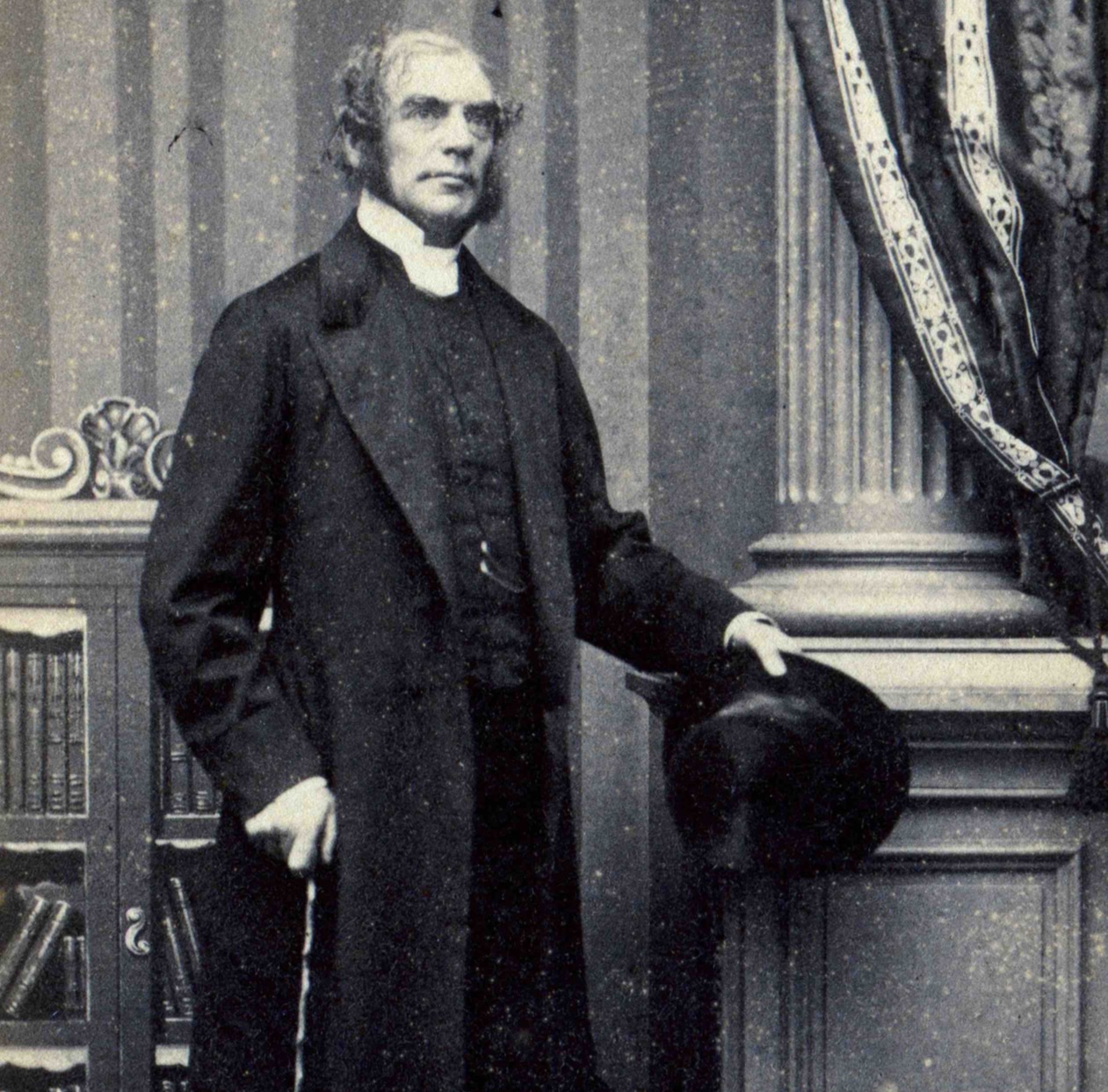
Bill Parker

The Bitter Sweet Truth

Jeremiah 15:10-21
Bill Parker May, 5 2013 Audio
0 Comments

Sermon Transcript

Auto-generated transcript • May contain errors

100%
Turn with me, if you will, to
Jeremiah chapter 15. But I also want you to look back
at Revelation chapter 10 that Brother Stan just read. And I
want to show you why I had him read that passage and the connection
that I'm going to make here in the prophet Jeremiah. I've entitled tonight's message
the bittersweet truth the bittersweet truth and that title suggests
that the ministry of truth the ministry of the gospel message
has its sweet side and its bitter side and I believe that's explained
in throughout the scriptures but It's described here, look
at Revelation 10 to start off with. He speaks of an angel here,
it's a messenger of God, a messenger of Christ, having the word of
God, it's called a little book. And that's the preaching of the
truth of the gospel, of God's free and sovereign grace. And
this angel sets his foot upon on the land and upon the sea
which describes that this is a ministry that covers the whole
earth every part of the earth and you know the Lord himself
when he spoke of the days of the end in Matthew 24 and Mark
13 and also in the book of Luke he said the gospel must first
be preached in all the world and then the end will come And
that's one of the reasons I believe that we're certainly closer to
the end than we ever were. That's obvious, but I believe
we're real close because of that. Because you think about the means
and the methods that God has given us and enabled us to get
the gospel out around the world, especially the internet. And
it's something amazing that I think about a couple of years ago when
we were having a conference and Brother Jim Byrd was here and
he preached here on a Saturday morning. And Nancy called him
from Michigan and said his son, David, in Hiroshima, Japan, watched
him on the internet live as he preached that message. Isn't
that amazing? I mean, that's just amazing to me. And so we
have those means. And that's what this passage
here is talking about in Revelation, the ministry of the gospel in
the world. It says in verse 7, look at Revelation
10 in verse 7, it says, But in the days of the voice of the
seventh angel, when he shall begin to sound, the mystery of
God should be finished. And that is the revelation of
God. And there's a lot of different, you know how the book of Revelation
is, a lot of people have different ideas. I believe what he's talking
about is the bringing in of the last one of God's people at that
stage. It said, As he hath declared
to his servants the prophets, Now that includes Jeremiah. The
point there is that the way it is here, as described in Revelation,
in the ministry of the gospel throughout the world in the last
days, that it's always been the same. And you know, we forget
that. I mean, I've heard people actually
say, boy, I wish I could be living back in the Bible days. No, you
don't. You don't know much about the
Bible days if you wish that. I'm telling you now, it was no
happy, happy time. They just weren't everybody walking
on clouds and rejoicing. I think about moments of time,
like Pentecost. Now that must have been something
to see, 3,000 souls coming to know Christ. being brought by
the power of God to know when to hear him speak in the gospel
in other languages and hearing the gospel and that must have
been a time but you know that was a very brief time you know
that wasn't the whole history of the New Testament Church in
its beginnings and then then later on 5,000 so that must have
been something to see but you know right on after that Stephen
was stoned the church was dispersed throughout the land. So think
about it that way. So those were brief moments of
time and certainly it would have been a marvelous thing to be
there to see something like that. But what marked the times was
the preaching of the truth in a world of opposition. We'll
look here in verse 8 of Revelation 10. He says, And the voice which
I heard from heaven spake unto me again and said, Go and take
the little book which is open in the hand of the angel which
standeth upon the sea and upon the earth. And John says, I went
unto the angel and said unto him, give me the little book.
Now this is the word of God, the gospel. And he said unto
me, take it and eat it up. And it shall make thy belly bitter,
but it shall be in thy mouth sweet as honey. Now the eating
of the word of God is a metaphor for the conviction of that word. It's hearing the word, receiving
it by God-given faith, by the power of the Holy Spirit, and
being convicted. That word becomes part of you,
just like good food nourishes your body. It becomes part of
you in that sense. And that's what it is to eat
the word of God. It's the same kind of metaphor
that our Lord used when he said eating his flesh and drinking
his blood. He wasn't talking about the heretical
doctrine that the Catholics have turned it into transubstantiation
or cannibalism. It wasn't that at all. But what he's talking about is
believing on him. Believing in the Lord Jesus Christ and his
word and his spirit his power becomes so much a part of us
under conviction That that we can't we can't get rid of we
don't want to get rid of it But but we can't lose it and we can't
get away from it because it's part of us It's like our heartbeat
you might say and so he said you take but he said it's going
to make your belly bitter But it shall be in thy mouth sweet
as honey And now what's he talking about there? Well, some commentators
say he's talking about that conviction there, making your belly bitter
in the sense of that conviction of our sin, bringing us down
to conviction of sin. And there is a sense of when
you could use that metaphor to describe that, but I don't believe
that's what he's talking about here, and I'll show you why.
Look at verse 10. He says, and I took the little book out of
the angel's hand and ate it up. And it was in my mouth, sweet
as honey. And as soon as I had eaten it, my belly was bitter.
And here's verse 11. He says, and he said unto me,
thou must prophesy again, preach it again before many peoples
and nations and tongues and Kings. Now, what I believe he's talking
about here is the preaching of the gospel in a world of opposition. And the next chapter deals with
the two witnesses, you remember, who were killed over their preaching
of the gospel. So the context seems to me that
he's talking about the ministry. And what he means is sweet in
your mouth. There is not a more beautiful, glorious message,
truth that we could ever encounter than the gospel of God's free
and sovereign grace in Christ Jesus. To preach Christ, how
sweet is that? As it comes out of my mouth,
you know, that's the sweetness of it. What a message. I mean,
this is something. The preaching of the terms of
an eternal covenant, the everlasting covenant of grace, the glory
of his person, the greatness and power of his finished work
to sinners like us, what a sweet, sweet, sweet message. But what
happens as soon as we see the reaction of the world, the natural
man? It just tears us up, doesn't
it? I mean, we even get emotional
about it. And whenever you see that term,
the belly or the bowels used, that's what they're talking about,
the sorrow. It's an emotional thing. And they use those terms
to describe that because it does affect you. It affects you physically,
doesn't it? When you see opposition to the
gospel, especially from your family. Isn't that right? I mean, your family. When people
that you naturally love, And you see such opposition from
them because the natural man receiveth not the things of the
Spirit of God. It just wells up in you such
sorrow and pain. And that's what I believe he's
talking about here in Revelation 10. Well, now that's the subject
back here in Jeremiah 15. He had spoken of the certainty
of God's judgment against sin in the first nine verses. Look
back here with me. And then in the second place
here, beginning at verse 10, he gives Jeremiah's response
to that. Now, Jeremiah is a human being,
and we should never think of any of these preachers of the
gospel or the prophets of God as anything more than human beings. Now, they were blessed human
beings, sinners saved by grace, but they were not superhumans,
even those who could perform miracles. That was the power
of God, not the power of the man. Isn't that right? Those
who endured such pain and long-suffering and such pain and suffering with
their long-suffering, that's still the power of God and not
man. And Jeremiah, he was a sinner saved by grace. And here's his
response to it. Look at verse 10. First three
words. Look at it coming out of his
mouth. Woe is me. Now here's a man. A man who is
blessed above all in Judah in that day. Other than just a few
others, a remnant. And yet, he says, woe is me. Listen to it. He says, my mother,
that thou hast born me a man of strife and a man of contention. Now who is he a man of strife
and contention to? Not the people of God, look at
it, to the whole earth. That's the earth dwellers. You
say that sounds proud to say that. No, now listen to me. We're
all by nature earth dwellers. By nature we're born. We fell
an atom and we're born dead in trespasses and sins. We have
no spiritual life, no spiritual connection to God in ourselves
and we're connected to this earth by nature. Isn't that right?
And that's who he's talking about here. Woe is me, my mother, the
sorrow of my mother, he's saying. that thou hast borne me a man
of strife and a man of contention to the whole earth." He says,
I have neither lent on usury nor have lent to me on usury. Now, he's not just talking about
borrowing and lending there, that's part of it, but what he's
simply saying there is I haven't done anybody wrong and they haven't
done anything wrong to me, yet every one of them doth curse
me. Now, what he means by that is
this, in the preaching of the gospel of God's grace to you,
I do you no wrong. Now, I may do you wrong in other
ways, in ways that I ought to beg your forgiveness. But in
the preaching of the gospel, I'm not taking anything from
you or really giving anything to you because I don't have that
power. And it's nothing that you have to pay back. If you
do come to believe it, you don't have to pay it back. It's free.
It's a free salvation. to everyone, anyone who wants
it. So that's what Jeremiah is saying. Yet, in other words,
I've got a message that you need. I need it. I've got, listen,
you're a sinner, I'm a sinner, and how many times we said it,
if God gave any of us what we've earned or deserved, it would
be eternal damnation, and that based on our best, but I've got
the one message that shows us the one way out of this mess.
And not only just getting out of this mess, but gets us into
an eternal state of blessedness that we have riches that we can't
even imagine. What a sweet message. Yet, he
says, every one of them doth curse me. They curse me. Paul wrote in Galatians chapter
6 and verse 14, he said, God forbid that I should glory, boast,
have confidence save in the cross of our Lord Jesus Christ. What
a sweet message. What a glorious message. But
he says, by whom, this Christ, by whom the world is crucified
unto me, what does that mean? That means I look upon this world
as cursed. Cursed is everyone that hangs
on a tree. And I'm crucified unto the world. They look upon
me as being cursed. What a bitter, bitter thing to
state to be in, in this world. Jeremiah, you're a man of strife. All you do is cause trouble.
We're having a good service here tonight. And we're just happy,
happy and jumping pews and whatever. And you come in here and preach
the gospel? and tell us that our prayers
aren't heard and that our sacrifices are not accepted? You're just
here to cause trouble. You're a burden to us. You're
a contentious man. You just want to argue. You're
cursed. And you know, we can think of
so many scriptures. I can think about 1 Corinthians
1.18, the preaching of the cross is what? Foolishness to them
that are perishing. None unto them which are being
saved is the power of God. I think about, Alvarez quoted
1 Corinthians 2.14, the natural man receiveth not the things
of the Spirit of God, neither can he know them. They're spiritually
understood, discerned. John 3 and verse 19 and 20, this
is the condemnation. Light has come into the world
and men love darkness rather than light because their deeds
are evil. They hate the light. Turn to Matthew chapter 10 with
me. Here's the school of evangelism
for the preachers of God. Verse 16. Now the first thing
they get in the school of evangelism is the message of evangelism.
The good news of how God saves sinners by Christ and Him alone. How does the forgiveness of sins
come about for a sinner? Not but one way, the blood of
the Lamb. Isn't that right? How can a sinner
be made righteous before holy God? Not but one way, and that's
the death of Christ for our sins. And by his death, we have righteousness
in him. That's a message that everybody
on this earth needs to hear and should want to hear. But it's
a message that everybody by nature hates and doesn't want to hear.
Look at verse 16. Behold, I send you forth as sheep
in the midst of wolves. Now wait a minute. Now why are
you even telling us that? Because that's not a very encouraging
thing to say, is it? I mean, that's not... I don't
believe I read that chapter in that book, The Power of Positive
Thinking. Did you? I missed that one. I didn't read
that chapter in that book, How to Win Friends and Influence
People. That one was missing. And here the Lord Jesus Christ
He says, behold, I send you forth as sheep in the midst of woods.
Be ye therefore wise as serpents and harmless as doves. Now, don't
you compromise the truth, but you use some wisdom. You use
some wisdom, not slight of hand or cunning now, but the wisdom
of God. He says, but beware of men, for
they will deliver you up to the councils. That's their courts. They will scourge you in their
synagogues. And you shall be brought before
governors and kings for my sake for a testimony against them
and the Gentiles. But when they deliver you up,
take no thought of how or what you're going to shall speak,
how to defend yourself. That's what he's saying. He says,
for it shall be given you in that same hour, what you shall
speak for. It is not you that speak, but
the spirit of your father, which speaketh in you. You're taught
your spirit. You're preaching the word of
God. And then he says, and the brother shall deliver up the
brother to death. Remember Cain and Abel? It's
always been that way, hadn't it? Father, the child, children
shall rise up against their parents and cause them to be put to death.
And you shall be hated of all men for my name's sake. But he
that endureth to the end shall be saved. You see that? That's what Jeremiah is experiencing
here. Paul, the apostle, wrote to the churches of Galatia, where
the gospel had been preached and the foundation had been laid,
but false preachers had crept in to try to divert their attention
away from Christ and His righteousness. And Paul come in and he said,
now this is serious business. He said, if they come preaching
any other gospel, let them be anathema. And he got opposition. And remember what he said in
Galatians, what he wrote in Galatians 4, 16, he said, am I therefore
become your enemy because I tell you the truth? He called it in Galatians 5 and
verse 11, the offense of the cross. Christ told his disciples
in John chapter 15 and verse 18, marvel not if the world hates
you. It hated me before it hated you. You're a follower of the
Lord Jesus Christ whom the world hated. Now what's the world gonna
say about you? He said this, he said if you
were of the world, the world would love its own. If you were
connected to the earth here, See, that's what Jeremiah is
saying. He's a contention to the whole world. He said, well,
Christ would say, well, if you're connected to the earth, then
you'd get along fine. You'd be right with them. You'd
have fellowship with them, see. You'd speak peace to them. Be
right with them. But he said, because you're not
of the world, the world will hate you. Later on there in John
chapter 16, he said, they'll throw you out of their worship
service. They'll throw you, they'll cast you out of their synagogues. and believe they're doing God's
work. Now we see a prime example of that in Saul of Tarsus. Remember
when he said in Philippians chapter 3 that he had a zeal because
he persecuted the church. He saw that as a zeal for God.
But it wasn't. It was a zeal for self and for
the devil actually. Look over at John chapter 12.
Turn with me there. John chapter 12. And it's not simply to paint
a picture of negativity. That's not what it's all about.
There's joy and peace in believing. There is. There's a sweetness
there. This is the bittersweet truth.
But these are the facts. And the Lord, you know, when
He told them in John chapter 15 that the world hates you,
you know, He said later on, He said, the reason I'm telling
you these things is so that you won't be offended. And what He
means is that you won't be tripped up. You know, you won't come
back and say, well, Lord, you deceived me. I thought everybody
was going to believe this. Well, he told Jeremiah they won't
hear you. You read Ezekiel 2 there. It's
the same thing, isn't it, Joe? He told Ezekiel. He said, I'm...
And Ezekiel, you know, Ezekiel was a prophet after Jeremiah,
and they were in captivity in Babylon. Ezekiel was prophesied,
and the Lord said, well, they're just a stiff-hearted, rebellious
people, and they're not going to hear you. But you know what
he told Ezekiel there? You read this, and Brother Joe
read this in the study while going to Ezekiel chapter 2. He
said, Ezekiel, you preach in any way. And you want to know
why? Two reasons. Number one, it glorifies
Christ. And number two, God said so. That's why. But look here in
John chapter 12, look over verse 42. Now here's what I'm telling you,
and this is what Jeremiah is learning, and what we learn all
the time, I learn it all the time too. That we always go wrong
when we try to remove the offense of the cross to make it palatable
to man, to the natural man. It says here in verse 42, nevertheless
among the chief rulers also many believed on him, but because
of the Pharisees they did not confess it. lest they should
be put out of the synagogue, thrown out of the synagogue,
for they love the praise of men more than the praise of God."
That's a problem, isn't it? Now go back to Jeremiah 15. You
see, we cannot judge the truth of our message by the reaction
of men. We can only judge the truth of
it by the written word of God. To the law and to the testimony,
if they speak not according to this word, it's because there's
no light in it. And I want to tell you something else. We cannot judge our approach
to men strictly by the reaction of men. Now, I pray that when
I preach, and I know You know, I know I've been, I can be hard
sometimes. I know that. I, you know, I can
come across as being somebody that's real, you know, hard and
I don't know, mean, I guess, I don't know. But I try to pray,
Lord, let me preach the gospel with compassion. I want to do
that. I hope I do that. I hope I do
it most of the time anyway. I, you know, I want to be sweet. I want to be kind. I want to
be gentle. I want to be loving. But don't
get fooled into judging all that by the reaction of men. Don't
do that. If you've got a problem in that
area when you talk to people about the scriptures and about
the gospel, then you pray and you say, Lord, deal with me on
that. But you know what most people,
I have found in my experience over the past 30 some years in
doing this, that what most people when they talk to you about being
mean is just simply being dogmatic. And dogmatic is not a bad word
when it comes to standing for the word of God. You won't bend. You won't open that door because
the word of God won't open it. You won't open it so they can
enter in, you see. It's a straight gate in a narrow
way. I've heard preachers say, well, people are not going to
listen to your doctrine until they see your love. Well, the
world is not going to see this as love. Now here's Jeremiah
here. He said, I'm a strife and a contention to the whole earth.
Well, what was Jeremiah's problem? As it's written here in the word
of God, it wasn't that he was in his personality mean and hard. No, no, he wouldn't compromise. He wouldn't bend for him. He
preached the sweetness of the gospel, the sweetness of the
word of God, the sweetness of Christ, but it's a bitterness
to the natural man. Look at verse 11. He says, The
Lord said, Verily, it shall be well with thy remnant. Verily
will I cause the enemy to entreat thee well in the time of evil
and in the time of affliction. Now what he's talking about,
you know, usually when you see that word remnant, you think about
the remnant of grace, but that's not what he's talking about here.
Now here's Jeremiah preaching the gospel of God's grace. He's
preaching Christ. He's telling these Israelites
that the hope of Israel is in the future. It's in the grace
of God in Christ. And look to him. And they don't
want to hear it. And so he complains, woe is me
and to my mother that bore me as a man of strife and a man
of contention. Sorrowful. Sorrowful. Well, the
Lord steps in and he says, Jeremiah, truly, without fail, it's going
to be well with thy remnant. What remnant? The remnant of
his days. What he's saying here to Jeremiah,
he said, I'm gonna cause the enemy to entreat thee well. He's
gonna, you're gonna be treated well. That doesn't necessarily
mean you're not gonna go through trials, but he's, what he's saying
simply here, Jeremiah, it's gonna be well with you. Now, it is
well with my soul. That's what he's saying. Jeremiah,
it's well with your soul. The remnant of your days will
be well. It's almost equivalent to what the Lord told his disciples
in Matthew 5 when he said, blessed are you when men shall persecute
you for righteousness' sake. Now, we don't think of persecution
as being a blessing. And persecution in and of itself
is not a blessing. But those who are persecuted
for righteousness' sake, for Christ's sake, for the gospel's
sake, for telling sinners the truth, for being honest, For
loving sinners enough to tell them the truth. Those kind of
people are blessed of God. And that's what he's saying to
Jeremiah. It's well with you. It's well with you. These persecutions
that come over the gospel, they identify us with the Lord Jesus
Christ. And that's what he means by that.
When men shall revile you and say all manner of evil against
you because you will not speak peace where there is no peace.
You get a prophet who'll speak peace to them. They'll love him.
They'll like him. They'll follow him. They'll embrace
him. But you get one who'll tell the
truth. Who tell them that Christ is the only way and every other
way is a false way. That's right. I don't care what
church you go to, if you don't go to a church where this gospel
is preached, where this Christ is preached, where His saving
work of grace is preached, it's a false way. And I'm not saying
that because I'm mean. I may be mean, but I'm not saying
that because I'm mean. Alright? I'm saying it because
that's what this Word teaches. There's one way to God, and it's
the blood and righteousness of Christ. There's no other way.
and my soul that's what Jeremiah he's grieving what Paul say my
heart's desire and prayer to God for Israel's that they might
be saved they have a zeal of God but not according to knowledge
for they being ignorant of God's righteousness are going about
to establish a righteousness of their own and have not submitted
themselves unto the righteousness of God for Christ is the end
of the law for righteousness to everyone that believe and
there's no other way but Christ there's no other way of forgiveness
but his blood There's no other way of justification but his
righteousness imputed. Every other way is a false way.
But, he goes on, look at verse 12 now. Now, what he's saying
here is this, now Jeremiah, he's a contentious fellow, strife,
he's being accused of that by the world that he's preaching
to. God says, Jeremiah, you're going
to be fine. I know it's sorrowful. I know
it's painful. You're human. God doesn't expect
us to be anything more than human. But you're going to be fine,
Jeremiah. It's going to be well with you. And it's going to be
well in the time of evil and the time of affliction. Listen,
they cannot separate you from God. They may put you in jail,
but they can't destroy you. But he says, now even though
that's so, even though Jeremiah is going to be fine, judgment
is still coming upon Judah. Look at verse 12. Shall iron
break the northern iron and the steel? That iron and steel is
that Babylonian army coming from the north. And it doesn't matter,
you may fashion weapons of iron, but you're not going to stop
it. God's judgment is coming. God's going to punish sin. He
says in verse 13, thy substance and thy treasures. He's talking
to Judah now. This is not Jeremiah because
he already told Jeremiah it's going to be well with you. We
have an inheritance that's incorruptible. The riches of God's grace in
Christ, that can never be taken away. But here he says, thy substance
and thy treasures will I give to the spoil without price. In
other words, they're not going to come down here and barter
with you. It's this is not a marketplace. This is going to be a fodder
for their conquering They're going to come down here and destroy
and that for all thy sins You see Christ was punished for our
sins we who are in him We don't pay for our sins Christ paid
for them and he says even in all thy borders you see judgments
coming God's going to punish sin and Well, look at verse 14,
he says, And I will make thee to pass with thine enemies into
a land which thou knowest not. A bunch of them are going to
Babylon, that's where Daniel and Ezekiel prophesied from.
Others are going to be dispersed out to different places, Egypt,
Jeremiah ends up in Egypt, that's where he flees to Egypt. And he says, for a fire is kindled
in mine anger which shall burn upon you. This is God's wrath,
unmixed, unchecked, unstoppable. And the lesson there is always
the same. Without Christ, that's all you have to look forward
to. Without Christ, that's all any of us have to look forward
to, the wrath of God. He that believeth not, the wrath
of God abideth upon him, John 3.36. Oh, how can I escape the wrath
of God? Flee to Christ. That's the only
way. Don't flee anywhere else. Don't
flee to the baptism. Our dear sister was baptized
this morning. But she knew that baptism, she
knows that baptism didn't save her. She was identifying with
Christ, her Savior. She was confessing Christ, her
Savior. Don't flee to anything or anyone
but Christ. submit to him and his righteousness
alone. Well, here's Jeremiah's turmoil. Now, Jeremiah is just, like I
said, he's a human being and he's in turmoil here. And here
we see the turmoil in his mind. Here's the bittersweetness of
it. He says in verse 15, Oh, Lord, thou knowest. Remember
me and visit me. Revenge me of my persecutors.
Take me not away in thy long-suffering. Know that for thy sake I've suffered
rebuke. So Jeremiah is pleading with
the Lord to take vengeance upon his enemies. And we get in that
state. The Bible tells us to pray for
our enemies, and we should. But we come to that state in
our lives where we just say, Lord, take vengeance upon them.
He says in verse 16, listen, he says, thy words were found
and I did eat them. Jeremiah is convinced that this
is the truth. And thy word was unto me the
joy and rejoicing of my heart. There's the sweetness of it.
You see it? For I'm called by thy name, O Lord, God of hosts. God who cannot be defeated. Now
there's faith right there. That's God-given faith. But think
about yourself. I think about myself. I have
times in my life where I have great faith, and then I have
times in my life where I question everything I do. Listen to verse
17. He said, I sat not in the assembly
of the mockers, nor rejoiced. I sat alone because of thy hand,
for thou hast filled me with indignation. Why is my pain perpetual? Now you see what Jeremiah is
saying here? He's expressing faith in the sweetness of the
gospel. He said, I didn't say, like Psalm 1, you remember Psalm
1, blessed is the man that sitteth not in the seat of the scornful
and walks in the ways of the wicked. That's what Jeremiah
is saying here. I didn't sit in the assembly of the mockers.
I didn't go to their worship services. I didn't rejoice with
them. I set alone because of thy hand,
thy power. This is the power of God that
separates a man or a woman from the world. That's what he's talking
about. You see, if you're separated
from the world, if you're not of the world, it's by the hand
of God, salvations of the Lord. for thou hast filled me with
indignation, indignation towards them, that is towards their worship
services, their gospel, which is a false gospel. So then he
says in verse 18, now here, this is, boy, I can identify with
this. He says, why is my pain perpetual? In other words, why
didn't it ever let up? And my wound incurable, I feel
like I'm never gonna get out of this, which refuses to be
healed. And listen to this, wilt thou
be altogether unto me as a liar, and as waters that fail, and as unsure waters? What's
he saying there? God, have you told me the truth? I can remember several times
in my life, and there may be more of these times coming, When
I've asked myself, have I gone crazy? I'm telling you, I mean, I asked
myself, is what I'm preaching really true? Does that shock
any of y'all? I hope it doesn't. But I have. You go through some low times
and people you thought were your friends turn against you. You
feel like that you're just being blessed so much in the worship
services and then you find some contention and dissatisfaction
and discontentment. And then you have people going
out saying all manner of evil against you and you wonder, why
Lord? Why are you letting this happen?
That's what Jeremiah is going through. It's kind of like John
the Baptist down there in the dungeon waiting to get his head
cut off. Now here's a man who's the last of the Old Testament
prophets. Christ himself said, none greater born of woman than
John the Baptist, and he's down there in the dungeon. Now to
our way of thinking, he ought to be up there at the biggest
revival meetings ever gone down in the history of mankind, shouldn't
he? He's down there in the dungeon waiting to get his head cut off,
and he sends his disciples to ask Jesus of
Nazareth, tell us, are you really the Christ? You say, well, that John the
Baptist, he ought to have had stronger faith. Wait a minute,
before you get down on old John the Baptist. Because I want to
tell you something. Whatever we're going through
right now, whether it's a time in the valley or on the mountain,
like that song you sing, James, let me tell you something. It's
by the grace of God that any of us continue on in this thing,
isn't it? God, have you really told me
the truth? Well, you know what happens in those times when I
get like that or when Jeremiah gets like that or when you get
like that? God always brings us back to the scriptures, doesn't
he? God always reassures us by giving
us a fresh view of Christ and his glory. And I'm going to tell
you something. It doesn't matter if the whole
world turns against you. It cannot be any other way than
what God says it is. That's right. Because this glorifies
God. I want to tell you something.
There's no other message that I've ever heard any religion, philosophy,
theology or whatever preach that puts man in the dust where we
really belong. And glorifies and exalts Christ. There's no other message that
does it. And you think about that. What a message. How God
can be just and justify the ungodly. You are not going to hear that
everywhere. Buddha never even touched that
subject. Mohammed never touched that subject. Confucius never
touched it. And most people who call themselves
Christian never touch it. I had a lady who called herself
an evangelist one time, and I asked her that question. She said,
well, what's the big deal about that? And I said, that's the
glory of God right there in Christ. That's why Christ came to this
world. He didn't come to this world to be a beggar to me and
you. He didn't come to this world
to see if He could get some forces to defeat the devil. He defeated
the devil on that cross when he said, it's finished. And it can be no other way. And
I'm ashamed that I ever come to such a state of mind where
I say, God, have you really told me the truth? But I do. Well, look at verse
19. Now, here's something that we
want to close with. Here's Jeremiah's restoration.
You see, God didn't leave him in that sad state of mind. And
he says in verse 19, therefore, listen to this, therefore, thus
saith the Lord, he says, if thou return, then will I bring thee
again, and thou shalt stand before me. And if thou take forth the
precious from the vial, thou shalt be as my mouth, let them
return unto thee, but return not thou unto them. What's that? That's Jeremiah's call to repentance.
When he says, if thou return, he's not using that phrase as
a lesson on the free will of man. I mean, here's Jeremiah. And he says, Jeremiah, if you
will return. God says that to us, if we will
return. But it's not a testimony to the
free will of man because I'll tell you something, you know
and I know that if it weren't for God's sovereign will and
power, none of us would return ever. Why wouldn't these fellows
in Judah return? Why wouldn't they repent? He
said they're stiff-hearted, stiff-necked, rebellious. What's the difference
between them and Jeremiah? The grace of God, that's the
difference. Jeremiah is going to return.
You know why? Because God put a new heart in him, God put a
new spirit in him, and wrote the Word of God on his heart.
He says that later on when he wanted to quit preaching, you
know, this is not the only time Jeremiah messed up. And the times
you've seen me mess up, that's not the only times. And you know
what? There'll be other times. But
you know what? When Jeremiah later on, he messes
up again, he said, I'm just quitting. I'm resigning. I'm not going
to preach anymore. And you know what he said? He said, but I
couldn't stop. I couldn't shut my mouth. The word of God burned
in me like a fire. And I could not shut up about
it. I had to tell somebody. That's
the power of God. And listen to what he says. He
says, and this is the bent of his heart, you see. That's the
new heart. created in him by the Holy Spirit. And how do we know that? Because
he repented. He returned. Judah wouldn't,
but he did. That's the grace of God. And
if any of us ever repent and return, and it's a continual
thing, it's the grace of God. And he says, you take forth,
listen, he says, you shall stand before me, that is, you're going
to have the authority of God with you, And if you take forth
the precious from the vile, by preaching this gospel, what do
you do? You separate the precious. Who are the precious there? That's
his church, that's his sheep, the redeemed ones from the vile. And he says, Now you return to
God, but don't you return to them. Don't you go back to them.
God's not going to let him go back. But look at verse 20, it
says, And I will make thee unto this people a fenced brazen wall. You're going to be like an immovable
wall. He said, and they shall fight against thee. Now, he said,
I'm not going to take that away. This is God's purpose now for
his glory. He said, but they shall not prevail
against thee. Now, why are they not going to
prevail? Look at it, underscore it. For I am with thee to save
thee and to deliver thee, saith the Lord. He told his disciples,
he said, you're going to have trouble, tribulation from the
world. But he said, be of good cheer,
for I've overcome the world. You see, it's all Him, isn't
it? In this thing of the ministry. And verse 21, He says, And I
will deliver thee out of the hand of the wicked, and I will
redeem thee, which means to restore thee out of the hand of the terrible. You see, this is the power of
God. That's the power of God. Even in this realm of the bittersweet
truth, isn't it? Because He's going to bring His
people to see this, this message, this great gospel of Christ and
bring them to Christ. And he's going to uphold his
ministers even amidst the opposition that they, we suffer. All right.
He leadeth me, hymn number 295 is our closing hymn. He leadeth
me.
Bill Parker
About Bill Parker
Bill Parker grew up in Kentucky and first heard the Gospel under the preaching of Henry Mahan. He has been preaching the Gospel of God's free and sovereign grace in Christ for over thirty years. After being the pastor of Eager Ave. Grace Church in Albany, Ga. for over 18 years, he accepted a call to preach at Thirteenth Street Baptist Church in Ashland, KY. He was the pastor there for over 11 years and now has returned to pastor at Eager Avenue Grace Church in Albany, GA

Comments

0 / 2000 characters
Comments are moderated before appearing.

Be the first to comment!

1
Joshua

Joshua

Shall we play a game? Ask me about articles, sermons, or theology from our library. I can also help you navigate the site.