Bootstrap
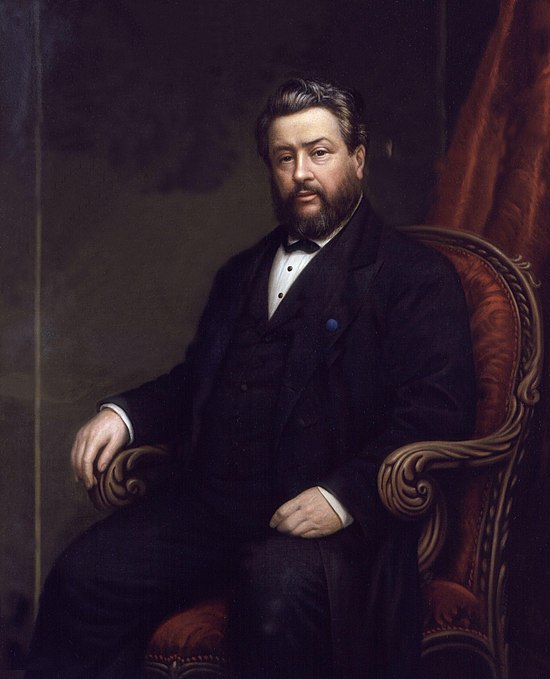
Bill Parker

Seek the Lord and Live

Amos 5:1-5
Bill Parker December, 26 2010 Audio
0 Comments
Bill Parker
Bill Parker December, 26 2010

Sermon Transcript

Auto-generated transcript • May contain errors

100%
Alright, let's return to the
book of Amos chapter 5. Amos chapter 5. Now the title
of this message this evening is in the form of a commandment
that is given twice explicitly in this chapter. and then implied
throughout the whole chapter and that is this, seek the Lord
and live. You see that in verse 4, he says,
seek ye me and you shall live, literally it's seek ye me and
live, just live. And I like that, I think there's
some significance there. And we know that those who have
spiritual life do seek the Lord and find him. And then he says
in verse 6, seek the Lord and you shall live. Seek the Lord
and live. Now this whole chapter is about
seeking the Lord. It's a commandment of God to
those who hear him and it's given to a rebellious nation, the people
who make up a rebellious nation, the nation Israel, the northern
kingdom of Israel, through his prophet, through God's prophet
Amos, And so I'm going to divide this chapter up into two parts.
I'm going to preach tonight from verses 1 through 15 that Brother
Joe read. And in this section of this part
of Amos chapter 5, there are three things that stand out here
that I think that we can all identify with as we see how the
prophets, as our Lord said to his disciples, how the prophets
point sinners to himself, to Christ. for all salvation, for
all hope, for all spiritual and eternal life. The first section
here that I want you to look at is the first three verses.
And what this does, it shows us the spiritual depravity and
deadness of all men and women by nature. He starts off in verse
1. He says, Hear ye this word, the
word of God from the prophet, which I take up against you.
Now, this is God's indictment. This is God's charge against
the nation Israel. And listen to what he says here.
He says, Even a lamentation. And you know what a lamentation
is. There's a book in the Bible called Lamentations. It's the
lamentation of Jeremiah. It's a lament. If you studied
any poetry in school, you might have studied certain laments.
And what it is, it's a sorrowful thing. And what this actually
is, it's like a funeral dirge. It's like I'm preaching Israel's
funeral. That's what he's actually doing,
Amos is doing. And he says, I take up against
you even a lamentation, a word of sorrow. a word of judgment,
a word that would bring tears to your eyes. And who's it against? He says, O house of Israel. That's the people of God as a
nation under the old covenant. At this time, as you know, they
were divided, Judah to the south, Israel to the north. And God
is getting ready to bear down on the northern kingdom in judgment. And so he says, this is your
funeral message. This, how would you like to attend
your own funeral? That's what's happening right
here. Well, what's the problem? Well,
he says in verse 2, the virgin of Israel is fallen. She's lost her virginity. She's
become corrupt and impure. Now, what he's talking about
here is spiritual. corruption. She's lost her spiritual
virginity. She's no longer spiritually pure. She's fallen just like man fell
in Adam. And lost his spiritual purity. Lost his fellowship with God. Became spiritually dead. And
the picture here is a deadness spiritually. The virgin of Israel
is fallen. And look what it says. She shall
no more rise. Now that's a funeral dirge. In
other words, there is absolute... Now here's what he's saying.
And I want you to listen to this very carefully. There is absolutely
no possibility of salvation and resurrection for this nation. That's what he's saying here.
What a sad, sorrowful lament. You say, well, the prophets pointed
sinners to Christ and there's hope in Christ. But this nation
rejected Christ. And here's what he says, he says,
she is forsaken upon her land, she occupies the land that God
gave her, but she's forsaken by the Lord. And he says, there
is none to raise her up, not even Christ. There's none to
raise her up. What's the message here? He's
talking about this nation that has fallen and lost her spiritual
purity. is a picture of this world fallen
in Adam. The depraved, sinful, spiritually
impure, dead world. And let me tell you something,
there is absolutely no hope of salvation for this world. This
world is dying. And when the Lord comes back,
this world is condemned. And there's no hope of salvation. Now, you say, well, down here,
he says, seek the Lord. Why would he say, seek the Lord?
My friend, it's like this. He's telling the nation Israel,
this nation's fallen. God's going to wipe this nation
off the face of the earth and there's not going to be found
anybody. She'll rise no more. There's not going to be found
anyone who will raise her up This nation is a dead nation.
This nation is under the judgment of God. This nation is going
to get what this nation deserves and has earned, the wages of
sin. Now, he looks at individuals who make up this nation and it's
almost as if he says this, now do you want to perish with the
nation? And I would do the same to this world. This world's fallen. This world is under the judgment
of God. This world is perishing and she's
going to die and rise no more under the judgment of God for
sin. Do I want to go down with this world? Do you want to go
down with her? Seek the Lord, then. You see,
the command of the gospel to seek the Lord is to individuals.
Now, it would be great if whole nations would seek the Lord,
wouldn't it? Wouldn't you rejoice over that? I would. Somebody
says, well, we've got to turn America back to God. Well, let
me tell you something. I'm not just trying to be a naysayer
here to be negative, but America essentially has never turned
to God as a nation now. But I'll tell you what, wouldn't
it be great if the whole nation would? I think it would, but
it's not going to happen. God doesn't save nations. God
saves sinners. He saves people. He saves individuals.
But here, Israel has lost her spiritual purity. Well, is there
any hope? Is there any hope? Well, not
for the nation. There's no hope for this nation, but there is
hope for sinners. This nation, look at verse 3,
he says, "...for thus saith the Lord God, the city that went
out by a thousand shall leave a hundred." Very small. He says, "...and that which went
forth by a hundred shall leave ten to the house of Israel."
There's going to be very, very few who turn to the Lord. In
fact, go over to the last verse. of chapter 5 verse 15 when he
says, hate the evil, love the good, establish judgment in the
gate. It may be that the Lord God of hosts will be gracious
unto what? The remnant of Joseph. Joseph,
meaning the Northern Kingdom, because the Northern Kingdom
was made up of the two tribes that came from Joseph, Ephraim
and Manasseh. Ephraim was the largest tribe.
So whenever they said Joseph, they meant the Northern Kingdom.
So he said a remnant, a remnant. What did Isaiah the prophet say
to the southern kingdom in his day? That if it weren't for a
very small remnant, we'd be like Sodom and Gomorrah. The whole
nation would be wiped out. God's going to save some people.
God has a people out of every tribe, kindred, tongue and nation.
God had a people out of the northern kingdom of Israel even in that
day. Earlier, when Elijah prophesied in the northern kingdom, he said
he had 7,000 reserved unto himself that had not bowed the knee to
Baal. God has a people. But don't hang your hopes on
this nation. Don't hang your hopes on this
world and the things of this world. This world's dying. This
world's going to perish. So where is there any hope? Now,
you know, whenever God brings a sinner to Christ, There's several
times in scripture, and I want you to turn to 2 Corinthians
chapter 11. There's several times in scripture where that relationship
is described as a husband, a faithful, able, loving, willing husband,
who is Christ, marrying a spiritually chaste virgin, his bride. And look at 2 Corinthians 11,
verse 2, Paul writes here. Now what he's talking about here,
we'll read verse 1. In the Corinthian church where he had preached
the gospel in Corinth and God had raised up a fervent and very
zealous church there, but later on false preachers crept in and
began to corrupt it. You see? And Paul is exposing
these false preachers and he's trying to show the Corinthian
believers or those who profess to believe that they shouldn't
follow this, these false preachers, these false gospels. And he says,
would to God you could bear with me in my folly and indeed bear
with me. What Paul's talking about there
is he saw it as foolish that he had to defend himself personally,
defend his character. before them. He didn't want to
do that. Paul wanted to preach Christ. He wanted to stand up
and brag on Christ. He didn't want to spend time
defending himself and his character and his motives. But listen to
what he says in verse 2. He says, I am jealous over you
with godly jealousy for I have espoused you to one husband. Now that husband is Christ. I
pointed you to Christ for salvation. No one else. Nowhere else. I
pointed you to Christ for eternal life. I pointed you to Christ
for righteousness and for forgiveness by his blood. I pointed you to
Christ for eternal life and glory. Nowhere else, no one else, just
one husband. And you profess to believe in
him and to rest in him and to love him. You're married to Christ
and he said, I've espoused you to one husband that I may present
you as a chaste, a pure virgin to Christ. Now that's the purity
that only comes from Christ. I'll show you that in just a
second, but look at verse 3. He says, "...but I fear lest
by any means as the serpent beguiled Eve through his subtleties, so
your mind should be corrupted from the simplicity or the singleness
that is in Christ." That single message of God's grace in Christ. It's not complicated, but men
and women want to corrupt it. They corrupted in so many ways,
with their works, with their will, with their divisions, with
their personality, in a lot of ways. But he says, he says, I
fear lest you should lose your spiritual virginity in that sense.
And what that would be is to prove out to be a false professor.
It wouldn't be that they lost their salvation. They'd mean
they were never saved to begin with. Well, where do we find
that spiritual purity? Where do we find it? Go to Revelation. chapter 19. I read this passage
a while back when we were going through another chapter. Revelation
19. Now think about it. Now here, the nation Israel,
God for certain purposes in His redemptive history and pattern,
He joined Himself to the nation Israel in a temporal covenant. in an earthly covenant, not in
a spiritual eternal covenant. There was no salvation in the
old covenant, no salvation in the law of Moses, no eternal
salvation. You see, that covenant was not
meant for that. But he joined himself to that
nation, and they were to be loyal to God, to the God of Abraham,
Isaac, and Jacob. But they sold themselves out
in spiritual harlotry, as it were, as the prophets say, to
idols. and to other nations, and to
themselves, and to their own works, and they left God. And
that's what Hosea means. He said the virgin of Israel
has fallen. She's dead. And this nation is
gone. All right? Now, look at Revelation
19. Well, how can I, who am a sinner,
corrupt in Adam and in myself? How in the world could I gain
spiritual purity? Now, I want you to look at this.
Look at verse 6 of Revelation 19. He says, And I heard, as
it were, the voice of a great multitude, and the voice of many
waters, and as the voice of mighty thundering, saying, Alleluia.
Praise to God. Praise the Lord. For the Lord
God Omnipotent reigneth. Let us be glad and rejoice and
give honor to Him, for the marriage of the Lamb. Now, you know who
the Lamb is. That's Christ, the Lamb of God.
The marriage of the Lamb is come, and his wife hath made herself
ready." Now, how do you make yourself ready for the Lamb?
There's only one way. That's by faith in Christ. That's
by resting in Him, believing in Him. He says in verse 8, "...and
to her was granted..." Now, this is a gift. Whatever's following
here is something that was granted, something she didn't earn, and
it's something she doesn't deserve, granted that she should be arrayed
in fine linen, clean and white, pure, clean and bright, with
no taint of sin, no taint of corruption. This is spiritual
purity. And it says, for the fine linen
is the righteousness of saints. Now, you know what the false
religious world does with that one, don't you? What is the righteousness
of saints? What is a saint? Well, that's
somebody who's prayed a lot, or somebody who hadn't missed
the service, or somebody who's performed three miracles, they
say, been canonized. No. A saint is... What does it mean? Sanctified
one. What does that mean? It means they've been set apart.
Who set them apart? God did. How did He set them
apart? In Christ. By His grace. What is the righteousness of
saints? Are you a saint? If you're a believer, if you're
a sinner saved by grace, that's what you are. You're a saint.
You say, well, I don't really like to say that. Well, God says
it with no embarrassment. In fact, Christ even makes this
statement about His people. He says, He's not ashamed to
call us brethren. You ever had any family members,
you're ashamed to call them sister or brother? Well, if anybody
ought to be ashamed to call me a brother, it ought to be Christ. The Scripture says He's not ashamed
to do so. He calls me a saint because I believe in Him and
rest in Him. What is, if you're a saint, what is your righteousness?
My righteousness is Christ. For God made him sin, Christ
who knew no sin, that we might be made the righteousness of
God. How? What does he say? In him. That's how I stand before God
in Christ. But look on. He says, "...and to her was granted
that she should be arrayed in fine linen, clean and white,
for the fine linen is the righteousness of saints. And he saith unto
me..." Now, here's who they are. "...right, blessed are they which
are called unto the marriage supper of the Lamb." How are
you called to the marriage supper of the Lamb? By the preaching
of the gospel of God's grace in Christ. "...and he saith unto
me..." These are the true sayings of God. That's how we gain spiritual
purity. It's not in ourselves. Not even
as a saved sinner can we say that we are perfect within ourselves.
I don't care who tells you that. They're wrong. The scripture
doesn't preach that. In ourselves, we're sinners. We don't do anything
in this life that we can say is sinlessly perfect. But in
Christ, I am right now as righteous as I'll ever be. spiritual purity,
spiritual virginity. That's what that is. Now, go
back to Amos 5. They lost that and the nation's
going to be destroyed. Now, from verses 4 to 6, here's
what he tells, here's his point here. You're fallen, you're sinful,
God's going to bring judgment upon this nation. And here's
what he says in verses 4 to 6, man's religion, man's highest
attainments, man's greatest dedication and zeal will not help you. It will not make you pure. It
will not clean you up. It will not save you. Look at
it, verse 4. Where thus saith the Lord unto
the house of Israel, Seek ye me, and you shall live. In other
words, the only way that you're going to be spiritually pure
is to seek the Lord. All right? Seek the Lord. Now, how do you seek the Lord?
You seek Christ. You'll see that in just a moment. But he says
in verse 5, but seek not Bethel. Remember Bethel, we've talked
about that all the way through Amos and Hosea. Bethel, that
was the place where Jacob's well was. That's the house of God,
that's what it means. But Jeroboam, the first king
of the northern kingdom after they split after Solomon, he
turned it into a place of idolatry. That's where they set up one
of the golden calves. And what did they call the golden
calf? They called the golden calf Jehovah. But they've set
up their places of idolatry in Bethel. And in other places,
two places they set up golden calves. One of them is Bethel.
And remember what Hosea called Bethel? He called it Beth-Avon.
Instead of the house of God, he said it's a house of evil.
That's what Beth-Avon means. And so he says, well, don't go
to Bethel. Don't seek Bethel. Don't seek
religion. Don't seek idols. Don't seek
your works. Don't seek spiritual salvation
and purity in your works. It won't go. Don't seek righteousness
by the law. Nor enter into Gilgal. That was
the place they camped at before they went over into the Jordan
River. It has a special significance. But Gilgal won't save you. Man's
power, man's thoughts. Pass not to Beersheba. There's
another significant religious place. He says, for Gilgal shall
surely go into captivity and Bethel shall come to naught.
Nothing. In other words, all your religious
efforts, all your works, all your zeal in religion will not
make you spiritually pure before God. How am I going to be spiritually
pure? Verse 6, seek the Lord and live. Seek Christ. Seek the forgiveness
of your sins by His blood. Seek to be justified, accepted
before God by His righteousness imputed. Seek the power of God's
Holy Spirit to give us new birth. All of these things, seek the
Lord, lest He break out like fire in the house of Joseph and
devour it, and there be none to quench it in Bethel. In other
words, seek the Lord. Now here's the third issue. From
here to verse 15, Here's what he talks about. If you're going
to seek the Lord, now think about this. We read this in Isaiah
45. I want to go back there just
for a second. Turn to Isaiah 45. If you're going to seek the
Lord, you don't just grope in the dark. You know somebody says,
well, seek Him within yourself. I heard a preacher say that one
time. Now, you can seek a lot of things within yourself, but
I'm going to tell you one thing you're not going to find in yourself,
and that's the Lord. How do you seek the Lord? Well,
first thing you must do is seek the Lord as He reveals Himself,
as He is, not as you think Him to be. You see, the problem with
seeking the Lord within yourself is you'll end up with a God who
is like yourself. And I hear people say, well,
you know, you'll talk about the God who's sovereign, God of electing
grace, God of distinguishing. Well, my God wouldn't do that.
I think it was Brother Barnard who said to a fellow, he said,
well, I know your God wouldn't, but the God of the Bible will.
How does God reveal Himself in His Word? And there are several
things. Seek Him in His Word. That's
how He reveals Himself. What does God say about Himself
from Genesis to Revelation? Whatever He says about Himself
in His Word, that's how we seek Him. And then if we seek Him
as He reveals Himself, and we seek Him in His Word, what does
that mean? That means we seek Him in and
by the Lord Jesus Christ. You're not going to find the
Lord without Christ. He is the fullness of the Godhead body.
Now let me show you that. Now look over here at Isaiah
chapter 45, and here's the issues that have to be settled. In chapter
45, he says in verse 21, now listen to this, he says, Tell
you and bring them near, yea, let them take counsel together,
who hath declared this from ancient times. This is not a new message.
This is the message from the very beginning. Who hath told
it from that time? Have not I the Lord? Notice the
word Lord, the name Lord there is in capital letters. That means
Jehovah, that's the covenant keeping God. That's the God of
Abraham, Isaac and Jacob. That's the God who's sovereign,
the creator God, the redeemer God. That's the God who justifies
who? As Abraham found out, the ungodly,
Romans chapter 4. It's the God who saves sinners.
by sovereign grace. That's who he is. And notice
how he identifies himself. He says, and there is no God
else beside me. Now listen to this, a just God
and a Savior. Now there is posed in that identification
of God the eternal problem that man just cannot figure out in
this thing of salvation. Job posed the question, his friends
posed the question, how can a man, a sinful man, man born of woman,
unclean, how can a sinful man be justified with God? How can
God be just, do what's right, and judge according to truth,
which the Bible says he always does, how can God judge according
to truth and still be a savior of sinners who deserve damnation
according to justice? In other words, if God looked
at me in strict justice and did what was right according to what
I've earned and what I deserve, then I'd be what? Eternally damned.
Isn't that right? O Lord, if thou, Lord, shouldest
mark iniquities, who would stand?" So then here's the eternal question.
How can God do right and do justly and still have mercy on us? How
can He be both a just God and a Savior? That's how He identifies
Himself here. And he says there, he says, there's
none beside me. You're not gonna find any religion
of the world among the major religions and the cults that
shoot off of them that can answer, well, you're not even gonna find
any religion of man that even poses that question, let alone
answers it. It's just not there. I'm gonna
tell you something, folks. Right here, when you read that
verse 21, you're reading something that is uniquely Christian. I mean, this thing sets Christianity,
true Christianity, not false Christianity, but true Christianity
apart from every other philosophy, supposed theology, and religion
of man. You go study. You're not going
to do that, I'm sure. But I'm saying, if you haven't
studied them, you don't really grasp how unique that is. A just
God and a Savior. How can it be both? How can God
be a righteous judge and still a merciful father? How can? Well, he says in verse 22 of
Isaiah 45, he says, look unto me and be ye saved all the ends
of the earth. Now look unto who? Look unto the Lord Jehovah. Look
unto this just God and a Savior. For I'm God and there's none
else. He says, I've sworn by myself. That's his character.
God has engaged His character. Everything that He is, every
attribute, His sovereignty, His holiness, His immutability, His
omniscience, His omnipotence, go on and on. Every attribute
of God is engaged behind this. To deny this is to strike against
the entire character of Almighty God. And he says, the word is
gone out of my mouth in righteousness and shall not return. This word
that he's about to speak, it goes out in justice and it can't
be taken back. He can't pervert justice, he
can't deny justice, he cannot ignore it. It goes forth in righteousness
and it won't come back. And he says that unto me every
knee shall bow and every tongue shall swear. You're going to
bow one way or another. And he says in verse 24, now
here's the answer to that eternal question. Surely, shall one say,
in the Lord, in Jehovah, have I righteousness? I don't have
it in myself. I didn't work it in myself. I
haven't been enabled to work out one, haven't established
it myself, but in the Lord have I righteousness. Who is the Lord?
the Lord Jesus Christ, the Messiah. And he says, In the Lord have
I righteousness and strength. Even to him shall men come, and
all that are incensed against him shall be ashamed. In the
Lord shall all the seed of Israel be justified and shall glory. Do you see that? Now go back
to Amos 5. What does that have to do with
the rest of this chapter? All right, I'm going to tell you.
I want you to look at this. Verse 7. What's the first thing he
says here? He says, he's talking about Israel
as a nation. He says, you who turn judgment
to wormwood. Wormwood was said to have a poisonous
fruit, it was to be just a dangerous weed. And he says, you turn judgment
into wormwood. And you leave off righteousness
in the earth. In other words, you don't have
a sense of real judgment and justice here. Now, what's he
talking about? He's talking about their civil courts. and their
religious courts, where judgment was issued forth. And so he says,
you've turned judgment into wormwood. You've turned it into a corrupt
thing. And you've left off righteousness in the earth. Now verse 8 he
says, Seek him that maketh the seven stars and Orion. You know
the constellations. That's what he's talking about,
the star. And he's talking about how they're ordered. You can
look up there and you'll see these shapes and all that, and
the stars are set in place by the determinate will and wisdom
of an all-knowing, powerful God. He says, He turneth the shadow
of death into the morning, and He says, He maketh the day dark
with night, the cycles of time. Who set that in order? God did.
That's not just by evolution now. That's not... God did that. There's an intelligent,
sovereign, supreme being behind all this. It's an order. "...that
calleth for the waters of the sea, and poureth them out in
the face of the earth." There's the cycle of the water. Now,
all this is set in place, alright? Everything has an order. Everything
has its place. Well, guess what? So does salvation. God's not going to set justice
out of order with mercy. He's not going to set truth out
of order with righteousness, it's all coming together. It's
all going to work consistently together. And he says, the Lord
is his name. Now look at verse 9, he says,
You strengtheneth the spoiled against the strong, so that the
spoiled shall come against the fortress. What he's talking about
is injustices there and you take from people, you spoil them.
Verse 10, they hate him that rebuketh in the gate. If there's
somebody comes along who gives a strong rebuke and rightly so,
what do they do? They hate him. It's like Paul
told the Galatians, am I your enemy because I tell you the
truth? You see, why do most people go to certain religious groups? It's because they hear what they
want to hear. Now the question is, are they
hearing what they need to hear? That's the problem. And sometimes
when they hear what they need to hear, what do they want? Well,
I'm not going to listen to that. The Bible calls that having itching
ears. You find somebody who will find you a preacher who will
scratch that itch. And so he says, they hate him that rebuketh
in the gate. They abhor him that speaketh uprightly." Anybody
who really judges rightly in these civil courts. He says in
verse 11, "...for as much therefore as your treading is upon the
poor, and you take from him burdens of wheat, you build houses of
huge stone, but you shall not dwell in them. You have planted
pleasant vineyards, but you shall not drink wine of them." They've
taken advantage of the underprivilege of the poor. Have you all noticed,
reading down through this, that it sounds like our country today?
They've taken advantage. They didn't show mercy to the
poor. They didn't show any compassion
to the poor. It was just what I could get for myself. Built
these houses and planted these vineyards, but they're not going
to do you any good. You're not going to live in them, God says.
You're not going to drink from them. Verse 12. He says, For
I know your manifold transgressions and your mighty sins. They afflict
the just. They take a bribe. Boy, that
does sound like our day, doesn't it? They turn aside the poor
in the gate from their right, from what they deserve as a human
being. Therefore the prudent shall keep
silence in that time for it's an evil time. Those who have
the wisdom and the sense of justice, they'll just keep quiet because
they're going to be hated. And so what does he tell? the
individuals. He says, Seek good, not evil,
that you may live. And so the Lord, the God of hosts,
shall be with you, and as you have spoken, hate the evil, and
love the good, and establish judgment in the gate. It may
be that the Lord God of hosts will be gracious unto the remnant
of Joseph. Now let me show you what that's
all about. Turn to Matthew 23. Now that whole covenant that
was given to the nation Israel from Mount Sinai through Moses, that whole covenant. The ultimate goal of that covenant
was to expose their sinfulness, we know that, the law was added
because of the transgression, and to drive them to Christ for
salvation, for righteousness, for life. There's nothing in
that covenant that gave any sinner an excuse to seek salvation by
his works. That was not a works covenant.
They had conditional promises given to the nation as they lived
here on earth, but there were no conditional promises for salvation
in that covenant. The only way of salvation it
was always testified of in those types and pictures and shadows
and the prophets was Christ, the coming Messiah by the grace
of God. But everything about that covenant was to be a reflection
to the nation Israel of the mighty character of God, even their
civil courts. And in their courts, they were
to deal, not like other nations now, they were to be separate
from other nations, they were to deal with injustice, they
were to deal in truth, they were to deal in mercy, not at the
expense of justice now, But right in line with it, and they were
to deal in faith, believing what God said, not what man said.
I want you to listen to this, verse 23 of Matthew 23. Talking
to the scribes and the Pharisees, the judges. He says, In other
words, you're tithers, that's not your problem. You give your
tithe. and have omitted the weightier
matters of the law." What matters? Judgment. That's justice. Mercy. You've oppressed the poor. And
faith. That was their problem. That
was the problem back in Amos' days, the problem in our Lord's
earthly days. He says, these ought you to have done and not
to have leave the other undone. Nothing wrong with tithing. meant
innocent human. Nothing wrong with that. But
when you get the thinking that that kind of religious exercise
is what saves you or makes you righteous before God, you've
left off justice and mercy and faith. Justice. God is a just
God. And yet, He's a merciful God.
He deals compassionately. Turn to Psalm 103. Psalm 103. Brother Bill read this in the
study. I told him he was preaching my message. And here's the point. If you're
going to find salvation, and as Amos said, if you're going
to hate evil and love the good, you're going to have to seek
the God who is a God of justice and a God of mercy and a God
of faith, who brings sinners to himself by faith in Christ.
Listen to Psalm 103 and listen to verse 7. He says, "...he that
is the Lord, made known his ways unto Moses. What is God's way? It's not just
the great miracles of parting the Red Sea. It's not just the
great miracles of feeding them and all. His ways are ways of
judgment. His ways are ways of mercy. His
ways are ways of faith. What is God's way? He made known
His way. What is God's way? Christ said
it this way in John 14, 6. He said, I am the way, I am the
truth, I am the life. No man cometh unto the Father
but by me. So it says, He made known His
ways unto Moses, His acts unto the children of Israel. The Lord
is merciful and gracious, slow to anger, and plenteous in mercy. He will not always chide, neither
will He keep His anger forever. He hath not dealt with us after
our sins. Now I always point out when I
read that, that you have to notice something that's very significant
there. It does not say, He hath not dealt with our sins. It says,
He hath not dealt with us after our sins. He dealt with our sins. And if we're saved by His grace,
when did He deal with my sins? He dealt with them at the cross,
when Christ died for my sins. See, He didn't pervert justice
in order to be plenteous in mercy. He's a just God and a Savior. And it says, nor rewarded us
according to our iniquities. Look down at verse 17. of Psalm
103 says, but the mercy of the Lord is from everlasting to everlasting
upon them that fear him and his righteousness unto children's
children to such as keep his covenant, his covenant of judgment,
his covenant of mercy, his covenant of faith, and to those who remember
his commandments. Now let me show you one more
passage and I'll close with this. Turn to Matthew chapter 11. Matthew
chapter 11. And this will be it. You know,
remember Amos said there, and I'm going to pick up there next
time, when he said, he said, seek good and not evil. How am
I going to seek good? Only one way, seek Christ, who
is good. There's none good but God, and
He is God in human flesh. He says, hate the evil and love
the good. The only way, now listen to me,
if you're a sinner saved by grace, be honest with yourself, the
only way that you can say you truly love good and hate evil
is as you look to Christ. Because as long as there is sin
within us, we will still have that warfare of the flesh and
the spirit. It'll always be there. But here's that, seek the Lord
and live. Listen to Matthew chapter 11,
verse 25. He says, at that time Jesus answered
and said, I thank thee, O Father, Lord of heaven and earth, because
thou hast hid these things from the wise and prudent, that's
men who are wise and prudent in their own eyes, self-righteous,
and you revealed them unto babes, those who are totally dependent
upon the Father for salvation. Even so, Father, for it seemed
good in thy sight. All things are delivered unto
me of my Father." Now listen to this, "...and no man knoweth
the Son, but the Father." Who's the Son? That's Christ. What
does that mean, no man knoweth the Son, but the Father? That
means this, that if you're ever going to come to know Christ
savingly, it's going to be as the Father reveals Him to you.
That's right. And then he says, neither knoweth
any man the Father save the Son, and He to whomsoever the Son
will reveal Him. If any man is going to know God
as Father, it's only going to be as Christ reveals Him to us. And how does He reveal Him? Both
as a just God and a Savior. One who's just to justify the
ungodly. One who is both a righteous judge,
who judges according to truth, but who also is a merciful, loving,
compassionate Heavenly Father on the one ground of the blood
and righteousness of the Lord Jesus Christ. All right.
Bill Parker
About Bill Parker
Bill Parker grew up in Kentucky and first heard the Gospel under the preaching of Henry Mahan. He has been preaching the Gospel of God's free and sovereign grace in Christ for over thirty years. After being the pastor of Eager Ave. Grace Church in Albany, Ga. for over 18 years, he accepted a call to preach at Thirteenth Street Baptist Church in Ashland, KY. He was the pastor there for over 11 years and now has returned to pastor at Eager Avenue Grace Church in Albany, GA

Comments

0 / 2000 characters
Comments are moderated before appearing.

Be the first to comment!

19
Joshua

Joshua

Shall we play a game? Ask me about articles, sermons, or theology from our library. I can also help you navigate the site.