Bootstrap
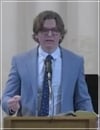
Bill Parker

Christ's Care for His Church

Isaiah 62:6-12
Bill Parker December, 31 2008 Audio
0 Comments
Bill Parker
Bill Parker December, 31 2008

Sermon Transcript

Auto-generated transcript • May contain errors

100%
It's been a long time since I've
heard either one of those hymns, and they're both good, aren't
they? You did a good job, Quartet.
All right, let's open our Bibles to the book of Isaiah, chapter
62. Isaiah 62. The title of the message
tonight is Christ's Care for His Church. And as I told you
last Sunday night when I preach from the first five verses of
this chapter. As I began to study for both
messages, I was so glad and I rejoiced that the Lord enabled us, allowed
us by His providence to close out this year with this passage
here. Because there are two things
that are prominent here. As I preached last Sunday night
on the subject of Christ delight in his church. That's really
something to think about, that Christ's delight in his people. That doesn't mean that God is
always pleased with what we do, because he's not. The scripture
says that. But his delight is in the grace
and power of the salvation that he provides, and that we as sinners
saved by grace shine forth as examples, recipients of His grace,
to the praise of the glory of His grace. If we're saved by
the grace of God, we should be walking, talking examples of
mercy, of unconditional love, love that we don't deserve and
cannot and have not earned. And therefore we, as believers,
who have been so blessed by the Spirit of God with a heart to
serve God. We ought to be so thankful that
we would seek to obey Him in every way, not to be saved, but
because we already are, even as a collective body and as individuals
here on this earth. But Christ not only delights
in His church, and that really provides the foundation of the
rest of this chapter beginning at verse 6. The foundation is
God's grace. But then He gives His ministers,
but not only His ministers, His church a charge to keep. And let me show you what I'm
talking about. Christ not only delights in His church, but He
also cares for His church. And he also takes care of his
church. If he didn't do it, it wouldn't
last. Isn't that right? He said to
Peter and the apostles, he said, upon this rock I will build my
church and the gates of hell will not prevail against them.
He has made provision for us by his grace and power through
his appointed means. Now, what are his appointed means?
Well, we could talk about a lot of them. We could talk about
his preachers. We could talk about evangelists, missionaries.
We could talk about teachers. We could talk about elders, deacons.
We can talk about even the means of grace that He uses for our
growth in grace, the edification of His people in all things. Our fellowship, for example.
We need each other. And prayer is a means of God's
grace. It is the wisdom of God who has
determined all things beforehand of whom none can stay his hand
or say unto him, What doest thou? God who declares the end from
the beginning, it is the wisdom of God that his people pray for
what he determines to give them. And you know why? Because it
glorifies him and it puts us in our place as sinners who are
totally dependent upon Christ for all of salvation. Our working
together for his glory, We're yoked together, the scripture
says. When Christ called, issued forth
the call of the gospel in Matthew chapter 11, he said, come unto
me all ye that labor and are heavy laden, I'll give you rest.
He says, take my yoke upon you. He said, my yoke is easy, my
burden is light. We're yoked together and we should
be working together for his glory and the salvation of sinners
and the good of his people. Now, how does he accomplish that?
Well, look at verse 6. The first point that he makes
here is about a watchman, or not just one watchman, but several,
plural watchmen, upon the walls of the church. He says in verse
6, he says, I have set watchmen upon thy walls, O Jerusalem.
Now, when you look at that, don't think of physical Jerusalem.
It has an application there, but the ultimate lesson here
finds its fulfillment in Christ and the salvation of God's people.
And Jerusalem here is the heavenly city, spiritual Jerusalem, of
which we are all a part if we know Christ. All who rest in
Christ. He's our King, He's our Lord,
He's our Redeemer, He's our Mediator, He's our High Priest, He's our
Prophet. We're citizens of the heavenly Jerusalem. And He says,
I set watchmen upon thy walls, O Jerusalem, which shall never
hold their peace, day or night, Ye that make mention of the Lord,
or are the Lord's, you might have seen your concordance there,
it has something like this, are the Lord's remembrances. That's a weird word, isn't it?
But that's what he's talking about. He says, make mention
of the Lord, keep not silent, verse 7, and give him no rest
till he's established and till he make Jerusalem a praise of
the earth. Gospel ministers. As the prophets
of the Old Testament, just like Isaiah, Jeremiah, and so on,
and ministers of the New Testament, evangelists, pastors, teachers,
are set in the church, on the walls of the church symbolically
here, to do what? To watch for the souls of men
and women. For unbelievers, to warn them
of danger. The danger to come, the wrath
of God to come. and to point them to the only
place of safety, and that is in the Lord Jesus Christ, who
took the wrath of God for his people on the cross. There's
only one way to escape the wrath to come. That's what we tell
sinners, and it's a very simple message. It's not a difficult
message. It's not hard. It's impossible for the natural
man to receive because of his natural darkness and pride and
self-righteousness and depravity. But it's not a complicated message.
Now, men will try to complicate it. Men will try to sugarcoat
it. Some will try to water it down.
Some will try to add to it. But don't let them do that. Be
a watchman. You see, that's what he's telling
his preachers, his ministers, his called ones. To the unconverted,
we point sinners to Christ. And somebody asks, well, who
do we preach to? Anybody who will listen. That's who we preach
to. Anybody who asks you to come
and preach. You know, we've confronted that. You know, you ask people to come
and preach and they won't come here or they won't go there because
they don't want a stigma or they don't want to be associated.
Let me tell you something. I don't believe that I have the
right to turn down any opportunity or invitation to go preach. I
don't have that. I may not want to go. I may be
like Jonah. God may have to drop, but I don't
have the right to say no. If I say no, what am I doing?
I'm shirking my responsibility as a watchman upon the walls
of the city of Jerusalem. Why not? Because what are we
preaching? What do we preach for? For the
glory of God and the good of God's people. So for unbelievers,
we're to warn them of the wrath to come and point them to Christ
for safety. We point them to the cross, the
finished work of Christ. and His blood and His righteousness
for all of salvation. Now, for believers now, we have
just as much a serious responsibility. And for believers, for the Church,
our mission as watchmen upon the walls is to continually remind
you and guide you in the way of Christ. the glory of Christ,
the salvation that he's accomplished, and guard you by the Word of
God. That's why I preach through the
Scriptures, word for word, verse by verse, because that's the
way that God's people learn, grow, and are protected from
the world and from ourselves. We need protection from ourselves.
And these watchmen that he spoke of here in verse 6 and 7, they're
placed upon the walls of the church by God, not men. If man puts them there, it's
no good. But God places His watchman where
He places them. And there to do three things,
to speak to the people for God, that means this, preach His Word,
not our own, not our opinions, not our philosophies, not what
we think, but preach what God's Word says, without apology, without
confusion. Secondly, make mention of the
Lord. Keep up His remembrance to the
people. We're going to take the Lord's
Supper when I finish this message. It's an ordinance of remembrance. It's not a tool of discipline
now, like some churches try to use it. It's an ordinance, it's
a memorial ordinance. It is given to the church to
continually set Christ before our eyes and before our minds
and our consciences and our hearts. And we drink the wine because
it symbolizes His precious, powerful, effectual, atoning blood which
put away all our sins. And we remember His body that
was broken for us, all of these things. We make mention of the
Lord. And then thirdly, we are to plead
with God for His people. Now that is an interesting thing
here in verse 7. When it says, give him no rest until he's established,
until he make Jerusalem a praise in the earth, what that's talking
about is don't stop pleading and praying to God. Somebody
says, well God, you know, He knows, first of all, He knows
what we need and what we want. And all you got to do is just
say it one time. Well really, technically, you don't even have
to say it one time if He already knows it. Yet God commands His
watchmen and His people to be in a continual attitude of prayer,
pleading, not giving Him any silence until He has done what
He has promised. Now, it's not our prayers that
gets God to do anything. I hear these preachers talking
about prayer changes things. Prayer doesn't change anything.
Listen, any prayer that changes God is prayer to an idol. He
says, I'm the Lord, I change not. Therefore, you sons of Jacob
are not consumed. So we're not praying to change
God. Now, prayer many times changes us, changes our attitude. It's an act of worship. It's
an act of faith. But God has already determined
what He's going to do. And it's the only way to do it.
It's the wise way to do it. It's the right way. But He has
determined also that His people worship Him and serve Him and
attest their faith unto him in prayer. And that's what he's
saying. We're to be in prayer. We're to be in continual prayer
for the people of God and for ourselves. Look at verse 8. He says, The Lord hath sworn
by his right hand and by the arm of his strength, Surely I
will no more give thy corn to be meat for thine enemies. And
the sons of the strangers shall not drink thy wine for the which
thou hast labored, but they that have gathered it shall eat it,
and praise the Lord. And they that have brought it
together shall drink it in the courts of my holiness." You know,
the physical Jerusalem was under assault by foreign invaders and
eventually conquered, conquered several times in their history.
And what they had worked and labored so hard for went to their
conquerors, went to their enemies. But God says here, that's not
going to be the case anymore. He says, you're not going to
work your corn that you worked so hard to grow. It's not going
to be meat for thine enemies anymore. And the sons of the
stranger shall not drink your wine. They're not going to take
all that that you labored for. Now, let me tell you something,
and I want you to hear this very well. If he's talking about physical
Jerusalem here, then it didn't come true. It didn't come true
because physical Jerusalem was utterly destroyed. Somebody says,
well, it's rising up again. Well, we could talk about that,
but I don't have time tonight. But I'm going to tell you something.
He's talking about spiritual Jerusalem. He's talking about
the heavenly city. There's not going to be any more foreign
invaders, you see, in God's eternal spiritual kingdom. That's right. Now, while we're on earth, we'll
be assaulted by Satan and by the world and by the flesh. But
there'll be no conquering. You see, again, the gates of
hell will not prevail against us. In Christ, we have all the
fullness of all grace and all glory, and it will never be taken
away. He gave it. He won't take it
back, and nobody can take it from us. Salvation. We have all
that God requires. all that we need in Christ, and
it cannot be taken away. We may even lose sight of it.
Just like David of old, when he lost the joy of his salvation
because of his own sin. You know, in salvation, David
did not lose one, one atom of the grace that God had given
him in Christ. He lost joy of it, but it was
still there. And because God loves and rejoices
over Zion, His church, the heavenly Jerusalem, He will provide and
He will protect against all enemies. He'll establish us upon the rock
Christ Jesus. That's what you all sang in that
song in times like these. That rock is Christ. And he's
an anchor, and we can be very sure that our anchor holds because
it's the rock Christ Jesus. And God will establish them upon
the rock Christ Jesus, how? By bringing his lost sheep into
the fold, and by keeping his saved sheep within the fold,
and he won't lose even one. There won't be one citizen of
this kingdom that's lost to the world, the flesh, or the devil.
It is the wisdom and glory of God, as I said, to determine
and accomplish a thing while at the same time commanding and
calling His people to pray for all things for His glory and
our good without ceasing. Listen to this. The Lord Himself
does not rest with regard to Zion. Now, there is a rest under
the people of God. Now, our Savior brought that
rest about by His finished work on the cross, salvation. All
of the ground and all of the requirements and all of the stipulations
and all of the conditions of salvation are finished, and we
don't have to worry about them. All we have to do is just rest
in them. I'll give you rest. But there
is a sense in which the Lord is not resting even now with
regard to the Church, and I'll tell you what I mean by that.
Number one, He still has some sheep to bring into the fold.
And He's seeking them, and He's going to find them, and He's
going to bring them in. And number two, he hasn't come back again. We're still on this earth. And
he's left us here for his purpose, for his glory, to be witnesses
to his grace. And he preserves us. Secondly,
he does not want his petitioners to keep silence in their prayers
for Israel. Don't ever, don't, you know,
I like that verse back over, I believe it's in 1 Samuel, or
maybe 2 Samuel, I didn't note it here in my notes. But he says,
God forbid that I should sin against God in ceasing to pray
for you. You know, I think that's one
of the greatest cures for problems that exist among people. Pray
for one another. Pray to God for one another.
And then thirdly, he doesn't want his people to leave him
alone concerning Israel's deliverance. And you know why? It's not because
it's going to change him, or get him to do something that
he doesn't want to do, or trying to give him another way. It's
simply an expression of our love for one another and our love
for God. And that's worship. Remember, he says here in verse
8, the Lord has sworn by his right hand and by the arm of
his strength, no more will Jerusalem be plundered by those who would
steal her goods, her grain, her new wine. Instead, he says, those
who have gathered it shall eat it. And you know what they're
going to do? They're going to praise the Lord. Because all
of us did the praise of the glory of His grace. Well, look at these
last verses now. Now, here's the work of the church
here on earth. And I believe this is a good
message for us to consider at the close of this old year and
the beginning of the new year. Right here. The work. What are
we here for? What is our work? Well, listen to what he says.
Look at verse 10. He says, Go through, go through the gates.
Prepare ye the way of the people. cast up the highway, gather out
the stones, lift up a standard for the people." Now, I tell
you, that verse right there is a great definition of gospel
ministry. First of all, he says, go through,
go through the gates. What is our work here on earth?
We're to show sinners the way of salvation, the way of righteousness,
And keep that way open so that all can go through it. All who
want to. All who want to may go in. In
other words, we're never to shut the gate to any sinner who desires
salvation God's way. Go through. Go through. Come
on. Oh no, we don't want that one?
No sir. Go through. Well, have you been circumcised?
Go through. Have you been baptized? Go through. You see, we can put
obstacles in the way. And then he says, prepare ye
the way of the people. The way we preach is a prepared
way. Not calling on sinners to prepare
themselves as if to make themselves worthy. We can't make ourselves
worthy. Our worthy is the Lamb that was
slain. Our worthiness is Christ. He's
our worthiness for all things. He's our worthiness to take the
Lord's Supper. That's what we're testifying
to when we take it. Christ is our worthiness. We
are accepted before God in the Beloved. And so we're not saying
make yourself worthy. We're talking about a way that's
already been prepared. Just like in this Bible, many
times you'll see it like a banquet, a feast that's already been prepared. Just come and dine. If you're
hungry for the Word of God, come and feast. If you're naked, Come
and clothe yourself with the clothes that have already been
prepared, the righteousness of Christ. I'm a sinner. What do
I need? I need mercy. Mercy is prepared. It was prepared at the cross
when Christ died for the sins of His people. All of this, it's
a come as you are. Don't bring your own robes. It's not a potluck dinner. It's
come as you are as a sinner seeking mercy. in Christ, at the mercy
seat. And that's what we do, prepare
you the way of the people. And then he says, notice here,
he says in verse 10, cast up, cast up the highway. That literally
means build up. How do you build up the highway?
Well, first of all, what is the highway? The highway is Christ.
He is the way, the truth and the life. No man cometh under
the Father, but by Him. The way to salvation is the way
of the cross, Christ who died on the cross. He is the way.
Now, how do you build up the way? You lift up Christ before
the people. You preach Christ and Him crucified
and buried and resurrected again. You brag on Him. You talk about
the glory of His person as God and man, the one and only mediator
between God and man. You talk about, listen, when
you preach, when you teach, when you witness, you get to Christ
as soon as you can, you stay with Him as long as you can,
and you never leave there. That's what it is to build, that's
what it means to cast up, cast up. Someone said, I believe it
was Pastor Scott Richardson preached a message years ago, and he's
talking about there in John 12, Christ said the Son of Man must
be lifted up, that all may come to Him, talking about His people.
And, of course, that's talking about His cross. I believe Brother
Richardson had this outlined, that Christ must be lifted up
on the cross or there is no salvation. He must die the death of the
cross in order that His people might have life. And then secondly,
Christ must be lifted up in the preaching of the gospel. Any
sermon that doesn't lift up Christ, build him up as who he is and
what he accomplished and why he did it and where he is, is
not worth the paper that it's written on or the air that it
takes to expel it. And then thirdly, Christ must
be lifted up in the hearts of God's people by the power of
the Holy Spirit. That's what he's talking about.
Build up. Preach Christ. Do like John the Baptist. What'd
he say? He said, Behold the Lamb of God
which taketh away the sin of the world. I'm not the light,
John said. He's the light. Don't look to
me. I'm just the signpost. That's all I am. Christ is our
Savior. I'm just like the prescription. He's the cure, you see. If you've
got a cure and the doctor gives you a prescription, you don't
take it home and swallow it, I hope, do you? You go get the
medicine and you take the medicine. Christ is the cure. What John
the Baptist said, he said, I'm not even worthy, listen, as great
as you may think I am, talking to his disciples, he said, here's
my greatness, I'm not even worthy to stoop down and untie his shoes. That's my worthiness in myself.
And then what did he say at the end of his ministry? He said,
I must decrease, Christ must increase. That's building up,
cast up, cast up the way. And I love that where there's
a verse there in the book of John, I didn't note that one
either, but I was thinking of it, where it says that his disciples
heard John preach. And you know what they did after
they heard John preach? They followed Christ. You know,
to me, that is the greatest thing that can be said about any man's
message on earth. That they heard Him and they
followed Christ. That's something, isn't it? Well,
that's the issue. Now, look here in verse 10. He
says, gather out the stones. Now, that means take out, remove
any obstacle that would hinder sinners from coming in and looking
to Christ and resting in Him. All things that offend, or all
things that are stumbling blocks or corrupt, all things that confuse,
the pure and simple and clear preaching of Christ and Him crucified
and risen again. Take it out. No matter how noble
it may seem. You know how many people claim
to be preaching Christ, but they'll always put stones in the way.
They'll say, well, now come to Christ, but now you've got to
be baptized. You've got to be with the right group. You've
got to follow the right man. You've got to do this, do that,
do this. And all they're doing is just putting obstacles in
the way of His people. You know, back in the book of
Numbers, it speaks of the cities of refuge. All of those cities
of refuge, you know, where a man who committed, who killed someone
inadvertently, could run to and find refuge. There were six cities
of refuge, I believe. And every one of them collectively
represent Christ, who is our city of refuge. One of the things
that the priest had to do was to keep the cities of refuge,
the way to the cities, clear. And that's what we're to do as
watchmen upon the walls. That's what we're to do as ministers
of Christ. That's what we're to do as a
church collective. Let's keep the way clear. And
I'll tell you what, one of the biggest obstacles is our own
pride, isn't it? Our own selfishness. We've got
to have our own way. We've got to exert ourselves.
I've been studying on that for Sunday's message on the parable
of the laborers, you know. Who's going to be first? Who's
going to be recognized? Who's going to get the credit?
That's one of the biggest obstacles in the way, isn't it? Lord, remove
me out of the way. That's what we ought to pray.
Keep the way clear of even me. And sinners will come in by the
power of His grace. Lift up. Look at verse 10 again.
He says, lift up a standard for the people. That's a banner.
The standard. Who is our standard? Who is our
banner? Christ is our standard. Christ
is our banner. Jehovah Nissi. You remember that
back in Exodus? Exodus 17. And you see, He is
our banner. And let me tell you something.
Go back there to Exodus 17 just a moment. Let me show you something
here that I believe will bless your soul. It's not a one-man
operation. It's not you all sitting there
in the pew saying, well, preacher, I'm glad you're doing that. Now
I'm going to go home and take a nap. Now don't get me wrong. I'm not
against naps. In fact, as I grow older, I'm
getting to like them more and more. But this is not a one-man
operation. Let me tell you something. Any
ministry that's built upon and rests upon one man is a failure. Now, it is, isn't it? The ministry's
built upon and founded upon Christ, the Rock, you see. And that's
what we're all about here now, see. It's not just one person
does it all, one person isn't. Listen here, you remember when
Moses, this is Exodus 17, you remember when they were being
attacked, Israel in the wilderness being attacked by the Amalekites.
And they told Moses, God told Moses to get up on that rock
and lift up his staff and hold up his hands rather. And it says,
It says in verse 10, look at Exodus 17, verse 10, "...So Joshua
did as Moses had said to him, and fought with Amalek. And Moses,
Aaron, and Hur went up to the top of the hill. And it came
to pass, when Moses held up his hand, that Israel prevailed. And when he let down his hand,
Amalek prevailed." Now, could you imagine that scene? Could
you imagine seeing that? Here's Moses up there, and he
lifted up his hand. Israel was winning. When those hands came
down, Israel was failing. That's an amazing thing, isn't
it? You say, well, Moses needed to hold them up all the time.
Well, Moses was a human being. Now you stand out there and try
to hold up your hands all that time. What's going to happen?
You're going to get tired and those hands are going to come
down. You're going to get weary. Just the flesh itself. But look at verse 12. He says,
But Moses' hands were heavy, and they took a stone and put
it under him. And he sat thereon, and Aaron
and Hurst stayed up his hands, The one on the one side, the
other on the other side, and his hands were steady until the
going down of the sun." You see, there's Joshua, and there's her
helping him. And it says in verse 13, look
at this, "...and Joshua discomfited Amalek and his people with the
edge of the sword." That means he whipped up on them. Discomfited,
that's what happened there. He whipped up on them. And it
says in verse 14, And the Lord said unto Moses, Write this for
a memorial in a book, and rehearse it in the ears of Joshua. I mean,
just keep saying it over and over again. For I will utterly
put out the remembrance of Amalek from under heaven. Amalek represents
our sins. Moses was a type of Christ in
his hand, as he and his humanity was held up by the Father, by
his own deity, and by the Spirit. And because of the power of His
hands uplifted, Amalek was defeated. Just like when Christ went to
the cross and in His humanity He was upheld in the weakness
of His sinless flesh by the Father, by His own deity, and by the
Spirit, He defeated sin. And you know what He did? He
put it out of remembrance forever in the mind of God. Now what
that means is that God never will hold it against us. He never
does because of Christ. But look on, verse 15, And Moses
built an altar, and called the name of it Jehovah Nisi, the
Lord our banner. For he said, Because the Lord
hath sworn that the Lord will have war with Amalek from generation
to generation. Now you can look at that like
this. The Lord takes care of all the
sins of all His people from generation to generation to generation to
generation. And He'll never stop. The power
of His blood and His righteousness. The power of His hand. Go back
to Isaiah 62. See, it's not a one-man operation here, is it? Well,
look at verse 11. Preaching the Lord Jesus Christ. Listen to this. He says, Behold,
the Lord hath proclaimed unto the end of the world, Say ye
to the daughter of Zion, Behold, thy salvation cometh. Behold,
his reward is with him, and his work before him. Christ is God's
salvation. Salvation came when Christ came.
Simeon said that. The consolation of Israel. He
said, I'm ready to depart, for mine eyes have seen thy salvation.
Christ is our salvation. He's our Redeemer. He's our Justifier. His reward is with Him. What
is that reward? It's eternal life. It's all grace
here and all glory hereafter. And it's with Him. He is our
reward. Eternal life in Him is our reward.
He's not coming to dispense rewards as if, well, what did you do
for me lately? No, sir. That's not what He's
talking about. His work is before Him. The reward is based on His
work, His work of redemption. It's the reward of His work,
not ours. He is the Redeemer, preaching
the Lord Jesus Christ. And then look at verse 12. Here's
the glorious fruit of the work of Christ. Here's the results
of His finished work. and they shall call them the
holy people, the redeemed of the Lord, and thou shalt be called
sought out, a city not forsaken." Listen to this. As a result of
his obedience unto death, as a result of his shed blood and
his righteousness and purity, as a result of his obedience
to God as our surety, every one of God's elect shall be saved
with an everlasting salvation. And these are the names by which
they'll be called, the holy people. What does that mean? That means
they're separated and set apart by Christ for God. We don't belong
to the world, Nick, anymore, you see. We're in the world,
but we're not of the world. We're not our own. We're bought
with a price. And that's the second thing, the redeemed of
the Lord. He owns us lock, stock, and barrel.
He bought us with the price of His precious blood and clothed
us with His righteousness. So we're bought with a price.
And then look what he says. We're known as sought out. Sought
out by who? Who sought us out? God did. In
Luke chapter 19, verse 10, the Lord said this. He said, For
the Son of Man has come to seek and to save that which is lost.
In Matthew 15, 24, he specified this. He said, I'm not sent but
unto the lost sheep of the house of Israel. He's come to seek
and to save the lost sheep of the house of Israel. But in John
10 and verse 15, where he said, I lay down my life for the sheep.
In verse 15, he says, as the Father knoweth me, even so know
I the Father. And I lay down my life for the
sheep. And then he went on to say, and you all need to thank
God for verse 16 of John chapter 10. And this is what it says.
It says, and other sheep I have which are not of this folk. Them
also I must bring." Not, can if they'll let me. I must bring. And they shall hear my voice,
and there shall be one fold and one shepherd. That's His people. And then lastly, a city not forsaken. You remember back over there
in verse 4? Read that. He says, thou shalt
no more be termed forsaken. Neither shall thy land any more
be termed desolate, that is what we are by nature in Adam, that
thou shalt be called Hephzibah, my delight, and thy land Beulah,
that is, married, married to Christ. For the Lord delighteth
in thee, and thy land shall be married." We are in a state of
grace. Isn't that right? A state of
grace, always and forever, because of our saints. All right.
Bill Parker
About Bill Parker
Bill Parker grew up in Kentucky and first heard the Gospel under the preaching of Henry Mahan. He has been preaching the Gospel of God's free and sovereign grace in Christ for over thirty years. After being the pastor of Eager Ave. Grace Church in Albany, Ga. for over 18 years, he accepted a call to preach at Thirteenth Street Baptist Church in Ashland, KY. He was the pastor there for over 11 years and now has returned to pastor at Eager Avenue Grace Church in Albany, GA

Comments

0 / 2000 characters
Comments are moderated before appearing.

Be the first to comment!

Joshua

Joshua

Shall we play a game? Ask me about articles, sermons, or theology from our library. I can also help you navigate the site.