Bootstrap
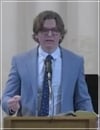
Bill Parker

Confessing Jesus Christ

1 John 4:1-4
Bill Parker March, 23 2008 Audio
0 Comments
Bill Parker
Bill Parker March, 23 2008

Sermon Transcript

Auto-generated transcript • May contain errors

100%
Now, if you would, let's turn
back in our Bibles to 1 John chapter 4. I want to reread the first three
verses of this chapter. The Apostle John writing to churches
throughout Asia Minor. Verse 1 of chapter 4, he says,
Beloved, that's the children of God, brethren in Christ, believers,
that's who he's writing to. He says, Believe not every spirit,
but try or test the spirits, whether they are of God. Why
should we do this? Here's the reason. Because many
false prophets are gone out into the world. There are many. He
says in verse 2, Hereby know ye the Spirit of God. Every spirit
that confesseth that Jesus Christ is come in the flesh is of God.
And the title of my message this morning is Confessing Jesus Christ. Confessing Jesus Christ. And
I would like for you, as I go through these scriptures and
preach this message, to consider that issue. Have I confessed
Jesus Christ? Those who are saved will confess
Jesus Christ. Those who are not will not confess
Him. Verse 4, or verse 3 rather. And
every spirit that confesseth not that Jesus Christ is come
in the flesh is not of God." Now, listen to this very carefully.
You hear the term Antichrist, Antichrist, Antichrist, the Antichrist. And that will conjure up all
kinds of images in people's minds, especially with the popularity
of what they call revelation and the prophecy, movies, books,
and everything. Now, listen to this very carefully.
Somebody says, well, I don't know who the Antichrist is. Well,
the Bible tells us. It's not complicated. Now, listen
to it. Read verse 3 again. And every
spirit that confesseth not that Jesus Christ is come in the flesh
is not of God, and this is that spirit of Antichrist. Now, do you hear that? Let that
soak in for a minute. This is that spirit of Antichrist,
whereof you have heard that it should come, and even now already
it is in the world." There is the issue, confessing Christ.
Now, John's subject, the Apostle John's subject in this passage
here is testing preachers, putting preachers to the test. That word
spirit, he says in verse 1, try the spirits, what he is talking
about is men or women who speak as motivated and energized by
a particular spirit. Now, you can argue over whether
he's talking about evil spirits, demons, or whatever. That's not
the issue here. Every person that stands before
an audience and goes out in the airwaves or stands behind a pulpit
who claims to be speaking for God or claims to be speaking
as they are motivated, energized, or taught by the Holy Spirit. Now, that's what he's dealing
with here. You see, but there's one Holy Spirit, God the Holy
Spirit, the third person of the Trinity, one Holy Spirit, one
God, but there are many, many, many, many evil spirits. Now,
the Scripture teaches this. The Holy Spirit is the Spirit
of truth. Evil spirits are lying spirits. They're spirits of error. Look
down at verse 6. He says, We are of God. Now,
who's he talking about, of God? Everyone that confesses Jesus
Christ. We're of God. How do I know if
I'm of God or not of God? Well, do I confess Jesus Christ? If I don't, I'm not of God. And
he says, We're of God. Now, he that knoweth God heareth
us. If I'm of God, and if I've confessed
Jesus Christ, and if I'm speaking as I'm motivated and taught and
energized by the Holy Spirit, then those others in this audience
today who are of God will hear what I have to say and believe
it. Not because it's me now. I mean, that's nothing. Not because
I went to school or seminary or have a degree, no, no. Not
because I've been in it for a hundred years, which I haven't, but because
I'm going to point you to something here that's our standard called
the Word of God. So he says, he that knoweth God
heareth us, he that is not of God heareth not us. Now he says,
hereby know we the spirit of truth, that's the Holy Spirit,
and the spirit of error. That's an evil spirit, truth
and error. Now, here's what John is saying
in this passage. He's simply saying this, it is
vital that we know the difference. This is necessary. Now, this
is like the difference between a thirsty man taking a cool,
clear, clean drink of water and having his thirst quenched or
drinking in a vial of strychnine poison. That's the difference,
you see. This is life and death. It's
vital that we know the difference. It's vital that we discern or
understand or judge the difference, because this is life and death
here. Now, the reason we have to do this, as I said back up
in verse 1 there, the reason we have to be so careful and
so diligent in this area is because many false prophets are gone
out into the world. And if you read the Scriptures,
if you know anything about the Scriptures, you're going to know
this. False prophets have always outnumbered
God's prophets. They've always done that in every
generation. False prophets have always outnumbered
God's prophets. So one thing that tells you right
offhand is that when it comes to knowing the difference between
a true preacher of God, a spirit of God, or a false preacher,
false prophet, you can't use numbers as your standard. I've
heard people say, well, everybody else is saying this. There's
just a few of you saying that. Well, that may be true, but that
doesn't make it true. Just because everybody else is
saying it, that may be true, but that doesn't make what they're
saying true. It may be true that everybody else is saying it.
So this thing about numbers isn't the issue here. They've always
outnumbered God's prophets. Now, false prophets, listen to
me, false prophets are motivated and energized ultimately by Satan,
the devil, and his demons. Look over at John chapter 8 with
me. Now, I'm going to be turning to a lot of scripture, and if
you can't get to these, I urge you to write them down and look
at them on your own. Because you're not going to get
anywhere in this if you don't read the Scriptures, if you don't
go by the Word of God now. It's like a fellow trying to
measure a foot without a ruler. He's just not going to get anywhere.
He's going to be off a little bit. He may be so good he can
get it close, but close isn't good enough, you see. You've
got to have it right exact. And just thinking and asking
other people's opinions is not going to help you one bit. Read
the Word of God. This is where we're going to
find it. This is God's revelation to his people. Look at John 8,
44. Now, in John 8, and I'm not going to be able to read the
whole context of these, and you know how I believe context is
the all-important rule of interpretation. So I'm not taking things out
of context. I want you to go back and study these and read
them in their context. But think about this now. Who's
he talking to here? He's talking to a religious man
here in John 8. These are the most religious,
most well-respected preachers and teachers of their day. These were men who were doing
their best to keep the law in order to be saved, which is work
salvation. And that's against the gospel.
But here's what he says in John 8.44. This is the Lord speaking
to these religious men. He says, you are of your father
the devil. And the lust of your father you
will do." Now, lust there is any unlawful desire. Any unlawful
desire is a lust. Not just sexual lust, but any
unlawful desire. And I want to tell you something.
Listen to me very carefully. Do you know the most evil, unlawful
desire that a person can have? It's to desire salvation based
on his works and his efforts. Because that's a denial of the
glory of God. It's a denial of Christ and his work. And that's
a self-righteous desire, uplifting the sinner. That's the proud
look that God hates. That's a lust. You ever think
of it that way? That's an unlawful desire. And
he says here, the lust of your father you will do. He was a
murderer from the beginning. And that's talking about Satan.
And how did he murder? Well, look, he says, he abode
not in the truth. He did not continue in the truth.
What God spoke, Satan stood against. And he says, because there's
no truth in him, and when he speaketh a lie, he speaketh of
his own. What that means is this. When
he tells a lie, he's only telling you what comes naturally to him.
That's the way a false prophet is. You see, when he gets up
and preaches the false gospel, he's only preaching what comes
natural to man. You see, it's not out of the
ordinary. So he shouldn't amaze us that there are many of them.
And so he says, for he's a liar and the father of it. Now go
back to 1 John chapter 4. Look down at verse 5. Now they're
energized and motivated by Satan. We speak of Antichrist. You hear
a lot of people talk about Antichrist being Satan's henchman. Well,
that's who it is, you know. The spirit of Antichrist is the
spirit of Satan. And he says in verse 5, they
are of the world, therefore speak they of the world, and the world
heareth them. You know, if you tell the world
what they want to hear, they'll hear you. The problem with the
gospel by the Spirit of God is that men by nature do not want
to hear it. You say, well, that's not true.
Turn to John chapter 3. Turn over there. John chapter
3. See, men by nature don't want to hear it. Now, why don't they
want to hear it? Well, look at this. Look at John
chapter 3 and look at verse 19. Now again, this is Christ speaking
to a religious man named Nicodemus. And he says in verse 19 of John
3, this is the condemnation, that light. Light is an emblem
of God's glory. It's an emblem of Christ himself.
He's the light of the world. He said, I am the way, the truth,
and the life. No man cometh unto the Father
but by me. Light is an emblem of the truth
itself. Light is coming to the world.
And men love darkness rather than light because they're what?
They're evil. What was evil? They're deeds.
Now, what are deeds in the Scripture? Deeds are men and women's efforts
to save themselves by their works. And why are they evil? Well,
men are sinners. That's what the Scripture teaches.
We're sinners and we cannot be saved by our deeds. It's impossible. By deeds of law shall no flesh
be justified, made right, saved in the sight of God. And our
very attempts to save ourselves by our deeds are nothing but
self-righteous, self-elevating efforts to deny Christ and what
He did, what He accomplished. God sent His Son into the world
to do what we cannot do for ourselves. If we insist on doing it ourselves,
we deny Him. And that's why they're evil in
the sight of God. And He says in verse 20, For
everyone that doeth evil hateth the light, neither cometh to
the light, lest his deed should be reproved." That means discovered.
In other words, the gospel light shows me what I cannot see for
myself. Men by nature cannot see for
themselves that their deeds are evil, therefore the light of
the gospel of Christ. In other words, it's like this.
If I'm trying to work my way into God's favor and blessings
and salvation by my own works, then I'm denying the work of
Christ. That's like saying my work is better than his. When I take my righteousness,
my efforts, and compare them to Christ, how does it compare?
Well, I'm not even on scale. Go back to 1 John 4 now. So this
is the issue now. They speak of the world. They
tell the world what they want to hear. You're all right. Peace,
peace when there is no peace. All of these messages. They talk
about how good men are, how noble men are, how dignified men are,
and that's what the world wants to hear. They applaud the works
and efforts of men. Look at Brother so-and-so, what
he's done for the Lord. That's the kind of message, you
see, that elevates the sinner. That's not preaching Christ,
is it? That's the kind of message that brings sinners into the
forefront and lifts them up. Men like to hear that. The issue
here is to discern the difference. And if we don't discern the difference,
he says here, we'll perish. You know, Christ told those who
followed the Pharisees, he said, they'd be blind leaders of the
blind. And if the blind lead the blind,
both shall fall into the ditch. You know, if you follow the blind
into the ditch, you know where you're going to end up? In the
ditch. Isn't that right? He told the
Pharisees one time in Matthew chapter 23, he says, you encompass
sin land to get converts, trying to convert people to your religion. And he said this, he says, when
that convert, when that proselyte, that convert is made, you make
him twofold more the child of hell than yourselves. All you've
done is just seal him in to a false way. Now, here's another question. How do we discern? How do we
know the difference? Well, this is the issue here
in 1 John 4 when he says test the preachers. Well, we have
to listen critically. Now, that may sound strange coming
from a preacher because most preachers don't like to be tested. But you have to listen critically.
But now let me tell you something. There's a good, there's a bad
way of listening critically, and there's a good way of listening
critically. Now, the bad way is this. Don't listen just to
find fault. Because I want to tell you something.
If you're listening to me or any other preacher just to find
fault, you will find it. You'll find what you're looking
for. You'll find fault. Now, fault is not going to save
you. Fault is not going to help you. But you will find it because
we're, you know, Paul said we have a glorious message, it's
a treasure, he said in 2 Corinthians chapter 4, but he said we have
this treasure in clay pots. And a clay pot's not much, it's
breakable. So, don't listen critically in
the sense of listening to find fault, but listen critically
in this way. Now, I want you to turn to Acts
chapter 17. Now, here's a good critical. Critical list, critically listening.
Here's Acts chapter 17, and look at verse 10. Now here's two preachers
of God. True prophets, true preachers.
One named Paul, you know about the Apostle Paul, and his companion
Silas. Look at verse 10 of Acts 17.
It says, And the brethren immediately sent away Paul and Silas by night
unto Berea. They sent them to a place called
Berea. That's not Berea, Kentucky, either. That's over there, you
know. But Berea, Kentucky is named after this one. So they
sent him unto Berea, who coming thither or there, went into the
synagogue of the Jews. So they went into a synagogue
just means a gathering. That's what that is. They're
gathered there to worship. And he says in verse 11, these
were more noble than those in Thessalonica. When they went
and preached in Thessalonica, they got run out of town. They
didn't want to hear anything. They just immediately rose up
and just rejected what Paul had to preach and what Silas had
to preach. They said, get away from us. We don't want to hear
that message. It's offensive. Well, what did we read in John
3, 19? The natural man hates the light, you see. And they
turned against him. But now these in Berea were more
noble than those in Thessalonica, in that they received the word
with all readiness of mind, and searched the what? Now, the scriptures. Now, what does the word scripture
mean? Well, you know what script means. That means right. Scriptures
are the written word of God. Well, what did they have? Well,
they had the Old Testament. They had part of the Old Testament.
That's what they searched. And it says they searched the
Scriptures. How often did they do it? It says they did it daily.
You might say, well, preacher, that's a little much for me.
Well, you're not as noble as the Bereans then. But he says
they searched the Scriptures daily whether these things were
so. In other words, they listened
critically. When they heard Paul preach, they went to the Scriptures
to see if what Paul was telling them was so. Is that right or
is that wrong? Is Paul preaching by the Spirit
of God or is it an evil spirit? How am I going to know? I'm going
to go to the Scriptures. Why am I going to do it daily? Well, don't raise your hand because
I won't be able to count you. But how many of you here take
prescription medications daily? Now, why do you do it daily? Because it's physical life and
that is precious to you. Physical health is somewhat precious
to you. How you feel today is precious
to you. Well, this is even more important,
isn't it? Because this is what determines
whether a person spends eternity in heaven or in hell. Now, you
look at these noble Bereans. You say, well, does that mean
that they were saved because they were more noble? No. I want
to tell you something. You better mark this down. The
only nobility we have is in Christ. What made the difference between
the noble Bereans and the unbelieving Thessalonians? The grace of God. And that's it, isn't it? If God
had left the noble Bereans to themselves, they would have been
just like the Thessalonians, rejected. That's the plight of
man. So you see here the issue is
What does the Word of God say? You know, this was an Old Testament
issue, too. In the book of Isaiah, when he
was preaching to his lost, self-righteous, religious generation, he had
to tell them by the Word of God. In Isaiah chapter 8 and verse
20, he said, "...to the law and to the testimony." That is, to
what God's Word says. If they speak not according to
this Word, it's because there's no light in them. They're lying
spirits. He called them familiar spirits,
but that's what it is. Well, let me show you some scripture
here. I want you to go to Revelation,
chapter 22. That's the last chapter of the
whole Bible. Now, the subject is confessing
Jesus Christ, discerning between false preachers and true preachers.
How do we do it? By the Word of God. by the written
Word of God. And I want to tell you something
about this written Word of God. We have it from Genesis to Revelation.
And you say, well, I'm just not that big on the Bible. Well,
I didn't used to be either, but I am now. And you say, well,
you make a living at it now. Well, I gained a healthy respect
for it long before I began making a living by it. But I want to
tell you something. This is the book of books. This
is the inspired, revealed Word of God. And I know people have
different opinions on it. Everybody's got one. And everybody
has an opinion. Somebody says, well, that's what
you say it says. That's what I say it says. Now,
listen to me. There are rules of scriptural interpretation.
Most people don't even know about it. But I want to show you something
about the written Word of God. Now, let's start with Revelation
22. And I say, if you can't find it, if you haven't gotten there,
just write this down and look at it. Now look at verse 17 of
Revelation 22. He says, And the Spirit, that's
the Holy Spirit, and the Bride say, Come. Now who is the Bride
there? That's the Bride of Christ. Now who is the Bride of Christ?
The Church. So what he's saying is this is
the testimony of the Church as energized and motivated by the
Spirit of God. And here's what we say, Come!
And let him that heareth say, Come, you say. And let him that
is athirst come." Thirsty for what? Well, if you were thirsty
for water, you'd go to the drinking fountain. You'd go to the watering
hole and get you a drink. If you're thirsty for salvation,
where are you going to go? Go to Him who's the water of
life. That's what Christ said to the woman at the well in John
4. He's the water of life. If you're hungry, Go to the bread
of life. He said in John chapter 6, I'm
the bread of life. If you're a sinner, go to the
Savior of sinners. You see, if you're thirsty, if
you're hungry, if you're needy, if you're naked, go to someone
who has the right clothing. That's the way Christ's righteousness,
His righteous robe that is put upon sinners is indicated in
Scripture. I have no righteousness of my
own. All my righteousnesses are as filthy rags. The Bible says
in John 3, verse 10, there's none righteous, no, not one.
And that's all of us now. You say, well, that's not me.
Well, you're just better than the rest of us. What can I say?
You don't need salvation. If you're not in the same boat
with me, you don't need salvation. But I'm a sinner and I need it.
I need mercy and grace. Somebody says, well, I just want
what I deserve. Well, I don't want that. Because I know what
I deserve. I deserve nothing but condemnation
and wrath. I know I'm the recipient of a
salvation that I didn't earn and I don't deserve. That's what
grace is all about. Mercy. But now, if that's not
you, you're just better than the rest of us. I don't see how
you even got in here this morning. Because somebody should have
spotted you right off. Said, hold it, fella, you don't need
to be here. Isn't that right? That's what this is about. He
that is a thirst come, and whosoever will. Now man by nature won't,
but whosoever will, let him take of the water of life. How? Freely. Freely. Now look at verse 18. For I testify unto every man
that heareth the words of the prophecy of this book, If any
man shall add unto these things, God shall add unto him the plagues
that are written in the book. And if any man shall take away
from the words of this prophecy, the book of this prophecy, God
shall take away his part out of the book of life and out of
the holy city and from the things which are written in this book."
That's how important this word is. Now, turn back to John chapter
5. It's the written word of God. Well, what is this word all about?
Now, let me tell you something now. The gospel message of salvation
by God's grace in Christ, His blood, His righteousness, His
obedience, His death, His burial, His resurrection, His intercession,
His second coming, all of that, those great truths that are gospel,
good news. Christ died for my sins. He put
away my sin. He paid my debt in full. He drank
damnation dry. He finished the transgression.
He made an end of sin. He brought in everlasting righteousness. I'm saved not based on my righteousness,
but upon His. He died. He was buried. He arose
again the third day. He lives. We don't preach or
worship or follow a dead martyr. We're not looking for His tomb.
We look to Him who lives. He lives, you see. He's not in
that tomb. If you find that tomb, men would
worship it, wouldn't they? And he says not to do that. Men
would make a pilgrimage to it, and he says, don't make a pilgrimage
to his tomb, run to him, whom to know is life eternal. He's
a living Savior, and he's coming again to gather his people and
to judge this world. So the gospel is not hard to
understand. But now, this book, when you
talk about Genesis to Revelation, there's a lot of difficult things
here. But let me tell you what it's all about. And I'm not oversimplifying
things here. And the reason I know I'm not
oversimplifying is because our Lord said it. And He says, look
at verse 39 of John chapter 5. He says, search the scriptures. What's the scriptures? That's
the written word of God. And he's talking to the Pharisees
here. He says, for in them you think you have eternal life,
for they are they which testify of me. That's what this scripture
is all about, about Christ and Him crucified. Christ. who died,
was buried, who arose again the third day, who is seated at the
right hand of the Father, ever living to make intercession for
His people, who is coming again. That's what this book is all
about. And that's really the essential. That's the basis of
it all. He goes on over in verse 45 of
this same chapter. Now, he says, do not think that
I will accuse you to the Father. There's one that accuseth you,
even Moses, in whom you trust. Now, he's speaking to the Pharisees.
And when it says they trusted in Moses, what that means is
they trusted in their works, because Moses represents the
law. And they trusted in their works
to save them, so they're trusting in Moses. But listen to what
he says in verse 46. For had you believed Moses, you
would have believed me. For he wrote of me." Moses, in
his writings, in his giving of the law to Israel, he never taught
Israel to seek salvation by their works, to seek righteousness
by their works, to seek eternal life by their works. Paul wrote
it in Galatians chapter 3, I think it's in verse 24, he said, For
the law was our schoolmaster to lead us unto Christ. That's
what Moses wrote. He says, but if you believe not
his writings, how shall you believe my words? Turn to Luke chapter
24. Luke chapter 24. You see, the
law was given to Israel, number one, to expose their sin and
their inability to be saved by their works. That was number
one. That's why the Ten Commandments
was given. The Ten Commandments is a beautiful code, it's a moral
code, but it was never given as a way of salvation. In fact,
anybody who could keep the Ten Commandments, let me tell you
about them, they do not need salvation. If you can keep the
Ten Commandments, you don't need salvation. That's right. That the law was given to sinners
in order to expose the disease, just like an x-ray machine or
an MRI today exposes the disease within. That's why the law was
given first and foremost. Secondly, it was given, and ultimately,
to drive them to Christ for the cure. Christ and Him crucified. His blood, His righteousness
alone for salvation. But look at Luke 24. Look at
verse 25. He's speaking. to some of his disciples, and
he says unto them, verse 25 of Luke 24, O fools and slow of
heart to believe all the prophets have spoken, ought not Christ
to have suffered these things and to enter into his glory?
And beginning at Moses and all the prophets, he expounded unto
them all in all the scriptures the things concerning himself."
Look across the page at verse 44. He's sitting there with his
disciples. And he said unto them, These
are the words which I spake unto you while I was yet with you,
that all things must be fulfilled which were written in the law
of Moses, and in the prophets, and in the Psalms concerning
me. Then opened he their understanding,
that they might understand the Scriptures, and said unto them,
Thus it is written, and thus it behooved," or it was impending
upon Christ. to suffer and to rise from the
dead the third day, and that repentance and remission of sins
should be preached in his name among all nations, beginning
at Jerusalem." Now, you notice the order there? It doesn't begin
with the preaching of repentance and the remission of sins. It
begins with Christ suffered and died and rose again. There's
the foundation of salvation. The main issue upon which all
preachers are to be tested He is the preaching of Jesus Christ
and Him crucified. The gospel of God's grace in
and by Him. Who is Jesus Christ? Look back
at 1 John 4. John writes here, in verse 2,
he says, Every spirit that confesseth that Jesus Christ is come in
the flesh is of God. Now, we know several things here.
We know John is not saying that anybody who just makes a statement
A person can say, I believe that Jesus existed historically. You know, there are historians
that don't even believe that. If you look at the History Channel,
you might see a program every now and then talking about the
search for the historical Jesus. And they'll argue, you know,
well, he didn't really exist, he did. Well, he did. I mean,
that's a stupid, foolish argument. That's just an outcropping of
the depraved mind of man. They don't even want to admit
that he even existed, let alone who he is. But you see, John's
saying more than that. He is addressing a particular
heresy of his day. There were men back then who
claimed to believe in Jesus, in Christ, but because they believed
that material things, that evil existed in material things in
and of themselves, they said, well, he couldn't have a human
body, couldn't have a fleshly body. Because that would make
him a sinner. We hear similar things like that
taught today, in some ways. But you see, he did have a human
body, but he was without sin. His human body was endowed with
the full measure of the Spirit, and it was in union with his
deity. Well, who is Jesus Christ? Well, write this Scripture down.
Matthew 1, verses 21-23. Matthew 1, verses 21-23. Who is Jesus Christ? There the
angel of the Lord came to Joseph, and Joseph's wife, Mary, was
pregnant with the Christ child. He had to be born of woman, the
Scripture says. That was prophesied way back
in Genesis chapter 3 and verse 15. He's the seed of woman, not
the seed of man. You and I are the seed of man.
That's why we were born in sin. We were born dead in trespasses
of sin. But Christ, who is the Savior
of sinners, could not be sin for himself, yet he had to be
man. He had to take on him the nature of humanity without sin,
body and soul without sin. And the reason is because he
had to die. God cannot die, but this person who is God did die.
That's attributed to his humanity. He is both God and man in one
person. Now, anybody who claims to believe
in Christ or to preach Christ, who denies either his deity or
his humanity, is a spirit of error. He is both God and man
in one person. I cannot explain that to you,
and you cannot explain it to me, but it's so. That's who Jesus
Christ is. And when the angel came to Joseph,
he said, Joseph, don't put your wife away. Because Joseph knew
that he had nothing to do with that pregnancy. And he said,
in her shame, he wanted to put her away. And he said, don't
put her away. For that which is in her womb is conceived by
the Holy Ghost. That holy thing that's in her
womb is conceived by the Holy Ghost. And then he tells him
what to name the child in Matthew chapter 1, verses 22 and 23.
And 24, I believe. He says, you shall call his name Jesus. For he shall save his people
from their sins." And then later on he says this, "...thou shalt
call his name Immanuel." That's from Isaiah chapter 9. It means
God with us. God-man. John chapter 1, "...in
beginning was the Word, and the Word was with God, and the Word
was God." That's speaking of the Logos, that's speaking of
Christ. John 1.14 says, And the Word was made flesh and dwelt
among us. Who is Jesus Christ? He's God-man. Romans chapter 1. Turn over there. Romans chapter 1. Paul begins
the epistle to the Romans with telling them this is the person
of Christ, you see. We preach a person. Who is he?
How is he identified? How are counterfeits exposed? How is he distinguished from
idols? How do I know that I'm worshipping
the one true and living God? How do I know that I'm not trusting
in a counterfeit? Who is Jesus Christ? Paul, verse
1 of Romans 1, Paul, a servant of Jesus Christ, called to be
an apostle, separated unto the gospel of God which he had promised
afore or before by the prophets in the Holy Scriptures. There
you go to the Scriptures again. Verse 3, concerning his son Jesus
Christ our Lord, which was made of the seed of David according
to the flesh, he came through the lineage of David, the tribe
of Judah, the kingly tribe. It was prophesied back in Genesis
chapter 49 that the scepter, that is the rule of kingship,
would not depart from Judah until Shiloh, peace, came. Christ is
our peace. He made peace between God and
sinners by his death on the cross. He satisfied the justice of God.
And then that's his humanity. Verse 4, "...and declared to
be the Son of God with power according to the Spirit of holiness
by the resurrection of the dead." He was made of the seed of David.
His humanity had a beginning. But His deity had no beginning.
He wasn't made to be the Son of God. He was simply declared
to be what He always was. He's the Alpha and the Omega,
the beginning and the end. He has no beginning and no end.
He's the same yesterday, today, and forever. He's Jesus Christ,
the Son of God. He's the God-Man. He's the only
one who could save a sinner from their sins. It took both God
and man and one person. Secondly, what did Jesus Christ
actually do? What did he accomplish? Look
over at verse 16 of Romans 1, since you're there. Paul writes
here, he says, I'm not ashamed of the gospel of Christ, for
it is the power of God and the salvation to everyone that believeth,
to the Jew first and also to the Greek. For therein is the
righteousness of God revealed from faith to faith. As it is
written, the just shall live by faith. What did Jesus Christ
actually do? I quoted for you in Matthew chapter
1, it said, His name shall be called Jesus for He shall save
His people from their sins. Well, that's what He did. He
didn't try to save us. He didn't try to save anybody.
Christ is not trying to save anybody. Christ died on that
cross to save His people from their sins. He put away sin by
the suffering on the cross. He shed His blood as a full payment
of all the debt for sin. He satisfied law and justice.
Over in 1 John chapter 4, down there in verse 10, his death
is spoken of as a propitiation. If you want to know the gospel,
if you want to know what Jesus Christ actually did on that cross,
study that word propitiation. We don't use that word today.
Or very much. I never hear it. Except when
I read three passages out of the New Testament. Romans 3,
1 John 4, and 1 John 2. It's over there also. It's a
New Testament derivative of an Old Testament passage that means
mercy seat. In the holiest of all, there
was a lid over the Ark of the Covenant called the mercy seat.
The high priest would go in one time a year and he'd sprinkle
blood on the mercy seat. That was a type of Christ and
his death on the cross to satisfy justice. What does propitiation
mean? It has nothing to do with trying
to do something or attempting to do something or going halfway
or 99% of the way. A propitiation means this, that
when Christ died on the cross, giving up his life for his people,
God was and is satisfied. It means reconciliation. It means
redemption accomplished. It means righteousness established.
Propitiation is a sin offering, a sacrifice for sin that gets
the job done. It has nothing to do with whether
you are accepted. You know, I hear these people
talk about accepting this, accepting that, accepting Christ. Listen,
God accepted it, and that's it. God accepted Him. Now, you believe
in Him, you're accepted in the Beloved. It's a salvation that
Christ accomplished on the cross. Now, thirdly, why did He do it?
You say, why is that important? Well, let me give you these three
things. Number one, the nature of God. The reason that Christ
had to come and die for the sins of his sheep is because God must
be just to save sinners. God must be both a righteous
judge as well as a loving father. Yes, God is love. Preachers talk
today about God's love, mercy, and grace, and I love to hear
about it, if it's scriptural. But any love In any mercy, in
any grace from God that denies or ignores His justice, His holiness,
and His truth is anti-gospel. He must be both a just God and
a saint. He must punish sin. He cannot
just look over it. Christ did not die just as an
expression of love. Christ died as a propitiation. It pleased the Father to bruise
Him as the sin-bearer and substitute of His people. Somebody had to
pay the price. You can't do it. I can't do it.
That's what Christ did on the cross for his people. He paid
the price. Somebody must take the punishment. God is a righteous
judge. He cannot just look over it.
He cannot forget. He can't just say, well, I love
you so much, just forget about it. Let's act like it never happened.
No, sir. If that's the case, Christ would
not have had to come and die. But he did come and die that
God might be just and justify. He did it because of our inability. We cannot save ourselves. Listen,
if you could start today living a perfect life, which you can
and I can, we still, one day or a lifetime of perfection is
not enough to pay for one sin. It takes the blood of the Son
of God. That's why the Scripture says you weren't redeemed with
corruptible things, but you were redeemed with the precious blood
of Christ. He came because of our inability. We cannot save
ourselves. We cannot make ourselves righteous.
That's why our salvation and our righteousness is Christ and
Him crucified. And then He came to glorify the
Father in His own exaltation. What did He do? Now, here's the
last one. Where is He now? Well, He's not
in a tomb. He's not in a shroud. in a grave, he's risen. He's risen. Why? Because from
his death comes life. And he's ascended unto the Father,
seated at the right hand of the Father ever living to make intercession
for us. And you know what that means?
That we live too. We who know him and rest in him,
we live too. He sends his Spirit to give us
life in the new birth. He's risen. Because He lives,
we live. And you know what that means?
He's coming back again. He's coming to judge this world
in righteousness. You see, the only thing that's
going to matter when Christ comes again is how do you stand with
Him. You say, well, I've lived my
life trying to be a good husband, a good father, good worker, good
citizen. Well, if that's your plea, then
you're in trouble. You say, well, preacher, shouldn't
we do all that? Yes, but not in order to be saved. You see,
that's a job you can't do. That's a work you cannot fulfill. Only the Son of God incarnate
can do that. How are you going to stand with
Him? Are you going to stand before God pleading your own righteousness
in your sins? Or are you going to stand before
God in Christ? All who stand before God in Christ
shall not be ashamed. that they shall live forever. He is risen. He is coming again. Bear it in mind. Let's sing hymn
number 287, Like a River Glorious. That will be our closing hymn.
Bill Parker
About Bill Parker
Bill Parker grew up in Kentucky and first heard the Gospel under the preaching of Henry Mahan. He has been preaching the Gospel of God's free and sovereign grace in Christ for over thirty years. After being the pastor of Eager Ave. Grace Church in Albany, Ga. for over 18 years, he accepted a call to preach at Thirteenth Street Baptist Church in Ashland, KY. He was the pastor there for over 11 years and now has returned to pastor at Eager Avenue Grace Church in Albany, GA

Comments

0 / 2000 characters
Comments are moderated before appearing.

Be the first to comment!

Joshua

Joshua

Shall we play a game? Ask me about articles, sermons, or theology from our library. I can also help you navigate the site.