Bootstrap
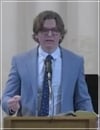
Bill Parker

The Lord, My Shepherd

Bill Parker December, 27 2006 Audio
0 Comments
Bill Parker
Bill Parker December, 27 2006

Sermon Transcript

Auto-generated transcript • May contain errors

100%
Now let's turn back to Psalm
23. Now all of you are familiar,
to say the least, with this passage of Scripture. So I'm not really
going to say anything new. I hope I never say anything new,
to be honest with you. Because if it's new, it's no
good, is it? We sing that song, the old, old
story. And that's what I want to tell
every time I get up here and preach, the old, old story, the
eternal story. But I'm not going to say anything
new. It may be new to you or it may be new to me. But what
I hope to do in this short message is just simply give us some words
of comfort. Sometimes you just need that,
don't you, just to settle in and just the Lord speak to your
heart and just be comforted. And here in these six verses,
you know this is more than just a poem. This is more than just
something to be read at a funeral. Quite often is. And that's okay. That's fine. But what we have
in Psalm 23 is really what you might say the story of the salvation
and life of a believer in Christ. I mean, this is like an autobiography
of a believer in six verses. And I like that. They say brevity
is something to be desired. Well, one old boy said, say the
mostest and the leastest. And that's what the Lord did
in Psalm 23. It simply begins in verse 1,
the Lord. I've entitled this message, The
Lord My Shepherd. And it says the Lord. And if
you're going to talk about salvation, if you're going to talk about
the blessedness of salvation, the life of a believer, well,
this is where everything begins. the Lord, the Lord. It all begins,
it all centers around, it all is culminated in the Lord. And any time you see the word
Lord there, and a lot of times you'll see that in capitals in
the King James Version, but it's referring to his specific character
as Savior, the sovereign Savior of his people. This is Jehovah,
who is the Lord. He's the God of election. He's
the God who's in control. He chose a people out of Adam's
race, unconditionally, according to His sovereign will, and determined
to save them for His glory through His Son. This is the Lord of
promise. This is the God of Abraham, Isaac,
and Jacob. That's the God of promise, the
God of grace. This is the God of covenant.
He makes covenants. And in the beginning God the
Father made a covenant with his Son wherein as he chose his people
he conditioned all of their salvation upon Christ and upon him alone
to the point that where the whole responsibility of the salvation
of God's chosen people was placed solely upon the shoulders of
the Lord Jesus Christ. And that's why He's called our
Shepherd. That is a great description of our Savior. The Lord is my
Shepherd. Christ is my Shepherd. He's the
Shepherd of the sheep. The Bible calls Him the Good
Shepherd. Look over at John chapter 10.
And this is so precious. Don't let this go by you. Who is the Shepherd? He's Jehovah.
Jehovah God. The Savior of His people. God
who saves. God who's able to save, the Lord
of hosts, the Lord of a great army, nothing can stop Him or
hinder Him or even slow Him down according to His timetable to
which He has appointed all things after the counsel of His own
will. That's who He is. And He is our
shepherd. I'll tell you what, you think
about that. What does the shepherd do? He cares for the sheep. He
cares for the sheep. The shepherd loves the sheep.
The shepherd protects his sheep. He says in John chapter 10, look
here at verse 14, or verse 11 rather, he says, I am the good
shepherd. He's the only good shepherd.
Among men there's to be found none good, no not one. None righteous,
no not one. But our shepherd is the good
shepherd. That's the kind of shepherd we need. You see, sheep
is a good description of us. I don't know much about sheep.
I've never been a shepherd or a sheep herder, but they say
sheep aren't the smartest animals in the kingdom. And spiritually
speaking, we're the dumbest. Now, isn't that right? By nature,
as we are fallen, ruined by the fallen Adam, we're the dumbest.
We're ignorant, spiritually dead. The Bible says we like sheep
have gone astray. That's the tendency of a sheep.
And it says we like sheep have gone astray. and gone to our
own way. And if left to ourselves, where
will we go? We'll go astray. And that's why
the sheep without a shepherd is lost. Without a shepherd,
where are we? We're nowhere. We don't know
what direction to turn. We don't know where we're going.
We don't even know where we've been. You think about that. Astray,
that means lost. That's as lost as lost can get.
You know, sometimes you get lost, at least you know where you've
been. You know, we don't even know where we've been. That's
right. We don't know our sin until God
shows us our fallen Adam. Isn't that right? We don't know
where we've been. And we certainly don't know where
we're going. All we, like sheep, have gone
astray. Well, what are we? We need a good shepherd. And
he better be a good one. Well, he's the best shepherd.
The Bible calls him the chief shepherd. He's the only shepherd. And he says, I'm the good shepherd.
And look here. Now, look how much the shepherd
loves the sheep. The good shepherd giveth his life for the sheep."
Right there in this psalm, according to God's Word, we find the doctrine
of substitution, representation. He said he gives his life for
the sheep. He takes our place. He took our place on Calvary.
And he loved us so much that he gave his life for us. He stood
in our place under the justice of God and took the full penalty
of God's divine justice against our sin as they were laid upon
him and charged to him. He's the good shepherd. If he
doesn't give his life for the sheep, he's not a good shepherd.
You know that? If he runs when the wolves come,
he's not a good shepherd. But the good shepherd gives his
life. He says in verse 12, he that is in hireling and not the
shepherd whose own the sheep are See, if the wolf come in
and leaveth the sheep, and fleeth, and the wolf catcheth them, and
scattereth the sheep," that's no shepherd. That's just a hireling. You see, the shepherd has a vested
interest in the sheep. They're his. They belong to him.
He owns them. Christ is our good shepherd who
bought us lock, stock, and barrel. He paid the redemption price
for his sheep, and he owns us. We're not our own, you see. He
shed His blood as payment. He made payment in full. And
He protects us. He gave us His righteousness.
Now, the hireling who doesn't own the sheep, just a guy who's
out there been paid minimum wage maybe to keep them, when the
wolf comes, he doesn't own the sheep. He doesn't have a vested
interest in the sheep. And when the wolf comes, where
does he go? He runs. And the sheep are scattered.
But not the Good Shepherd. Oh, no. He'll never do that. He'll never let us go astray.
Look on down in verse 14, he says, I'm the good shepherd and
know my sheep. The good shepherd knows his sheep.
You see, there's none of this stuff that modern religion teaches
about Christ died for everybody, and he's just hoping that somebody
will accept him. He don't know really who. Now,
there's some who say that he looked down through a telescope
at the time. But listen, let me tell you, the good shepherd
knows his sheep. That means he loves them. Means
he chose them. Means they're his. He knows them
by name. I'll show you that in just a moment. He said, I know
my sheep. He's not ignorant of who he died
for. Just like the high priest of
old who had their names written on his shoulder. Remember the
names of the 12 tribes of Israel. Six over here and six over here
showing that he bore, as a representative, he bore the responsibility of
representing them before God. And he had the names on his breastplate.
Showing that in type, how Christ loved his own. And he knew him. And he said, and am known of
mine. Now, how do you know if you're a sheep? Not only does
he know you, but you know him. He reveals himself to you. You
know Christ. You know how God is just to justify
the ungodly. He says in verse 15, as the Father
knoweth me, even so know I the Father, and I laid down my life
for the sheep. You see, it's for his glory.
He said in verse 16, and other sheep I have which are not of
this fold, this Jewish fold. He has sheep out of every tribe
and nation, God's people. He redeemed them and he means
to have them. And he said, them also I, now look at this in verse
16 of John 10, them also I what? Must bring. Not bring if they'll
let me. I must bring them. He has a mandate. from the Father to bring them
in. They cannot be condemned. You
preached that last week. Who shall lay anything to the
charge of God's elect? Christ's sheep. It's God who's
justified. It's God who declared them not
guilty. It's God who made them righteous
through Christ. Who can condemn us? It's Christ
that died. And that's what he's saying.
He said, I laid down my life for the sheep, therefore I must
bring them. If he laid down his life for
them, he must have them. There's no other way. If he would
fail to bring in even one of his sheep, that makes him a total
fag, and he's not the good shepherd. But you see, the Lord is my shepherd,
and he must bring his sheep in. He said, they shall hear my voice.
That's the preaching of the gospel. We read that in Isaiah 40. O
thou that bring good tidings to Zion. They're going to hear
his voice in the preaching of the gospel and the power of the
Holy Spirit. They're going to be born again.
They're going to know the shepherd. And he said, and there shall
be one fold and one shepherd. One church, one head. One body,
one head. One fold, one shepherd. Not many. And he said in verse 17, Therefore
doth my Father love me, because I lay down my life, that I may
take it again. How many times does he say that
here in context of being the shepherd? I give my life for
the sheep. I lay down my life. Therefore
the Father loves me because I lay down my life. You see, that's
the first thing that we see in Psalm 23. The Lord Jehovah, Savior,
Redeemer, Justifier. That's what He is. And if he's
not, he's not a good shepherd. He didn't come just to be an
example. Could you imagine a shepherd who just says, well, I'm not
going to lead the sheep. I'm not going to protect them.
I'm just going to walk among them and let them see me, and
maybe they'll follow my example. No, sheep are too dumb for that.
That's right. They've got to be led. They've
got to be protected. They've got to be flocked in,
you see. And that's why he's the good
shepherd. Oh, my soul. Look over at verse 27 of John
10. He said, My sheep hear my voice,
and I know them, and they follow me. And I give unto them eternal
life. It's a gift from God. It's grace.
It's amazing grace. The life that we have in Christ
is the result of God's amazing grace. And they shall never perish. They can't lose salvation. Why?
Because He's our shepherd. If we could lose salvation, number
one, he's not our shepherd. Number two, we never had it to
begin with. Is that right? He's our shepherd. I used to have a fellow who would
pull out this verse to try to prove that you could lose salvation.
It said, neither shall any man pluck them out of my hand. And
he would say, well, see there, it says now man can't do it,
but Satan can. Well, now let me tell you something.
Satan is not more powerful than our shepherd. And plus, you might
look there in verse 28, the word man is in italics. That means
it was supplied by the translators. And it's not a bad translation,
but literally it would read like this, neither shall any pluck
them out of my hand. That includes Satan. Nobody's
going to pluck them out of his hand. He said in verse 29, my
Father which gave them me is greater than all, and no man
is able to pluck them out of my Father's hand. I and my Father
are one. I'll tell you, in the shepherd
we have the Father on our side, we have the shepherd on our side,
and we have the Spirit on our side. We're on their side. Oh,
the Lord is my shepherd. Look back at Psalm 23. Listen
to what he says here. We're the sheep. The Lord is.
He said the Lord is, not the Lord might be. Not the Lord's
going to be. He is my shepherd. Now let me
tell you something. He was my shepherd before I even knew him. I was going astray like that
old lost sheep, but he was still my shepherd. He was my shepherd
in eternity past when God gave me to him. That's right, in his
eternal purpose. He was my shepherd when he walked
this earth and kept the law for me. He was my shepherd when he
went to the cross and died for my... He didn't go there for
himself. He didn't die for his own sins. He died for our sins.
He was cut off, Daniel said, not for himself, but for his
sheep. That's right. He laid down his
life for his sheep. He said that. John 10, we read
it three times. He's my shepherd then. And he
is my shepherd now. And he called me into the kingdom.
And because he is my shepherd, look here, it says, I shall not
want. Now, he is my shepherd, not just
a shepherd, but he's my shepherd. And that means I shall not want.
That means I won't like anything. I won't be deficient in any area
in Christ. Now, if you look at me personally,
and you follow me around for about two seconds, you're going
to see more deficiencies than you can count. And I suspect
that's the way it is with you. You're going to see limitations.
You're going to see backtracking. You're going to see a lot of
things that are in the negative. If you look at me, but in my
shepherd, I shall not want. There's no deficiency. That's
what that means. That means complete in Christ. Right now, I am perfect in Christ. I am not perfect in myself. I
wish I were, but I'm not. And as I say, just follow me
around for about two seconds. It may not even take that long.
But in Christ, I shall not lack anything that God requires of
me. The Bible says at this point in 1 Corinthians 1.30 that we
are of God, made of God in Him, in Him now. Wisdom, in other
words, all the wisdom that God requires of me, I find complete
in Christ, for He is my wisdom. You follow me around, you're
going to find a lot of foolishness. But in Christ, you're not going
to find it. And righteousness, all the righteousness God requires
of me, I find complete in Him. And sanctification, holiness,
complete in Him. And redemption, complete in Him.
I shall not want. That's what that means. There's
no lack. There's no want. There's no negative. There's
no insufficiency. There's no incompleteness. There's
nothing but perfection in Christ. Now that's what I am right now
in him if he is my shepherd. I long to be, you know David
said it this way, he said, I shall be satisfied when I awake with
thy likeness. Anticipating, experiencing the
fullness of what he is already in Christ. The Bible says as
he is, so are we. in this world. Look at verse
2. He says, He maketh me to lie
down in green pastures, literally pastures of tender grass. You
might see that in your concordance. What is that? That's His Word.
Oh, His Word is the green pastures. That's why we're here tonight,
to hear from Him, to hear His Word, to feed upon His Word.
His Word points us to Him, Christ who is the Word. The living Word,
in the beginning was the Word. Christ, who is the incarnate
Word, the Word made flesh, dwelling amongst. Christ, who is the written
Word. He said, these Scriptures speak
of me. The key to understanding Genesis
to Revelation is looking to Christ. Scripture tells us that. Christ,
who is the preached Word. If I don't preach Christ, you're
just wasting your time listening to me. And I'm wasting my time
preaching. Anybody gets off on anything
else, they're just They're just blowing smoke. He makes us, and notice here,
He has to make us do it. He maketh me to lie down. It's
like sheep have to be made to be brought into the pasture.
And we have to be made. Oh, the Lord makes us willing
in the day of His power. He gives us a heart to love Him
and to feed upon Him. He implants His Word upon our
hearts and His Spirit indwells us. And He makes us lie down
in the green pastures. It says, He leadeth me beside
the still waters. That's literally the waters of
rest or the waters of quietness. That's the peace of God which
passes understanding. We have peace with God through
Christ on the cross. When God justified us and took
our sins and put them away and gave us His righteousness, but
by His Spirit in the new birth, when we're regenerated, we have
the peace of God within our hearts. That peace of God, that's what
he's talking about there. He leads us beside the waters
of quietness, the graces of the Spirit. You know, you've heard
the saying, still waters run deep. Boy, these do. It's almost like all our lives
we just play around on the surface. We don't know the depth of it,
do we? The depth of God's grace by His Spirit. In verse 3, he
says, he restoreth my soul. Not only does he save my soul,
but he restores me. And this restoration is a continual
bringing me back to the comfort and the peace and assurance of
what I am in Christ and what he accomplished for me at Calvary.
Let me show you that. Turn over to 2 Corinthians chapter
4. Paul spoke of this quite often
because he was a man who suffered. He suffered. And you know when
you suffer, you lose heart, don't you? I do. When you get in trouble,
you kind of just wane, don't you? You want to just faint.
You want to just quit. Somebody asked me one time if
I ever thought about quitting the ministry, and I said, more
times than I can count. But you know why I don't? because
my shepherd restores my soul." You know, if any man had a reason
to quit, it would have been Paul. You think about it. I mean, I
haven't had anybody take me out and whip me with a cat and iron
tail yet. I hope I never do. I know some who'd like to, but
they haven't yet. They haven't yet. I haven't had anybody threaten
my life. I've been cussed out. But nobody's
threatened my life. Paul, there was 40 Jews who vowed
a vow that they wouldn't eat or sleep until Paul was dead.
First time Paul preached the message, after God saved him,
they had to sneak him out of town and lay him down over a
wall in a basket and send him back home to keep from getting
killed. That was his first message. So if anybody had a reason, he
said that, he's talking about here in 2 Corinthians 4, about
the glory of the message of grace. And it's a treasure. Oh, what
a treasure. We know something of the value
of it, but we haven't really tapped but the surface of it. But here's what he says, look
at verse 7 of 2 Corinthians 4, he says, but we have this treasure
in earthen vessels. That's breakable clay pots. Now
Christ cannot be broken, but I can, and you can. And he says
that the excellency of the power may be of God and not of us.
You see, it's not of our power. Somebody talks, I used to read
these books and they talk about stalwarts of the faith. There
are no stalwarts of the faith in men. They're just clay pots. Christ is the stalwart. He's
the rock of ages, as you and Pam sang, but he's the rock.
Somebody says, I'm rock solid. Oh no, you're not. Just wait
a while, you'll see. You'll come down. Something will
bring you down. But Christ is the rock, you see.
And we're just clay pots. That the excellency, the power
may be of God and not of us. And Paul, now look at this, but
now he restores our soul. It's almost like you could say
it this way, when we're broken, he puts us back together again.
He says in verse 8, we're troubled on every side. That means every
way you turn, there's trouble. That's what that means. In other
words, there's not one way you can turn your face where there's
just perfect peace. You know, like somebody said,
well, I just want to go where there's peace. Well, Paul said,
well, that place doesn't exist for him. He's troubled on every
side. But look here, yet not distressed. Why am I not distressed? Because
there's trouble on every side. The Good Shepherd restores my
soul with his word. We're perplexed. You know what
that means? It means we're confused. How
many of you in the past, recent past, have said, well, what in
the world's going on? Have you ever said that? I have. What in the world is going on?
Why? Because I'm perplexed. I'm perplexed. I'm confused. But he says, but
not in despair. If you look in your center concordances,
it's not altogether without help or means. We may not understand
all the workings of it, but we know where it comes from and
we know who's in control. Is that right? That's comfort,
isn't it? He says, verse 9, we're persecuted,
but not forsaken. That means this, men will persecute
you, men will accuse you, men will hate you, but you're never
forsaken of God. The Lord's your shepherd. You
can't be forsaken of God. He could no more forsake you
than he could deny himself. Somebody asked me, what do you
mean that Christ has a vested interest in us? I mean his glory. That's right. If he was to lose
even one of his sheep, it would be at the expense of his glory. Did you know that? So we are
persecuted, but never forsaken, cast down, but not destroyed. Oh, we might get downcast, but
not to destruction. Even in death, we have victory. We're going to see that. Verse
10, always bearing about in the body the dying of the Lord Jesus. That means His death is our hope.
That's the reason we're not distressed and despair destroyed and forsaken
because Christ died. He paid it all. Look back at
Psalm 23. He restores myself. Now, how
does he do that? Look at verse three. He leadeth
me in the paths of righteousness for his name's sake. What is
it to be led in the paths of righteousness? Does that mean
get religion? No. Does that mean walking off? No. Does that mean you just stop
doing certain things and you start doing other things? No.
Being led in the paths of righteousness means this. It means walking
by faith in Christ, trusting Him according to His Word out
of love to honor Him for His namesake. That means living for
the glory of God in Christ. And He guides us and directs
us by His Word and by His Spirit. Look at verse 4. He says, Yea,
though I walk through the valley of the shadow of death, I will
fear no evil. Do you see that? He said, I'll
walk through the valley. You know, I figured if I was
ever in the valley of the shadow of death, I'd be running. How
about you? But He says here, Yea, though
I walk through the valley of the shadow of death. That's something,
isn't it? Even in death, and I believe
he's speaking of literal death here, not some sort of death
angel or some sort of dark time. I believe he's talking about
death here. Even in death will fear no evil. Why? Look at it.
For thou with me. That's what he's saying. Christ
is with me. And you know what? He conquered
death. O death, where is thy sting? O grave, where is thy
victory? He conquered death and he's with
me. You see, we walk through the valley of the shadow of death
with no fear, because like Enoch, we walk with God. We walk with
Christ. And it says here, he said, thy
rod and thy staff, they comfort me. You know, in the Shepherd,
there's three uses for the rod and the staff. Basically the
same thing. Someone said the rod represents his chastisement
and his guidance, and the staff represents his authority and
support, and that could very well be. But basically, there
are three uses the shepherd had for the rod, or the staff, the
shepherd's staff and rod. Number one, he used it to reckon
up, or count the sheep. And in that sense, they're said,
as Leviticus chapter 27 puts it, to pass under the rod. And that's what they did. They'd
pass under the rod, and he'd count his sheep. And you know
in the Bible, in the Old Testament, and we've learned this from our
study of Exodus, we'll see it in Leviticus, see it in the book
of Numbers, Any time God takes a census and counts, what is
He showing? He's showing ownership by redemption. That's what He means. That's
why God only can enact a census. You remember when David took
it upon himself to count Israel, to number Israel, and God punished
him? Because you see, David had no right to do that. Israel didn't
belong to David. They belonged to God. And only God can say, Moses,
count the number, you see. They belong to Him. And that's
what the shepherd used his rod, his staff for, to reckon up and
count his sheep. Why? Because they're His sheep.
That's who we are. We're His sheep. We don't belong
to some preacher or pastor, and we don't belong to any under-shepherd.
We belong to these, the Lord is my shepherd. We belong to
Him. He bought us by blood. And he
owns us, he paid the debt, he redeemed us, and he owns us.
And the shepherd tells them one by one, his sheep, he knows them
by name. Christ said that, I know them.
And even so are the people of God called the rod of his inheritance
in Jeremiah chapter 10. That's what the people of God
are called. We're the rod of his inheritance. such as he takes
special notice or countenance. The second thing he would use
the rod or the staff for, the shepherd, would be to keep the
sheep within the flock and going in the right direction. Because
without his rod and his staff, we'll go astray. That's the way
sheep are. So he uses the rod and the staff,
that's the rod of his power. And that could be his chastisement,
it could be his guidance, his authority from his Word. He keeps
us going. He keeps us from going astray.
How many times have I said this? If salvation could be lost, it
would be. But you know why it won't be?
Because the Lord is my shepherd. And his rod and his staff. And
then thirdly, he does use it to chastise the sheep when they
stray from the flock, but it's the chastisement of the shepherd
who loves his sheep. It's not a, it's not a destruction.
It's not a, it's not, if you don't straighten up, I'm going
to kick you out of the flock. That's religion. That's the way
man thinks. You don't straighten up, you'll
lose your position in the family of God. Oh no, you can't do that. You know why you can't lose your
position in the household and family of God? Because if the
Son make you free, you shall be free what? Indeed. You can't lose it. Look down
at verse 5. I love this. I love the passages
of Scripture that talks about the Lord's preparations when
He prepares something. And it says, Thou preparest a
table before me in the presence of mine enemies. Now, you think
about that. That's our salvation, our preservation,
and our final glory in heaven is the preparation and provision
of our shepherd. And that's how he uses his rod
and his staff to comfort us. And he does it in the presence
of our enemies. You think about it. You know,
the gospel sometimes is presented as a feast that's already been
prepared. Do you remember when the king
gave a marriage feast for his son. He said, you go out and
you tell them, the feast is prepared. Salvation has already been accomplished
by our Savior. Redemption's accomplished. Justification
has been settled. God is reconciled to sinners.
Now, you be reconciled to God. Don't bring your own food. Don't
bring your own provisions. Don't bring your own works. It's
grace. It's already provided. God prepared
in his son. The question was asked about
Israel in the wilderness when they were longing for the flesh
pots of Egypt. Can the Lord prepare a table
in the desert? Well, my friend, He's the shepherd,
and you bet He can. Oh, He can prepare a table in
the desert like you never even dreamed of. And you won't have
to bring anything but hunger to be fed. Isn't that right?
He prepared it. He prepared all the redemption
that I need. He prepared all the righteousness
I need. He prepared all the holiness
I need. He prepared all the redemption
I need. He prepared it. Christ at the cross and all the
benefits. And this table, it's a bounty, it's a feast so that
we can partake peaceably in the presence of our enemies. You
know, when you're fighting and fussing and fleeing from an enemy,
you're not sitting down eating, are you? But here you are. Right
there in their presence. They're looking at you just wanting
to get at you. And here you're just sitting there feasting on
the gospel. Peaceably. You know whose hands they're
in. You know that it's not by your power that they're going
to be defeated. You know that it's of God. He goes on, he says,
Thou anointest my head with oil. Just like the priest in the Old
Testament were anointed with oil. That's a picture of the
Spirit. filling them and teaching them and leading them in the
ways of God to the whole way of atonement
and salvation. And my friend, we're anointed
with the Spirit of Christ who leads us to Christ who prepared
that table so that we can sit down in the presence of our enemies
and feast. You know what that means. You
know, when people are attacking and fussing and fighting and
accusing, we ought not let that hinder. our worship, our worship
services, and when we get up and preach, don't let that stuff
hinder you. He prepared the table, now let's
just eat right there in the presence of our enemies, and let's do
it peaceably. Let the potsherds of the earth
strive with the potsherds of the earth. Let's feast on the
gospel table that's been prepared by our Shepherd. He says, my
cup runneth over. That means there's more than
we can imagine. There's not just somebody says, well, you know,
you get a little, we get, no, we all get a lot. There's more
than enough. More than enough to feed us all. And then verse six, he says,
surely goodness and mercy shall follow me all the days of my
life. God's goodness. God's mercy.
His goodness and mercy is in Christ. The good shepherd who
is our mercy seat and all the days of our life, not just some
of the days, even listen, The days that are bad, goodness and
mercy will follow me. The days that are good, goodness
and mercy. See, I'm just as in need of mercy
in the good days as the bad days. The days that I don't realize
it, I lose sight of it. You know, when David lost sight
of Christ, Christ never lost sight of David. You remember
when David prayed there, he said, Restore unto me the joy of thy
salvation. It was always there. Well, even
then, goodness and mercy was following that old sinner, just
like it does this old sinner. And then he says, I will dwell,
and I will dwell in the house of the Lord forever, the length
of days. You see, dwelling in the house
of the Lord, that's his church. That's not a building. That's
Christ's church. And it's his house. It's the
house he built. The building is of the Lord.
And every brick in it, every safe center, that's what the
brick is. We're the little stones. Peter talked about that. We're
living stones. He made us and he put us there.
He put us in place. He fitly put us together, Paul
said in Ephesians. In other words, he puts you where
he wants you. Now, you know, somebody says,
well, I'm not where I want to be. Well, you've got a problem.
Now, you've got a problem, because I know this about God's house.
He puts his bricks where he wants them. And it says he seals them
together. He's the foundation, the rock
upon which they're built, so that when the storms of life
come by, it will not fall, because it's built on the rock. And then
he's the chief cornerstone. That means he holds it all together.
And then he's the head. So it's all in him. This is the
house of the Lord. What does that mean? That translates
into one word here, forever. Forever. Forever. And forever.
Bill Parker
About Bill Parker
Bill Parker grew up in Kentucky and first heard the Gospel under the preaching of Henry Mahan. He has been preaching the Gospel of God's free and sovereign grace in Christ for over thirty years. After being the pastor of Eager Ave. Grace Church in Albany, Ga. for over 18 years, he accepted a call to preach at Thirteenth Street Baptist Church in Ashland, KY. He was the pastor there for over 11 years and now has returned to pastor at Eager Avenue Grace Church in Albany, GA

Comments

0 / 2000 characters
Comments are moderated before appearing.

Be the first to comment!

Joshua

Joshua

Shall we play a game? Ask me about articles, sermons, or theology from our library. I can also help you navigate the site.