Bootstrap
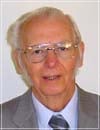
Bill McDaniel

Christ: Only Way to God

Bill McDaniel October, 15 2017 Audio
0 Comments

Sermon Transcript

Auto-generated transcript • May contain errors

100%
In Micah the 6th chapter and
verse 6, in fact verse 6 through verse 8, look at these questions
concerning an inquirer about what is pleasing unto God. Wherewith shall I come before
the Lord, and bow myself before the Most High? Shall I come before
Him with burnt offerings? with calves of a year old? Will the Lord be pleased with
thousands of rams or with ten thousands of rivers of oil? Shall I give my firstborn for
my transgression, the fruit of my body for the sin of my soul? He has showed thee, O man, what
is good, and what doth the Lord require of thee, but to do justly,
and to love mercy, and to walk humbly with thy God. Now, John chapter 14, 1 through
6. Let not your heart be troubled. You believe in God, believe also
in me. In my father's house are many
mansions. If it were not so, I would have
told you. I go to prepare a place for you,
and if I go and prepare a place for you, I will come again and
receive you unto myself, that where I am there you may be also,
and whither I go you know, and the way you know." Thomas said
unto him, Lord, we know not whither thou goest, how can we know the
way? Jesus said unto him, I'm the
way and the truth and the life. No man comes unto the father,
but by me. And those words are our text
and our subject of the day. No man comes unto the father,
but by me. Now I'd like to add some other
scriptures that might come before us today, and that pertain unto
the same matter and the same subject. One is Acts chapter
4, verse 11 and 12. This is the stone which is set
at nought of you builders, which is become the head of the corner. Neither is there salvation in
any other, for there is none other name under heaven given
among men whereby we must be saved." Of course, the apostle
refers to Jesus Christ, the Nazarene. He's that stone that was set
aside by the builder. But in verse 10, he both died
and rose again out of the grave and over death. There's another
great verse in 1 Peter 3 and 18, contains our subject and
our text of the day. For Christ has also once suffered
for sin, the just for the unjust, that he might bring us unto God."
Emphasis on what he did. He brought us unto God. And the means by which he did
it, he suffered as our substitute, the just one for the unjust. being put to death in the flesh,
but quickened by the Spirit, overcoming death after dying
and lying in the grave three days and three nights. Well,
let's start, if we might, with an observation concerning the
question and the subject of today. And that is, when any person
whoever it might be, and in whatever place or whatever reason, should
become alarmed and concerned about their soul and the status
of their state before the Almighty God. Perhaps the fires of conscience,
like those in Daniel, the fire should be lighted seven times
hotter than ever it was before. And this individual or this person,
therefore, become fearful of death and of eternity as it looms
before them. And they think of their mortality
and of the judgment of God that is to follow after their death. Then their thoughts might turn
to those questions like we read. What is the remedy? What should
I do? What can I do? How shall I come
to God? With what will he be pleased?
What will he accept in my stead that I might be in the favor
of God? In short, What is the way of
salvation? Here I should tell you that the
answers will be many in the minds of men. But as Solomon has written,
there is a way that seemeth right unto a man, but the end thereof
are the ways of death. Now, notice the question in the
book of Micah, and that there are some of them in chapter six. Here they are. Wherefore or wherewith
shall I come before the Lord and bow down myself before him? In other words, whereby shall
I become a worshiper of God and be accepted of God as a worshiper? What will please him? What will
God accept that I might come before him? Now, to emphasize
this, We notice that the prophet uses hyperbole. That is, he makes
a great exaggeration of truth as a figure here. In verse 7,
shall I come with thousands thousands of rams, 10,000 rivers of oil,
my firstborn, even a child, the fruit of my body given for the
sin of my soul. Will this give me access? Shall
I be able to be accepted and to come before God with this? Think of the rich ruler in Matthew
chapter 19 and 16, who came before our Lord. And I believe the text
said that he came running and that he kneeled before the Lord. And out of his mouth came these
words, good master, what good thing must I do that I may have
or inherit eternal life? Now, this man seemed thoughtful
about this life and the coming world, but as Gil noted, he was
entirely upon a legal bottom and a covenant of works, the
words of Gil. Some Jews in Acts chapter two
and verse 37, having heard the words of the apostle Peter and
experienced that great phenomenon Pentecost, and they were pricked
in their heart and their consciences, and they had strong compunction
from what they had heard. And the question from the Jewish
standpoint is this. Men and brethren, what must or
shall we do? That is from the Jewish standpoint. And it was asking life and response
to what they had seen, what had occurred at Pentecost, what they
had heard Peter say about the Messiah, who he says was Jesus
of Nazareth. Now, let me share one more with
you. And it's in Acts 16. And verse
30, and it's from the one that we simply refer to as the Philippian
jailer. An earthquake came. He had heard
Paul and Silas singing and praising God and witnessing under the
other preachers, the other prisoner in the prison there. And so he
came out and cried out, what must I do that I might be saved? And the answer, believe. on the
Lord Jesus Christ, and thou shalt be saved. And sometimes if the
Lord figuratively sets off a quake in the soul of an individual,
then the mind races to see, what must I do? So, let's go to the
passage found in John chapter 14, which is a part of what we
call the upper room discourses of our Lord. The last hours that
our Lord spent on Passover night with his disciple in the upper
room before he was crucified on the next day. And during these
discourses, our Lord is speaking unto his apostle that he might
calm their heart and their fears and that he might prepare them
for his departure by his death up on the cross. And they heard
all of that. I shall be crucified. I'll be
taken. I'll be slain. I'll be delivered
into the hands of the Gentile and be crucified. And that made
them very sorrowful. They were sorrowful in heart. They couldn't imagine. Things
were different on this Passover than they had been in the previous
Passover that the Lord had celebrated with them. And they were sorrowful. And the Word tells us so. John
14 and verse 1. John 16 and verse 6 and verse
22 and verse 33, their hearts were sorrowful at the words of
the Lord that they should be with Him no more in the world. Now this note concerning that,
at nearly every funeral that you'll ever attend in our day. In some way, John 14 will probably
be referred to. Sometimes, many times, it is
the main text of a funeral sermon in our day. But actually, it
has nothing at all to do with death or with a funeral of a
believer. And the same is true of another
passage, that'd be Psalms chapter 23. These were not funeral sermon
or funeral messages. But one thing I had not noticed
before about these upper room discourses of our Lord unto his
disciple. And that was the interruption
or the interaction, I don't know which to call it. of the disciple
with our Lord in the upper room. I don't know why I never had
noticed it before as I did this week. Here are some of them.
You can notice some very easily in chapter 14 to the end of chapter
17, the upper room discourses. First of all, as you might imagine,
there is the Apostle Peter speaking out and sometime against our
Lord. In chapter 13, it was he that
said, verse 6 through 10, Oh, you're never going to wash my
feet. And then the Lord corrected him about that. And again, he
speaks in chapter 13 and verse 36 through verse 38. Then we notice that John, John
the Beloved, in John 13, 23 through verse 26 asks, our Lord a question. He did it
at the urging of the Apostle Peter. Who is the betrayer? Who is it that will betray you? And again, in chapter 14, you
have three more that interact or interrupt, whichever you want
to call it, the Lord. Thomas in verse 5, Philip in
verse 8, and a man named Judas in verse 22. But not Judas is
carried. Plus, there are other unnamed
ones in verse 16, verse 17, and verse 29 in that upper room discord. Now why? Well, their hearts were
very heavy and their spirits were low at the thought of the
loss of the presence of the Lord. Their minds were racing about
these things and these matters, and they were troubled to no
extent in their inward part. Their Lord was going away. The Lord was to be crucified
according to His Word. He had often spoken of His death,
and in a sense that had dashed their expectation of a great
worldly kingdom ruled over by Messiah, and Israel again exalted
as the head of the nation. This was the expectation of so
many of the Jew. And it seems that that hope was
revived again after the resurrection Our Lord for reading Acts chapter
1 and verse 6 Lord. Will you at this time? Restore
again the kingdom unto Israel, but he promises them here That
he will prepare them a place He'll go away, but he will go
away. He will prepare them a place
and He will come again, he will receive them unto himself, that
where he is, there they may be also. And as we look at verse
4, whither I go, there you go, and the way you know. Now Thomas
openly disputes this. We know not where you're going,
and how can we know the way? In verse 5. Now, how can we reconcile
these two things together? They had often heard these things
from the Lord, that the time would come when he would go away,
and that exit out of the world would be by crucifixion upon
the cross. But they still, at least Thomas,
up to this point, had not grasped the full reality of what was
about to occur. You can compare that in Luke
9 and verse 45. They heard and they heard, but
they did not understand with understanding. So in verse 6,
of John 14, the Lord plainly tells the one that we call Doubting
Thomas, I'm the way, I'm the truth, and I am the life. Here he is, all three of them
in one, the way, the truth, and the life. Now, these are more
of the great I am's of the Lord that we find in the New Testament. I am the way, I am the truth,
I am the life. To that we might add, I am the
great shepherd, I am the light of the world, I'm the bread of
life, I'm the vine, you're the branches, I am the resurrection. Taken from Exodus 3, And verse
14, I am that I am. But here is our major text and
subject. No man comes to the Father but
by me. Now one commentator wrote that
Jesus here expands upon his being the way. I'm the way. And no
man comes unto the Father but by me. I'm not only the way,
I'm the way and I'm the only way that one might come unto
the Father. Now back in John 10 and verse
9, Jesus had said, I am the door, by me if any man enter in, he
shall be saved, he shall go in and out, and shall find pasture. Now there the immediate context
concerns not salvation particularly, but the ministry, the shepherd,
and entering into the ministry. Only by Christ can one enter
into the ministry. He is also the only way that
one can become a true minister of the Lord, or a shepherd, as
the figure is in that place. And he's all three at one and
the same time. I am the way. Now the word way
in the scripture has the meaning of a path or of a road or a manner
of life. I am the way. Number two, I am
the truth. for all divine and saving truth
and knowledge of God is embedded in the Lord Jesus Christ. He
came full of grace and of truth, John chapter one. Then he said,
I am the life. Physical life, yes, but especially
eternal life. For he is the giver of eternal
life. Now the text is very clear. No
one can come to God. That is, no one can be saved. No one can become a worshiper
of God and be received by God. into everlasting habitation and
become a worshiper of God and brought unto heaven in final
glorification when they die, except but or by the Lord Jesus
Christ. Now, the first thing that is
suggested here is that by nature, all are astray from God. They're not with God, as we hear
so many people talk about it in our day. They're alienated
from God, and that by their sin. Not only were they conceived,
we all conceived in sin, Psalm 51 and 5, but we went astray
as soon as we were born, speaking lies. We're called a transgressor
from the womb, Psalm 58 and verse 3. Our sin had separated us from
God, and like sheep, we had gone astray. We had all turned everyone
to his own way, as Isaiah 53 has described it. In other words,
we were lost. And as a consequence, we could
not, we cannot come to God on our own recognizance. We cannot do that. And by our
own ability. None can mediate their own reconciliation
with God. None can commend themselves unto
God. God receives sinners only in
the way that it has been determined and is declared in the scripture. Thus Christ said, no man can
come unto the Father but by me. It is impossible that even one
come to God apart from Christ, for one must also come to Christ
in order to come unto God. There is no deviation. John 6,
verse 44. It is of the same significance
as our text. No man can come to me except
the Father which has sent me drawing. There are no exceptions.
John 6, 65. No man can come unto me except
it were given unto him by my Father. There are no exceptions. Now, before we proceed with that,
let's bring in some more scripture and consider and confirm this
coming, C-O-M-I-N-G, unto God through Christ. First of all,
Hebrews 7, verse 24 and verse 25. This man, because he continues
ever, has an unchangeable priesthood. Wherefore, he is able to save
them to the uttermost that come unto God by him, seeing he ever
lives to make intercession for them. Our emphasis now is upon
them that come unto God by him. Perhaps we'll come back to this
later. Then first Peter chapter 3 and
verse 18 for Christ also Has once suffered for sin the just
for the unjust That he might bring us unto God Verity that
he might bring us unto God Hebrews 10 and verse 1 we read of the
comers the Old Testament worser comers or to draw nigh is actually
the meaning. No one could draw nigh to God
except in a particular way. Hebrews 11 and verse 6, he who
comes to God must believe that he is, that he is a rewarder
of them that diligently seek him. So in Hebrews, the comers
and the worshipers seem to be synonymous, one and the same. But the Old Testament sacrifices
could not perfect those who came to be worshipers, who drew near. They could not perfect them,
and they could not clear the conscience, and they could not
put away sin. So now let's consider what is
involved in this coming. First, what this coming is not. This coming is something, but
it is not something else. It is not physical movement of
any kind whatsoever. It's not a physical movement
of the body or of the feet. As for example, it is not coming
to the front of the church during what we have heard called the
invitation. Now the invitation system, and
we'll throw something in, is the illegitimate child of free
will. And it has filled the churches
with unregenerate members without number. But it is not coming
to the front. It is not making a decision for
Christ. It is not accepting Jesus as
a personal Savior. It's not memorizing a creed. It's not joining the church,
and it's not going down into the waters of baptism. To repeat
a verse from Hebrews 11 and verse 6, that's the chapter on faith,
if you remember, without faith. It is impossible to please him,
for he that comes to God must believe that he is, that God
exists, that he is a rewarder of them that diligently seek
him. Have you ever heard anybody say
or give this testimony, well, I was in such bad shape And I
cried, God, if you exist, and if you're out there, and if there
is a God, will you come and will you please help me? No, he that
comes must believe that he is. So the apostle speaks of faith. as pleasing to God, for it flows
from the previous verse there in that chapter in verse 5, and
the translation of Enoch in connection with faith. For before his translation,
he, not seeing death, he had this witness that he pleased
God. Enoch pleased God. He walked
with God. And in connection with Hebrews
11, verse 5 and 6, Enoch pleased God, but without faith, verse
6, it is impossible to please God. Compare Hebrews 13, And
verse 16, with such sacrifices, God is well pleased. Meaning those in Hebrews 13 and
15, spiritual sacrifices, God is well pleased. Now as to coming
to God, not only is it by faith alone, but it has two aspects
to it. Number one, initial coming and
acceptance into the favor of God and God well pleased with
them through the mediation and the person and the work of Christ
and receive them accepted in the beloved Ephesians 1 and 6. But then secondly, also that
their worship and their service and their prayers might be acceptable
unto God, as was that of Abel in Genesis chapter 4, of Enoch
in Genesis chapter 5, and with Owen, some Hebrew texts refer
to an access or an approach unto him in sacred worship, acceptable
by Jesus Christ. We read from the Apostle Peter,
Cain, you remember, was rejected in Genesis chapter 4 because
not only of his person, but then of his offering. other texts
as Hebrews 7, 25, 1 Peter 2 and 4, John 4 and verse 16 refer
to a coming in which God receives them into his favor, his company,
fellowship, and everlasting life. Now let's pick up the words of
our Lord again. In John 14 and verse 6, I'm the
way, I'm the truth, I'm the life. No man comes unto the Father
but by me. And that's the same thing as
saying no one can know the Father. No one can know him apart from
the Son, Jesus Christ, who is the only begotten Son of God. But also, let's go back and find
a connection in Hebrews 7 and verse 25. It begins with a wherefore. Hebrews 7 and 25, if you're going
there. In other words, here is a conjunction
and an inference or a conclusion from what is to be inferred from
the preceding section of Romans chapter 7. showing that Christ
has an eternal and intransmissible priesthood. What kind does He
have? He has not that of Aaron and
of the Levi. Christ has an eternal, intransmissible
priesthood. Verse 24, But this, because he
continues ever. Verse 25 said, he ever lives. Hebrews 7. Because he continues
ever. He will not lose his priesthood
to death. as did Aaron and the Levitical
priests. He has, therefore, an unchangeable
priesthood. You might notice that the margin
has it, that which passes not to another. He didn't get it
from another, and it won't pass down to any other. It is because of the nature and
the quality of Christ's priesthood that Hebrew 725 is based. Because he is a priest forever,
and that after the order of Melchizedek, he's able to do what is declared
in verse 25. Save the comers unto the uttermost. Now the margin or the meaning
of that word we're told is evermore, completely, entirely. He's able to save absolutely,
completely, entirely, forever, and thoroughly. Thus, we need
consider how we can only come to God by Christ. What is it that makes it possible
that is necessary in order that we might come to God and come
to him by the Lord Jesus Christ? Number one, we must And we do have a great high priest. Oh, that's so indispensably necessary. We must have a perfect and a
great high priest. He has given God a perfect sacrifice
for our sin, and that was acceptable to God. In Hebrews 3 and 1, wherefore,
brethren, partakers of the heavenly calling, consider the apostle
and high priest of our profession, Jesus Christ. Hebrews 4.14, seeing
then that we have a great high priest that is passed into the
heaven, who is he? Jesus, the Son of God, let us
hold fast our profession without wavering. We have a high priest
not in a monkey suit on earth, but in heaven, in the very presence
of God himself. In Hebrews 10, 20 and 21, having
a high priest over the house of God, let us draw near with
a true heart in full assurance of faith. Now, we could not come
to God apart from the one who is the priest of the Most High
God, who has entered by his own blood into heaven itself. Now, the Jews, remember this,
they could not make their own atonement and make their own
sacrifices under the law. It was not in their hand. They could not do that directly
to God, only by a priest of God's appointment. So no one can come
to God apart from the priestly office and the work of Jesus
Christ. We cannot act as our own priests. We have no earthly human priests
or popes. As the Jews hollered, we have
no king but Caesar. So we shout, we have no great
high priest but Jesus. And he is an ever living priest. and he's the son of God, and
he's been raised from the dead, and he has ascended into heaven. He is a priest forever by the
oath of God after the order of Melchizedek. No, we cannot come
to God without the proper priest, and that priest is the Lord Jesus
Christ. Secondly, we must have something
else. Christ is the mediator of the
covenant. We cannot come to God apart from
a proper mediator. Hebrews 8, 6 and 12 and 24 tells
us that Jesus is the mediator of the new and the better covenant. Paul tells us in 1 Timothy 2
and verse 5, there is one Mediator between God and men, the man
Christ Jesus. And that a Mediator is not a
Mediator of one, Galatians 3.20. One doesn't need a Mediator,
but between more than one. There is one God, there's one
Mediator between God and men. We cannot be saved apart from
a Mediator. We cannot come to God without
one, for the very fact of a Mediator supposes an estrangement and
a separation and an enmity between God and man, an animosity. that one must mediate away. Something stands between. It's man and God that divides,
so that the two parties cannot come together or be friends. without a mediator. Now, we have
human mediators. We hear of them all the time.
Usually, a human mediator trying to settle something will try
to hammer out a compromise from each side. You give a little,
you give a little. You give this up, you give that
up, and let's agree. And that's usually how a human
mediator is worked out. But in the mediatorship, of our
Lord Jesus Christ. It is more than asking God to
forgive us or to lay aside his displeasure at our sin. That's not what he does. But
it rests upon the fact that Christ as a mediator has made a satisfaction
for the sins of us He's given God a full satisfaction of His
justice and of His law. Therefore, turning away the reason
our sin while we were estranged from God. So therefore, reconciling
such unto God and in such a way that his honor and his justice
are fully upheld and are not compromised in any way. The justice and honor of God
are at no loss by saving us through the death of Jesus Christ. Now, to be the mediator between
God and man, it was necessary for the Son to assume human nature
without depravity. And this assumption we call in
theology the hypostatic union. that Christ is the true God,
but he's also true man with a true human soul and both natures in
one person, human and divine, therefore capable of mediating between God and man, being true
God, true man. He is therefore the mediator
between God and man. Now, a vital part of his priesthood
and the office of mediator is his intercession. for us in the
presence of God. His intercession in behalf of
the redeemed and regenerate ones. In Hebrews 7 and verse 25, His
ever living to make intercession for us is the ground upon which
he is able, as Owen put it, to save completely as to all parts,
fully as to all causes, and forever as to duration." For as many
have noted, the intercession of our high priest in heaven
is the second part or aspect of his high priestly work. That's what the priesthood did.
First a sacrifice, then entering into the Holy of Holies with
the blood of the sacrifice to put upon the mercy seat and to
appear in the presence of God to make intercession for the
people. Their names were written upon
the breasts of the high priest as he went in before God. And
of Christ we read this, to appear in the presence of God for us,
Hebrews 9.24, for us as a priest, as our great high priest. You remember, he's also called,
in 1 John 2 and 1, our advocate. If any man sin, we have an advocate
with the Father, Jesus Christ, the righteous. Notice who our
advocate is. Jesus Christ, the righteous. The righteous one is our advocate. And in 1 John 2 and 2, he himself
is the propitiation for our sin. And as to His intercession, see
Romans 8, 34, Hebrews 9 and 24. Christ's intercession, I believe,
is not limited unto His oral words and prayers before the
Father God in heaven, but also consists in His continual presence
there before God, to present that sacrifice wholly acceptable
unto God, that even after His death and resurrection, His ascension
into glory, our Lord there lives a mediatorial life in heaven
for our benefit. So we have to have a priest,
we have to have a mediator, and then thirdly, we cannot come
to God unless we have a surety provided to pay our debt. And he is the surety of a better
covenant or testament, Hebrews 7 and verse 22. Now, assurity
has a double duty. A, to answer the debt of another,
and B, to guarantee the life and the safety of the one for
whom he is assurity. You have that in Genesis chapter
43, verse 8 and 9, and Solomon writes again and again on surety
ship. Here they are, 6, 1 through 5,
11, 15, and 17 and 18. By the way, Solomon says, don't
be a surety for a stranger because you will smart for it. So we
had that double need, A, one to pay God our debt, and B, one
able to bring us to God in a saving way, one himself who has full
access to the Father. who is dear and beloved unto
the Father. He has the favor of God and that
we are accepted by the suretyship of our blessed Lord, as the Puritan
Thomas Goodwin wrote, and I quote, he became a surety of the whole
covenant and every condition of it. End quote. Both on God's
part and upon our part. What we owed, we could not pay. We lacked ability to pay the
debt. And Christ, having been made
our surety, answered that debt that he might bring us to God.
He does not pay a part of the debt, but the whole. The last
parceling is settled. For in suretyship, The liability
can be shifted from the debtor unto the surety, and the surety
must answer the debt. And as Solomon said, they that
are surety will smart for it. Proverbs 11 and 15, and the margin
there has it, be sore broken or suffer. They that are surety
for strangers will suffer for it. Some have ruined their self,
their credit, their business, and all, because they made themselves
surety for another who defaulted. And that are on the cross. Christ
was our surety. His soul was made an offering
for sin. He suffered as a part of our
surety. He is a surety still in heaven,
and to communicate that suretyship unto us that we have by Him. Let's not miss the connection
in Hebrews 7 and verse 25 of the efficacy of his intercession,
that the ability of our high priest to save the comers unto
the uttermost is on account of him being alive forevermore to
make intercession for us. Owen wrote, this regards the
efficacy of his intercession, that he keeps those who are coming
unto God by Him through His intercession. He ever lives, He ever intercedes. His intercession cannot miscarry,
even as cannot His blood. So let's close with what it means
to come to God. Many imagine that they have already
come to God, who have not. They have only come to a church,
or a preacher, or a creed, or some like. There is no coming
to God apart from Jesus Christ. And Jesus Christ as the Son of
God, as the priest, as the mediator, the intercessor, and the surety. And in faith, in his ability
to save. and in his person. And this coming,
especially in the Hebrew text, expresses coming as a true worshiper
of God through Jesus Christ. It's evangelical worship, if
you will, whereby the comers are perfected in order that they
might approach God by the person and the mediation of Christ,
who died that he might bring them unto God. And that is his great work, and
he is performing it. No man can come unto God except
by Jesus Christ. A religion in which Christ is
left out of the equation cannot bring one to God. Any religion
without Christ is unable to bring one to a saving knowledge, to
bring them to salvation, give them the hope and the assurance
of heaven. Christ cannot be left out and
one come to God in a saving way. We understand that, and that's
an awesome truth of our scripture.

Comments

0 / 2000 characters
Comments are moderated before appearing.

Be the first to comment!

Joshua

Joshua

Shall we play a game? Ask me about articles, sermons, or theology from our library. I can also help you navigate the site.