Bootstrap
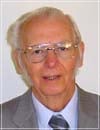
Bill McDaniel

Jesus Christ Our Advocate

1 John 1:8
Bill McDaniel December, 13 2009 Audio
0 Comments

Sermon Transcript

Auto-generated transcript • May contain errors

100%
Alright, 1 John 1, verse 8, down
through chapter 2 and verse 2. John is very plain spoken when
it comes to sin and rebuking false prophets and Antichrist
and such things. John is one of the most spoken
of all of our writers. And he said in verse 8, if we
say that we have no sin, we deceive ourselves and the truth is not
in us. If we confess our sins, He is
faithful and just to forgive us our sins and to cleanse us
from all unrighteousness. If we say that we have not sinned,
we make Him a liar and His Word is not in us. Now watch this. My little children, These things
write I unto you, that ye sin not. And if any man sin, we have
an Advocate with the Father, Jesus Christ the Righteous. And He is the propitiation for
our sins, and not for ours only, but also for the whole world. So we'll be looking at verse
1 and verse 2 in our due time. I would first of all, however,
ask you to bear with me as I try to prepare the way for us to
enter into the text in order that we might better understand
why it is that John speaks to us of having an advocate. and that that Advocate is in
our behavior, and that Advocate is Jesus Christ. And why do we
need one that John calls here an Advocate? And how is one of
value to the children of God? How does an Advocate serve our
interest and our comfort while we live in this world and he
is yonder in heaven. In order to get to the fuller
benefit from this passage of the Scripture, we may know or
must know or consider the backdrop against which this is written
that we have an advocate. First of all, we notice that
he opens with a reference in chapter 1 to the person of the
Lord Jesus Christ. that though He is and was the
very eternal Word of God, yet that same One has been manifest
among men on the earth. Chapter 1, verses 1 through 3. And John, who wrote this epistle,
had this advantage to us, that he had been an eyewitness to
the incarnate Lord. He saw Him in the flesh. He heard Him. He was instructed
by Him, taught by Him, and learned from Him. And John even adds
this, and touching the very Word of life. He was in the company
of the Lord of glory upon the earth. And in verse 2 of chapter
1, there John bears witness of what he had seen and what he
had heard. And in him, Jesus Christ, he
says, there is eternal or everlasting life. Then in the third verse,
the purpose of the apostle is given for setting forth these
things, and it is this, that you may also have fellowship
with us. That is, that you may also who
have not seen the Lord personally and in the flesh, you who have
not heard Him speak orally while in the flesh, you that have not
handled Him as He is indeed the very Word of life, that you may
also, who had not those privileges that we did, have fellowship
along with us. You may keep on having fellowship,
I believe is the tense of the words here as they are written. Now, fellowship is a word that
means to partake of jointly with another. It means to share with
this one or that one. It means to share in common. It means to have a mutual relationship
and to keep on having such. that it might be perpetual. John adds this, truly our fellowship
is with the Father and with His Son, Jesus Christ. Our fellowship does not end at
being fellowship with the apostles, but also with the Father and
His Son, the very God of heaven. and with that beloved, blessed
Son that He sent down into the world. Now, this is the most
blessed fellowship possible or desirable. Directly, we have
fellowship with the Godhead. Of course, we acknowledge that
it is only possible through the revelation that God has made
of Himself in His Son, the Lord Jesus Christ, as a direct work
of the inward grace work of the Spirit of God in our heart. Now, as we look at that for what
it is worth, I agree with those who say that verse 4, if you
might look upon it, to formally conclude the grand truth that
we have in verses 1 through verse 3. That in these things, that
is, in the knowledge of these great gospel truths. They might rejoice. They might
be exceedingly happy. They might find spiritual contentment
in these things. There is joy in knowing the eternal
God through His eternal Son who has appeared among men upon the
earth for the purpose of saving His people from their sin. Tis a blessing, is it not, to
believe the Gospel and know that our sins are put away. Tis a blessing to find the contentment
of the Gospel that it brings in communion with God and our
Lord Jesus Christ. By the way, I would that you
might consider how often again and again In this little epistle,
John says something like this, I write, I have written. And
he mentions that over and over again. Now, to interrupt our
flow of thought, though but momentarily, there is another backdrop in
which John writes this epistle for our benefit. And that is
that John is one of the stronger in condemning antinomianism,
licentiousness, or living in sin for those who profess the
Lord and Savior Jesus Christ. He writes that such as do know
the Lord, have been born of God, do not make sin the practice
of their life. Chapter 3 and verse 9 is very
clear. Also, It is John who, unafraid
and unashamedly, warns strongly against false teachers and the
Antichrist. Many of them were already present
in John's day. They were already active in the
day that John wrote this epistle. Now, with all of this in mind,
and as our backdrop, let's catch the emphasis in chapter 1, verses
5 through 7. He says there, God is light. And God being light, there is
no darkness. None at all in Him. But light and darkness here certainly
are metaphors for purity and for evil respectively. That's common throughout the
New Testament. And the Apostle's point is this. which he wishes to make, that
none can have fellowship with God or fellowship with Jesus
Christ who walk in darkness, he calls it, or sin literally. In verse 6, if we say, if we
claim, if we profess to be in fellowship with Him, yet walk
in darkness, we are liars and we do not practice or do the
truth. So you notice that John is not
hesitant to call men liars. I look through the concordance.
I find that he uses the word lie three times in the epistle,
and he uses the word liar five times in this epistle alone. Eight times John flames out against
men that they are liars. So, if any say, that they are
having fellowship with God, walking in darkness, living sinful, John
will call them a liar and a stranger to the truth as it is in Christ. Now on the other hand, in verse
7 of chapter 1, those who walk in the light, have fellowship
with them and with God, and the blood of Jesus Christ, God's
Son, cleanses them from all sin, ever washing away their sin,
like a fountain open for the foulness of our sin, and washing
it away. Then in verse 8, chapter 1 again,
the apostle declares that none are without sin. And he does
it twice in that chapter. If any say they are without sin,
they are deceiving themselves. Some are doing that. And it is
evident that the truth is not in them when they say they have
no sin. Note, there is no deception that
is so deadly as those respecting sin and our relation unto it. just as in Galatians 6 and verse
3, if any man think himself to be something when he is not,
he deceives himself and the truth is not in him. By thinking that
he is something that he is not, he has, or she has, deceived
themselves. Now by the same token as what
Paul says in Galatians 6 and verse 3, If one thinks themselves
to be without sin, he is self-deluded. He did not get such a notion
from the truth of the Gospel, or from the Scripture, or from
the Word of God. We all fell into sin with Adam. And sin is even in our nature,
not just outward in our acts, but even in our nature. Thus it is that John slays and
sweeps away any notion of perfection in this life. Then look at verse
9, when we confess He is faithful and just to forgive us. And in
verse 10, he repeats what he had said back in verse 8 again,
but phrases it here a little bit different than it was back
in verse 8, especially to claim that we have not sinned is to
make God a liar. For God's Word says, all have
sinned and come short of the glory of God. Romans 3.23. Paul wrote in Romans 3.10, there
is none righteous, no, not one. In Galatians 3.22 again, Scripture
has concluded all under sin. Also, if all are not sinners,
why then did Christ die such an awful death for the sin of
His people? Remember, some of the most imminent
saints that you'll meet with in the Scripture are heard to
be confessing themselves to be vile and sinful in the sight
of God. There is David in the 51st Psalm. There is Isaiah when he saw the
Lord saying, I'm a man of unclean lips. There is Peter falling
down and saying, depart, Lord, for I am a sinful man. There is Paul in that great passage
in Romans 7, speaking of the power of indwelling sin in his
life and in his soul. So as we prepare to consider
the blessed work of Christ as an advocate, I think John has
well prepared us the office, the need, and the function of
him as an advocate. Inasmuch as the office of Christ
as an advocate has been established, and it functions, yes, functions,
in regard to them that are believers and that sin. When they sin,
as often as they sin, when they sin, they have an advocate with
the Father. Now, getting into the second
chapter, nearer to our text. In verse 1, John says, These
things I write unto you, that you sin not. These things. What are they? Being especially
what has gone before. And particularly concerning such
things as having fellowship with God and with Christ, walking
in the light, and the pardoning and cleansing of the blood of
Christ of the sins of His people. But especially concerning sin
is this office of advocate established. And none, not even the most eminent
saint of God, is free of sin. And quickly, let us notice the
tender and the affectionate way that this aged and beloved John
addresses them. My little children. That's another favorite term
of him my little children. I have no greater joy than to
hear that my children walk in the truth." It's common in the
writing of John. Now this exhortation toward them
is this, that you sin not. I'm writing these things. I have
written these things. And my purpose in writing them
is that you sin not. Not that He calls them to a life
of absolute perfection, for this He declared impossible by His
own pen back in chapter 1. But that they might not live
in sin, and even that as much as lay in them with the help
of God and grace, that they not sin. John Gill wrote on this
passage of Scripture that Nothing could be more suitable to such
an end than the consideration of the holiness of God." What
is there that could be a stronger deterrent to sinning than for
us thinking upon the holiness and the righteousness and the
majestic awesomeness of our great God? And I'm afraid that far
too many have too little understanding of this aspect of our God, our
holy, righteous God who dwells in absolute holiness. Please
note that John writes, exhorting them not to sin, even though
in chapter 1 and verse 7, the blood of Jesus Christ, God's
Son, cleanses from all sin. We have an advocate Even though,
in John 1.9, if we confess our sin, He is faithful and just
to forgive and to cleanse us from all unrighteousness. Even though, in John 2.1, if
we sin, we have an advocate with the Father. The point being this,
that John contradicts those who slander the free grace of God
and gratuitous justification as being absolutely free and
without works. Mockingly, they say to us all,
if I believed that, if I believed like that, that justification
was free and we were preserved in Christ forever, I'd live as
I please if I believed a doctrine like that. Please notice, if
you will, that John's counsel is not, he does not say, don't
worry about your sin. Don't worry in case you have
sin. It's no big deal. It's easily
taken care of. Just confess it and forget it
and go on your way. Others will say, just plead the
blood etc. on and on their arguments might
go. But John does not say that. Rather,
John says, little children, if any man sin, we have an advocate. And I agree with those who think
that John is speaking about the sins of Christians in this place,
about the sins of believers. If any of those who are redeemed
by Christ rather than mankind in general in this place. And all of those redeemed by
Christ do sin, yea, they cannot reach perfection in this life. Now, in sinning, we have an advocate,
great comfort unto us. And he tells us, first of all,
this advocate we have is with the Father, directly with the
Father. His advocacy is performed before
and toward the Father. Get that in our mind? We have
an advocate with the Father. Not an angel or a lower class
or a saint or Mary. We have an advocate with the
Father. Secondly, we must understand
that this Advocate that we have that is with the Father is none
other than Jesus Christ, the righteous One, the One without
sin. So let's begin to inquire as
to the meaning and the use of an Advocate in the Christian
life. What is an Advocate in the scriptural
sense of the word? And what does an Advocate do
that is useful and beneficial unto others. Now, we've had advocates
among men. We had that. We remember Marvin
Zimmer, did we not? But an advocate in the Scripture
is not the same. The word here, translated, advocate,
appears a total of five times altogether in the New Testament. And if you were to look it up,
it would be the word parakletos. And all five of them are used
by this writer, John the Apostle. Four times he uses it in the
Gospel of John. And one time here in 1 John 2,
verses 1 and 2. Now, each time that this word
parakletos appears in the Gospel of John, that is, in the King
James Version, it is translated all four times by the word comforter. All those times that our Lord
mentioned a comforter, it is this word here that we have translated
advocate. The places are John 14, 16, 14 and 26, 15 and 26, and John 16
and verse 7. All four times, at least in King
James, it is there translated as a comforter. Now, some versions
render the word helper. You might be reading along in
one version and see the word helper. Others are used to the
word paraclete, and others the word comforter. All of these
having a significance in what our Lord said about the Spirit
of God. Then we realize that all four
uses of the word in the Gospel of John have reference not to
Christ, but to the Holy Spirit. While the advocate mentioned
in 1 John 2 and verse 1 is the exalted Lord Jesus Christ, the
Son of God, the Righteous One. Also, we notice that the heifer
in John's Gospel, or the comforter, or the paraclete that John writes
about there in the Gospel of John, was the Holy Spirit of
God that came down from heaven to dwell in the sons of God while
they are upon the earth living out their life, while the Advocate
who is Christ in 1 John chapter 2 is not walking among us, but
is in heaven in the very presence of God. Now, the paraclete, or
the heifer, which is the Spirit, is in that sense a heifer and
a guide. to lead them into the truth of
God, Jesus said He would do, and also to enlighten them, to
convict them of sin, and to comfort them and witness to their sonship
which they have in Christ. A very helpful and a very comforting
paraclete or a comforter this became unto them. Now, another
thing. And that is that our advocate
is what an old-timey preacher, an old Puritan named Tobias Crisp
called, quote, the friend at the bar of justice, unquote. We have a friend at the bar of
justice. That we have an advocate at the
bar of justice whose function there is to assure that the people
of God get indemnity from sin at that bar of justice, that
it cannot condemn them. Not that they don't sin, but
that it cannot condemn them. Before we proceed further, let's
better describe the meaning of an advocate. For our English
word may lead us astray somewhat, used as a noun, Our English word
refers to a person who acts in the best interest or behalf of
others who, for some reason beyond their own capability, cannot
act in their own behalf. As a verb, it is an advocate. They plead another's cause. As a noun, they act in behalf
of another. as a verb they plead or act in
behalf of another. They plead or argue their case
before one who has some authority. This they do in some secular
way, maybe even in a judicial court of law. They act as an
advocate. Now, our advocate, who is Jesus
Christ and is before the Father in heaven, exercises his advocacy
in regard to sin. And he does so in the highest
court of all, the highest bar imaginable. And that is before
the righteous judge of all of the earth. As an advocate in
the sense of our text in 1 John, is one who pleads in behalf of
others. at a bar of justice, so that
the advocateship of our Savior Jesus Christ consists in pleading
the discharge of His people from sin, even when they have sinned,
even when they have committed a sin, and yet in a way that
is consistent with righteousness consistent with the justice of
God. And let us say, it is not only
just that no sin can be brought there and charged against us,
but that it would be an injustice for such a sin to be charged
against one for whom Christ has borne their sin and taken them
away forever and forever. Would it seem that justice and
righteousness would require that Christ, who is just and righteous
in these matters of the sins of the saints, take the law's
side against us? Does that seem reasonable in
our heart and in our mind, that our advocate would fall out on
the side of the law concerning our sins? Well, he does not do
that. But why take our side? We have sinned. We have sinned. Why is our advocate there to
not bring them in charge against us? For in the practice of law
among a nation, he is considered a shyster barrister who gets
an acquittal for an obviously guilty person. And this is what
earns them their sordid reputation that they enjoy among the human
family, that is, lawyers. Yet Christ is an advocate, not
for such as have done righteously. He's not an advocate for such
as have done what is right, but as an advocate for those who
have sinned. He says in the text, if any man
sins, we have an advocate. And the advocate is not against
them, but the advocate is for them. Not that they be charged,
but uncharged when they sin. The way this is viewed, it would
seem by hearing some tell it, that grace and forgiveness of
sin is given at the expense of the justice and the righteousness
of God. For there are many who cannot
reconcile how Christ could ground our indemnity from sin upon a
justice when we have actually sinned. And the law curses sin
and sinners, and it does that with power. That only sin is
forgiven by the free grace of God through Jesus Christ our
Lord. Now granted, in the forgiveness
of the pardon of our sin, it is indeed a highest act of grace
in our behalf from God Almighty. Since any that are justified
are justified freely by the grace of God that is in Jesus Christ. We read it in Romans 3.24. Yet through the redemption that
is in Jesus Christ, that He died bearing our sin. But then consider
the indemnity from sin from the standpoint of Christ and His
death upon the cross. Again, that man Chris said this,
it gets the discharge, quote unquote. Christ as our advocate
gets that discharge. And two things are true in regard
unto Him. One, that this is by the appointment
of the Father that Christ is an Advocate. It is by the Father's
will and purpose that Jesus Christ acts for those for whom He pleads
as an Advocate. He holds this office legally,
and He has it from God. He has not taken it upon Himself. He has been appointed. Secondly,
His advocateship is not without ground, not without reason, not
without purpose. For He has made satisfaction
and full atonement for the sins of those for whom He is an advocate. He has paid the debt in full. He has paid the last sparkling,
as we'd say, of o'er the last penny. All that justice requires. every sin such persons would
ever be guilty of. And it was received by the Father
as a just recompense and a settlement of the debt. For He is our surety,
paid off the debt that we owe. But next, let us consider this
office of advocate in relation to the other offices which Christ
holds and exercises in connection with the purpose of God. Now,
we know that Christ holds multiple offices. He has not one office,
but He has several. For example, He is Mediator. He is Surety of the New Covenant. He is the Testator of the New
Covenant. He is our Priest, our Great High
Priest. He is the Great Prophet. that
God has sent into the world. And He is all of these. And John Brown wrote in his treatise
on Christ as our Advocate these words, quote, He is a priest
to offer sacrifice, He is a king to rule, and He is a prophet
to teach us the things of God. But in addition to, and distinct
from these, He holds that distinct office of an advocate. John clearly calls him in this
place an advocate. Not a mediator, a priest, or
a king, or a prophet, but an advocate. And this is the only
place in the New Testament where our Lord is specifically designated
as our great advocate. And if I may say so, and say
it like this, it puts the finish upon the saving work of Christ,
being the last great bulwark that our Savior has erected against
the miscarriage of any that are chosen and redeemed in Christ. They have had their sins atoned
for by His death upon the tree. They have been regenerated by
the Spirit. They have been called. They have
believed on Him. And yet, number one, they are
still in the world. Number two, they will sin after
they are saved and believed. Yea, the rest of their lives
will they sin and have the need of an advocate. Here's a point
for us to ponder. We know that Christ is an advocate. We know that He makes intercession
in heaven. Scripture tells us that and tells
us clearly and in several places. But here's the question. What
exactly is the manner or the kind of intercession and advocacy
that our Lord carries on or makes? In other words, I'm asking Does
he do it by prayer? Is it that our Lord visibly,
orally prays as our advocate before the throne of God? We
know that He did this while He were upon the earth. In John
17, He prayed for them orally in prayer to God. He told Simon
Peter in Luke 22, 32, I have prayed for you that your faith Do not fail. What a rebuke unto
Peter! I have prayed for you. On the earth our Lord offered
up audible prayers. Or is His advocacy and His intercession
simply that He is there in His person and His finished work
making intercession before God and that that finished work and
presented blood is the intercession that he makes. We can hardly
conceive that his advocacy in heaven now is restricted to the
act of saying prayers before our God, for it would be continual. To intercede and to be an advocate,
he has entered yonder into heaven to the right hand of God. As
Owen John Owen the Puritan said, to make a legal appearance for
our defense before the judgment seat of God." Yes, our Advocate
has made a legal appearance. Hebrews 7 and 25 is very clear. It makes this connection, or
ties this knot, if you will, that seems to be tied tightly. And it's this, quote, He is able
to save us unto the uttermost, seeing, seeing He ever lives
to make intercession for us. Get that. He is able to save
to the uttermost, to the last thing, every bit, because He
ever lives to make intercession. We know that the blood of Christ
speaks better things than that of Abel. Abel's blood cried unto
God from the ground. The blood of Christ cries from
the mercy seat. Let's go back to the central
thought. Sinning believers have an advocate. If any man sin,
we have an advocate. I like what one author wrote
that John makes no exception. Either in respect of person or
sins, we have an advocate. Not some believers, not some
men, but every believer has an advocate. Every one of them. And then I add, nor is there
a restriction or a limit upon the kind or the degree of sin. He does not speak of lesser and
greater sins, just sin. He does not speak of small sins. or of the sins of ignorance,
or sins that might surprise us and overtake us quickly. He does
not make a distinction between strong and weak believers in
this place. All have an advocate. Please do not count me a libertine
if I tell you there is an advocate for sinning Christians without
exception. so that there is no sin that
a believer commits in this sin by which he may forfeit the benefit
of Christ's advocacy. That's why he's there. That's
what he does. When we sin, we have an advocate. But we must say, Christ is not
an advocate then for every person in the world without exception,
for the whole world, the whole race. is not the beneficiary
of His advocacy. He is the advocate for those
for whom He is a propitiation. In short, Christ is the advocate
of each and every one for whom He paid the price of redemption
by His death and blood shedding upon the cross. He made propitiation. Let's notice again in verse 1
chapter 2, He is our advocate. And in verse 2 of the same chapter,
He is the propitiation for our sin. Now, propitiation is a word
that means a covering to cover it over or an expiation to take
it away or to remove it, to give satisfaction, to make an atonement. Propitiation is the making of
an atonement whereby God is pleased and the sinner for whom it is
given is pardoned. Christ is a perpetuation in the
sense that He made atonement for our sin, that such as a perpetuation
He is a perpetuation for, or reconciled to God, for they have
Him as an advocate." Now, it would be a foolish claim or argument
to put in a claim for universal atonement using the second verse
here where you find the phrase, the whole world, just because
you see the words, the whole world, for it is a contrast. Right in the verse there is a
contrast. He is a perpetuation for our
sin and for the whole world. So, there is some exclusion here. You have the same thing in 1
John 5.19. where the same phrase appears, the whole world lies
in wickedness. But in the same breath, he said,
we are of God and we know the whole world lieth in wickedness. Thus, this is not a proof text
for absolute universalism. This doctrine is a great consolation
to the believer who sins. That's why John wrote it, that
sin will not be charged upon us, Who shall lay anything to
the charge of God's elect? Paul said in Romans chapter 8,
who shall lay anything to the charge of God's elect? We have an advocate who is, one,
is Jesus Christ, two, an advocate with or before the Father, and
three, He is righteous. We have an advocate with the
Father, Jesus Christ the righteous. And that's a comfort to the children
of God when we sin, and that sin is heavy upon our hearts
and our minds and our consciences to know that we have an Advocate,
to know that we confess our sin. He's faithful and just to forgive,
for a fountain ever flows for sin and uncleanliness, and that
is the fountain opened by Christ who became our Advocate. Well, hopefully God will make
these things a blessing unto our heart. Let's stand together
and we'll have prayer before we are dismissed. I didn't mention
to the ladies, but I stuck a turkey in the oven back there. It's
supposed to be warm. It needs tearing up. Okay.

Comments

0 / 2000 characters
Comments are moderated before appearing.

Be the first to comment!

Joshua

Joshua

Shall we play a game? Ask me about articles, sermons, or theology from our library. I can also help you navigate the site.