Bootstrap
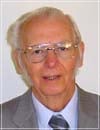
Bill McDaniel

Man Blind From Birth Receives Sight

John 9:1-12
Bill McDaniel October, 11 2009 Audio
0 Comments
Jesus' Miracles In John

Sermon Transcript

Auto-generated transcript • May contain errors

100%
Here is the text, John 9, 1 through
12, for those on the tapes and CDs. As Jesus passed by, he saw
a man that was blind from his birth. And his disciples asked
him, saying, Master, who did sin, this man or his parents,
that he was born blind? Jesus answered, Neither hath
this man sinned, nor his parents, but that the works of God should
be made manifest in him. I must work the works of him
that sent me while it is day. The night comes when no man can
work. As long as I am in the world,
I am the light of the world. When he hath thus spoken, he
spat on the ground, and made clay of the spittle, and he anointed
the eyes of the man with the clay, and said unto him, Go wash
in the pool of Siloam, which is by interpretation sent. He went his way therefore, and
washed, and came seeing. The neighbors therefore, and
they which before had seen him, that he was blind, said, Is not
this He that sat and begged? Some said, This is He. Others said, He's like Him. That is, He looks like Him. But
He the man said, I am He. Therefore said they unto Him,
How were thine eyes opened? He answered and said, A man that
is called Jesus made clay, and anointed my eyes, and then said
unto me, Go to the pool of Siloam, and wash. And I went and washed,
and I received sight. Then said they unto him, Where
is he? He said, I know not." John 1
through verse 12. Now, coming to our fifth miracle
that John is led to record that the Lord performed during his
ministry, let us take time to make a couple of observations
about the miracles of our Lord. In fact, we need to keep these
things in our mind as we move through this series or through
this study. And these points, I believe,
are certainly pertinent. to a protracted study of the
miracles that were performed by the Savior while He dwelt
in our flesh in this world. Not only that, but it will help
us keep everything in a right and proper perspective concerning
the miracles, He that worked them, and why they were worked
by our Lord. Point number one is this. that
miracles were for the most part in the Scripture confined to
certain periods of time. And they were to confirm some
great revelation that God was making. The miracles are needed
when the miracles are not needed, when there is nothing new to
be confirmed, when there is no new gospel to be spread in the
world, when there is no new revelation. Now, the miracles of Christ were
loud, undeniable attestations that He was the Messiah. Acts 2 verse 22 and 23, and God
willing, I want to close our series next Sunday morning with
that text in Acts the second chapter. That he came from God
and a confirmation of the gospel was therefore presented by the
miracles of Christ and then also by the apostles themselves. Bearing
witness to them, Paul said in the book of Hebrews chapter 5.
And for that reason, for this reason, they are not needed today. There is no new revelation that
God would make. There is no new covenant. that God would install among
the people who worship Him. Point number two, those that
have the faith of God's elect, those that believe on the Lord
Jesus Christ, the miracles are accepted by them as true, factual,
and actual. Faith, you see, believes the
Scripture. The faith of God's elect takes
the Scripture as the literal and inspired Word of God, and
miracles are a great part of God's Holy Word. Miracles, therefore,
are not myths. They are not exaggerations. They are not made-up stories,
no matter how far-fetched some may take them to be. If you have
any doubt about the Lord working miracles, such as giving sight
to this man, or raising Lazarus again from the dead, will you
believe then John 3.16? Because they stand or fall together. The miracles are as much a part
of the work and the ministry of our Lord as that verse lets
so many love in our day. They stand or fall together. It is as easy to believe all
of the miracles as it is to believe John 3 and verse 16. Now today
we consider the fifth miracle of our Lord Jesus Christ, which
John the Gospel-eater is inspired to include in the record of his
gospel. The giving of sight is this miracle
to a grown man. Not only a grown man, but a man
that was blind from his mother's womb. A man that was born in
the darkness of blindness, is a man that had never seen the
light of day. He had never seen the beauties
of nature. He had never seen his parents
or his friends or his neighbors. He had never seen the temple
and he had never beheld a beautiful flower garden. And the giving
of sight unto this man and the effects of it take up the whole
9th chapter of the Gospel of John. John does this in his Gospel. Chapter 6 takes up the whole
matter of the giving of bread to the 5,000. Chapter 9 to the
man born blind. Chapter 11 to the resurrection
of our Lord. So that these things are given
as important and as great detail in the Gospel of John. Now, the
occasion of it was after this fashion. How it came to be, we
have the record. The Lord and His disciples were
going, possibly they were leaving the temple or going to the temple,
and as they went, they saw a man having been blind since the day
that he was born. It is probably so that this man
was positioned in a public place, the temple or otherwise, a public
thoroughfare, in order that he might ask alms of those passing
by. Much like the blind man in the
third chapter of Acts and verse 2, who sat by the temple and
asked alms of them that were going and that were coming. perhaps
thinking if their heart is stirred for the worship of God, that
they will have pity and mercy upon Him. Now, note how well
documented is the fact of this man that he was blind from birth. He did not lose his sight to
disease or accident or violence or anything of that sort. It
is well documented that the man had been blind from the day of
his birth. In verse 1, it clearly said,
which was blind at birth. In verse 2, it speaks of him
as that he was born blind. Down in verse 20, his parents
His mother and father that begat and birthed Him confirm that
He had indeed been blind since the time of His birth. And in
verse 2, we notice the question of the disciple concerning the
lifelong blindness of this man. This is indeed a restrictive
affliction that might come upon one And as they beheld the blind
man as they passed by, and by some means or other, knowing
that the man had been blind all the days of his life, even from
birth, they asked a question of their great teacher as they
see that sight. And someone has expressed the
question openly to the Lord, saying, who did sin? Literally, who sinned? This man or his parents that
resulted in him being born blind in the flesh? Now here's their
question. They must have thought sin is
the reason. Who did sin? Could it only be
to he or his parents that caused that this man should be born
blind? Now, the disciples fixed the
man's affliction, therefore, in their mind as being caused
by personal sin and as a judgment or as a punishment for that personal
sin. The only question was, was it
the sin of the man himself or was it the sin of his parents? What is the only alternative? If it is not the man, then the
sin of his parent. Now this question in relation
to the man himself presents a great dilemma. Since the man was born
blind, did they imagine that he had sinned prior unto his
birth? Could they have that thought
in their mind? Blind forever? Blind from birth? Did or could he sin before he
was ever born? Now, it was not the doctrine
of orthodox Jews in that day and time that souls were pre-existent. Orthodox Jewry did not hold to
that. Nor did they hold that souls
passed from one body unto another. And that they might therefore
have sinned in some previous life causing such a condition
in the next life. Now, though such a notion might
be found and was found, I believe, among some of the fringe Jews
who swallowed too many tenants of paganism for their own good. Some have suggested that some
Jews there were who held the belief that an infant could sin,
actually sin, in the womb. And yet we need not be drawn
aside into this empty vein speculation. As to the second part of their
question, whether the sin of his parents might have been visited
upon their child. You know this they might conclude
from reading in the law in Exodus 20 and verse 5, that God, quote,
visiting the iniquity of the fathers upon the children, until
the third and the fourth generation." You have it again in Exodus chapter
34 and verse 5, that the sins of the parents will be visited
upon the children. There was a parable rather popular
in Israel, and it's in Ezekiel 18 and verse 2. And it says this,
the fathers have eaten sour grapes and the children's teeth are
set on edge. Did you ever eat an absolutely
green persimmon? You know what it does under the
mouth. The parable said this, the fathers
have eaten sour grapes and the children's teeth are set on edge. In a very real sense, all diseases
All sicknesses, all disabilities and so forth are because of sin. Yes, it is true. Including death. Death has entered into the world. The wages of sin is death. Romans 6 and verse 23. In Adam,
all die. 1 Corinthians 15 and verse 22. But in verse 3 of our text in
John 9, the Lord tells them that neither had this man sinned,
nor had his parents sinned, that this man was born blind and lived
year after year in midnight darkness. Now, we can make two halves of
the third verse if we look at it. where the Lord speaks of
the situation negatively and positively, saying in verse 3,
the first part, neither hath this man sinned nor his parents. The Lord is not declaring them
to be without original sin or actual sin in their life. He's not clearing them of being
sinners after the order of all other men. He's not calling them
to be perfect parents without depravity, for their question
was not concerning the depravity of the whole race, but their
question was And was some actual sin responsible for this man
being born blind? To this the Lord gives an answer. No. Neither the man nor his parents
have sinned to cause this. Well, then the question comes
back, why then? What's the explanation why this
poor man was born blind, never has seen, and as a consequence
has been turned into a beggar." Well, the answer is in the last
part of verse 3. It says, "...but, or so that,
or in order," this man was born blind, "...in order that the
works of God should be made manifest in him." Again, this relates
to the man who was born blind and to him only. As to say, not
on account of his sin or his parents' sin was he born blind,
but it was a special dispensation of God's providence that it might
provide an occasion for the display of the power and the glory of
our Lord Jesus Christ. This man was not born blind because
somebody sinned and it visited upon him. This man is a special
and sovereign providence and dispensation for the display
of the power and the sovereignty of God. Giving light to such
a man. Giving sight to such a man. Look at it in the end of verse
3. should be made manifest in him. That the works of God might
be made manifest in him, in this man born blind. Joseph Hall wrote, there is a
higher reason and a higher cause for being deprived of sight in
the case of this man. Not just sin, but the sovereign
The providence of God is behind it all. Look at verse 4 and verse
5. It is clear that the Lord intends
by the words that He speaks here to work a mighty work upon this
man. He likens himself in verse 4
and 5, using a metaphorical expression there, to a workman who has been
assigned a particular work to do on a certain day and a certain
time he has to perform them. He must do it while it is day
and before the night come. That the healing of the man that
was born blind was among the mighty works that were given
unto our Lord to perform. That the healing of the man's
blindness was among those things that the Father had sent Him
to do. Let's take a minute, if we might,
to consider that we can see this in verse 3 of the miracles that
John records in his Gospel. That each is a miracle which
our Lord determined before that He would do. Not only here, but
in John 6. You remember in John 6.6 what
it is said there? How can we feed so many with
this little lunch? But it said, Jesus, knew in Himself
what He would do. That He would feed many using
the boy's little lunch of five loaves and two fishes. Again,
we'll see it this evening in John 11 and verse 4. When Jesus heard of the awful
sickness of Lazarus, He said unto His disciples, The sickness
is not unto death, but unto the glory of God, that the Son of
God might be glorified by means of it." Chapter 9 and verse 3,
that the man's blindness was to be an occasion of the displaying
of the glory and the power of the Lord Jesus Christ. Now look
in verse 5, he declares himself the light of the world. Also,
John 8 and 12, He does the same. And He gives sight and light
to those that are His very own. In Him is light. He is the light
of men. He is that light that shines
in darkness. John 1, verses 4 and 5. In Him was light, and that light
was the life of men. But in our text in verse 6 and
7, we have the record of the Lord giving sight to the man
born blind, having told why he must do so, to the glory of God. Then He does it. And as we hear
the account of it, it is among the most unusual of the miracles
that our Lord performed. Now, there were many miracles
done by our Savior. that are in the Scripture, and
no doubt many that are not included. But it is among the most unusual
ways that our Lord worked a miracle during His ministry. What I mean
is, rather than simply command the eyes to be opened and to
see, and He might have done that, or touch the eyes as He did on
other occasions and give them sight, Instead, our Lord takes
a different and an unusual way in giving sight unto this man
that was born blind. Who can believe it? All that
believe the Scripture. He mixes his spittle or his saliva
with clay, with the dirt of the ground. And then He stirs and
He makes a mixture of the two. And then with his own hand or
finger, he anoints or rubs that across the eyes of the man. You may notice in the margin
of King James, it says, spread the clay upon the eyes of the
man. After he had mixed it together,
clay and spittle, he spread the clay upon the eye of the man. He put the spittle clay upon
the blinded eyes of the man. Now, would it not surprise us
if the man had taken a strong affront unto be treated in such
a way. The man has taken no affront
and meekly allows the Lord to perform his work. Oh, I wonder
if those who stood by and saw this said, what manner of cure
is this, mixing spittle and mixing clay? How can such be a cure
for blinded eyes? Looks like it would do more harm
than good from the natural sense and standpoint. But the man is
submissive and the man is obedient. And yet, he has no sight. The Lord wipes the spittle upon
his eyes, the both of them, and as yet, the man has no spit,
by even the spittle being that of the God-man mixed together
with dirt, and personally applied to the man with his very own
hand. It is here in verse 7, if you
will look. that we learn that the miracle
has two parts or two aspects unto it. Unlike some of the other
miracles which were instantaneous and on the spot, this one, as
well as another, has two parts unto it. Not only has the Lord
anointed the man's eyes with a clay and with a spittle, but
now the man is told, go and wash himself, not just in any water,
not at home, but in the pool of Siloam, which John tells us
the interpretation of it is sin. He is sent to that pool. He says to him, go wash. Not in the pool of Bethesda,
where the man in John chapter 5 was, but in the pool of Siloam. And he says to him, not, go fetch
water and drink of it, but wash yourself in it up to bottom. And not your eyes only, but wash
in the water of Siloam. Verse 7 said, he did so and he
came seeing. He received his sight. He came away with sight. He could
see after that point of being obedient and washing himself
in that pool. He received his sight. He became
sighted when he washed in that pool according to the Lord. Now looking ahead, and the man
is consistent and he sticks to his story no matter who confronts
him about it. For in verses 8-12, when his
neighbors, his acquaintances, his friends, and those who had
seen him and recognized him often, knew that this was a man that
had been blind and that sat by the way and begged, they asked
him then in verse 10, How were your eyes opened? How came this to be? He answers, Verse 11, a man named
Jesus made clay and spittle and anointed my eyes and told me
to go wash in Siloam, and when I did, I received my sight. Later, in verse 13 through verse
15, when the Pharisees found out about it, they had a hissy
fit, And they also ask him in verse 15 how he had received
his sight. And he said again, he put clay
upon mine eyes, I washed and I see. Now, let us consider a
couple of other miracles by the Lord that bear some likeness
to this blind man getting his sight. For example, in Mark 7,
31-35, on a certain day, the Lord did have a man brought unto
Him that had a double affliction. This man was deaf and also had
an impediment in his speech. in that he had a hard time forming
his words and speaking them. Speaking was difficult for the
man, and he had no hearing. And they brought him to Jesus,
and they wanted the Lord to put His hand upon the man and touch
him that he might be well. And in v. 33-35 of that chapter,
Mark 7, The Lord took the blind man aside
from the crowd, took him away from the multitude, and He cured
both of the man's affliction, but each of them with a separate
remedy. By two special remedies. First,
the Scripture said that He put His fingers in the man's ear. The Lord of glory put His fingers
in the man's ear. And he used again, in this case,
his spit or saliva to anoint the stammering tongue of the
man. Then our Lord looked up toward
heaven, and He let out a sigh or a groan, as the Scripture
said, and He said unto that man's ears, Be opened. And immediately his ears were
opened to hear, and his speaking was plain and distinct for the
first time in his life. But there's another unique miracle
that was worked by our Lord, something akin to our miracle
in John 9. It's found in Mark 8, and the
verses are 22-26. And it might be the only one of the Lord's miracle that in
two stages the miracle was worked. Again, the affliction of this
man is blindness. Now, we know that the Lord might
have given this man sight simply by willing it to be so. He willed water to wine. He might
have willed this man to have sight. Again, he could have done
it by a command of authority and power, I say, eyes be open. Or he could have done it by touching
the eyes of the man, as in other cases. Or he could have had the
man make a mud pack and put it upon his eyes, or dipping in
a pool a certain number of times, and the man could have received
his sight. The Lord is not restricted in
the way that He might work His great work. But He does it to
the glory of God and to Himself. So He personally takes this blind
man by the hand and He takes him out of the town where again
He spit upon the man's eyes Then he touched him. Then he asked
the man, can you see anything now? The man said, I see men
like trees walking. I see the outline, but not clearly. Cannot make out the distinguishing
features of them." And then the Lord touched his eyes again,
and the man looked, and he could see every object very clearly. Twenty-twenty vision. Now concerning these two miracles,
why did the Lord take them aside? Why not do the miracle in front
of many witnesses, to have many to confirm it. The better to
verify them. Why not in front of multitude? And why, in both cases, did He
command the men not to tell anybody the blessing that they had received? Both of those men, I didn't mention
it, but the Lord commanded them, tell nobody. Don't tell anybody
about this. Mark 7.36 and 8.26. But also, who could hide such
a blessing under a bushel? Who could keep a secret such
as that that the Lord had given? And besides, would it not be
evident to all that knew them that these things are impossible
to hide? And was the case with a man in
our passage in John chapter 9 and verse 8, when his neighbors saw
him, they recognized that he had sight and that he used to
be blind, but that now he could see. In verse 9, some said, yes,
this is him. Others said, I'm not so sure,
but it sure does look like him." And the man spoke up and said,
I am he, it is I. Their first question, how did
you receive your sight? How is it that you came to be
sighted? Likewise with the two men in
Mark, the change would be seen. How did you receive your hearing? How were you cleared of your
stammering tongue? How did it become so clear? How
is it that you see, after all this time, the only answer possible? A man named Jesus touched me,
and I see and I speak. But let's go back to John 9,
and we notice again that the whole chapter is taken up with
the one incident of the man born blind. And in verse 13, the Pharisees,
the legal police, now enter into the picture. These self-righteous,
partisan bigots. The religious czars, if you would,
of Judaism in Jerusalem. And they were not likely the
Laman Pharisees, but these were the Pharisees in authority. And John Gill thinks they may
have been some who sat upon the Sanhedrin court. Others agree
that these Pharisees were not what Lange called, were what
Lange called, in a magisterial capacity. They had some kind
of authority in Judaism. They were such as sit in Moses'
seat. Matthew 23 and verse 2. They
were in places of authority. And this may be confirmed by
a couple of verses further down in the chapter, such as verse
22. Look there, where it is stated
that the Jews had agreed that if any man did confess Jesus,
they were to be put out of the synagogue. If anyone was heard
of confessing that Jesus was the Christ, they were to be thrown
out of the synagogue. Now please note the action and
words of the man's parents in verse 18 through verse 23. How reluctant they were to get
too deeply involved in this matter. How reluctant they were to say
much about their son's sight. They said, It is true that he
was born blind. Then down in verse 35, we're
chasing a thought, they did cast the man out of the synagogue
for his confession and for his defense of the Lord Jesus Christ. As in verse 33, as he used logic
on the Pharisees. He said to them, if this man
were not of God, he could do nothing. If this man were not
of God, he could not do mighty, wonderful things like this. In
verse 34, they are stung, that is the Pharisees, are stung by
the man's words, and not being able to refute his logic, they
then denigrate the man greatly. You born in sin, You from birth
a beggar, an uneducated man. You not a reader or a scholar
of the Scripture. Do you presume to teach and instruct
us? Teach us who are the teachers
of Israel." That was their reaction. If you go back to verse 13, We
can now better understand the motive the neighbors had when
they saw that he was a blind man in bringing him to the Pharisees. Those neighbors brought him for
Pharisees to learn and to see. And we ask two questions. Number
one, Was it their intention to magnify the Lord for the miracle
that they hoped the Pharisees would be pleased at the news? This seemed highly unlikely.
Could it be that they'd bring Him and say, look to the Pharisees,
this man is working wonderful things. Secondly, was it their
intention, and I think here's where we must land, Was it their
intention to report a violation of the Sabbath day? If not this,
did they think it was their duty to bring this great thing to
the attention of the Jewish hierarchy, that they might consider the
magnitude of the miracle as they that judged Israel, and let such
be known unto the leaders? Could George Hutchison actually
have a valid point that they did it to curry favor with the
council, these neighbors and friends, that we could please
the council, which they knew the council and the Pharisees
would be jealous and resentful of the growing popularity of
the man from Galilee, the Lord Jesus. One of the outstanding
things about this miracle It, like others, was performed on
a Sabbath day. Jesus did that quite often. A Jewish Sabbath day. A fact which His enemies used
to oppose Him and to view Him as an enemy of Moses and they
as the guardians of the law of God, especially the law of the
Sabbath. I suppose this might belong unto
another sermon or study, but consider, if you will, how many
of the Lord's miracles were performed on a Jewish Sabbath day. Mark 1, 21 through 27, the casting
out of an unclean spirit. Mark 3, 2 and 3, healing a man
of a withered arm on the Sabbath in the synagogue. Luke 13, 10-13. A woman with an infirmity that
caused her to walk all bowed down. And the Lord healed her
on the Sabbath day. In John 5, verse 9, the impotent
man at the pool on the Sabbath day. And here in John chapter
9, The giving of sight to this man was also done on the Sabbath
day. And yet, the Lord purposely healed
and worked miracles on the Sabbath day, even as the Jews watched
Him with bated breath and keen eyes, so that they might accuse
Him. Everywhere He went, they entered
the Sabbath day. Perhaps they planted some people
there that were afflicted to see if the Lord would heal upon
the Sabbath day. Then again, it is interesting
how many blind the Lord gave sight to. When John the Baptist
sent to the Lord and said to Him, are You the one that should
come or should we look for another? Part of the answer to John was
the blind are receiving their sight. Matthew 11 and 5. And
see what they said about her of the Lord to the man that received
His sight in John 9, 16. They said, this man is not of
God. He does not properly respect
and observe the Sabbath. And in verse 24, they tell him,
Give God the praise, as for this man, we know that he is a sinner,
for he keeps not the Sabbath day. Their great mistake was
in seeking to separate the Lord Jesus Christ from His deity. The man Christ Jesus from His
deity. That was one of their fatal errors. They both deny that Jesus is
God and they call Him a sinner and especially a Sabbath desecrator. That the Lord healed the man
and did so on the Sabbath day made him a target of persecution. Their enmity against the Christ
of God, they vented against the man and cast him out of the synagogue
for taking the side of Jesus. The same was true with Lazarus.
He represented the miracle of Christ and they wanted to kill
him after he was resurrected. Now concerning this miracle,
as with others, they are types. And were we not all spiritually
blind? Were we not all spiritually Blind
by nature. Were we not stumbling and staggering
in darkness with regard to spiritual things? Blind and could not see
afar off. Blind and could not see the things
of God. We could not see or understand
until the Lord of glory cause the scales to fall off of our
spiritual eyes that we might see. Some are blind, you know,
with twenty-twenty sight. Some who have perfect sight in
the flesh and body are blind to the things of God. Now, the
man's words are incorporated in a part of a hymn in verse
1 John Newton's famous old hymn that we often sing, Amazing Grace. Verse 25, the man wrote part
of that verse, or part of it is taken from him. He says, One
thing I know, that whereas I was blind, now I see. I once was lost, but now am found,
was blind, but now I see. This I know. Once I was blind,
now I see. One of the great wonders of grace,
the great work of God, is to flood the eyes of our understanding
with the knowledge of spiritual life and the things of God. To give seeing eyes to us a hearing
ear and a seeing eye. Two important faculties indeed. That the Lord opens our mind
and He opens our understanding. And thank God for that. That
the Lord opened our eyes that we may see. We may behold Him
in the Scripture. Behold the Christ of God. This is Him that was to come. This is the Christ. This is the
Son of God. That's our confession. And we see Christ now in the
Scripture where we never saw Him before the Lord opened our
eyes. Okay, stand please for a word
of final prayer. We're going to take our lunch.
I believe we have Sister Chicken Lady here today. With that, we'll
go and have some gospel bird if you can stay.

Comments

0 / 2000 characters
Comments are moderated before appearing.

Be the first to comment!

Joshua

Joshua

Shall we play a game? Ask me about articles, sermons, or theology from our library. I can also help you navigate the site.