Bootstrap
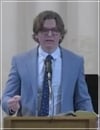
Bill Parker

I Was Blind, Now I See

John 9:25
Bill Parker August, 13 2023 Video & Audio
0 Comments
Bill Parker
Bill Parker August, 13 2023
John 9:25 He answered and said, Whether he be a sinner or no, I know not: one thing I know, that, whereas I was blind, now I see.

In the sermon titled "I Was Blind, Now I See," Bill Parker addresses the themes of spiritual blindness and divine healing as depicted in John 9:25. He emphasizes that Jesus’ miracles, including restoring sight to the blind, serve as signs of His divine authority and illustrate the spiritual awakening necessary for believers. Parker points out the contrast between the blind man’s physical healing and the Pharisees’ spiritual blindness, arguing that true spiritual vision comes from God’s sovereign grace. He cites Scripture to show that salvation is not based on human effort or understanding but solely on the redemptive work of Christ, highlighting its importance for Reformed theology which emphasizes grace alone. The practical significance lies in the assurance that those whom Christ saves are enabled to perceive His glory and respond in faith.

Key Quotes

“The miracles of Jesus were not an end in and of themselves. Christ did not come into the world to heal people physically... They attested to His deity.”

“This man was born blind... because God's purpose and plan to manifest His glory in Christ through this man's healing.”

“Spiritual blindness is the darkness and ignorance of not knowing God, not knowing Christ, not knowing ourselves.”

“Christ saves His people from their sins. He didn't try to save them. He's not out there trying to save people. He saved His people.”

Sermon Transcript

Auto-generated transcript • May contain errors

100%
Welcome to Reign of Grace. This
program is brought to you by Reign of Grace Media Ministries,
an outreach ministry of Eager Avenue Grace Church in Albany,
Georgia. It is our pleasure and privilege
to present to you the gospel message of the sovereign grace
and glory of God in the person and work of the Lord Jesus Christ. We pray that today's program
will be a blessing to you. Thank you for listening. And
now for today's program. Welcome to our program today.
I'm glad you could join us. If you'd like to follow along
in your Bibles, I'm going to be preaching from John chapter
nine, the gospel of John chapter nine. And the title of the message
is, I was blind, now I see. I was blind, now I see. And I'm taking that title from
verse 25 of John chapter nine. This is the account of Christ
giving a blind man a man who had been blind from birth, giving
him eyes to see. And this was the blind man's
testimony at one point in this account, in verse 25, as the
Pharisees and the religionists were questioning him about his
being able to see, because everybody knew that this man was born blind,
he was blind from birth. And when they questioned him
about Christ and how he was about Jesus of Nazareth and how he
was healed, it says in verse 25 of John 9, he answered and
said, whether he be a sinner or no, they claimed that Christ
was a sinner. Now, Christ was not a sinner.
But their view of that was that a person who was a sinner was
separate from them and therefore not in the kingdom of God, not
in the family of God, not worthy of it as they thought they were.
And they were questioning him about who Jesus was and what
he claimed to be. And this man didn't know. All
he knew is this. He says, whether he be a sinner
or no, I know not. But one thing I know that, whereas
I was blind, Now I see. I know this. That's what he's
saying. Now this is one of the miracles
of Christ. You know, as the Lord Jesus walked
this earth in his earthly ministry, for those three and a half years
that we have recorded in the Gospel narratives, He went about
performing miracles, different kinds of miracles. And one of
the greatest of all the miracles was the healing of those who
had infirmities, such as making the blind see, the deaf hear,
the dumb speak, all of that, healing lame people. And many
times it was on the Sabbath. Well, here's a man whom Christ
gave physical sight. And later on, we're gonna see
he also gave the man spiritual sight. And let me say this about
the miracles of Jesus. The miracles of Jesus were not
an end in and of themselves. Christ did not come into the
world to heal people physically. Even though he did that, that
was not his purpose. The miracles that he performed
were testimonies of several things. Number one, of his deity, because
only God can heal. Now, he may use human beings
in the healing process, but it's ultimately God that heals. I
often tell people that there are some false religionists who
claim to be Christian, who say that it's a sin to go see a doctor
or something like that because you're supposed to depend upon
God. Well, my friend, God uses doctors. He uses medicines. He uses operations, all of that. Now, you may be healed, you may
not be healed. That's up to Him. But God is
the ultimate healer. So the miracles of Jesus testified
of His deity. He is God manifest in the flesh. And so when any of the prophets
of God or the apostles had the gifts of healing back in the
day when the New Testament began, before the Word of God came together,
those gifts, they attested it. They said, this is of God. Not
of me. You know, when Peter, for example,
I think when he healed a person, they came and they bowed down
to Peter and he said, no, no, no, no, don't bow down to me. I'm just like the medicine. I'm
just like the doctor who performed the operation. God is the one
who healed. But Christ is the great healer.
He's called the great physician. And in a spiritual sense, you
remember what he said? The whole need not a physician. He said,
I came to seek and to save that which was lost. Sinners, I came
not to call the righteous, but sinners to repentance. And that's
spiritual healing. That's the healing that he gives
his people in salvation. So that's what the miracles are
for. Also, the miracles were illustrations of how God saves
sinners. For example, when he healed lame
people, made them walk. That's an illustration of how
he gives us spiritual legs to walk by faith, walk in the ways
of God. When he gave deaf people the
gift of physical hearing, that's a spiritual illustration of spiritual
hearing. giving people ears to hear. I
talked about that last week, those who hear God's word. Faith
cometh by hearing and hearing by the word of God. And then
here in John 9, giving the blind man sight. He gave other people
sight. There's a man named Bartimaeus,
blind Bartimaeus. He healed him and gave him sight,
physical sight. That's an illustration of how
he gives us who are blind by nature, which is all of us, he
gives those whom he saves spiritual sight to see the glory of God
in the face of Jesus Christ. When he healed people of leprosy,
that's a perfect illustration of how he heals us from the problem
of sin, which runs throughout everything we do and are. He
heals us from the leprosy of sin spiritually. Now, there's
another thing that you need to understand. Not everyone whom
He healed physically were healed spiritually. There's one story
where Christ healed, I think, 10 lepers, and they all walked
away and only one returned to glorify Him and to worship Him.
Many that he healed physically were not healed spiritually,
were not saved. For example, many of the 5,000
that he fed with loaves and fishes were not fed spiritually with
the gospel, the bread of life. Many were, but some of them turned
away later on. They were never saved. So don't
think that just because Christ healed a person physically, that
that means they were saved. Many of them were. You've got
to read the whole context. Now this man here, who was blind
from birth, Christ healed him both physically and spiritually,
but not at the same time. He healed him first physically.
and then he healed him spiritually. But one of the things we can
see is this illustration of how this man, in his physical ailment,
his physical blindness, is a picture of all of us by nature. Look
at verse one of John 9. It says, and as Jesus passed
by, he saw a man which was blind from birth. This man was born
blind. And that's the way we are by
nature. We fell in Adam. into a state of sin and death
and depravity, we're blind spiritually, deaf spiritually, spiritually
dead. The Bible says, if you're born
again, you hath he quickened, given life, who were dead in
trespasses and sins. And so just like this blind man
who was blind from birth, that's what we are by nature. We fell
in Adam into a state of sin, death, and depravity. Spiritually
blind. Now spiritual blindness is the
darkness and ignorance of not knowing God, not knowing Christ,
not knowing ourselves. And thinking that we can do something
by the way of our works, our character, or our decisions to
make ourselves right with God. You know the Pharisees were religious,
and they claimed to be children of God. They weren't. They were
unbelievers. They didn't know God. They didn't
know Christ. And you remember what Christ
said of them? They were the blind leading the blind, and they all
fall in the ditch together. Well, what were they doing as
blind men leading the blind? They were teaching sinners to
seek righteousness by their works under the law. Now, only a spiritually
blind person would do that. You see, the gospel teaches that
salvation is not by our works of righteousness under the law.
That's darkness. That's deception. That's ignorance. That's actually idolatry. Because
the God who accepts that in your mind, He's an idol. He's not
the God of the Bible. The gospel teaches that salvation
is by the righteousness of another, the Lord Jesus Christ, God manifest
in the flesh. And it's by His obedience unto
death on the cross, redeeming His people by His blood. that
brings forth the righteousness that we need to be justified,
to be regenerated. The Bible says the body is dead
because of sin. This is Romans 8, 10. But the
spirit is life because of righteousness. Well, where am I gonna find righteousness?
Not by my works, not by my character, not by my decisions, not within
myself. The only place I'm going to find
righteousness is in Christ. Romans 10, four, for Christ is
the end of the law, the fulfillment, perfection, completion, establishment,
and fulfilling of the law for righteousness to everyone that
believeth. And those who believe are those
who have been given spiritual sight to see the value of the
glorious person of Christ. and the finished work of Christ.
Christ saves His people from their sins. He didn't try to
save them. He's not out there trying to
save people. He saved His people and He will
have them. They're His sheep. They're God's
elect. They're the church. They're His
brethren. All of them for whom He died shall be saved. They'll
be given spiritual sight. You say, well, am I one of those?
Well, do you see the glory of God in the face of Jesus Christ?
Do you believe the gospel? Are you concerned for your soul?
Are you interested in what the Bible says? So any preacher,
listen, any preacher who stands before people and tells them
that Christ died for everybody and that salvation is conditioned
on what you do or what you decide, My friend, that's the blind leading
the blind. And if that persists until death,
you fall in the ditch together. Get away from that, that's what
I'm telling you. Come to hear the gospel, come
to believe the gospel. Well, this man was blind from
birth. Well, look at verse two of John nine. It says, and his
disciples asked him, saying, Master, who did sin, this man
or his parents, that he was born blind? Now, what they're expressing
there is what man naturally thinks. People naturally think that if
somebody's going through some type of adversity or suffering
from some problem, for the most part, and I know not everybody
thinks this way, but basically you think this way, that there's
something wrong. This person's done something
bad or his parents has done something bad. In other words, why is this
guy blind? What'd he do? Did he sin or did
his parents sin? And the thing that's wrong about
that is this, we're all sinners. We've all by nature rejected
God or rejected Christ. We all deserve the worst we can
get. We've all earned the worst we
can get. Christ taught that. Read about it in Luke chapter
13. He talked about those Jews who came to worship God and they
were slaughtered by pilots, soldiers. And he talked about a natural
disaster, the Tower of Siloam falling down on people and killing
them just like natural disasters, like we have hurricanes and tornadoes. And he said, do you suppose that
those who died, were more deserving, were greater sinners than those
who didn't die? People usually say yes. He said,
not so. He said, except you repent, you'll
likewise perish. We all deserve that. So Christ
sets them straight. Listen to what he says in verse
three, and this is amazing. Now, I know people don't like
this because there's a lot of people who say, well, if something
happens that's good, that's God. If something happens that's bad,
that's the devil. Not so. Listen to what he says
in verse three. Jesus answered, neither have
this man sin nor his parents, but that the works of God should
be made manifest in him. Now when he says neither hath
this man sinned nor his parents, he's not talking about, he's
not saying this man is not a sinner like you and me, or his parents
were not sinners like you and me. He's simply saying that the
reason this fellow's blind is not because his parents did sin
or he sinned, we're all sinners now, but he said the reason this
man was born blind was because of God's purpose and plan to
manifest the glory and power of God in Christ through this
man. Now how old was this fella? He
was an adult, we know that. Because his parents said that
when they came to his parents and asked him questions about
what had happened, his parents told him, he said, you read the
whole chapter of John, his parents told him, said, well you go ask
him, he's of age. He can answer for himself. He doesn't need
us to answer for him. So I don't know how long this
man had been blind, but he was an adult. And all that time he
was born blind. Why? Because God purposed it
that way to manifest his glory in Christ through this man's
healing. And he said in verse four, he
said, I must work the works of him that sent me while it is
day. The night cometh when no man
can work. What he's saying, it's time for
me to work. There's coming a time that I'm going away. And he said,
it's time for me to do this work. He says in verse five, as long
as I'm in the world, I am the light of the world. We've talked
about that back over in the book of John. He said much about Christ
is the light. John 4, the water of life. John 5, the bread of life. John
6, the light of the world. Now that light when he's talking
about is the gospel wherein he's revealed in the glory of his
person and the power of his finished work. And so he said in verse
six, when he had thus spoken, he spat on the ground, made clay
of the spittle, and he anointed spread the clay on the eyes of
the blind man with the clay and said unto him go wash in the
pool of Siloam which by interpretation is sent send him there and he
said he went his way therefore and washed and came seeing he did what Christ told him to
do somebody said well see he had the choice he didn't have
to wash let me tell you something This was the purpose and the
plan of God. This man was going to wash. Christ
made him willing to wash with the clay spread over his eyes.
You know, this is what people don't understand today. That
by nature, we're unwilling to be saved God's way. but that
God in His power and in His purpose and in His plan and in His providence
always makes His people willing in the day of His power. That's
what He does. Somebody told me one time, he
said, well, you preach that God saves us against our will. No,
I don't. Now I'll say it this way, I will
agree this way. He saves us against our natural
fallen sinful wills But the way God saves us, He gives us a new
will. He makes us willing. He draws
us with cords of love, but it's not just some general syrupy
kind of love. It's not some universal love
that you can turn down. He makes us willing with cords
of love that sent His Son to satisfy His justice on our behalf. And so this man went down, and
it says in verse eight, the neighbors therefore, and they which before
had seen him, that he was blind, they said, is not this he that
sat and begged? He was not only blind, but he
was a beggar. He couldn't make a living. Verse
nine, some said, this is he, others said, he is like him,
but he said, I, and the man said, oh no, that's me. That's me. And verse 10, therefore said
they unto him, how were thine eyes open? And then he told him,
he told him how Jesus of Nazareth came, put the clay on his eyes
and told him to go wash. And he said, how? And they asked,
well, where is Christ? He said, I don't know. I don't
know. Now they bring him to the Pharisees.
And the Pharisees, they questioned him. They do their thing. They
hated Jesus of Nazareth. They rejected the gospel. And
it says in verse 14, they questioned him. And it says in verse 14,
and it was the Sabbath day when Jesus made the clay and opened
his eyes. Oh my goodness. It was on their Sabbath. And
so they began to put Jesus down as a lawbreaker, as a sinner,
as a false preacher, because he broke their Sabbath. Now my
friends, and there's so many verses here, you can read all
of this. But what a perversion of the
law that they had. The Sabbath. Now under the old
covenant, for 1500 years, from Sinai to the cross, there were
Sabbath days, there's the weekly seventh day Sabbath, and it was
on the end of the week, not the first, it wasn't Sunday. And
that calendar had not even come into being yet. And there were
weekly Sabbath, there were monthly Sabbath, there were yearly Sabbaths,
there was a Jubilee Sabbath, all of that. All of those Sabbaths
were times of rest from their labors. And those Sabbaths were
pictures of the spiritual, eternal, final rest that true believers
have in Christ. What is the Christian Sabbath?
It's not Sunday. No. The Christian Sabbath is
Jesus Christ crucified and risen from the dead. We rest in Christ. It's not a day under the New
Covenant. Now, we worship God on the first
day of the week. That's called the Lord's Day
in the sense every day is the Lord's Day. But in the sense
of that's the day that we set aside to meet together as a congregation
of believers to worship God. But it's not our Sabbath. Our Sabbath is Christ. Read Hebrews
chapter four for that. I've preached on that on this
program and I've preached on it a lot at our church. Christ
is our Sabbath. Those days and years and months
and all of that, that was a picture of Christ. But even their Sabbath,
they had turned it into a legal system of works and made it so
that you could do certain things. You could do this, you couldn't
do that. Well, first of all, even the Sabbath day, God never
prohibited performing acts of necessity or acts of mercy. So they were wrong. Christ did
not break the Sabbath. Now Christ was under the old
covenant. He had to keep the old covenant
law. He had to keep that Sabbath time because he had to keep the
law perfectly. He told him in Matthew chapter
five, I didn't come to break the law. I came to keep the law
in every jot and tent. But they accused him of breaking
the law because he healed a man on the Sabbath. Well, that wasn't
breaking the law because as I said, the law never prohibited acts
of mercy. and acts of necessity on the
Sabbath. So Christ didn't break the law,
but they accused him of because in their sick ignorance, blindness,
in their own blindness, in their own legalism, they wanted to
discredit him. So they asked the man's parents,
the parents about Christ. The parents, they said, well,
ask him. And it says, look down at verse
24 now. This is John 9, 24. Then again
called they the man that was blind. And they said unto him,
give God the praise. We know that this man is a sinner.
Don't look to Christ. Don't give him the praise. Give
God the praise. Well, you can't praise God without
praising Christ. They didn't know that. But he
answered, verse 25, as I told you at the beginning of the program.
This is where I got the title from. He said, whether he be
a sinner or no, whether he be lost or whatever, I know not,
he said. One thing I know, that whereas
I was blind, now I see. And so they asked him, they said
to him again, what did he do? How opened he thine eyes? And
he answered, this is verse 27, he answered, I've told you already
and you did not hear. Not only were they blind, but
they were spiritually deaf. Wherefore would you hear it again?
Will you also be his disciples? The man's kind of chiding them. You're so interested, do you
wanna follow him too? In verse 20 it says, then they
reviled him and said, thou art his disciple, but we're Moses'
disciples. We keep the law. You follow him,
Jesus. The lawbreaker, that's their
view. He wasn't a lawbreaker. But he said, we keep the law.
Well, they didn't keep the law. Back in John chapter five, he
said, Moses in whom you trust, the law, it'll be your judge. You say you live by the law,
you'll die by the law. Galatians 3.10, cursed is everyone
that continues not in all things which are written in the book
of the law to do them. The law brings in everybody guilty. You see, the only way that we
can measure up to the perfection of the law is in the righteousness
of Christ. Well, they excommunicated the
man. Well, later on, Christ came back
to him and revealed himself as the Son of God incarnate, the
Savior, the Messiah, the righteousness of God. And the man fell down
and worshiped him. Not only did Christ heal him
physically of physical blindness, he healed him spiritually of
spiritual blindness. I was blind, now I see. That's
the testimony of every true child of God who's been brought to
faith in Christ. Hope you'll join us next week
for another message from God's Word. We are glad you could join us
for another edition of Reign of Grace. This program is brought
to you by Reign of Grace Media Ministries, an outreach ministry
of Eager Avenue Grace Church in Albany, Georgia. To receive
a copy of today's program or to learn more about Reign of
Grace Media Ministries or Eager Avenue Grace Church, write us
at 1-1-0-2 Eager Drive, Albany, Georgia, 317-07. Contact us by
phone at 229-432-6969 or email us through our website at www.theletterofgrace.com. Thank you again for listening
today and may the Lord be with you.
Bill Parker
About Bill Parker
Bill Parker grew up in Kentucky and first heard the Gospel under the preaching of Henry Mahan. He has been preaching the Gospel of God's free and sovereign grace in Christ for over thirty years. After being the pastor of Eager Ave. Grace Church in Albany, Ga. for over 18 years, he accepted a call to preach at Thirteenth Street Baptist Church in Ashland, KY. He was the pastor there for over 11 years and now has returned to pastor at Eager Avenue Grace Church in Albany, GA

Comments

0 / 2000 characters
Comments are moderated before appearing.

Be the first to comment!

26
Joshua

Joshua

Shall we play a game? Ask me about articles, sermons, or theology from our library. I can also help you navigate the site.