Bootstrap
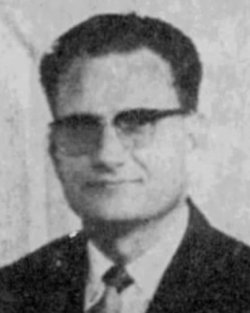
W.E. Best

Is There an Intermediate State Between Death & the Resurrection?

2 Corinthians 4:16
W.E. Best June, 15 2003 Audio
0 Comments
Best's Corner

Wilbur Elias Best addresses the theological question of whether there exists an intermediate state between death and resurrection in his sermon based on 2 Corinthians 4:16-5:10. He argues that Scripture supports only two conditions of existence: the mortal state on Earth and the immortal state in eternity, with no reference to any intermediate state such as purgatory. Best cites 2 Corinthians 5, emphasizing that believers in mortal bodies anticipate being clothed in immortal ones, thus dismissing the notion of being conscious without a body. He stresses the importance of understanding that man remains a whole being—body, soul, and spirit—reflecting the image of God. The doctrinal significance lies in reinforcing the Reformed view that believers trust in Christ for their ultimate resurrection and glorification without the need for a temporary existence after death.

Key Quotes

“There is absolutely no reference to a third condition, such as the Intermediate State, or the Roman Catholic teaching of Purgatory.”

“You can't pick and choose. You can't say, I like this, but I don't like that.”

“The human body is mortal for time. But it will be immortal for eternity.”

“Immortality is not a dubious opinion. It is a positive, God-given conviction.”

Sermon Transcript

Auto-generated transcript • May contain errors

100%
My question today is, is there
an intermediate state between death and resurrection? Is there
an intermediate state between death and resurrection? Before I get into it, I really
enjoyed getting into it again, and much deeper than what I have
in the past. And if I were to get into the
study of it again, the same thing would take place. God's truths
become richer and richer. That's why I don't understand
people who do not really want to study the Scriptures. They're
missing the greatest blessings of life. I'm going to deal with this a
little later. I think I'll deal with it in a question. I wonder how many of you would
like to know what my greatest discouragement in the ministry
has been over a period of 61 years. Now, I can put that in the form
of a question, and I can give it biblically and also experientially. What would you think, I would
say, about my greatest discouragement in the ministry. You say, well,
you shouldn't be discouraged. You better go read your Bible. See, that's what I'm talking
about. People today don't know beans about the Scriptures. I
hate to say that, but that's true. I heard a man this morning,
and before I tell about it, I want you to know that I do not think
for one cotton-picking second that I have arrived But folks,
I'm on the way of arrival. I hope you got what I said. I'm
on the way of a genuine arrival. I listened to a man this morning.
I've heard him a few times. He's brought some pretty good
things. He's an Armenian, but he makes
some good statements. He's well-educated. and I've
enjoyed some of the things that he has said. I heard his subject
this morning announced, and so I said, I better listen to this.
I did. And was it ever disgusting? I'm so tired of people saying
they believe the Bible, but if they do not believe all the Bible,
I doubt they believe any of it. If they just want to believe
that which is pleasing to them, then they don't believe the Bible.
It's just that simple. You have to take all that God
has given or none. Does that make sense to you?
You can't pick and choose. You can't say, I like this, but
I don't like that. One of the members made a great
statement to me this morning before the service. He was talking
with somebody recently. And the fellow could take election
okay. He had heard messages on election
or had read about it. But when you mention reprobation,
he threw up his hands and, man, he was ready for a battle. Didn't
believe that at all. Well, if you believe one, you've
got to believe the other, folks. You can't believe one without
the other. Now, that shows you how foolish people are today,
generally speaking, when it comes to the scriptures. Now the question,
once again, before we read some scripture, is there an intermediate
state between death and the resurrection? That's my question. And we need
to read some scripture, and you're familiar with it, we've used
it recently, especially in the funeral services
of Juanita, but we're going to have to look at that same passage
again this morning. And I don't think it'll be boresome
to you. If it is, well, you can let me
know after the service, and then I can tell you what I think about
your boredom. Turn, if you will, please, to
2 Corinthians chapter 4. I want to read beginning with
the 16th verse of the 4th chapter and we'll read through the 10th
verse of the 5th chapter. So from 4.16 to 5.10, Therefore we do not lose heart, but though our outer man is decaying,
yet our inner man is being renewed day by day. For a momentary light
affliction is producing for us an eternal weight of glory far
beyond all comparison. While we look not at the things
which are seen, but at the things which are not seen, For the things
which are seen are temporal, but the things which are not
seen are eternal." Now, I think it's a little strange
that whoever gave us the chapter titles took this break here between
verse 18 of chapter 4 and verse 1 of chapter 5 to have a chapter
division. That breaks the continuity of
thought. And you don't have to take somebody
else's word for it, just read it. Now, FOR, that tells you
something, doesn't it? The very first word in the fifth
chapter. For we know that if the earthly
tent, which is our house, is torn down We have a building
from God, a house, not made with hands, eternal in the heavens. For indeed in this house we groan. We groan in this house, longing
to be clothed with our dwelling from heaven. Inasmuch as we having put it
on, shall not be found naked. For indeed, while we are in this
tent, we groan, being burdened, because we do not want to be
unclothed, but to be clothed, in order that what is mortal
may be swaddled up by life. Now He who prepared us for this
very purpose is God, who gave to us the spirit of a pledge. Therefore, being always of good
courage, and knowing that while we are at home in the body, we
are absent from the Lord. For we walk by faith, not by
sight. We are of good courage, I say,
and prefer rather to be absent from the body and to be at home
with the Lord. That is to talk about this body,
this body in which we're groaning. Verse 9. Therefore, also we have
as our ambition, whether at home or absent, to be pleasing to
Him. For we must all appear before
the judgment seat of Christ, that each one may be compensated
for his deeds in the body according to what he has done, whether
good or bad. And that's a great portion of
Scripture. I hope to be able to get all
the way through this this morning and I'll do my best to do that.
I'll have to emphasize some things diligently so you'll see what
I'm pointing out and give it consideration when I do that,
please. It'll be helpful as we go along. The chapter division between
2 Corinthians 4.18 And 5 verse 1 complicates the
problem of interpretation for many people. I said it complicates
it for many people. In verses 4, 16 through 5, 10,
we go from, watch this, from time to eternity. Are you with
me now? God's providence prepares the
elect for the exodus out of time into eternity. So that's what
the providence of God is accomplishing today in your life and in mine.
The human body is mortal for time. Mortal for time. But it will be immortal for eternity. Are you with me? I think we need
to stop right there for a moment. Open your Bible to the 15th chapter
of 1 Corinthians. 15th chapter of 1 Corinthians.
Let's read a few verses. Let's begin, because it's a long
chapter of 58 verses and I don't want to read all of it. Let's
begin with verse 50, you can get the context. Now I say this,
brethren, that flesh and blood cannot inherit the Kingdom of
God. You understand what he's talking
about, I hope. nor does the perishable inherit the imperishable. Behold, I tell you a mystery. We shall not all sleep, but we
shall all be changed. In a moment, in the twinkling
of an eye, at the last trumpet, for the trumpet will sound, and
the dead will be raised imperishable. And we shall be changed. For this perishable must put
on the imperishable. You're putting off, but you're
putting on. Are you with me? And this mortal must put on immortality. That's not a state of nakedness,
folks. Are you with me? That's not a state of nakedness.
Verse 54, But when this perishable will have put on the imperishable,
and this mortal will have put on immortality, then will come
about the saying that is written, Death is swallowed up in victory.
O death, where is your victory? Where is your sting? The sting
of death is sin. and the power of sin is the law,
but thanks be to God who gives us the victory through our Lord
Jesus Christ. Now keep that passage in mind
too as we progress. A close examination of these
verses that we read to begin with in the fourth chapter of
the second Corinthian letter, beginning with verse 16 through
510, show that Paul's inspired teaching
deals with only two conditions. I said two conditions, not three. Stay with me and see if I'm telling
you the truth. First, imperfect and perfect. Secondly, mortal and immortal. Thirdly, he's dealing with time
and eternity. Now can you put it all together?
There is absolutely no reference to a third condition, such as
the Intermediate State, or the Roman Catholic teaching of Purgatory,
or, what else, a temporary body between death and the resurrection. Now I want that to soak in but
I'm trying to take it from every aspect. So let me repeat that. I said there's absolutely no
reference in the verses that we've looked at in the 15th chapter
of 1 Corinthians or the 4th and 5th chapters of 2 Corinthians
dealing with this subject. No reference to a third condition,
an intermediate state, purgatory, or another temporary body between
death and resurrection as some teach. Now, furthermore, soul,
S-O-U-L, soul life apart from the body
either in time or eternity is unscriptural. I'm just pausing so you can get
a breath and make a strong mark on that that I've just said. I said soul life apart from the
body is not found in either time or eternity. It's unscriptural. Our present
bodies are tents of the Holy Spirit. And I use the word tent
because it's used in the fifth chapter of 2 Corinthians. Paul
said, do you not know that you are a temple of God? And that the Spirit of God dwells
in you? That's 1 Corinthians 3.16. I'll
give you a similar statement, but it has something added to
it. From the 6th chapter of 1 Corinthians, verses 19 and 20, listen to this. He also said, Or do you not know
that your body is a temple of the Holy Spirit who is in you,
whom you have from God, and that you are not your own, for you
have been bought with a price? Therefore glorify God in what? Your body. Your body. Now, Paul did not utter a probable
opinion. when he said, for we know, for
we know, perfect, active, indicative of the verb oida, which is both
punctiliar and linear, meaning complete action or completed
action with continuing results. So folks, it does pay to know
a little bit about the original language. Let me say that again. Paul said, for we know, we know
is a perfect, active, indicative verb by the name of OIDA, O-I-D-A
in the Greek, which is both punctiliar point action, now notice this,
and also linear, linear action, long line. That's the Greek verb, you see
I imported it, and perfect tense. And so it means continuing results. And I challenge anybody to refute
that by the Greek text. Now let's go a little further.
So it is both punctiliar and linear, that is we know, with
continuing results. It also means they will never
be disappointed. Perfect tense. Never be disappointed. I'm not going to be disappointed.
Every time I read that perfect tense in the Greek, that's shouting
time, folks. And if you didn't know it was
in a perfect tense, you wouldn't understand it. You just read
it. That doesn't mean you couldn't understand basically the truth,
but you miss a lot. Now, let's go a little further. So it also means they will never
be disappointed. That if the earthly tent, which
is our house, is torn down, we have a building from God. We
have one from God, the first verse of the fifth chapter of
2 Corinthians. A house not made with human hands. Eternal in the heavens. Eternal
in the heavens. What Paul knew, was not probable
opinion, but an undoubted conclusion. Is that what you see in what
I have said? Is that what you get out of it? I hope it is. Based on the simple argument
that Paul gave. Now let's go forward. The Holy
Spirit within the believer, within you and within me, makes intercession
with groanings, because the believer himself is groaning. Romans 8,
26 and 27. 23 through 25. And then in 2 Corinthians 4,
5 through 18. The context shows that the present
life of the Christian, present life, is temporal. Folks, I'm here today, but I
may not be here tomorrow. As I look at the little congregation,
you're here this morning, but you may not be here next Sunday,
some of you. This is temporary. But that for
which we wait, that for which we wait, W-A-I-T, is eternal. So when I step out of this, folks,
I'm going to step into something else. And what I step into is
eternal. Let's continue. And I won't ever
be disappointed because it's perfect tense. Jesus Christ who
redeemed the believer at Calvary. intercedes for each believer
before the Father, just as the Holy Spirit intercedes for us
and makes that intercession from within us. So we have two intercessors,
one in us and the other at the right hand of God the Father,
which completes the Trinity. So Jesus Christ, who redeemed
the believer at Calvary, intercedes for us before the Father. Paul
said, Who will bring a charge against God's elect? That's what
we've been studying for a couple of Sundays. Who will bring a
charge against God's elect? God is the one who justifies. Who is the one who condemns?
Christ Jesus is He who died. Yes, rather. that is raised,
who is at the right hand of God, who also intercedes for us, Romans
8, 33 and 34. Now, coming to the close of the
intercessory prayer of our Lord Jesus in John 17, Jesus Christ
continued to use... I hope you see the beauty of
this. I'll do my best to bring it to you. Jesus Christ continued
to use the Dramatic Perfect Tense. Keep that in mind. I'm going
slow. I want you to get those words
fixed in your mind. The Dramatic Perfect Tense. When He said, Father, I desire
that they also whom Thou hast given Me. Now watch this. That's the perfect
active indicative of Didymi. The Greek verb Didymi. Be with
me where I am in order that they may behold My glory. And folks, we are beholding His
glory, even now, but not like we will when we are in glory. You follow me? I hope you're
following me. "...which Thou hast given me,
for Thou didst love me before the foundation of the world." Oh, Righteous Father! This is
John 17, 24 and 26. Righteous Father! Although the world has not known
thee Christ said in his prayer yet I have known thee and these
have known that thou didst send me who told us he did through
his men see and through the gospel and through the truth and I have
made thy name known to them and will make it known that the love
wherewith Thou didst love me, may be in them, and I in them." I hope it's... See, we're in
deep water, folks. We can't lose any thought at
all if we do, we lose something. Now, I said the dramatic perfect
tense, and I'll be explaining that more to you later on. Well,
I'll just go ahead now. The dramatic perfect tense is
a completed action in the past brought vividly into the present
as a visible result. I am a visible result of God's
grace and so are you who are saved. You are a visible result. Theologically, it is not consummatively
because his work has not been consummated yet. Are you with
me? Jesus Christ is coming the second
time and we'll receive our resurrection by this. So keep that in mind. So theologically it is not used
consummatively because the chosen disciples had not been glorified
at that time. when He gave His prayer, and
as He prays for you and me even now, interceding for us at the
right hand of the Father. So, those who take their election
for granted, I want to give you a warning here. And folks, the
more I deal with this subject, the bigger it gets. It doesn't
shrink, it just keeps to enlarge. Those who take their election
for granted, so that it becomes an occasion
for subtle self-justification." Notice what I said. I said, for
subtle self-justification may be compared to the Jews that
Christ debated with in John chapter 8. You need to put that chapter
down and read it and study it diligently. for very few people
believe really what it says. And I'm talking about so-called
Christians. External privileges often become a snare, often become
a snare. Religionists lean on, for instance,
I'll illustrate it, pious ancestors. Oh, my father was a Christian,
my mother's a Christian. That doesn't mean you're a Christian. pious ancestors. I'm talking
about the Jews now, but I'm talking about religious Jews under the
name of Christianity today. And here's what the Jews with
whom Christ debated said. Listen to this. And it's found,
if you wanted to turn to it, in the Gospel of John, chapter
8, verses 33 and 34. But listen to what these Jews,
and they believed in election. They knew that they had been
nationally chosen. Now notice what they said, we
are Abraham's offspring. So they have past ancestors and
customs and their denominations. They even had their denominations,
even in Christ, they had different sects. They had different denominations
today. So you see why this is a great
subject, but unless a person really wants to know the truth,
he doesn't like to hear it. And I hope we don't have any
like that here, but I'm not too sure. So we'll find out over
a period of time. Now, so external privileges, I said,
often become a snare. So the Jews said, we are Abraham's
offspring. and have never yet been enslaved
to anyone. How is it you say you shall become
free? They didn't like Christ when
He said that. They didn't like what He said. Jesus answered
them truly, truly. I say to you, everyone who commits
sin is the slave of sin. And the slave does not remain
in the house forever. The son does remain forever. If therefore the Son shall make
you free, you shall be free indeed. Unable to answer Christ, the
Jews resorted to ridicule and blasphemy. And that's exactly
what you can expect if you're not a Christian now and you become
one. You might as well get ready for it, for you'll get it. I've
never been without it. And I won't be without it in
nearly 64 years. Next month, in fact. You're going
to have opposition. And it'll come from every side
you can think of. So get ready for it. That's part
of the Christian life. You say, well, am I interested
in it? Oh, it depends if you want to spend eternity with the
Lord or spend eternity in hell. But you don't have any choice
in the matter. I said you don't have any choice in the matter
whatsoever. Your destiny does not lie in your hands. Destiny
is up to God Himself, the Sovereign God. Now you can put the average
congregation to sleep with a statement like that or they'll wish they
were somewhere else. God never starts something He
doesn't bring to a conclusion. Is that Bible? Yes it is, Philippians
1-6. Every man shall have his day. And every man shall have his
day is a trite statement. But there is one thing for sure,
Jesus Christ is going to have His day, folks. He's going to
have His day, and it'll be a day of judgment. It is called the day of Christ.
Absolute perfection is God's conclusion in everything He starts. Everything. Although Christ presently
has all power in heaven and earth, we add what Scripture adds. The Son of Man shall in His day,
in His day, I said He's going to have His day, openly exercise
His power, outwardly manifest His exaltation, visibly bring
all things into subjection, and on earth perform all He promised. Now folks, that's saying a whole
lot. A whole lot. So perfection is
God's conclusion in everything, and this perfection takes place
when each believer steps out of time into eternity. Man does not become something
less than man when he dies. I hope you'll follow me for the
next few minutes, it's very crucial. I said man does not become something
less than man when he steps out of time into eternity. The seat
of the image of God is the whole man, whole man. because God said,
let us make man in our image according to our likeness. In the day when God created man,
He made him in the likeness of God. Genesis 1 26 and 5 1. Therefore, man is like a coin which bears the image of the
Roman emperor, Caesar. I'm going to use the Bible now
as an example, a statement made by our Lord himself. Christ illustrated
this when his enemies tried to entrap him, entrap him. They said to him, teacher, we
know that you are truthful. and defer to no one, for you
are not partial to any, but teach the way of God in truth. Is it lawful to pay a poll tax
to Caesar or not? Shall we pay or shall we not
pay? But he, that is Christ, knowing their hypocrisy, he knew
there were a bunch of hypocrites because he could read them, like
a book and he reads you and me right now whether we are a hypocrite
or not and here's what he said, why
are you testing me? Christ said to those hypocrites,
why are you testing me? Bring me a denarius or a penny
to look at it. And they brought one, and he
said to them, whose likeness and inscription is this? And
they said to him, Caesar's. And Jesus said to them, render
to Caesar the things that are Caesar's, and to God the things
that are God's. And they were amazed at him. That's Mark 12, 14 through 17.
The enemies of Christ knew that the head on the coin bore resemblance
of Caesar. Scripture's emphasis is that
the whole man, I want to emphasize this morning, the whole man, not part of him, but the whole
man, Man is a tripartite being. You know what I mean by that
term? Body, soul, and spirit. Proof, 1 Thessalonians 5.23.
Now, watch for a moment. So the enemies of Christ knew
that the head on the coin bore resemblance to Caesar. Scripture's
emphasis is that the whole man is the image of God, body, soul,
and spirit. Scripture does not make a distinction
between man's spiritual and physical attributes in order to limit
the image to the spiritual attributes. Are you with me? Therefore, the
first revealed thought concerning man was that he was to be the
visible representative of God in the universe. In this disclosure
of the divine mind, we look beyond Adam to the one of whom Adam
was the type. You know what I'm saying now?
I'm talking about Romans 5, 12 forward through 14. Jesus Christ
who was to come, Romans 5 14. Christ is the image of the invisible
God. What did I say? I said Christ
is the image of the invisible God, Colossians 1 15. When Jesus
Christ came in His first advent, He took the first place as Adam
did in Titus. as Adam did in type. As the only begotten God, Jesus
Christ has declared the Father, John 1.18. It is necessary to be guarded
when we speak of likeness. Likeness in relation to Christ. Why? Because He is God. He is
God. Christ is spoken of as the IMAGE
of God, but He is NEVER, watch this, He is NEVER spoken of as
the LIKENESS of God. If God does not reveal Himself
to man in human terms, it is an ABSOLUTE IMPOSSIBILITY for
man to have ANY CONCEPTION of God. You see what I'm talking
about? Folks, I said we're treading
deep water. The amazing grace of God is seen in what? In the
condescension of God to become man or the God-man. And that's what Christ did for
you and me in order that he might pay the price for our redemption.
And we don't want to get too far into that because that's
another subject. But I had to say that much. So he expresses
himself in terms that humanity can comprehend. Thus, some of
the perfections of God are represented by the human body. And I'll illustrate
that with the scriptures themselves. What did I say? I said God is
represented by the human body in this sense. Omniscience by
the all-seeing eye. It's called the all-seeing eye.
omnipresence by his ears, he knows everything is taking place,
omnipotence by his mighty deeds with his arms and so forth, and
pleasure and displeasure by his facial features. We do not deny that man's body
is made in God's image, we don't deny that. but be it far from
us to conceive of God as a mere bodily substance, like unto us."
He's not that. Consider what God said to the
wicked in Psalm 50 verse 21. You thought, you thought that
I was just like you, those wicked people. And that's what the world
thinks about Him today. So what was said by our
Lord, the Covenant God, in the 50th division of the Psalm to
the wicked, that's being said today. That's for us to understand. So in the humanity of Jesus Christ's
human nature, We have the ultimate expression of God who came seeking
to identify Himself with those the Father gave to Him in the
covenant of grace, and that was an eternal covenant. Therefore,
we have no difficulty in believing that the body of Adam was formed
according to the idea of the body of Christ and the divine
mind. Hence we have the expression,
And the Lord God made garments of skin from Adam and his wife,
and clothed them. Then the Lord said, Behold, the
man has become like one of us, knowing good and evil. Genesis 3, 21 and 22. Paul says ABSOLUTELY NOTHING
in 2 Corinthians 5, 1-6 to support the so-called intermediate state. Now go back to 2 Corinthians
chapter 5 and notice what I'm saying and follow me in these
verses. Paul says ABSOLUTELY NOTHING
in this passage of Scripture, the first six verses, to support
the so-called intermediate state. The Apostle had referred to his
mortal body as dying. And here's what Paul said, always
caring about in the body, the dying of Jesus, also may be manifested
in our body. For we who live are constantly
being delivered over to death, for Jesus' sake. that the life
of Jesus also may be manifested in our mortal flesh. Now, you want to do a little
real studying now? The intermediate state position is one of two forms. Two forms. Let me give them both
to you. Number one, dead believers. though conscious, are without
a body. That's one view of it. I'm giving you what they say. Dead believers, though conscious,
are without a body while waiting for the resurrection. That's
one view. Two. Dead believers have an intermediate
body until the resurrection. an intermediate body, and they
think that's taught in 2 Corinthians 5. Alright? So Paul had only
two conditions, two conditions, stay with me now, in view. That's all he's had, going back
to the 16th verse of the 4th chapter. Only two conditions,
either time or eternity. Now, 2 Corinthians 4, 6, Therefore
we do not lose heart, but though our outer man is decaying, yet
our inner man is being renewed day by day. So the two are the
temporal and the eternal. Are you with me on that statement?
The two are the temporal and the eternal, without reference
to a third condition. You see what I'm saying? You
following me? The temporal is described by
the word perishable. And the heavenly dwelling is
characterized by the word immortality. 1 Corinthians 15, 50-57. There is characterized, that
is, one of them by the perishable and the other by the imperishable.
Now, there is not anything stated about any intervening stages. Look at it. If you find it, speak
up, I'll listen. Since you're not going to find
it, I don't have to wait around too long, do I? I said, there is not anything
stated about two intervening stages. Therefore, the groaning
and burdened body will give place to triumphant joy and perfection
and perfection. How could we behold the glory
of God unless our glorification is enlarged above the highest
of our present conceptions. Think about that. We learn from Christ's high priestly
prayer that our body shall be like Christ's glorified body,
John 17. And I'll read it. Again, a portion
of it. Verses 22 through 24. You need
to read along with me. And I'll make the statement while
you're turning to it to preface the reading of it. Prayer that
our bodies shall be like Christ's glorified body. Now Christ said,
And the glory which thou hast given me I have given to them
that they may be one Just as we are one, I in them and thou
in me, that they may be perfected in unity, that the world may
know that thou didst send me and didst love them even as thou
didst love me. Father, I desire that they also
whom thou hast given me be with me where I am. in order that
they may behold my glory which thou hast given me for thou didst
love me before the foundation of the world. Now let us not forget that Moses and Elijah were both
recognized on the Mount of Transfiguration. You say, well, why are you referring
to this? I'm giving you arguments, folks, from the Word of God. Matthew 17, 1 through 13. This historical event has a great
prophetical message. It was symptomatic of what had
already begun and prophetic prophetic, of what shall be revealed. If
we were to choose the most dreadful position in which men were ever
placed on planet Earth, Shadrach, Meshach, and Abednego would be
pointed out to us, no doubt. On the other hand, watch this,
if we were to choose the most favored, we would say Peter,
James, and John. Now, I'm not going into this
in great detail because that's a great prophetical lesson later,
but I'm illustrating something. So, however, The three Hebrews,
now think about this, and think about it seriously. The three
Hebrews, Shadrach, Neshach, and Abednego, were calm in the fiery
furnace. Calm in the fiery furnace. Are you listening? While the
disciples were fearful in the presence of Christ. Do you ever wonder why? It's
time to do a little wondering. Time to do a little study, isn't
it? Moses and Elijah. Such manifestation of glory produced. Reverential fear in the hearts
of the disciples. Plus the fact that much favor
carried with it an awesome responsibility. Why did he have Peter, James,
and John there? They were to be sent out on an
awesome mission, folks. About time they did a little
shaking. See, this was before the Lord became our substitute
at Calvary. and then sending out the disciples
with a message that his death produced. Both Moses and Elijah, listen
closely, were where? Where were they? They were on
the Mount of Transfiguration. Well now, when did this take
place? During the lifetime of the Lord Jesus Christ. How long
had Moses been dead? How long had Elijah been in heaven? Moses died and was buried, God
buried him, last chapter of Deuteronomy, and Elijah was caught up, typifying
in the Old Testament the rapture of the saints, later. But he
was in eternity, and if he was in eternity, he was already in
his glorified body. Where were they? They were with
the Lord. So both Moses and Elijah were
in eternity. Moses by death and Elijah by
whirlwind in heaven. He was taken by a whirlwind into
heaven. Well, the scriptures are in the
outline. Now, the Greek now, let's do
a little investigating now. I'm going to make some folks
a little uneasy, probably, because, see, I had questions asked me
years ago on this. Some of you didn't like Eternity
and Time. It was too deep for you. I don't think we have, maybe
I hope we don't have any left. You know, my wife's statement
along this line came up in my mind last week. I'll share it
with you. Every time I've gotten on a great
subject, and most people who haven't had any training whatsoever,
but they think they know. And preachers today don't teach
all these things. They just don't teach them. They
say they'll kill a church. I can understand that. I can understand that. But the
thing of it is, they need to be killed. They're in the way. I remember a statement Juanita
made when we had some folk creating some problems a few years ago
over some of the teaching that I've done. You know what she said? That
smiling Juanita of mine? She said, anybody who can leave
ought to go. I buy it, folks. That's 100%
correct. If anybody can leave, he ought to go. If anybody can get up and leave
out, what I'm teaching right now, he can leave now, he ought
to go. Now that's, I'm not trying to
be a smart aleck, folks. I'm trying to get the message
out. And it's not easy. And it hasn't
been. You fool around here a minute
and it'll be, want me to tell you my most discouraging thing
in my ministry. It's very easy. Very easy. All right, let's look at Moses
now and Elijah. Both of them are in eternity.
Been dead for some time. Go back, Moses buried in Deuteronomy,
last chapter. Elijah caught up with a whirlwind.
And that record is found in 2 Kings 2. So they were both in eternity. Now how could they be recognized
if they were bodiless? I'm asking a question. Is it
a sensible question? How could they be recognized?
But Peter, James, and John both, all three of them, had no problem
recognizing Moses and Elijah. They were recognized as such.
The Greek noun that is used for soul, psuke. Psuke is the Greek
word for soul. Now I'm going to give you a real
lesson for a few minutes, so I hope you take some notes and
study it for yourself. The Greek noun psuke means it's
used in the sense of physical life. Physical life. Matthew 2 and verse 20, I'll
give you references to show you how that the Greek noun, pesuke,
is used in various scriptures. Now watch it closely. So pesuke
refers to physical life. In Matthew 2.20, I'll read it
for you. Those who sought the child's
life, L-I-F-E, life, that's pesuke, are dead. Now look, let me give
you another one and it's a little different. Matthew 6, 25. Do not be anxious for your life. See, the same thing. And then
I'll give you another one. A human individual. Acts 2, 41. Now watch this. And there were
added that day about 3,000 souls. That doesn't mean they were bitalists. They were baptized. You see what I'm saying? And
I'll help you out in just a minute. And then in Romans 13, 1. And
they were added that day. This is Acts 2, 4 to 1. Added 3,000. So Romans 13, 1. Let every person, the word person
is the word for soul in that verse. Same thing. Be in subjection
to governing authorities. In Revelation 6-9, now before
I do that, before I read it, I remember when I was on eternity
and time, and many of them are gone, most of them are gone now,
and I'm glad they're gone. I wish they would have embraced
the truth, but they didn't. They came to me with a question,
what are they going to do with that verse in Revelation 6-9? You know, when people get like
that, I can be real cool. I can just turn you off and it
doesn't bother me at all. I just say, well, think it over
a while and I'll discuss it with you later. But I know that the person is
not ready to hear an honest opinion given. You can tell by the way
people act. You say, you mean church members?
Folks, I'm talking about religionists. I've been dealing with them for
61 years. I mean on an every Sunday basis if I wasn't sick.
You learn something about people. Do you love people? I wouldn't
be doing what I'm doing if I didn't love people. But you know, I'm a sheep hunter.
I'm looking for sheep. That's my responsibility. Look
for sheep. And what a joy it is to find
a sheep once in a while. So there were added 3,000 souls. Now, Revelation 6, 9. I saw underneath
the altar the souls of those who had been slain. Does this
say anything about them being naked? Come on, folks. Think it through. Nothing about
being unclothed. Just use the word soul. Pusuke
is used. I saw underneath the altar the
souls of those who had been slain. If you look at Matthew chapter
10 and verse 28, it's used in another way. I'm talking about
the sukkah, the immaterial, so the soul is immaterial. And listen
to this verse and you'll see why it's used like this. Matthew
10, 28, And do not fear those who kill the body. See, you can
shoot me and kill this body, but you can't kill my soul. See what I'm talking about? And
do not fear those who kill the body, but are unable to kill
the soul. And then we find another passage
in Luke 12, 19 and 20, and I will say to my soul, soul, you have
many goods laid up for many years to come. Take your ease, eat, drink, and
be merry. But God said to him, you fool,
you fool, this very night your soul is required of you, and
now you will own, and now who will own your property. Aren't the scriptures wonderful?
If you take time to study them and know what you're talking
about. The body, now we're going to sum it all up in a few, and
draw a tight knot. The body adapted for time is
one of flesh and blood. I want you to think that through
for a moment. The body adapted for time is
one of flesh and blood. 1 Corinthians 15 verse 50. Chapter 15 verse 50. But the body adapted for eternity
is what kind of body? Who knows? Have you forgotten? What is it, David? Flesh and bone, not flesh and
blood. Flesh and bone. Luke 24, verse
39. Therefore, now listen to this,
Flesh and blood, flesh and bone. Now, my body is flesh and blood. It's not immortal, it's mortal. When I die, I step out of time
into eternity, it won't be flesh and blood. It'll be a glorious
body, but it'll be flesh and bone. Now, I want to show you how prophecy
is brought in here. I want to show you something
really beautiful. You heard me say, anytime you start studying
a subject, before you get through, you cover all the subjects. Did
you get what I said? You have to cover everything.
Now watch this. So the body adapted for time,
one of flesh and blood. The life of the flesh is in the
blood. That's what the Bible says in Leviticus 17 11. The
life of the flesh is in the blood, but the one for eternity is flesh
and bones. Luke 24, verse 39. Therefore, Christ's assemblies,
like this assembly right here, right now, Christ's assemblies
in flesh and blood possess the kingdom legally that I dealt
with last Sunday. Legally. As well as in anticipation. However, they will not actually
possess the kingdom until they're glorified. Until they're glorified. how
ABSURD to CLAIM to BE in the KINGDOM NOW, as the all-millennialists
and most religionists believe. The Kingdom is not in existence.
It's not on Earth. Christ hasn't come and established
His Kingdom. So, however, they will actually
possess the Kingdom and they'll be in their bodies
of flesh and bone. So the answer is very simple. Flesh and blood cannot inherit
the incorruptible kingdom. But when the assemblies possess
their incorruptible bodies of flesh and bones, they will inherit
the incorruptible kingdom. I challenge anybody here today
to disprove what I've said. Now, one more paragraph and I'm
through. In conclusion, let us never think
that we can synchronize the clock of timelessness with our present
clock of temporal time. That's where all the confusion
is. I'll say it again. Let us never think that we can
synchronize the clock of timelessness with our time. which is temporal. Does that
make sense? That's the only way you can explain
it. Now when people start wrestling with it and make wild statements
and try to pit one verse against another verse, you know then
they're not willing to admit that they don't know what they're
talking about. But they think they have a question. We must realize that we are hidden,
hidden, H-I-D-D-E-N. And the until we meet again becomes the eternal now. Therefore, we should not put
on our grave markers, rest in peace. That's foolish. That's not rest in peace. I said we should not put on our
grave markers, rest in peace, but until we meet again. Immortality is not a dubious
opinion. It is a positive, God-given conviction. And before I let you go this
morning, I will share one thought with you. I was thinking this
last week. I just happened to get under
the right kind of men in God's providence, for which I give
him all the credit. when the Lord saved me, to be
associated with two or three men that were really great Christians,
deep thinkers, wanted to be fair with everybody, and not denominationally
led by anybody. It rubbed off, and I'm grateful
that it rubbed off. They would point out things that,
no answer for it. Do you know why You take for
instance, we just use the Southern Baptist because I was in the
Southern Baptist Convention. Just use the Southern Baptist Convention.
Their preachers are not interested in declaring the whole Council
of God. I ought to know I've been around
enough of them. And since I left the convention I've had 40 some
preachers to cross my path and not a one of them is doing anything
today for the Lord. Not a one-up. Not one. Some of them came out of the
convention and then went back into the convention in order
to get a church. Some of them became involved in sexual promiscuity
and practically wiped them out. Should have. Well, you say, well, are you
just setting yourself up as an example? No, folks. Those of
you who know me, you know better than that. It hasn't been an
easy road. And just to be real frank with
you, I've felt many times like Jeremiah. I'm going to deal with this as
a question. What has been my most discouraging thing to happen
or my greatest discouragement in the ministry? It's very easy.
You know what it is? trying to teach unregenerate
people who have made professions of faith and don't even know
the Lord. That's what I've had. That's
what these churches are made up of. You see, I wouldn't make a statement
like that. I made it. I'll stand by it and
die by it. But I had a wife that was tremendous. She was a great partner. The
Lord saved her almost the same time He did me. She could turn the smile on,
but let me tell you something. She could cut your head off and
you wouldn't know it with the truth. When you open your Bibles this
morning, I'll share this with you and conclude it. Book of Jeremiah, chapter 20. I'm going to start reading with
the seventh verse. Now, this Jeremiah was a great
prophet. The Lord used him greatly. But he had his moments, as anyone
does. We're all human. Verse 7, Jeremiah,
Oh Lord, this is his complaint. Oh Lord, thou hast deceived me
and I was deceived. Pretty strong statement, isn't
it? But I tell you, if we would be honest with ourselves, sometimes
we make some pretty strong statements, folks, in the negative. Thou hast overcome me and prevailed. I have become a laughing stock
all day long. Well, I've been that too. For
each time I speak, I cry aloud. I proclaim violence and destruction. Because for me, the Word of the
Lord has resulted in reproach and derision all day long. Now watch the next verse. Verse
9 is kind of long. Easy to remember. It's been easy
for me to remember. because of its content. But if
I say, I will not remember him or speak any more in his name."
He got so discouraged, he said, I'm not only going to not preach,
I'm not even going to mention him. I'm not going to mention
his name. Now that's going pretty far, wasn't it? Then in my heart, I'm thankful
for that. Every Monday, for many years,
I felt like resigning. But before Monday was over, I
got a hold of myself. I felt like it was a waste of
time, my time, and the people's time. And we were up running
a thousand people, and we had nothing but a bunch of goats.
And I knew it. You know what? Came in, joining
our church, moving our membership, Baptist. always coming to me
and saying, I never heard that before. You preach your thing,
I never heard before. Well, that mean it's no good
because you haven't heard it? And I got where I was really
caustic with a lot of them. I make no bones about it because
I knew what I was talking to. All right, watch this. I want
you to see the heart of Jeremiah. Then my heart, Then in my heart
it becomes like a burning fire. After he said, I'll just not
preach anymore. Then in my heart it becomes like a burning fire
shut up in my bones. And I am weary of holding it
in. And I cannot endure it. For I
have heard the whispering of many, terror on every side. Denounce Him, yes, let us denounce
Him. All my trusted friends watching
for my fall say, perhaps He will be deceived so that we may prevail
against Him and take our revenge on Him. But the Lord is with
me like a dread champion. Therefore, my persecutors will
stumble and not prevail. They will be utterly ashamed
because they have failed with an everlasting disgrace that
will not be forgotten. Yet, O Lord of hosts, Thou who
dost test the righteous, test the righteous. That's what he
does. He tests us. Who seeth the mind
and the heart, let me see Thy vengeance on them. For to thee
I have set forth my cause. Sing to the Lord, praise the
Lord, for he has delivered the soul of the needy one from the
hand of evildoers. That's a tremendous passage of
Scripture. Shows that Jeremiah, even though
God gave him grace even before he was born, called him to preach,
be a prophet before he was even born. That's what the Lord thought
of him. But he had his rough go. He had
his rough times. My most discouraging thing in 61 years has been a real sense
of desire to know the truth on the part of the church assembly
as a body. I've never seen it, not even
in this one. I'm talking about people really
having a desire to have an assembly like the Lord meant for it to
be. I think we can have. I think
it's nearer than most institutions, but we're not perfect. We're
not perfect. And we never will be perfect,
but we surely could be greater than we are. You're dismissed.
W.E. Best
About W.E. Best
Wilbern Elias Best (1919-2007) was a preacher and writer of Gospel material. He wrote 25 books and pamphlets comprised of sermons he preached to his congregation. These books were distributed in English and Spanish around the world from 1970 to 2018 at no cost via the W.E. Best Book Missionary Trust.

Comments

0 / 2000 characters
Comments are moderated before appearing.

Be the first to comment!

161
Joshua

Joshua

Shall we play a game? Ask me about articles, sermons, or theology from our library. I can also help you navigate the site.