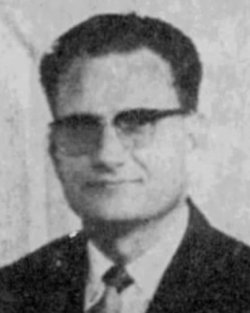
In this sermon titled "The Person of Christ & His Impeccability, Part 2," Wilbur Elias Best addresses the doctrine of the impeccability of Christ—essentially, the belief that Jesus could not sin. He critiques opposing viewpoints that argue against impeccable Christ's nature, emphasizing the importance of maintaining that Jesus' divine nature ensures His inability to sin. Best leverages Scripture, notably Hebrews 13:8 and Malachi 3:6, to support the claim that God's immutable nature extends to Christ, asserting that true holiness is active and incapable of sin. The practical significance of this doctrine is profound as it affirms the perfection of Christ as a Savior who, being fully God, is inherently incapable of falling into sin, which is vital for a high view of Christ's work in salvation and His role as our intercessor.
“Holiness is far more than the absence of sin. It is a positive virtue. Not something negative, it's positive.”
“An immutable person is not one who does not change, but one who cannot change.”
“To say that Christ could have sinned is to say that a finite power is capable of overcoming an infinite power.”
“The human nature never acted independently of the divine. Never acted. In other words, there was never any controversy.”
The Bible teaches that Christ is impeccable, meaning He could not sin due to His divine nature.
Hebrews 13:8, James 1:17, Malachi 3:6
Christ's holiness is essential as it reflects the perfection of His divine nature and His character as our Savior.
Acts 3:14, Hebrews 7:26, 1 Samuel 2:2, Psalm 89:35
Christ's immutability assures believers of His unchanging nature and promises.
Hebrews 13:8
Christ's temptation was real but does not imply He could sin; His divine nature ensured He could not.
Matthew 4:1-11, Hebrews 4:15
Auto-generated transcript • May contain errors

Comments
Your comment has been submitted and is awaiting moderation. Once approved, it will appear on this page.
Be the first to comment!