Bootstrap
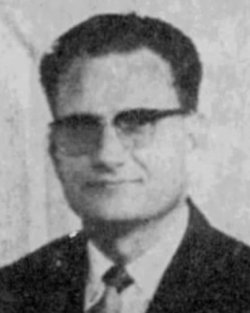
W.E. Best

Does God Love Everybody?

W.E. Best July, 1 1988 Audio
0 Comments
Best's Corner

Wilbur Elias Best's sermon, "Does God Love Everybody?", critically examines the doctrine of God's love as presented in Scripture, specifically addressing John 3:16. The main argument posits that the phrase "God so loved the world" does not imply that God loves every individual universally but refers specifically to the elect—those whom God has chosen for salvation. Best supports his arguments by highlighting the Greek term "kosmos," illustrating its varied interpretations within the context of Scripture, thereby challenging the notion that it denotes all of humanity. He cites various biblical texts, including Romans 9:13, Psalm 5:5, and John 10:11, to demonstrate examples where God's love is selectively directed and to affirm that His love is sovereign and immutable. The significance of this message lies in its call to recognize the seriousness of sin, the righteousness of God's judgment, and the assurance of God's love towards His chosen, thus encouraging a deeper understanding of salvation and conversion in the Reformed tradition.

Key Quotes

“The idea that God loves everybody has some strange bedfellows... Universalists, Unitarians, and Arminians all believe that God loves everybody.”

“I would be wrong if I were to stand before you this morning and you're unsaved... and say to you, God loves you.”

“The marvel is not that God hates some, but that He loves any.”

“When we see people go back... they went out that it might be fully made manifest that they were not of us.”

Sermon Transcript

Auto-generated transcript • May contain errors

100%
your Bibles to John chapter 3. John 3.16 has been called the
gospel in a nutshell. Many, many statements have been
made about this text of scripture. But the question is, what does
it really teach? Is the apparent statement or that which appears
on the surface? Does it really mean that God
loves everybody? Or does he love some and hate
others? You say, Preacher, that statement
turns me off because I have always believed for the simple reason
that I've always been taught that God loves everybody. And the Scripture says He loved
the world. Therefore, since He loved the
world, it must include everybody. We're going to read some verses
from this chapter in just a moment, but I want to relate what I heard
a few weeks ago over the radio by a man who has spent almost
50 years in the ministry. He has had a lot of formal training,
and when a question was asked him by one of his listeners concerning
this very text of Scripture, which we're going to study this
morning, He gave an answer that is not in harmony with Scripture. He made a statement that I'm
going to prove from the Word of God that is in contradiction
to the teaching of God's Word. This man is supposed to be an
evangelical, and he is regarded that by religionists in general. The question that was asked him
really caused him to manifest what was deep down in his heart. Does God love everybody? His statement was, yes, God loves
everybody. And the word world, which comes
from the Greek word kosmos, always means mankind and can
never be used in a restricted sense. Two weeks ago, a man who
heard him, that lives here in the city, who is quite a student,
not only of the Greek but of the Hebrew, called And he asked
me if I heard him make that statement, and I said, yes, I heard him. He knew what I thought about
it. He didn't have to ask me because we had discussed the
subject before. He made some real good statements
in commenting about what this man had said. Keep in mind now
what the man said. The word cosmos means mankind
and can never be used in a restricted sense. Therefore, when it says,
God so loved the world, it means that God loves everybody. Let's read beginning with verse
14 of John chapter 3. and read several verses. We'll
go through the 18th verse. The 16th verse is the text which
we will be studying this morning. I hope that each one of you has
a Bible. If you do not have, and you see
someone who doesn't have a Bible, share yours with the individual
next to you who doesn't have one. because we're going to spend
time this morning investigating some scriptures, and I want you
to look at them with me. I have gone through the verses
that I'm going to use this morning, and every reference that I make
concerning the word world is a translation of the Greek word
cosmos, and I challenge anybody to check me out and to see if
I'm incorrect. You know, there are other words.
There is one word in particular that is in some places translated
world, and it means age. But we're not dealing with that
word. We're dealing only with the word cosmos in answer to
the question. The Lord Jesus was speaking to
Nicodemus, a ruler of the Jews. He had already explained to him
the meaning of the new birth. The new birth is accomplished
by the Sovereign Spirit in the heart of the sinner. That is
described in verses 6 through 8. Now he is dealing with a different
subject, beginning with verse 14. It has to do with a conversion
experience. And as Moses lifted up the serpent
in the wilderness, even so must the Son of Man be lifted up,
that whosoever believeth in him should not perish, but have eternal
life. For God so loved the world that
he gave his only begotten Son, that whosoever believeth in him
should not perish, but have everlasting life. For God sent not his Son
into the world to condemn the world, but that the world through
him might be saved. He that believeth on him is not
condemned, but he that believeth not is condemned already, because
he hath not believed in the name of the only begotten Son of God. John 3.16 is our text. The idea that God loves everybody
has some strange bedfellows. I want to give an example of
that. For instance, universalists,
Unitarians who deny the three persons of the Godhead. Christian
scientists, who are neither Christians nor scientists, spiritualists,
Jehovah Witnesses, modernists, and Arminians, all believe that
God loves everybody. Now, those are strange bedfellows,
aren't they? When you think about Universalists,
who believe that everybody is going to be saved, we know that
is contrary to Scripture. One doesn't have to be a theologian
to understand that era. Jehovah Witnesses, we know that
they don't have the truth, that they're steeped in error, spiritualists,
Christian scientists, modernists who deny the shed blood of Jesus
Christ, who deny the deity of Jesus Christ. Yet all of these
believe that God loves everybody. Thus we see that persons who
believe that have some strange bedfellows. Now, the first question that
I'm going to raise this morning and then answer it is, do the scriptures categorically
affirm that God loves everybody? My subject this morning is going
to be in the form of questions and answers. And this is a little
different method of teaching or preaching than I usually do. So the first question, Do the
scriptures categorically affirm that God loves everybody? We're going to look at this question
as it relates to John 3, verse 16. To whom was Christ speaking in
John 3? To whom was He speaking? He was
speaking to Nicodemus. Nicodemus was a master of Israel.
He was a lost religionist. But I must add something that
we might have overlooked. Even though Nicodemus was a lost
Pharisee, a lost Jew, he was one of God's elect. That makes a difference. I want to point out something
now that maybe all of us have overlooked. Since the Lord Jesus Christ was
speaking to Nicodemus, one for whom he would shed his blood,
one for whom he would die on the cross, one about whom he could say,
I know my sheep. And we know eventually Nicodemus
came to know Christ. Now, the statements that I'm
going to give in relation to this text are all found within
the context of the gospel according to John. In John 10, the statement
is made in verses 11 and 15, I laid down my life for the sheep. The Lord Jesus also made the
statement. I know my sheep, and am known
of mine." It is true that at this time Nicodemus did not know
Him in a conversion experience. But he did come to know Him according
to the 19th chapter of the Gospel of John and verse 39. Nicodemus was one who came with
precious ointment for the embalming of the body of the Lord Jesus
Christ. He had come to experience by
faith Jesus Christ as Lord and Master,
and he followed Him. Now I want to point out the difference
between the message that Jesus Christ was giving to Nicodemus
and the message proclaimed by the apostles throughout the Acts
of the Apostles. To the surprise of many and to the neglect of a great
number of Christian ministers, They have failed to point out
that not one reference is made in all of the acts of the apostles
to the love of God. Not one reference made to God's
love in all of the acts. And yet, in all of the acts,
we have the method of evangelizing. We have the mission work described. We have missionary journeys by
Paul. So when you think about it from
that point of view, the message preached by Peter in Acts chapter
2, the messages proclaimed by the Apostle Paul, whether it
be in Thessalonica, Corinth, Ephesus, Galatia, or wherever,
not one reference was ever made in all of the messages preached
by Peter, Paul, and others concerning the love of God. Why the difference? Jesus Christ could speak of God's
love, the love of the Father, because He knew who the sheep
were. But the apostles could not use
the word love indiscriminately because they did not know those whom the Father loved.
And since they did not know, what did they preach? They preached
the holiness of God. They preached the justice of
God. They preached the wrath of God. In other words, they
preach subjects to awaken the consciousness of the hearers
and rightly so. But not one reference by one
of the apostles to the love of God in the sense that God loves
you was ever made by one of them. Now let me go a step further.
I'm making some strong statements, but I challenge you to refute
them by the Scriptures. All the references to the love
of God, either in the church epistles or in the general epistles,
and I will add even the pastoral epistles of the New Testament,
in all of the epistles, every reference to the love of God
was to the love of God in Christ Jesus experienced by the recipients
of grace. Now think about that. Let me illustrate it. I would
be wrong if I were to stand before you this morning and you're unsaved. And I want to say to you, God
loves you. I would be wrong in giving that
message to you. I said I would be wrong in giving
that message to you. I do not know. I do not know. Now, that does
not destroy, that does not annul the fact that the gospel is to
be preached indiscriminately to every person under the sun. My responsibility is to witness. Your responsibility is to witness. You see, we do not have an infinite
mind. Jesus Christ said, I know my
sheep and am known of mine. He knew. I do not know. The apostles did not know. If
I were to go out here and meet a person who was living a very
wicked life. And I were to say to him, did
you know that God loves you? You say, well, now, I think that
would be a good approach. Oh, no, it wouldn't. Beloved,
that would be casting pearls before swine. Let me prove what
I'm saying. Unless a person has been regenerated
by the Spirit of God, he has no concern whatsoever for the
love of God. The Bible says he is an enemy
of God. He hates the light. He hates
Jesus Christ. He hates righteousness. He hates
anything that goes contrary to his own feelings. Now, my question was, do the
scriptures categorically affirm that God loves everybody? I'd like you to begin with the
19th verse of this 3rd chapter of John, and let me point out
something to you. And this is the condemnation
that light is coming to the world, and men love darkness rather
than light. Men by nature love darkness. I know it. I know it for a fact,
and you do too. Those of us who have been saved
by the grace of God know that before we were delivered by the
grace of God, that we loved darkness and we hated light. Why is it
that when a person is exposed, that he hates the individual
who exposes him? Listen to this. Verse 20, For
every one that doeth evil hateth the light. Now, Jesus Christ
is the light of the world. The person who does evil, who
practices evil, who lives an evil life, he hates the light. Listen to this, neither cometh
to the light. In other words, within your own
strength, you'll never come to the light, lest his deeds should
be reproved. But he that doeth truth, this
is on the opposite side, cometh to the light. That is, the Christian,
the one who has been born of the Spirit of God, comes to the
light, that his deeds may be made manifest, that they are
wrought in God. Let's face it. What I'm giving
this morning will tell you just where you stand in the presence
of God. Now, does God love everybody? Let me raise this question. Did
God love Esau? We're told in Romans 9, 13, God
loved Jacob but hated Esau. I get amused at the average interpretation
that is given of that text. Some say the word hate there
means he loved him less. Now, isn't that foolish? He loved
him less. It says he loved Jacob and hated
Esau. And I'm not through. Let me ask this question. Did
the Lord love the Amalekites that we have already studied
about in the seventeenth chapter of the book of Exodus? Will you please turn with me
for a moment to Psalm 5, verse 5, the fifth division of the
Psalms, and verse 5. Listen to this statement, "...the
foolish shall not stand in thy sight. Thou hatest all workers
of iniquity." Now hold that phrase a moment. Hold it a moment. What is it that we commonly hear
today? God loves the sinner, but he hates his sin. That's
an expression you hear almost every time you hear someone speak
on the subject of God's love. Is that scriptural? No, it is
not scriptural. That statement is made out of
ignorance concerning the subject of man's depravity. Look at the text again. Thou
hatest all workers of iniquity. It doesn't say works of iniquity. You see, if God loved the sinner
and hated his sin, it would have to read like this. God hates
the works of the wicked. It doesn't say that. Look at
it for yourself. Don't take my word for it. And
I assure you the Bible doesn't contradict itself. Thou hatest all workers of iniquity." We have seen Romans 9, 13, God
hated Esau. Here God hates all workers of
iniquity. Now turn, if you will, please,
to Exodus 17 and verse 14. The Word of God proclaims in
this passage of Scripture, And the Lord said unto Moses, Write
this for a memorial in a book, and rehearse it in the ears of
Joshua. For I will utterly put out the
remembrance of Amalek from under heaven. I will utterly put out
the remembrance of Amalek from under heaven. Does that sound like that God
loves him? All whom God loves, He loves eternally. His love
is everlasting. His love is immutable. Now, would
you say that God loved Esau for a time, and then because of his
wicked deeds, God's love was turned to wrath? Beloved, that
contradicts one of the great principles of Scripture. that
destroys the great truth of immutability. God changes not. Does it mean that God loved Amalek
for a time and then because of his wicked deeds, he said, I'm
just going to put him out of my memory forever? Let me ask
you a question. Is the Lord going to put you,
a recipient of grace, out of his memory forever? No. He loves
us with an everlasting love. And nothing can separate us from
the love of God, which is in Christ Jesus our Lord. Romans
8. So the statement, God loves the
sinner, but hates his sin is a false statement made in ignorance
of the depravity of the human heart. Now let me make this statement
before we leave this verse in Psalm 55. Who can conceive of sin without
a sinner? Who can conceive of sin without
a sinner? That would be like you saying,
I hated the deeds of Adolf Hitler, but I love Hitler. Beloved, you
cannot hate the deeds, the wicked deeds of an individual without
hating the individual because you cannot conceive of sin apart
from the sinner. You know, the marvel is not that
God hates some, but that He loves any. That's the marvel. Will you think about that a moment? The marvel is not that God hates
some. The marvel is that He loves any. There wasn't anything in me to
influence God's love. And I assure you, there isn't
anything in you to influence God's love. God's love, first of all, is
sovereignly bestowed. He loves whom He pleases. Whom He pleases. He has that
right. He is the sovereign Lord of the
universe, and you cannot question His love. If you do, you question
the sovereignty of God. You say, well, that makes Him
arbitrary. Arbitrariness cannot be attributed to God as it is
attributed to man, because God is His own law. He can do as
He pleases. He's the creator of the heavens
and the earth. You and I cannot dictate to Him.
And yet there are many religions who think they can dictate to
God. But I want you to know the God
I love, as the result of His love having been shed abroad
in my heart, is the God of the universe, the
sovereign God of the universe, who can do as He pleases. And
I cannot question Him. And I have no desire to question
that. Listen to this. No person can
know the love of God until he first recognizes the wrath or
the righteous judgment of God. Now, I'm coming right down to
be helpful to some of you who are on the fence, and you won't
help. You're manifesting some interest, and this will be of
help to you if you'll listen. You can never come to know the love
of God until you first recognize his righteous judgment. I want
you to know I didn't. And every saved person in this
auditorium this morning will give testimony to the same truth.
You never came to recognize or to know the love of God until
you first came face to face with his righteous judgment. Every person, therefore, must
see himself as he really is. And no person will ever see himself
as he really is until the grace of God comes into his heart and
life by the Sovereign Spirit. until there is a change in disposition. And I can't give that change.
Only the sovereign God can give that change. But every person
must see himself as he really is—depraved, wicked, condemned,
and hopeless—get this—outside of Jesus Christ. I want you to
know I came to that place. And everyone who is saved, has
come to that same place. Did you know that the potential
to every sin conceivable to man lies within the heart of every
sinner? Let me illustrate it. I do not know if this is true,
but the alleged daughter of this man in Baytown, She is allegedly
the guilty party of having killed or having had a part in the death
of both her father and mother. For what? Insurance money. For what? The estate. Now, you
and I draw back and we say, I just can't understand that. Wait a
minute. I said there are lies the potential of every sin conceivable
to man in the heart of every sinner. The potential is there.
And the only reason that you haven't committed the same sin
is that you have been restrained in some way by God. The potential is there. You say,
I'd never do that. You don't know what you're talking
about. The heart is deceitful, it is desperately wicked, and
who can know it but God himself, Jeremiah 17, 9. You see, the more Christians
study, the more believers learn about Holy Scripture, the more
we understand the depravity of the human heart. I understand
a lot of things about my own heart today. that I did not understand
even 10 or 15 years ago, and I've been a Christian 37 going
on 38 years. The potential is there. I said
the potential is there. I was talking with a friend of
mine a couple of weeks ago, and he was telling me about a trust
that he and his wife had made out called a marital trust. He said, I wanted to have some
understanding about what is going to happen to what I might leave
when I die while I'm living. I don't want to wait until I'm
dead. And then he said, my children and grandchildren fight and get
mad over what little is left. And then he smiled and he said,
you know, he said, you can't ever tell about your own kids
or your grandkids. He said, I'll get up to 70 and
75, maybe a little older. Some of them wonder, how long
is Pop going to live? Wonder how long he's going to
be around. He said, what are they thinking about? They're
thinking about what they're going to get when he's dead. You say, well now,
I'd never, I'd never think like that. You don't understand the
depravity of the human heart. So he said, while I'm living,
I want to have an understanding about what is going to happen
to what I leave. And he said, if they want to
get mad at somebody, they can get mad at me now. Or they can
get mad at me when I'm gone. I don't want to get mad at one
another. He said, I want to have a say-so about my estate and
how it's going to be divided. He's right. That's good business.
He is a businessman. The potential is there. Now we
come to the second question. Now, I see I'm going to have
a hard time finishing this morning, but we're dealing with a very
important subject. Now, my first question was, do the scriptures
categorically affirm that God loves everybody and we have proved
from the Word of God that he does not? Now, let's look at
the second question. Here's where I want you to follow
me in your Bibles very closely. Does the word world in John 3,
16 mean everybody? Look at the text. For God so
loved the world, Does that mean that He loves everybody? Everybody? Now, the Greek word
cosmos must be interpreted in the passage where it appears
according to the teaching of the context. I'm going to prove
that. All right, go back with me to
John chapter 1, verse 9. I'm going to show you from the
scriptures that the word world, coming from the Greek word cosmos,
does not mean mankind in every place where it occurs. So go
back to John chapter 1. We're going to stay mainly now
within the context of the gospel and also the epistle written
by John. Look at verse 9, chapter 1. That was the true light. Now, in order that you might
not miss out on something, connect the word, word, in verse 1, in
the beginning was the word, and the word there is none other
than Jesus Christ, according to verse 14, the word which was
made flesh. And then in verse 4, the word
life. In verse 5, the word light. And then again in verse 9, the
word light, and when you connect those words with the verses,
what do you have? They all refer to none other
than Jesus Christ. All right, now look at verse
9. That was the true light, that is Jesus Christ, which lighteth
every man that cometh into the world. The word world in verse
9, means the material system known
as the world. In other words, he lighted every
man that comes into this world system. It does not mean mankind
in that text. So when you interpret it in the
light of its context, you see what it means. Now go to verse
10, the very next verse. And in this verse, the word world
is found three times, and it does not mean the same in any
one of the three places. Look at it, if you will, please,
verse 10. He, that is, Christ, was in the world, in the world, and the world was
made by him, and the world knew him not. Now, let's look at this. I enjoyed studying this all again
this last week as I was answering the question, does God love everybody? I've preached on it many times
over the years, but I never cease to study the Scriptures when
I come face to face with the same question over and over.
Does the word world mean the same in all three places in this
verse? All right, if it does, let's
read it like this. Let me paraphrase it now. Look
at the verse. Look at your Bible. He was in the everybody. Now listen to this. If the word world means everybody,
then He was in the everybody, and the everybody was made by
Him, and the everybody knew Him not. Well, let's look at it from
another point of view. Look at it again. He was in the heavens and the
earth. Well, we know that He made the heavens and the earth.
So He was in the heavens and the earth. And the heavens and
the earth were made by Him. And the heavens and the earth
knew Him not. Now, believe me, wouldn't that
be kind of silly? An inanimate object doesn't know
Him. I said an inanimate object doesn't
know Him. So wouldn't that be kind of stupid? What does the verse really mean?
All right, look at it carefully. It means that Jesus Christ, first
of all, was in the inhabited earth. That is, the earth inhabited
by man. This refers to his incarnation.
He came into the world. He came into the habitable part
of the earth. That's what it would mean in
the first part. Then look with me as we continue. And the world,
and here it would consist of all his creative work, the heavens
and the earth, and mankind too, for that matter. And then in
the last part, and the world knew him not. Now wait a minute,
look at the last. If the last occurrence of the
word world means everybody, What would we have? That means
that John the Baptist didn't know him. Look at it now. Think for a moment. That means
the Apostle John didn't know him. That means that all who
were following him, who were his disciples, didn't know him.
And yet he said, I know my own sheep and am known of mine. What I'm pointing out is it is
used in a restricted sense, and the way you determine is how
it is used in the context. All right, let's go again. Let's
look at the 17th verse. Drop down just one verse from
our text. Verse 17. Once again, the word
world is found three times in this verse. For God sent not
his Son into the world, to condemn the world, but that the world
through him might be saved." This verse means that Jesus Christ,
look at it now, follow me, was sent into the habitable earth
among men, if you please, not for the purpose of condemning
the world of men or all mankind, because he didn't condemn all
mankind, but that the world of men or some might be saved. Now, what world? Does Jesus Christ mean when he
says that the world, look at verse 17, that the world through
him might be saved? It means the same as the word
world in the first part of verse 16, for God so loved the world. The world. Does that mean everybody? No. It means those whom the Father
gave to him in the covenant of redemption, which is referred
to seven times in John chapter 17. But I'm not through yet. This is interesting. Interesting. Someone has said all mankind
are divided into two worlds, and they're right. Those who
advocate this are right. First of all, we have the world
of God's elect. And number two, we have the world
of the non-elect. Now go with me to another verse,
John 13, verse 1. I'm only using one part of the
text. John 13, verse 1. Beloved, I
believe in studying the Scriptures. I get sick and tired of men making
statements which cannot be substantiated by holy scripture. Now before
the feast of the Passover, when Jesus knew that his hour was
come, that he should depart out of this world unto the Father. How is the word world used here? Does it mean the world of mankind?
No, in this case it isn't used in that sense. He was simply
leaving the earthly sphere after having finished the work the
Father sent him to perform, and he would ascend to the right
hand of God the Father, which is taught later on in the gospel
of John. Love not the world. Now look
at that. Love not the world. Here the
word cosmos is used again. Does it mean mankind? I'd like
to ask this man who gave such a foolish answer over the radio
the other day, after having been in the ministry 50 years, he
says we're to love everybody. And if the word cosmos means
mankind and can never be restricted, then what will he do with this?
Love not mankind. Get himself in a mess, won't
he? I'd say he'd get himself in a
mess, wouldn't he? All right, when it says, love
not the world, neither the things that are in the world, what's
he talking about? He's talking about this world
system. The word world also means fashion. So don't love this world's fashion. You know, we're all so fashion-minded,
and it's a shame when we consider Who are the fashion makers? Have
we ever stopped to think about who the fashion makers are and
what kind of characters the fashion makers are? We're not to love
this world's system. We're not to love this world's
fashion. That's what it means. Because
if any man loves this world order or this world's fashion, the
love of the Father is not in him. He's not talking about mankind
here. If He were talking about mankind,
then this verse contradicts John 3, 16. Doesn't it? All right, let's look at another. Let's go even a little further. Look at 1 John 5, 19. 1 John
5, 19. We know that we are of God and the whole world Lie in wickedness. Beloved, if
the word world there refers to all mankind, then that means
all mankind are lying in wickedness. That isn't true. John wasn't
lying in wickedness. He was not wallowing in sin.
He had been delivered from wickedness. He had been delivered from sin
back in I John 3, 6 through 9. So that would contradict. the
very epistle from which this text is drawn. So the word world
is used in a restricted sense here, because the saved are not
lying in the lap of the devil. Now you'll find as you sum it
up, and I'll give you these references and you can look at them later,
The word world is used several ways in Scripture. We have the
world of sinners, John 15, verse 18. Number two, we have the whole
human race referred to by the word world in Romans 3, 19, that
the world might be condemned. The whole world is condemned. Outside of Jesus Christ, the
whole world is condemned. Number three, we have the world
of believers in John 6 and verse 33. Number four, we have the
world of Gentiles in contrast to the Jews in Romans 11 verse
12. In Matthew 4 and verse 8, and
you remember this, When the devil took the Lord Jesus Christ in
the temptation upon a high mountain and showed him all the kingdoms
of the world, it refers to this world system and not mankind. In Acts 17 and verse 24, the
word world is used in the sense of the heavens and the earth. And in John 13, 1, in Ephesians
1, verse 4, the word world is used in the sense of this earth
upon which you and I live. Now, does the word world mean
mankind always? I'll let you answer the question. for yourself. But for me, the
scriptures are very plain. Now, the next question. Did Jesus
Christ die for everybody? God so loved the world that He
gave His only begotten Son. Did Jesus Christ die for everybody? He did not. John 10, 11, and
15, He laid down His life for whom? The sheep. He came to seek
and to save the lost. and to save his own, as we're
told in Matthew 1 and verse 21. If Jesus Christ died for everybody,
then everybody's sins have been taken away, for John said, as
he pointed to the Lord Jesus Christ in John 1 29, Behold the
Lamb of God that taketh away the sin of the world. If He died for everybody, you
and I might as well go home. Why are we preaching? That means
everybody's sins have been taken away, if that be truth. But it
isn't truth. It isn't truth. Christ died for
those whom the Father loves with an everlasting love. And God's
love is sovereign, Romans 9. It is everlasting, Jeremiah 31,
3. It is immutable, Song of Solomon
8, 6, and 7. And uninfluenced, Deuteronomy
7, 7, and 8. Author W. Pink makes a good statement,
and I quote him at this point. that fails to atone is worthless. Let's go a little further. A
sacrifice that fails to deliver is worthless. Now, did Jesus
Christ die in vain? He did not. Every one for whom
He died, every one for whom He shed His blood, shall be saved. He shall see his seed and be
satisfied. Isaiah 53, verse 10, one of the
great passages of Scripture on the atoning work of Jesus Christ. Now let's raise another question.
Who will believe that Jesus is the Christ? Now, this gets down
to you, listen now, those of you who have not really believed
on Christ. You're interested, and something
has happened to you, and you're manifesting interest. Listen
to this, this is for you. Who will believe that Jesus is
the Christ, the Son of the living God? Those who believe are those
whom the Father gave to the Son. Turn with me, please, to John
6 and verse 37. You see, we're staying mainly
in the gospel according to John. John 6 and verse 37. Let's read
the verse. After I've read the verse, I
want to make a comment. All that the Father, the Lord
Jesus is speaking, all that the Father giveth me shall come."
Not might come, but shall come. Thank God for that shall. Shall
come to me, and him that cometh to me I will in no wise cast
out. Persons today who are Arminian
when it comes to the subject of salvation, always stress the
last part of verse 37 without emphasizing at all the first
part of the text. Isn't that true? You hear them
say, All that cometh unto me, I will in no wise cast out. But
let's go back and see what the first part of the text says.
All that the Father giveth, me shall come to me, and him that
cometh, to me I will in no wise cast out." Now look at that for
just a moment in the light of whosoever in John 3 verse 16. For God so loved the world that
he gave his only begotten Son that whosoever, whosoever, who
are the whosoever? That's my next question. Who
are the whosoever? We believe that whosoever wants
to come to Jesus Christ may come. Now, let me pause there a moment.
Whosoever wants to come to Jesus Christ may come. Do you want to come to Christ
this morning? I assure you, if you want to, you can come. Now, let's go a little further.
You see, we believe that whosoever wants to come to Jesus Christ
may come to Jesus Christ in a conversion experience. But the question
is, who wants to come? Who wants to come? Now, you might
say this morning, well, I want to, but I'm afraid of what all
I'm going to have to give up. You don't want to come. Just
be honest now, you don't want to come. you do not want to come. You
may say, I want to come to Christ, I want to believe on Christ,
I want to be sure of my salvation, but whenever you put the word
but in there, you don't want to. You see, when a person wants
to come, he'll come. There isn't anything that can
keep him from coming because his coming is in the power of
God who gives it. I'm going to prove that. I'm
trying to be helpful. Somebody might say, this is not
gospel. This is the only gospel the Bible
teaches. All right, look at verse 37 again. All that the Father
giveth me shall come to me, and him that cometh to me I will
in no wise cast out. For I came down from heaven not
to do mine own will, but the will of him that sent me. And
this is the Father's will which hath sent me, that of all which
he hath given me I should lose nothing." Jesus Christ is not
going to lose a one for whom he died. Look at that, beloved. How encouraging. That gives certainty. But should raise it up again
at the last day. Verse 40, And this is the will
of him that sent me, that every one which seeth the Son, and
believeth on him, may have everlasting life, and I will raise him up
at the last day. Drop down, if you will, to verse
44. No man can come. Wait a minute. No man can come. By nature, you cannot come to
Jesus Christ. In your own strength, you cannot
come to Christ. You not only don't want to, but
you can't. You can't. Listen to this. No
man can come to me except the Father, which hath sent me draw
him, and I will raise him up at the last day. Now the next
verse, it is written in the prophets, and they shall be all told of
God, every man therefore that hath heard and hath learned of
the Father cometh unto me. If you have heard with a hearing
ear, if you have seen with a seeing eye, then you come. You come in the
power of the Father who gives the power. You can't come in
your own strength. You can't come by natural faith. You can only come by supernatural
faith, which is called the faith of God's elect in Titus 1 and
verse 1. And that is the gift of God. Thus, whosoever, of John 3, 16,
must be interpreted in the light of Scripture. The conclusion
is this, that whosoever of John 3, 16 are those who have been
drawn by the Father. Now, the question is, do you
want to come? I still say, if you want to come,
you can come. Because if you want to come,
you want to by the power of the indwelling Holy Spirit. And only
the Holy Spirit can give you the want to. Now, you can tell, you can know
whether it's genuine or not. Is there anything standing in
the way? You see, evangelists today, churches today, have been
so concerned about filling their churches with people and increasing
their church role by this easy believism, by this human faith,
make a decision! And they come and say, well,
I can receive Christ as Savior now, and I'll make Him the Lord
of my life later on. I want you to know that doctrine
comes right out of the pit of hell itself. Whenever a person comes, he comes
because he wants to come. And he comes in the strength
of the Lord. And there is a conversion experience. And when he comes,
he'll never go back. When we see people go back, they
come to church for a while, they take an active part for a while,
and then they cease? The Bible has an answer for that.
They went out promised because they were not of us. For had
they been of us, they would no doubt have continued with us.
But they went out that it might be fully made manifest that they
were not of us. 1 John 2, 19. Simple as it can
be. Simple as it can be. Now, the
whosoever of John 3, 16 are a specific people as opposed to the world
in general. I said a specific people. Whosoever
believe, believe in what? In the preacher? There are a
lot of people who follow a preacher because they like him. There
are a lot of folk who follow a particular denomination because
they like that denomination. They can live like they want
to and do the things they want to and yet be religious and think
they're going to get to heaven. It isn't believing in a preacher.
It isn't believing in a denomination. It isn't believing in a church.
It's believing Jesus Christ, the Son of the Living God. Now, Let's look at some things
in closing that are so important. I may be holding you just a little
long, but it's important. By nature, no person can come
to Jesus Christ. He does not want to come. I know
that from experience, and so do you. But I can remember when
I wanted to, And I knew something happened within me, and I couldn't
account for it. And that something within me
was the grace of God bestowed by the Sovereign Spirit. So, by nature, no person can
come. I want you to also know that
by your own intellectual knowledge of things, you'll never come
to Jesus Christ. How do we know this? We're told
this in 1 Corinthians 121. The world by wisdom, that is,
its wisdom, knew not God. You can never know God by the
wisdom of this world. It takes the wisdom of God to
know Jesus Christ, who is wisdom personified. Just as man enters the world
without his own volition? You enter this world without
your own volition. You also enter into the family
of God without your own volition. Are you listening? I said you enter the family of
God without your own volition. That's regeneration. And then
by faith, which is God's gift. But wait a minute. Even this
faith is God's gift. And since this faith by which
we embrace Jesus Christ is God's gift, a gift is always received
from without. It never comes from within. So
it is not something in you naturally. It is something that comes to
you from without. It's God's gift to you. So as we enter the world without
our volition, we enter the family of God by regeneration without
our volition. And then by our volition, it's
more than that, by faith which is the gift of
God. we embrace the Lord Jesus Christ as Savior and Lord. You see, a blind man cannot make
himself see. A deaf man cannot make himself
hear. A lame man cannot make himself
walk. And a natural man cannot make
himself have supernatural things. Just that simple. I like what John Owen says about
this verse of scripture. I want to give you his interpretation
of this verse. Look at John 3.16, and I will
quote John Owen, one of the Puritan reformers, one of the greatest
theologians who ever lived. John Owen interprets John 3.16
in the following manner, quote, God so loved his elect throughout
the world that he gave his son with this intention that by him
believers might be saved. That's the way he summed it up.
I looked at the text a lot this last week as I was preparing
this message, and let's look at it from this point of view.
For God so loved the world of Elias, that He gave His only
begotten Son, that through Christ's redemptive work, the elect would
be enabled to believe and not perish. That's the way I like to look
at it. The Holy Spirit in regeneration
separates the elect from all natural faith and gives them
supernatural faith. You can rest assured of one thing.
When the Holy Spirit operates on you, He removes all of your
question marks. He removes your own human, natural
faith. He makes you realize that there
is nothing within you that's good, And then the Holy Spirit gives
to you the ability to come. And come you will to the feet
of Jesus Christ and embrace him as Lord and Savior. My question
is, can you? Can you really believe on him?
But I want to emphasize that we believe whosoever wants to
come can come. Whoever wants to come can come. Do you want to come? Do you want
to come to Christ? That's the question. Now there
are other things that I wanted to give in connection with this,
but we'll have to keep those things for a subsequent lesson. I hope this has been helpful. Can it be proved from the scriptures
that God loves everybody? No. He doesn't love everybody. How is the word world used? It's
used many ways in the scriptures. And it can always be determined
by the context in which it is used. whether it refers to this
earth, this world order, or this system, mankind in general, or
whatever. Believers only, unsaved people
only, Gentiles and distinction from the Jews. But don't forget these verses,
like John 1, 9, 10, John 3, 17, John 13.1, 1 John 2.15, 1 John
5.19, these verses prove conclusively that the word cosmos, or world,
is not always used in the same sense.
W.E. Best
About W.E. Best
Wilbern Elias Best (1919-2007) was a preacher and writer of Gospel material. He wrote 25 books and pamphlets comprised of sermons he preached to his congregation. These books were distributed in English and Spanish around the world from 1970 to 2018 at no cost via the W.E. Best Book Missionary Trust.

Comments

0 / 2000 characters
Comments are moderated before appearing.

Be the first to comment!

70
Joshua

Joshua

Shall we play a game? Ask me about articles, sermons, or theology from our library. I can also help you navigate the site.