#4 - Isaiah 53 - The Savior's Vicarious Suffering
Isaiah 53:5
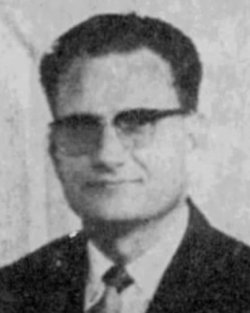
In this sermon, Wilbur Elias Best thoroughly examines the doctrine of vicarious suffering as articulated in Isaiah 53:5. He presents key arguments emphasizing that Christ's suffering is both sympathetic, during His earthly ministry, and vicarious, focusing predominantly on His substitutionary atonement on the cross. Best cites various New Testament passages to support his points, notably 1 Peter 3:18 and Colossians 1:20, to demonstrate that Christ was wounded not for His own sins but for humanity's transgressions, thus affirming the Reformed doctrine of penal substitution. The practical significance of this doctrine is highlighted as a basis for understanding salvation, emphasizing that Christ's work on the cross is a certainty, a decisive act of divine grace for the elect, and not merely a possibility.
“You see, greed and sorrow are not necessarily direct results of transgression of God's love.”
“He was wounded for our transgressions. This is the vicarious suffering of Jesus Christ.”
“Jesus Christ did not die in vain. It was a certainty that he was wounded for my transgression.”
“The law of God makes no allowance for ignorance. It makes no allowance for infirmity.”
The Bible teaches that Jesus Christ suffered vicariously for our sins, as expressed in Isaiah 53:5.
Isaiah 53:5
We know Jesus' death was for our sins through biblical prophecy and apostolic teaching, especially in Isaiah 53:5.
Isaiah 53:5, 1 Peter 3:18
Understanding Isaiah 53 is crucial for Christians as it reveals the depth of Christ's sacrifice and its implications for our salvation.
Isaiah 53:5
Isaiah 53 connects with New Testament teachings particularly in its prophetic depiction of Christ's atoning work.
Isaiah 53:5, 1 Peter 2:24
Auto-generated transcript • May contain errors

Comments
Your comment has been submitted and is awaiting moderation. Once approved, it will appear on this page.
Be the first to comment!