Bootstrap
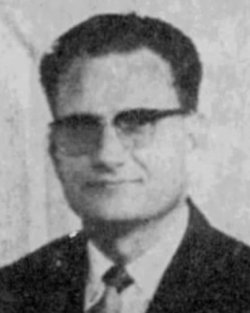
W.E. Best

How Can One Know God Purposed to Save Him?

2 Timothy 1:8-11
W.E. Best August, 19 1979 Audio
0 Comments
Best's Corner

In the sermon "How Can One Know God Purposed to Save Him?" by Wilbur Elias Best, the central theological doctrine addressed is that of divine election and the assurance of salvation. Best argues that salvation is founded not on works but solely on God’s purpose and grace, emphasizing that works are simply the result of the believer’s regeneration. He references 2 Timothy 1:8-11 to illustrate that God’s purpose is eternal and encompasses predestination and calling, affirming that one's assurance of salvation can only be understood by tracing back through a sanctified life to God's original purpose. The practical significance underscores the comfort found in God's sovereignty in salvation, contrasting it with the uncertainty associated with a works-based faith. This encapsulates Reformed doctrines such as unconditional election and the perseverance of the saints.

Key Quotes

“The foundation of one's salvation is the purpose and grace of God, given... before the world began.”

“If you did not make the difference, but God himself made the difference, then why are you so disturbed over what I am preaching to you?”

“There is order in the salvation of the elect from God's point of view. Secondly, there is order in the assurance of that salvation from the believer's viewpoint.”

“Can one know whether he is in the purpose of God or not? Oh yes.”

Sermon Transcript

Auto-generated transcript • May contain errors

100%
Let me review briefly what we
discussed with you last Sunday morning in verse 9. When Paul said, Who has saved
us and called us with a holy calling, not according to our
works, there we have the negative and then the positive, but according
to his purpose and grace. which was given us in Christ
Jesus before the world began. We sought to show last Sunday
morning that works do not constitute the foundation of salvation. The foundation of one's salvation
is the purpose and grace of God, given in the positive point that
we brought out in that lesson. Works are simply erected upon
that foundation. Thus, works are the fruit of
salvation and calling. Works can never be mixed with
purpose and grace to constitute salvation, but works are the
fruit of God's purpose and grace. Most religionists do not believe
what I have stated. I'm sure that most of you are
well versed enough in what other people believe to concur with
what I have said. In the discussion of the positive
point, God's purpose, I gave three things last Sunday. Number
one, God's purpose is eternal. There are many parts to God's
purpose, but yet there is only one purpose. God's purpose was
known to him intuitively and simultaneously. Even though God's
purpose, which has many parts, was known to him intuitively
and simultaneously, yet we must not overlook the fact that God's
purpose has order in it. just as there is order in the
Godhead. The execution of this purpose
in time is executed according to the order known intuitively
and simultaneously by God. I gave an illustration last Sunday
of the order by using the personal ministry of Jesus Christ. My
third point was, how can one know that God purposed to save
him? My answer was, briefly last Sunday,
that one must follow the stream of the sanctified life back to
God's purpose. I also gave three questions that
Charles Haddon Spurgeon raised as he stood before a congregation
of people made up mostly of Methodists. He showed, first of all, that
Mr. Wesley believed in conditional
election. And when he said, that brings
me to the subject that I'm going to speak to you on today, and
that is divine election, when he made that statement, He knew
that he had opposition to what he was going to say. Now, the
three questions that he gave should be memorized by you and
me. I do not know of any better approach
in witnessing to an Arminian than to use these three questions
in the order in which he gave them. His first question was, is there any difference between
you and the wicked? And then he cataloged a lot of
different things that people are guilty of as being wicked
individuals. Is there any difference? And
they had to agree there was a difference. His second question was, who
made the difference? And he said, whoever made the
difference should get the glory for having made that difference.
And the one who made the difference is none other than the sovereign
God. His third question was, did you make the difference?
And they had to admit that they did not make the difference.
Then he concluded by saying, if you did not make the difference,
but God himself made the difference, then why are you so disturbed
over what I am preaching to you? If it is not wrong for God to
make the difference, it is not wrong for God to purpose to make
the difference. Beloved, that is the greatest
thing that I've read in a long time. In fact, I think that should
be parallel to John Owen's statement on particular redemption. I think
it is just as significant for whom did Christ die, and I'll
not go into that, but I think it is just as significant as
that given by John Owen. Now the question this morning
on the assurance of salvation. How can one be sure that God
purposed to save him? I want to introduce this subject
by giving a quotation from the work of James Arminius. I will
give this quotation after I have given to you a statement that
I recently read by an Arminian. And Arminian made the statement
that it is one's faith that writes his name in the Lamb's Book of
Life. I've heard that statement on
radio, and I've heard that same statement by preachers on TV. That is a statement that is made
constantly today by Baptists, the Charismatics, and others. Let me give it again. It is one's
faith that writes his name in the Lamb's book of life. After having made that statement,
I want to give to you now a quotation from the works of James Arminius. Quote, Faith is not an effect
of election. but is a necessary requisite
foreseen by God in those who are to be elected. And the decree
concerning the bestowing of faith precedes the decree of election. He further stated there are three
assertions included. Number one, faith is not an effect
of election. Number two, Faith is a necessary
requisite in those who are to be elected or saved. And number
three, this requisite is foreseen by God in the persons to be elected. This comes from volume one, page
285 of his work. Now, there is a difference, even
among Arminian people, concerning this view. There are some who
acknowledge that the names are written in the Lamb's Book of
Life even before individuals are born, physically. And that they are written there
by virtue of the foreseen faith that God had of those individuals. By virtue of the foreseen faith
of individuals in Jesus Christ, the Father wrote their names
in the Lamb's Book of Life. That's one view. There is another
view, and this is prevalent today, that the names are actually written
in the Lamb's Book of Life when the person actually believes. Not when God foresaw that he
would believe, but when the individual himself actually believes. So
there is a difference even among Arminian people concerning the
time that the name is written in the Lamb's Book of Life. Some
base it on actual faith being exercised, others base it on
foreseen faith by God. Thus some put it before time
and some in time. I want to make these distinctions
as clearly as possible this morning because I'm going to be giving
several distinctions that are important. I'm doing this now
before we get to the outline. The Armenian theologian who made
the statement that one's faith writes his name in the Lamb's
Book of Life went on to argue in this manner. He said the individual
or individuals who holds, that is, the individual who holds
the view of the five points embraced by Calvinists in the area of
soteriology, the person who embraces the five points, he said, can
never be sure of his salvation. He can never be sure, he said,
because that individual is not capable of looking into the Lamb's
Book of Life and finding out for sure if his name is recorded
there. On the other hand, he said, I
believe, since I believe in free will, that one can know that
his name is in the Lamb's Book of Life, since it is his faith,
the exercise thereof, that places his name there, and when his
faith places his name there, then he feels it. I want you to think that through
for a moment. Therefore, he makes light of
the person who believes in the absolute sovereignty of God.
He said, in no way Can he be sure that his name is written
in the Lamb's book of life? Whereas, since I believe in free
will, when I exercise my faith in Jesus Christ, I know by that
act my name was recorded there, and I feel it. I'd like to raise some questions
at this point. That means that a person became
elected when he believed. Thus, election is the fruit of
his faith, whether it be foreseen by God or when it actually took
place in time by man. Was man elected to faith? Or was he or is he elected because
of his faith? Now let's answer that question
before we go any further. Does God elect a person to faith
or does he elect a person because of his faith? The Hubers will not mind me saying
this, but last week When the young man, a very personable
young man, preached Mrs. Huber's father's funeral sermon,
he brought out very clearly, he had three points. Number one,
the person. Number two, the promise. And
number three, the presence. And when he was talking about
the promise, he made the statement that by faith one is born again. Is that the teaching of scripture?
That's Arminianism. We are elected to faith, not
because of our faith. And I do not want to take the
time, I do not think it is necessary to quote you a multitude of scriptures
to establish that point. I'm assuming you know that. And
we have to go on, you see, to other things. The Bible is clear. in that it states that all who
are ordained to eternal life believe, and the faith is the
fruit of the divine ordination. I'll give you one verse that
happens to be Acts 13, 48. Now the idea of believing, and
the name is written in the last book of life, and then one feels
what has been done. I have four questions I want
to raise. I haven't gotten to the outline yet. It's a two-point
outline, very simple. Here are the four questions.
Were the elect angels elected by their faith? Maybe you haven't
thought of this point before, but it came to me last week in
the reading of a work. Paul in 1 Timothy 5.21 talks
about the elect angels. My question is simply this. Were
the elect angels elected by their faith? No, they were not. Because
the angels, the elect angels, are not regenerated. They were
perfect creatures. They did not fall. And since
they are not regenerated, they're not given faith. So their election
is not determined by their faith. Since the angels' election was
not determined by their faith, I must tell you our election
was not determined by our faith either. The second question. How can
the Arminian be sure of salvation since most of them do not believe
in perseverance? The third question, what about
faith exercised by unregenerate persons to whom Christ would
not commit himself? And the fourth question, what
about those to whom God does not give saving faith? Now, I'll
give you four verses of Scripture to go with these four points,
these four questions that I have asked. 1 Timothy 5, 21 is related
to the elect angels. 1 Peter 1 through 9 is related
to the second question about perseverance. John 2, 23 and
24, this passage is related to the third question. And 2 Thessalonians 3.2 is connected
with the fourth question. Now we need to make some other
distinctions. Free grace, and that's what I believe. With all
my heart I believe it. I can see nothing else in all
of Scripture but free grace. Unlike free will, discovers that
salvation is according to the purpose and grace of the sovereign
God given us in Jesus Christ before the world began. That's our text. To me, this gives far more assurance,
beloved, than the strength of man's so-called free will. If man's will is free to choose
Jesus Christ, then it is free to reject Jesus Christ after
it has chosen him. Or it loses its freedom. Since there are two different
groups of Arminians, I must give you the basic difference of each
group. And I'll do that at this point.
Number one, there is one group that believes
in apostasy. Thus those who believe in falling
from grace hold the view that freedom of the will is maintained
after one has exercised his free will in accepting Jesus Christ. Therefore, Since he believes
that his free will is maintained, he believes that he can will
to be lost after he has been saved, or he can so will to sin
that he loses his salvation. So he believes that he has the
freedom of the will to choose Christ, and in choosing Christ,
he maintains that freedom, and later he can reject Christ. The
second group believes in eternal security. They call themselves
one-point Calvinists, and that has to be attributed to most
Baptists today. They believe in the eternal security
of the believer. Now the difference in the second
group from the first group, who believe in apostasy, is that
they believe when they exercise the freedom of their will to
choose Christ, they lose that will and therefore they cannot
choose to get out of Christ. So they choose to get into Christ.
After getting into Christ, they can no longer make a choice to
get out of Christ. Therefore, they lose the freedom
of their will once they're in Christ. You can't deny this, and I'm
hoping that you get these distinctions. Now I'd like to give you my outline,
a very simple outline. First of all, the order of salvation
from God's point of view is as follows. Purpose or election,
redemption regeneration, calling, sanctification, which is progressive,
and glorification. There are other points that could
be added, but I'm trying to make the message this morning as concise
as possible. So there is an order of man's
salvation from God's point of view. This order begins with
the purpose of God, And the conclusion is the glorification of the one
whom God purposed to save. And we discussed that last week
in the light of Romans 8, 28 through 30. I'll illustrate it
more later. The second point of my message
this morning, there is order in the assurance of salvation
from the believer's standpoint. There is order in the assurance of salvation
from the believer's standpoint. Let's get these two thoughts,
please. Number one, there is order in the salvation of the
elect from God's point of view. Secondly, there is order in the
assurance of that salvation from the believer's viewpoint. Now I gave to you briefly the
order of salvation from God's standpoint. Let me mention just
briefly now, then we will elucidate on this later, in the understanding
and assurance of salvation. There has to be order. There
has to be order. So the order, let's go to our
text. Let us not go outside of our
text. Who has saved us and called us with a holy calling? We've already shown you here
are three great steps, or points. Salvation, the effectual call,
and progressive sanctification. Now the believer must begin not
with salvation, But he must begin with progressive sanctification,
go back to the effectual call, and then to the salvation of
God, which includes election, redemption, and regeneration,
as we've already shown. So there is retrogression in
our understanding back to the purpose of God. There is progression
in the salvation from God's standpoint, in the execution of His purpose.
But in order for you and me to understand God's purpose, we
have to begin with the fruit, with the results, and not with
a cause. Not with a cause. Now let us
discuss each one of these points. The order of salvation from God's
point of view is as follows. His purpose, His redemption,
the regeneration of the individual, His calling, the progressive
sanctification, and of course, finally, glorification. Since
we have not been glorified, we'll have to stop short of that point.
We can only begin with progressive sanctification and work back.
Last week I showed from Romans 8, but I'm going to give several
biblical examples of this truth. And this is why it was such a
blessing to me to reflect upon this and to try to correlate
the biblical examples in order that we can know if we are in
God's purpose or not. So in Romans 8, beginning with
verse 28, For we know that all things work together for good
to them who love God, to them who are the called according
to his purpose. For whom he did foreknow, them
he also did predestinate. And then he goes on to say, whom
he did predestinate, them he also called. And whom he called, he justified. And whom he justified, he glorified. So you have, as I stated last
week, not five great points or links in that chain, but you
have six beginning with God's purpose, which is the foundation
of the other five. Beginning with purpose and concluding
with glorification. I would like to give some of
the points. Go back with me in your minds, if you will, to the
25th chapter of the book of Exodus. I would like to use this as one
example. When God gave to Moses the instruction for the vessels
of the tabernacle, God did not begin with the altar of brass. Jehovah, God began with the Ark
of the Covenant, which was inside the most holy place. And please
observe the order. That is, God began with Himself. The Ark of the Covenant within
the Holy Place must be associated with God's eternal purpose. What God purposed to do in and
there. So we have to leave, and if you'll
follow the order in Exodus 25, God began with the Ark of the
Covenant. He came out to the Ark of the
Incense. Then He discussed the candlestick,
the table of showbread, the labor, and finally, the brazen altar,
where the sacrifice was made, which is symbolical of the place
where Jesus Christ offered Himself, and by offering Himself, He satisfied
the justice of God. Now, I'm not going to reverse
it now. I'll do that later. So God began inside the most
holy place and came out to the altar of brass. Let me give another
biblical example. In the first five chapters of
Leviticus, you have, beginning with chapter 1, the brazen altar,
the altar of brass. The burnt offering was offered
thereon, or the burnt sacrifice, the burnt offering. That's in
chapter 1. So when God gave to Moses the
instruction for worship in the tabernacle, the Lord began with
what offering? The burnt offering. The second
offering of the five mentioned is the meal offering. The third
offering is the peace offering. The fourth offering in chapter
4 is the sin offering. And the fifth offering is the
trespass offering. Please observe the order because
we will be reversing that order in the second point. So God in
giving the instructions to Moses began with the burnt offering,
the meal offering, the peace offering, the sin offering, and
the trespass offering. Now let's look at our text again.
Who has saved us? Now when did that salvation take
place? In eternity past in the mind
of God. And that salvation includes God's
purpose, His election, predestination, the redemptive work of Christ,
and even regeneration itself, who has saved us and called us. The calling is the fruit of God's
purpose, the redemptive work of Christ, and regeneration. who has called us with a holy
calling or unto a holy life and it is this holy life or this
stream of progressive sanctification that one is to follow as he retrogresses. We'll discuss that in a moment. All right, I'll give you another
example. Ephesians chapter 1, beginning with verse 3. God begins
with divine election, chosen in Christ, before the foundation
of the world. And when you work that order
through, and coming to the 12th and 13th verses, you will find
that in the 13th verse, what? The believer is sealed by the
Spirit of promise unto the redemption of the purchased possession,
verses 13 and 14. So where does the believer begin? Not with election, but with being
sealed, indwelt by the Holy Spirit under the redemption of the purchased
possession, then there is retrogression in his understanding. But I'm
presenting the first point as of now, so you can see the order. The order. Now let's look at
the second point. Is there any doubt about the
order from God's point of view, beloved? Is there any doubt?
I hope not. And unless a person, in his understanding
of what I'm giving to you this morning, has this order in his
mind, he cannot even understand the first principle of grace,
which is unmerited favor. And that we'll discuss later.
So from God's point of view, election or purpose, redemption,
regeneration, sanctification, and of course we could put a
lot of things in there. I'm just giving to you, not the
complete order. Not any one passage, Romans 8,
Ephesians 1, Titus 3, or wherever one might go, the passage which
we're studying this morning, no one passage mentions all the
different steps in this order. But I'll tell you what, when
one studies the whole counsel of God, it doesn't take him long
to see that first of all it begins with God's purpose, predestination, the redemptive work of Christ
on the cross, regeneration in the heart, the
application of that work, the effectual call, the exercise
of one's faith that has been given him in regeneration, when
he hears the call, he responds to it, and then the progressive
life of sanctification. Now, let's reverse it. How do
we understand? How can we know? Can one know? That's the question. If God purposed
to save him or not. I'm going to preface this second
point by giving some important distinctions that came to my
mind in reflecting upon this subject. The biblical truth of
free grace does not give an instant absolute assurance to all professing
believers. Maybe I ought to repeat that
statement. I said the biblical truth of
free grace does not give an instant and absolute assurance to every
professing believer. After having made that statement,
I want to give five distinctions that I hope that you will write
down. These five distinctions are so
important in order for one to know if he is in God's purpose
or not. The first distinction, there
must be distinction between regeneration and assurance. If we understand this, then there
is hope for us and the others to follow. This is the basic
one. This is the foundational one.
There is a distinction between regeneration and assurance. They are not concurrent. I'm hoping that you understand
enough about the subject of regeneration that it will not be necessary
for me to expand on it very much, but I will mention two or three
things. First of all, regeneration takes place in the subconsciousness
of man. Since regeneration takes place
in the subconsciousness of man, there can be no immediate assurance
thereof Assurance, on the other hand,
takes place in the consciousness of man. Do we not see how simple this
is? Whenever a person does not have
a proper understanding of regeneration, then he can't understand this
distinction. If one says a person is regenerated by his faith,
rather than his faith being a fruit of his regeneration, then he's
going to be confused on this point. Again I say, there is a distinction
between regeneration and assurance. They are not concurrent. They
are not concurrent for the simple reason that regeneration takes
place in the subconsciousness of man, whereas assurance takes
place in the consciousness of man. I was not conscious when I was conceived in my mother's
womb. I was not conscious of it. I'll tell you something else,
even after I was born of the flesh, I was not even conscious of the
time when I was born of my mother. I wasn't even conscious when
I came forth from the womb. There had to be some growth,
there had to be some development before I became conscious of
the fact that I had been born of my mother. One takes place in the subconsciousness
of man, that's regeneration, and assurance takes place in
the consciousness of man. I'm not worried about that being
refuted. My second division, or distinction, that should be
made. There is a distinction between faith and assurance. There is a distinction between
faith and assurance. Faith is the root. Assurance
is the fruit. I like to illustrate that point.
Don't reverse it. Faith is the root. Assurance
is the fruit. Since faith is the fruit of regeneration,
and faith must be exercised, then one cannot have any assurance
of regeneration until there's an exercise of faith. And the
next distinction will simply give you the basic point that
must be made, because it isn't enough for a person to say, I
believe. It isn't enough for a person to say, I believe. So there's a distinction between
faith and assurance. Faith is the root. Assurance
is the fruit. I'll illustrate it in this manner.
Let's illustrate, first of all, faith. Faith is when Peter said,
Matthew 16, 17, Thou art the Christ, the Son of the living
God. Beloved, I believe with all of
my heart when Peter said that, there was some sense of assurance.
There was some sense of relief in his soul. There was some sense
of understanding. Thou art the Christ, the Son
of the living God. Now the assurance is seen when
the same Peter, later on in the fourth chapter of the Acts of
the Apostles, was told to speak no longer in the name of Jesus
Christ, but his reply was with John. We cannot but speak the
things which we have heard. Do you see the difference between
the root and the fruit? Do you see the distinction between
faith and assurance? Faith is when he said, Thou art
the Christ. Assurance is when he said, I
cannot bespeak the things of Christ. So assurance does not come to
one by faith in one's faith. Assurance does not come to one
by exercising faith in one's faith. There are too many people
today who are looking to their faith when they ought to be looking
to Jesus Christ who is the object of faith. And no one will ever have any
assurance, genuine assurance, as long as he continues to look
at his faith. He must look at the object of
his faith. Now the third distinction. There
must be a distinction between objective and subjective faith. I want you to see how each one
builds on the foundation previously laid. Beloved, here's one sermon
that if I live long enough I'll preach more than once. And I
won't make any apology for it. That's how important it is. I
said there must be a distinction between objective and subjective
faith. The first is the testimony of
Christ. Hebrews 11 verse 1. And the second is the fruit of
regeneration. 1 John 5 verse 1. Now let's read
both of these verses. Turn first of all to Hebrews
11.1. Now faith is the substance of things hoped for, the evidence
of things not seen. For by it the elders obtained
a good report. The word faith in verse 1, contrary
to what you probably have heard or read, does not refer to subjective
faith. It's objective faith. It's the
testimony of Jesus Christ. The elders obtained a good report,
not by their subjective faith, but by the objective testimony
of Jesus Christ. We're showing the difference
now between objective and subjective faith. This is objective faith. Now turn to 1 John 5 verse 1.
Whosoever believeth that Jesus is the Christ is born of God. That's subjective faith. So the first is the testimony
of Christ and the second is the fruit of regeneration. The fourth distinction. There
must be a distinction between objective and subjective assurance. There must be a distinction between
objective and subjective assurance. One can have assurance that the
gospel is the gospel of Jesus Christ without having any subjective
assurance. The devils believed and trembled.
John chapter 2, verses 23 and 24, there were many who believed
on Jesus Christ, but he would not commit himself unto them
because he knew what was in their hearts. I wonder how many religionists
today are sitting in church buildings, and they say, I believe that
Jesus Christ is the Son of God, I believe that He came into the
world, I believe that He died on the cross, I believe He arose
out from among the dead, I believe He's the right hand of the Father,
but they are not saved. It takes more than objective
assurance. They can be assured of that.
Just as the demons were sure that Jesus Christ was the Son
of God, just as many knew that Jesus Christ was the Son of God. That is, they believed the testimony
of the Lord. Now, subjective assurance is
another matter. One can have assurance that the
gospel is the objective message of Jesus Christ without having
subjective assurance. However, apart from objective
assurance, there can never be any subjective assurance. One must believe that the message
is the message of Jesus Christ. But it takes more than that.
It takes subjective faith, which is the fruit of regeneration,
appropriating the objective testimony of Jesus Christ to give one what? Internal assurance. But when subjective faith, which
is the fruit of regeneration, appropriates the objective testimony
of Jesus Christ, he does have some assurance. Now come to the
final distinction. You see how each one builds upon
the preceding foundation stone. There is a distinction to be
made between subjective assurance and experienced subjective assurance. There must be a distinction between
subjective assurance and experienced, and I would that you would underscore
the word experienced, experienced subjective assurance. I can illustrate
that in a very simple manner. I had some assurance of my salvation
in the early days of my Christian life. But beloved, I must tell
you, I did not have then the glorious assurance that I have
now. It is true that I experienced
some assurance then, but after all of these years
of study, trials and testings, I have more assurance now than
I had then. What am I saying? I'm saying
there are degrees in assurance. That's what I'm saying. And if my blessed Lord tarries
His coming, and I'm able to live another 10 or 20 years, by God's
grace I'm going to have a greater assurance then than I have even
today. So there is a distinction between
subjective assurance and experienced subjective assurance. Don't you believe that Peter,
who stumbled and made so many terrible mistakes in the early
years of his Christian life, Don't you know there was growth
in grace and knowledge? And since there was growth in
grace and knowledge, there was also an increase in his assurance. Certainly. You find him faltering
at the beginning, and you find him standing like a rock later
on. I feel for Christians who do
not study and apply themselves, Not any one of us is as strong
as he ought to be. I'm not. And I know my weaknesses,
some of them anyway. But I pity that Christian who
doesn't study, who doesn't try to apply himself. He is a fit
target for the deceptions of the devil. We must grow. We must increase. By the way,
I'm going to follow tonight and preach the message I had intended
to give this coming Wednesday. I'm going to give it tonight,
and I'll continue our study in Revelation 3, 10 and 11 on Wednesday. I feel that what I have to give
tonight is more important than that that I'll be teaching from
Revelation 3, 10 and 11. And I'm going to be preaching
tonight, and you'll see the importance of it, to follow what I'm discussing
with you this morning. Numbers chapter 21. Read it this
afternoon before you come tonight. Numbers chapter 21. Now let's
reverse the order. I've made some important distinctions,
I hope. The order of assurance is as follows. We go from, what,
calling to election in 2 Peter 1.10. Make your calling sure,
you make your election sure. Now there's another order, but
it's not complete at 2 Peter 1.10. That's another order that
can be added to what we've been discussing. Here's another. Let us go now from the brazen
altar. Going back now to Exodus 25.
The brazen altar. When one approaches the tabernacle
in worship, where does he begin? He begins at the brazen altar.
He goes past the brazen altar, past the labor, into the first
room, as it were, of the tabernacle. He sees the bread on the right,
the light on the left, the ark of the incense, just between
the holy place and the most holy place. And by faith, he enters
into the most holy place. Hebrews 10, beginning with verse
20. And he knows that he's in the
purpose of God. Because it has been grace that has brought him
to the brazen altar. It has been grace that has taken
him by the labor where he has washed his feet. It is grace
that has taken him into the first room of the tabernacle. He sees
the showbread. He feasts upon Christ. He recognizes
Christ as the light of the world. He prays the ark of the incense,
denotes prayer, and enters in and knows that he's in the purpose
of God. Let's look at another illustration.
Go now with me to the book of Leviticus. And let's begin with
chapter 5 and go back to chapter 1. Here's retrogression. I realized
that when I exercised faith in Jesus Christ, I didn't know some
things about it that I know now. But oh, there was a peace that
passed all understanding. I knew I felt that my sins had
been forgiven. I felt that a great load was
lifted. You see, we have the trespass
offering that deals with what? The sins of the sinful nature. It wasn't long, however, after
I recognized that, then I realized that there was an old sinful
nature. That's the sin offering. And
then I go a little further, the peace offering. Sure, there was
peace. There was a sense of peace. But
there's a greater sense of peace today with me than 40 years ago. Than 40 years ago. And then I
go from the peace offering to the meal offering, the bloodless
offering, which denotes the perfect life of Jesus Christ. And it
was that perfect life that was offered on the cross, that perfect
life that was offered on the brazen altar, and there, there,
the justice of God was satisfied. Do you see the retrogression?
Beginning with the forgiveness of sins, understanding the nature
of sin, the peace, the person of Christ, and the price of His
redemption. Oh, I'm in the purpose of God.
Now look at our text again. who has saved us and called us
with a holy calling. So going from a life of progressive
sanctification and following that stream back to the effectual
call and the effectual call back to the salvation of God. I'm
in the purpose of God. I'm in the purpose of God. Now I'd like to give this in
conclusion. In the stream of one's life, and I'm talking about the sanctified
life, the life that has been set apart by the grace of God, that life is not a life of disobedience. Ephesians 2 verses 1 through
3, it is a life of obedience. It is a life of obedience. If
the stream of one's life, however, is one of disobedience, then
there is no grace. However, in the stream of progressive
sanctification, there are acts of disobedience. I said acts
of disobedience, but not a life of disobedience. There have been
acts of disobedience in my life. But beloved, I have to confess
there has not been a life of disobedience. Are you able to
make the distinction between acts of disobedience and a life
of disobedience? Moses was in the stream of progressive
sanctification. There were acts of disobedience
in his life as we saw last Wednesday night. He became angry with Israel. He even rebelled against God.
He even took to himself glory that should have been given only
to God. He spoke unadvisedly. But there was not a life of disobedience. There were acts of disobedience.
Now, where do we really find out the difference between a
life of disobedience and acts of disobedience? A life of disobedience
will never manifest repentance. There'll never be any repentance
in a life of disobedience. Hypocrites will never repent.
They'll cover up, but they'll never repent. I'm sorry to say
it, I hate to have to say it, but I've seen in my ministry
many people whose lives have demonstrated that their life,
even though they were religious, The life was a life of disobedience,
and there was never any evidence of any repentance in that life. I close with this. The other
morning, Juanita and I were walking, and I got to thinking about something,
and this came to my mind, and I said, sweetheart, I said, have
you ever thought about the different animals that are used to describe
man? The Bible speaks metaphorically. Man is called a wild ass. Now listen to me, I'm going to
give it to you just like it is. I want to illustrate my point.
Man is likened to a wild ass. He's likened to a fox. He's likened
to a wolf. He's likened to a dog. He's likened
to a hawk. Now I could give you many others,
but I'll stop with that because that illustrates my point. Oh,
but there's one that I love. He's likened to a sheep. When it comes to the wild ass,
there is nothing but a life of disobedience. When it comes to
the fox, there's a life of disobedience. When it comes to the hog, there's
a life of disobedience. The dog, life of disobedience. And I'm going to illustrate it
for you. I'm going to give you the scriptures on it. But with a
sheep. The sheep wanders, but oh, the sheep recognizes
the voice of the shepherd. There is a disciplining of the
sheep, and the sheep returns. Listen to this in closing. Man
is born like a wild ass's colt, Job 11, 12. That proves the depraved nature
of man. He's depraved by nature. The
Lord Jesus Christ stigmatized Herod as that fox. Luke 13, 32. A fox is known for
its cunningness. Its selfishness. Someone is lacking
it to this. A selfish intriguer. Cunning. Subservient to those above. Ruthless to those beneath. The Lord Jesus Christ called
the false prophets in Matthew 7, verse 15, wolves in sheep's
clothing. How can one distinguish the sheep
that is truly a sheep and a wolf that is dressed in a sheep's
garment? The context tells us, by the
fruit thereof ye shall know them. That's Matthew 7. Did not the
Apostle Paul warn us of wolves coming in, not sparing the flock,
in Acts 20 and verse 29? Take in 2 Peter chapter 2, verses
20 through 22. There are those who hear and
embrace the objective message. They recognize it being the testimony
of God, and it has some effect. in their moral life, and as long
as there is restraint, the individual may not do some awful things,
but as soon as the restraint is lifted, I want you to know,
the nature of a dog is to return to its vonite, and the nature
of a hog is to return to its wallowing in the mire. Speaking through Peter said,
it would have been better had they never known the way of righteousness
than after having known it to turn from the holy commandment
delivered to them. Yes, it is possible for a person
to be subjective to the objective testimony of God without any
subjective faith and application or appropriation of the objective
message. But I assure you, sooner or later,
anyone who has embraced the objective message without subjective faith
and assurance, the life of that person will be seen returning
to its original nature, like the hog to its wallowing in the
mire, or the dog to its vomit. You can take a dog, And the dog
can learn many tricks. It can learn certain words by
repetition. We've taught our dog a few things.
And he'll obey us in some things. But I'll tell you what, I've
noticed this. If Bruiser gets sick, and if
he vomits, he always returns to his vomit. You see, that's
an awful, awful statement. I'm giving you the Word of God,
and that's the way the Lord describes it. And we better look at it
as the Lord looks at it. You can take a hog out of its
environment, take the hog out of the hog pen, give it a good
bath, put cologne on it, put a ribbon around its neck, and
it may be taught a few things. But you let that hog out of the
parlor and right back to the hog pen, the hog will return. All of these animals illustrate
so vividly a life of disobedience. But I like the sheep. By God's
grace, I'm a sheep. I wander. I falter. But the crook of my shepherd
reaches out and pulls me back. And there is repentance. Can one know whether he is in the purpose
of God or not? Oh yes. There is order in salvation
from God's viewpoint. And there is order
in our understanding as to whether God purposed to save us or not. Let's stand as we sing.
W.E. Best
About W.E. Best
Wilbern Elias Best (1919-2007) was a preacher and writer of Gospel material. He wrote 25 books and pamphlets comprised of sermons he preached to his congregation. These books were distributed in English and Spanish around the world from 1970 to 2018 at no cost via the W.E. Best Book Missionary Trust.

Comments

0 / 2000 characters
Comments are moderated before appearing.

Be the first to comment!

36
Joshua

Joshua

Shall we play a game? Ask me about articles, sermons, or theology from our library. I can also help you navigate the site.