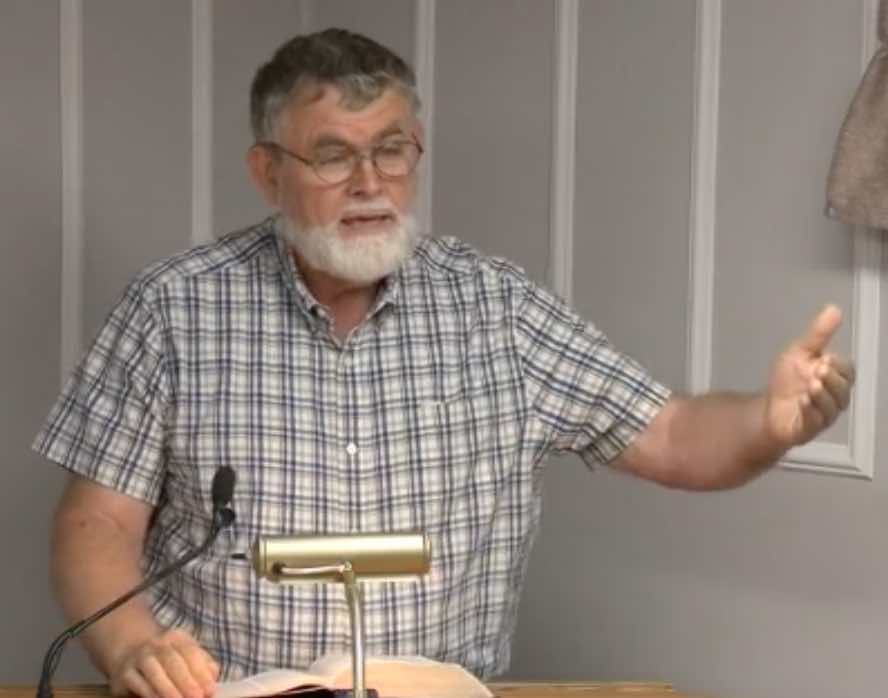
In the sermon "To the Church in Smyrna," Mike McInnis addresses the sovereignty of God and the trials faced by believers, as illustrated in Revelation 2:8-11. He emphasizes that God acts according to His will without taking human opinions into account, affirming that His sovereignty does not diminish His goodness. McInnis references the historical context of the church in Smyrna, which faced persecution and poverty yet was spiritually rich, highlighting God's knowledge of their tribulations and the assurance of eternal life for the faithful. He underscores the exhortation to remain steadfast amidst suffering, linking this to the broader Reformed doctrine of perseverance of the saints, that true believers will endure trials through God’s grace and faithfulness.
Key Quotes
“God does things the way he wants to do them. And he doesn't ask anybody if it's okay.”
“Whatever the Lord ordains is right.”
“Be thou faithful unto death, and I will give thee a crown of life.”
“He that overcometh shall not be hurt of the second death.”
The Bible teaches that God is sovereign and does all according to His will, with passages like Daniel 4:35 affirming that no one can stay His hand.
Scripture is replete with declarations of God's sovereignty. For instance, Daniel 4:35 states that God 'does according to His will among the host of heaven and among the inhabitants of the earth; and none can stay His hand or say to Him, What have you done?' This emphasizes the truth that God acts as He pleases without answering to anyone. He ordains all events for His glory and the good of His people, making His will an ultimate authority that transcends human reasoning. To deny God's sovereignty is to alienate oneself from the truth of who God is; for He is the one who determines what is right and good, independent of our perceptions or preferences.
Daniel 4:35
Jesus' resurrection is a central truth of the Christian faith, affirmed in Revelation 2:8 where He declares, 'I was dead, and behold, I am alive forevermore.'
The resurrection of Jesus Christ is foundational to Christian belief, encapsulated in the proclamation found in Revelation 2:8, where He asserts, 'I was dead, and behold, I am alive forevermore.' This profound statement affirms His victory over death and serves as a testament to His divine nature. The resurrection is not merely a theological concept; it is an historical event witnessed by many, reinforcing our faith that Jesus lives. This reality offers hope and assurance to believers, signifying that we too will experience resurrection life through Him. Furthermore, the resurrection is a demonstration of God's power and the ultimate fulfillment of His promise of eternal life for His people.
Revelation 2:8
Understanding suffering allows Christians to recognize God’s sovereignty and purpose in trials, as noted in Revelation 2:10 where believers are encouraged to be faithful unto death.
Suffering holds significant meaning for Christians as it is often through trials that God works to refine and strengthen our faith. Revelation 2:10 emphasizes this truth, urging believers to 'be faithful unto death, and I will give you the crown of life.' This teaching assures us that while suffering may be painful, it is not without purpose. God uses suffering to deepen our reliance on Him, to mold our character, and to draw us closer to Christ, who also suffered. Embracing suffering as part of the Christian journey equips us to witness to God's grace, reminding us that our present struggles will lead to eternal glory. Therefore, a right understanding of suffering allows us to face challenges with hope and perseverance, rooted in the sovereignty of God.
Revelation 2:10
'The first and the last' identifies Jesus as the eternal God, emphasizing His sovereignty and ultimate authority over all time.
'The first and the last' is a profound declaration about the nature of Jesus Christ, highlighting His eternal existence and divine authority. This title, as stated in Revelation 2:8, connects to the doctrine of Christ’s divinity, asserting that He exists outside of time, encompassing both the beginning and the end. This duality reinforces our understanding of Jesus as the Alpha and Omega, offering comfort to believers that our lives are under His sovereign rule from start to finish. By recognizing Christ in this light, we appreciate His control over history and individual lives, giving us confidence amidst uncertainties and adversities. Understanding Jesus as the first and the last also assures the faithful that He has already secured victory over sin and death, providing eternal life through Him.
Revelation 2:8
God knows His people intimately, as expressed in 2 Timothy 2:19, where it states, 'The Lord knows those who are His.'
The knowledge of God concerning His people is both comprehensive and intimate, as underscored in 2 Timothy 2:19: 'The Lord knows those who are His.' This signifies a relational understanding far beyond mere acknowledgment; it reflects God's careful and loving attention toward His children. The assurance that God knows His people serves both as a comfort and a warning. It reassures believers of their security in Him, affirming that they belong to Him. Simultaneously, it calls them to live according to His standards, knowing He observes their actions. This divine knowledge infers that God is actively involved in the lives of His people, guiding, correcting, and nurturing them towards spiritual maturity. Moreover, this truth encourages Christians to trust in God during trials and tribulations, as He is attentive to their needs and struggles.
2 Timothy 2:19

Comments
Your comment has been submitted and is awaiting moderation. Once approved, it will appear on this page.
Be the first to comment!