Bootstrap
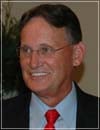
Larry Criss

Made Accepted

Ephesians 1:6
Larry Criss November, 28 2021 Audio
0 Comments
Larry Criss
Larry Criss November, 28 2021

In his sermon titled "Made Accepted," Larry Criss delves into the theological implications of Ephesians 1:6, highlighting the doctrine of divine acceptance through Christ. He argues that all Christians are considered saints and accepted by God due to the grace bestowed in Jesus Christ, countering the Catholic notion of posthumous sainthood and the need for purgatorial cleansing. Criss utilizes Scripture, particularly Leviticus 22:21, Ephesians 1:3-6, Romans 8:1, and 1 John 3:1, to articulate that divine acceptance is not contingent on human works but is a sovereign act of God predestining believers in Christ. The practical significance of this message underscores the believer's security and identity in Christ, where acceptance is based solely on grace rather than personal merit, thus fostering assurance and gratitude among the congregation.

Key Quotes

“Without holiness, no man shall see the Lord. And if we're not saints on earth, we'll never be saints afterwards.”

“God saw my Savior, and then He sees me. He doesn't see me outside of His Son.”

“Brothers and sisters in Christ, it's not too much to say before God rejects one of his own, he would have to reject his son first.”

“In the Beloved, how safe my retreat. In the Beloved, accounted complete.”

Sermon Transcript

Auto-generated transcript • May contain errors

100%
Turning, if you will, back to
Ephesians chapter 1, our text will be verse 6. Verse 6. To the praise of the glory of
His grace wherein He, that is God, hath made us accepted in
to be loved. Made accepted. Made accepted. Notice, first of all, before
we come to the text, to those to whom Paul writes those to
whom he addresses this epistle in verse 1, to the saints which
are at Ephesus. All Christians are saints. They
must be. Without holiness, no man shall
see the Lord. And if we're not saints on earth,
we'll never be saints afterwards. Unlike the teaching of the Catholic
Church, they say you become saints by a process, by steps. You can't be. You never arrive
at that while you're living. It's only after you're dead.
You must spend so much time in purgatory. You must be prayed
out of that place by the priest, the so-called priest, and by
various steps in this process, eventually you become a saint.
Not an inkling, not a hint of such teaching in the Word of
God. If I'm not a saint when I die,
I'll never be a saint after I die." Paul also, you notice there in
verse 1, he refers to them as saints, but also to the faithful
in Christ Jesus. The faithful in Christ Jesus.
Believers in him. Followers of him. Adhering to
his truth and his ways. Firmly following the Lamb wheresoever
he goeth. True to their profession and
their relationship to the Lord Jesus Christ. Remember our Lord
asked Peter or his disciples of the 11 to 12. On one occasion,
when the multitude upon hearing some teachings of his that they
didn't like, it rubbed them the wrong way. He wouldn't allow
them to glory in the flesh. And as they turned and walked
away, he asked the disciples, will ye also go away? And remember
what Peter said, Lord, to whom shall we go? To whom shall we
go? Someone said if we can leave,
if a believer, a professed believer can leave the Lord Jesus Christ,
they will. If they can, they will. All but
grace constrains us. The answer with the apostle,
Lord, to whom shall we go? We've got no place else to go.
Got no place else to go. We have no other hope. We have
no other plea. We have no other foundation.
As we come to this text now here in verse 6, first consider this. Made accepted. Made accepted. What does that mean? What does
Paul mean when he says made accepted? What's the meaning of that? Well,
we all know what it means to feel out of place, don't we? To feel like we just don't fit
in, we just don't belong. There are certain people, and
I know you You can identify with this that you just don't feel
comfortable around. You just don't feel at ease in
their company. I know when I was about seven or eight years old,
the coal mines that my father worked in shut down. back in
West Virginia, so he went to Ohio where he had a brother that
worked and got a job there and then soon after moved us up there.
Youngstown, Ohio, my soul. I'd never been in a city of any
size whatever, but man, it was so much bigger. I never did feel
comfortable there. They made fun of how I talk.
I thought they talked funny, but I was there for probably
four or five years, and I was so glad when we moved back to
the mountains of West Virginia. I was in my security zone then. I was in my comfort zone. Felt
out of place. Oh, but how much more, how much
more is it to be accepted and not out of place before God Almighty? That is, this is the one that
Paul speaks of here, accepted into be loved. accepted by God
himself. He is the one that makes us accepted. And that's no small thing. Child
of God, that's no small thing. That has eternal, everlasting
consequences. Because remember, God Almighty,
contrary to the opinion of popular religion, God Almighty is not
easily satisfied. Is he? No, he doesn't accept
just anything. I've told you before, as a young
boy, my father expected me to do what he told me to do. I and
my brothers, we all had chores to do. And if I didn't do them
right, he would tell me, son, you've only half finished the
job. Now get back there and do what I told you to do. And I
remember thinking to myself, because I had better sense than
to say it out loud in his presence, but often I would think to myself,
man, he's hard to please. You just can't satisfy Him, or
at least I couldn't. How much more is that true of
God Almighty? Folks in our day don't give that
much thought, do they? What does it take to satisfy
God? Is He pleased with just anything?
Is He pleased with just religion? Because it tells us that we don't
have to, that He doesn't require much. But will God be satisfied
with my best? Will my works, will my very best
works be a sufficient grounds to stand before Him, accept it? Will He accept that? Listen to
how God Himself answers the question. I don't care how the Baptist
answered that question, how a church or a preacher or a priest might
answer the question. I want to know what does God
himself say? What does he require before I
can be accepted before him? Listen to what he himself says.
It shall be perfect to be accepted. This is Leviticus 22 and 21.
Whosoever offers the sacrifice of peace offerings unto the Lord,
to accomplish his vow, or a freewill offering in beefs or sheep, it
shall be perfect to be accepted." It doesn't sound like that he'll
accept just anything. It doesn't sound like God is
satisfied with just anything. He says, there shall be no blemish
therein whatsoever. And you know what? That is still
God's standard. Perfection. It's not the best
I can do. God demands perfection. That's
never been changed. Man thinks it has, and we're
taught that it has. We're told in every hand that
God accepts us if we'll do something like just make a decision for
Jesus. Where is that in the Word of
God? I've never found that sort of language in God's Word. Make
a decision. The apostles never preached make
a decision for Jesus, did they? They never did preach such a
thing. There's no such thing as an altar call in the Word
of God. Jesus Christ is our altar. He's
our altar. He's our sacrifice. He's everything. No. Is that really all God requires? Is it really as easy as A-B-C
to be accepted by God Almighty? If doing those things, if walking
an aisle, shaking the preacher's hand, making my decision, saying
the sinner's prayer as they call it. If those things make me perfect,
if by doing those things I'm made perfect, then yes, God will
accept me. But those things can't make us
perfect, they're just religious tradition. It can only be enough
if God says it's enough. I can only be accepted if God
accepts what I bring before Him. If it's enough to satisfy Him. If it's enough to please Him.
And remember, He's hard to please. God's hard to please because
He says it must be perfect to be accepted. Now compare your
very best deeds to that. I mean, compare your very best
works to this standard of perfection before a holy God. He's never
altered that standard. He's never lowered that standard,
and he never shall. So that being the case, the next
question is this. How are sinners accepted? How
are sinners accepted? Who makes them accepted? You
remember, someone asked Brother Henry Mahan years ago, Brother
Henry, do you believe that when God saves someone, it's forever? Do you think salvation is forever? And Henry said, well, it depends
on who does the saving. Who does the saving? If it's
up to man. If it's up to man to save himself,
then no, it won't last. It won't last long at all. But
if it's God Almighty, if, as the scriptures declare, salvation
is of the Lord, Henry said, yeah, it's going to be forever. Nothing
can be added to it. Nothing can be taken away. Apply
that same answer to this. Who can be accepted? It depends
on who makes them accepted. And our text says here that God
made us accepted. He, God, God made us accepted
in to be loved. That's what the text says. God
that makes the sinner acceptable to Him. Understand that this
acceptance comes to us entirely as a work of God. He, God, had
made us accepted in to be loved. Ooh, I like that. That sounds
so much better than Larry's works, than Larry's self-righteousness.
than Larry's good deeds, than Larry's decision. Oh, this is
so much more comfortable. This is so much more secure. This is so much more lasting,
being accepted by God and to be loved. We never made ourselves
acceptable. We couldn't, and we don't. He
that first made us in creation has made us new creations in
Christ Jesus by His grace. And it's by being in to be loved
that we're made acceptable by God in the Lord Jesus Christ,
accepted in to be loved." That's got such a sweet sound to it,
doesn't it? Oh, that sounds so much better
than saying, well, I belong to this denomination, or this creed,
or this catechism. or this confession, no, I belong
to Christ. I'm in the beloved, I'm in Christ. God accepts me for Christ's sake. Paul said in this same book of
Ephesians, chapter 5, isn't it, that God for Christ's sake, or
chapter 4, even as God for Christ's sake has forgiven you, God accepts
his people in Christ and for Christ's sake. We're told this
again and again in this very chapter. Look, if you will, again
at verse 3 in Ephesians 1. Blessed be God, Paul says. Blessed
be the God and Father of our Lord Jesus Christ who has blessed
us. Oh, how he's blessed us. With
all, not some, but with all spiritual blessings in heavenly places
in Christ. You know the words in Christ,
in him, by Christ, through Christ, for Christ, in other words of
the same effect, meaning the very same thing, are used 55
times in this epistle. 55 times. The Holy Spirit reminds
us that everything we have from God, everything we are by grace,
and everything we hope to enjoy in heavenly glory is in Christ,
outside of Him. Outside of the Lord Jesus Christ,
you know what we can expect? Nothing but God's wrath. Nothing
but eternal condemnation. Outside of Christ, that's the
only thing a sinner can expect. Judgment and wrath. There's only
one place. One place. Oh, what a place.
Only one place a sinner can be accepted by God who demands perfection. That's the place I want to be
found, don't you? Tell me where that place is. Point me to that place where
here it is accepted in the beloved. Romans 8 and 1, there is therefore
now no condemnation to them that are in Christ Jesus. Notice again here in Ephesians
1 verse 4, according as God hath chosen us in him, that is, in
Christ, before the foundation of the world. People think election
amounts to this. God looked down through time,
and he saw who would choose him, so he chose him. Represents God's
being involved with a bunch of unnecessary nonsense, doesn't
it? Oh, no. It's not that we chose him. He
chose us. Paul says, before the foundation
of the world. Thou art my first elect, God
said. and then chose us in Christ our
head. Look at verse 5. Having predestinated
us unto the adoption of children by Jesus Christ to himself. Without Christ we have nothing.
The God and Father of our Lord Jesus Christ adopted us into
his family in and by Christ before he called the world into existence.
Before he set the stars in their course, before he created heavens
and earth, he chose his people in Christ and predestinated them
unto the adoption of sons. Oh, we're children of the king.
A child of God is a child of the king. The king and high priest
of our profession, the Lord Jesus Christ, our elder brother, we're
in his family, flesh of his flesh and bone of his bones. Paul in
Romans 8 said this, For ye have not received the spirit of bondage
again to fear, but ye have received the spirit of adoption, whereby
we cry, Abba, Father. Martha, you go tell my disciples
that I send them to my Father and their Father, unto my God
and their God. I'm going to the Father's house,
and there's a place there for them. The Spirit itself beareth
witness with our spirit that we are the children of God, Mm,
I like that. Children of God. And if children,
then heirs. Heirs of God and joint heirs
with Christ. If so be that we suffer with
him, that we may also be glorified together. No wonder John wrote
this. 1 John 3 and 1, you know it very
well. John said, behold, let me show
you something marvelous. Behold. Behold. Oh, don't rush by this. This requires your undivided
attention. Behold what manner of love the
Father hath bestowed upon us, us of all people, that we should
be called the sons of God. Therefore the world knoweth us
not, well that's okay, because it knew him not. Beloved, now
are we the sons of God. Now. Nothing can change that. Now are we the sons of God. We
may be weeping, but we're still the sons of God. We might be
hurting, but we're still the sons of God. We might be bearing
a heavy heart, but we're still the sons of God. And it doth
not yet appear what we shall be, but we know that when He
shall appear, that is Christ, we shall be like Him. For we
shall see Him as He is. Verse 6, Ephesians 1, to the
praise of the glory of his grace wherein he had made us accepted
in the beloved. By an act of free and sovereign
grace, he accepted all the objects of his eternal love in Christ
before the world began. And those he accepted in eternity
can never be made unaccepted in time, no matter what. No matter
what. What if they fall? There's no
if about it. What if they sin? There's no
if about it. They'll still be accepted and to be loved. Brothers
and sisters in Christ, it's not too much to say before God rejects
one of his own, he would have to reject his son first. That's
exactly right. He would have to reject Christ
and reject all those who are in his son. And that's just not
ever going to happen. I love this old hymn. In the
Beloved, how safe my retreat. In the Beloved, accounted complete. Who can condemn me? In Him I
am free, Savior and Keeper forever is He. In the Beloved, God's
marvelous grace. That's what Paul said here, didn't
he? According to the riches of His grace. In the Beloved, God's
marvelous grace. He calls me to dwell in this
wonderful place. God sees my Savior, and then
He sees me. In the Beloved, accepted and
free. There's your peace. There's your
security. There's your hope. There's your
comfort. Oh, God sees my Savior and then
He sees me. He doesn't see me outside of
His Son. In the Beloved, accepted and
free. Verse 7, Paul says, In whom we
have redemption through His blood. That's what we're going to remember
here in a few moments. In whom Not in what? What could
never take away my sins? Oh, only the blood of Christ
can do that, in whom we have redemption. Not in whom we hope
to have redemption, or hope to get redemption, or hope to add
to redemption. No, in whom we have redemption.
Through his blood, the forgiveness of sins according to the riches
of his grace. Redemption is deliverance from
all sin, from all condemnation, from all the consequences of
sin. Deliverance into the glorious liberty of the sons of God. This
redemption is that which was accomplished and obtained for
us by the precious sin-atoning blood of Jesus Christ. Neither
by the blood of goats and cats, but by his own blood, he entered
in once into the holy place, having obtained eternal redemption
for us. Past tense period. They sing
a new song in heaven, saying, thou art worthy to take the book
and to open the seals thereof, for you were slain and hast redeemed
us to God by thy own blood out of every kindred and tongue and
people and nation. Jesus Christ did not die in vain. He didn't shed his blood for
nothing. He redeemed his people from their
sins. The law of God was honored by
his obedient life. doing all those things that pleased
the Father. And the justice of God is satisfied
by His vicarious death, and we have full and complete forgiveness. God does, God, grace rather,
doesn't proclaim a redemption that offers pardon, but a redemption
that demands pardon. Justice satisfied, and Christ
satisfied God's justice in His death upon the cross, and just
as satisfied demands pardon be granted, be given. And it is. Look at verse 10 here in Ephesians
1. That in the dispensation of the
fullness of times he might gather together in one all things in
Christ. In Christ both which are in heaven
and which are on earth even in him. It is the purpose and good
pleasure of God to save all of his elect And that's exactly
what it's doing. I'll see these prophecy experts. I don't know what it is about
prophecy that people find so intriguing. They won't come to
hear the gospel of Christ, but they'll sit and try to figure
out, what does this mean? This man, this man of sin, this
666, let's figure this out. Oh, tell him, behold the Lamb
of God. Well, what's the big deal there? Oh, no. Brothers
and sisters in Christ, it's all about him, isn't it? and God's
purpose and what he's doing today. Now, while he allows this world
to continue, he's still calling out his sheep. That's exactly
it. That's the only reason. Paul says, it's not like your
brother Peter, says it's not like what the mockers and the
scoffers are saying to you. No, no, no. God's allowing this
world to continue. It's not a fairy tale like they
suggest, like they say to you, but God's allowing this world
to continue because He's calling out His elect. He's long-suffering
to us-ward. He's chosen. He's redeemed. He's
elect. And brothers and sisters, when
God Almighty calls that last sheep, that one that was chosen
and given into His Son's hands, for whom He became assured, For
whom he lived, for whom he died, for whom he intercedes. When
that last sheep comes to the great shepherd of the sheep,
God shall declare, time shall be no more. And he'll wrap this
up. It'll be over. Look at verse
11. In whom? Those words are in you. In whom? Also. You mean there's
more? Well, Paul said in verse 3, God
has blessed us with all the spiritual blessing. In whom also we have
attained an inheritance. I've never inherited anything.
Have you? I don't recall anybody ever willing anything to me. My poor old father didn't. It
was all he could do to raise nine kids when we were still
at home, much less leave us anything as an inheritance. I remember
I had a cousin one time that somehow or other someone told
him that we had an ancestor across the pond that had died. and had
a pretty large inheritance. And this guy, he was a logger,
my cousin, so he was investigating that. By the time he got it all
figured out with all the cousins, all the family, all the relatives
of that man, we would have got about a buck fifty apiece. And
he figured it just wasn't worth the effort. Oh, but this is,
isn't it? This inheritance, Christ took
possession of heavenly glory for us as our representatives.
That's what Paul says in Hebrews 6, that he now appears in the
presence of God for us. For us. He represents us. My soul. That's why I say God
would have to reject his son to reject those that are in his
son. We have obtained an eternal inheritance
in heaven. It's awaiting our arrival. That's
what Peter wrote in his first epistle, chapter 1. to an inheritance
incorruptible and undefiled, and that fadeth not away, reserved
in heaven for you." I've been thinking much the last few days
about our dear friends who have already entered glory, are already
in it. Man, so many, Bobby. It seems
like every few months I hear of one that's gone to glory from
among us, and then others are our dear friends. Oh, I think
what a joy they must be experiencing right now. Don, Tommy, and Lindsey,
and Henry, and Scott, and Maurice, and so many others. Oh, my soul.
Can you imagine? I just can't. I can't imagine. My soul. They've entered that
eternal everlasting rest. They've entered that place where
there is no sin, and no sorrow, and no sickness, and no death,
and no weeping. But most of all, they now worship
the Lamb with an unsinning heart. Oh, my soul, I can't imagine
what that must be like. But I think, oh, I'm so happy
for them. I'm so happy. I remember talking
to Don on more than one occasion when God would call one of His
own home, Don would say, I'm sorry for the family, but I'm
so happy for them. I'm sorry that they're suffering,
but oh, I'm so happy for those who have gone to be with their
Lord. Look at verse 13 here in Ephesians 1. In whom ye also
trusted. Trusted. Oh, for grace to trust
him. Oh, he's so trustworthy, and
I trust him so little. I have no reason not to trust
him. There's never been one promise, one word that's ever failed,
and yet I find myself not trusting. in whom ye also trusted, after
that ye heard the word of truth, the gospel, the gospel of your
salvation, whom also after that ye believed ye were sealed with
the Holy Spirit of promise, in whom, in whom, Paul says again
and again, not in what, what didn't die on the cross for me,
what didn't shed his own blood for me, it was a living Savior,
the Lord Jesus Christ, the Lamb of God that took away my sin,
in whom, and that whom is Jesus Christ. It is the Christ that
sinners look. It's the Christ that sinners
believe on and trust in, that he's able to keep that which
we've committed unto him, and able to keep us from falling.
Oh, that's my great shepherd. What power, what grace resides
in him? John said, we saw him and he
was full of grace and truth. He's able to keep us from falling,
and to present us faultless before the throne of God. Imagine that. Jesus Christ is the one in whom
God makes us accepted. And what God has joined together,
no man, no man, no devil can put asunder. 1 Corinthians 1
and 30, but of Him, that is of God, God did this. God made us
accepted in His Son. God put us in His Son. Who's
going to take us out? But of Him, of God, are you in
Christ Jesus? Who of God has made in us wisdom,
and righteousness, and sanctification, and redemption? Oh, in the Beloved
accepted am I, risen, ascended, and seated on high, saved from
all sin through His infinite grace, with the redeemed ones
accorded a place. These are they we read in Revelation,
this multitude before the throne. These are they which follow the
Lamb, withersoever he goeth. These were redeemed from among
men, being the firstfruits unto God and to the land. Here is
plain evidence of a special redemption. They were redeemed from among
men. Some of the children of men are,
by redeeming mercy, distinguished from others by a particular redemption. Christ said, I lay down my life
for the sheep. Christ loved the church, Paul
says in this same book, chapter 5. Christ loved the church and
gave himself for it. Oh, think about that child of
God. Hebrews chapter 2, for as much then as the children are
partakers of flesh and blood, he, that is Christ, also himself
likewise took part of the same. Why? That through death, as God
he could not die, he became man. did die, that through death he
might destroy him that had the power of death, that is the devil,
and deliver them, deliver them, who through fear of death were
all their lifetimes subject to bondage. In the beginning was
the Word, and the Word was with God and was God. The same was
in the beginning with God. All things were made by him,
and without him was not anything made that was made. And the Word
was made flesh, and dwelt among us, and we beheld His glory,
the glory as the only begotten of the Father, full of grace
and truth. My soul, have you gotten a handle on that? I haven't
either. God Almighty became a man, became
a man in order to save His people from their sins. And think about
this, that one, that eternal God by whom all things were made,
that was made flesh, was in order to be made sin. He was made flesh
and then made sin. See him hanging on the tree,
the darkness symbolic of the darkness his soul was passing
through. Wherefore art thou red in thine
apparel, and thy garments like him that treadeth in the wine
vat? And his answer is, I've trodden the winepress alone,
and of the people there was none with me. Behold, God saying,
concerning his son, awake, O sword, against my shepherd, and against
the man that is my fellow, saith the Lord of hosts, smite the
shepherd. And see him who knew no sin,
who did no sin, in whom was no sin, cry out under the wrath
of a holy God, my God, my God, why hast thou forsaken me, so
that we might be made the very righteousness of God in him,
accepted in the beloved. Oh, and hear him cry. Hear him
cry after passing through that ordeal. Passing through that
darkness, he comes out triumphant and he exclaims, it is finished. It is finished. All the sins
of all my people, it's finished. Everlasting righteousness has
been brought in, it's finished. Transgression is put away, it
is finished. Then and there, then and there,
he himself, by himself, purged our sins forever. Then and there,
he obtained eternal redemption for us. And God says, for every
sinner Jesus Christ redeemed, God declares, deliver his soul
from going down to the pit. He won't perish. He won't go
to hell. My son died for him. I've found the ransom. And the
ransom soul sings. in thankfulness. God forbid that
I should glory, saving the cross of the Lord Jesus Christ, by
whom the world is crucified unto me and I unto the world. This
religious day in which we live, people think the cross is just
as a piece of wood, as an emblem, something they hang around their
neck or on their repel or over a steeple of a church. No, when
Paul talked about the cross of Christ, he was talking about
redemption obtained. not an offer to redeem or a possibility
of redemption, or an incomplete redemption that needs me to add
something to it to make it successful. No, Paul was rejoicing in an
atonement that really did atone, a redemption that really did
redeem. Oh, listen, listen to what the
results of this is. Ezekiel chapter 16, verse 14. and thy renown went forth among
the heathen, for thy beauty, this is concerning his church,
for it was perfect, God demands perfection, and he says I found
it, for it was perfect through my comeliness being found in
the beloved, accepted in the beloved, it was perfect through
my comeliness which I put upon thee, saith the Lord. Listen
to this, Colossians 1, 28, whom we preach, warning every man, and teaching
every man in all wisdom that we may present every man perfect
in Jesus Christ. In Jesus Christ, how could we
be less than perfect? How could we be anything but
perfect? Hebrews 10 and 14, for by one
offering he hath perfected forever them that are sanctified. Now
last of all, how should accepted sinners respond to this? David,
looking back over his life and God's many blessings, benefits,
David said, what shall I render unto the Lord for all of his
benefits to me? What should a redeemed sinner's
response be? Not unto us, O Lord, not unto
us, but unto thy name give glory for thy mercy and for thy truth's
sake. Martin Luther said this. I think
I've shared it with you before. When I look at myself, I don't
see how I can be saved. That's exactly right. That's
exactly right. Oh, but he didn't stop there.
But he said, but when I look at Christ, I don't see how I
can be lost. Oh, I like that. What a miracle. What a marvel. What a mercy.
What mercy and grace of God there is in the salvation of a sinner.
Look at Saul of Tarsus, the man who wrote this epistle. My, so
how religious he was. Oh, what a Pharisee he was. How
self-righteous. How zealous for the tradition
of the fathers. And at the very same time, how
lost he was. How blind he was. How in darkness
he was. Until that day. I see the Apostle
Paul, after that experience of God's amazing grace on the Damascus
road, standing up to preach the gospel, that he at once labored
to destroy, saw what in the world happened to you. What happened
to you? Did you make a decision, Paul?
Did you walk down an aisle? Oh no, that's not what happened. That wouldn't produce this change.
Paul would say, you've heard of my conversation, how I lived
in the times past, but when it pleased God. That's when a sinner
say, when it pleases God. Won't it please God who separated
me from my mother's womb and called me by His grace to reveal
His Son in me? That's the reason for this great
change. God's miraculous mercy. God's
amazing grace. Any sinner you ask will tell
you the same thing. Blind Bartimaeus, who gave you
your sight? Ain't you the same beggar I seen
sitting at the walls of Jericho every day? Or sitting at the
gate every day, begging people just a nuisance? You now see. What happened to
you, Barnabas? Oh, let me tell you. Let me tell
you. Let me tell you about this. One day I was sitting there in
darkness in my rag, just like I always was, and I heard a noise. And I asked, what's going on?
And somebody said, Jesus of Nazareth's passing by. He said, oh, I'd
heard of him. I'd heard of him. I'd heard what he'd done for
other blind beggars. And I began to cry out, Jesus,
thou son of David, have mercy on me. And what happened, Bartimaeus,
he stood still. Can you imagine that? Can you
believe that? He heard my voice. He heard my
cry among all that other noise. And he stood still. And I came
to him. He asked me, what do you want?
Oh, that I might see. And he said, receive thy sight.
And I followed Jesus in the way. For God, who commanded the light
to shine out of darkness, has shined in our hearts to give
the light of the knowledge of the glory of God in the face
of Jesus Christ. Blessed is the man whom thou
choosest, and calls us to approach unto thee. Oh, blessed is that
man who's accepted and to be loved. He's blessed now, and
he'll be blessed forever in eternity with heavenly glory, with Christ
his Redeemer. I love old Bunyan's picture in
his famous allegory of Pilgrim's Progress. Don't you? He said,
I dreamed and behold, I saw a man clothed with rags standing in
a certain place with his face from his house and a book in
his hand and a great burden on his back. Then he said, I saw
my dream. Just as Christian came up to
the cross, his burden loosed from off his shoulders. Oh, remember
that. His burden loosed from off his
shoulders. and fell from off its back, and
it began to tumble, and so continued to do so, till it came to the
mouth of the sepulcher, where it fell in. It fell in, and I
saw it no more." The burden of my heart rolled
away. And he said, then was Christian glad and lightsome. Lightsome. and say with a merry heart he
has given me rest by his sorrow and life by his death. He looked
and looked again, even until the springs that were in his
head sent the waters down his cheeks. Then he gave three leaps
and went on his way singing. Thus far did I come laden with
my sin, nor could aught ease me of the grief that I was in.
Till I came hither, oh, what a place is this! must here be
the beginning of all my bliss, must hear the burden fall from
off my back, must hear the strings that bound it to me cracked,
bless cross, bless sepulcher, bless rather be, the man that
was there put the shame for me. The wise man said this, go thy
way, children of God, go thy way, eat thy bread with joy,
and drink thy wine with a merry heart, for God now accepteth
thy works." Think of that. God accepts you in Christ Jesus
to be loved, and we can never be unaccepted. It can never be
altered. It can never be changed. We're
accepted in to be loved. When we fell in our father Adam,
we were accepted in to be loved. Though we came forth from our
mother's womb in time speaking lies, we were still accepted
in to be loved. And though we spent Our days
before He called us by His grace in darkness and rebellion, we
were still accepted in the Beloved. And even now, even now, after
experiencing God's amazing grace, we fall seven times a day, we're
still accepted in the Beloved. What a glorious position to be
in, accepted in the Beloved. In Christ's heart, in Christ's
book, the Lamb's Book of Life, in Christ's hands, in His person,
for we're members of His body, of His flesh, and of His bones. If my good works had put me in
Christ, then my bad works might take me out. But God put me in
Christ when I was a sinner, and He will never take me out, no
matter what, no matter what, though I'm still a vile and worthless
sinner. Unchangeable His will, Though
dark may be my frame, his loving heart is still eternally the
same. My soul through many changes
goes, his love no variation owes. Thanks be unto God for his unspeakable
gift and for making us accepted and to be loved. Amen. God bless
you.
Larry Criss
About Larry Criss
Larry Criss is Pastor of Fairmont Grace Church located at 3701 Talladega Highway, Sylacauga, Alabama 35150. You may contact him by writing; 2013 Talladega Hwy., Sylacauga, AL 35150; by telephone at 205-368-4714 or by Email at: larrywcriss@mysylacauga.com
Broadcaster:

Comments

0 / 2000 characters
Comments are moderated before appearing.

Be the first to comment!

Joshua

Joshua

Shall we play a game? Ask me about articles, sermons, or theology from our library. I can also help you navigate the site.