Bootstrap
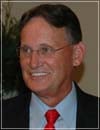
Larry Criss

A Truly Blessed Man

Psalm 32:1-2
Larry Criss October, 6 2019 Audio
0 Comments
Larry Criss
Larry Criss October, 6 2019

Sermon Transcript

Auto-generated transcript • May contain errors

100%
Psalm 32. Psalm 32. Probably just consider verses
1 and 2. That's enough. Psalm 32 verses
1 and 2. The title of my message, and
you'll see why I chose this title when we read these two verses,
is A Truly Blessed Man. A Truly Blessed Man. And David
describes that man. himself and every believer. Blessed is he whose transgression
is forgiven, whose sin is covered. Blessed is the man unto whom
the Lord imputeth not iniquity, and in whose spirit there is
no guile. Blessed, one of the meanings
of the word is happy. We could, without doing any violence
to the verse, read it that way. Happy is he whose transgression
is forgiveness. And of what we're told here,
there is more than sufficient, there's more than enough to make
those happy who have experienced the things that David speaks
of here. I remember hearing years ago
our dear friend, now beholding the king in his beauty right
now. Dear brother Henry Mahan, speak of preachers that try to
sneak up on people's blind side. You know what he meant by that,
I'm sure you do. Thinking that someone can be
saved by ambush, that they can be caught unaware. Now that's
just exactly what modern-day evangelism, so to speak, does. It happens all the time. I knew
a man that before God saved him and taught him the truth and
rebuilt his son to him, he worked in the Billy Graham organization. That's a big outfit. And this
man told me that during those citywide crusades, as they were
called, that he, along with hundreds of other volunteers, would be
sitting in various places in the auditorium, wherever it was
at, in the bleachers, and at the invitation, which is the
climax of the service, that he, along with hundreds of others,
would start to walk forward. That was to trigger a response
in others. That's just being blindsided.
That's just deceitful. How unlike what the Lord Jesus
Christ did. He told people. He never tried
to sneak up on anybody's blind side. He just didn't do it. The
great shepherds sought the sheep. He said, I've come to seek and
to save that which was lost. But he never once concealed what
it would cost to follow him. Ask the rich young ruler. He
bowed physically, he bowed physically, but he didn't bow in his heart
and he went away sorrowful and the Lord didn't chase after him
and compromise his word and his gospel. Ask the multitude in
John chapter 6, a multitude of people. The Lord didn't blindside
them. He taught them, unless you take
up your cross and deny yourself, deny yourself and follow me,
you cannot be my disciple. I won't let you be. I won't allow
you to be. And brothers and sisters, just
as the Lord wouldn't blindside folks, I'm not going to either. I'll tell you right up front.
Right up front, right at the very outset, my motive this morning,
my desire for preaching this message. First, I felt led of
the Lord to do it. And for this reason, I want us,
I want us, you and me, believers, to remember, as David tells us
here, how blessed we are if we know the Lord God and Jesus Christ
whom he did send. If you know that, you're a blessed,
blessed, happy individual. As the Lord told Peter, when
Peter confessed, when very few others were doing so, he said,
Peter confessed, we know who you are. You're the Christ. You're
the Messiah. You're the one the Old Testament
spoke about. You're the one we've been looking
for. We're convinced, I don't have a doubt, that you're the
Christ, the Son of the Living God. And you remember what our
Lord said to him? happy. Blessed art thou, Simon
Barjona, you've been to the school of higher learning. It doesn't
get any higher than this. My Father, which is in heaven,
has taught you that thing. He has revealed to you who I
am. If God is pleased to bring again
to our remembrance the wonderous truth and make it fresh to our
hearts, if He does that, I believe it will produce a response from
us back to him in adoring worship. And that will be good. No believer
has a problem with that. No believer would deny, oh I
need that. I need to remember. I need to
worship God at the footstool of the Lord Jesus Christ. I need
to be brought down low that way, because I can't look up when
I'm already standing so high. Oh, but if I'm brought down low,
then I'll look up. Then I'll look up. Look up at
that one who loved me and gave himself for me. Won't that be
good? Wouldn't that be good? I need
that. This is how Isaac Watts expressed it in one of his many
hymns. As a matter of fact, a portion
of this hymn is on page 5 of our hymn book. He wrote, begin
my tongue some heavenly theme, and speak some boundless thing,
the mighty works or mightier name of our eternal king. Oh, might I hear your heavenly
tongue, but whisper, you are mine. Those gentle words should
raise my song to notes almost divine. How would my leaping
heart rejoice and thank my heaven secure? I trust the God-creating
voice and faith desires no more." What a joy. Notice, first of
all, carefully, briefly but carefully, what David didn't say. What David didn't say. He didn't
say, blessed is the man who has much of this world's goods. He
didn't say that at all. He didn't mention it. Or this world's celebrity, or
fame, or fortune. That's the world's definition
of the blessings of God, isn't it? They think a man is blessed
of God by how much he has. How much he's hoarded up. how
much he saved. They look and say, oh, David
even fell into that temptation one time. Psalm 73, I was jealous,
I was envious at the ungodly. They don't need anything. They
have everything they need. And he said, until I went into
the sanctuary of God and God drew back the curtain and I saw
their end, oh, I was as a beast before they. Surely you've set
them in slippery places. They don't have it made, everything
but that. The old Puritans used to say
that when God intended to curse a nation or a people or an individual,
He would send them prosperity, would turn their heart from Him. Remember what our Lord said in
the parable concerning the rich fool? He said to those that spoke
of riches and inheritance and earthly gain, He said, beware
of covetousness. For a man's life consisteth not
in the abundance of the things which he possesseth. Most people think it does. And
he spake a parable unto them, saying, The ground of a certain
rich man brought forth plentifully. And he thought within himself,
saying, What shall I do? Isn't it amazing how God's word
is always relevant? Many hundreds of years ago did
our Lord speak these words, but I know people, and you do too,
that have this very same attitude. They say to their self, what
shall I do? Because I have no room where
to bestow my fruits. And he said, this will I do. This is my will. This is my will. I will pull down my barns and
build greater. And there will I bestow all my
fruits and my goods. And I will say to my soul, soul,
thou hast much goods laid up for many years, take thine ease,
eat, drink, and be merry." Do you remember what the next verse
says? Our Lord said, but God, but God. Man, this man had made all his
plans, all of his preparation, all he thought that he would
ever need and never gave God Almighty a serious thought. Think
about that. Never gave God a thought. Never
one time did he have a serious thought about standing before
God Almighty. It was all about this world.
All about now. All that he could get now. But
God said to him, you're a fool. This night, tonight, now, before
you see another dawning, this night thy soul shall be required
of thee, then whose shall those things be which thou hast provided? So is he. You see? Our Lord says, so is he. He makes
application. He doesn't just leave it hanging
out there like it has no relevance for you and I. He says, so is
he, no matter who he is. So is Larry Criss. So are you. So am I. If I lay up treasure
for myself and am not rich toward God. That's the world's definition,
is it not? of blessedness, what they can
get of this world. And it's even worse, isn't it?
Sad to say. It's even worse in the religious
world. These hucksters, and I would
call them that if they were lined up on this pew, that make merchandise
out of men's souls, have built financial empires on telling
lies on God. For example, God wants everybody
healthy and everybody wealthy. Really? Is that what God wants? Then why aren't everybody happy?
Everybody wealthy and healthy and wealthy then? Can God not
accomplish His will? And people pay, as Paul told
Timothy, in the last days they'll heap to themselves teachers having
itching ears. We will pay you big bucks to
tell us what we want to hear. We like that message. Blindsided. Blindsided. But God's Word says
that's just a lie. That's not true. The Lord said,
love not the world. It's all perishing. Every tree
in this forest is marked for destruction. Don't build your
hopes on that. Our Lord said, when a man approached
Him one time and said, you know what, I think I'll follow you
wherever you go. I want to be your disciple. I'll
follow you wherever you go." And our Lord said, you better
think about that. You better count the cost. He
said, let me tell you, the foxes have holes and the bird of the
air has nests, but the Son of Man doesn't have anywhere he
can even lay his head. And that fellow went away. Went
away. First Timothy chapter 1, Paul
told Timothy, but godliness with contentment is great gain. For we brought nothing into this
world, and it is certain we can carry nothing out. And having
food and raiment, just those two, let us be there with content. Ah, so what a rare, rare precious
ornament is contentment. Is it not? Like the dear old
lady you've heard about who sat down to widow, a believer sat
down to a little bread before her at the table, and a small
bowl of soup. And she bowed her head in insincerity,
gave God thanks for what she was about to have. And then when
she raised her head and opened her eyes, she looked at it and
she said, well, just think of this. All of this and Jesus Christ
too. And she was content. She was
content. That's truly a lovely picture,
isn't it? Adorned with the contentment
that only a child of God can have. Now I said we would be
brief as to what David didn't say, and I'm glad to pass on
from that. Now look at what a truly blessed
man he is. David wrote this glorious psalm. It's proven by the head, a psalm
of David. And Paul himself says David wrote
this, when he in Romans 4 said, speaking of this, David, even
as David also describeth the blessings of the man unto whom
God imputeth righteousness without works, Paul rejoiced when he
found that out. Oh, cause he was always prior
to that day on the Damascus road trying to work his way to heaven.
And never, never, he could never have a peace of conscience. He
could never have peace with God. It doesn't come that way. And
then when Christ revealed himself to him, Paul said, Oh, I know
what David was talking about now. Oh, I know what he meant
now. Blessed is the man whose transgression
is forgiven. David's deep repentance over
his great sin was followed, and we read, or rather you can read
about that in Psalm 51, by such blissful peace, it's evident
isn't it, that he was led by the Spirit of God to pour out
his heart in the music of this choice song. In order, in the
order of history, it seems to follow, I know it doesn't chronologically,
not here in our Bible, but it follows Psalm 51. That's when
David speaks of the exposing of his horrible sin, his adultery
with Bathsheba, his murder of Uriah. And God sent his faithful
prophet Nathan to tell him, David, you're the man. You're the man. God knows what you did. And David,
just like Peter, In a similar circumstance, heard the cock
crow. And everything he thought was
concealed just came flooding into his heart. Oh my soul, Nathan,
you're exactly right. I've sinned against God. Oh God,
restore unto me, read the 51st Psalm. That's what he wrote when
Nathan exposed him. Oh God, restore unto me the joy
of my salvation. I'm weary. I'm weary of this. God, I've sinned against you,
my God. Forgive me. Put away my sin. Yes, Nathan said, David, you're
the man. And David confessed, I've sinned
against the Lord in 2 Samuel chapter 12. Is David a lost man
now? Has he gone too far? Has he just
gone too far? Does God say, well, I'm wife
of my hands of David. Everything I did, I took him
from tending his father's sheep to making him king over Israel.
And this is what he does? He's caused many to blaspheme
my name by his actions. He's dishonored me. I'm done
with him. No, far from it. No, thank God. Hear the answer. Hear the answer
of free grace and magnified mercy. Nathan said to David, the Lord
also hath put away thy sin. John, I could just stop right
there. I'm not thinking of David. I'm
not thinking of David. I'm thinking of Larry Criss. Nathan says, the Lord has put
away thy sin and thou shalt not die. And now David tunes his
harp from Psalm 51 and sings this glorious tune. Blessed is
he whose transgression is forgiven, whose sin is covered. Blessed,
David sings, is the man unto whom the Lord imputed not iniquity,
and in whose spirit there is no guile. David's experience
of God's mercy and grace gives us rich instruction, doesn't
it, and encouragement for ourselves. David reveals, as it were, the
footsteps of the flock, of God's other sheep. This psalm of David
is given unto us by the inspiration of God's Holy Spirit to teach
us, to teach us, oh yes, There is mercy with our God, everlasting
mercy. David promised in the 51st Psalm
to teach transgressors the Lord's ways and in this Psalm he does
exactly that. Come around all ye that fear
the Lord and let me tell you what great things he's done for
my soul. Let me tell you about God's mercy
and God's forgiveness. Have you had an opportunity to
see the quote that heads today's bulletin by J.C. Ryle? He said,
Christ is never fully valued until sin is clearly seen. That's
just a fact. That's just a fact. Men are not
blindsided into salvation. We're brought down. We're stripped.
We must know, Ryle wrote, we must know the depth and malignity
of our disease in order to appreciate the great position. How did old
Newton put it? It was grace that taught my heart
to fear. That's tough. That's tough business. That's
a hard work. That's a hard work when God gets
a man lost. That'll cause him to see his
righteousness as filthy rags. That'll make him lay on the bed
and sleep not come to him. That'll make him cry out, how
can I be just with God? Oh, yes. was grace that taught
my heart to fear. Oh, but. Oh, but. That same amazing unmerited grace
relieved my fears when God speaks and says, thy sins, thy sins
are all forgiven thee. Look at the first sweet note
in David's thankful song. Blessed is he whose transgression
is Forgiven. Billy, you ever heard
a better word than that from the lips of God himself? Forgiven. Forgiven. David in the front
of this psalm shows us where true happiness really consists. Not in beauty, not in honor,
not in riches, that's the world's trinity, but in the forgiveness
of sin. The Hebrew word For forgive signifies
this, to carry out of sight. To carry out of sight. And that's
how Jeremiah speaks of it when he wrote in chapter 50, In those
days, saith the Lord, the iniquity of Israel shall be sought for,
and there shall be none. It's been carried out of sight.
Out of God's sight. and the sins of Judah, and they
shall not be found." How can something be found that no longer
exists? This is an incomprehensible blessing,
is it not? And lays the foundation for all
God's other mercies. Forgiveness. Forgiveness. Oh, after so much mercy passed,
will God let me sink at last? No, no. The very fact that I
have experienced God's mercy is proof that I shall always
have God's mercy. Mercy and truth shall follow
me all the days of my life until I open my eyes in the kingdom
of our God. In Isaiah chapter 43, we read,
I, this is God speaking, I am, even I am he that blotteth out
thy transgressions for mine own sake." Now that makes it pretty
sure, doesn't it? That makes it pretty certain.
For my own sake. For my own glory. And will not. Listen, this is God speaking
to you, child of God. And he said, I will not remember
your sins. No wonder David says, blessed
is he whose transgression is forgiven. Behold the man who
was blessed, truly blessed in this way, blessed in the state
of his mind, his guideless spirit, gallus. That means he's got nothing
to hide. He doesn't try to snowball God.
He's not afraid to stand before God as he is because he knows
he's accepted in to be loved. Blessed in the forgiveness of
a forgiving God. Forgiveness perfect. perfect,
all your sins, entire, lacking nothing, signified by the sin
being covered and iniquity never ever being imputed. And all this,
David tells us, is the Lord's doing. This is the Lord's doing,
marvelous in our eyes, blessed in the blessings which follow.
The constant supply of grace and the certain glory to come. God's forgiveness is never ever
taken away. Oh, Larry, there's been times
I felt like it. Well, your feelings were wrong. In Psalm 51, David
felt like it too. Oh, until the faithful prophet
said, the Lord has put away your sin. Never withdraw the forgiveness
of God. Once forgiven, we will never
be unforgiven. Happy. Happy. Blessed is the
man that experiences that. Blessedness is not in the case
ascribed to the man who has been a diligent law keeper, does it? But the law breaker. The law
breaker. The one who broke the law experienced
this. The Pharisee has no idea of this. The Pharisee can't enter into
this. He stands aloof by himself and
says, I thank you God that I'm not like other men. Mercy's not
for him. He doesn't need it. He doesn't
want it. Oh, but for a lawbreaker, For
a sinner, for one that pronounces himself guilty and takes sides
with God against himself, mercy is the sweet, sweet word to his
soul. Mercyful, irreversible, pardon
of transgressions and sins to a poor sinner. Oh, that's a little
taste of heaven on earth, is it not? The word again, also
rendered forgiven in the original means taken off of or taken away
as a burden lifted or a barrier removed. I like that description,
don't you? That by the pardon of our sins
we may be eased, eased of our burden. Eased of our burden,
that heavy burden. That's the picture of a load
on the back. The remission of sin gives us
rest. and relief. And grace again Newton wrote,
my fears relieved. Man, what a relief that was. My soul, what a relief that was. The burden, the load, the back-breaking
load of my guilt and sin was all rolled away. Oh, what a relief
that was! And I can sing with David, happy,
happy and blessed is the man whose transgression is forgiven. I cannot help but think, and
I did while I was preparing this message, one of my favorite pictures
of this very thing is the one that old John Bunyan gives a
pilgrim. Running up the hill with that
great burden on his back. Lost, lost, lost. Guilty, guilty. God's law kept shouting to him. And that burden he couldn't get
rid of. Nothing he did could get rid
of it until, until that blessed day he came up to the cross And
the burden loosed from off his shoulders. And he watched it
just roll and roll and tumble till it fell into a grave. And
he said, I saw it no again, no more, forever. Oh, and he could
sing with David, blessed is the man whose transgression is forgiven. Bunyan went on to write concerning
that, that old Christian stood there looking at the cross, wondering
how a sight of that should ease him of his burden. And he stood
there until the tears, like the fountain in his head, began to
send the tears down his cheek. And he gave three leaps for joy
and went on his way saying, why shouldn't I? Why shouldn't of
all people in this world a believer be the most happy? My soul, I
know we have our trials, we have our heartaches, but that doesn't
touch this. That doesn't touch in any way
or phase in any way my relationship to God Almighty. No, that doesn't
change this glorious everlasting forgiveness. He's eased me of
my burden. That's exactly what the Lord
Jesus Christ promised him. Come unto me. I remember reading
this. And for a while, it seemed like
such a long, long while, that I was seeking peace and finding
none. I was being instructed to jump through all the religious
hoops. Get you a Bible, Larry. So I
got me a Bible. Read scriptures, Larry. So I
read scriptures. The burden was still on my back. But I remember
reading one night, alone in my room, these words of the Lord
Jesus Christ. And it was like he was speaking
just to me. Come unto me. Larry, you go on to the altar,
you go on to the preacher, you go on to relatives, friends,
and Jesus said, come unto me. All ye that labor and are heavy
laden, and I will give you rest. I thought, man, I sure would
like to have that. I sure would like to rest. He
said, take my yoke upon you and learn of me, for I am meek and
lowly in heart. and ye shall find rest unto your
souls. In grace my fears relieved."
What a lift that was. Again, forgiveness means the
lifting off of a heavy burden. Oh, what a lift that was. And
what a cost it was to our Savior. He made an end of sin. He bore it away. What a load
that was. It cost Him being forsaken of
God to bear my sins away. And He did it. He did it. Glory to His name,
He did it. What did the prophet say? Surely
He, He, the Lord Jesus, the Shepherd, He had borne our griefs and carried
our sorrows, yet we did esteem Him stricken of God, smitten
of God, and afflicted. But He was wounded for our transgressions,
He was bruised for our iniquities, the chastisement of our peace
was upon Him, and with His stripes we are healed. All we like sheep
have gone astray, we have turned every one to his own way, and
the Lord has laid on Him, laid on Him the iniquity of us all. If my iniquities, my sins, my
transgressions were laid on Him, they're not on me. They can't
be in two places at once, can they? No, He bore them all away. Like that scapegoat, who symbolically
had our sins, the sins of Israel, transferred to Him. When the
high priest placed his hands over the head of that goat, and
symbolically that's a picture of Christ, and then that goat
was taken out into the wilderness and led away and was never seen
again. Jesus Christ. He did that for
his people. He bore their sins away. Happy,
happy is the man. The hymn writer said, did you
hear what Jesus said to me? My sins are all taken away. Your
sins are pardoned and you're free. They're all taken away. So I praise the Lord for sins
forgiven. They're all taken away, away. I'm coming close to singing,
Delilah, whether you like it or not. Whether you'll play for me or
not. While onward pressing my way
to heaven, they're all taken away, away, away. Have you heard what Jesus did
for me? My sin. They're all taken away. Blessed is the man, the last
part of verse 1, whose sin is covered, covered. What does that
mean? Covered. There is a covering,
the wise man speaks of, that proves a curse rather than a
blessing. He that covereth his sin shall
not prosper. John spoke of the same thing.
If we say that we have no sin, we deceive ourselves and the
truth is not in us. If we say that we have not sin,
we make him a liar and his word is not in us. The garments, the
garments of our own making, our own merits, are too short to
cover our sins." Adam found that out, didn't he? When he hid at
the voice of God and he and Eve sowed themselves fig leaves,
what did God do? They were obnoxious to him. He
took them away, those fig leaves, a picture of man's self-righteousness.
God won't accept them. He didn't accept them then and
he doesn't today. Listen to what he says. All our
righteousness, or rather all is an unclean thing, and all
our righteousnesses, not just our sins, our righteousnesses,
are as filthy rags, and we do all fate as a leaf, and our iniquities
like the wind have taken us away. When a man foolishly and ignorantly
attempts to remove his sin by his own work, by his own merit,
and thinks that will present him a covering acceptable before
God, he doesn't do anything but make himself even more guilty.
That's exactly what Paul said. And Paul knew what he was talking
about when he said these words because he did the same thing.
My brethren, I have a great heaviness and sorrow in my heart for my
brethren, because they're ignorant of God's righteousness, and because
they're ignorant of God's righteousness, they go about thinking they can
establish their own, instead of submitting to Christ the end
of the law for righteousness. Paul knew exactly what they were
doing, because he once did the very same thing. But the covering
for sin that David speaks of is the very essence, isn't it,
of joy. There's a blessed covering for
sin. Forgiveness of sin is the hiding
it out of sight. And that's true blessedness.
True blessedness. Christ atonement is the propitiation. The covering, that's the word,
like covered the mercy seat. That's what the public can cry
for. Lord be propitious to me, he
said. Merciful. The covering, the making
an end of sin, that we can trust Him. By that
sweet, sweet experience of grace, we know we are accepted into
the love. And it's clear, is it not clear,
from David's words, that one who is pardoned and forgiven,
who sin is purged, to whom sin will not be imputed, is something
that they know. What comfort is there in an unknown
forgiveness? What comfort is in an unknown
forgiveness? This knowledge arises from knowing
whom we have believed. And that being so, we can go
on to say, knowing whom I have believed, then I'm confident.
I'm confident he can handle it. He can take care of me. He can
keep that which I've committed against that day. And that he's able. to keep me
from falling, and to present me without fault before the throne
of God. That's a big one. My soul, that's
a great one. Can a child of God say that?
Can he believe that? Can he trust that that's so?
Well, if God is God, he can. If Christ didn't fail, he can.
Not only can he, he should honor God. Don't measure, don't measure. God's mercy with the yardstick
of your own merit. God doesn't deal with you on
the grounds of what you deserve, but upon the grounds of what
His Son deserves. God will have mercy upon us for
Christ's sake. Oh, well now, that's a blanket
I can wrap up in. Jesus, thy blood and righteousness,
my beauty are, my glorious dress, Miss flaming worlds in these
array with joy shall I lift up my head. Bold shall I stand in
that great day for who ought to my charge to lay. Fully absorbed
from these I am from sin and fear from guilt and shame. Can you imagine, I thought about
this a lot, I read it I think last Sunday. Can you imagine
how that woman who was a sinner that day in the home of Simon
that self-righteous Pharisee must have felt. She knew what
Simon felt about her. She knew how his brother Pharisees
were looking at her. She's a sinner. She could feel
their stares. She could feel that they despised
her and looked on her with disgust. They all did. They all did. except
the one that matters, the Lord Jesus Christ. He said to her,
Thy sins are forgiven, and they that sit at meat with him begin
to say within themselves, Who is this that forgiveth sins also? And he said to the woman, Thy
faith hath saved thee, go in peace. And she just leaves them
Pharisees trying to work out their own righteousness before
God, and she just goes home singing, redeemed, how I love to proclaim
that. Go thy way, he said to the woman. Your sins are forgiven. Your
sins, which are many, are all taken away. Go thy way, child
of God, whether that way may be in the sunshine or in the
rain. on the mountaintop or in the
dark valley, whether it's in sickness or in health, know this,
go thy way, thy sins are all forgiven." I'm sure I've probably
told you the story that Mr. Spurgeon told about Roland Hill,
a preacher of yesteryear. This man had a heart of love
for the poor and the needy, and an acquaintance of his that knew
that gave him some money with the instruction to give to a
needy minister, preacher, pastor that pastored a poor group of
folks. Mr. Hill thought, well, I can't
give it all to him at once. So I was just sending him so
much each week. And he put a portion of the money
in an envelope, mailed it to this man, And just put a note
in there that said, more to follow, more to follow. Every week, that
man would receive that, more to follow, more to follow, until
the son was gone. And Spurgeon applied that this
way. When God forgives our sins, there's still more forgiveness
to follow. He justifies us in the righteousness
of Christ, but there is still more to follow. He adopts us
into the family of God, but there is still more to follow. He prepares
us for heaven, but there's still more to follow. He gives us grace,
but there's more to follow. He helps us in old age, but there's
still more to follow. And Spurgeon concluded, even
when we arrive in the world to come, there will still be more
to follow. When we look up on the face,
of the one who saved us by his grace. How will we ever get over
that? How can there ever be an end
of the joy that that will bring? Let me wrap this up. Look at
the last two verses. Many sorrows shall be to the
wicked, but he that trusteth in the Lord, mercy shall come
pass him about. Mercy, like the air that surrounds
him. like the sunshine that surrounds
him. God's mercy just surrounds him. He's compassed with mercy.
He's engulfed with mercy. Verse 11, be glad in the Lord
and rejoice ye righteous and shout for joy all ye that are
upright in heart. You remember when Michael saw
Saul's daughter that was married to David, saw him dancing with
joy before the ark of God. She looked at her window and
said, well, that's just disgusting. A king shouldn't behave that
way. And David said, you've not seen
nothing yet. I declare I would rather hear
a shout of amen than some sound snoring, wouldn't you? Oh, happy,
happy, shout for joy all ye that are upright in heart. Let me
conclude this. I've got here a letter. This was correspondence
from 2012. I've got others, but I want to
share this with you. This is from dear brother Henry
Mann. He wrote, the years are going
by ever faster than ever before. Someone once said, my days are
growing shorter and my nights are growing longer. But I'm persuaded
that what the Lord gives, he can take away when it seems good
for him to do so. My special prayer each night
is the same. And he wrote down Philippians
1, 20 through 23, which is this. For to me, to live is Christ,
and to die is gain. For I am in a strait betwixt
two, having a desire to depart and to be with Christ, which
is far better." Henry concluded, God bless you and yours. And
he wrote down number 6, 24 through 26. That was his son's text last
Sunday in the message he preached entitled Blessing. And then Henry enclosed this
poem. He just said, here is a good poem, anonymous. Oh, let me share
this with you. He said, I'm glad that you are
with my second family, my dear ones in Sylacauga. They are all
so special to Doris and me in nearly 60 years. Here's the poem. I took a plunge
in the crimson flood that washed me white as snow. I took a look
at the Son of God and He satisfies, I know. I took my place at His
dear feet as the fallen woman of old. I
bathed His feet with my tears of grief and His mercy saved
my soul. I have no claim to mercy and
grace. I'm just a sinner, my brother. So if God hears my plea
and His face I do see, It will be through the work of another. And he does. And he does. And so will every believing sinner. Blessed, happy is the man whose
sins are forgiven. God bless you. Thank you for
your time.
Larry Criss
About Larry Criss
Larry Criss is Pastor of Fairmont Grace Church located at 3701 Talladega Highway, Sylacauga, Alabama 35150. You may contact him by writing; 2013 Talladega Hwy., Sylacauga, AL 35150; by telephone at 205-368-4714 or by Email at: larrywcriss@mysylacauga.com
Broadcaster:

Comments

0 / 2000 characters
Comments are moderated before appearing.

Be the first to comment!

Joshua

Joshua

Shall we play a game? Ask me about articles, sermons, or theology from our library. I can also help you navigate the site.