Bootstrap
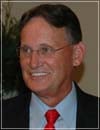
Larry Criss

One Thing

Psalm 27:4
Larry Criss May, 6 2018 Audio
0 Comments

Sermon Transcript

Auto-generated transcript • May contain errors

100%
Years ago I was traveling some
place and I was listening to a cassette. I told you it was
years ago. The cassette's just about obsolete
anymore, isn't it? But I was listening to a message
that Brother Tim James was preaching and he was in Ashland, Kentucky,
13th Street Baptist Church and Henry Mahan was pastor and it
was during one of Henry's annual conferences. And Tim was very
young, and there were a lot of older, more experienced, including
Henry, in the congregation. And Tim felt pretty nervous about
that. And I've been there. But he said
he sought himself before he stood to preach, if I'm setting where
those men are or whoever in the congregation. Tim asked himself,
what do I need to hear most? What's most important? What will
help me? I thought about that as I prepared
this message. What would help me? What would
help me? If I'm sitting where you are
this morning, what most comforts my heart? What do I long to hear? Moose Parks, again many years
ago, he wrote a hymn and I had a copy of it on my computer that
crashed and I lost it with everything else, but I remember pretty well
several of the verses and I think it's pretty close. Tim wrote,
I'm sorry, Moose wrote We have gathered in this chapel, having
come from far and near. We are weary from our journey.
Some good news we long to hear. So to him who is our preacher,
we would make this one request. Tell us now that blessed story
of God's free and sovereign grace. That's what I need to hear. That's
what I need to hear. Nothing else going to comfort
me. Moose went on to write, tell us not of self-salvation through
an act of man's free will. That's not going to help me.
That's going to do the very opposite. That'll bring me down. That makes
salvation impossible if it's dependent upon such a thing as
that imaginary thing called free will. There's no such critter.
But he went on to say, Tell us not of self-salvation through
an act of man's free will. It will bring no consolation,
having heard we're hungry still. Our souls, those who have been
renewed by the grace of God, that's exactly what they continue
to live on and to feed on, God's free and sovereign grace. Is that not so? Is that not true? Is that not what blesses your
heart? Brother Don, my pastor, told me many years ago in a conversation,
and we had many about the ministry and preaching, pastoring. He
said, Larry, if the message doesn't help you, if it doesn't stir
you, if it doesn't speak first to your heart, don't expect it
to speak to the heart of those to whom you preach. And I pray
that this morning the message will speak to our hearts together. I begin by asking this question.
We're going to come to our text, Psalm 24 and 27 in verse 4. But the question is this, what
do we really, really need? What do we need? What do we need
the most? What is the one thing that we
can't possibly afford to be without? My father used to have a pretty
crude saying about wishing. I would say, well, I wish I had
a new bicycle. I wish I had this. I won't tell
you what that saying was, but it was true. But I will tell
you this. Nothing ever came of all my wishes. Nothing. Nothing. I had an empty
hand if I wished, and it remained empty. But I can also tell you
this. Here I stand. Far from being
that young boy wishing for things that I couldn't have, but I survived
without them. Survived without them. But this
one thing that David speaks of, I don't want to be without. I
cannot be without. I can get along and I dare say
we would all be surprised if rather at how less than what
we have we would be able to survive with. But there's one thing we
can't. Look at verse 4. One thing, one
thing, David says, if I desired of the Lord, that will I seek
after, singular, singular. That will I seek after, that
I may dwell in the house of the Lord all the days of my life,
to behold the beauty of the Lord, and to inquire in his temple."
My message is just that. One thing. David speaks of one
thing he desired, one thing he sought after, one thing that
he devoted all of his energy to, and that was to know God. Nothing whatever can be drawn
from the title of this psalm. It just says the psalm of David,
doesn't it? So many of the psalms, that's
the only title they have. Some of us give us a hint as
to the circumstances under which it was written, but this doesn't. But we can, in reading the psalm,
ascertain certain things about David's circumstances when he
wrote it. He was pursued by his enemies, we read there, verses
2 and 3. He was shut out at this present
time from the house of the Lord. For some reason, he couldn't
go there. He was pursued because of that, rather, being pursued
by his enemies. He was prevented from being in
the house of God. He was parted from father and
mother, and he was subject to slander. And David's experience
more or less is the experience of all God's people. Anybody
here exempt from tribulation? The Lord said in the world, speaking
to his sheep, immediately to the disciples and all those afterwards,
all those that should believe on him afterwards, he says to
you and I, don't expect any different in this world, you're going to
have tribulation. David spoke of affliction. And
God's people are all afflicted. I like what Martin Luther said.
He said that he could never rightly understand some of the Psalms
until he was afflicted, until he had experienced it. The sweet
singer in Israel was once a shepherd of his father's flocks, his father's
sheep, Jesse. And later, as king, he was the
shepherd over his heavenly father's flocks, his heavenly father's
sheep. And even so, even as king, with all the riches, all the
comfort, all the things that he possessed, David was not exempt
from affliction. That man who wrote that sweet,
comforting 23rd Psalm. Is there any psalm of all the
many recorded that has been of more comfort than that? I love
how it begins, don't you? The Lord, the Lord. Capital letters. The Lord, God Almighty. He's
my shepherd. He's my shepherd. I belong to
Him. He's the great shepherd, the
faithful shepherd, the good shepherd. And I'm in His hands. The Lord
is my shepherd. Oh, how sweet when God enables
us to lie down by those still waters with David. and have the
sweet and blessed assurance that I am his and he is mine. And whether I feel it or not,
whether I'm aware of it or not, whether I always act like it
or not, that's never going to change. He's always mine and
I will always be his. But the man who wrote that comforting
psalm also wrote the sad, mournful confession of Psalm 51. I've
sinned against you. Oh my God, that was David, that
shepherd that the youngest of Jesse's sons that God chose. I've chosen him, he told Samuel. All of Jesse's sons passed before
Samuel. He came to anoint the future
king of Israel. And they thought so little of
David that he wasn't even in the house. He was out tending
sheep. And the Lord and each son came
before Samuel, and Samuel thought to himself, oh, look at him,
strong, strapping young man. This must be the Lord's anointed.
And the Lord said, that's not him. That's not him. And they
all passed by, and God said again and again, that's not him. That's
not my chosen. That's not Israel's future king.
And Samuel said to him, is there any more? Oh, yeah, there's one,
the youngest one. He's out in the field. Well,
go get him. Fetch him. And David comes in
and God says, Samuel, arise, anoint him. That's him. That's
my chosen, David. But even so, even so, David,
even after being king, was not exempt from heartache. He experienced
both sadness and joy, heartache and happiness, triumph and defeat. Someone said, God, mixes like
a skilled pharmacist, medicine, not all joy, although
that would spoil us, not all sorrow, that would drive us to
despair, but he just mixes it just right, just right, and then
gives it to us for our own good and his glory. David experienced both, triumph
and defeat. And that's the case of everybody
that takes up their cross and denies themselves and follows
the Lamb. 1 Peter 1 and 6, wherein ye greatly
rejoice, though now for a season, if need be, ye are in heaviness
through manifold temptations, just different than various temptations,
that the trial of your faith being much more precious than
that of gold that perishes, Though it be tried with fire, might
be found unto praise and honor and glory at the appearing of
Jesus Christ. And then in chapter four, Beloved,
think it not strange concerning the fiery trial which is to try
you, as though some strange thing happened unto you. But rejoice,
inasmuch as ye are partakers of Christ's sufferings, that
when his glory shall be revealed, ye may be glad also with exceeding
joy. Thank God the story of his people
does not end with sorrow, but they shall mount up to Mount
Zion with songs of grace upon their lips and everlasting joy
upon their head. That was the case with David.
Someone said, except for Psalm 22 that speaks of our Lord's
sufferings, that every psalm, every psalm that begins with
the note of sorrow always ends with joy. Always, except Psalm
22. God's people, it's true, weep
in the night. Oh, but the joy, the joy that's
coming in the morning. 2 Samuel 23, I love this passage,
it's familiar to you. Now these be the last words of
David. David, the son of Jesse, said,
and the man who was raised up on high, the anointed of the
God of Jacob, And the sweet psalmist of Israel said, the spirit of
the Lord spake by me, and his word was in my tongue. The God
of Israel said, the rock of Israel spoke to me. He that ruleth over
men must be just, ruling in the fear of God. And he shall be
as the light of the morning, when the sun riseth, even a morning
without clouds, as the tender grass springing out of the earth
by the clear shining after the rain. My house be not so with
God. Lester, John, Terry, we can all
say that. We can all say that. Although
my house be not so with God. Yet, yet. Oh, the song doesn't
stop there. Yet He had made with me, yet
He had made with me, and nothing can change this, nothing can
alter this, nothing can stop this. Yet He had made with me
an everlasting covenant. He made it with me through my
substitute, through my representative, the Lord Jesus Christ, the Son
of David, David's Son and David's God. God made a covenant with
Him on the behalf of His people. And it's ordered in all things
in short, and this is all my salvation and all my desire,
although He make it not to grow. Compare those last words to some
of the last words of Peter. But the God of all grace, but
the God of all grace, who had called us into his eternal glory
by Christ Jesus after, after that you have suffered a while,
after, there's an end to it. Joy's coming in the morning.
make you perfect, and establish you, and strengthen you, and
just settle you down. Settle you down. Oh, to settle
down. Just to fall down on the eternal
rock of ages, that impregnable refuge, and to know that it is
well, it must be well. How could it be anything but
well with my soul having such a foundation to rest upon? Yet David sounds throughout this
psalm, although it is tainted with sorrow, his sure confidence
in God. He says, I'll behold the beauty
of the Lord and inquire in his temple. I'll do that again. I'll
do that again. Now tell me, could he have made
any greater request than that? Any greater cause to be sincere
about than that? For though worldly beauty like
the hymn says, this world rose a spade. This life is a vapor,
the glory of it, like the flower of the field, it fadeth and withereth
away. Oh, but the beauty of the Lord
endureth forever. We're going to a place, the old
hymn said, where the roses never fade, never fade. This world's
beauty is fading, yet the beauty of the Lord shall continue when
this world is done, when God's done with it. What David desires
in effect is that one thing needful, that Christ, the son of David,
spoke about hundreds of years after David made this statement,
or text. One thing have I desired. When
our Lord said concerning Mary, speaking to Martha, Martha, you're
troubled about things, lots of things. One thing, one thing
is needful. And Mary had chosen that good
part that shall not be taken away from her. One thing is needful. George Wagner, a man that I don't
recall hearing of before, but lived in the 1800s, when I was
preparing this message, I ran across the statement that he
made, and I thought would fit well here, commenting on one
thing, commenting on this text, he said, and he referred these
words of the psalmist to his own life, and he said, changes,
great changes, And many bereavements have been in my life. He said,
I've been empty from vessel to vessel, but one thing, one thing
has never failed. One thing makes me happy that
my life has been won. It has calmed my joys. It has
soothed my sorrows. It has guided me in difficulty.
It has strengthened me in weakness. It is the presence of God, a
faithful and loving God. Yes, brethren, the presence of
God is not only light, it is unity. It gives unity to the
heart that believes, unity to the life that is conformed to
it. It was the presence of God in
David's soul that enabled him to say, one thing have I desired
of the Lord, and Paul echoed the words when he said, this
one thing I do. Verse 4 again, that I may dwell
in the house of the Lord all the days of my life. In the beginning
of the Psalm, David seems to take an audit. Now when we hear
that word from certain quarters, we don't want that. But here it's a good thing. Remember,
remember, Paul said in Ephesians 2, remember what you were, remember
where you were. Take an audit now and then. And
David does so here. He takes an audit of his soul's
accounts and he reckons up the large incomes and everlasting
treasures of God's bounty and God's grace and God's mercy. And the Lord is my light, he
said, and my life, my strength, my salvation. And where David's
light and life and salvation is, he says, that's where I want
to be. I want to be with him who is
my strength. I want to dwell in the house
of the Lord forever. I love the testimony of a man
with experience, don't you? David wasn't sitting in his castle
when he wrote it, obviously. He was in trouble, he was afflicted,
he was tormented, slandered by his enemies, and he speaks from
personal experience. I like that, don't you? I remember
in 2008, ten years ago, February 7th. It's still on Free
Grace. If you've never listened to it,
I encourage you to do so. A message by Brother Henry Mahan
called The Reflections of 80 Years. Reflections of 80 Years. I was there that night he preached
it at Grace Baptist Church in Danville. And Henry's text was
this, another psalm, Psalm 39. Lord, make me to know mine end. And only God can do that. and
the measure of my days, what it is that I may know how frail
I am. Behold, thou hast made my days
as an handbreadth, and mine ages as nothing before thee. Barely
every man at his best state is altogether vanity, Selah. Surely every man walketh in a
vain show, surely they are disquieted in vain. They heapeth up riches,
and knoweth not who shall gather them. And now, Lord, what weight
I What wait I for? Am I any better than they? Am
I any different than they, the men of the world, the men that
don't know God? Lord, what do I wait for? And
David said, and Henry preached from, my hope is in thee. And Henry's outline was this.
One, life is a vapor. Billy's 79 years old today. It's
been a vape for Amyville. Gone, gone. The second thing
Henry said, salvation is of the Lord. Christ is sufficient, was
Henry's third point and we're completing him. And his fourth
one was this, God will provide. God will provide. One thing,
this is the right target to shoot at, isn't it, children of God?
This is the well to dip our buckets in. This is the door to knock
at. This is the bank, the bank of
God's grace, with an endless supply to draw on. Under David's
painful circumstances, we might expect that he would desire safety
and comfort and repose and a thousand other good things, but no, he
has set his heart on that one pearl of great price and sells
everything that he might have it. Verse 5, or rather Jesus,
in the Gospels is described as the light, our life, our salvation,
as David does here, the lefter up of our heads. Without him,
we don't have any life, or light, or strength, or confidence. In
him we find all, the source, the fountain, the means, the
end, and everything in between. Of Him? Of Him. Where's grace begin? With Christ. Where's salvation
begin? With Christ. When are we saved
when we're enabled to look to Christ? Of Him. Who gives us
that faith, that ability? Who opens our blinded eyes that
we might behold the Lamb of God? Of Him. Of Him. And through Him,
a circle. And back to Him are All things
to whom be glory forever and ever. Amen. He is my salvation,
David says in verse 1. I'm safe by that one who is my
salvation. He's the strength of my life.
Not only the protector of my life, but the strength of this
frail, weak, fainting life. God, who is a believer's life,
is the strength of that life, not only by whom, but in whom
he lives and moves. And if God be for him, if God
be for him, and John, God's for us, God's for us, my soul. I mean, David says that's the
basis on which he says all things work together for our good. I
mean, God foreknew us. and predestinated us and chose
us, and called us, and justified us, and glorified us. My soul,
if God be before us in such a way as that, who can be against us? What does it matter if God be
for us? And here's the second thing.
One thing, one thing, we already, we referred to it, I think, perhaps
in the reading. In Luke 18, also in Matthew 19
and Mark 10, I think, There was a young man come to our Lord. I mean in broad daylight. He
didn't sneak through the back door like Nicodemus under the
guise of darkness, no. He came in broad daylight and
before everybody that was around, he kneeled down before Jesus
Christ. He said, good master, good master, what must I do?
What must I do to inherit eternal life? And like most people, like
most people, And I hope you know that I take no joy in this fact. I wish it wasn't so. But like
most people in churches this morning, he really didn't think
he needed anything. He thought he already had all
that he needed. He said, I've kept all God's
commandments since I was a boy. The young man said unto him,
all these things have I kept from my youth up, what do I like
yet? Just in case I'm overlooking
something, I don't think I am. He came as a rich man with a
rich man's mentality. I've got everything. Don't need
it. But do I lack anything? And he
really didn't feel like, felt like he did. And the Lord answered. The Lord answered him. Is any
other answer more important than his? It doesn't make any difference
what the preacher or the priest or the Baptist or the Catholic
or the blah, blah, blah. What religion says, I want to
know what the Lord says. One thing thou lackest. And that one thing is the same
thing David spoke of. The one thing needful. The one
and only Savior. The one mediator. The one way
to God. The one name under which we must
be saved. Only one. One. One thing thou
lackest, it was Jesus Christ himself. If he had been this
rich young ruler, really acquainted with the extent and spiritual
nature of God's holy law, and some of the working of his own
sinful heart, he would have said quite the contrary than what
he did. He would have said, all these
have I broken from my youth up. in thought and in deed. The young
man didn't know God. He couldn't know God. And he
proved that he didn't know God. He proved it. He proved it. And
I know this is old-fashioned. This is old-fashioned. But he
proved that he didn't know God because he wouldn't bow to Jesus
Christ. We've had folks come here and
got ticked off and left because they wouldn't bow to Jesus Christ. I wouldn't tell them they knew
God because they never bowed to Jesus Christ. And how unusual,
how unlike today. I mean, if this young man had
come to Nine out of ten churches, and did what he did, bowed down. What must I do to be saved? Well,
man, they'd have drug him to the altar, gave him the sinner's
prayer, stood him up and slapped him on the back and said, you're
eternally saved. Don't you ever doubt it. You
came forward. You made your decision. And then they said, did we hear
you're rich? We're going to make you a deacon. No, no. The Lord sent him away sorrowful,
sorrowful. He wouldn't part with that which
was his true love. He couldn't serve God and his
money. He couldn't serve God with a
divided heart and Christ sent him away sorrowful. Let him go,
let him go. Just like the Lord did the whole
multitude. Let him go. He didn't run after
him and beg him to stay and compromise his nature and his word. Oh no,
he went away sorrowful. It's impossible to have eternal
life. Without Him who said, I am. I am the resurrection and the
life. Nobody else is. He that believes in me shall
never die. Because I live, ye shall live
also. And this is the record that God
has given to us eternal life. And this life is in His Son.
I just love those words. In His Son. Oh, how accepted
I must be by God Almighty if I'm in His Son. How loved I must
be by God Almighty if I'm in His Son. How perfect without
blemish and spot must I be in the sight of a holy God if I'm
in His Son. He that hath the Son hath life,
and he that hath not the Son, no matter what else he may claim,
has not life. These things have I written unto
you that believe on the name of the Son of God, that you may
know that you may know you have eternal life, and that you might
believe, just keep on believing, on the name of the Son of God.
And we know that the Son of God has come, and has given us an
understanding, that we may know Him that is true, and we are
in Him that is true, even in His Son, Jesus Christ, this is
the true God, and eternal life. A third thing, a last thing,
perhaps you've already thought of it, we've referred to it,
Compare what our Lord said to the rich young ruler. One thing
thou likest, that what he said to a woman
in Bethany at a certain house of a certain family that our
Lord visited and Mary got right down in the floor at his feet.
Don't want to miss a word. Mr. Spurgeon told a story because
he had an orphanage for boys and one for girls. as a part
of the ministry of the great tabernacle. And there was one
little orphan boy that sat on the very first pew. And he would
sit like this, sit like this, listening to Spurgeon. And somebody
asked him one time, why do you do that? Why do you do that?
He said, because Mr. Spurgeon said, if God speaks
to me, it's going to be through his word when it's preached.
And he said, I don't want to miss it. I don't want to miss
it. If God speaks peace to my heart,
it'll be through the gospel of God's free grace, and I don't
want to miss it. Compare what he said concerning
the one thing needful, or rather to the rich young ruler, one
thing you lack, to what he said concerning Mary. One thing is
needful. One thing. One thing. What did
he mean? What was that good part that
should never be taken away from her? The one thing needful, again,
again. It's Jesus Christ Himself. It's Jesus Christ Himself. Not
His doctrines, as lovely as they are, but Jesus Christ Himself. Jesus is the one thing needful
to bring us to God, to reconcile us to God. The one thing needful
by which I obtain forgiveness of all my sins. The one thing
needful to save me to the uttermost, nobody else can. With men, it's
impossible. Whether that man is called a
priest, impossible, or a Baptist preacher, impossible, or a church,
impossible. Salvation is impossible with
men, any man and all men. All but concerning Jesus Christ
Himself, who but He can do this? Who but He can do this? Now unto
Him that is able to keep you from falling, and to present
you faultless before the presence of His glory, with exceeding
joy, to the only wise God our Savior, the one thing needful,
be glory and majesty, dominion and power, both now and forever. Amen. Who but he can do this? Husbands, love your wives, even
as Christ also loved the church and gave himself for it, that
he might sanctify and cleanse it with the washing of water
by the word, that he might present it to himself a glorious church,
not having spot or wrinkle or any such thing, but that it should
be holy and without blemish. Oh, my soul. What grace, what
mercy, what great salvation, hallelujah, what a savior. I like what one man said. If
my sins mount up to heaven, God's mercy is above the heavens. Should
my sins reach the very throne to accuse me, there is one upon
the throne who will not condemn me. When I look to myself and
see my vileness and necessity, I'm confounded with shame. But
when I look to the Lord Jesus Christ and see his fullness and
sufficiency, I'm confounded with wonder. My soul, why me? Why me? Why did he choose me? Why did he love me? Why did he
lay down his life for me? Why does He want me with Him
where He is that I may behold His glory, see His face, the
King in His beauty? Jesus Christ Himself is the one
thing needful to do this to all believers. He's the rock under
their feet. He's the staff in their hands.
He's their ark and their city of refuge. He's their sun and
their shield. He's their bread and their medicine,
their health and their light. their fountain and their shelter,
their portion and their home, their advocate and their physician,
their captain and their elder brother. He's their life, their
hope. He's everything. One thing have
I desired of the Lord, and what, brothers and sisters, eternal
security it is for that blessed people that are in the heart
and the hand of the great shepherd of the sheep. His hands are hands of omnipotence,
hands full of mercy and truth, hands of comfort, hands of sufficiency,
hands full of whatever we need is in Him. David says, oh, this
is my desire, one thing, to behold the Lord, to behold the beauty
of the Lord. What a word that is, the beauty
of the Lord. I so think of that. The Bride
of Solomon song said he's altogether perfect. What a sight that will
be when my Jesus I shall say. Oh man, what a day, glorious
day that will be. Mr. Fortner has a hymn entitled
Jesus is the one thing needful. Jesus is the one thing needful. Oh, our precious Lord and Savior,
ever true and ever faithful, we will sing your praise forever.
Boundless fullness in him dwelling, boundless grace for all his chosen,
like a mighty river flowing to all weary sinners broken. Mercy
from him overflowing to the poor and tried believer, and his blood
in heaven pleading brings salvation to us sinners. Yes, Christ is
the one thing needful, precious to believing sinners, Ever true
and ever faithful, exalted Lord must be forever. Let me close. Paul wrote in Philippians 3,
brethren, I count not myself to have apprehended. I'm not
there yet, he is now. But this one thing I do, forgetting
the things, plural, which are behind and reaching forth into
the things which are before, here's the singular. I pressed
toward the mark for the prize of the high calling of God in
Christ Jesus. I suppose, Bobby can confirm
this, that I usually request that she sing one song, maybe
more than I do any other, and it is Christ is all. One verse
of that song says, I stood beside a dying bed where
lay a man with aching head, waiting for Jesus' call. I marked his
smile as sweet as may, and as his spirit passed away, he whispered, he whispered, Christ is all. Christ is all. One thing, one
thing. God bless you. Thank you for
your teaching.
Larry Criss
About Larry Criss
Larry Criss is Pastor of Fairmont Grace Church located at 3701 Talladega Highway, Sylacauga, Alabama 35150. You may contact him by writing; 2013 Talladega Hwy., Sylacauga, AL 35150; by telephone at 205-368-4714 or by Email at: larrywcriss@mysylacauga.com
Broadcaster:

Comments

0 / 2000 characters
Comments are moderated before appearing.

Be the first to comment!

Joshua

Joshua

Shall we play a game? Ask me about articles, sermons, or theology from our library. I can also help you navigate the site.