Bootstrap
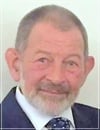
Daniel Parks

Christ Has Been Raised from the Dead - Part 01

Daniel Parks April, 16 2017 Audio
0 Comments

Sermon Transcript

Auto-generated transcript • May contain errors

100%
I invite your attention to 1
Corinthians chapter 15, verse 12. The first epistle of Paul to
the church in Corinth, 15th chapter, 12th verse, and the subject of
this morning's message is, Christ has been raised from the dead. Our brother read, just a moment
ago, verses 1 through 20. So we're not going to read that
passage again, no need to. We will refer to it from time
to time. But in verse 12, I want you to
look at one phrase in verse 12. That phrase is in the first part
of the verse, and it reads, preached that he has been raised
from the dead. Now that's my text. Christ is
preached that he has been raised from the dead. And my subject
is Christ has been raised from the dead. I'm going to preach
that. I'm going to do what the text says. Christ is preached
that he has been raised from the dead. It is necessary that
I preach to you the resurrection of Christ. It is not necessary
that I do so every time. But it is necessary that I preach
Christ every time. There is an allusion to the resurrection
of Christ in just about every message. We emphasize the death
of Christ quite often, and Paul said, we preach not ourselves,
but Christ Jesus, the Lord. We preach Christ crucified, and
we do. I can think of no better subject
than to preach Christ, and particularly with regard to what he has done
to save sinners like me. Now, what is it to preach the
gospel? And if we preach the gospel,
we must preach the resurrection of Christ. And how do we know
so? Go to the first verse in chapter
15. Paul writes, Moreover, brethren, I declare
to you the gospel which I preached to you." Now, do you remember
this morning in the lesson I told you that one thing that preachers
do is when they preach a message is they tell you what they're
going to tell you Then they tell you what they came to tell you,
and then they tell you what they told you. Well now, Paul has
here done the same thing. Notice, I declare to you the
gospel which I preached to you. I've already preached this gospel
to you, and now I'm going to tell you what I preached. And
here it is. Here is the gospel that I preached.
I want you to notice Four things regarding this gospel.
And if you're in the habit of marking your Bible, and you can
mark in real tiny characters, you can put these four things
down regarding the gospel. First of all, It is the gospel
which I preached to you. Look at the word which. Which
gospel is it? It is the gospel which I preached
to you. There's more than one gospel.
This is the gospel which I preached to you. Second, which you also
received. I preached it and you received
it. Third, this is the gospel in
which you stand. You got firm ground here in this
gospel. You can stand here because it
is solid. And then the fourth mark of the
gospel, it is the gospel, verse two, by which also you are saved. I preached it, you received it,
You stand in it, and it saved you. If you hold fast that word which
I preached to you. Folks, if you have received the
gospel of Jesus Christ, you are to not only stand on it, but
grab hold of it. Grab hold of it, and never let
it go. If you hold fast that word which
I preached to you, unless you believed in vain, there are some
who come and say, I'm standing on the gospel and the gospel
is Christ. He is the gospel. I'm standing
on the gospel and I've grabbed hold of it and I'm not going
to let it go. And then a few years later, They let go of the
gospel and walk away from it. And I hope that none of you are
of that sort. If you are, no pardon me, they
who are of that sort did not truly receive the gospel, did
not stand in it, and did not really grab hold of it. They
only thought they had. They believed in vain. What is this gospel? I just described
four things regarding it. For I delivered to you that which
I also received. I preached it because I received
it. Well, now there's another mark. That's a fifth thing regarding
it. I preach it because I received it. It was given to me. And here
it is. Now there are four things here
again regarding the message of the gospel. Four components are
here given. What is it? That Christ died
for our sins according to the scriptures. There's a first thing. We preach the death of Christ
and it must be according to the scriptures, according to what
you read in the Old Testament. Second element, that he was buried. Third element, that he rose again
according to the scriptures. We give you book, chapter, and
verse for just about everything we say from this pulpit. And
fourth, he was seen. It is one thing to say, he was
raised in the dead. It is another thing to say, I
saw him. I saw him. And it is another
thing to say, they saw him. So, the four components that
Paul here mentions regarding the gospel are these. Christ's
death, Christ's burial, Christ's resurrection,
and Christ, the resurrected Christ, seen by men. Now today, I'm going
to emphasize that part of the resurrection of Christ. Today,
when you leave the building, I hope you can truthfully say,
the resurrection of Christ was preached to me. My pastor this
morning said he was going to preach the resurrection of Christ,
and sure enough, he did so. What will we preach regarding
this resurrection of Christ? All right, here's the first element
regarding the resurrection of Christ. Christ's resurrection
fulfilled Old Testament prophecies. Now, I think you have a tract
inside your bulletin you can follow along with me today, but
there's that first point. Christ's resurrection fulfilled
Old Testament prophecies. Now, I could give you a number
of instances, but I'm going to cite just one instance, and it
is Peter the Apostle on the day of Pentecost. We're going to
take our time. We're not going to finish the
message today, so I'll just take my time with this. The day of
Pentecost was 50 days after the death of
Christ. You see the word 50 in that word
pentecost. Jesus had been brought before
the tribunal in Jerusalem. It was Passover. Jews from all
over the Roman Empire, and they were scattered across the empire,
across Northern Africa, across Southern Europe, in the Middle
East, and they were, and males, every Jewish male had to be in
Jerusalem for these three feasts of the year, according to the
law, according to the law. Passover was one of them, so
they'd come for Passover. 50 days after that was the Feast
of Pentecost. had to go back to Jerusalem.
So who is here on the day of Pentecost? The same people who
put him to death, who put Jesus Christ to death. They're back
in Jerusalem. And ten days before, about ten
days before, Jesus had gone to glory. He was resurrected from
his tomb on the third day and Then walked among his disciples
for 40 days, 40 days among his disciples and witnessing to them,
teaching them, showing them the proof that it was he who had
risen from the dead. And then he said, you stay right
here in Jerusalem, do not leave Jerusalem. Because they had a
commission to go into all the world and preach the gospel,
but he says, don't you even start. until I give you power to do
so. You tarry in Jerusalem until the Spirit comes upon you, and
then you'll have power, then you go preach. But do not go
preach until I give you the power." So they stayed in Jerusalem,
the 11 apostles, and the rest of the members of the church.
On the day of Pentecost, Jews from all over the Jewish diaspora
had been scattered all over. They're in Jerusalem and the
power came. Here were the 11 apostles and
the rest of the church, about 120 people in this room, and
the Spirit of God came down on the damn big Pentecost and gave
them power. And they began to speak with
other tongues as the Spirit of God gave them utterance. And
now they're out in the street, and they're talking in tongues
that they had never learned. See? He gave them power to do
so. They're to go into all the world.
How are they going to speak all those languages of the world?
The Lord's going to give it to them. All right? So, they hear
our preaching, and as you can imagine, a big crowd gathers. Here they come. People say, what's
going on over yonder? Looks like a bunch of drunks."
And Peter says, no, no, no, we're not drunk. It's only 9 a.m.,
all right? We are not drunk. We've had nothing
to drink. But this is the fulfillment of
Scripture. And Peter stands up and he says,
I'm going to tell you what's going on. He says, you men, you
Jews, just a few days ago, You took Jesus of Nazareth, a man
attested by God unto you, and you murdered him by hanging him
on that tree. Well, let me tell you what happened.
You murdered him. You nailed him to a tree. He
was laid in the tomb, and God raised him up. And he began to
declare it. He began to quote from the scriptures
regarding this resurrection of Jesus Christ. And one of the
passages he quotes is from Psalm 16. Now, remember this. David
and other men wrote these psalms. But the singer in a number of
these psalms is not necessarily David, it's Christ. And in the
16th Psalm, the foremost singer is Jesus Christ himself. Peter says, here's what has happened. The Lord has fulfilled Psalm
16, verses 8 through 11. Peter said in Acts 2, verses
25 through 28, For David says of Christ, And this is Christ speaking.
I foresaw Jehovah always before my face. This is still Christ
speaking. For he is at my right hand that
I may not be shaken. This is still Christ speaking.
Therefore my heart rejoiced and my tongue was glad. Moreover,
this is still Christ speaking, my flesh in its grave also will rest in
hope. Three days and three nights.
My flesh, not my spirit, my flesh will rest in hope. Why? For you, Jehovah, will not leave
my soul in Hades or in the grave, nor will you allow your Holy
One to see corruption. What is corruption? It's not
a pretty sight, folks. It's what happens when they put
you in the grave, all right? Did you know that at the very
moment that you breathe, There is a biological process that
starts in your body and it's called decay, decay. And pretty soon, and there's
really no good way of putting this, pretty soon you're going
to have a body older or worse than any you ever had before. Jesus comes to the tomb of Lazarus
and he says, Take me there. He says, Lord, he's been dead
now for a few days. He stinks. Are you sure? By now, he stinks. Why? Corruption. It's decay. Listen, folks, you
see this? It's all going to turn rotten
one of these days. It's going to be turned rotten.
It's not a pretty sight. It's not a good smelling thing,
neither. It's a terrible thing. But Jesus
said, Jesus said, You will not allow your Holy
One to see corruption. My body is not going to decay
in that grave. You have made known to me the
ways of life, meaning you have brought me up from the dead.
I'm alive. You will make me full of joy
in your presence. You're going to bring me to glory.
Now listen, folks. This Psalm 16 is Jesus Christ
speaking. This is His hymn. And Peter says,
did you read those words? And they said, yeah, we know
those words. That's Christ. And he preaches Christ to them.
This is a fulfillment of the prophecy of Christ. Now, I'll
show you one more. I'll show you one more. In the prophecy of Isaiah, chapter
53, and you know the passage very well. Who has believed,
I report, to whom has the arm of Jehovah been made known? And
you read about he was accounted as sheep to be led to the slaughter. You read about he was stricken
and smitten and afflicted by God. You read about that. That's
all of his death. Everything in that first part
of Isaiah 53, that is the death of Christ. But there are points
that are made in the last part of that chapter that necessitate
the resurrection of Jesus Christ. Now you have them in your outline
or your synopsis there before you. Isaiah 53 verses 10 through
12, listen to this. This is regarding Jehovah and
Jesus Christ. When you, Jehovah, make His,
that's Christ, when you make His Son an offering for sin,
an offering always died. When you brought that lamb for
an offering, it died. Here is Jehovah making His Son,
Jesus Christ, an offering for sin. He's gonna die. When your
sacrifice, your offering is died, he, afterward, shall see his
seed, his spiritual descendants, God's children. He will see his
seed. He's gonna die, but he's gonna
see his children afterward, after he dies. He shall prolong his
days, so that he lives forever and never dies. And the pleasure
of Jehovah shall prosper in his hand. He's gonna die, and then
he's gonna prosper. He's gonna go to death in poverty. They're gonna take everything
he's got. You're even going to cast lots
for the few things He bore toward the cross? But after that, He's
going to prosper. The pleasure of Jehovah shall
prosper in his hand. He shall see the labor of his
soul. Now the labor of his soul was
on Calvary. The labor of his soul is when
he says, My God, my God, why have you forsaken me? Father,
forgive them. They do not know what they do.
I thirst. You hear Jesus Christ on the
cross? for three hours from high noon till 3 p.m. He's laboring. What's he doing? He's redeeming
sinners. His blood is flowing out and
redeeming sinners. It was the hardest day of work
he ever did. It was the labor of his soul. He shall see the labor of his
soul, which means he shall see the results of the labor of his
soul and he shall be satisfied. He's going to look back on his
death and find pleasure in it. He's going to look back at all
that he went through and it's going to bring great satisfaction
to him. because he's going to see all of his children. He shall
see his seed and every one of them is saved and justified,
reconciled to God and redeemed. He's going to see it. Furthermore,
verse 12, after he dies, I will divide him a portion with the
great and he shall divide the spoiled with the strong. Because
he poured out his soul unto death. I'm going to give all these things
to him. I'm going to exalt him to my
throne. I'm going to tell him, son, sit
down. Now you've worked long enough for me. I'm going to do
work for you. I'm going to conquer all your
enemies. You just sit here. And I'm going to conquer your
enemies. And then? The end will come. But right
now, that's what Jesus is doing. He's up there in heaven and He's
ruling and reigning. He is as happy as He can be. On earth, He was a man of sorrows
and acquainted with grief. In heaven, He is a man of happiness
and joy and bliss forevermore. Never again acquainted with grief. Now, these are the prophecies. There are others, there are others,
but I must move on. But I do want you to see this.
He died for our sins according to the scriptures, he was buried,
and he rose again according to the scriptures. It happened just
as he said. Second thing we preach concerning his resurrection,
is that Christ's resurrection was prophesied by Christ himself. Now that's rather audacious,
you may say. You mean to tell me that a man,
when he's alive, is going to prophesy that he's going to be
raised from the dead. Yeah, that's right. In fact,
he did more than that. Not only did he say, I will be
raised from the dead, he also said, When I am dead in the tomb,
I will raise myself. That would be foolishness if
it came from me. If you ever talk like that, we're
just gonna certify you a fool and send you off somewhere, okay? Jesus prophesied his own resurrection. For example, he told sign-seeking
scribes and Pharisees in Matthew 12, verse 40, as Jonah was three
days and three nights in the belly of the great fish, so will
the Son of Man be three days and three nights in the heart
of the earth. Now, notice they were sign-seekers.
Jews and Gentiles differed in disregard with regards to religion. Gentiles sought after wisdom. Show us something that sounds
wise. The Jews would always say, show
us a sign. We wanna see a miracle. They
came to Jesus and they said, show us a sign that you are who
you are, who you say you are. He says, I'll give you a sign. But you gotta wait for it. But
as Jonah was three days and three nights in the belly of the great
fish, so will I be in the belly of the earth, which means I'm
coming up. I'm coming up. Just as that fish let Jonah out,
so will the grave let Jesus out. Second prophecy. He spoke of
the temple of His body when He told sign seekers, destroy this
temple and in three days I will raise it up. John 2 verses 19
through 21. Which was very early in His ministry. Very early in His ministry. You
see your body? It is a dwelling place. That's
what the word temple means. You see this temple? He spoke
of His own body. What did he say? Destroy it! And they would. On the cross.
On the cross. Oh, they would destroy it. They
would take their spikes and drive them into his hands and feet.
And they would take a whip, cat of nine tails probably, and just
plow his back. They were going to destroy his
body. Took that crown of thorns and crushed it to his brow. were
led to believe that as he was sitting there with that crown
of thorns crushed to his brow, they walked around with their
sticks and hit it so that it would go deeper into his brow.
They drove a spear into his side. They were doing everything they
could to destroy that temple in which he lived. He said, go
ahead and destroy it. In three days, I will raise it
up. They never forgot that. Oh, they
lied about it. They said he was talking about
the temple that was built, you know, the one it took 40 some
years to build. They said, you know, they misapplied
what he said. In fact, they just lied about
what he said. They said, he talked about destroying that temple
that was built here in their city and then he was going to
rebuild it in three days, you know. No, he was talking about
the temple of his body. And they finally learned what
he meant. Then third, he taught his disciples that he would be
killed and raised from the dead on the third day. And he did
this at least thrice from about six months before his death and
resurrection. He ministered for three and a
half years on this earth. When he had ministered for about
three years, He said to Peter one day, and he said to the other
apostles, he said, who do men say that I am? Well, some of
them think you're Isaiah, come back, and Jeremiah. Some of them
think you're one of the prophets in the Old Testament that died
and came back. Yeah, but who do you say that
I am? And Peter said, You are the Christ,
the Son of the living God. And it appears that after three
years of teaching that, they finally believed it. That's why
Jesus said, Who do you say that I am? He had been teaching them. He had given them signs. He had
done miracles. But yet you're going to find
that even among his apostles, there were still little doubts
in the back of their mind. Little doubts. But now, after
preaching for three years to them in the greatest seminary
this world has ever known, he says, who do you say that I am?
Oh, you are the Christ. You are the Son of the living
God. And Jesus said, Flesh and blood didn't teach you that.
My Father said that. Then, Jesus said these words. Now that they are fully convinced
that He's the Christ, He said that He was going to go to Jerusalem. And when I get to Jerusalem,
and you're going to go with me, We're going to Jerusalem one of these days. And when we
get there, they're gonna take me and they're gonna beat me,
abuse me, and they're gonna nail me to
a tree and I'm gonna die. And then I will be raised from
the dead. Peter said, no, no, pardon me. Peter took the Lord aside. Come here, Jesus, come here,
come here. There ain't no truth in what you just said. He rebuked
the Lord. What do you mean? You're gonna
die and then get raised again. Peter had the audacity to rebuke
the Lord for saying that. And so the Lord rebuked him,
get thee behind me Satan, I know what I'm talking about. But the
point I want to stress here is, these disciples, it took them
a while to grasp the truth that he was indeed the Christ. And
it took them longer to grasp the truth that he would be raised
from the dead. Thrice our Lord said this to
them. He would be raised again from
the dead. But he was so well known for this doctrine. that even his enemies said to
Pilate, when Jesus was laid in the tomb, he's laid in the tomb,
and Jesus' enemies went to Pilate and they said, Sir, we remember
that when that deceiver was still on this earth, he said he would
be raised again on the third day. We suggest you seal that
tomb and put a guard around it. So it was very well known that
Jesus had said he would be raised on the third day. Look at one
more prophecy from the lips of Jesus. In John 10, 17, and 18,
he declared, I lay down my life, and here's
why I do it. I lay down my life so that I
may take it again. It sounds like resurrection to
me. No one takes my life from me. They think they do, but I
lay it down of myself. They can't even crucify me unless
I give them permission. I have power to lay my life down,
and I have power to take it again. Now here is a very important
truth to consider in John 10. Here Jesus said, I lay down my life and I will
raise it up again. I'll raise my body up. He here
ascribes the resurrection to himself. In other places he said, I will
be raised from the dead, meaning he would be passive in it. as
though he were a dead body there in that tomb, and he would be
raised as though he had nothing to do with it. But here he says,
no, no, no, I do have something to do with it. I will raise myself
from the dead. Now, when you read these prophecies
from Christ regarding his resurrection from the dead, ask yourself these
questions. How does a dead man fulfilled
his prophecy regarding being raised from the dead. How does
he do it? How is a man killed by his enemies
and laid in the tomb, how does he fulfill his own prophecy regarding
his resurrection? And furthermore, second question,
how can Jesus Christ resurrect himself from the grave, since
the power to raise the dead and give life to them belongs only
to God. None but God can raise the dead. None but God! And Jesus says,
I will raise myself from the dead. And he did so. He did so. We sang, low in the grave he
lay, Jesus my Savior. Waiting the coming day, Jesus
my Lord. And up from the grave he arose,
with a mighty triumph for his foes. He arose a victor from
the dark domain, and he lives forever with his saints to reign.
He arose. He is Lord. He is Lord. He is risen from the dead, and
He is Lord. Every knee shall bow, every tongue
confess that Jesus Christ is Lord.
Daniel Parks
About Daniel Parks
Daniel E. “Moose” Parks is pastor of Sovereign Grace Church, 1000 7th Avenue South, Great Falls, Montana 59405. Call/text: 931.637-5684. Email: MooseParks@aol.com.
Broadcaster:

Comments

0 / 2000 characters
Comments are moderated before appearing.

Be the first to comment!

Joshua

Joshua

Shall we play a game? Ask me about articles, sermons, or theology from our library. I can also help you navigate the site.